Nestled amid plants native to the U.K., a giant figure of Gaia, or Mother Nature, sleeps in a verdant garden. With willow-branch locks shaped by artist Tom Hare and a crown of leaves, the figure’s face and shoulders are made from a fallen mature tree carved by Tim Wood. A winding pathway leads beneath an arch that extends the character’s torso, created in the tradition of dry stone walls and meticulously assembled by the family-run outfit Noble Stonework.
You’ll find Gaia in a garden title
Nestled amid plants native to the U.K., a giant figure of Gaia, or Mother Nature, sleeps in a verdant garden. With willow-branch locks shaped by artist Tom Hare and a crown of leaves, the figure’s face and shoulders are made from a fallen mature tree carved by Tim Wood. A winding pathway leads beneath an arch that extends the character’s torso, created in the tradition of dry stone walls and meticulously assembled by the family-run outfit Noble Stonework.
You’ll find Gaia in a garden titled “On the Edge” at this year’s RHS Chelsea Flower Show, which has taken the top prize of Garden of the Year. The project is a collaboration between designer Sarah Eberle and Campaign to Protect Rural England (CPRE), which champions the countryside and the sustainable practices necessary to protect and preserve its ecosystems.
Photo by Neil Hepworth/RHS
For this year’s exhibit, Eberle emphasized “edgelands,” or spaces between rural and urbanized areas like the borders of fields or even residential gardens. Think roadside berms or the seemingly unruly growth beside a canal. Often, these spots just look like a lot of weeds. Eberle sees not only the beauty, but the value, in these overlooked areas.
“These spaces connect millions of people to nature in everyday life, yet they’re undervalued and under constant pressure,” CPRE says in a statement. “This garden is an invitation to see them differently: not as ‘leftover’ land, but as living places that can recover and thrive with the right care.” Eberle’s choice of plants has a slightly wild aesthetic, with vines taking over the stone arch—redolent of the U.K.’s historic stone bridges—and a graceful yet somehow satisfyingly chaotic arrangement of plants we might associate with untamed overgrowth.
The garden’s design encourages people to consider using natural materials, cultivating local plants to help pollinators, and embracing “flaws” like old stumps or rocky areas that can be havens for wildlife. Amid nature’s innate rhythms, Gaia is a gentle protector who snoozes calmly with everything in balance. Eberele describes the effect: “A sense of abundance, a landscape under repair, the beauty in the ordinary. It’s about how it makes you feel—it’s almost a homecoming, an embrace, a hug.”
The Chelsea Flower Show is the flagship event of the Royal Horticultural Society, and it has been held on the grounds of the Royal Hospital since 1913, with the exception of a few skipped seasons during the two World Wars and in 2020. It’s not just limited to British gardeners, however: exhibitors from around the globe conceive of some of the most creative gardens imaginable. Tickets are available on the RHS website, and the show continues through May 23 in London.
When Valerie Lueth of Tugboat Printshop sets out to make a woodblock print, it’s rare that she only uses a single block. Instead, sometimes up to five distinctly carved pieces are incorporated, each containing different details that, when combined, create a total image. To make the prints, which are usually limited to editions of 100 or so, Lueth rolls the meticulously hand-carved blocks with colorful ink, layering them precisely in order. Black outlines define flora and fauna, for instance,
When Valerie Lueth of Tugboat Printshop sets out to make a woodblock print, it’s rare that she only uses a single block. Instead, sometimes up to five distinctly carved pieces are incorporated, each containing different details that, when combined, create a total image. To make the prints, which are usually limited to editions of 100 or so, Lueth rolls the meticulously hand-carved blocks with colorful ink, layering them precisely in order. Black outlines define flora and fauna, for instance, which are first laid down as colorful shapes.
Tugboat Printshop is celebrating its 20th anniversary this year, and for a limited time, there’s a discount on original woodcut prints in the shop. Keep an eye out on the studio’s Instagram for updates about future editions, and Lueth is always sharing loads of making-of images on Flickr.
Printing process of “Songbird & Cricket”One of five woodblocks used for “Songbird & Cricket”“Glowing Rose” (2024), five-block woodblock on BFK tan paper, 24 x 15 inches, edition of 100Blocks used to print “Glowing Rose”“Glowing Rose” being pulled from the final block“Dangling Grapes” (2025), four-block woodcut on BFK tan paper, 20 x 14 inches, edition of 100Blocks used to print “Dangling Grapes”“Steadfast Turtle” (2025), four-block woodcut on BFK tan paper, 11 x 14 inches, edition of 100Four woodblocks used for “Steadfast Turtle”
In a distraction-free “dream lab,” Zendaya has carte blanche to create a new wardrobe in a short, stop-motion film written and directed by Spike Jonze. The advertisement, which announces a clothing line the actor co-created with apparel brand On, merges dance and playful optics as she maneuvers through some otherworldly trial and error.
You might also enjoy Jonze’s mind-melting dance video for Apple featuring FKA twigs.
Do stories and artists like this matter to you? Become a
In a distraction-free “dream lab,” Zendaya has carte blanche to create a new wardrobe in a short, stop-motion film written and directed by Spike Jonze. The advertisement, which announces a clothing line the actor co-created with apparel brand On, merges dance and playful optics as she maneuvers through some otherworldly trial and error.
Manuel Gual posted a photo:
Vintage Meccano Workshop: Mechanical Dreams in Brass and Steel
Description:
A detailed visual collection inspired by classic Meccano engineering, captured inside a warm vintage workshop filled with metal strips, brass gears, pulleys, axles, wheels, tools, blueprints, cranes, bridges, clockwork mechanisms, model vehicles and carefully organized construction parts. The series celebrates the beauty of mechanical imagination, precision assembly, old workshop craftsma
Vintage Meccano Workshop: Mechanical Dreams in Brass and Steel
Description:
A detailed visual collection inspired by classic Meccano engineering, captured inside a warm vintage workshop filled with metal strips, brass gears, pulleys, axles, wheels, tools, blueprints, cranes, bridges, clockwork mechanisms, model vehicles and carefully organized construction parts. The series celebrates the beauty of mechanical imagination, precision assembly, old workshop craftsmanship and the nostalgic charm of hands-on model engineering. Each scene evokes the atmosphere of an inventor’s bench, where miniature machines, structural frames and experimental mechanisms come together like a tribute to industrial design, educational toys and timeless creative tinkering. These images have been generated by Artificial Intelligence.
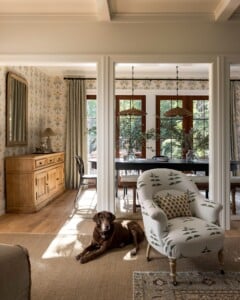
Editor’s Note: There’s something magical about a home that truly reflects its owner—a space that feels deeply personal, rooted in memory, and in harmony with its surroundings. That’s exactly the feeling you get stepping into Lily Riesenfeld’s thoughtfully curated home, featured in Sense of Place, a stunning book by my dear friend Caitlin Flemming and her mother, Julie Goebel. Together, they’ve built a body of work that celebrates the art of creating spaces infused with meaning.
Step inside
Editor’s Note: There’s something magical about a home that truly reflects its owner—a space that feels deeply personal, rooted in memory, and in harmony with its surroundings. That’s exactly the feeling you get stepping into Lily Riesenfeld’s thoughtfully curated home, featured in Sense of Place, a stunning book by my dear friend Caitlin Flemming and her mother, Julie Goebel. Together, they’ve built a body of work that celebrates the art of creating spaces infused with meaning.
Step inside a special home that proves: our surroundings have the power to inspire, comfort, and connect us more deeply to what matters.
A Home Rooted in Place
When you meet Lily Riesenfeld, you can’t help but notice that she seems tethered to the earth with deep roots.
An advocate for environmentally friendly living, Lily seems deeply comfortable in her surroundings. Her 1921 black shingled home with mahogany doors and trim sits in harmony with the surrounding mighty redwood trees, and hiking trails meet the backyard. Lily and her family chose this home because it is located near the trails of Mount Tamalpais, with San Francisco Bay inlets to the east and the Pacific Ocean to the west.
A Childhood Spent Outdoors
Lily grew up in Berkeley, California. When she was eight years old, her family bought a ranch in Healdsburg, California, a short drive from their home.
“Watching my mom and dad develop a vision for the ranch was special,” states Lily. Over the years, the family planted several hundred trees, built a ranch home, restored a redwood barn from the 1850s, and eventually planted one hundred acres of French varietal grapes. Her family developed the ranch with the idea for animals, the vineyard, and natural habitats to coexist. Lily’s favorite part of going to the ranch is sharing it with people who come to visit.
Along with the ranch in Healdsburg, where they spent most summers, the family also went to visit various family homes for two weeks every summer in Maine. As a child, Maine was somewhere she could be wild and free. The furniture on the porch, as well as the porch itself, in the home belonging to her great-grandparents, was painted in a celadon green that the family called “Gamby green,” after her great-grandmother. Gamby loved the shade so much that she even had a set of Wedgwood china made in the color. Many of the choices Lily has made in her home were inspired by her grandmother’s home in Maine, the family home in Berkeley, and the ranch in Healdsburg.
Building a Life at the Intersection of Wellness and Purpose
During her early adult years, Lily began her work with a focus on personal wellness and launched her first entrepreneurial endeavor, The Lily Pad, located in Malibu. After meeting her husband and moving back to the San Francisco Bay area, Lily also cofounded The Pad Studios, which is both a Pilates and yoga studio. Over the years, she began developing purpose-driven events to help communities connect, launching a brand called the Kinship Experience. As those experiences evolved, “I began moving my work to the intersection of human health and global health,” states Lily. She then launched a summit called Futurewell.
Today, Lily is an advocate for regenerative agriculture and works to advance healthy, equitable food systems. She is fundraising for a regeneratively built Center for Food and Agriculture, which will offer a permanent farmers’ market by the Marin Civic Center. “The building we have plans to erect will be drawing down more carbon and energy than it uses.”
A Home Designed in Harmony
Lily designed her Larkspur home with guidance from Caitlin Flemming. “Caitlin was a huge inspiration and the reason my home came together in the most synchronistic way possible.”
The colors within the home coexist in a calm harmony. Earth tones of deep greens, wheat, and a light shade of blue are mixed with a diversity of complementary patterns. All of these color choices can be found in the outdoors around her—the golden hills, the redwood trees (one of which is in her garden), and the light blues and grays of the water.
Walls in both the entry and the dining room are covered in a large-scale William Morris pattern. Curtains and pillows use smaller prints combined with a touch of wood-toned plaid in many rooms. Two petite vintage French chairs are covered in a hand-printed leaf pattern, continuing the spirit of the outdoors. Even the plates are a combination of patterns of vintage transferware in varying shades of green, along with pieces from her great-grandmother’s green Wedgwood.
If there is a heart to this home, it would unquestionably be the kitchen, where homemade tortillas sit wrapped in a linen towel by the stove and slow-simmering pinto beans are ready for anyone who is hungry. It’s a place to be nourished, and Lily is ready to welcome those in need of its healing power.
10 Reflections on Home
1. What drew you to where you live?
It was definitely Mount Tamalpais and the hiking here. We didn’t even look at Berkeley, even though our families live there. We also thought it would be good to be a bridge away from our parents.
2. How do the surroundings of where you live inform your aesthetic in your home?
The colors of the nature where I live definitely inform my aesthetic.
3. What is your idea of home?
A place for people to gather and to feel comfortable—a place you instantly feel at ease.
4. What is your favorite season where you live? Why?
I would have to say late summer. Suddenly, the light changes, and there is a golden cast to everything.
5. Is there anything you collect?
Anyone can see that I have a soft spot for wicker baskets and hats. I also love anything for the kitchen, especially interesting pottery.
6. How do you spend your weekends?
We spend our weekends hiking, cooking, and going to our children’s sporting events. When we can get away in the winter, I love going to our cabin in Sugar Bowl, which is very close to Tahoe, that was built in the 1930s to look like a Swiss village.
7. What can’t you live without?
Probably a latte in the morning. Of course, my children and husband, too! Also, my morning hike every day is what keeps me sane.
8. What elements turn your house into a home?
I think it feels like my home because it has a strong element of nostalgia. I also love adding layers of textures and textiles. This home is the opposite of stark.
9. How does your home fuel your creativity?
I love styling meals and bringing people together at the table. Every Sunday, my mother-in-law comes to dinner, and I always make an effort to dress up and make a nice meal.
10. Are there people or businesses close to home that you rely on to fuel your creativity?
I have learned so much from Alice Waters, after having the pleasure of doing a few curated events alongside her. Alice’s specific direction taught me how to make an experience about food, and how to perfectly execute the presentation. For the purpose side of my work, I am inspired by local creatives such as Paul Hawken, Jack Kornfield, Dr. Daniel Siegel, and my dearest friend, Jennifer Siebel Newsom.
Milan-based Filipina designer Mirei Monticelli creates biomorphic lighting fixtures that toe the line between sculpture and utility. Undulating outward and glowing from within, the artist’s works feel as if they are alive, quietly dancing wherever they stand or hang.
These gestural, biodegradable structures are crafted with hand-woven Banaca fabric made from Abacá, a fiber that grows abundantly in Monticelli’s native Philippines. The artist’s studio works directly with a community of weave
Milan-based Filipina designer Mirei Monticelli creates biomorphic lighting fixtures that toe the line between sculpture and utility. Undulating outward and glowing from within, the artist’s works feel as if they are alive, quietly dancing wherever they stand or hang.
These gestural, biodegradable structures are crafted with hand-woven Banaca fabric made from Abacá, a fiber that grows abundantly in Monticelli’s native Philippines. The artist’s studio works directly with a community of weavers in the Bicol province at the southeastern end of Luzon, sharing with Colossal, “We’ve developed the material together over time, so it’s not just sourcing, but a relationship.”
The laborious act of harvesting Abacá fiber has long been communal. From gathering the wild plant’s towering stalks and stripping them layer by layer to sun-drying bundles of knotted thread and hand-weaving the strands into functional textiles, the necessity of human connection has always been part of the process.
The term Banaca—coined by Monticelli—combines modern elements of design with a heritage technique that has been passed down for centuries. Monticelli’s contemporary subversion of a material so deeply engrained within Philippine culture further emphasizes the works’ metamorphic and dynamic presence. “Human rhythm is what gives the material its character, and it’s also why every piece feels alive when it’s lit,” says the artist.
Monticelli’s practice also incoporates techniques that echo garment construction and fashion. The artist shared that many of her methods are also learned from her mother, a fashion designer. Draping, volume-building, and creating shape are present in Monticelli’s lamps, underscoring a bodily essence within their surging forms.
Last month, the artist unveiled an installation titled “Pleasure Garden” at Milan Design Week, and often collaborates with interior designers, hospitality partners, and architectural studios to create immersive spaces. Find more from Monticelli on Instagram.
Photo by Juan PadillaPhoto by Juan PadillaPhoto by Juan PadillaPhoto by Juan Padilla
Debbie Lawson is known for her large-scale sculptures of life-size animals cloaked in ornamental carpets. Starting with an armature of wire mesh, masking tape, and Jesmonite resin, she meticulously cuts and tucks Persian carpet around every limb, building a surface that looks unbroken. As if the animals have materialized from within the textiles and are temporarily frozen in a stage of metamorphosis, we encounter them on the verge of making a move.
In the artist’s solo exhibition, In a Cow
Debbie Lawson is known for her large-scale sculptures of life-size animals cloaked in ornamental carpets. Starting with an armature of wire mesh, masking tape, and Jesmonite resin, she meticulously cuts and tucks Persian carpet around every limb, building a surface that looks unbroken. As if the animals have materialized from within the textiles and are temporarily frozen in a stage of metamorphosis, we encounter them on the verge of making a move.
In the artist’s solo exhibition, In a Cowslip’s Bell I Lie at Sargent’s Daughters, she provokes “questions about the relationships between decoration and nature, craft and camouflage,” the gallery says. The title is a line from Shakespeare’s The Tempest, when the spirit Ariel sings about freedom and the carefree, even charmed connection to nature following his release from forced servitude to the sorcerer Prospero. Several of the works seen here, including “Wild Dog Sundown,” “Red Eagle,” and “Black Cougar,” are included in the show.
“Wild Dog Sundown” (2025), carpet and mixed media, 92 1/2 x 61 3/4 x 24 3/4 inches
Lawson draws on the lineage of nature motifs in art, especially wildlife. She alludes to “the natural and animal forms hidden within decorative forms and patterns, from the frescoes of Pompeii to French Rococo moldings to Venetian stone carvings—the designs of William Morris and even the New York Public Library’s lions,” says a statement. Think clawfoot tubs, heraldic animals carved into hearths and other decorative interior elements, and the more modern form-meets-function works of Les Lalannes, which often incorporate birds and mammals into designs for benches and lamps.
The dialogue between art and decor parallels inherent tensions between interiors and the outside world—refinement and domesticity versus nature or indeed, the wilderness. Lawson also thinks about the gendered history of home life and craft, which has long been been associated with “women’s work.” This is deeply personal for the artist, as textile- and art-making go back generations in both her family and her hometown of Dundee, Scotland. She says, “I’m also thinking about women, including some of my near ancestors, so often confined by the constraints of the patriarchal society in which they/we lived, trapped in the daily grind and unable to pursue their own considerable creative talents or fully inhabit the world.”
Lawson’s camouflaged animals manifest from the backgrounds of carpets, emphasizing emergence itself. As these wild animals—leopards, cougars, bears, and more—are more clearly defined, they don’t break free from their patterns. Rather, they are indelibly characterized by the textile and can be clearly recognized for their unique individual traits. It’s not unlike how craft, especially textiles that were historically relegated to domestic settings and considered at least a notch or two below “high art,” has intently disrupted the art canon in recent decades.
In a Cowslip’s Bell I Lie continues through May 30 in New York. See more on Lawson’s Instagram.
“Red Eagle” (2026), carpet, steel, and mixed media, 116 1/8 x 78 3/4 x 21 5/8 inches“Arabian Leopard” (2024), carpet and mixed media, 63 x 90 1/2 x 13 3/4 inches“Black Cougar” (2025), carpet and mixed media, 70 7/8 x 29 1/8 x 13 3/8 inches“Prospero” (2026), carpet and mixed media, 52 x 19 3/4 x 18 1/2 inches“Alligator” (2025), carpet and mixed media, 30 x 43 x 16 inchesDetail of “Alligator”“Red Cougar” (2025), carpet, table, and mixed media, 90 1/2 x 63 x 31 7/8 inches“Gold Cougar” (2026), carpet and mixed media, 70 7/8 x 28 3/4 x 9 1/2 inches

 Login
Login