MAY 20 — “Would you like a cup of tea?”
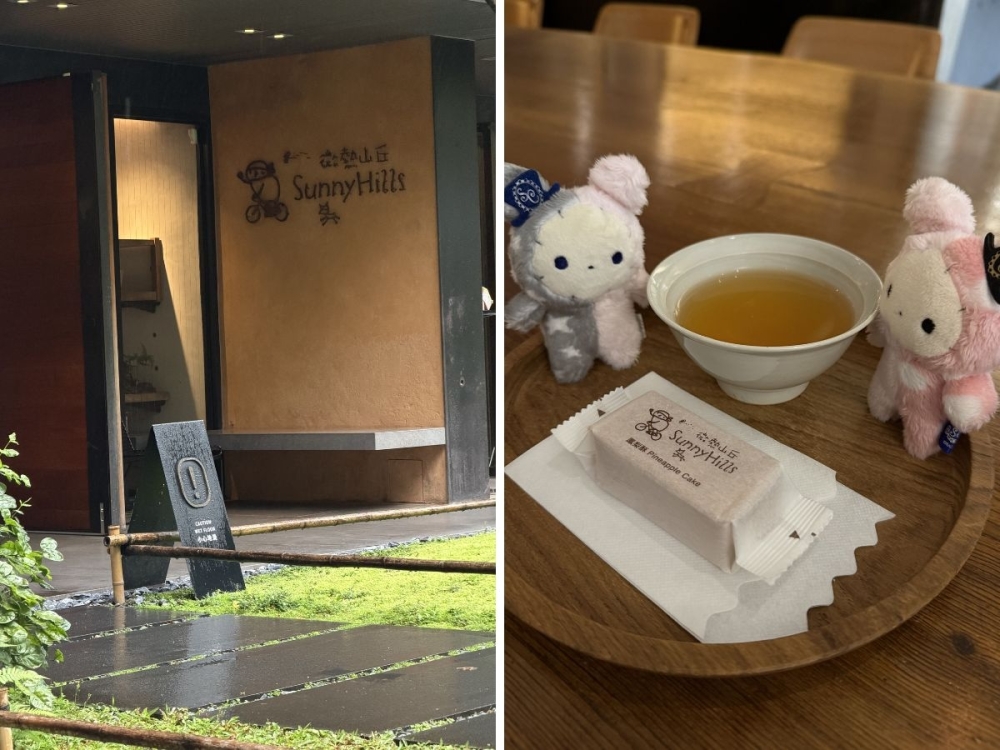
It was not a question I expected, as I stood there at the entrance of SunnyHills Café in Taipei, bedraggled and a little damp after trying (and failing) to figure out the city’s buses.
Just 20 minutes prior to arriving at the cafe a harried bus driver had yelled at me for taking too long to get off the bus.
My post-cancer treatment legs were still too stiff; going down steps was and still is a painful affair and while the pain has ebbed a little, the stiffness keeps rushing back like waves to sand.
So I wasn’t angry at the bus driver, I couldn’t even understand what he was saying.
But from his frustrated tone, I get that he was upset.
If I was a much older woman, if I still had a bald head and cane, perhaps he might have been a little more patient or perhaps not.
As hard as it is sometimes to deal with a physical facade that does not match my reality (“You look good/You’re all better now, right?”), I will take the stiff legs, the awkward halting steps, the ever present pain as trophies hard-won, souvenirs from a battle where I claimed the ultimate prize — coming out alive.
Yesterday I woke up and my left shoulder felt lighter than it had in over six months and I rolled my arm around and around, hearing the clicking of my shoulder blade as if it had finally come to life, like a thawing of ice after a long winter.
Back to my cup of tea.
I am used to the usual “CanIhelpyou?” I get at Malaysian stores that actually mean “Are you here to buy something, I hope you’re here to buy something, I’m here for you if you buy something.”
Instead the pleasant staffer asked if I wanted tea, and when I said yes, ushered me to a long, polished wooden table, with many seats as though prepared for not just one mussed and confused visitor but as many as could make it.
Sometimes all it takes is a cup of tea to warm the soul. — Pictures by Erna Mahyuni
On a little plate was a pineapple tart, the Taiwanese kind, a slender, rectangular cube, still in its wrapping and next to it, a cup of a pleasant oolong tea.
I should have asked what kind of tea it was but instead I sank into a chair to have my tea and tart.
There’s a very good reason SunnyHills pineapple tarts often win in local “what is the best pineapple tart” polls.
Part of it is the pastry. You can taste the butter, good butter at just the right ratio to keep the shell moist and the filling, ah, you wish local pineapple pastries could come close.
The filling is generous and the flavour gets the right mix of not being overly tart nor overly sweet but I confess I love the apple tarts most.
My friend says the reason SunnyHills’ tarts taste so good is that they use only pineapple instead of substituting in some wintermelon.
I think that’s only part of the charm. What the tarts get right is that lovely mouthfeel where you get just the right amount of dough and filling with each bite, without leaving a doughy aftertaste or an unpleasant overly sour flavour from poorly prepared pineapple jam.
There was no attempt to immediately ask me why I was there or to show me what they had in-store, the wares were on display after all.
When I looked curiously at the apple tarts, the salesperson asked if I would like a sample and I said, sure.
She handed me a whole tart.
Bear in mind, Taiwanese pineapple tarts are the length of my palm and thick as two fingers and being the typical Malaysian who is used to free samples being the size of a fingernail, this was an unexpected bounty.
So you see, dear reader, you can hardly blame me for buying two boxes of tarts, some banana waffle biscuits and a gift set of tarts for the friend who was the reason I was there in the first place.
She had asked me, “Are you going to SunnyHills? No pressure.”
I said, “Well, I could.” I could and I did, because my itinerary was as loose and as free as the passing clouds.
After looking at my receipts, I realised I wasn’t even charged for the cup of tea, nor was there a fee for the tart that accompanied it and of course, the apple tart sample was free too.
Perhaps it was hospitality.
Perhaps they just knew that once you tasted their tarts, you wouldn’t be able to resist taking some home with you.
If there is one memory I will hold most dear about Taipei, it is that one cup of tea and the kind of simple hospitality you don’t get as much in big cities so when you do find it, when you’re standing on shaky legs in the rain, it’s something to savour, like you would a very good, buttery tart.
* This is the personal opinion of the columnist.

 Login
Login