Login
Login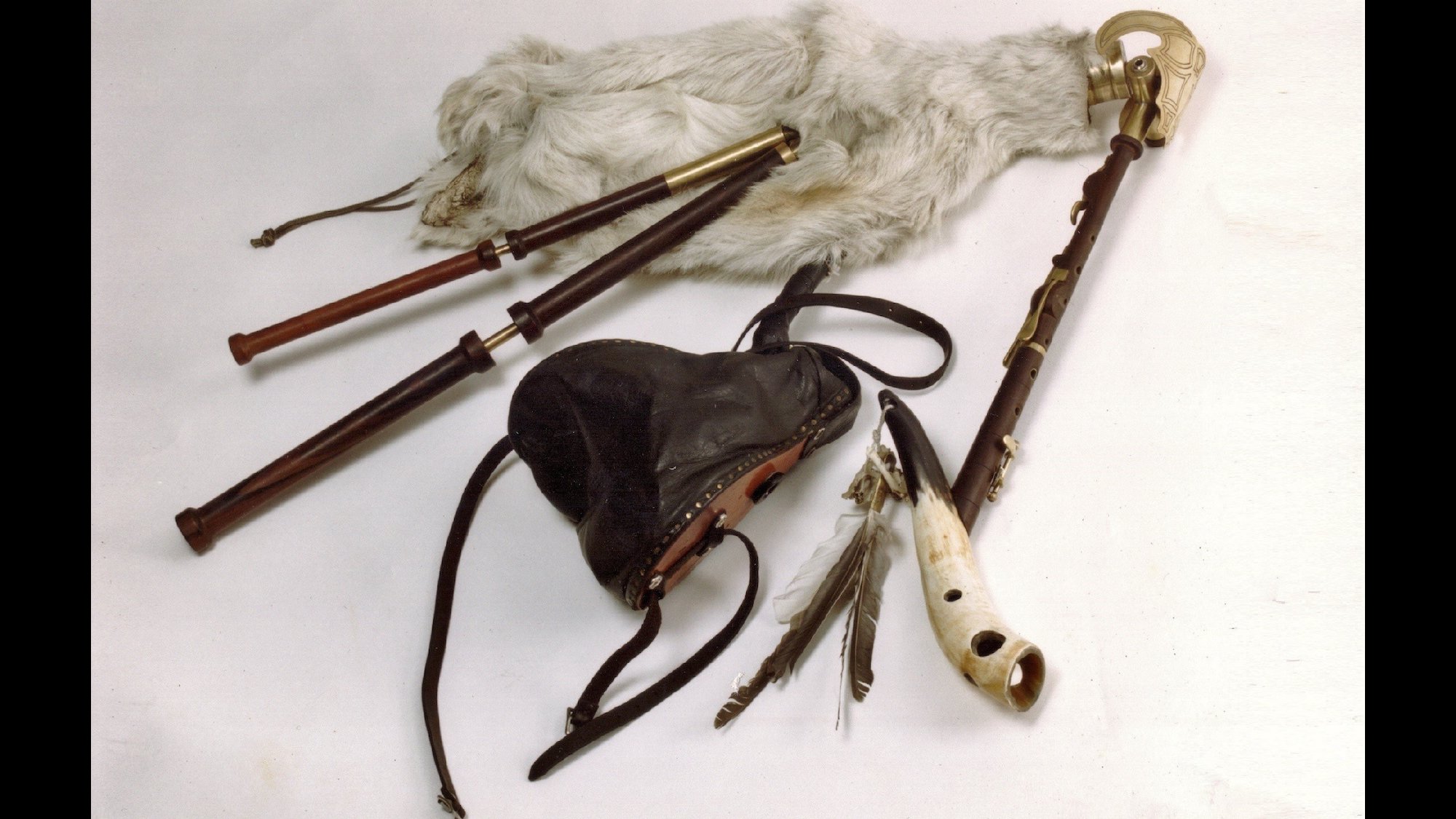


Inventor plays homemade electromagnetic bagpipes in rock band
Bagpipes: You either love ‘em or you hate ‘em. But even among the instrument’s diehard defenders, most wouldn’t spend years designing, building, and perfecting an electromagnetic variant. But that’s exactly what one intrepid hobbyist in the United Kingdom has accomplished—although he first began toying with the idea 30 years ago.
“This project started back in 1996 when I hacked an Irish Uilleann bagpipe chanter by replacing the cane reed with a homemade reed made from carbon steel,” he explained on his Hackaday project page.
Although most famously associated with Scotland, various iterations of bagpipe instruments are documented in regions around the world like North Africa, East Asia, and the Persian Gulf. The Uilleann or Irish pipes date back to the 18th century and operate similarly to their Scottish relatives. To play them, a wearer operates small bellows strapped around the waist to blow relatively dry air through pipe reeds while using them like flutes. Uilleann pipes typically encompass two full octaves and produce a sound that many consider more melodic and mild than Scottish bagpipes.

This doesn’t mean they’re quiet, of course. In fact, their earliest versions could often be found on the battlefield as morale boosters. Although, the invention of electric instruments meant that even the most robust pipes couldn’t overshadow an amplifier cranked to its maximum. This posed a problem to the modernized version’s inventor.
“I desperately wanted to play the pipes in a rock band and I knew that I would only be able to sonically compete with an electric guitar by fitting an electromagnetic pickup next to a steel reed,” he explained.
Wielding a workaround may sound like a lot of work, especially when a musician could hypothetically just place a microphone near their traditional bagpipes. While certainly possible, it’s still difficult for the performer to actually hear themselves on stage compared to the electric instruments and drums. On top of that, standard microphones pick up a lot of background noise and produce feedback in stage monitors. Constructing a steel reed bypasses these issues entirely.
“Jimi Hendrix-type feedback can still be created but only by turning up the monitor amp really high and physically shoving the instrument into the speaker,” the creator wrote, adding that he can also employ the same effects used by guitarists, including distortion, pitch shifters, and delays.
The modern updates don’t end there, either. While the bellows bag is crafted from goat skin, it’s basically an exterior cosmetic accessory that houses another bag made from the same vinyl used in car seat covers. That’s all well and good—but how does it play?
“Playing gigs with this instrument, people would crowd around to watch and guitarists at the back would be scratching their heads thinking ‘That sounds like an electric guitar, but it definitely is not an electric guitar and you definitely can’t get an electric guitar to sound like that!’” he wrote.
While the full plans aren’t available online, fans of the sound can check out the inventor’s website to hear multiple original songs featuring the electro-bagpipes.
In The Workshop, Popular Science highlights the ingenious, delightful, and often surprising projects people build in their spare time. If you or someone you know is working on a hobbyist project that fits the bill, we’d love to hear about it—fill out this form to tell us more.
Related 'The Workshop' Stories
Meet the college student crafting electric guitars from scratch
Teen builds ‘Bionic Underwater Robotic Turtle’ to detect ecological threats
This guy crammed a laptop into an Altoids tin
Clever kid builds phone charger powered by pet hamster
Teen brothers build a Disney-inspired ride in family basement
Teen turns his suburban home into elaborate haunted house every October
The post Inventor plays homemade electromagnetic bagpipes in rock band appeared first on Popular Science.