Greeshma Gadikota and her team explore how materials that might otherwise be landfilled can be transformed into products needed for solar energy and other critical technologies.
Greeshma Gadikota and her team explore how materials that might otherwise be landfilled can be transformed into products needed for solar energy and other critical technologies.
Everything is bigger in Texas, and that includes its controlled detonations. Texas A&M University recently revealed what they say is the world’s largest controlled explosion lab, where researchers can fill a nearly 500-foot metal tube with gas and ignite it in the name of science. They are calling it The Detonation Research Test Facility (DRTF). By precisely measuring what it takes to turn a simple flame into a massive, deadly detonation, researchers hope to make discoveries that could bette
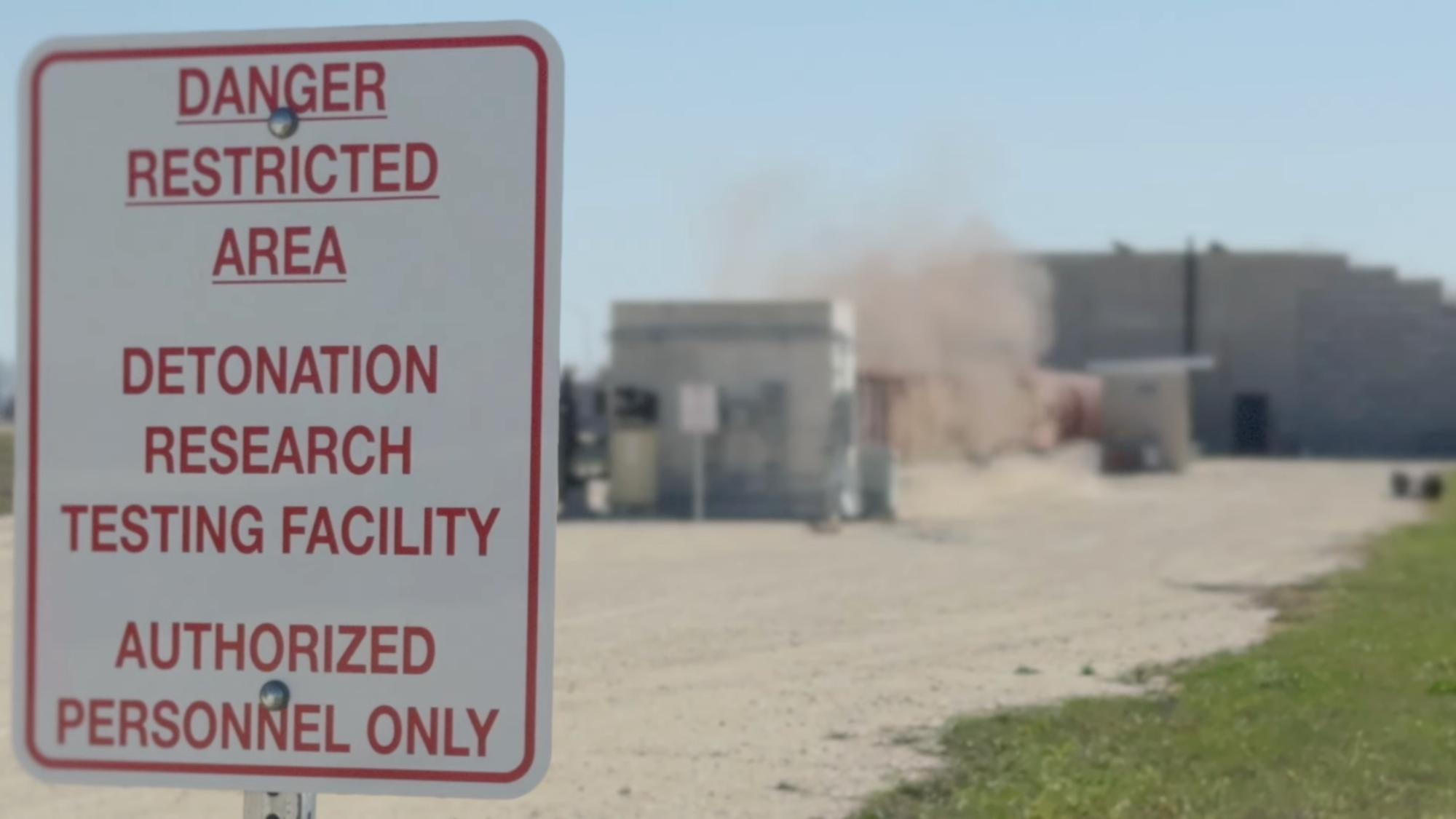
Everything is bigger in Texas, and that includes its controlled detonations. Texas A&M University recently revealed what they say is the world’s largest controlled explosion lab, where researchers can fill a nearly 500-foot metal tube with gas and ignite it in the name of science. They are calling it The Detonation Research Test Facility (DRTF). By precisely measuring what it takes to turn a simple flame into a massive, deadly detonation, researchers hope to make discoveries that could better prepare engineers to prevent gas leaks, and potentially inform ways to build explosion-resistant infrastructure. And all of that will require lots and lots of yeehaw inducing bangs.
Located in Southeast Central Texas, the detonation tunnel is about six feet in diameter and stretches nearly the length of two football fields. Its metal exterior consists of three-quarter-inch steel walls and is covered in earth to muffle the sound—or try to, at least. Inside, the tube holds various sensors that can measure the explosion as it intensifies. By containing all the power within the facility, researchers can study explosions strong enough to level entire buildings. The shockwaves that form in the tunnel can apparently reach speeds of Mach 5—or roughly 3,800 miles per hour.
“The facility enables us to observe, measure and understand one of nature’s most extreme forces in ways that haven’t been scaled before, or even been possible until now,” Texas A&M Engineering professor Dr. Elaine Oran said in a statement.
Measuring a detonation, from flame to boom
The idea for the massive detonation tunnel began as an inquiry from the coal mining industry. Industry leaders sought to scientifically determine whether natural gas trapped in a coal mine could explode and detonate. The short answer is yes. It quickly became clear, however, that a facility capable of measuring that would prove useful for a number of other explosion-related questions as well.
To measure an explosion, researchers start by sending an electrical current through a long wire leading into the chamber. Eventually, the current leads to a spark, which creates a flame, not unlike a gunslinger in a Western striking a match and watching a flame trickle its way to a stick of dynamite.
Texas A&M University’s Detonation Research Test Facility is a nearly 500-foot detonation tube more than 6 feet in diameter, built with three-quarter-inch-thick steel walls and paired with a 90-meter earth-covered muffler. Image: Texas A&M University College of Engineering.
When the flame enters the chamber, it begins a violent journey. The chamber is lined with what researchers refer to as an “obstacle course” of metal beams that generate turbulence. As the flame travels, more surface area is created, which in turn causes it to burn faster and stronger.
Eventually, all of that power creates a shockwave in front of the flame. Once the shockwave is strong enough, it pushes forward and creates a second, much larger explosion. That second, earth-shaking boom is the detonation.
Video footage of the process occurring in real time is dramatic, to say the least. Everything is quiet except for a voice in the control room counting down three, two, one. That’s followed by what sounds like a muffled gunshot as the flame enters the tube’s first segment. Visually, the tunnel’s thick metal exterior quivers and soil shakes off it as each succeeding segment ignites. That all leads up to the detonation, which is a significantly larger boom that shakes the entire facility and sends earth soaring into the air. Seconds later, amid smoky air, the soil can be heard raining back down, like an artillery scene from a war film.
And even though the facility is designed to withstand massive explosion level forces safety, it still leads some to check their heart rates.
“There’s a lot of nervousness, [and] jitters,” Texas A&M Aerospace engineering student Zachary Wideman said in a video. “Because something on this scale with this type of energy, you can’t help but be nervous.”
Though the facility’s controlled explosions will likely prove most useful for industrial safety initially, engineers involved believe its scientific findings could have broader appeal. The shockwaves it creates could prove important for future testing of hypersonic plane and space shuttle propulsion. On the more conceptual side, scientists interested in the history of the cosmos could use the tube’s controlled explosions to help build models of supernovas, which undergo a similar physical process, albeit on a much, much larger scale.
Bioluminescence is everywhere in nature, but it puts on its biggest light shows underwater. In the deepest regions of the oceans, as much as 90 percent of all living creatures may possess at least some ability to shimmer thanks to cellular chemical reactions. However, the ethereal displays aren’t limited to these deep, dark waters. The cold blue glow from bioluminescent algae like Pyrocystis lunula is occasionally visible atop waves for other organisms to see.
Still, spotting these glimmers i
Bioluminescence is everywhere in nature, but it puts on its biggest light shows underwater. In the deepest regions of the oceans, as much as 90 percent of all living creatures may possess at least some ability to shimmer thanks to cellular chemical reactions. However, the ethereal displays aren’t limited to these deep, dark waters. The cold blue glow from bioluminescent algae like Pyrocystis lunula is occasionally visible atop waves for other organisms to see.
Still, spotting these glimmers is difficult for the naked eye. P. lunula only shines for a few milliseconds at a time when agitated. However, those lights could hypothetically remain illuminated for much longer if certain chemical switches are flipped on in the algae. The possibilities would be vast—suddenly, harmless organisms could replace environmentally toxic chemicals used to produce artificial glows, and even cut back on electricity usage for lights.
“This project was a moonshot idea,” University of Colorado Boulder civil engineer Wil Srubar said in a recent profile. “I was curious if we could create a world in which we don’t use electricity but rather use biology to produce light.”
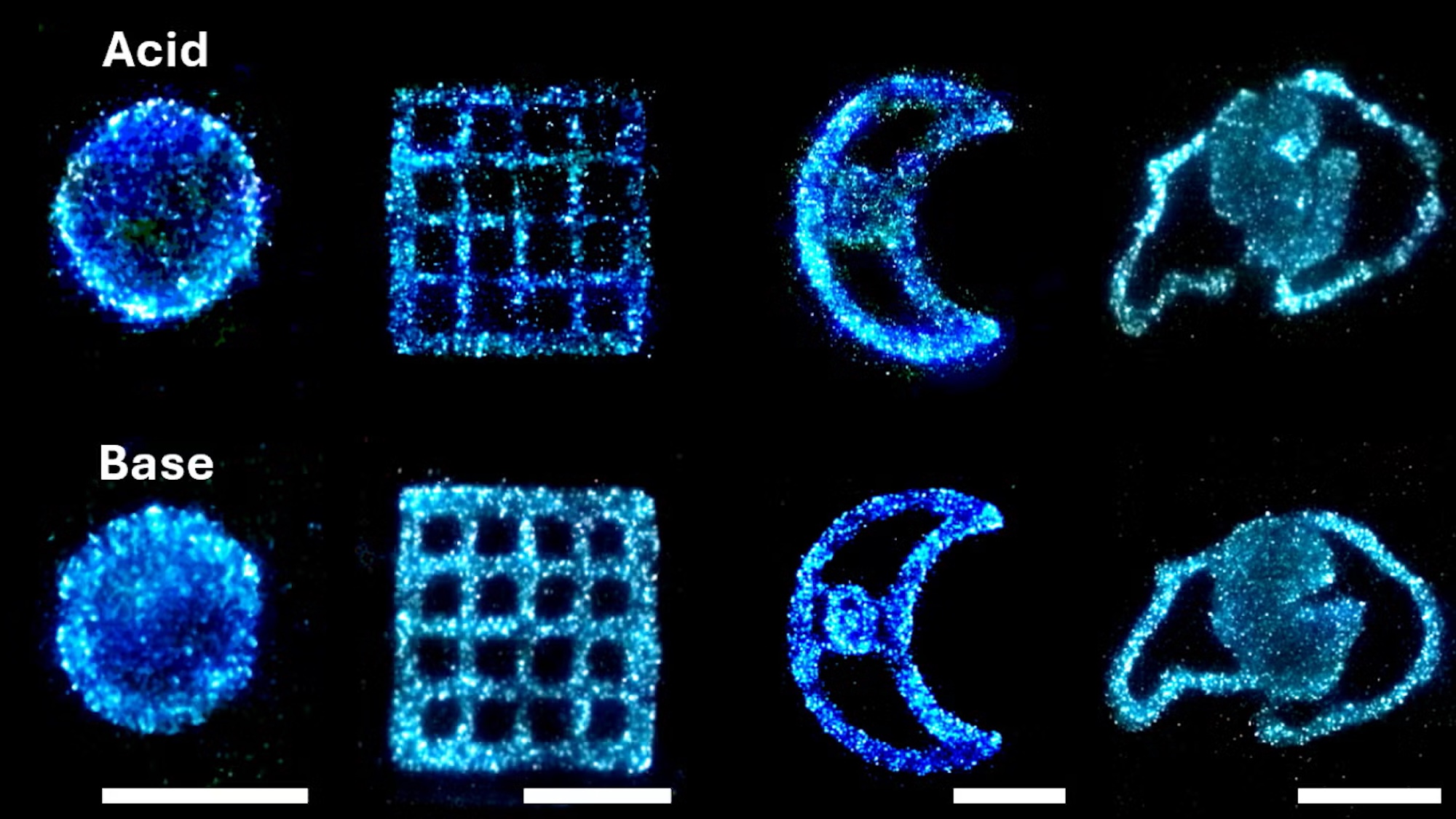
Drawing on previous research, Srubar and his colleagues assessed P. lunula’s bioluminescent response to basic and acidic compounds. They tested one acidic compound with a pH of 4 (similar to tomato juice) and a more basic compound with a pH of 10 (similar to hand soap).
Their results, published in the journal Science Advances, suggest algae could be part of a brighter, more sustainable future. In both cases, P. lunula began to shine. Acidic exposure made the algae glow brightly for up to 25 minutes, while the basic compound produced a shorter, more diffused light.
“It was a very exciting moment when we found the right chemical stimulant that allowed the light to stay on for a long time,” said engineer and study co-author Giulia Brachi. “This is the first time we have figured out how to sustain luminescence.”
The team took things even further from there. The engineers embedded the algae into various shaped objects made with naturally sourced, 3D-printed hydrogel. Because the acid and base solutions aren’t lethal to P. lunula, the organisms survived for weeks while constantly glowing. After four weeks, the acid-treated examples still retained 75 percent of their brightness.
According to the team, there are a range of uses for P. lunula. Autonomous robots and even space exploration equipment could produce battery-free light illuminated by the algae. If the algae responds to other chemicals, then it may show promise as a tool to test water quality or toxicity. What’s more, the photosynthetic algae doesn’t produce any carbon—it devours it.
“We’re storing carbon while we’re producing light, whereas conventionally, we emit carbon to light up spaces,” said Srubar. “This discovery really paves the way for engineering other living light materials and devices.”
Curiosity got itself stuck between a rock and hard place last month, but NASA says there’s no reason to fret about the intrepid Mars rover. On April 25, mission engineers were remotely piloting its robotic arm’s rotary-percussive drill into a Martian rock nicknamed Atacama. It’s a relatively routine task for Curiosity, which takes the samples and then pulverizes them into a powder for future onboard chemical analysis.
But Atacama is no small stone. The hefty, 1.5-foot-wide geologic formation
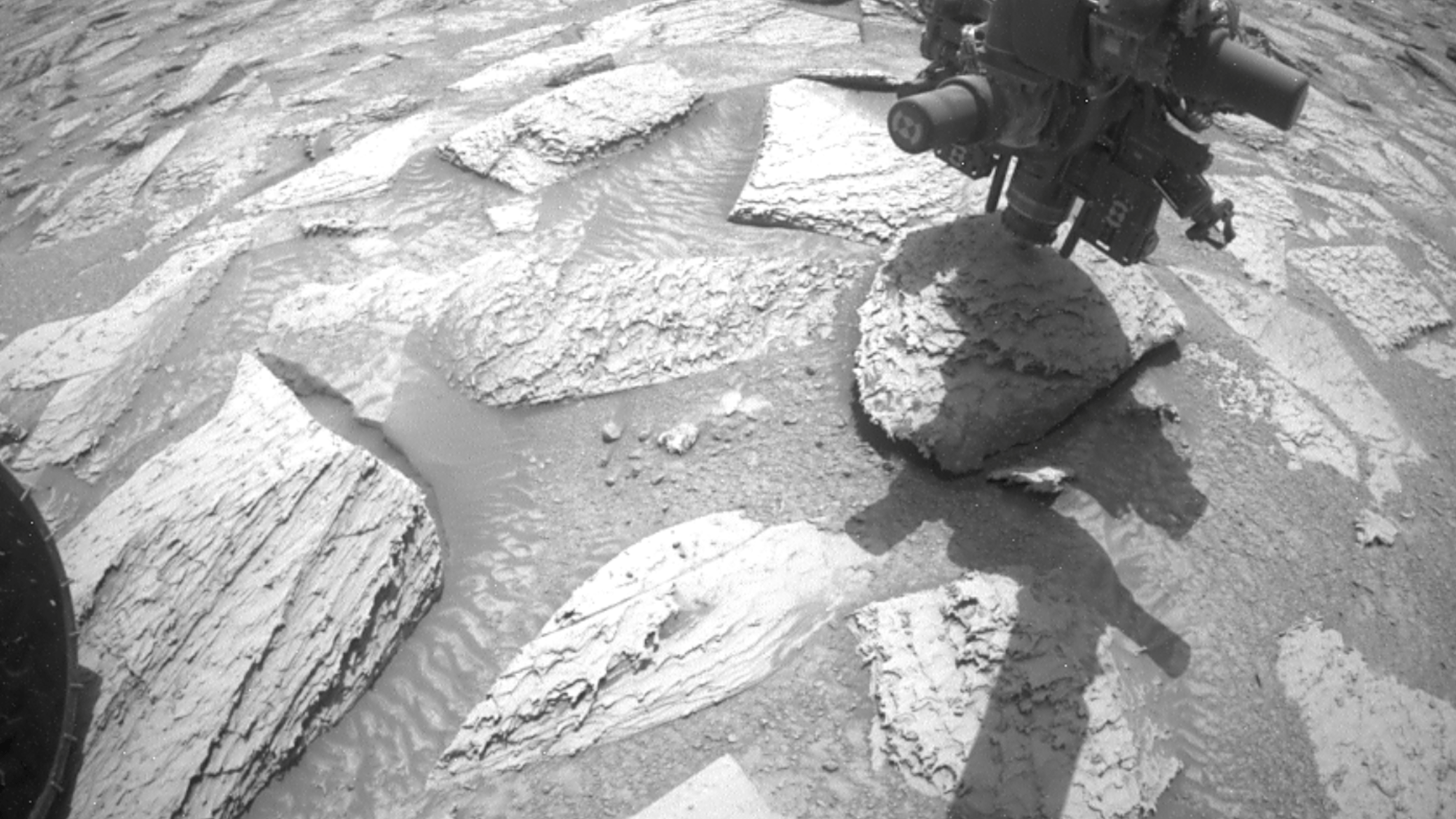
Curiosity got itself stuck between a rock and hard place last month, but NASA says there’s no reason to fret about the intrepid Mars rover. On April 25, mission engineers were remotely piloting its robotic arm’s rotary-percussive drill into a Martian rock nicknamed Atacama. It’s a relatively routine task for Curiosity, which takes the samples and then pulverizes them into a powder for future onboard chemical analysis.
But Atacama is no small stone. The hefty, 1.5-foot-wide geologic formation is about six inches thick and weighs about 28.6 pounds. So NASA engineers were understandably a bit worried when Curiosity attempted to retract its arm—and subsequently lifted the entire rock off the ground.
“Drilling has fractured or separated the upper layers of rocks in the past, but a rock has never remained attached to the drill sleeve,” the agency explained in a recent rundown.
While amusing to envision, the situation was no laughing matter for NASA’s engineers. The rover’s drill would be of little more use with a giant rock indefinitely attached to it. But even if controllers could detach Atacama from the rover, the force might damage the tool or the arm itself. Without those capabilities, Curiosity’s ongoing mission would be in serious jeopardy.
Mission specialists first tried the drilling version of “turning it off and on again,” by vibrating the tool. However, Atacama remained stubbornly stuck on Curiosity…for another four days. NASA then tried a new approach by reorienting the robotic arm and instructing the drill to vibrate one more time. Atacama managed to shake off a bit of sand that time, but little else.
Two more stressful days passed before NASA gave it a third try. Engineers tilted the drill slightly further, then rotated and vibrated the tool while also spinning its drill bit. The Curiosity team anticipated it may take multiple attempts to pull off the feat.But in this case, Atacama finally gave way almost immediately. The nearly weeklong ordeal culminated with the giant rock fracturing as it landed on the Martian ground.
So far, NASA hasn’t reported any lingering damage to the vehicle, meaning the rover is likely ready to continue exploring the Red Planet. As for Atacama, it seems the Martian rock learned a valuable lesson: Don’t mess with Curiosity.
A senior surveyor at a government inspection unit has admitted alerting the renovation consultant ahead of site checks at Wang Fuk Court before the estate went up in flames, a public inquiry has heard.
Andy Ku (centre), a senior maintenance surveyor at the Independent Checking Unit (ICU), leaves the Wang Fuk Court independent committee hearing on May 6, 2026. Photo: James Lee/HKFP.
Victor Dawes, lead counsel to the independent committee investigating the fatal fire, questioned Andy Ku, a
A senior surveyor at a government inspection unit has admitted alerting the renovation consultant ahead of site checks at Wang Fuk Court before the estate went up in flames, a public inquiry has heard.
Andy Ku (centre), a senior maintenance surveyor at the Independent Checking Unit (ICU), leaves the Wang Fuk Court independent committee hearing on May 6, 2026. Photo: James Lee/HKFP.
Victor Dawes, lead counsel to the independent committee investigating the fatal fire, questioned Andy Ku, a senior maintenance surveyor at the Housing Bureau’s Independent Checking Unit (ICU), on Wednesday.
Dawes presented to the committee Ku’s written witness statement, in which the senior surveyor said that the ICU had “no particular role in reviewing or confirming the quality, reliability, and integrity of consultants.”
The committee earlier heard in March that one of the directors of Will Power Architects, the consultancy firm overseeing the large-scale maintenance work at the Tai Po housing estate, had not carried out his duties as a “registered inspector” (RI).
“The RI’s work, in effect, is to act as a regulator. If it’s not up to you to keep them in check, who else would it be?” Dawes asked Ku.
Ku replied that the oversight system is essentially “self-regulating” and that the ICU does not have a formal auditing system.
The committee also heard on Wednesday that for most of its inspections, the ICU had notified a Will Power employee, who was also a representative for the RI. The inspector himself was not there for most of the ICU checks.
Dawes remarked that the ICU’s inspection practice deviated from the norm with other government departments, such as the Labour Department and Buildings Department.
The lead counsel also told the hearing that the ICU had conducted a total of 10 inspections at Wang Fuk Court, of which only two were held without advance notice. One of those two inspections was an impromptu check, which Ku conducted himself after a medical appointment in the same district.
“If you didn’t have a medical appointment in Tai Po that day, there wouldn’t have been an inspection?” Dawes asked. Ku agreed.
Wang Fuk Court buildings on December 29, 2025, one month after the deadly fire. Photo: Kyle Lam/HKFP.
Dawes then showed the committee screenshots of ICU maintenance surveyor Amanda Lau’s text conversations scheduling an inspection with the RI representative, who then alerted the contractor, Prestige Construction & Engineering. Ku confirmed that Lau acted on his orders.
After the fire, the ICU began conducting inspections without advance notice, Ku said.
Dawes asked if the new arrangements meant that the ICU realised there were issues with its old system. Ku replied: “There was room for improvement.”
Scaffolding nets, foam boards
Ku was also grilled on his unit’s oversight of scaffolding nets and foam boards, which a preliminary investigation has blamed for contributing to the spread of the blaze.
The lead counsel brought up the ICU’s checks on the fire retardancy of scaffolding nets used at Wang Fuk Court.
He asked Ku why he told the Buildings Department the nets were up to standard, despite the ICU’s own test showing the nets continued to burn for more than 10 seconds before the flame was extinguished.
Ku said that upon two retrials of the same piece of netting, the net did not catch fire.
Dawes showed a fire retardancy certificate to the committee and asked Ku whether the ICU could verify the legitimacy of the certificate and whether it really corresponded to the same lot of scaffold nets.
Ku said the unit could not verify, as it relied on the contractor’s word.
Despite residents’ complaints, the senior surveyor told the hearing that he did not notice the estate’s windows were covered with foam boards during an ICU inspection in September because scaffolding nets were in the way.
The blackened exterior of an apartment block in Wang Fuk Court, Tai Po, on November 27, 2025, with what appears to be styrofoam boards attached to the windows. Photo: Kyle Lam/HKFP.
A month later, the contractor and the inspector told Ku that only three floors would have windows covered with foam boards whenever spalling works were carried out.
Ku said he did not ask to see a fire retardancy certificate for the foam boards as he believed the phased arrangement would mitigate fire risks. “There was no basis to ask for a certificate,” he said.
Dawes scrolled through about a dozen photos from the site, most of which showed windows covered with foam boards in clear view. The photos were part of a slideshow report that Ku had previously seen.
Dawes questioned how Ku could have been unaware of the foam boards, to which the government surveyor said he was “focused on the concrete works.”
Ku added that in retrospect, he “had been lied to” and that he did not follow up on the matter because there were no further complaints from residents.
Concrete is everywhere, and that’s a problem. Manufacturing the essential material accounts for around eight percent of annual global carbon dioxide emissions, making it one of the single biggest contributors to the climate crisis. Researchers are investigating all types of creative solutions to the issue, often by replacing ingredients with more eco-friendly alternatives.
Recent propositions include adding coffee grounds, bacteria, and even recycled diapers into the mix.But engineers at Purd
Concrete is everywhere, and that’s a problem. Manufacturing the essential material accounts for around eight percent of annual global carbon dioxide emissions, making it one of the single biggest contributors to the climate crisis. Researchers are investigating all types of creative solutions to the issue, often by replacing ingredients with more eco-friendly alternatives.
Recent propositions include adding coffee grounds, bacteria, and even recycled diapers into the mix.But engineers at Purdue University in Indiana think the answer can already be found in the natural world. According to a study recently published in the journal Chemistry of Materials, one solution may be swapping out the cement for shellfish.
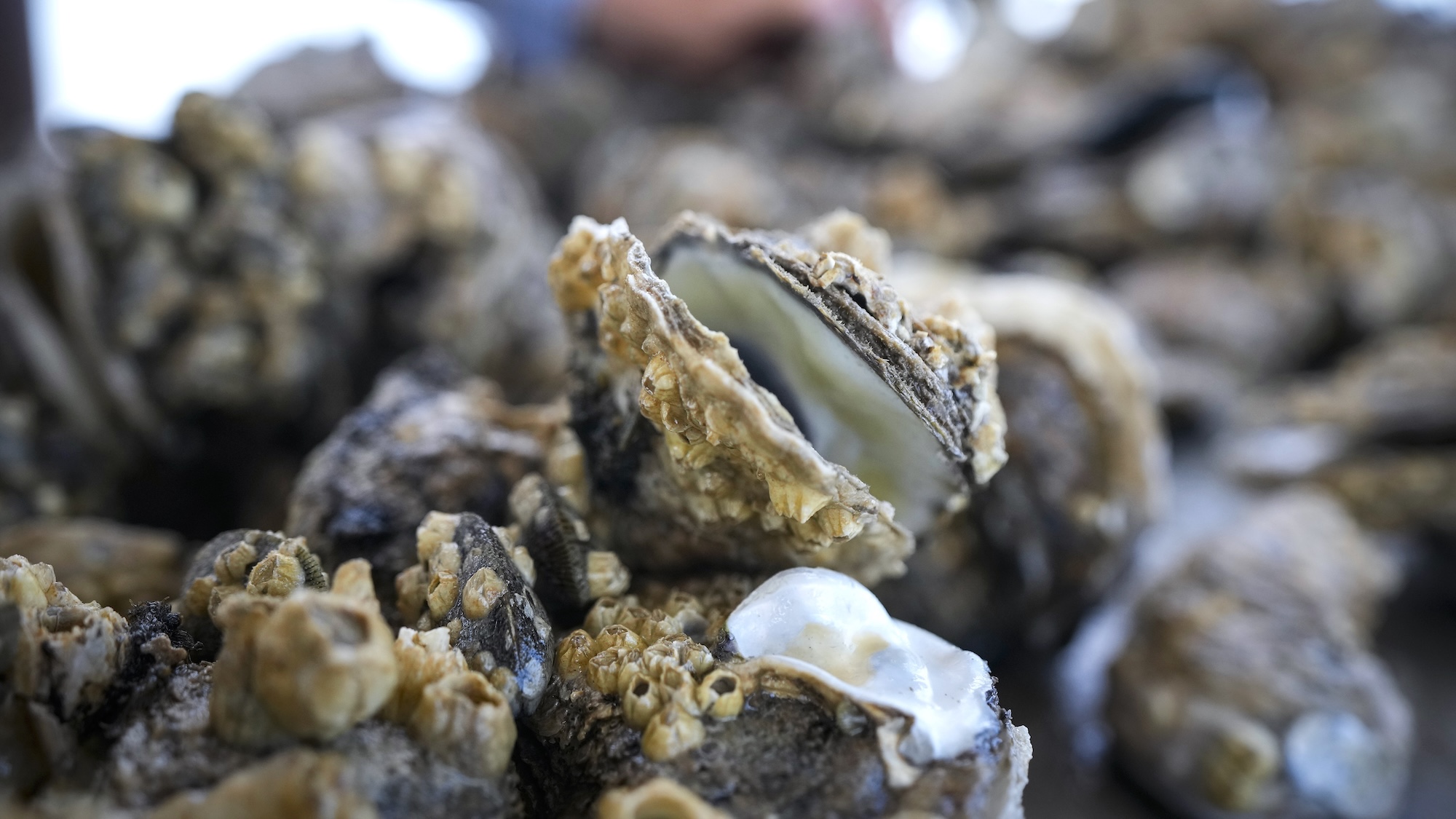
“Oysters generate a natural cement. They use this material for attaching to each other when building reef structures,” chemist and study co-author Jonathan Wilker explained in a recent university profile.
Wilker has spent years examining the biological properties of oyster cement in hopes of recreating the sturdy adhesive for other applications. They have since learned that the bivalves bind together by producing the inorganic compound calcium carbonate—basically chalk. While calcium carbonate isn’t usually adhesive by itself, oysters also produce a small amount of stickier organic materials like phosphorylated proteins. This allows the shellfish to fuse together, even when saturated in water.
After breaking down the chemical composition of oyster cement, Wilker’s team recreated it in a laboratory. They then collected a bunch of limestone bathroom tiles, since their calcium carbonate is virtually identical to oyster shells. From there, they glued stacks of tiles together using their artificial, biomimetic cement. In nearly every stress test, the tiles broke before the bond itself.
Confident in their faux-oyster cement’s abilities, Wilker and colleagues finally tried combining a polymer from their creation into commercially available concrete mix. In lab tests, their oyster-inspired concrete was 10 times stronger while doubling its compressive strength. On top of all that, it also took less time to cure.
Wilker’s team plans to continue testing their patent-pending recipe. He notes that it’s not simply stronger. It’s even more eco-friendly when compared to most adhesives on the market.
“Most of the adhesives that you see at the hardware store are made of organic compounds, derived from petroleum,” he said. “There is so much more that we can learn from nature.

 Login
Login