Reading view

Starbucks Japan has a secret breakfast set…and a hack for when it sells out
Japanese customer service turns a disappointing experience into a heartwarming memory. 

When people hear the words “Starbucks breakfast” in Japan, they usually think of the chain’s “Good Start Morning” offer, which gives you a 40-yen (US$0.25) discount on the in-store price when you buy a qualifying drink and food item together. You can take advantage of the deal until 11 in the morning at most stores, but diehard fans of the chain know there’s a better deal hiding out at the Starbucks Reserve Roastery Tokyo in Tokyo’s Meguro Ward.

Here, you’ll find a luxurious breakfast that’s been described by diners as “hotel-quality”, but the only problem is it’s so popular it often sells out. That’s what happened when we stopped by to try it, but rather than leave disappointed, we ended up leaving with a full stomach and a warm heart, thanks to the help of staff who went above and beyond with their customer service to make our experience a great one.

▼ Starbucks Reserve Roastery Tokyo
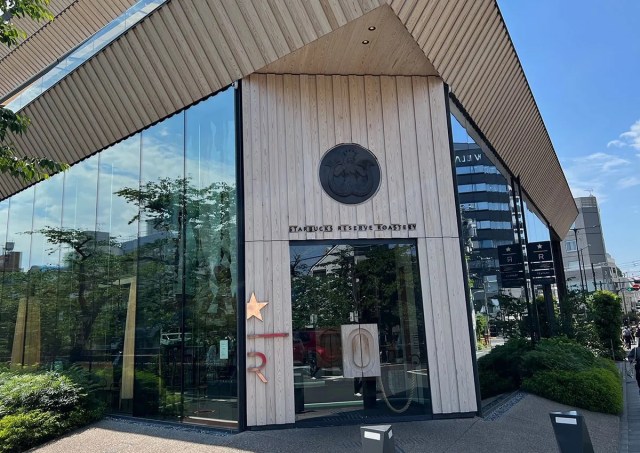
The official name of the popular breakfast is “Roastery Breakfast Mattina“, and it’s sold by Princi, the Italian bakery on the first floor. While it’s said to be incredibly delicious, it’s also slightly pricey, at 2,250 yen per set, and can only be ordered dine-in until 11:00 a.m. each day.

▼ Drinks are sold separately, so if you want to add coffee to your breakfast, you should be prepared to spend at least 3,000 yen.
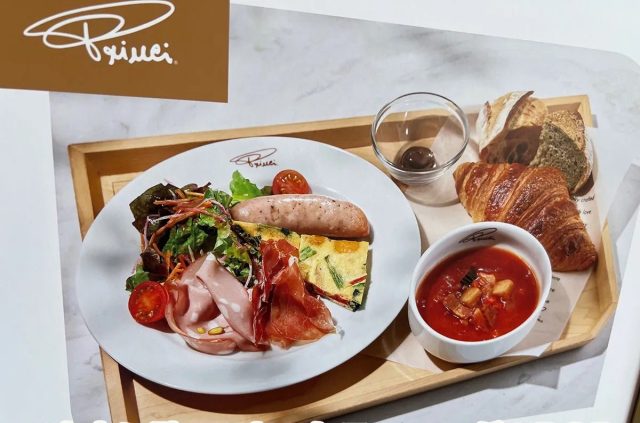
Despite the price, the breakfast is incredibly popular – so much so that when we visited at 10:30am, staff told us that they’d just sold out, and when we returned the next day just after 9 a.m. staff told us they sold out at 8 a.m.

Fearing we may never get to eat breakfast, we asked staff if there was any type of workaround they might recommend. We told them we’d be happy to purchase the bread and ham from the breakfast set on their own if it were possible, and to our surprise, the staff member we spoke to said, “You can buy the bread individually. We also offer ham in sandwiches and such, but…please wait a moment.” They then started communicating with someone on their intercom system.

Eagerly waiting to find out what was about to happen, the employee then said, “Well, how about this? We have a menu item that we’d like to recommend, but please wait a moment while we check if it’s still available.”

Crossing our fingers for the best result, we waited with bated breath until the staff member turned and said, “It seems it’s still available, so I’ll guide you to the place where it’s being served.”

▼ They then led us to the Princi bakery, where they introduced us to a store-exclusive menu item called “Customize Bread”.
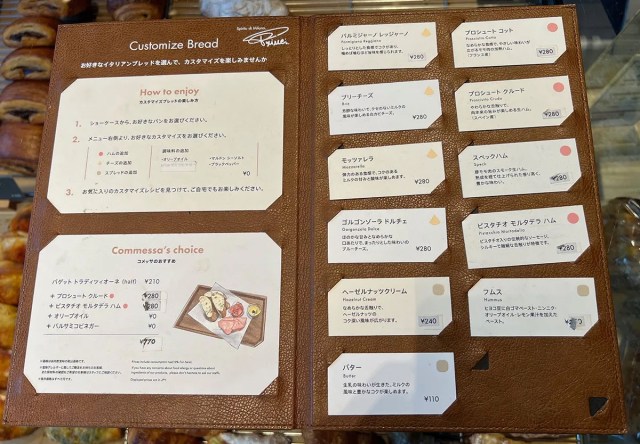
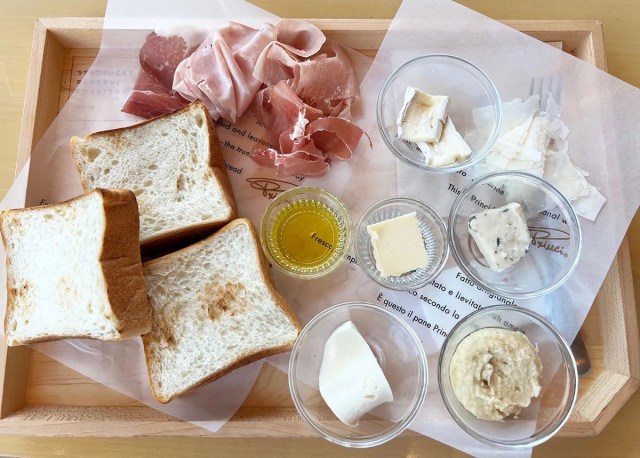
As the name suggests, this customisable bread menu allows for a wide range of customisation. You can choose your favourite bread, cheese, ham, and, if desired, olive oil, salt, and black pepper, to create your own unique set.
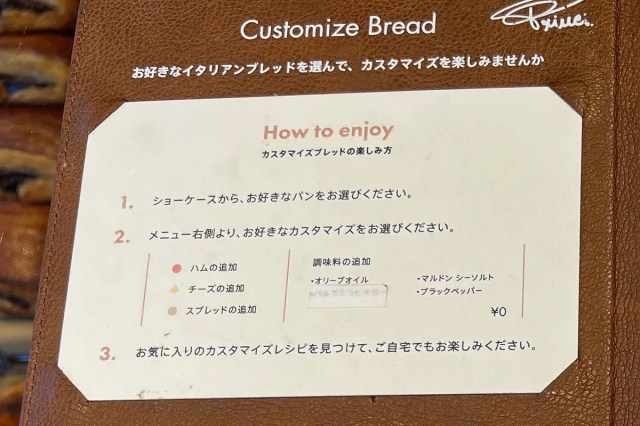
The price varies depending on what you add – cheese add-ons cost an extra 280 yen, while the butter, dip and cream options are less expensive.
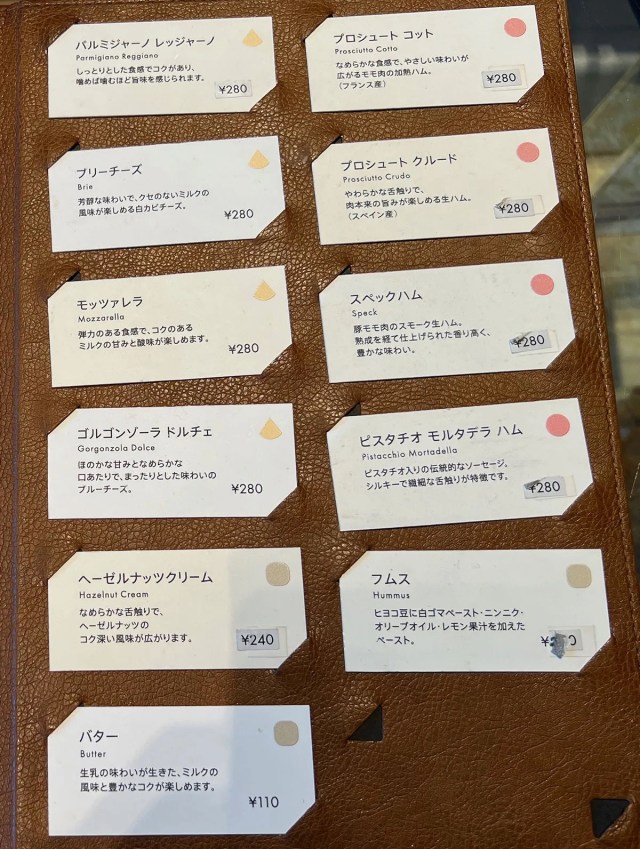
You get to choose your bread yourself, but if you’re unsure about anything, you can simply tell staff your preferences for hard or soft textures and they’ll choose something that suits your taste. Staff were incredibly helpful, and when we asked if it might be okay to order pretty much all the toppings, they told us not to worry as customers often add all of them.

▼ So we ended up ordering the lot, except for the Hazelnut Cream, which we worried might be too sweet for our liking.

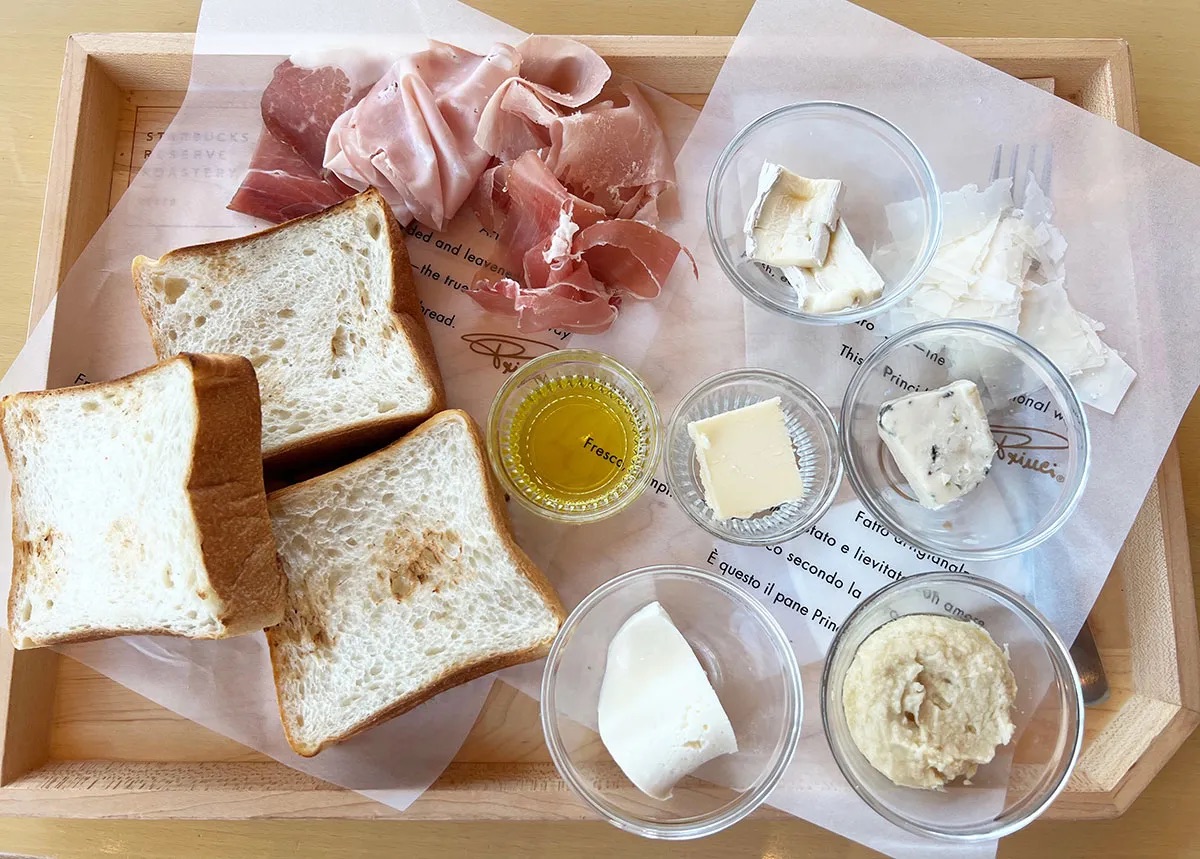
It was a veritable feast, and so good looking it resembled a breakfast you’d get at a fancy hotel.

▼ Olive oil, Maldon sea salt, and black pepper are free with every order.
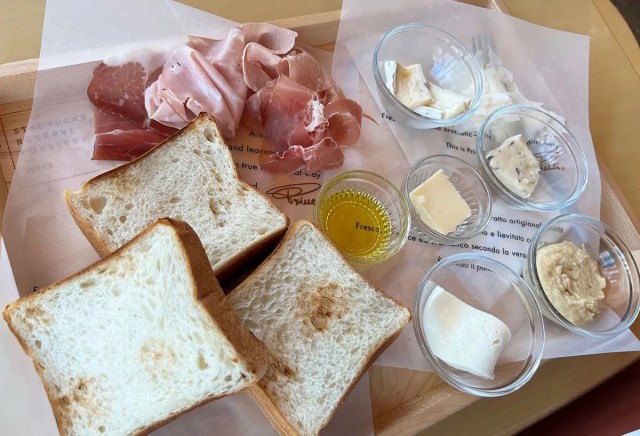
We had no idea a breakfast like this was possible at Starbucks, and we were particularly impressed with the range of hams.

▼ We chose prosciutto crudo, prosciutto cotto, pistachio mortadella, and speck.
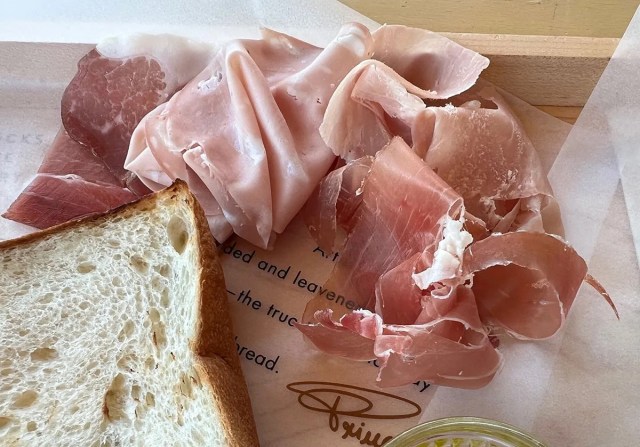
Sure, it may not be as colourful as the original breakfast set, but in every other respect it seemed overwhelmingly superior. Not only did it look like a high-class hotel breakfast, we also enjoyed being able to mix and match the bread with toppings to our liking.
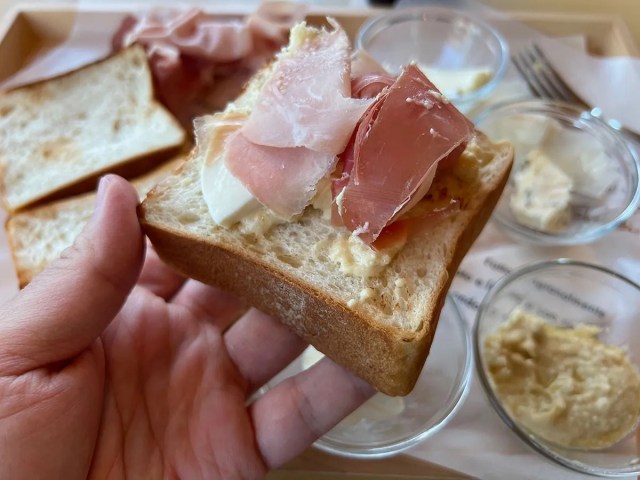
As previously mentioned, the price of the set varies depending on what you add, and because we went all out with the add-ons, our total came to 2,934 yen, which was more than the sold-out breakfast.
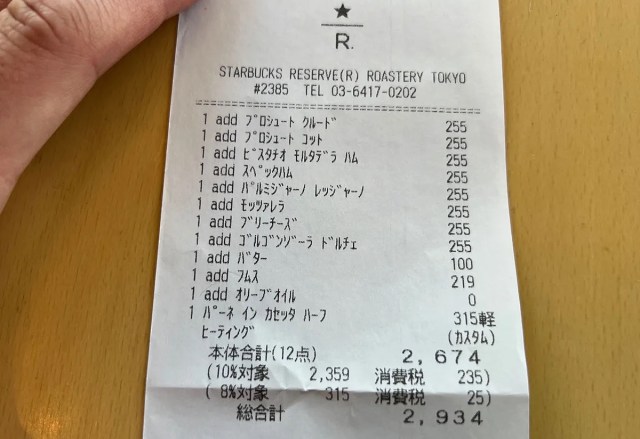
Still, it was an experience we were happy to pay for, because not only did we get to discover a new way to eat breakfast at Starbucks, we got to experience the warmth of Japanese customer service as well. In fact, it was the customer service that left a lasting impression on us, as staff went out of their way to ensure we left happy, and never applied any pressure during our order, so we were able to make our choices calmly and with ease.

It added the pep in our step we needed to start the day, and now we know Starbucks is just as good a place to go for breakfast as it is for afternoon tea.

Cafe information
Starbucks Reserve Roastery Tokyo / スターバックス リザーブ ロースタリー東京
Address: Tokyo-to, Meguro-ku, Aobadai 2-19-23
東京都目黒区青葉台2丁目19-23
Open 7 a.m.-11 p.m.
Website

Images©SoraNews24
● Want to hear about SoraNews24’s latest articles as soon as they’re published? Follow us on Facebook and Twitter!
  •  

Do Bare Feet of a Gorilla slides really make your legs slimmer?

These bizarre sandals have gone viral on Japanese social media, so we put them to the test.

If you’re interested in Japan, your timeline and explore pages are likely filled with photos and videos of influencers promoting the country’s latest finds. A lot of the time, though, these influencers miss the true hidden gems that circulate on Japanese social media, and right now there’s one product that locals are raving about: Bare Feet of a Gorilla.

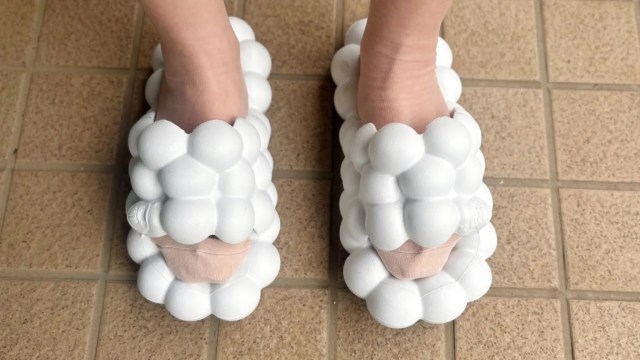
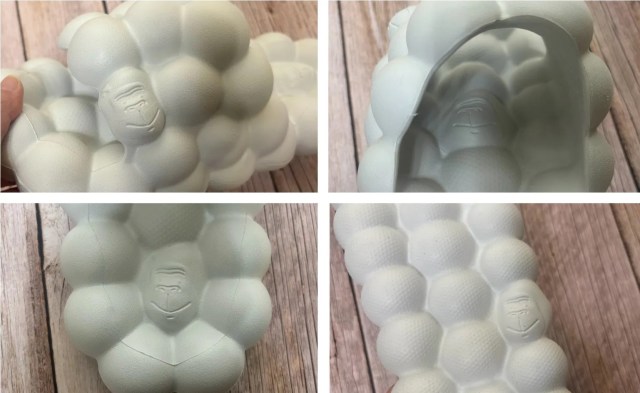
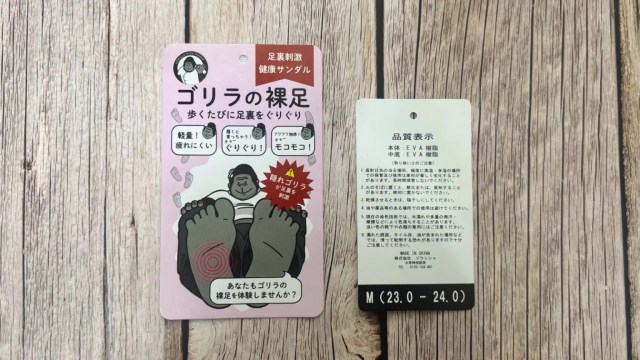
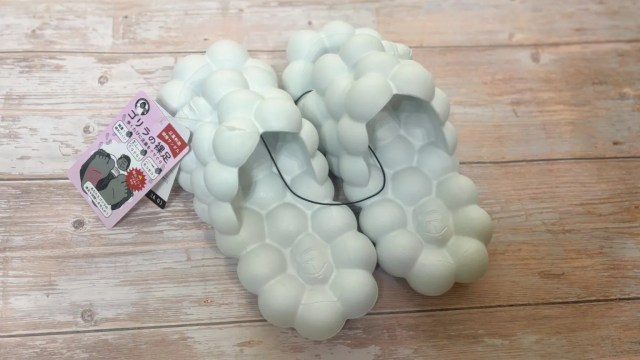
Produced by Osaka-based company Doshisha, as part of its Gorilla Series of quirky lifestyle products, Bare Feet of a Gorilla are acupressure sandals designed to provide a pleasant stimulation to the soles of the feet every time you walk in them.

Ever since their release in late April, users have been heaping praise on the sandals, adoring them not only for their cute similarities to a cloud, but the effect they have on the feet and legs.

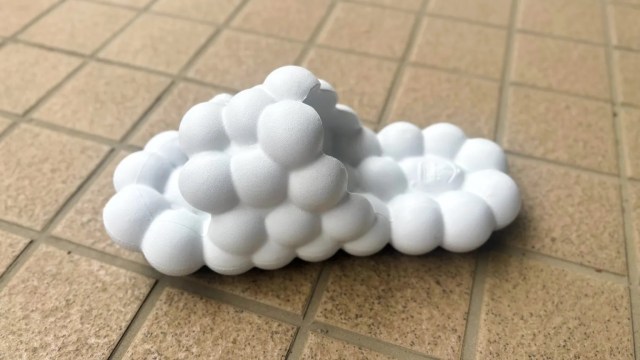
▼ Look closer and you’ll find hidden gorillas within the puffy surface of each sandal.

According to Doshisha, these slides were created in response to the growing popularity of so-called “recovery sandals”, which are particularly popular with young people in summer to relieve tired legs. The pleasant stimulation provided by the puffy surface, and the gorillas hidden within them, are said to combat swelling in the legs, an assertion backed by many users of the product, who say their legs look slimmer after wearing them.

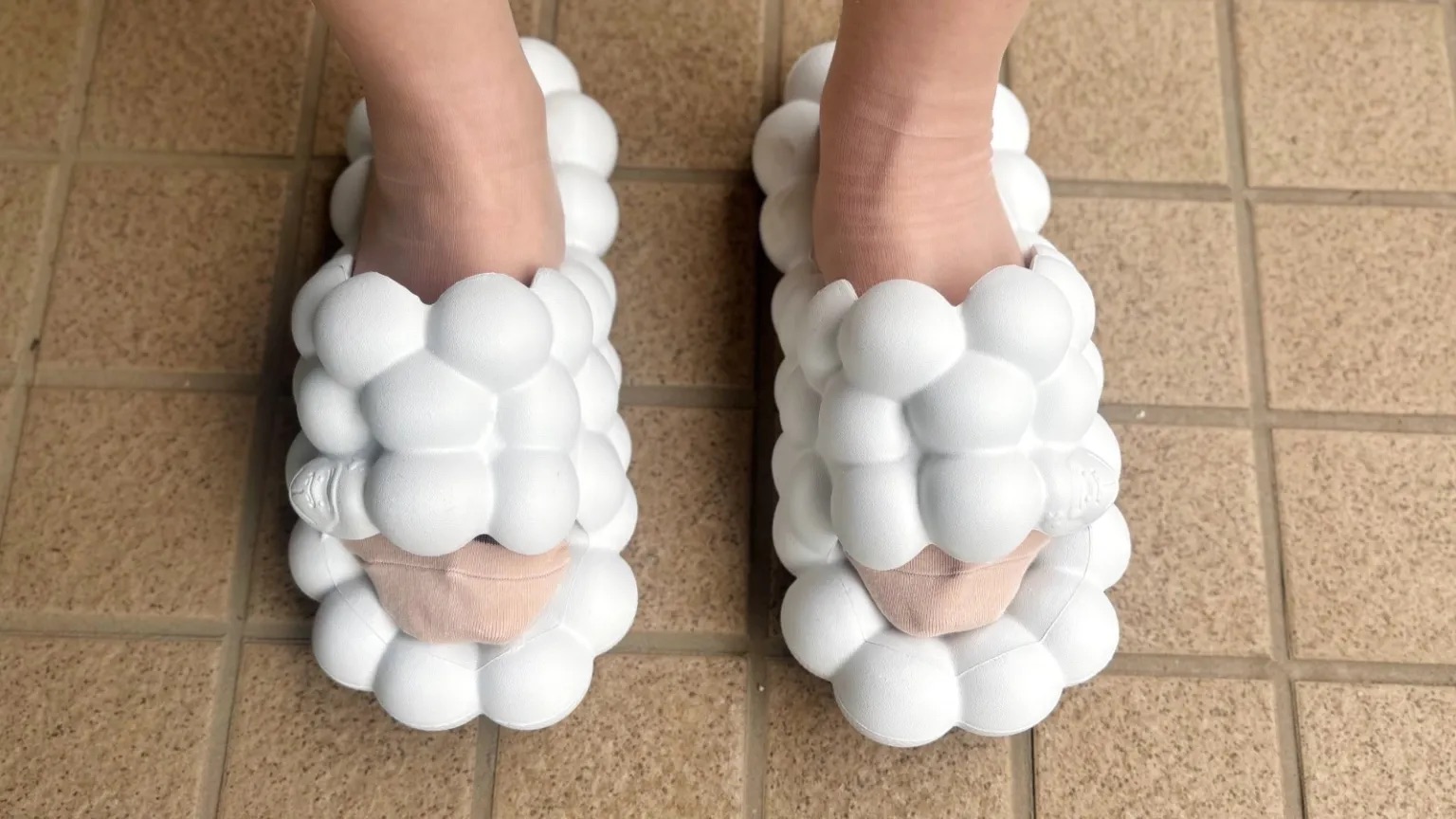
From our experience, acupressure sandals tend to have a breaking-in period, where you have to put up with a certain amount of pain before getting used to the stimulation on the soles of your feet. However, when we slid into the Bare Feet of a Gorilla, we were surprised to find that we barely felt any pain.

Although there was a feeling of unevenness, the sensation was soft on the feet, thanks to the EVA material, which had excellent give. The stimulation was moderate, and after just a short period we felt the sluggishness disappear from our legs.

They were wonderfully lightweight, making them very easy to walk in, and we were able to walk about the house for a couple of hours while doing chores before we felt it was time to step out of them. They’re comfortable enough that you could even wear them when ducking out to a nearby convenience store, but they do have an acupressure effect that’s hard on the feet after an extended period of time.

As for the slimming effect, well, we didn’t notice any differences there, but they did help to stimulate the soles of the feet and they also reduced fatigue so they certainly delivered on that promise.

They do look fantatstic, though, and will definitely turn the heads of passersby if you go out in them. Available in black, grey, white, and mint green, the slides come in small, medium and large sizes (22-23 centimetres [8.7–9.1 inches],  23-24 centimetres, and 24-25 centimetres respectively). They can be purchased at Don Quijote stores and affiliated retail chains like Apita and Piago nationwide, priced at 2,189 yen (US$13.76).

Related: Doshisha, Don Quijote
Images ©SoraNews24

● Want to hear about SoraNews24’s latest articles as soon as they’re published? Follow us on Facebook and Twitter!
  •  

7-Eleven Japan adds macaroni cheese sandwiches to its convenience store food range

New “one piece” sandwich looks set to be another sell-out hit for the popular chain.

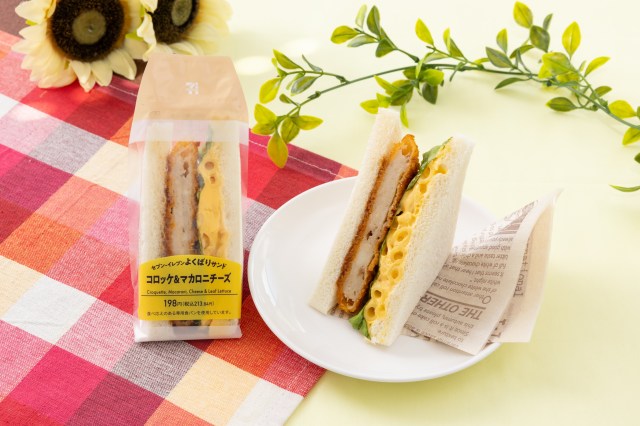
On “Sandwich Day” on 13 March, 7-Eleven completely revamped its sandwiches in Japan, and among them appeared a new, generously filled single-serve range known as the “Yokubari Sando” (“Greedy Sandwich“). This so-called “one piece” sandwich aims to deliver an overwhelming sense of filling and satisfaction at an affordable price point, and the newest addition to the range, announced today, does just that, with a surprising filling to boot.

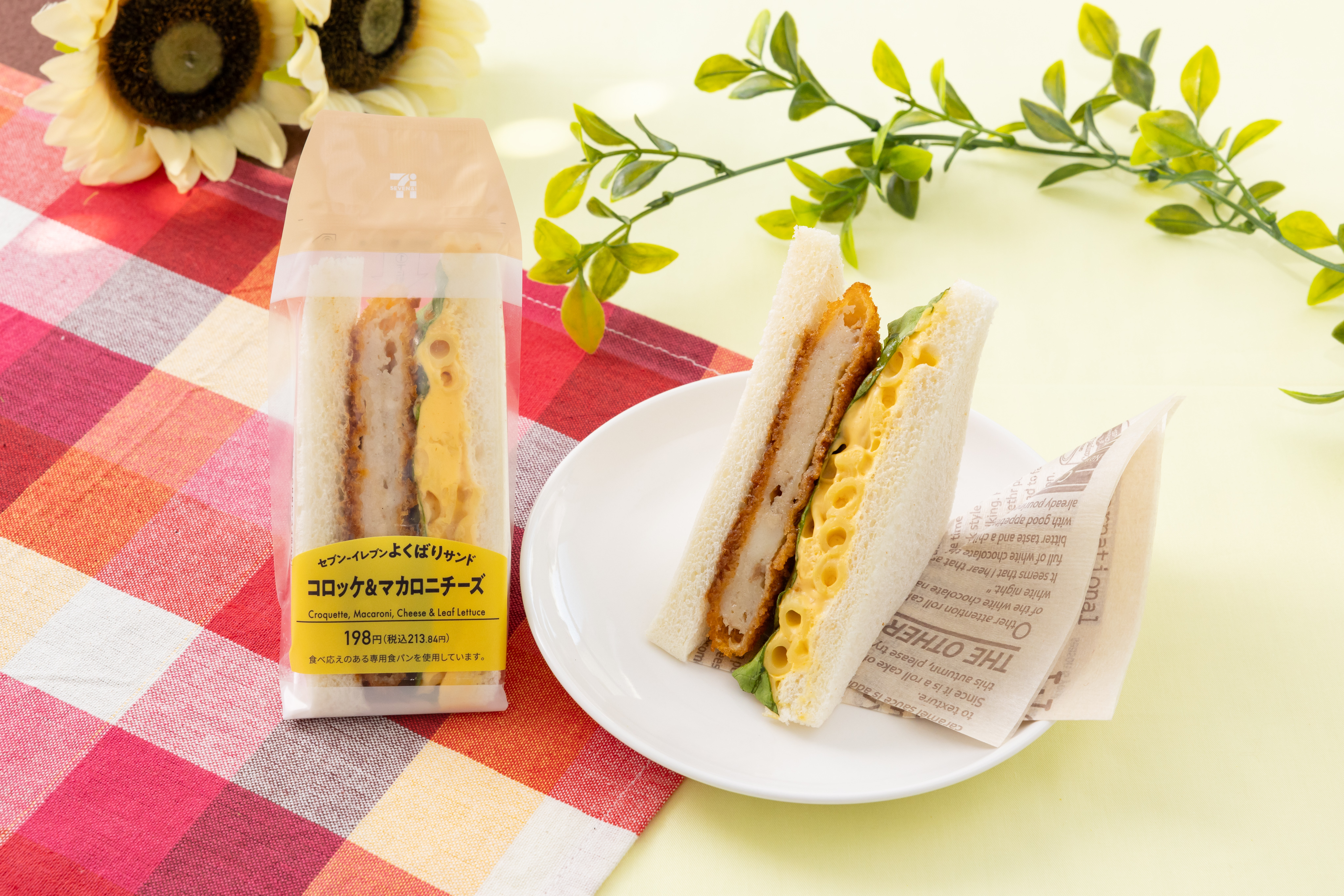
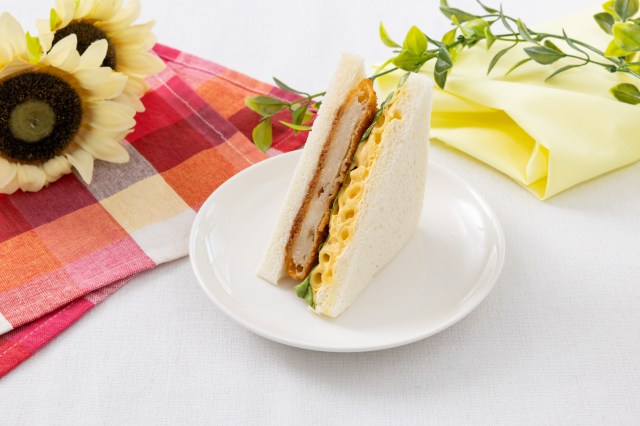
▼ Say hello to the Croquette & Macaroni Cheese.

Known as “Croquette, Macaroni Cheese & Leaf Lettuce” in English, this sandwich has been carefully designed to ensure you get all the fillings in every mouthful, from the first to the very last bite.

7-Eleven says it totally redesigned the shape of the croquette to suit the sandwich, developing a unique type of croquette that spreads all the way to the edges of the bread. With rich, creamy macaroni and cheese sandwiched inside, this pairing is said to create an exquisite combination that allows the texture and flavour of each ingredient to stand out, giving you an incredibly moreish and satisfying sandwich experience.

By selling sandwiches individually, instead of in pairs, the Greedy Sando line is able to deliver a much more generous filling, which is a genius marketing move by 7-Eleven, who faced criticism in the past for what many called its “paper tiger” sandwiches.

Judging by the immense popularity of the previously released Greedy Sando, which gave us colourful chocolate sprinkles and whipped cream, this new sandwich looks set to be a sell-out hit so keep an eye out for it at Seven-Eleven stores around Japan when it’s released on 27  May, priced at 214 yen (US$1.35).

Source, images: Press release
● Want to hear about SoraNews24’s latest articles as soon as they’re published? Follow us on Facebook and Twitter!
  •  

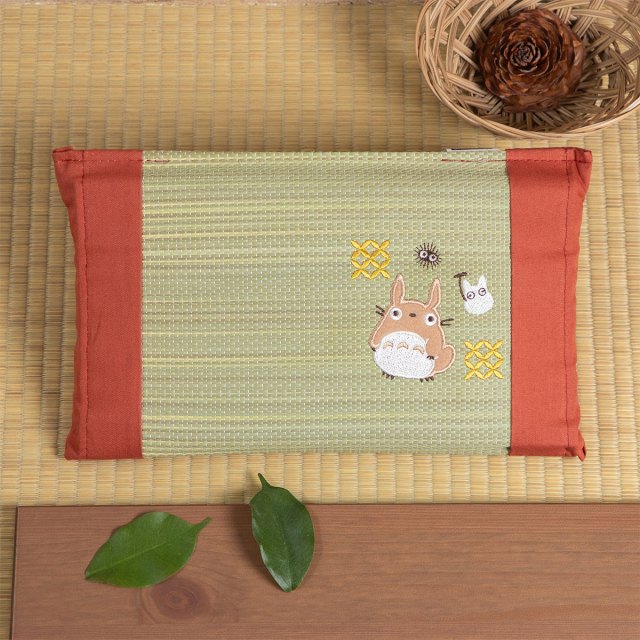
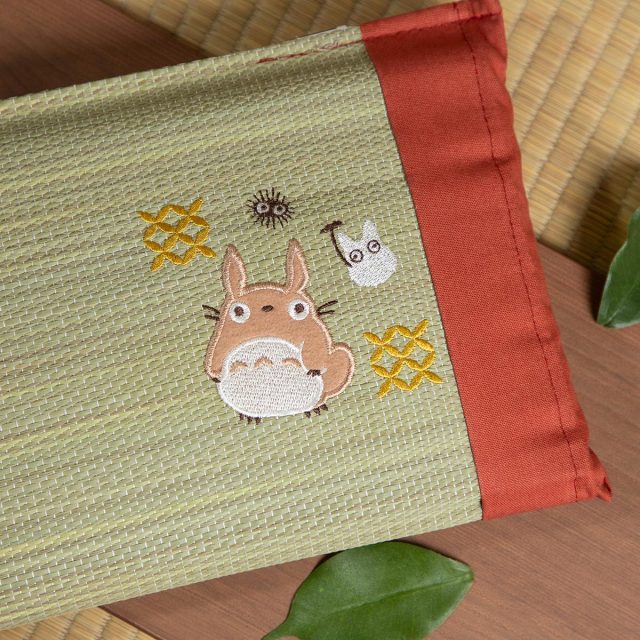
Studio Ghibli adds mini pillows and massive mats to its anime merchandise store in Japan

My Neighbour Totoro is here to help you look and feel cool in traditional Japanese style. 

With the weather heating up in Japan, people across the nation are reaching into their cupboards and bringing out their fans, cotton bedding, and other cooling items to help cope with the rising temperatures.

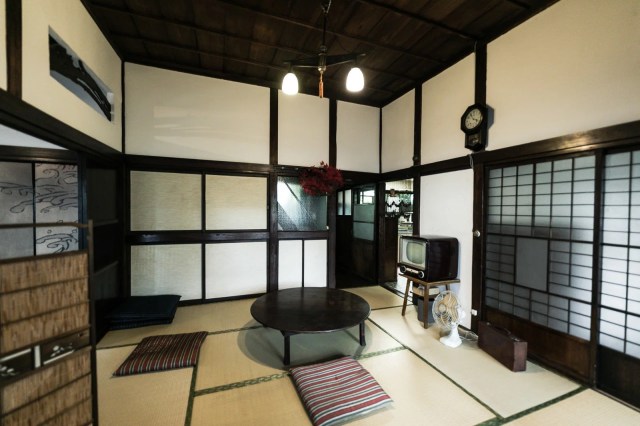
Those who like to stay cool in traditional Japanese style, however, will be reaching for items made with igusa, a soft rush grass that has been used here for centuries. Commonly used for tatami flooring, products made with igusa have an earthy scent, natural deodorising effects, and excellent moisture-regulating properties – when humidity levels are high, igusa absorbs excess moisture, and in dry environments, it slowly releases moisture, providing comfort without the use of air conditioning.

▼ The cooling, air-cleansing properties of igusa are part of what makes Japanese homes so special.

Image: Pakutaso

Igusa is a common element in traditional countryside homes where the old ways still hold strong, like the Kusakabe family home that features in the Studio Ghibli film My Neighbour Totoro. So it makes sense that Studio Ghibli would release its own series of igusa products, adorned with motifs and characters from the movie.

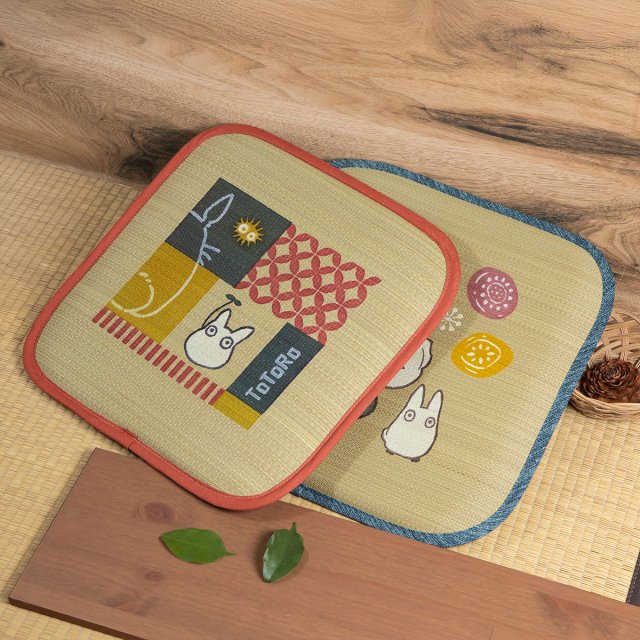
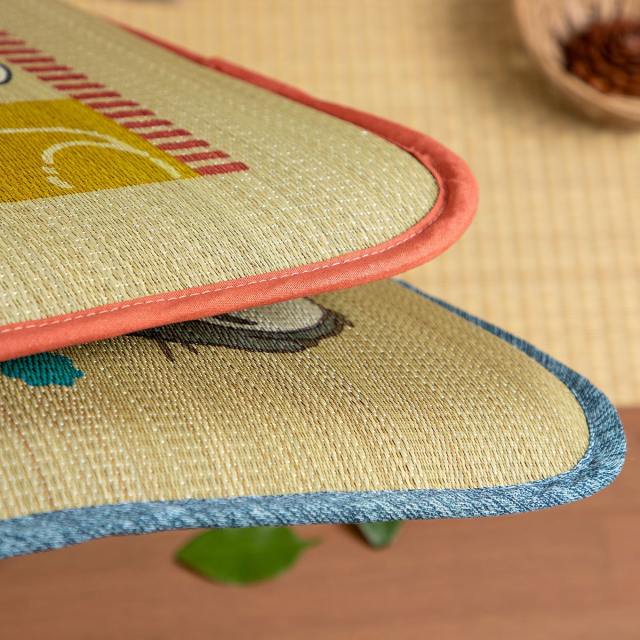
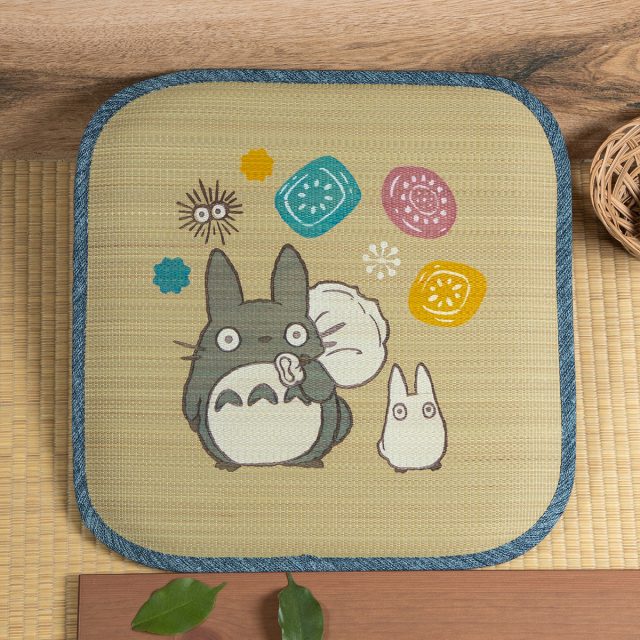
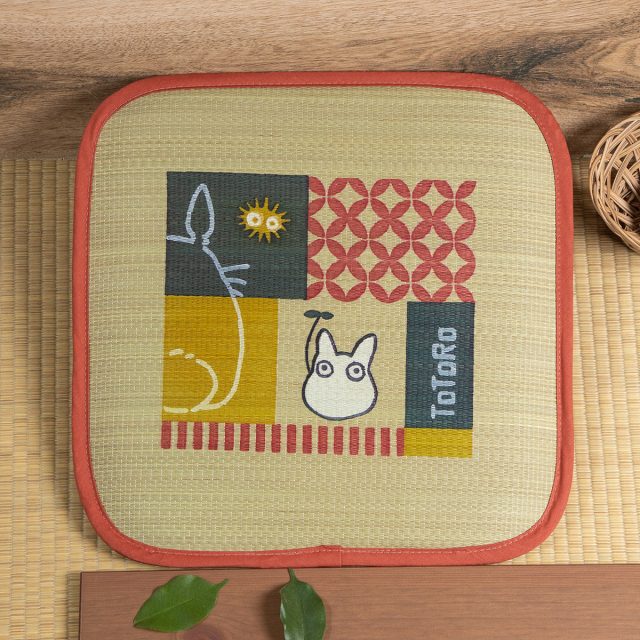
▼ The first item is the Igusa Seat Cushion, which comes in two gorgeous designs.

The cushions measure 40 centimetres (15.7 inches) in height and width, and are two centimetres thick, with a smooth surface that makes them very comfortable to sit on, even for long periods of time.

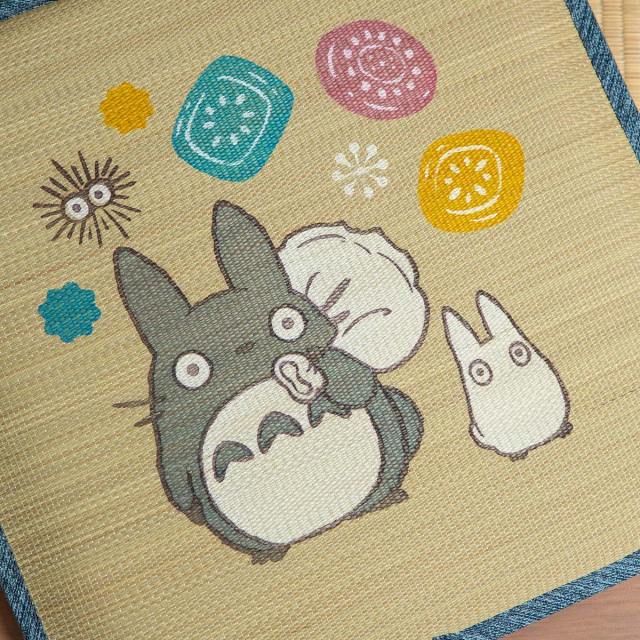
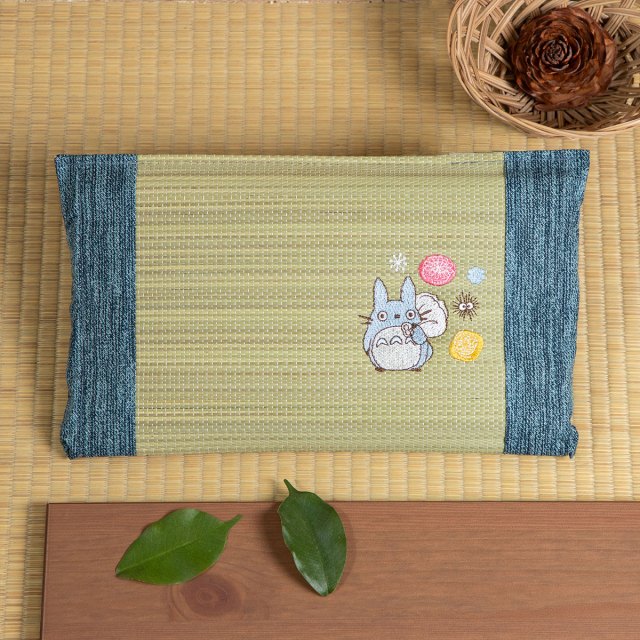
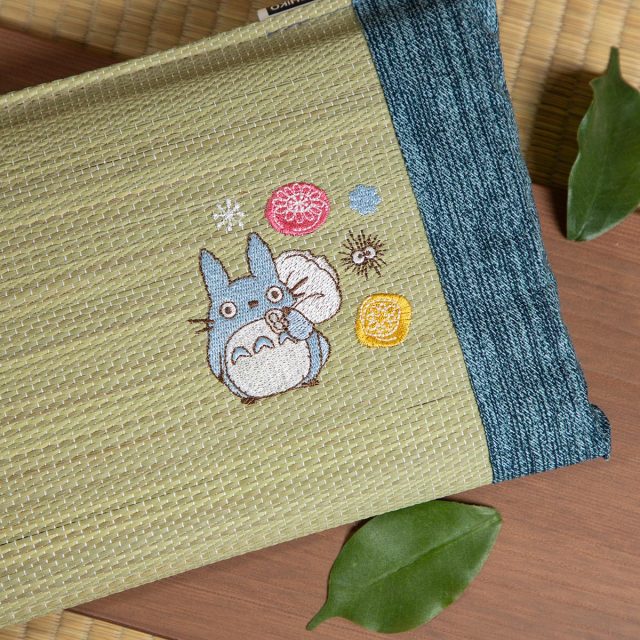
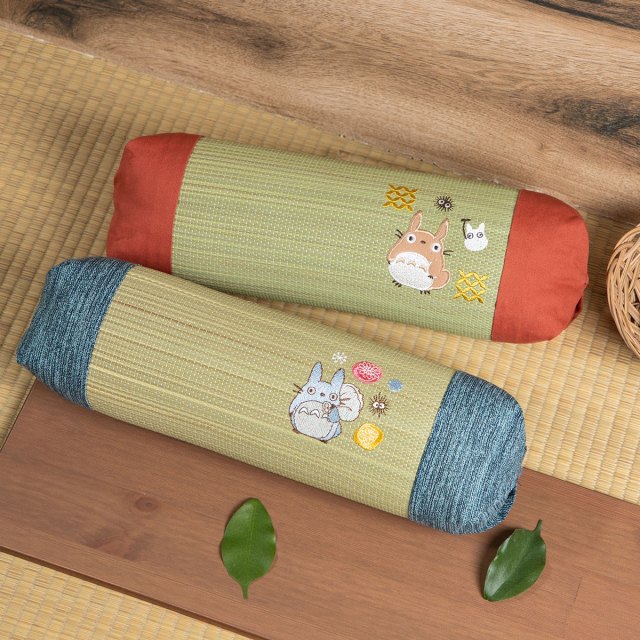
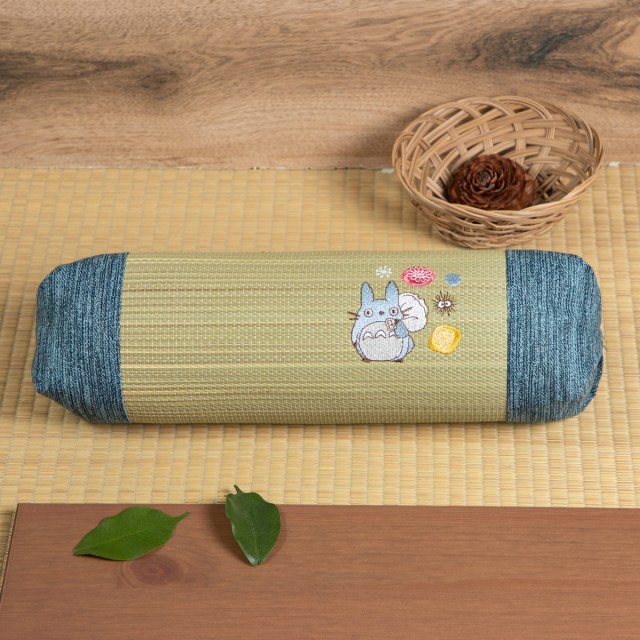
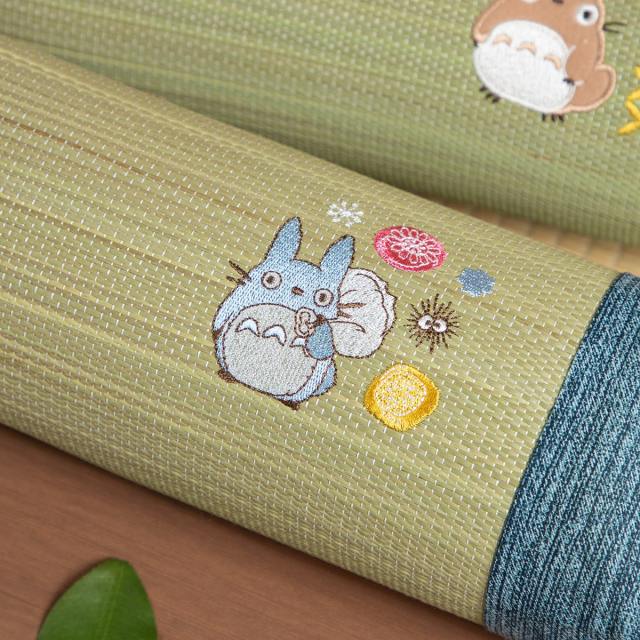
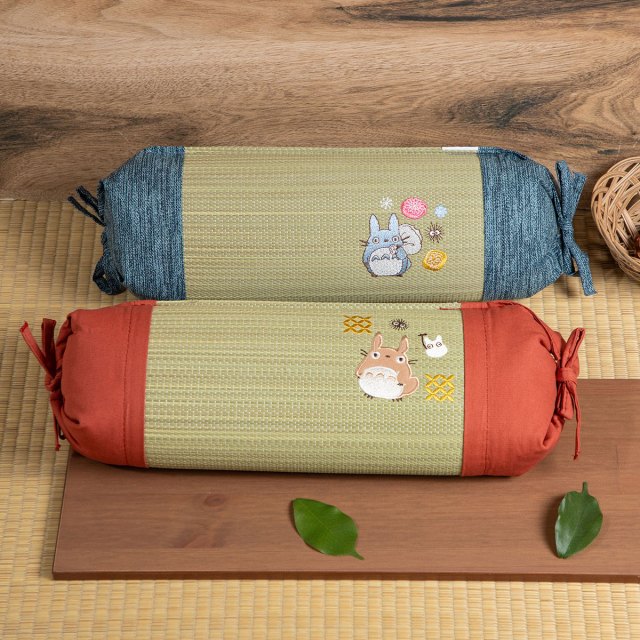
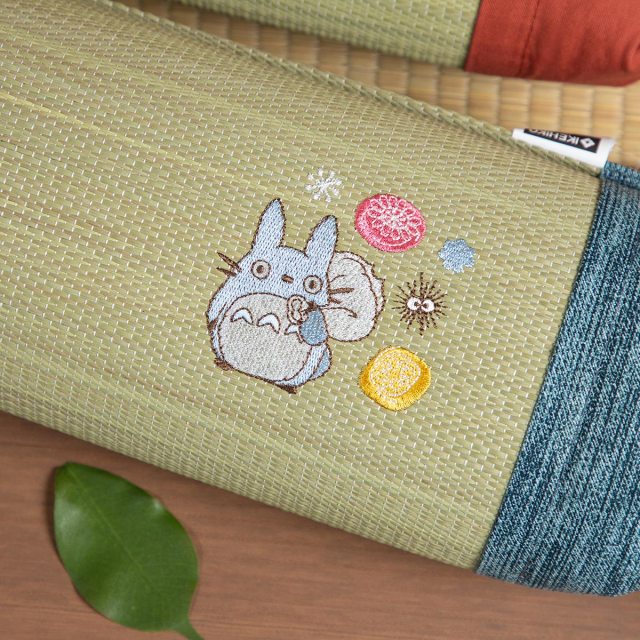
The first design, “Drop“, gives us a Soot Sprite, Small Totoro, and Medium Totoro, with a handful of sweets for added colour and cuteness.

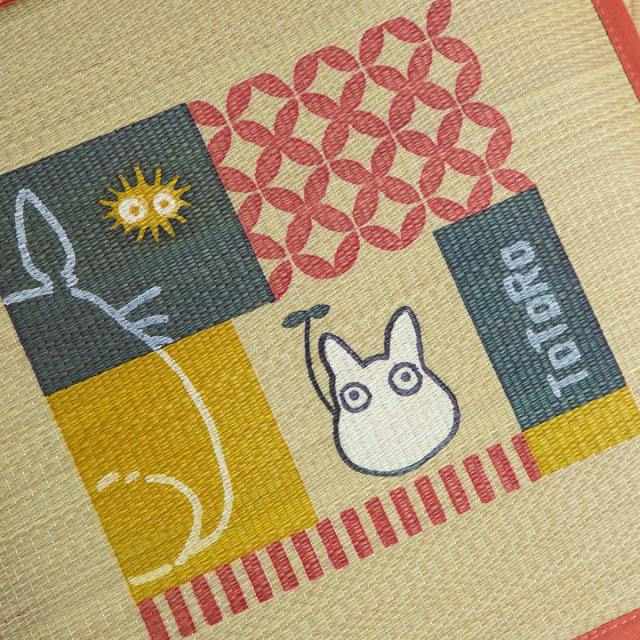
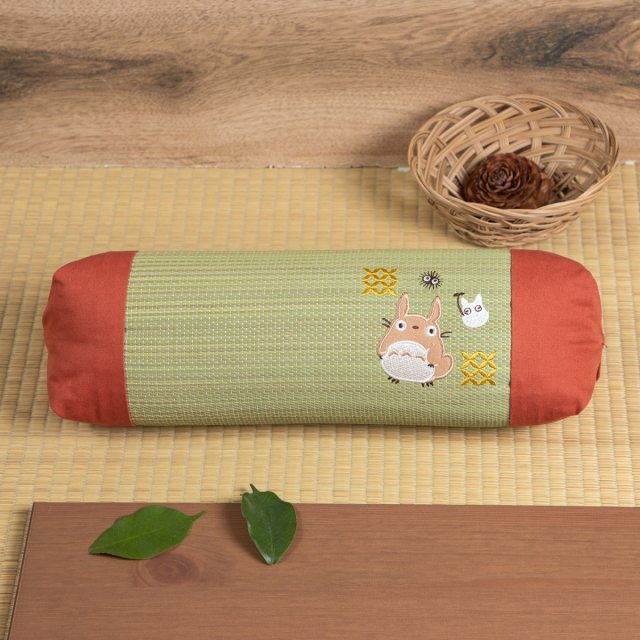
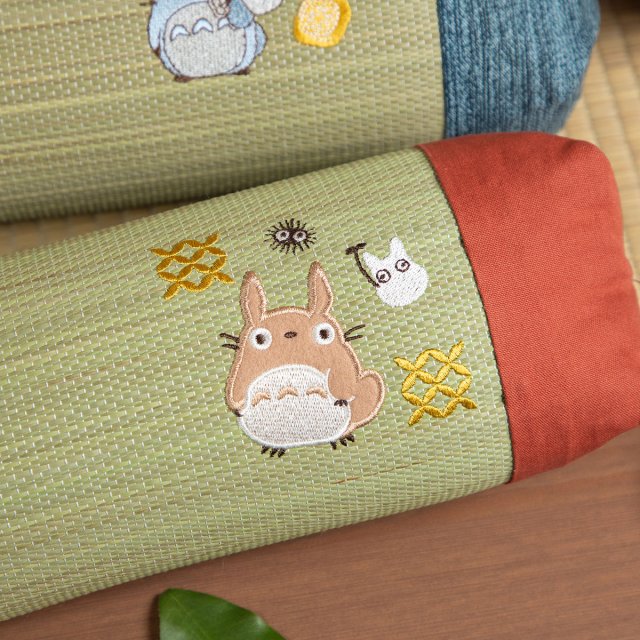
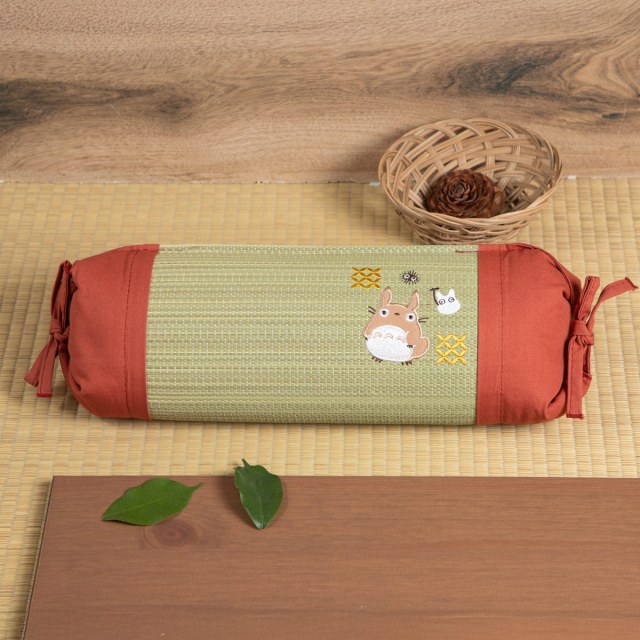
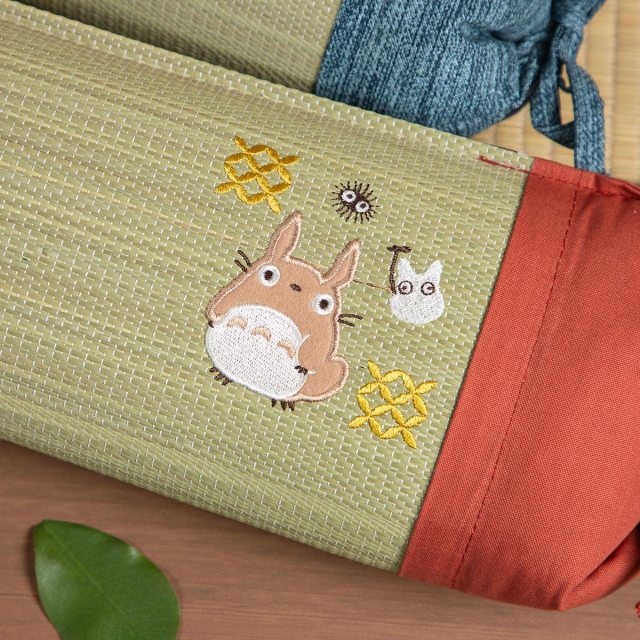
The second design, “Retro Style“, adds a dash of retro colour to a Soot Sprite, a Small Totoro and a silhouette of the Large Totoro, accompanied by an auspicious traditional shippo pattern.

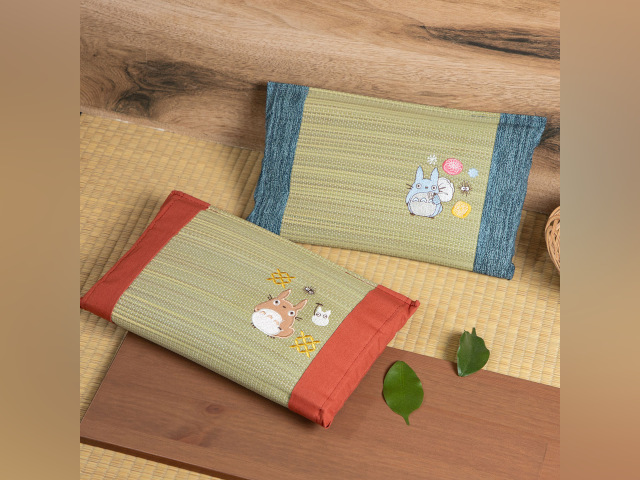
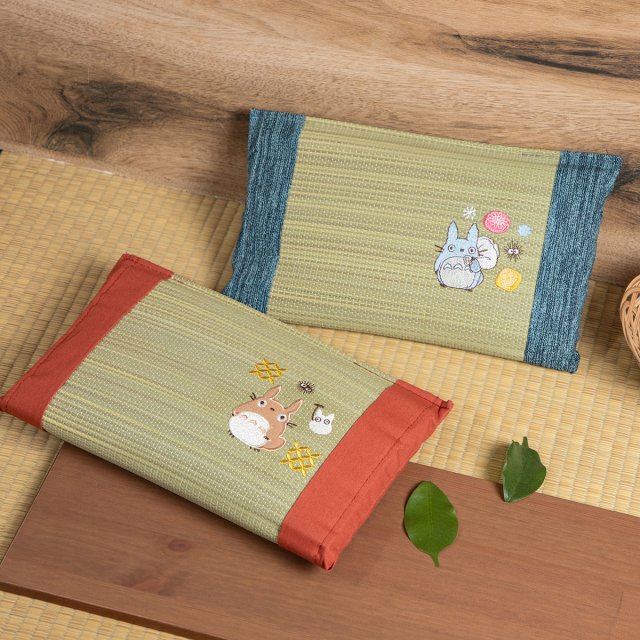
These two designs also feature on three other cushions, starting with the “Mini Flat Pillow” which is filled with breathable polyethylene pipes.

▼ Drop

▼ Retro Style

▼ Next up, we have the Bale Pillow, which is filled with low-rebound urethane chips.

These chips have excellent resistance against sagging, so the cushion is less prone to losing its shape, giving you just the right amount of neck support for summertime naps.

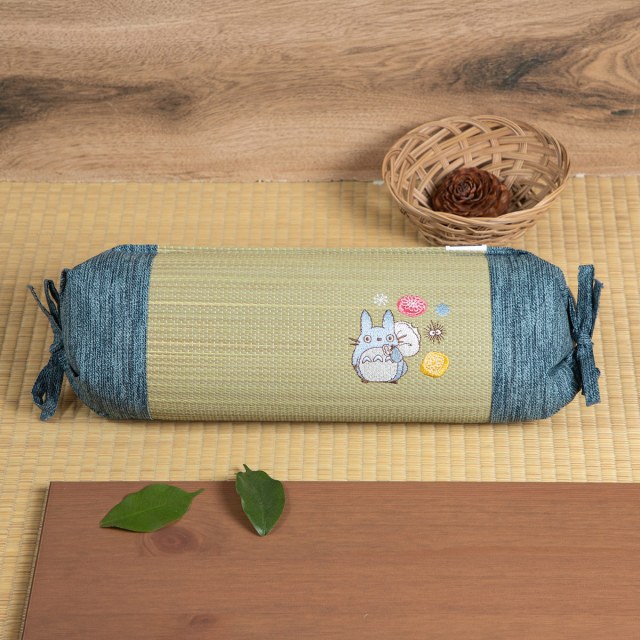
▼ The final cushion is the Candy Pillow, so-called as the rolled shape and ties on each end resemble a candy roll.

Filled with breathable polyethylene pipes, this pillow is less prone to heat buildup, making it another summer naptime essential.

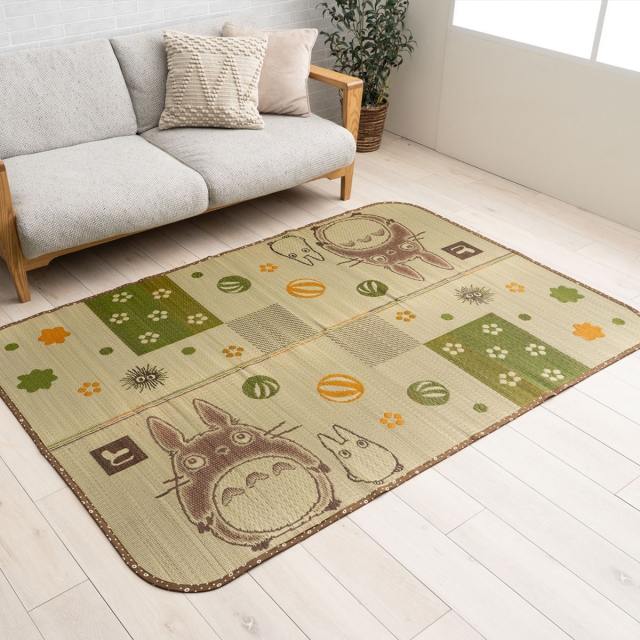
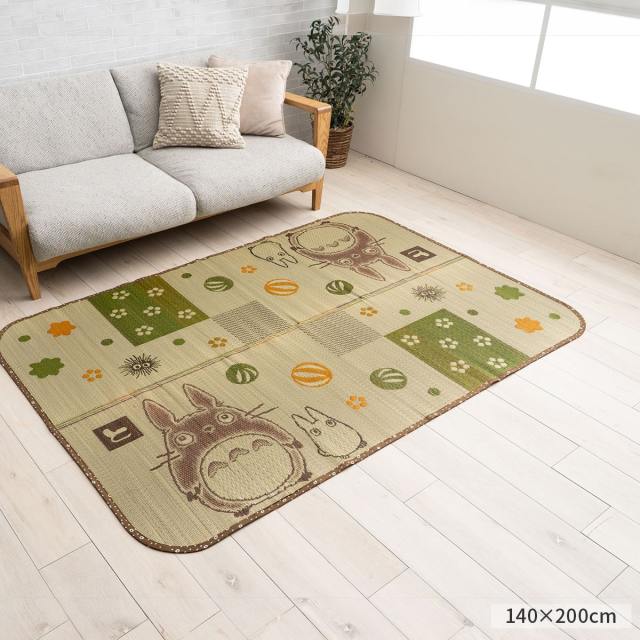
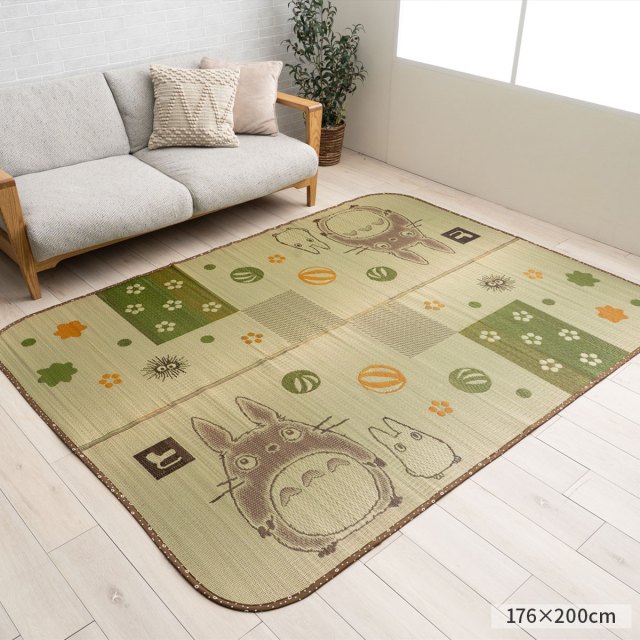
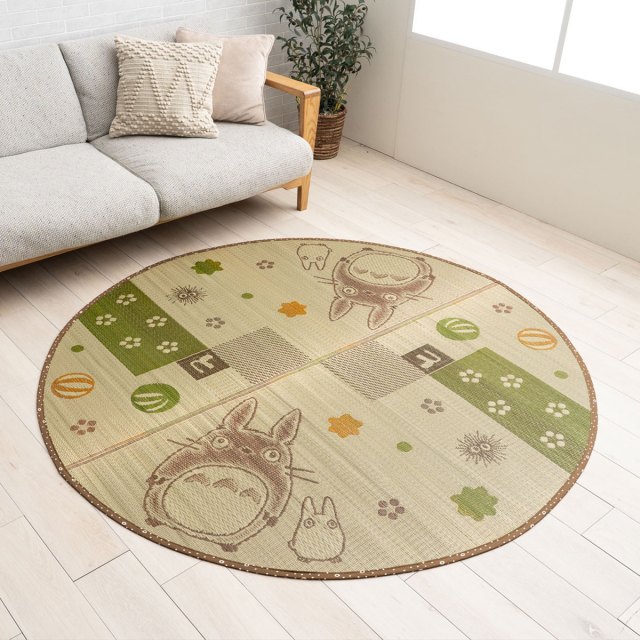
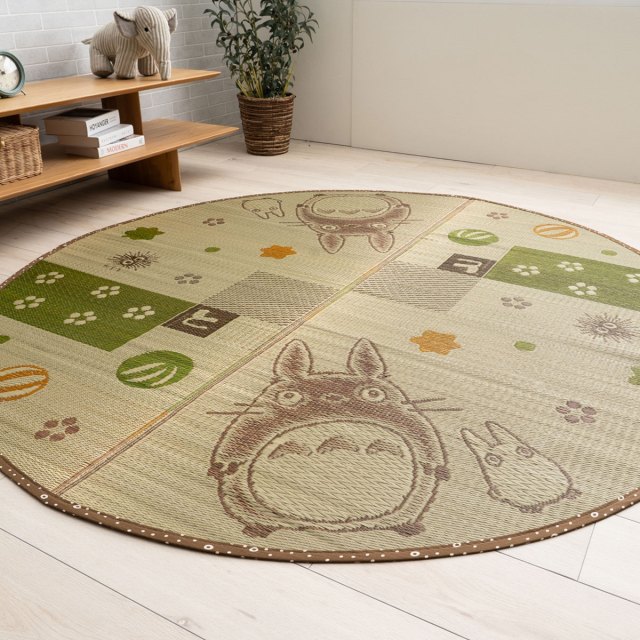
For the ultimate nap, you can pair the pillows with an igusa rug, and there are two to choose from in the collection, both cutely named “Wagororo“.

Wagororo combines the word “wa” (“Japanese style”) with “gorogoro” (“to lounge around”), and that’s exactly what these mats are designed for.

▼ The rectangular mat comes in two sizes, 140 x 200 centimetres and 176 x 230 centimetres.

▼ The round mat is 176 centimetres in diameter. 

Every item in the range is made with domestically sourced igusa, and protected with “Hiba Essence” extracted from Hiba trees in Aomori Prefecture, using a special process unique to the manufacturer. Hiba essence contains a natural substance called hinokitiol, which adds further antibacterial and deodorizing properties to each product.

According to stockists Donguri Kyowakoku, the scent of grass and the expressions of Totoro and his friends will help “soothe away the fatigue of everyday life”. That’s something we could definitely do with when Japan’s humidity starts zapping our energy levels, and the entire range is available to purchase now, at Donguri Kyowakoku stores in Japan and at the online store (links below).

Source: Donguri Kyowakoku
Featured image: Donguri Kyowakoku
Insert images: Donguri Kyowakoku (1, 2, 3, 4, 5, 6, 7, 8, 9, 10)

● Want to hear about SoraNews24’s latest articles as soon as they’re published? Follow us on Facebook and Twitter!
  •  

Kanji ice cream becomes a sell-out hit in Japan

A fun new way to learn kanji… and reward yourself for it at the same time.  

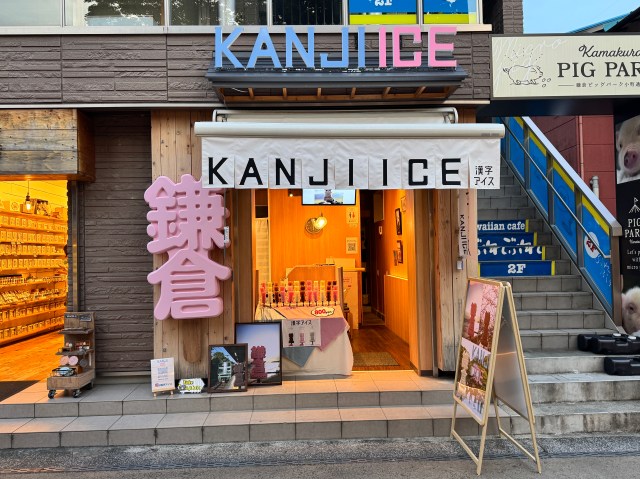
It’s been just over two weeks since Kanji Ice opened a store in the historic district of Kamakura in Tokyo’s neighbouring Kanagawa Prefecture. The opening on 1 May was perfectly timed to precede Golden Week, a string of holidays on 3-6 May, which is known for being a busy travel and shopping period.

While the store’s operators had hoped it would be busy, they couldn’t predict just how sought after its wares would be, and demand turned out to be so great that many of its ice creams totally sold out, proving they were onto a winner.

▼ The word “ice” commonly means “ice cream” in Japan.

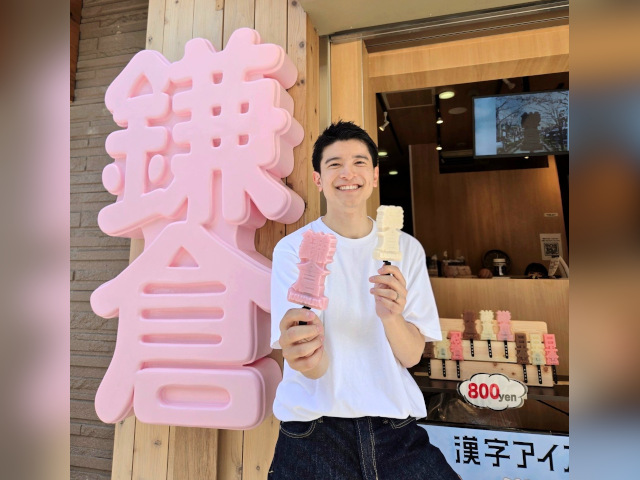
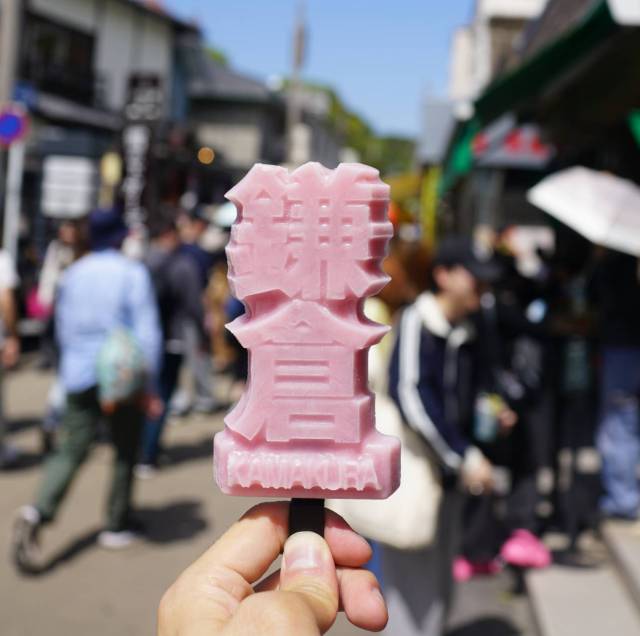
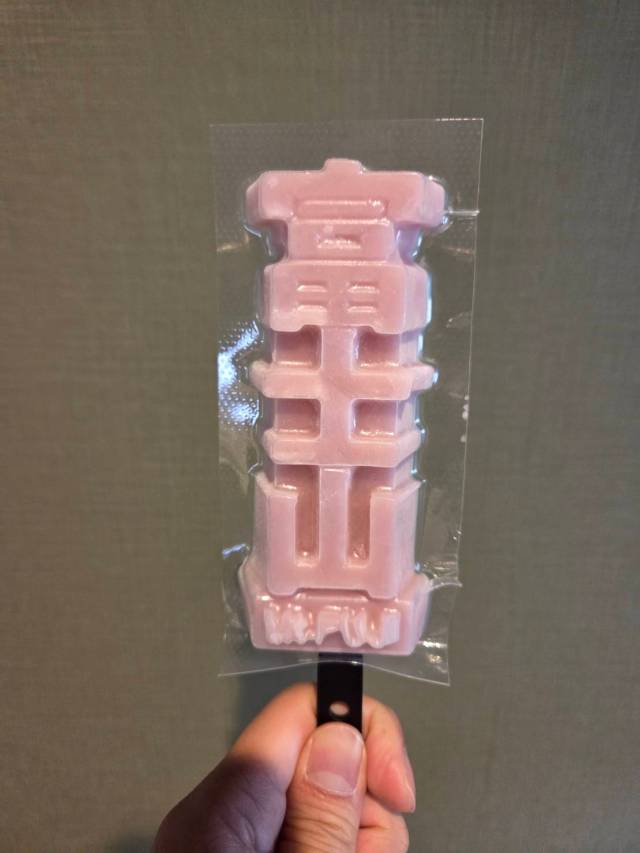
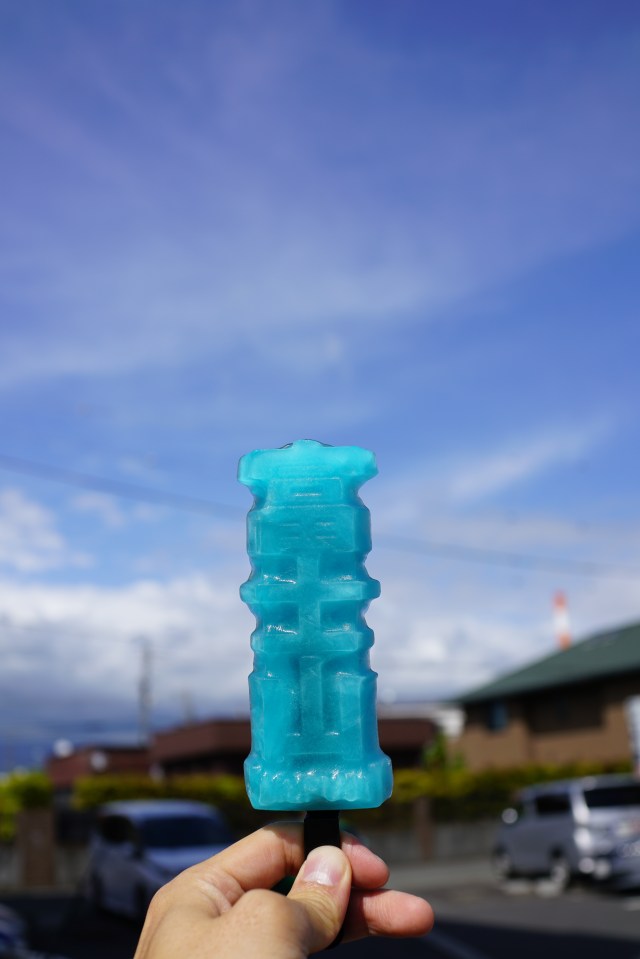
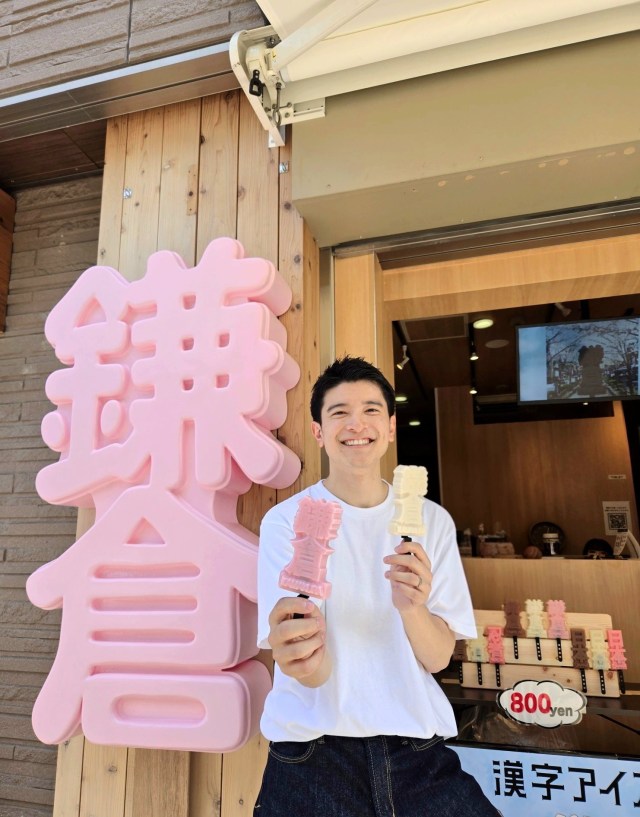
So what makes these new ice creams such a sell-out hit? Well, for starters, they look amazing, with three flavours – Crunchy Rich Chocolate, Crispy Strawberry, and Chewy Milk – moulded into kanji letters that read: “Kamakura“, “Japan” and “Ninja“.

▼ 鎌倉 (“Kamakura“)

Then there’s the fact that they’ve been developed with a special ice cream manufacturing technology that prevents the ice cream from melting, so it remains solid even after 30 minutes even at room temperature. The non-melting ice cream is a patented technology of a Japanese company called Fulllife, who is working with the store to jointly file a new patent application for the Kanji Ice Cream.

Non-melting ice cream is said to be perfect for carrying around, so you can capture memorable photos of the Kanji Ice cream at various tourist spots in the vicinity. The store is also working at expanding beyond Kamakura, with Kanji Ice cream now available at sites like Sanga Stadium in Kyoto and JR Shin-Fuji Station in Shizuoka Prefecture and the Fuji Shibazakura Festival in Yamanashi Prefecture, where you can pick up an ice cream that says “Mt. Fuji” (富士山).

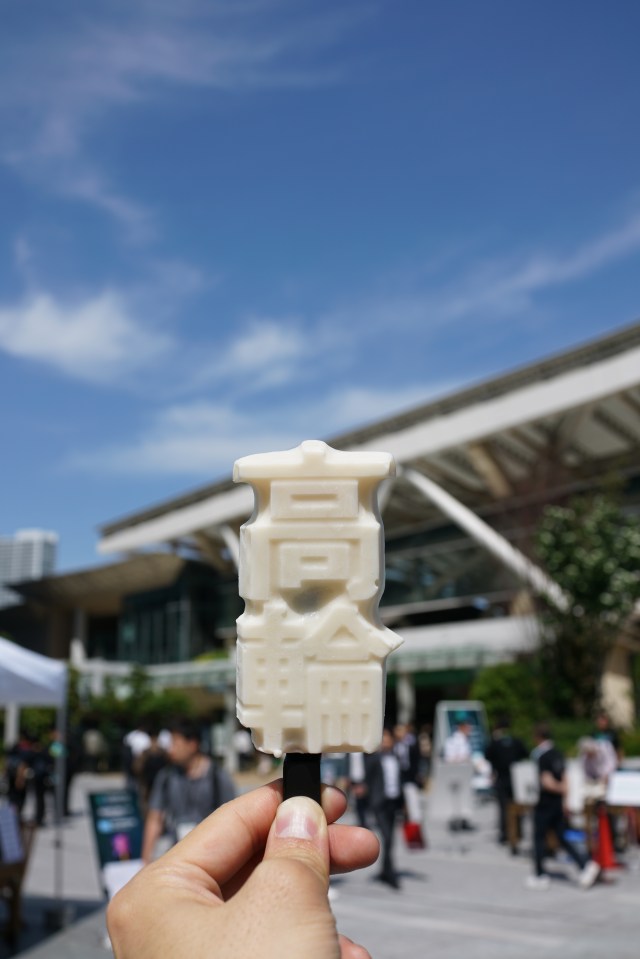
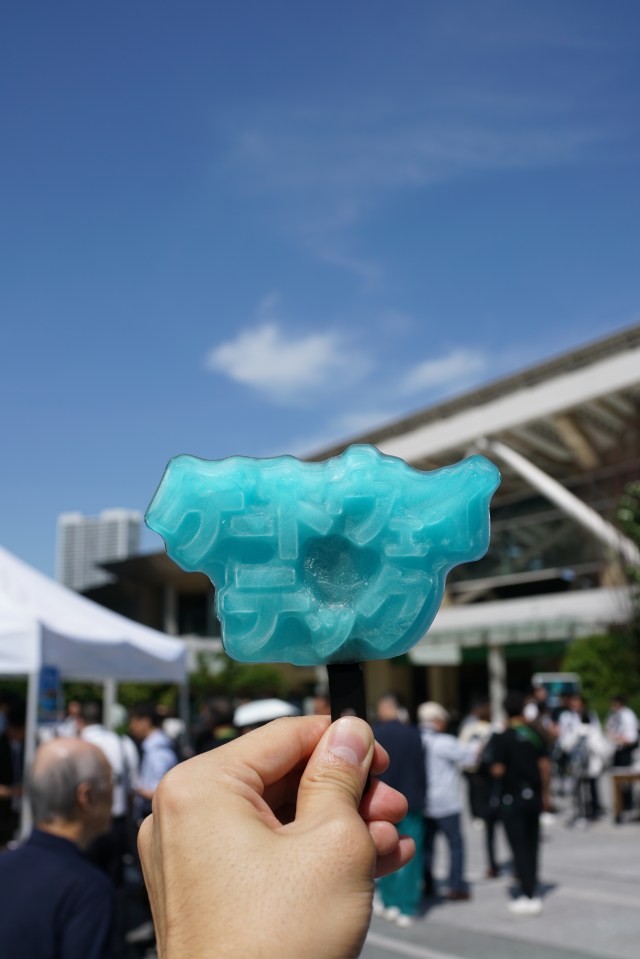
The store is also able to create custom ice creams for events, like these two, which read 高輪 (“Takanawa”) and ゲートウエイテック (“Gateway Tech”), for an annual business event at Tokyo’s Takanawa Gateway City.

With so many options for customisation, the Kanji Ice Cream might soon be greeting you at all sorts of tourist sites around Japan.

▼ Strawberry polyphenols are used for the ice cream’s non-melting properties.

This is a very social media-friendly ice cream that’s sure to attract attention online, so keep an eye out for it while you travel around Japan. And if you happen to find yourself over in Gifu, there’s a non-melt katana samurai sword ice cream that draws upon the secret powers of kudzu for its remarkable strength.

Store information
Kanji Ice Cream / 漢字アイス
Address: Kanagawa-ken, Kamakura-shi, Yukinoshita 1-6-4
神奈川県鎌倉市雪ノ下1-6-4
Open 11:00 a.m.–5:30 p.m.

Source, images: Press release
● Want to hear about SoraNews24’s latest articles as soon as they’re published? Follow us on Facebook and Twitter!
  •  

Choc mint ice cream season hits Japan with a spectacular drinkable ice cream from Tully’s

Why go to Starbucks when you can find hidden gems like this at a locally born chain?

Are you a Chokomintou supporter? If you are, then you will be gearing up for a very busy, and refreshing, summer in Japan, because Chokomintou means “Choco Mint Tou”, where “tou” (“political party”) humorously refers to the chocolate mint party, a faction despised by some and strongly supported by others.

Choc mint is certainly a divisive flavour combination, but here in Japan, where summers can be excruciatingly hot and brutal, it’s become immensely popular, so much so that “Chokomintou” quickly became a common term, with people proudly declaring their support for it.

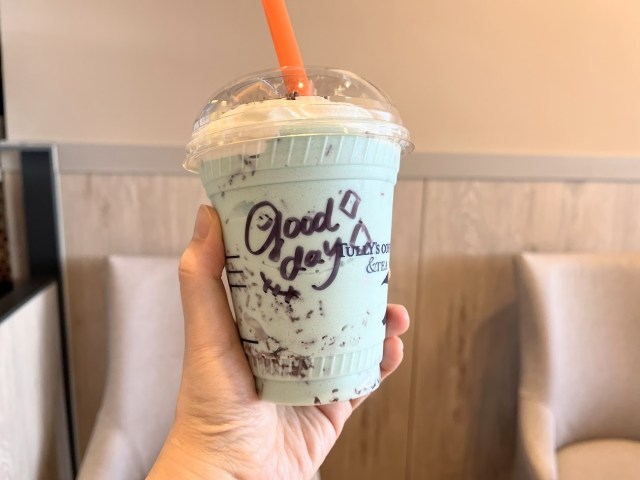
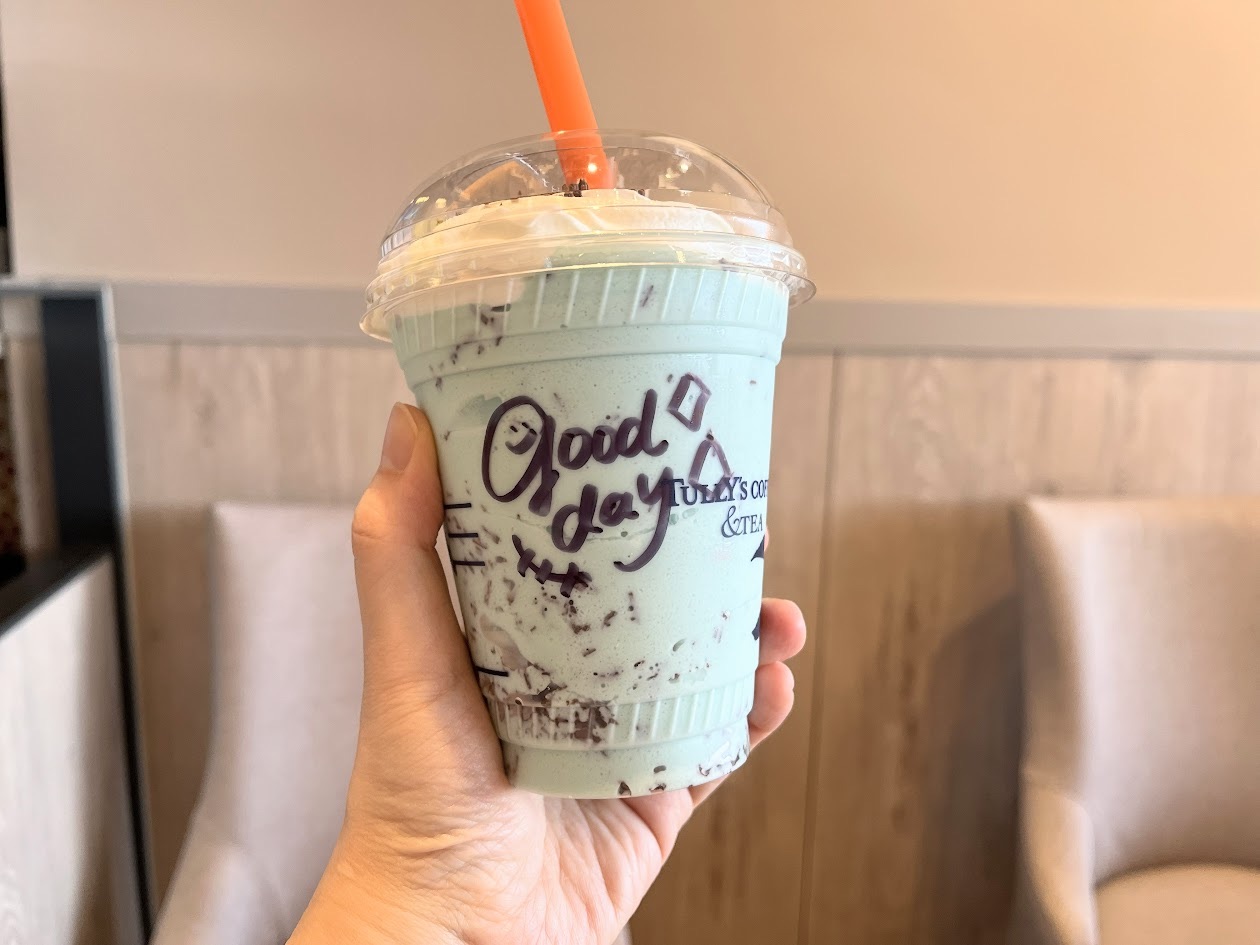
This summer, those supporters are being treated to a whole slew of new treats, and one that’s currently causing a stir is the Chocolate Mint Shake from Japanese coffeehouse chain Tully’s.

This beverage is so thick it’s more like a drinkable ice cream than a shake, but what makes it even more special is the fact that you can request extra mint, making it one of the strongest mint-to-chocolate drinks on the market.

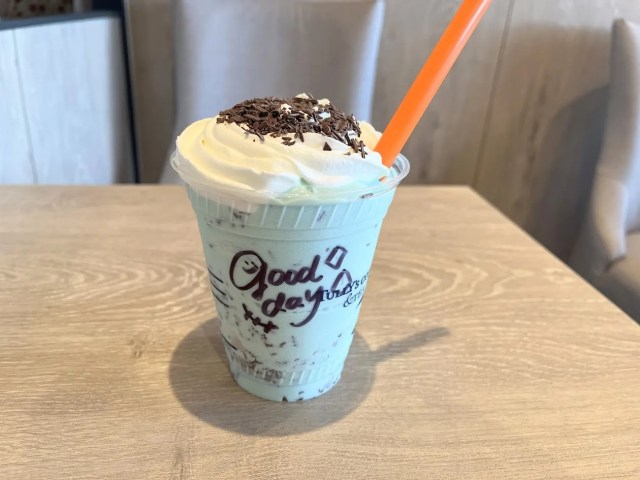
▼ The Chocolate Mint Shake retails for 790 yen (US$4.98).

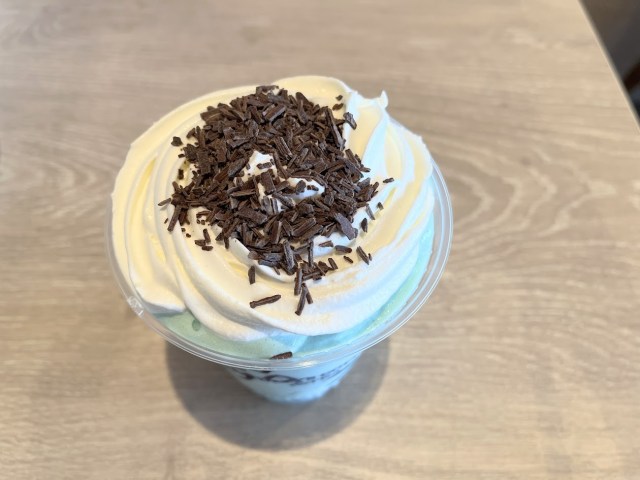
The blue-green hues will immediately refresh your mind when you lay your eyes on the shake, and the pop of contrasting colour with the bright orange straw is another nice visual touch. The topping of chocolate shavings adds another accent in colour and, as it turns out, texture.

We ordered our shake with extra mint, and the resulting flavour was super minty, hitting the taste buds with an invigorating freshness. Thankfully, there was no “toothpaste-like” taste that’s sometimes evident in chocolate mint products – it was purely a fresh mint zing that paired beautifully with the chocolate, all wrapped up in a rich and creamy, ice cream-like texture. It was a delightful sensation, and the occasional crunch of the chocolate shavings added a nice surprise in between mouthfuls.

It was such an exquisite balance between mint and chocolate that we’d describe it as the golden ratio of choc mint. It’s by far the best chocolate mint product we’ve ever tasted, and so good it has the power to move a chocomintou fan to tears.

As a home-grown coffeehouse that tends to sit in the shadow of Starbucks, Tully’s is often coming out with unusual releases to stay in the competition. The Chocolate Mint Shake is a great example of that, and a good reminder that sometimes the best finds can be found in the shadows.

Photos ©SoraNews24
● Want to hear about SoraNews24’s latest articles as soon as they’re published? Follow us on Facebook and Twitter!
  •  

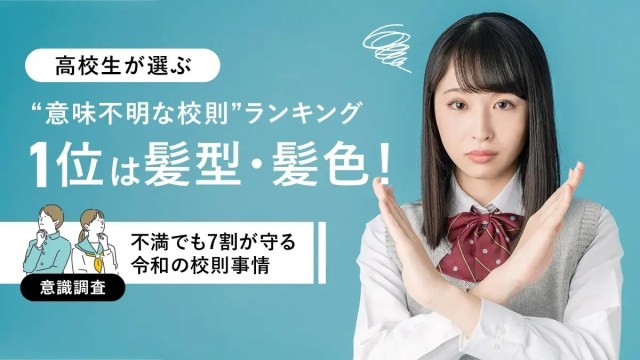
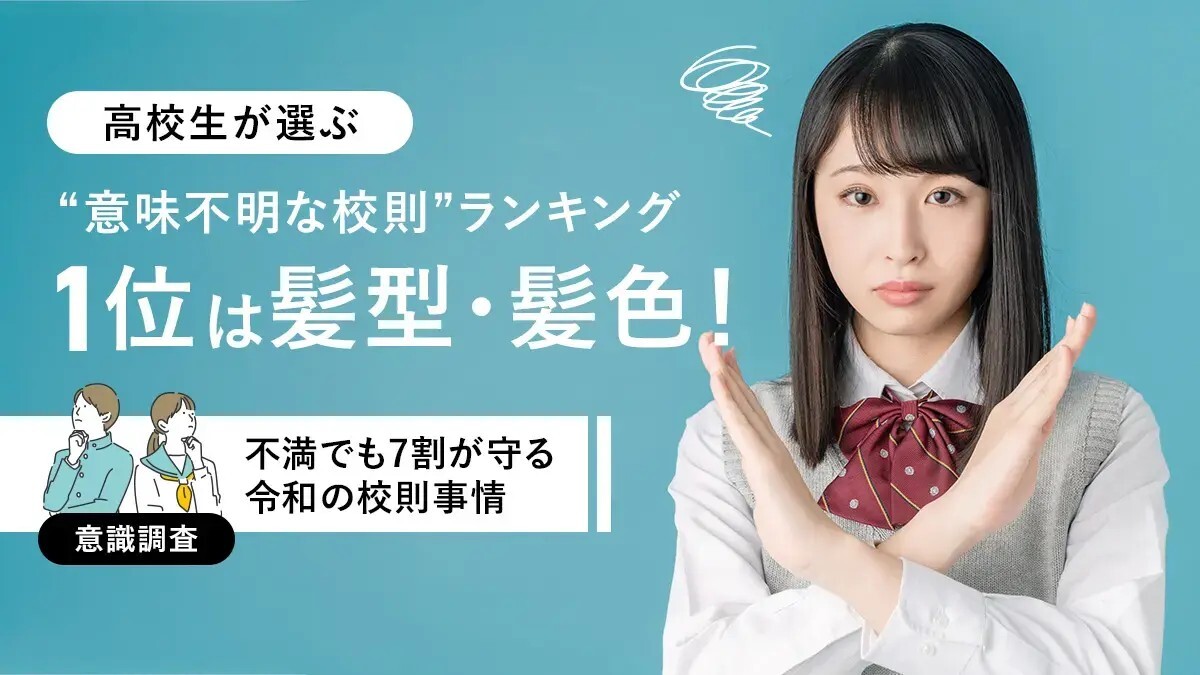
The top 12 incomprehensible school rules, as chosen by high school students

Plus some surprising extra requirements, like having to say “thank you” at least 10 times a day. 

Every school in Japan has its own set of rules, and while many of these guidelines are perfectly understandable, there are some that are baffling, to say the least.

This topic of nonsensical school rules was recently explored by Jukusen, one of Japan’s largest online directory and comparison platforms for cram schools, in a survey that targeted 104 high school students nationwide.

More than half (56.7 percent) of the respondents said there were rules at their school that they did not agree with, and out of these, about 70 percent said they hadn’t been given an explanation as to why those rules are necessary.

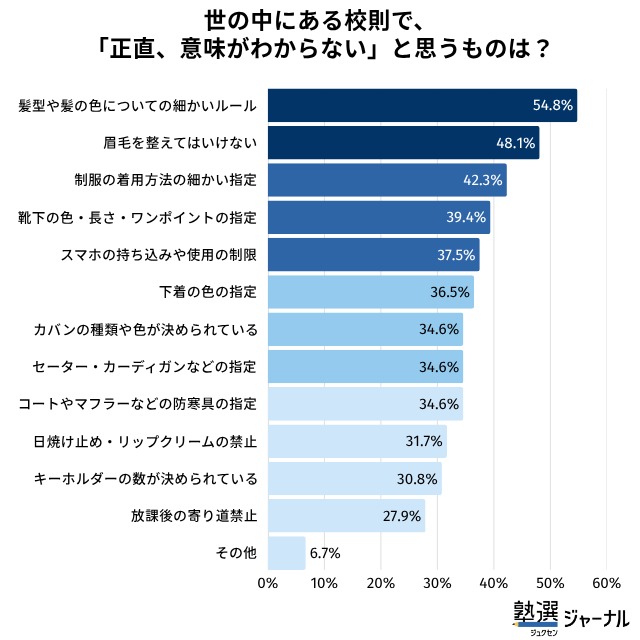
So what were the rules that made no sense to students? Let’s take a look at the top 12 responses below – totals exceed 100 percent as students were allowed to give multiple responses – starting with a brief rundown from 12 to six.

12. No stopping anywhere on the way home after school (27.9 percent)
11. Limits on the number of keychains students can carry (30.8 percent)
10. Ban on sunscreen and lip balm (31.7 percent)
9. Restrictions on winter clothing such as coats and scarves (34.6 percent)
8. Restrictions on sweaters and cardigans (34.6 percent)
7. Rules specifying the type and colour of school bags (34.6 percent)
6. Restrictions on underwear colour (36.5 percent)

▼ The question put to students for the survey was: “Which school rules honestly make no sense to you?

Taking a closer look at the top five revealed the following results:

5. Restrictions on smartphones (36.5 percent)

Many respondents accepted bans during class but thought prohibitions during breaks or school events were unreasonable as students want to communicate and take photos at those times.

4. Restrictions on the colour, length, and design of socks (39.4 percent)

Students questioned why schools sought to regulate such a minor detail, saying it felt pointless to regulate tiny fashion issues.

3. Restrictions on how to wear the uniform (42.3 percent)

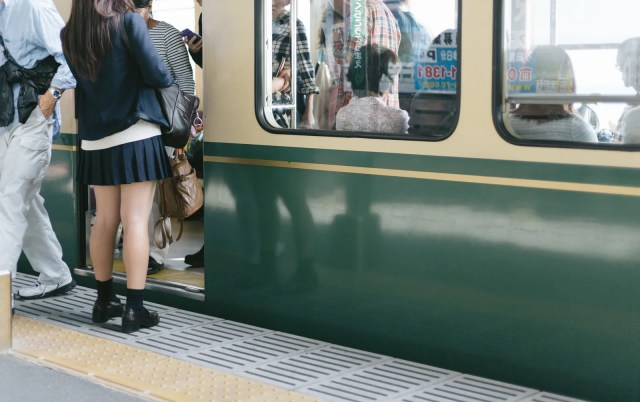
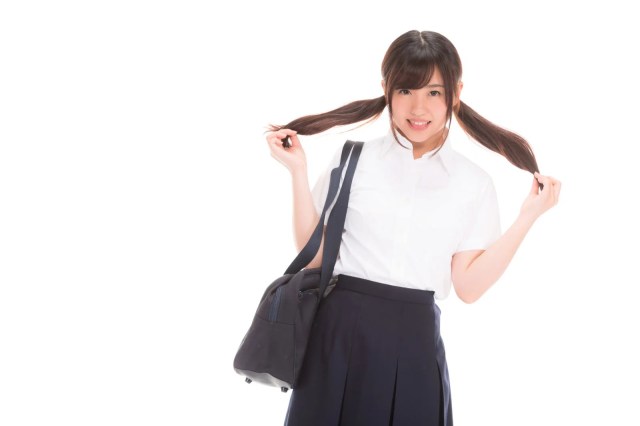
Students complained that uniform rules were excessively detailed and inconsistently enforced, with one student saying she was pulled up by teachers for folding up the waist of her skirt, even though she was only doing it as it was uncomfortably loose.

▼ Low socks and a high skirt is a no-no at schools.

2. Ban on eyebrow grooming (48.1 percent)

Students argued that not being allowed to care for your eyebrows actually makes people look less presentable. They also expressed concern for people who feel insecure about their brows, as they’re not allowed to tend to them.

1. Restrictions on hairstyles and hair colour (54.8 percent)

Students strongly questioned why schools regulate hair at all, with many saying they felt these rules weren’t in line with the times as they prioritise conformity over individuality.

The survey also revealed some unusual rules that exist at some schools:

  • On graduation day, girls must wear tights of 80 denier or higher
  • Students are required to say “thank you” at least 10 times a day within the school
  • Bans on establishing a light music club

While “light music” originally referred to lighter orchestral pieces, it now involves popular music like punk, rock and J-Pop, and some schools fear these clubs might “increase the number of delinquent and misbehaving students”.

Though students are quick to complain about these “incomprehensible” school rules, saying they have little to do with academic performance, in the end, they mostly put up with them, with approximately 70 percent of current respondents indicating that they abide by the rules despite their dissatisfaction.

The remaining 30 percent are likely plucking an eyebrow hair every now and then, and holding out hope for their school to rethink some of its requirements. With some schools now easing up on black-only hair rules and abolishing underwear checks, change may very well be on the horizon.

Source: Press release
Featured image: Press release
Insert images: Press release, Pakutaso (1, 2, 3)

● Want to hear about SoraNews24’s latest articles as soon as they’re published? Follow us on Facebook and Twitter!
  •  

Saltiest ramen in Japan? Ikebukuro White goes viral for crazy salt levels

We challenge you to find a saltier ramen in Japan.

Once you start diving into the world of Japanese ramen, you’ll find that the waters are deep, with an incredibly diverse array of varieties, and new dishes being created somewhere every day.

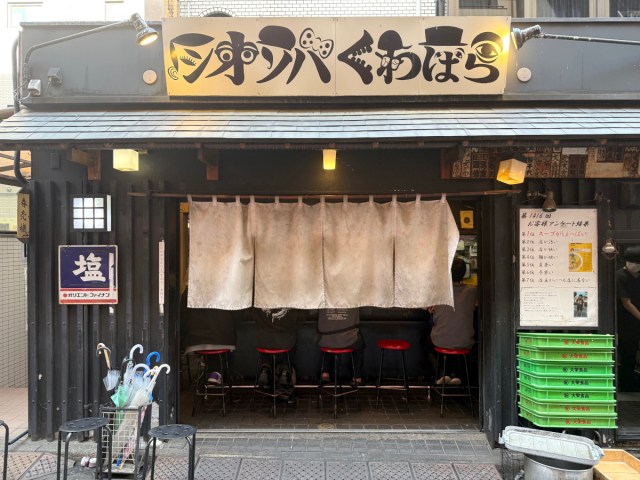
A great example of that can be seen at Kuwabara, a ramen restaurant in Tokyo’s Ikebukuro that specialises in “shio soba“, a light, salt-based ramen. The store’s full name is “Shio Soba Specialty Shop Kuwabara” so it prides itself on salty ramen, but according to diners, a dish on the menu called “Ikebukuro White” is off the scale, with diners describing it as “shockingly salty“.

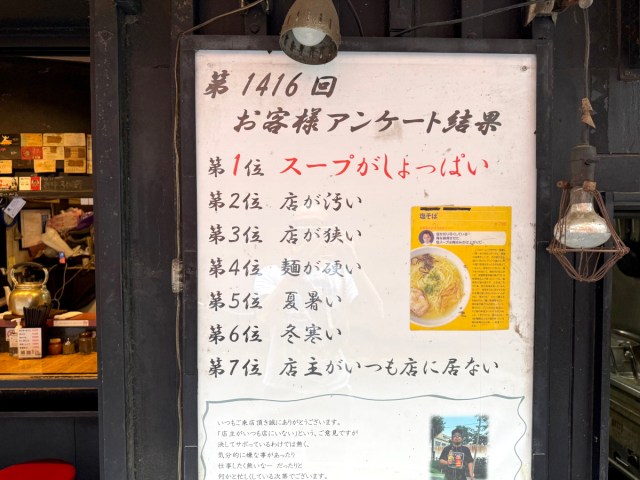
▼ A sign out the front shows customer’s views of the store, with “The soup is salty” in top place, written in red.

The saltiness of the Ikebukuro White is said to be so insane that the restaurant is now trending on social media, with some online commenters describing it as “salty delicious”, “incredibly addictive”, “one of a kind” and “the saltiest salt ramen I’ve ever eaten in my life.”

▼ Needless to say, those comments immediately piqued our interest so we headed out to the store to try the Ikebukuro White.

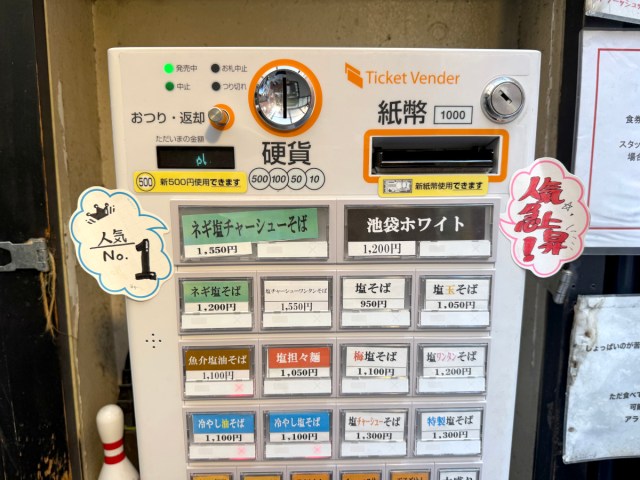
Ironically, the dish is marked by a black-and-white button on the ticket machine inside, where it’s priced at 1,200 yen (US$7.61). Next to it is a handwritten sign that says, “rapidly gaining popularity”, indicating that this dish really is attracting attention from diners.

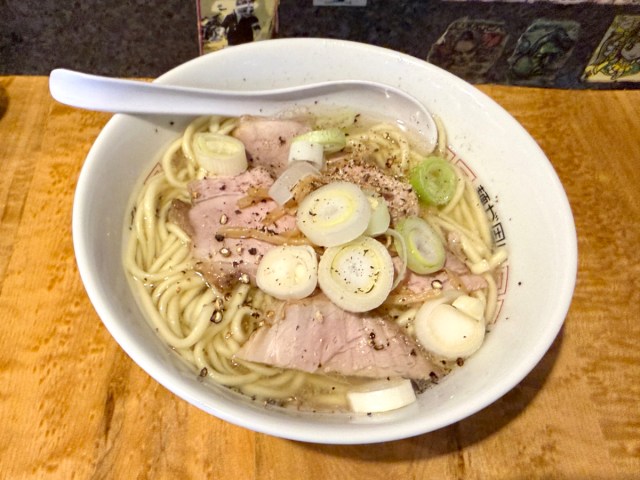
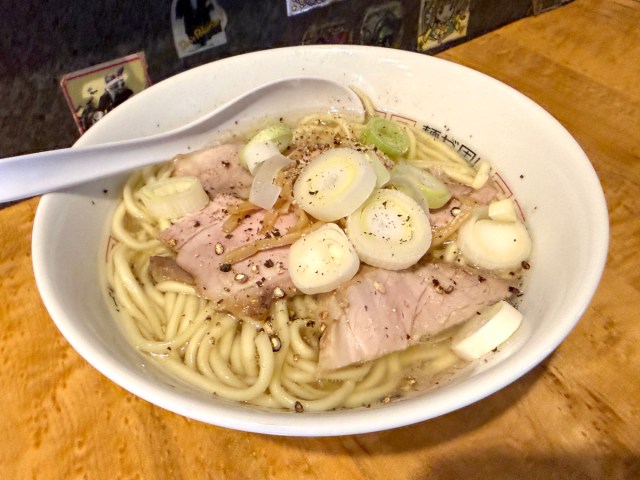
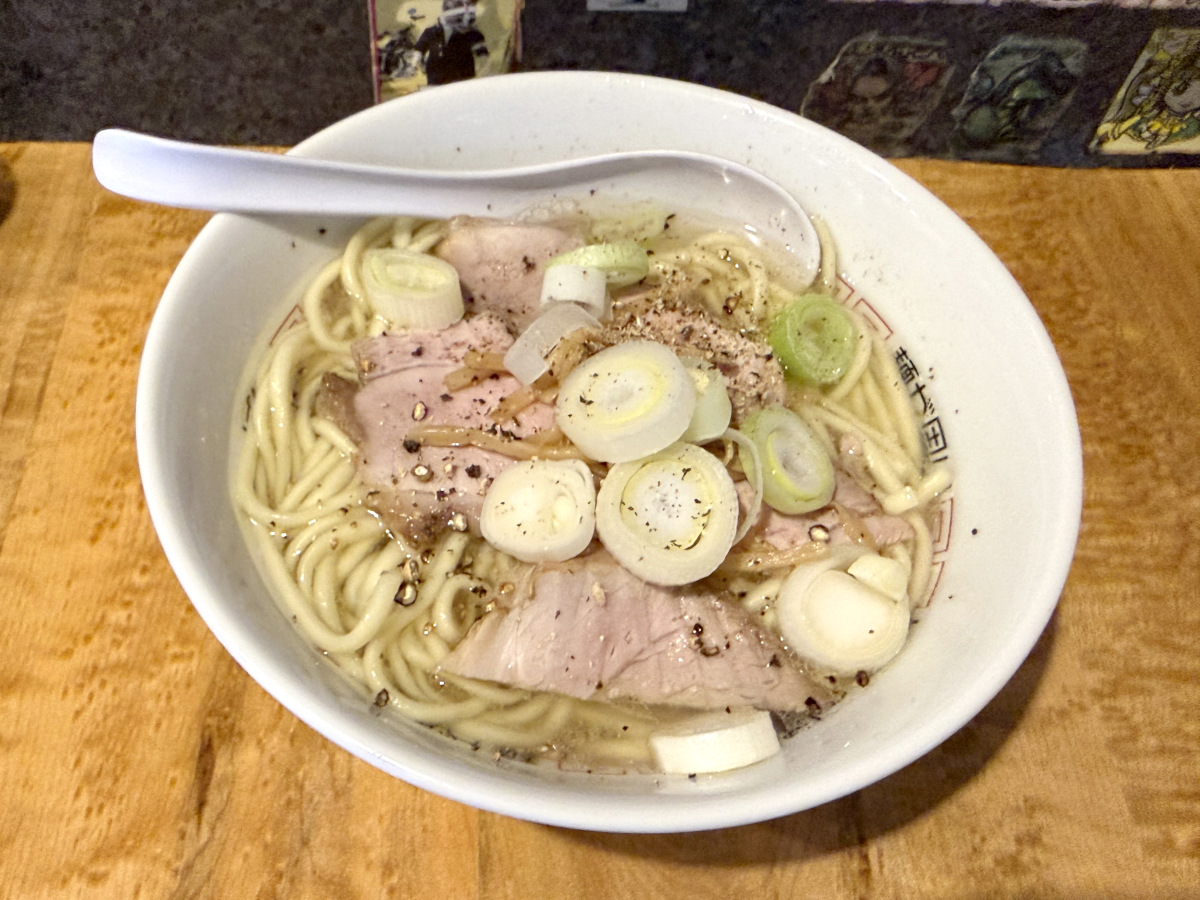
After handing our ticket over to staff, we took a seat and a few minutes later our Ikebukuro White arrived. At first glance, it looked like a slightly unorthodox salt ramen, with black pepper and flat noodles, but nothing could prepare us for what we tasted when we took our first sip of the broth.

▼ SALTY!!

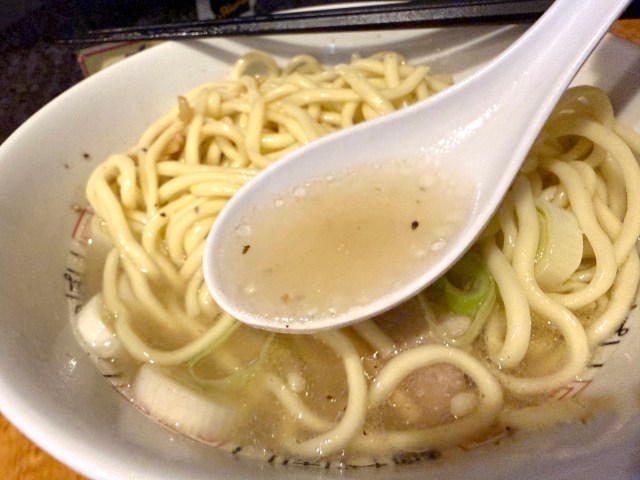
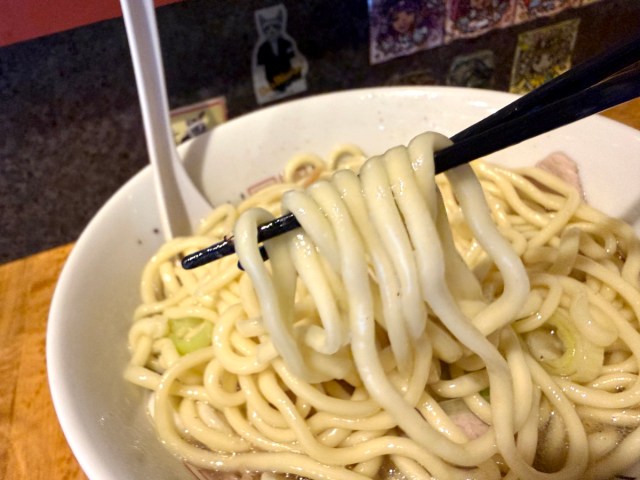
The saltiness is so strong it needs to be emphasised in all caps, and although it’s not extreme enough to make you stop eating, it toes the line by erring on the side of tolerable. This really was the saltiest ramen we’d ever had in our life, and in addition to the saltiness, the garlic and black pepper also pack a punch. The firm texture of the flat noodles, cooked perfectly al dente, attempts to soften the flavours, but they remain strong in every mouthful.

Perhaps because of the intense saltiness, we found ourselves finishing the noodles in no time.

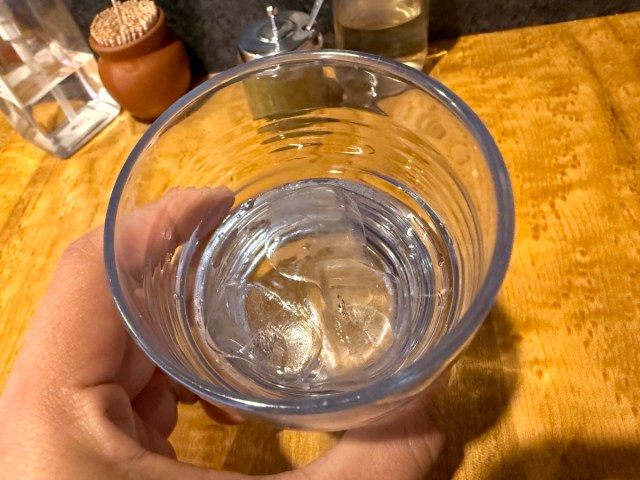
One unexpected side effect of the salty broth was it made the water taste incredibly delicious. And yes, we gulped down an entire glass after the meal.

Now that we’ve tried the famed ramen, we challenge anyone to find a saltier broth in Japan. It’s so salty that if you didn’t know its reputation beforehand, you might find yourself wondering if the chef made a mistake with the seasoning.

There’s no mistake here, though, and although the saltiness is incredibly overwhelming, it’s a one-of-a-kind ramen you won’t find anywhere else. So if you’re willing to dive into Japan’s ramen world, this is definitely the deep end, where the broth is delicious, but as salty as the sea.

Restaurant information
Shio Soba Specialty Shop Kuwabara / 塩そば専門店 桑ばら
Address: Tokyo-to, Toshima-ku, Higashi-Ikebukuro 1-27-5
東京都豊島区東池袋1-27-5
Open 11:00 a.m.-8:30 p.m.
Closed irregularly

Photos ©SoraNews24
● Want to hear about SoraNews24’s latest articles as soon as they’re published? Follow us on Facebook and Twitter!
  •  
❌