Reading view

Sand Demand Outpaces Sustainable Extraction
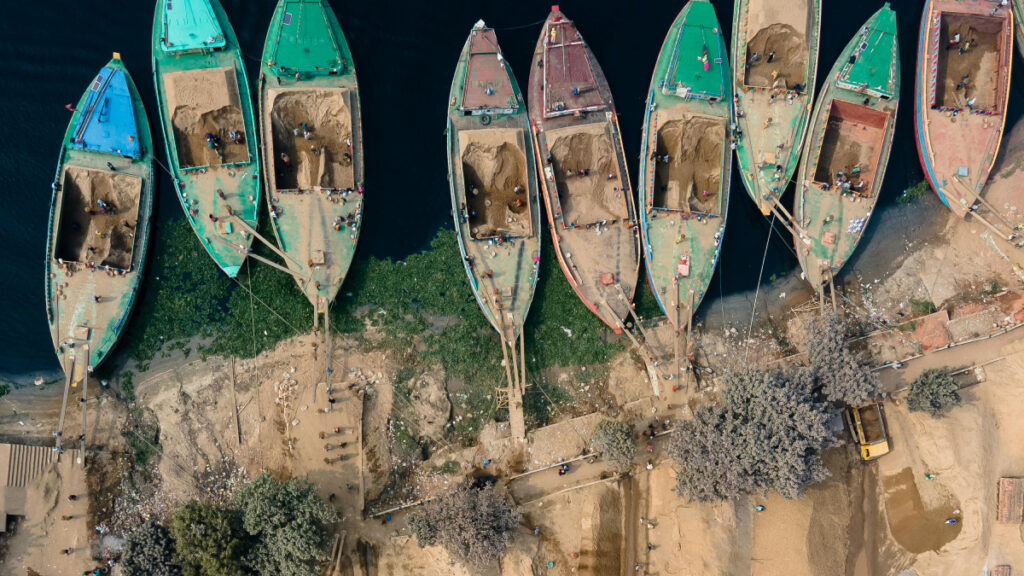
Colorful boats filled sit side by side on a sandy bank, each with a line of trucks waiting to fill it with more extracted sand.

Research & Developments is a blog for brief updates that provide context for the flurry of news that impacts science and scientists today.

Sand is the most exploited solid natural resource on Earth. It has been integrated into how we build homes, roads, buildings, and bridges as well as how we protect coastal infrastructure from rising seas. Sand underpins nearly every aspect of modern infrastructure and economics, plays crucial roles in supporting ecosystem biodiversity, and literally shores up rivers and coasts.

A new report from the United Nations Environment Programme (UNEP) found that we are using 50 billion metric tons (50 trillion kilograms) of sand per year. As global development and industrialization expand, demand for sand in the building sector is expected to rise 45% by the year 2060, outpacing current efforts to sustainably harvest it. The report’s authors urge countries to establish sand as a strategic national asset and develop policies for sustainable extraction.

“Sand is sometimes referred as the unrecognized hero of development, but its essential role in sustaining the natural services on which we depend is even more overlooked,” Pascal Peduzzi, director of the UNEP Global Resource Information Database Geneva, said in a press release about the report. “Sand is our first line of defence against sea level rise, storm surges, and salination of coastal aquifers—all hazards exacerbated by climate change.”

Sand Wanted: Dead or Alive

Dead sand, or sand that has been extracted from its natural environment, is a key component in building materials like concrete and asphalt. Communities around the world use sand in water filtration systems, providing clean water for drinking and agricultural use. And although a transition to clean energy sources is necessary to curb the effects of climate change, many of those sources also depend on sand: solar panels require glass made from high-purity silica sand, and wind turbines, hydroelectric dams, and nuclear power plants all require concrete.
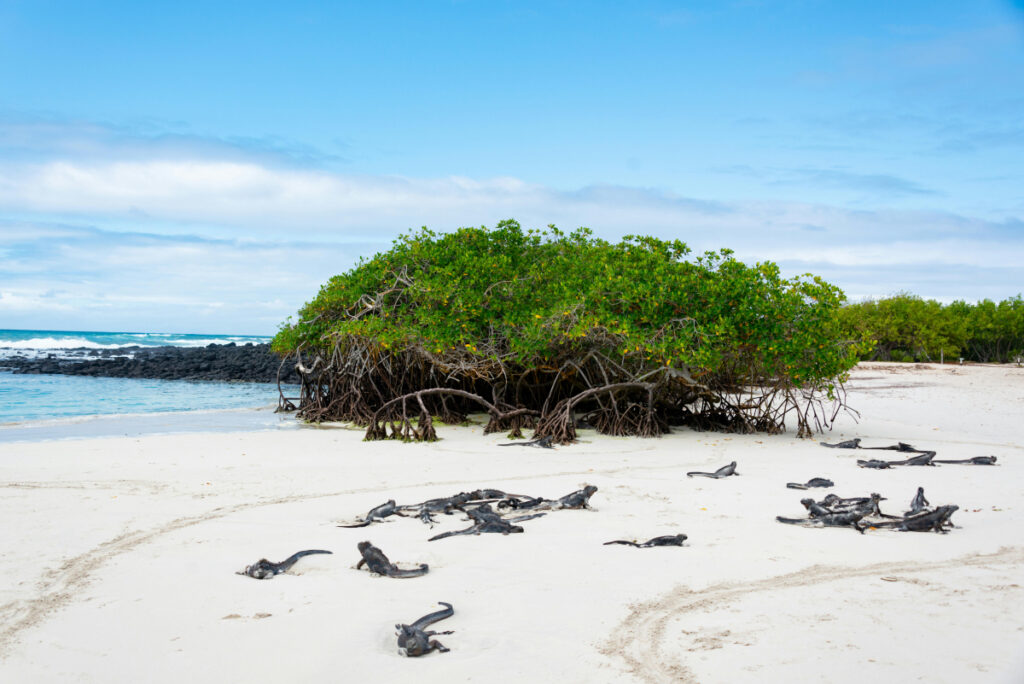
A copse of mangroves grows on a sandy shore. Dozens of iguanas lounge on the sand.
Mangroves, one of the most important coastal trees, can grow in sand. Credit: Diego Parra

Sand also plays a critical role in natural ecosystems. It is home to a wide array of critters from crabs, sharks, and turtles to microorganisms like bacteria and fungi. It supports the growth of corals, mangroves, and seagrasses that in turn support even more marine creatures. It is a key component of healthy soil and aids in surface drainage. It guides river evolution and acts as flood buffer and storm barrier. It also provides local economic benefits via tourism.

These are among the values of sand when it is left alone and unused, called “alive” sand. The UN report notes that these benefits are typically of greater value over time than if sand is dredged and used. But because these benefits are hard to see, they are often overlooked when nations calculate the value of their sand resources.

A Sustainable Sand Future

Despite sand’s importance whether dead or alive, the report notes that few countries have established sand as a strategic national asset or have developed strategies for sustainable extraction. At the current pace, humans are extracting sand from the natural environment at a faster pace than it is being replenished by geologic processes.

 
Related

•  Read the Report: Sand and Sustainability: An Essential Resource for Nature and Development
•  Track Global Sand Dredging: Marine Sand Watch
•  Dig Into the Details: Grains of Sand: Too Much and Never Enough
 

What’s more, the UNEP’s Marine Sand Watch tool shows that about half of sand dredging companies are operating within marine protected areas, accounting for about 15% of the volume of dredged sand. This practice, the report notes, is potentially trading in sand’s long-term benefits for short-term gains.

The UN report recommends a few actions to protect the long-term availability of sand as a natural resource, including:

  • Recognizing sand as strategic national asset, establishing national inventories, and creating long-term regional planning groups that consider sand as an essential resource for resilience;
  • Establishing circularity and recycling of building materials, especially in areas of conflict and natural disasters;
  • Strengthening environmental protection practices, and codifying international frameworks to strengthen accountability along the supply chain, including increased transparency about extraction; and
  • Integrating sand-related biodiversity and social risks into financial decisionmaking and governance.

“Over-reliance on short-term economic metrics risks obscuring, and further impacting, the geological and ecological processes that take centuries to form and may not be restored once critical thresholds are crossed,” the report states. “What is hardest to measure may be precisely what sustains both nature and human societies over the long term. The challenge ahead is not only to manage extraction, but to recognise and balance the full spectrum of sand’s values.”

—Kimberly M. S. Cartier (@astrokimcartier.bsky.social), Staff Writer

These updates are made possible through information from the scientific community. Do you have a story about science or scientists? Send us a tip at eos@agu.org.

A photo of a hand holding a copy of an issue of Eos appears in a circle over a field of blue along with the Eos logo and the following text: Support Eos’s mission to broadly share science news and research. Below the text is a darker blue button that reads “donate today.”
Text © 2026. AGU. CC BY-NC-ND 3.0
Except where otherwise noted, images are subject to copyright. Any reuse without express permission from the copyright owner is prohibited.
  •  

Anwar says Sabah power grid project will bring development to interior regions

Malay Mail

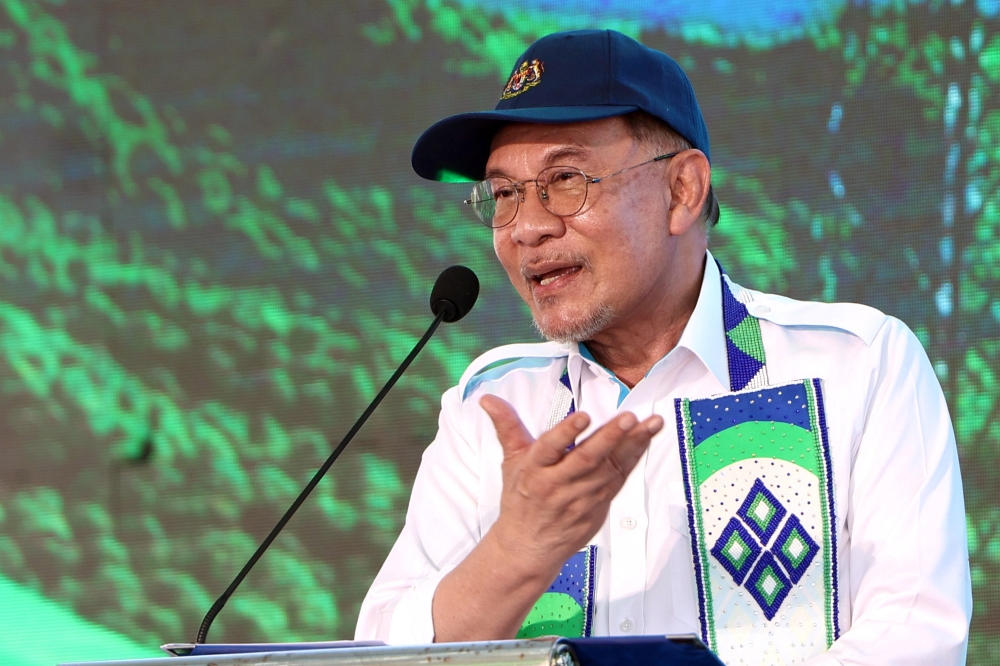
SIPITANG, June 13  — The implementation of the Sabah Southern Madani Link (SSML) electricity grid project demonstrates the federal government’s commitment to ensuring that development initiatives and basic amenities reach communities in Sabah’s interior regions.

Prime Minister Datuk Seri Anwar Ibrahim said the project is in line with the Malaysia Madani policy, which emphasises fair and equitable development, rather than concentrating progress solely in major urban centres.

He said genuine development would not have a comprehensive impact if basic facilities continued to bypass remote areas, particularly in Sabah’s interior.

“That is why I am deeply concerned and want to ensure that development is distributed evenly throughout every part of the state, including the interior. This is what distinguishes our approach from that of some other countries, where development is focused only on major cities,” he said when officiating the groundbreaking ceremony for the SSML project here.

Also present were Chief Minister Datuk Seri Hajiji Noor, Domestic Trade and Cost of Living Minister Datuk Armizan Mohd Ali, and Minister in the Prime Minister’s Department (Sabah and Sarawak Affairs) Datuk Mustapha Sakmud.

The SSML project involves the construction of a 275-kilovolt (kV) electricity transmission line linking Sabah’s west and east coasts, playing a crucial role in strengthening the state’s power supply grid and balancing energy distribution across Sabah.

The project, which commenced on September 17 last year, is scheduled for completion on September 16, 2028, at a cost of RM198 million. As of May 26, the project had reached 17 per cent completion.

Anwar said the energy grid project carries significant importance as it requires the dedication and perseverance of workers who traverse the dense forests of southern Sabah to build electricity infrastructure for the people.

“I am moved and pleased to see those transmission towers stretching across the wilderness. Imagine the workers whose job requires them to enter the forests and leave their families behind, all to develop electricity supply infrastructure for the people of Sabah. To all of you, I extend my deepest appreciation for this sacrifice,” he said.

Commenting on criticism from certain quarters in Parliament over the substantial development allocations for Sabah and Sarawak, the prime minister said the government stood by its decision as part of efforts to narrow infrastructure development gaps in the two states. — Bernama


  •  

As Modi sets tenure record, Anwar praises leader and Malaysia-India friendship

Malay Mail

KUALA LUMPUR, June 10 — Prime Minister Datuk Seri Anwar Ibrahim has congratulated Indian Prime Minister Narendra Modi on his historic milestone of becoming the country’s longest-serving elected prime minister.

In a Facebook post today, Anwar said the achievement reflects Modi’s years of dedicated public service and leadership in advancing India’s development, prosperity and standing on the global stage.

“Heartiest congratulations to PM Modi on this historic milestone of becoming India’s longest-serving elected prime minister,” he said.

Modi has been serving as Prime Minister since May 2014.

Anwar said Malaysia values its close and longstanding friendship with India and looks forward to continuing cooperation to strengthen bilateral ties and expand opportunities for the peoples of both countries.

“I wish PM Modi continued success and the people of India continued peace, progress and prosperity,” he said. — Bernama

  •  

Two killed in rare street demonstration over women’s rights in Afghanistan

A child reported among those killed when Taliban forces fired on crowds in Herat, who were protesting over arrests of women accused of violating hijab dress code

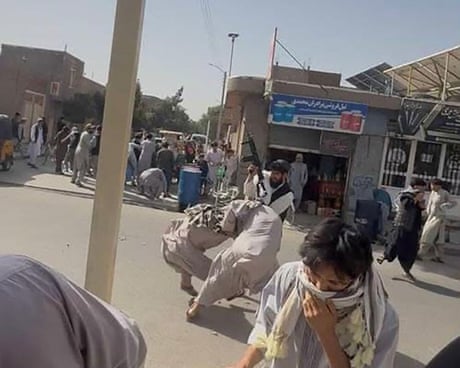
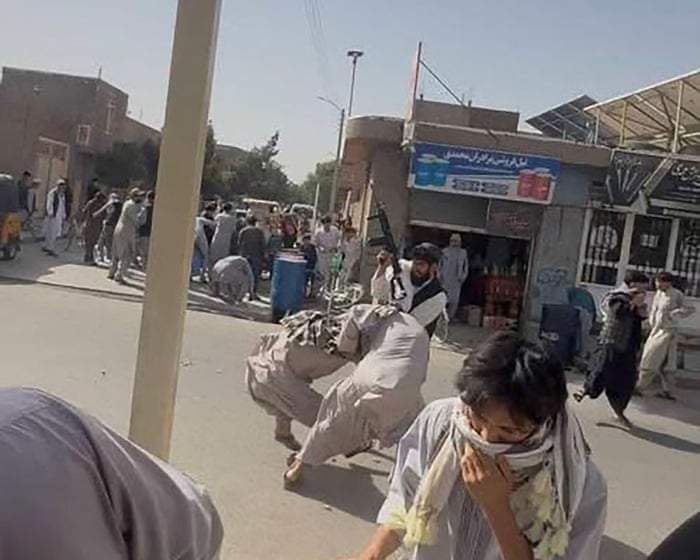
A Taliban crackdown on women’s dress code in Afghanistan has escalated into a rare mass street protest in the western province of Herat, with at least two people, including one boy, killed by security forces.

Officials made a wave of arrests in recent days targeting women and young girls accused of “improper hijab”. Residents say many families had received no information about the whereabouts or condition of those detained.

Continue reading...

© Photograph: Handout

© Photograph: Handout

© Photograph: Handout

  •  

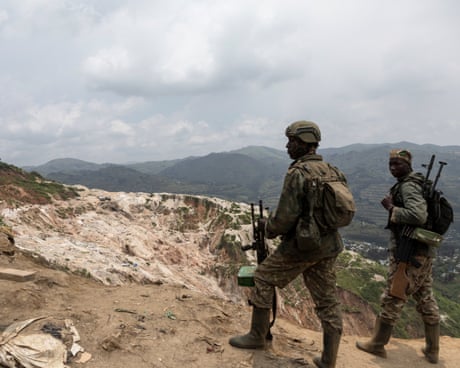
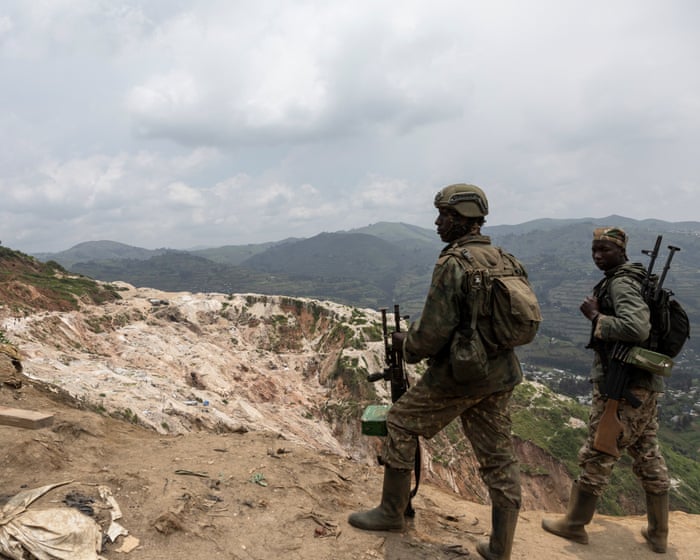
Global brands ‘likely’ using mineral that funds rebels accused of atrocities in DRC, investigation finds

Amazon and Sony among firms that may have sourced coltan, used in phones, from supply chains controlled by the M23 rebels, says Global Witness

Leading global brands including Amazon, Ericsson and Sony are “likely” to have sourced minerals linked to a militia accused of widespread sexual violence, summary executions and torture, a new investigation claims.

The companies allegedly, but unknowingly, acquired coltan smuggled from mines in the Democratic Republic of the Congo (DRC) that are occupied by the M23 militia, which has committed myriad atrocities in eastern DRC.

Continue reading...

© Photograph: Camille Laffont/AFP/Getty Images

© Photograph: Camille Laffont/AFP/Getty Images

© Photograph: Camille Laffont/AFP/Getty Images

  •  

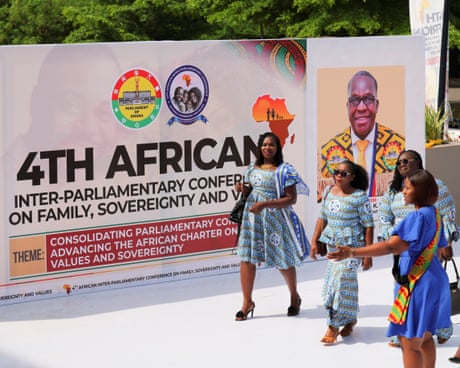
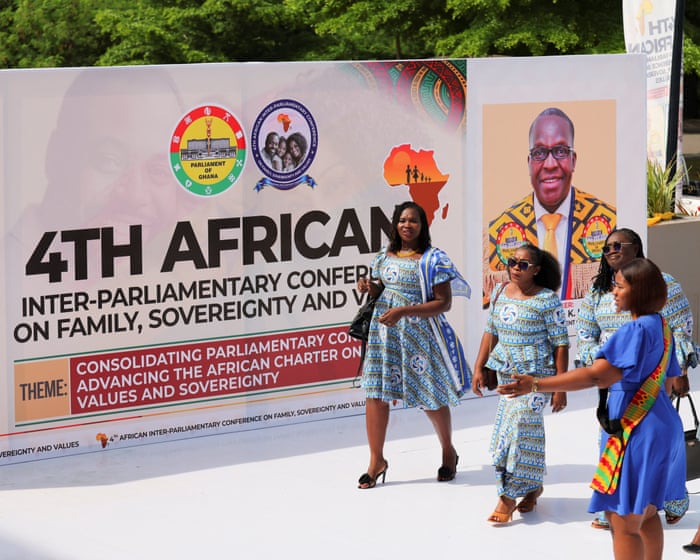
‘Family values’ African charter condemned by rights groups as regressive and dangerous

Draft treaty claims sexual and reproductive health and rights are an existential threat to the African family

An African treaty that rejects longstanding international human rights obligations moved a step closer to becoming policy this week as governments across the continent met in Ghana.

The draft African charter on family, sovereignty and values, seen by the Guardian, asserts that African values and culture are under attack from “foreign ideologies” and urges states to withdraw from any agreements that do not align with the principles of the charter, including the 2003 Maputo protocol, which promotes gender equality and protects the reproductive and health rights of women and girls.

Continue reading...

© Photograph: Francis Kokoroko/Reuters

© Photograph: Francis Kokoroko/Reuters

© Photograph: Francis Kokoroko/Reuters

  •  

Reese’s Book Club Pick ‘The Fine Art of Lying’ To Be Adapted As TV Series By UCP With Scarlett Johansson’s These Pictures Producing

EXCLUSIVE: Fresh off its selection as Reese’s Book Club pick for May 2026, Alexandra Andrews’ The Fine Art of Lying has been acquired for series development at UCP, a division of Universal Studio Group. Andrews is executive producing the thriller drama project along with Scarlett Johansson’s These Pictures. In The Fine Art of Lying, Clare […]

  •  
❌