Disney built an empire on fairytales and talking animals and earworm songs, but it's important to note that they do sometimes go off the beaten path and try something different. Unfortunately, that doesn't always work for them, and this is a great example of that. It wasn't a traditional Disney movie but that's maybe why time has made its reputation stronger and 25 years later, the underrated sci-fi is getting a sequel.
Three Star Wars-themed collaborations from a galaxy far, far away appeal to both longtime and newer fans of the franchise.
We’ve known about Japanese dessert chain Ginza Cozy Corner‘s penchant for mini cake sets for a while now. From home-grown cuties such as Pokémon to international collaborations like Marvel’s Avengers and Pixar films, it seems no characters are safe from getting the Cozy Corner cake treatment–which now includes iconic members of the Star Wars franchise.
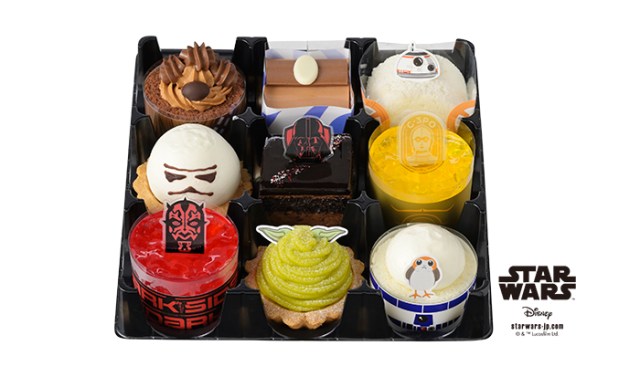
In celebration of the simultaneous U.S. and Japanese premiere on May 22 of The Mandalorian and Grogu film, a direct sequel to the three seasons of the hit Disney+ live-action TV series The Mandalorian, three special Star Wars-themed items are currently available at Ginza Cozy Corner locations throughout Japan and on its online shop. The pièce de résistance is a Nine-Piece Mini Cake Set for 3,564 yen (US$22.49) that pays homage to classic heroes and villains that appear in Episodes I through IX of the core Star Wars film series, spanning over 40 years of film history.
▼ Star Wars Nine-Piece Mini Cake Set
Pictured below, the character contents and flavors are as follows:
● Chewbacca (top left): chocolate and caramel whipped cream cake
● Ahsoka Tano (top center): coffee sponge cake with a layer of caramel whipped cream
● BB-8 (top right): mango whipped cream and yogurt-flavored whipped cream roll cake
● Stormtrooper (middle left): cheese-flavored cream tart
● Darth Vader (middle center): cocoa sponge cake with a layer of chocolate whipped cream
● C-3PO (middle right): tropical mousse cake topped with orange and lemon-flavored jelly
● Darth Maul (bottom left): cake topped with raspberry jelly, berry jam, and mousse
● Yoda (bottom center): matcha whipped cream and matcha-an (sweet bean paste) tart
● R2-D2 with a Porg (bottom right): yogurt-flavored whipped cake with freshly whipped cream
▼ Darth Vader getting the kawaii treatment wasn’t on our bingo card, but we’ll take it.
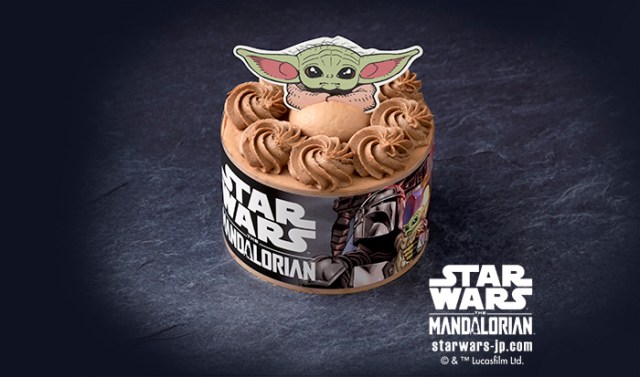
Meanwhile, for viewers who have fallen in love with the more recent cast addition of Grogu, popularly dubbed “Baby Yoda,” a single serving-sized Grogu Chocolate Cake is available for 777 yen.
▼ Grogu Chocolate Cake
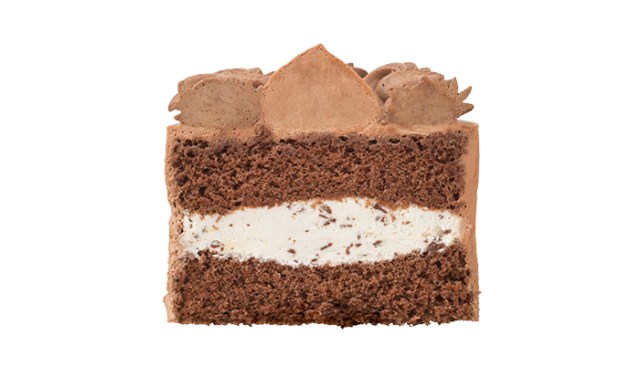
This treat is a fluffy cocoa sponge cake stuffed with a layer of chocolate flake-filled cream and chocolate cream adorning the top.
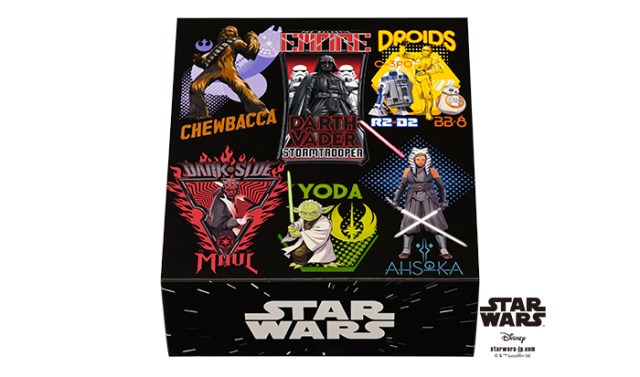
Finally, for those who want a keepsake once the dessert is gone, the Star Wars Sweets Box is the perfect grab for 1,320 yen. It contains eight individually packaged baked goods including two butter madeleines, three Earl Grey madeleines, and three cookies printed with an illustration of the Mandalorian and Grogu that come inside a metallic box designed to look like it was made from Beskar, aka Mandalorian iron.
▼ Star Wars Sweets Box
A stylish two-sided charm reflector keychain is a bonus souvenir.
The above items will be available for purchase through approximately June 25, so place your order before they vanish from this galaxy.
The anticipation for the new film coming out also has us hoping that the Star Wars kabuki play will make a comeback in due time…this time with Grogu.
Have you ever wondered about how Walt Disney’s Snow White and the Seven Dwarves was brought to Germany?
After all, the film is based on a German fairy tale, and it was released on the cusp of World War II. Surely, there would have been a German version. Well, it turns out there was a German dub that was intended to release in Germany in 1939. Unbeknownst to many, including the good folks at Disney, the cast they hired for the German dub had consisted entirely of Jewish exiles living in Amsterdam. Not only that, but these actors had been some of the biggest names in the German film industry before the rise of the Nazis.
After Snow White and the Seven Dwarves premiered in the United States in 1937, Disney quickly moved to create 12 international versions of the film. It wasn’t difficult to secure distribution deals in most countries, but Germany proved to be a tough nut to crack. By 1938, all of the American owned studios had pulled up stakes and left the country due to rising political tensions. American movies could still be released in Germany, but they had to go through UFA, which was the German state-owned film distributor.
Nazi leader Adolf Hitler, and Propaganda Minister Joseph Goebbels, who directly controlled the movie industry in Germany, worked with Disney through UFA to try and secure a deal for Snow White. Hitler was a big fan of Disney, and Snow White was based on a German fairy tale, so he knew they had to show the movie in Germany. To Hitler, having the great Walt Disney adapt a German fairy tale as a feature length animated film was a great national honor. For Disney, going through the government of Germany took a lot more time than negotiating a deal with a traditional, privately owned studio. While they worked out a deal, Roy Disney flew to Amsterdam to oversee the production of the Dutch version of Snow White.
In Amsterdam, Roy Disney worked with local Dutch producer Max Tak, who hired director, actor, and comedian Kurt Gerron to direct the Dutch dub of Snow White. Since Gerron was fluent in German, he was asked if he could also direct a German dub of the film. Gerron was more than happy to take the job offer, as he was part of a community of German speaking actors who had recently moved to Amsterdam. There was one little detail that likely went unnoticed, however. Gerron and his community of actors were Jews from Germany who had fled to Amsterdam after Jews were banned from working in the German film industry.
Dora Gerson
From May 1938 to July 1938, Gerron directed both the Dutch and German dubs of the film. Featured in the cast for the German version were Dora Gerson as the Queen, Otto Wallburg as Doc, Kurt Lillien as Grumpy and Sneezy, Siegfried Arno as Happy, and Gerron himself played the Magic Mirror and Bashful. Each of these actors had been prominent in both film and live performances.
Dora Gerson was a German-Jewish actress who appeared in films alongside Bela Lugosi during the silent era. She had been married to film director Veit Harlan briefly in the 1920s, he would later go on to direct the antisemitic propaganda film Jud Süss in 1940. Gerson fled Germany for the Netherlands in 1936, and would eventually be caught and sent to Auschwitz with her husband and two children. The family was murdered at Auschwitz on February 14th, 1943.
Otto Wallburg was a prominent comedian and actor who performed in dozens of movies in the 1920s and 1930s. He appeared alongside Kurt Gerron in the 1931 comedy Bombs on Monte Carlo, also in 1931 he appeared in The Congress Dances, which was an international sensation. He escaped Germany for Austria in 1933, where he continued working in film until fleeing to France, and then finally the Netherlands. After the German invasion of the Netherlands in 1940, Wallburg was arrested and sent to the Westerbork transit camp, before he was killed at Auschwitz on October 29th, 1944.
Kurt Lilien was an actor who was most active between 1927 and 1933. During this time he appeared in a number of films, including Two Hearts Beat as One starring Lilian Harvey. Lilien also performed in the 1927 silent film The Most Beautiful Legs of Berlin alongside Kurt Gerron. He was killed at the Sobibor Concentration Camp in Poland on May 28th, 1943.
Of those who performed in Snow White, there is no one more historically significant than Kurt Gerron, himself. Unbeknownst to Disney at the time, Gerron had a reputation with the regime. To international audiences, Gerron was Marlene Dietrich’s manager in The Blue Angel, an UFA produced film about a professor who falls in love with a burlesque dancer. To the Nazis, Gerron represented the personification of Jewish excess. In his films, Gerron commonly played the part of the Jewish banker, lawyer, or any sort of greedy businessman. His appearance inspired many of the anti-semitic cartoons published in right-wing newspapers of the 1930s, and in 1940 his image would be used disparagingly in the propaganda film The Eternal Jew. Gerron was the image most German people had in their heads of what a Jew looked like.
Kurt Gernon
The final film directed by Kurt Gerron, long after his work on Snow White was behind him, was a propaganda film “praising” the conditions of the concentration camps. The film was called Thereseinstadt, and it was finished but never released. The Reich had intended to use his international fame to show the world that Jews weren’t being mistreated in concentration camps. Gerron believed producing the film would save him and his wife, but after the film was finished, the two were sent to Auschwitz where they were murdered on October 28th, 1944.
In late 1938, German filmmaker Leni Riefenstahl made a now-infamous trip to Hollywood to promote her documentary Olympia, about the 1936 Berlin Olympics. Riefenstahl was notorious for producing propaganda films for the Nazi party, so you could imagine her presence in Hollywood was about as welcome as a joke in an article about the Holocaust. Walt Disney was the only person in town willing to see her. He even gave her a tour of the Disney studios, showing her concept art and production materials from Fantasia, which was in production at the time. Riefenstahl had hoped to show Disney Olympia, but Disney’s projectionist had refused to screen it, as the projectionist union had taken a vocal stance against Riefenstahl.
It must be noted that Disney only welcomed her as part of negotiations for Snow White, and not because he had any positive feelings toward the Nazi regime. This didn’t matter to the rest of Hollywood, who decided that Walt Disney was an antisemite as a result. Whatever beliefs Disney privately held, this incident was purely business. Germany had the second biggest film market in the world at the time, so when you’re gambling your fortune on a film project, you want to make sure it gets seen in Germany.
Leni Riefenstahl directing
This was the absolute last chance Walt Disney had to sell Snow White to the Germans, but after Riefenstahl returned to Germany having felt slighted by Hollywood, the German government banned American films entirely. Goebbels was willing to make an exception for Snow White, but unfortunately, Kristallnacht, a nationwide pogrom against Jewish people, had occurred at the same time as Riefenstahl’s trip. Disney felt it better to abandon the sale altogether. Tensions in Europe were at a boiling point, and it just wasn’t worth the trouble.
While the German dub of Snow White and the Seven Dwarves wouldn’t see release in Germany, it would premiere in Switzerland in December 1938, as well as Hungary. It wouldn’t be shown publicly anywhere else until after the war, but when the Soviets raided the Reich’s film archive, they found four copies of Snow White. The English version was present, along with the French and Dutch versions, but curiously enough, they also had the German version. It’s been said that Hitler was a fan of the movie, even if they couldn’t show it in Germany, he certainly enjoyed watching it privately. There is no evidence that Hitler knew who starred in the German version, but as Hitler and Goebbels were both avid movie buffs, it wouldn’t be hard for them to pick out Gerron’s voice specifically.
After the war, the film would premiere in Austria in 1948, and finally make its way to Germany in 1950. Through the 1950s and 1960s, German audiences would become familiar with the 1938 version of Snow White, however, in 1966 Disney decided to create a new dub for Germany. This dub would then be replaced by another one in 1992 for the film’s home video release. Both the 1938 and 1966 versions would be sealed away in the Disney vault, not for any reason other than practicality. The latest dub in each language is typically the default version, and there’s no point in giving attention to earlier versions, unless there’s substantial fan outcry to see them.
Disney isn’t necessarily hiding some dark secret, in all likelihood they probably weren’t aware at the time. Had Roy Disney realized the cast he hired was made up of Jews, he most likely would have pulled the plug on the project. Not due to any antisemitism on his part, but because he was trying to sell this movie directly to Hitler. It’s not likely the Disney company were even aware of who dubbed the film in the years following the war when it started to be screened publicly. It was a one and done job where a group of actors were plucked off the streets and paid for a few days’ work.
So, how do we know who starred in the German dub? German-Jewish journalist Paul Marcus, otherwise known as PEM, had fled Germany early on in the 1930s and had started a personal newsletter reporting on Jewish actors and entertainers living in exile. One of these newsletters from 1938 detailed the production of both the Dutch and German dubs of Snow White. This newsletter is backed up by articles from local Amsterdam-based newspapers. It’s because of the underground resistance movement that we have this information today.
Sources
• “Walt Disney’s European Tour in 1935: Germany, Austria, and Switzerland.” The German Way, 4 May 2020, www.german-way.com/walt-disneys-european-tour-in-1935-germany-austria-and-switzerland.
• Giesen, Rolf, and J. P. Storm. Animation Under the Swastika. Jefferson, North Carolina, McFarland, 2012.
• Prisoner of Paradise. Directed by Malcolm Clarke and Stuart Sender. Menemsha Entertainment, 2002.
• “De Nederlandsche Versie van Walt Disney’s Sneeuwwitje.” Nieuwsblad van Het Noorden, 7 May 1938. ·“Hollands Sneeuwwitje Vóór de Zomer Klaar.” Zaans Volksbad, 19 May 1938, p. 14.
• Snow White Archive. “1938 German Dub of Snow White.” Filmic Light, 19 Nov. 2017, filmic-light.blogspot.com/2017/11/1938-german-dub-of-snow-white.html.
• Doherty, Thomas. “When Leni Riefenstahl Came to Hollywood.” The Hollywood Reporter, 23 Aug. 2021, www.hollywoodreporter.com/movies/movie-features/leni-riefenstahl-hollywood-1235001606.
We’ll always have a friend in the Toy Story franchise, which has film #5 coming this summer. First announced in February 2023, the fifth film of the beloved Disney Pixar series has added a new roster of voices to its cast, and it will take on a prevalent theme in the age of AI and […]
It’s time for the 2024 Golden Globe Awards, which will honor some of the year’s best movies and TV shows. The award show will be broadcast live on CBS on Sunday, Jan. 7 from 8 – 11 p.m. You can also stream the ceremony on Paramount+.
The 2024 Best Motion Picture Animated Movies Nominees
There are six nominees for the Best Motion Picture Animated Movies category, each with a unique style and innovative animation. My personal favorite is Spider-Man: Across the Spider-Verse, but The Boy and the Heron is also a strong contender.
The Boy and the Heron : The Winner
The Boy and the Heron is a coming-of-age drama directed by Hayao Miyazaki, one of the greatest living directors of animation. This 2D animation features a mythical heron that visits a young boy as he tries to make sense of the world around him.
Elemental
Dive into a world where Earth, Wind, and Fire live among one another but not together. This “COOL” movie by Disney discusses how cultures, or in this case, elements can work together and understand one another. This uniquely animated love story packs an emotional punch with great visual effects from Pixar.
Spider-Man: Across the Spider-Verse
Welcome to the Spider-verse! This movie is by far my favorite of the nominees! Spider-Man: Across the Spider-Verse is a thrilling animated movie that follows Miles Morales across multiple universes. It pays homage to many versions of the web-slinger’s appearance from comics to TV shows and has a stunning storyline. It’s my personal favorite of the nominees.
Suzume
Suzume is a visually stunning anime directed by Makoto Shinkai. The movie follows a 17-year-old girl named Suzume and a stranger she meets, who team up to prevent a series of disasters across Japan. The film was inspired by the director’s feelings about the 2011 Tohoku earthquake and tsunami and its devastating impact on the country.
The Super Mario Bros. Movie
The Super Mario Bros. Movie has become a hit with audiences of all ages, grossing over $1.3 billion. It incorporates many gaming and contemporary styles of animation from Illumination. The movie delivers a delightful origin story for Mario and Luigi, and its silly and memorable quotes make it a fun watch for everyone. I give it 4 stars out of 5.
WISH
Can Wish, the movie, make its dream come true and win a Golden Globe? The film marks the 100th anniversary of the Walt Disney Animation Studio and follows the story of Asha, a young woman who learns how to make her wishes come true. Although the animation is beautiful and the story is interesting, it’s not one of my favorite Disney movies. However, I did enjoy the references to the studio’s wishing star and some of the characters that have been featured throughout Disney’s history.
EXCLUSIVE: Walt Disney’s first company-wide creative agency, Main Street, has launched with Carrie Brzezinski-Hsu as its Head of Creative Execution. In this role, she oversees the creative talent and production behind Disney’s biggest campaigns and some of the world’s most beloved brands and franchises, spanning entertainment, sports, experiences, consumer products, and more. She will also […]
The most well-known nephews in the Disney canon are Donald Duck’s: Huey, Dewey, and Louie. The trio first made their debut in comic form on October 17, 1937. The following year, in 1938, the trio made their animated debut in the aptly titled Donald’s Nephews. Pretty cut and dry for some of Disney’s most iconic and long-lasting characters. Yet, the characters they were created to counterpart — Mickey’s two nephews — have a more intricate debut history. Morty and Ferdie are not defined by a single debut, but by a prolonged process of instability across media, where character is constructed, obfuscated, and re-established.
The duo first appeared on the September 18, 1932 Mickey Mouse Sunday strip. In their initial comic appearance, they are presented as children of a Mrs. Fieldmouse—then not explicitly identified as Mickey’s sister. Their initial appearance does not explicitly identify them as relatives of Mickey, yet this quickly becomes implied the following week on September 25 when they refer to Mickey as “Unca Mickey”. What this first Sunday page provides is a critical foundation exemplifying their core characteristics: mischief and havoc.
(above) The first strip featuring Mickey’s nephews, and (below) a panel from the September 25 panel with the first “Unca Mickey” reference.
Their havoc manifests metatextually as their antics overwhelm finer details of characterization, resulting in neither child being named until the October 30, 1932 Sunday page. This month-long interregnum sans naming reflects the instability of the duo’s early characterization. This is further emphasized within the comic panels as only one nephew is given a name—Mortimer Fieldmouse—leaving the other nephew unnamed.
Within the finer details of Disney lore, this name—Mortimer—is often associated with an earlier naming suggestion for Mickey himself. The suggestion came from Walt Disney’s wife, Lillian, at the same time that Walt was navigating the loss of his rights to Oswald and uncertainty over his own future. Metatextually, the presence of a Mickey relative named Mortimer reinforces the instability of character, and reminds readers that these stories exist within the early days of Mickey’s own rapidly defining world.
However, this page also gives some definition as it is the first instance of Mickey definitively referring to the duo as his nephews.
(above) October 30, 1932 strip featuring the first instance of a nephew being named.
Despite the comic strip clearing away initial ambiguity, more would implant itself into the Disney ecosphere with the 1933 cartoon short Giantland. The comics’ examples of a nephew duo are quite clear, but Mickey’s role as an uncle to mouse children would become more ambiguous.
This short opens with a large Mouse nibling group listening to Mickey read a bedtime story. The niblings call Mickey “Uncle Mickey,” but the short adds in further ambiguity by not identifying any of the children explicitly, thus making it unclear which are the two nephews present in the comics—or whether none of them are, and if Mickey might only be the niblings’ honorary uncle.
Interestingly, the Giantland cartoon would be adapted into a Sunday storyline that ran from March 11, 1934 until April 29, 1934. As a result of deriving elements from the pre-existing short, this comic strip storyline too has the ambiguous nature of which child is whom. Each Sunday would begin with Mickey telling his niblings about another part of the adventure against Rumplewatt the Giant. However these children—like in the cartoon—are never distinctively identified. Through background actions the audience can see more mischief being wrecked upon Mickey’s home, thus indicating that this quality befalls the numerous Mickey niblings.
Concurrent with Giantland’s release, the publisher David McKay introduced even more ambiguity when it published the “Mickey Mouse Story Book,” a repackaging of material from the 1931 book “Mickey Mouse Movie Stories,” consisting of images from 1930 and 1931 cartoons with alternative prose describing the plots. The cover exhibits Mickey—alongside a sleepy Pluto—reading a book to two unidentified mouse children.
The cover draws a connection to Giantland as it implies that the contents of the actual book—the aforementioned cartoon reuse—is what is being read to the children: a storytelling session similar to that in the Giantland cartoon. Since the interior of the physical book is repeated from 1931, however, it contains no framing devices, mentions, or references to the 1933 cover’s children audience. Thus this cover leads audiences to identify the duo as either Mickey’s nephews or two of the Giantland niblings, or both, making their relationship to Mickey somewhat vague once again.
(It must be noted that the “Mickey Mouse Story Book” bears only a 1931 copyright date, leading many in the past to presume the book was actually released in 1931—with its cover illustration thus representing the first appearance of mouse nephews anywhere. But as period newspapers and bookstore advertisements show, the “Story Book” was not actually released until late 1933; its 1931 copyright date refers only to the book’s interior contents, reprinted as they were from 1931.)
On June 16, 1934, Mickey’s nephews—presumed to be Morty and Ferdie, although never referred to by name—make a decisive return in the animated cartoon Mickey’s Steam Roller. This would be the duo’s first distinctive animated appearance as a duo sans any other unnamed mice children. Carrying over the common traits from the comics, the duo play and cause mischief throughout the short. The year 1934 also saw the instance of the original Orphan’s Benefit—remade in color in 1941—wherein Mickey and friends perform for many mice children. Though, based on the title, it can’t be assumed that these children are all Mickey’s relatives. However, it does continue to lean into the grey area of Mickey Mouse caring for or entertaining quantities of identical children.
The nephew duo would return to the Sunday strip again on March 31, 1935. Here, Mickey refers to them as “my nephews, Morty and Ferdie Fieldmouse!”, thus—for the first time—giving both boys distinctive names. In this newest appearance, they continue to delight in mischief, but they also foreshadow their more famous counterparts when interacting with Donald Duck.
Donald, not yet an uncle, is upset about being called one. Little does he know… (March 31, 1935).
The duo would serve as the prototypes for what would eventually become Donald’s nephews—both in messing with him and in how they caused disruption. On the Sunday page from April 7, 1935, the duo bait Donald into impressing them. Donald ends up overexerting himself, thus losing control and crashing a croquet ball into Mickey’s house. This encounter feels reminiscent of The Hockey Champ, wherein Donald’s hubris becomes his downfall as he attempts to one-up his nephews with his skills.
Before the year was up, the duo would return again on December 15, 1935. Within these appearances, the duo reinforce the role that they came to inhabit within the strip. As Disney historian David Gerstein puts it:
“By 1935 a satisfying middle ground was achieved, with Mickey portrayed less as a parent, more as a big brother.”
From this point on, the duo would appear at various intervals within the comics. However, when the duo appeared outside of the newspaper realm, these appearances continued to be more ambiguous, less defined, and lean into the larger nibling groups.
In one 1937 book entitled “Mickey Mouse and His Friends” a trio of mice niblings appear in a single image before a text adaptation of Mickey’s Elephant. Entire crowds of niblings—often, as before, identified as orphans—make further animated appearances in Gulliver Mickey (1934), Orphans’ Picnic, Mickey’s Circus (1936) and Pluto’s Party (1952). Morty and Ferdie themseves make another animated appearance in a blink-and-you-miss-it cameo in 1938’s Boat Builders; when a crowd assembles to watch the launch of Mickey’s, Donald’s, and Goofy’s boat, the duo can be seen climbing up a dock piling at the left of the shot..
Mickey’s nephews might not have stuck around as prominently as other recurring characters, but their early appearances were hugely influential. Their exact roles and status took time to become explicit, and the two would often fade out into ambiguous crowds of many mice children. Yet they helped to establish Mickey as an authority figure and companion to kids within his universe. Morty and Ferdie also acted as the prototype testing ground in small ways for their more popular counterparts: Huey, Dewey, and Louie.
Since the 1980s, the duo have made newer appearances in animation including as role players in 1983’s Mickey’s Christmas Carol, with Morty as Tiny Tim, and in 2017’s The Scariest Story Ever: A Mickey Mouse Halloween Spooktacular. The nephews have also remained recurring characters in comics from the 1930s up to the present day, logging hundreds of appearances annually around the world. Now as Mickey’s earliest stories come into the public domain each year , fans and readers alike have the opportunity to better understand Morty and Ferdie’s origin: not to see them as only static figures lost in the Disney vault, but for the influential voice that they are. The public domain also allows the creators to give the duo new creative expressions that were overlooked at their original inception. Plus, some enterprising person might even feign to name each and every nibling.
NOTES: As of 2026, all published Mickey Mouse cartoons and printed material from 1930 and before are in the public domain. In the course of researching this piece, I discovered that the Mickey Comics from 1931 through October 1935 were not renewed. The earliest renewal for the strip that I could locate was for the week dated November 18, 1935. These weekly renewals continued on from this date. The mentioned cartoons from 1932-1941 as well as the 1937 Donald Duck comic are still copyrighted until the end of the 95th year following their publication.
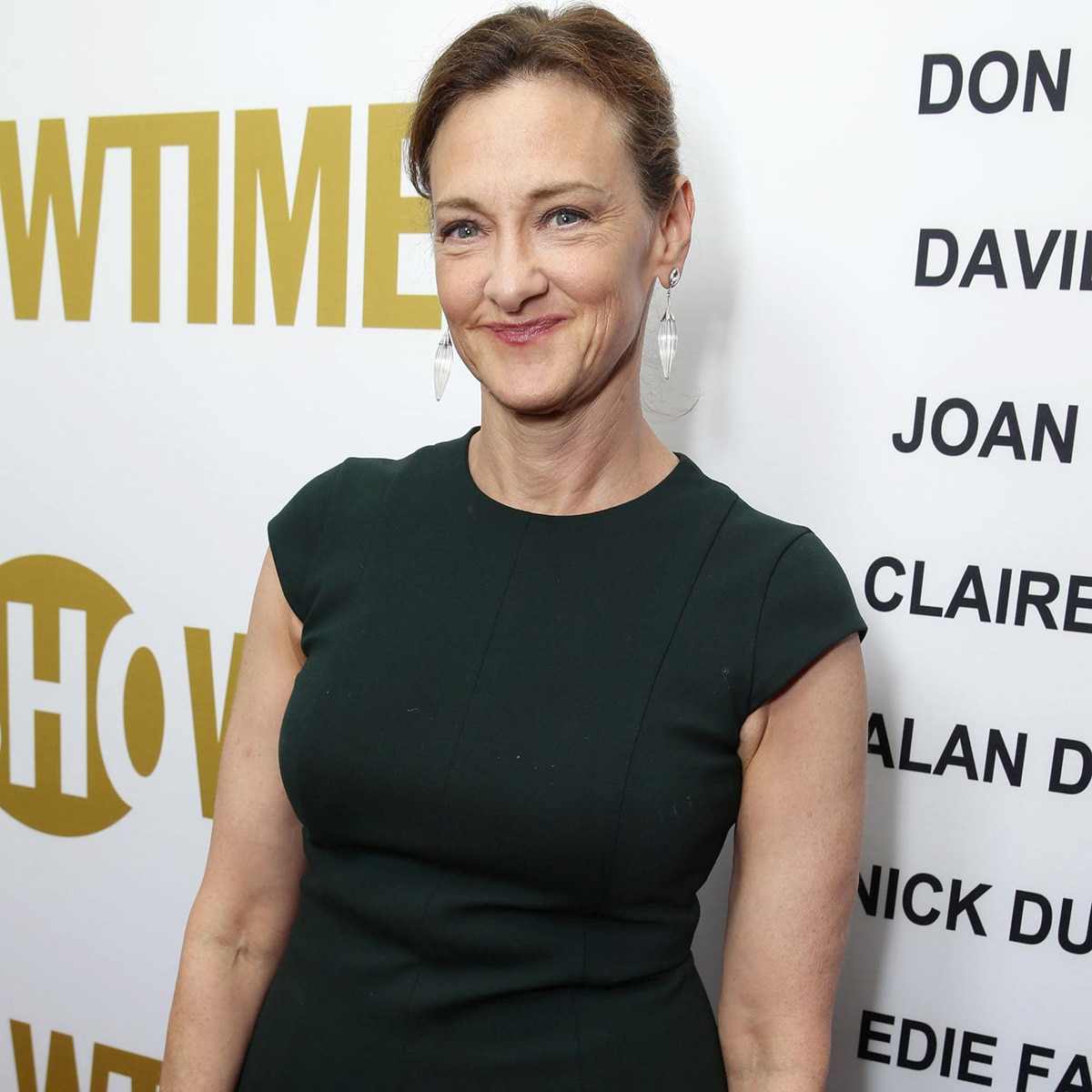
Sweet mother of Abraham Lincoln, it’s Joan Cusack.
The iconic actress made her first appearance on a red carpet in 11 years, joining costars Tim Allen, Tom Hanks and Greta Lee for the U.K....
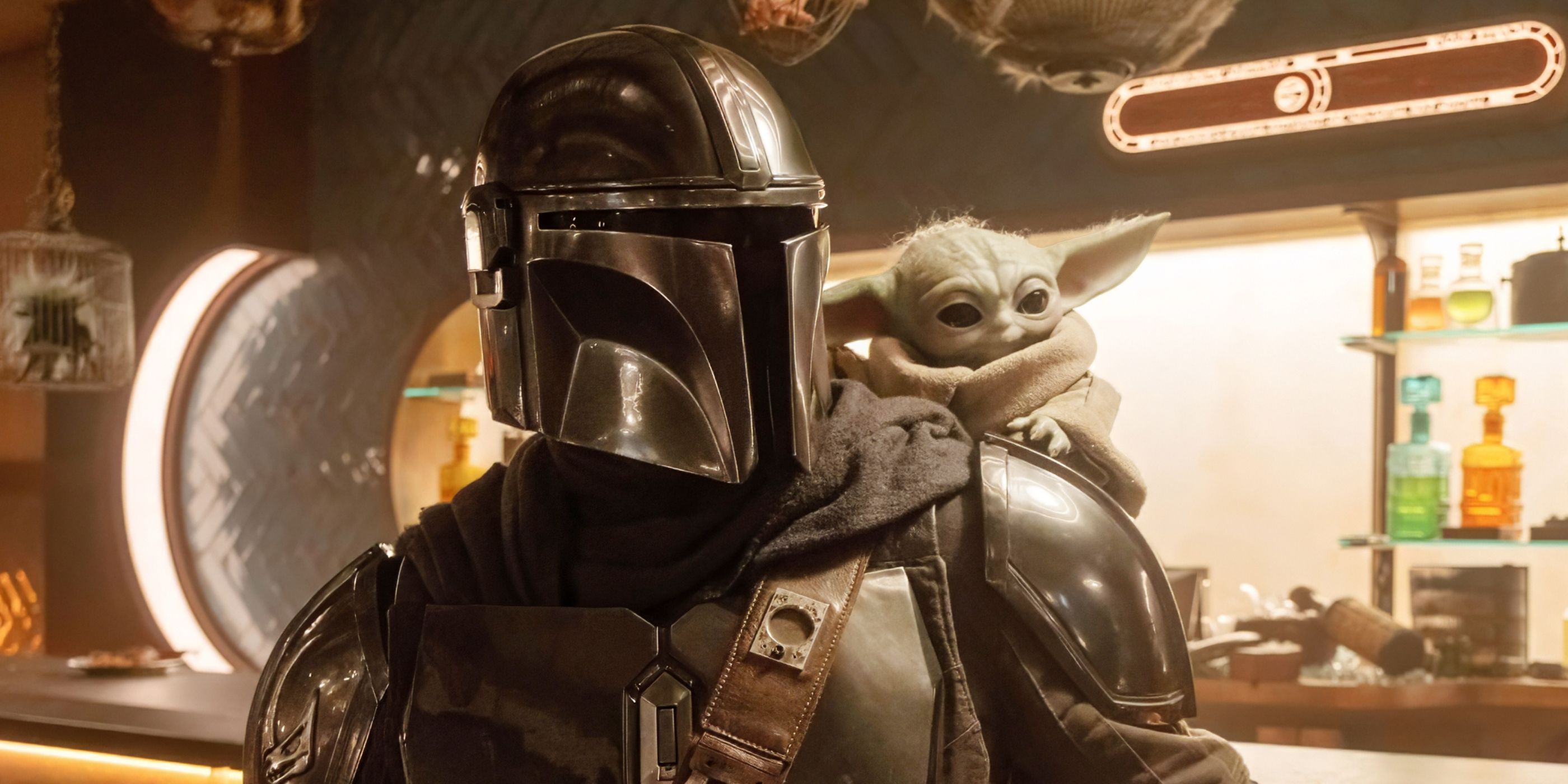
Spoiler Alert: This list contains spoilers for The Mandalorian and Grogu.After seven long years, Star Wars finally returned with a new movie, even if the wait wasn't that bad because of the many Disney+ TV shows. One such series was The Mandalorian, easily the most popular show Disney+ put out because of its badass action and adorable star, Grogu. With the success of the show, Disney felt like a movie sequel would be the best return to the big screen, and while that is up for debate, there is no denying that Star Wars: The Mandalorian and Grogu is one of the most enjoyable Star Wars movies of all time.
Nowhere does royalty like the U.K. so it makes sense that the country is set to welcome an entire musical experience themed around the Disney Princesses. “Disney Princess – The Concert” will debut in Warwick in March 2027 followed by a major tour across the U.K. and Ireland including stops in Swansea, Brighton, Hull, Manchester, […]
Taylor Swift is in her Tay Story era. The musician stepped out to join the Toy Story 5 cast at the Los Angeles premiere on Tuesday evening on the heels of her new original song for the film “I Knew It, I Knew You,” breaking records last week. The singer-songwriter stopped for photos in promotion […]
Disney Advertising has sold out of inventory on the NBA Finals through the first four games, with a number of brands motivated by the unusual elements in this year’s title matchup. The New York Knicks, who haven’t been to the Finals since 1999 and haven’t won a championship since 1973, lead the San Antonio Spurs […]

 Login
Login









 Sweet mother of Abraham Lincoln, it’s Joan Cusack.
The iconic actress made her first appearance on a red carpet in 11 years, joining costars Tim Allen, Tom Hanks and Greta Lee for the U.K....
Sweet mother of Abraham Lincoln, it’s Joan Cusack.
The iconic actress made her first appearance on a red carpet in 11 years, joining costars Tim Allen, Tom Hanks and Greta Lee for the U.K....