Instagram has reportedly removed millions of bot and inactive accounts in a major platform-wide cleanup drive in 2026, triggering sharp drops in follower counts for celebrities, influencers and brands across social media.
According to reports circulated by PopBase, several high-profile personalities witnessed sudden declines in their follower numbers after the purge. Among the most affected was Kylie Jenner, who reportedly lost more than 14 million followers following the cleanup exercise.
Several other creators, influencers and public figures also saw significant overnight drops in followers and engagement figures as the platform removed fake, automated and inactive profiles.
The large-scale action quickly sparked reactions online, with users dubbing it the “Great Purge of 2026”.
Users across social media platforms shared screenshots showing steep declines in follower counts, while some joked that even major verified accounts were not spared.
One user on X claimed that Instagram’s own official account had reportedly lost nearly 9 million followers during the purge.
“Even Instagram's own official account reportedly lost over 9 million followers during the cleanup. Nobody was safe,” the user wrote.
Instagram routinely conducts such cleanups to improve authenticity and reduce fake engagement on the platform. Bot accounts are often used to artificially inflate likes, comments, followers and engagement metrics for influencers, brands and content creators.
Responding to the reports, Meta said the cleanup was part of its regular efforts to remove inactive accounts and maintain platform integrity.
A spokesperson for Meta clarified that active users and genuine followers were not affected by the process.
“As part of our routine process to remove inactive accounts, some Instagram accounts may have noticed updates to their follower counts. Active followers remain unaffected, and any restored suspended account will be included in the count again after verification,” the spokesperson said.
The reported purge has once again reignited conversations around fake engagement, purchased followers and the pressure on influencers and brands to maintain large social media audiences.
Gas just broke $4 a gallon again — and this time, it happened in weeks, not months. The war with Iran and the closure of the Strait of Hormuz triggered what the International Energy Agency called the largest oil supply disruption in history, cutting roughly 20% of global petroleum from accessible markets and sending U.S. pump prices surging more than 30% since late February. Diesel has climbed above $5.60 a gallon. Analysts warn that if the Strait stays shut through summer, prices could reach $6–7 a gallon.
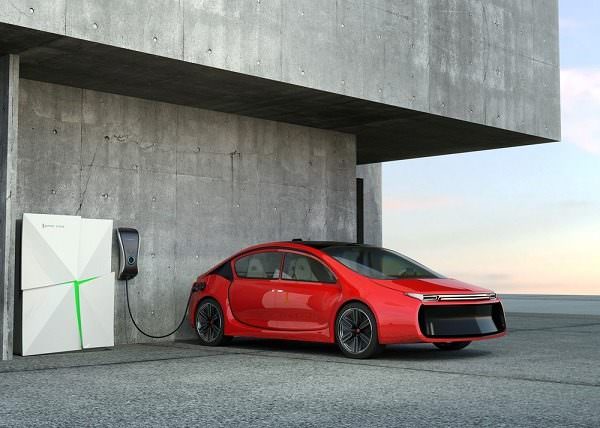
At the same moment, the federal government pulled a $7,500 lever it had been offering EV buyers for three years. Trump’s One Big Beautiful Bill Act ended the IRA’s clean vehicle tax credit on September 30, 2026, sooner than almost anyone expected. For anyone considering an EV right now, both of these developments matter enormously, and they cut in opposite directions.
Here’s how EV math works in April 2026.
6 Benefits of Electric Cars
The benefits of owning an EV arguably outweigh any cons — from spending less money in the long run to making fewer trips to the repair shop. And it doesn’t stop there.
1. Gasoline Prices Have Never Made the Cost-Per-Mile Case for EVs More Clearly
With U.S. gas prices above $4 a gallon and diesel topping $5.60, the fueling cost gap between EVs and gas vehicles has widened sharply. The EIA’s March 2026 short-term outlook projected average retail gas prices of $3.34 per gallon for the full year — but that forecast was built on assumptions about the Strait reopening quickly. Prices are already well above that. Electricity prices, by contrast, remain stable and domestically produced.
A typical EV running on home electricity still costs roughly one-third as much per mile as a comparable gas vehicle — a savings that grows with every ten-cent jump at the pump. The current energy shock makes that argument harder to dismiss.
2. Energy Independence Means Something Different Now
The Iran war viscerally confirmed energy analysts argument that American households are deeply exposed to disruptions on the other side of the planet, even as the U.S. produces record quantities of domestic oil. Global crude oil prices are set by global markets, and domestic production buffers the shock but doesn’t eliminate it.
Charging an EV from the grid — or better, from rooftop solar — can insulate a household from price shocks. It’s a form of energy resilience that’s worth taking seriously as a financial and practical argument, not just an environmental one.
3. EV Range Has Left ‘Range Anxiety’ Behind
The 2021 version of this article listed 60-to-100 miles as a typical EV range. That figure is obsolete. As of 2026, the Lucid Air leads at 410 EPA-rated miles, the Hyundai IONIQ 6 Long Range delivers 361 miles, and the Chevrolet Equinox EV — the best-selling non-Tesla EV of 2025 — offers 319 miles starting under $35,000. Even mid-range EVs from mainstream brands now routinely clear 250 miles per charge.
The range question has effectively been answered for most everyday use cases. Long-distance travel remains more planning-intensive than gas, but it’s a planning question, not a stranding question, for most drivers on most routes.
4. Charging Infrastructure Has Reached Critical Mass
As of January 2026, the U.S. had nearly 68,000 public DC fast-charging ports, a 33% increase compared to 2024. Tesla’s Supercharger network alone accounts for over 52% of fast-charging stalls, and more than two-thirds of those are now open to non-Tesla vehicles. Ford, GM, Rivian, Hyundai, Kia, Mercedes-Benz, Volvo, and Stellantis have all adopted NACS, effectively granting their drivers access to the Supercharger network via native ports or adapters.
Reliability, long the Achilles heel of non-Tesla charging facilities that were often out of commission, is also improving. New stations are being built with redundant chargers, remote monitoring, and real-time availability data integrated into vehicle navigation. The experience of pulling up to a broken charger on a long trip is becoming less common, though rural coverage gaps persist.
5. Maintenance Costs Remain Lower — and the Gap Is Growing
EVs require no oil changes, no exhaust system. They need fewer brake replacements because regenerative braking extends pad life substantially. And they have significantly fewer moving parts subject to wear. A Consumer Reports analysis drawing on survey data from hundreds of thousands of members found that EV owners spent about half as much on maintenance and repair as owners of comparable gas vehicles; that’s an average savings of $4,600 over the life of the vehicle.
With inflation squeezing household budgets and the Iran war likely to push repair and parts costs higher as diesel-driven supply chain expenses rise, lower maintenance overhead matters more in 2026 than it did even a year ago.
6. State Incentives Fill Some of the Federal Gap — For Now
The federal $7,500 clean vehicle credit is gone. But the replacement focused on American-made cars makes up the gap. The One Big Beautiful Bill introduced a federal auto loan interest deduction of up to $10,000 annually through 2028, available for U.S.-assembled EVs financed with new loans. It’s a deduction rather than a credit, meaning it reduces taxable income rather than tax owed directly, and it phases out for households with incomes above $100,000 for a single person and $200,000 for couples.
State incentives come in many forms and have different eligibility rules. Several states with high EV adoption still offer significant savings, which are especially important now that federal credits are no longer available.
Colorado provides a $750 state tax credit for buying or leasing a new EV with an MSRP up to $80,000. There is also an extra $2,500 credit for EVs priced under $35,000, so budget-conscious buyers can save up to $3,250. You can assign the credit to a participating dealership and get the discount at the point of sale, so you do not have to wait until you file your taxes.
New Jersey’s Charge Up program gives up to $4,000 in point-of-sale rebates for eligible new battery-electric vehicles, applied directly at the dealership through June 30, 2026. The state plans to keep EV incentives active through 2030, with funding renewed each year. This is one of the strongest long-term commitments among states.
Oregon’s program has some important updates. The Standard Rebate, which offered up to $2,500 for any Oregon resident, was suspended in September 2025. The Charge Ahead Rebate, which provided up to $7,500 for income-qualified buyers, was suspended on December 5, 2025 due to limited funding. If you bought an EV during the eligible period, you still have six months from your purchase date to apply. Approved applications may be put on a waiting list for payment in spring 2026. New funding rounds may happen, but they are not confirmed yet. Check the Oregon DEQ’s program page before counting on the rebate.
California’s Clean Cars 4 All program is one of the most generous for income-eligible buyers. Low-income residents in certain air districts can get up to $12,000 toward an EV purchase, plus up to $2,000 for home charging or prepaid charging credits. If you do not need to scrap an old vehicle, you can get up to $7,500 through the Driving Clean Assistance Program. Both programs are income-based and run by regional air districts. Use the state’s DriveClean incentive search to see what is available in your ZIP code.
Massachusetts provides a $3,500 rebate through the MOR-EV program for buying or leasing a new qualifying EV with an MSRP under $55,000 at participating dealerships. If you meet income requirements, you can add another $1,500 through MOR-EV+, for a total of $5,000. There is also a $3,500 rebate for used EVs, but only for income-qualified buyers.
New York’s Drive Clean Rebate gives up to $2,000 off the purchase or lease of over 60 new EV models. The rebate is applied at the point of sale by participating dealerships across the state, and there is no income requirement. The amount depends on the vehicle’s range: you get the full $2,000 for EVs with over 200 miles of range on a 36-month lease or purchase, $1,000 for 40 to 199 miles, and $500 for shorter-range models or those with MSRPs above $42,000.
All of these programs depend on available funding and may change their rules. Check the DOE Alternative Fuels Data Center for the latest information before you buy.
Many automakers are also stepping in with manufacturer cash incentives and subsidized lease deals to offset the lost federal credit. Hyundai, for example, cut the price of its 2026 IONIQ 5 by nearly $10,000.
Photo: Shutterstock
5 Drawbacks of EVs
Of course, nothing is perfect, and electric cars are no exception. There are a few important factors to consider before signing on the dotted line at the dealership.
1. The Federal Tax Credit Is Gone — And the Replacement Is More Complicated
The $7,500 IRA clean vehicle credit that made EVs significantly more accessible to middle-income buyers expired on September 30, 2025. The $4,000 used EV credit expired at the same time. The EV charger installation credit survives through June 30, 2026, but only in eligible census tracts, such as low-income communities and non-urban areas.
The loan interest deduction that replaced the purchase credit is available only to buyers who finance a U.S.-assembled EV, ruling out cash purchases and vehicles assembled in Canada or Mexico (check the vehicle’s VIN: U.S.-assembled vehicles start with 1, 4, 5, or 7). This program is also an annual deduction on taxable income rather than a dollar-for-dollar credit, which means buyers in lower tax brackets get proportionally less benefit.
The net result is that the out-of-pocket cost of EVs is higher upfront in 2026 than in 2024–2025 for most buyers who don’t live in a high-incentive state. Automaker discounts and competitive leasing help, but the headline sticker shock is real.
2. Charging Can Still Be Slow — And Fast Charging Carries a Cost
DC fast charging, which can replenish an EV from 10% to 80% in 15 to 45 minutes depending on the vehicle, is increasingly available. But it comes at a premium: public fast charging costs significantly more per kilowatt-hour than home charging, and some networks charge idle fees after your session ends, so don’t leave your EV hooked up longer than needed. Home Level 2 charging (overnight, plugged into a 240V outlet) remains the most cost-effective option but requires an upfront equipment investment, and not everyone has access to dedicated parking.
The EV charger tax credit’s narrowed eligibility means many urban apartment dwellers and suburban homeowners outside those tracts get no federal help with installation costs.
3. Upfront Cost Remains Higher Than Comparable Gas Vehicles
The Chevrolet Equinox EV starts at $34,995. That’s genuinely competitive, and several EVs now undercut the critical $40,000 price point. But comparable gas hybrids remain several thousand dollars cheaper at purchase, a gap that the loan interest deduction only partially closes, and only over several years of ownership.
The economic argument for EVs is stronger over the lifetime of the vehicle than at the point of purchase. For buyers who are payment-sensitive or unable to finance, the math favors gas vehicles in the short term, even as gasoline prices strain monthly budgets.
4. Rural Charging Gaps Persist
The Biden administration’s $5 billion National Electric Vehicle Infrastructure program, which was funding charger buildout along highway corridors including in rural and underserved areas, was suspended by the Trump administration in early 2025. Private investment continues, but it concentrates in high-traffic corridors and urban markets where utilization rates justify the capital.
For drivers in rural areas or anyone frequently traveling through them, this remains a practical constraint. Home charging covers most daily use, but highway travel through low-density regions still requires careful route planning.
5. Policy Uncertainty Makes Long-Term Planning Harder
The EV market has experienced whiplash between 2022 and 2026 due to the IRA’s expansion of credits and their accelerated elimination. The OBBBA’s auto loan deduction expires at the end of 2028. Fuel economy standards have been relaxed. Several states are fighting against preemption of their own EV mandates. HOV lane access for EVs has been eliminated in New York and California.
None of this changes the fact that EVs make environmental or financial sense over a 10-year ownership horizon. It does mean that buyers should research current incentives carefully before purchase, verify vehicle assembly origin, and not assume that today’s program landscape will look the same in two years.
What You Can Do
If you’re weighing an EV purchase in 2026:
Check your state’s current incentive programs at the DOE Alternative Fuels Data Center (afdc.energy.gov) before assuming federal credits apply — they don’t.
Verify vehicle VIN origin before financing: only U.S.-assembled EVs (VIN starting with 1, 4, 5, or 7) qualify for the new loan interest deduction.
Request manufacturer incentives directly: automakers including Toyota, Hyundai, Ford, and GM have introduced their own cash discounts and subsidized leases to offset the lost federal credit.
Model the 5-year total cost, not just the sticker price: fuel savings, reduced maintenance, and available incentives often close the gap faster than the purchase price suggests.
If you rent or lack dedicated charging, factor public charging costs into your fuel savings estimate — DC fast charging at public stations costs more per mile than home Level 2 charging.
For rural buyers, check PlugShare or ABRP (A Better Route Planner) to map charging availability along your most common routes before committing to an electric vehicle—you’ll find the gaps are closing.
Editor’s Note: This article was originally written by Stephanie Braun on May 3, 2017, and was most recently updated in April 2026. Feature image courtesy of Shutterstock.
Electric vehicles are becoming more popular in Canada, according to a new survey report, but a large number of Canadians believe cold temperatures are a reason not to consider one.
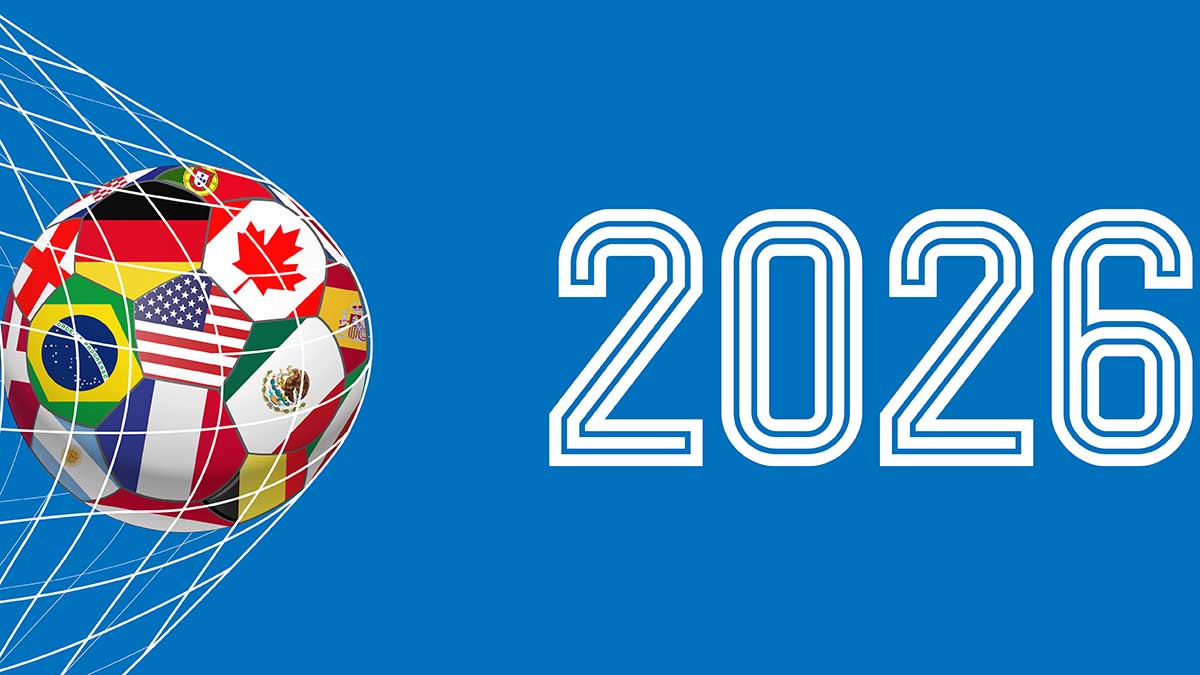
Nine million tons of carbon dioxide equivalent. That is the projected climate cost of the 48-team, three-country, 16-city soccer tournament that kicks off June 11 in Mexico City — nearly double the average emissions of every World Cup held between 2010 and 2022.
The figure comes from a peer-reviewed analysis published by Scientists for Global Responsibility, the Environmental Defense Fund, Cool Down, the Sport for Climate Action Network, and the New Weather Institute. Their conclusion: FIFA’s decision to expand the tournament and spread it across a continent has locked in a climate footprint that no amount of host-city recycling or LED lighting can offset.
Which makes the question of which host cities are doing serious sustainability work more important, not less. Their practices will outlast the tournament.
The Problem Is Structural
World Cup-related team air travel will account for roughly 7.7 million tons of CO2-equivalent — about 85% of the total, according to the SGR analysis. That is the direct consequence of two FIFA decisions. First, the tournament grew from 32 to 48 teams and from 64 to 104 matches. Second, FIFA chose to hold those matches across Canada, Mexico, and the United States rather than concentrate them in a single region.
The contrast with the previous tournament is stark. Qatar 2022 kept its eight stadiums within 34 miles of each other. The shortest distance between 2026 stadiums, from MetLife in New Jersey to Lincoln Financial Field in Philadelphia, is 95.5 miles. Most teams’ itineraries cover thousands of miles. One UEFA playoff winner, according to a Fossil Free Football analysis, could travel Toronto to Los Angeles (2,175 miles), then Los Angeles to Seattle (932 miles), then, in the knockout rounds, another 2,500 miles to Boston.
FIFA does not set binding emissions limits for host cities, and it did not address the underlying decision to spread the tournament across North America. SGR’s researchers urged FIFA to reverse the team expansion, set mandatory environmental standards, and end sponsorship deals with high-emitting companies, including the Saudi oil company Aramco, whose sponsorship is estimated to result in an additional 30 million tons of CO2e due to energy sales linked to the tournament’s promotion.
The Heat Risk Nobody Planned For
Climate change is not just an abstraction measured in tournament emissions. It is a condition players and fans will experience in real time. The SGR/EDF report assessed heat, flooding, and extreme weather risk at all 16 stadiums. Six face extreme heat stress due to Wet Bulb Globe Temperatures above 80°F, the threshold where exertion becomes dangerous. Eight of the 16 cities require what the researchers called immediate environmental intervention. Four need critical intervention, according to the report.
AT&T Stadium in Arlington, Texas, which will host nine World Cup matches — more than any other venue — experiences 37 days per year above 95°F, with July wet bulb readings that exceed FIFA safety thresholds.
Houston’s NRG Stadium faces simultaneous heat, flooding, and wildfire risk.
Los Angeles contends with wildfire smoke.
Miami faces hurricanes.
Where Host Cities Lead, and Where They Lag
A sustainability ranking published by World Sports Network in April 2026 attempts to score the 16 host cities across transit access, electric vehicle infrastructure, waste, air pollution, urban greening, and greenhouse gas emissions. The methodology has limits — it weights all factors equally, uses stadium-specific data alongside city-wide data, and includes some questionable proxies — but its directional finding is consistent with what urban sustainability researchers have long documented about the climate in North American cities.
Vancouver tops the rankings. British Columbia generates roughly 95% of its electricity from renewable sources, largely hydropower. BC Place sits in the center of Vancouver, with 26 public transit stops within a 10-minute walk. Fans can reach it by SkyTrain or bus. That single design decision eliminates most of the vehicle trips and parking-lot sprawl that define a typical U.S. stadium day.
Boston ranked second, the highest-scoring U.S. city. That is less about inherent greenness than about what severe flooding has forced the city to prepare for. Boston experienced 19 days of flooding in 2024, and sea levels around the city are projected to rise 20 centimeters by 2030 relative to 2000. The city’s Building Emissions Reduction and Disclosure Ordinance requires large buildings to cut emissions to net zero by 2050, with interim targets that have already tightened performance at Gillette Stadium’s surrounding infrastructure.
Mexico City placed third, Toronto fourth, Monterrey fifth. The pattern shows that four of the top five cities are outside the United States, even though 11 of the 16 host cities are American. Mexico City’s transformation from one of the most polluted major cities in the world into one of the Americas’ most active urban reforesters, with over 27 million trees and plants added between 2018 and 2021, is the kind of long-horizon work that does not fit inside a tournament timeline but shapes what that timeline makes possible.
The American Transit Problem
Every U.S. host city except Boston falls in the bottom half of the WSN ranking, and the reason is almost always the same: transit.
AT&T Stadium in Arlington has no public transit stops within a 10-minute walk. Hard Rock Stadium in Miami, which will host seven matches, sits 17 miles north of downtown Miami with no rail connection. SoFi Stadium in Inglewood, MetLife in East Rutherford, and NRG in Houston all require a car, a shuttle, or a rideshare for most attendees.
Dallas-Fort Worth is ranked third in the world for transportation-related greenhouse gas emissions, a structural problem no single event can fix. The Dallas organizing committee has built a sustainability plan in collaboration with the University of Texas at Arlington’s chief sustainability officer, Meghna Tare. It addresses waste management, single-use plastic reduction, composting, and community legacy. The North Central Texas Council of Governments has designed a charter bus system to fill the transit gap for the nine matches AT&T Stadium will host. These are real efforts. They also show that when infrastructure is car-dependent, event-specific workarounds can reduce harm but don’t substitute for the public transit that does not exist.
What This Means Beyond the Tournament
The 2026 World Cup will be a 34-day event watched by a projected 5 million in-person fans and up to 6 billion viewers worldwide. The emissions it generates will dissipate into an atmosphere that cannot tell tournament carbon from commuting carbon. What will persist are the infrastructure choices each host city makes now, including whether transit lines are extended or not, stadium renovations that meet LEED standards or do not, food recovery programs that continue operating after the final match or get packed away with the branded signage.
These are not reasons to hate world football. It’s the Beautiful Game, and its governing body, FIFA, can make changes to reduce the tournament’s impact and protect players from heat-related injuries.
Female mud snails are developing male reproductive organs near marinas. In Florida, alligators living in lakes contaminated with pesticides are being born with smaller genitals and disrupted hormones. Sea turtle populations are becoming almost entirely female as nesting sands get warmer. The same types of chemicals responsible for these wildlife changes are now found in human placentas, testes, and semen. A new peer-reviewed review brings all of this evidence together for the first time.
A cross-species review published April 23 in npj Emerging Contaminants, led by Oregon State University toxicologist Susanne Brander and Mount Sinai researcher Shanna Swan, brings together evidence from many animal groups, including invertebrates, fish, birds, reptiles, amphibians, marine mammals, rodents, and humans. The main finding is that pollution and climate change together are now the biggest single cause of biodiversity loss. The chemicals at the heart of this problem—phthalates, bisphenols, PFAS, and microplastics—are lowering fertility and reproductive success in many species, including humans.
Of more than 140,000 synthetic chemicals registered under the EU’s REACH chemical safety regulation, only about 1% have been properly tested for safety, and over 1,000 are known endocrine-disrupting chemicals (EDCs). Each year, more than 2,000 new chemicals are introduced worldwide. The review’s authors say these chemicals can be effective at concentrations so low they are “analogous to a whisper that is powerful enough to redirect a hurricane.” Because the endocrine system is very similar across vertebrates, scientists have used fish to predict effects in mammals. This is why the human findings in the review are not surprising when compared to what has happened in wildlife.
The article provides new clarity on how climate change and chemical exposure interact. Warmer temperatures have been shown to worsen endocrine disruption. In some fish, heat combined with EDCs changes sex ratios more than either factor alone. At the world’s largest green turtle rookery, almost all hatchlings are now female. In humans, an 80-year study of U.S. birth data found that hotter weather is linked to fewer conceptions. Other studies show that higher temperatures are connected to lower semen volume, sperm count, and sperm quality.
Plastics aren’t inert and “BPA-free” doesn’t mean safe
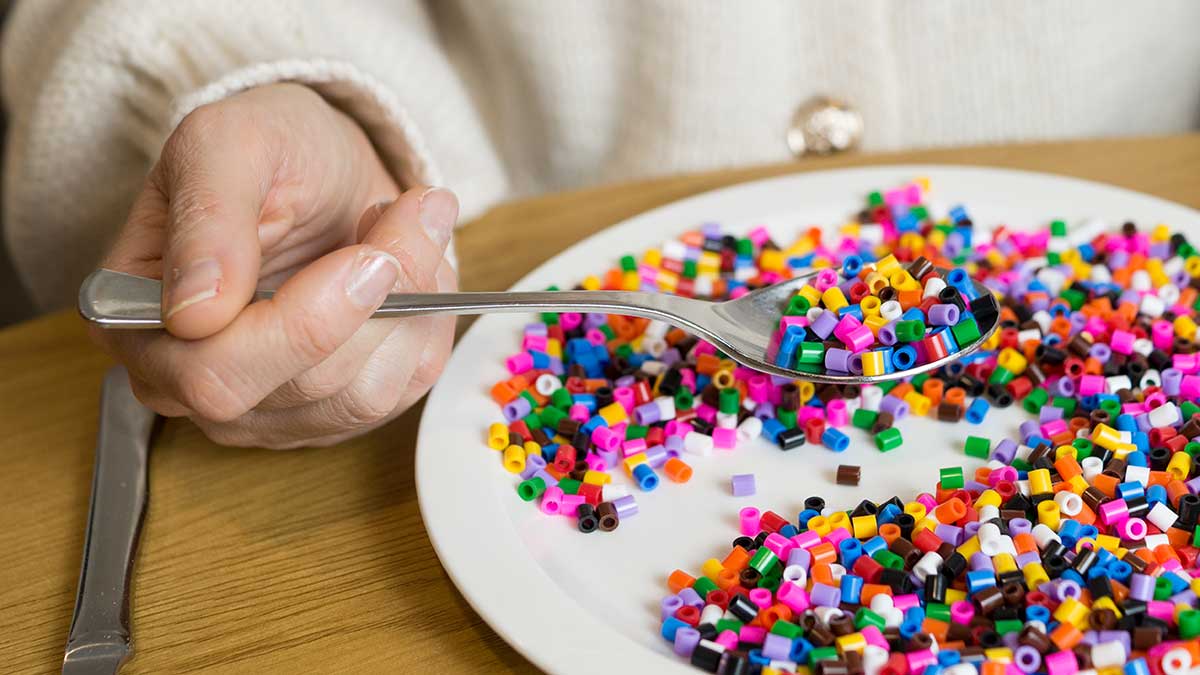
The article pays special attention to microplastics and nanoplastics, which were only recently recognized as reproductive toxicants. In 2021, researchers found microplastics in human placentas. In 2023, another study found microplastics in human testis and semen samples. A follow-up study found microplastics in every canine and human testis examined, with higher levels in humans. Several studies in the review show that polystyrene microplastics lower fertility, fertilization, and hatching rates in fish, and these effects can last for generations.
The issue of chemical substitution is important here as well. Older PFAS chemicals like PFOA have mostly been replaced, but their substitutes, such as GenX chemicals and other similar compounds, show equal or even stronger estrogen-like effects in lab tests. BPA substitutes like BPS and BPF act almost the same way on hormones. The review also points out that bio-based plastics like polylactic acid (PLA) caused reproductive harm in earthworms, similar to regular polyethylene. This pattern of “regrettable substitution,” where a banned chemical is swapped for a similar, unregulated one that causes the same harm, is now well documented.
The federal regulatory response is the focus of much controversy. EPA finalized the first national drinking water limits for six PFAS in 2024, setting PFOA and PFOS at 4 parts per trillion. In May 2025, the agency announced it would keep those two limits but extend the compliance deadline to 2031, and eliminate limits on four other PFAS. In January 2026, the D.C. Circuit denied EPA’s request to summarily vacate those four limits; final briefs are due this spring, and a decision is expected in the second half of 2026. While that plays out, individual filtration is the only consumer-side lever that actually removes PFAS from the water already in the tap.
What you can do to reduce your family’s exposure
Individual actions alone cannot solve a problem this big. The review’s main point is that we need broad regulatory changes for whole classes of chemicals, not just one at a time. Still, you can lower your own exposure, and the most effective changes come from a few key steps. The list below is ordered by impact, not by how easy the steps are.
Drinking water: this is where to start
Start by checking your water. Enter your ZIP code into EWG’s Tap Water Database to find out what has been found in your local water supply. You can also use the EPA’s PFAS Analytic Tools for more information. If you have a private well, have it tested by an EPA-certified lab. Mail-in kits from SimpleLab and Cyclopure cost between $85 and $300.
Use a filter for your tap water. Choose filters that are certified to NSF/ANSI 53 (carbon-based) or NSF/ANSI 58 (reverse osmosis) for reducing PFAS. Be aware that “tested to NSF standards” is just a marketing term that can be abused, so check that the filter is actually certified. Reverse osmosis and granular activated carbon are proven to work, but most pitcher and refrigerator filters are not certified for PFAS.
Change filter cartridges on time. EWG senior scientist Tasha Stoiber points out that a used-up filter can release more PFAS than untreated tap water. Keeping up with the maintenance schedule is essential for protection.
Avoid using bottled water as a long-term fix. A 2024 Columbia University study found about 240,000 plastic particles per liter of bottled water, which is 10 to 100 times higher than earlier estimates. Around 90% of these particles are nanoplastics.
Food contact materials
Do not heat food in plastic containers. Phthalates are more likely to leach out when heated. Use glass or ceramic in the microwave. If you plan to reuse plastic food containers, avoid putting them through the dishwasher’s high-heat cycle.
Reduce takeout and fast food when possible. A 2016 study found that people who ate more fast food had higher levels of phthalate metabolites in their urine, likely due to plastic gloves, wraps, and containers. Maine will ban PFAS in food packaging starting in May 2026, with a wider ban by 2030. Other states are following Maine’s lead, but for now, eating fewer plastic-wrapped meals means less exposure.
Replace nonstick cookware when it becomes chipped or scratched, as it is damaged. PTFE-coated pans can release particles into food. Stainless steel, cast, good, long-lasting alternatives. Also, nonstick pans are not ideal for high-heat cooking like searing.
Store food in glass or stainless steel containers. This is the easiest change you can make. Glass jars and stainless containers do not release microplastics or phthalates and can last for decades. Replace plastic containers only when they break or stain, instead of buying more. products
Be cautious when you see the word “fragrance” on a product label. Diethyl phthalate (DEP) is often used as a fragrance carrier and does not have to be listed separately under U.S. labeling rules; it just appears as “fragrance” or “parfum.” Choose products that list all fragrance ingredients or are certified EWG VERIFIED or EPA Safer Choice.
Plug-in air fresheners are especially high in phthalates, so the easiest solution is to remove them and use ventilation instead.
Get rid of vinyl shower curtains. The “new shower curtain” smell comes from phthalates being released from PVC. Cotton, hemp, and PEVA shower curtains are easy to find and cost about the same as vinyl ones.
Check your cleaning products for parabens, triclosan, and APEs. EWG’s Guide to Healthy Cleaning rates products based on an EDC database. Laundry detergent and fabric softener residues stay on clothes and touch your skin for hours, so exposure can add up quickly.
Be careful with plastic toys labeled with codes 3, 6, or 7, especially for young children who put toys in their mouths. Code 3 is PVC, which contains phthalates. Code 6 is polystyrene. Code 7 is a general category that often includes polycarbonate, a source of BPA. Safer alternatives include wood, natural rubber, organic cotton, and silicone.
Stop pesticides at the property line.
Think twice before using pyrethroid-based treatments for your home or lawn. Bifenthrin, one of the most common pesticides in the U.S., has been shown to disrupt estrogen receptors in fish at levels often found in urban runoff after rain. The review also notes that people with higher levels of pyrethroid metabolites in their urine tend to have lower semen quality and more sperm DNA damage. If you hire a pest control service, ask about the active ingredients they use and request safer alternatives.
Buy organic for the produce items with the highest pesticide loads. EWG’s Shopper’s Guide to Pesticides in Produce (the “Dirty Dozen” / “Clean Fifteen”) lets you prioritize organic where it matters most, rather than treating the produce aisle as all-or-nothing.
Where individual action stops working
The authors of the review make it clear that consumer choices alone are not enough. These chemicals are found even in Arctic rainwater, can cross the placenta, and last for centuries in the environment. The solution they propose is coordinated regulatory action: a strong Global Plastics Treaty that targets harmful chemicals, not just plastics in general; regulations that cover whole classes of chemicals rather than one at a time; and rules that make polluters responsible for cleanup costs, rather than passing those costs to utilities and customers.
The reason the review looks at different species is to show that what happens to snails, alligators, and seabirds also happens to humans, just at a different pace. Wildlife data have been warning us for 40 years, and now human data are starting to show the same patterns.
Making just one kilogram of regular milk protein can release up to 72 kilograms of CO₂-equivalent emissions. Now imagine making the same protein in a stainless-steel tank, using sugar or industrial byproducts, without any cows. That is what precision fermentation offers, and it’s already producing products you can find on retail shelves.
In our recent Sustainability In Your Ear interview with Brendan Niemira, the new Chief Science and Technology Officer at the Institute of Food Technologists (IFT), he described precision fermentation technology, which involves feeding microbes to make a variety of edible and industrial materials, as one of the biggest changes coming to agriculture. He described it as on par with the original domestication of livestock 25,000 years ago. Since then, humans have domesticated only about 50 animal species. Precision fermentation could allow for trillions of possible combinations of microbes to make almost anything.
That is a big claim. Here is what precision fermentation really means, why dairy is a great example of its environmental benefits, where this technology already outperforms cows, and where it still falls short.
What is Precision Fermentation?
People have been fermenting foods for thousands of years. Beer, yogurt, kimchi, and sourdough all rely on microbes to transform one ingredient into another. The big change in the last decade is that we can now control exactly what the microbes produce.
“We can specify what metabolite or nutrient we want to produce, and we can design a multi-species microbial ecology that will produce it,” Niemira said. Thanks to whole-genome sequencing, proteomics, and metabolomics, scientists now have a detailed map of what microbes eat, how they work together, and what they make. Engineers can add genetic instructions to yeast or bacteria so that, as they grow, they produce a target molecule such as a specific dairy protein, a vitamin, an enzyme, an industrial material, or a food preservative. Niemira summed it up as, “Garbage in, gumdrops out.”
While this is an oversimplification, it captures the engineering logic: with the right combination of microbes and feedstock, scientists can make food.
From Cow to Microbial Foundry
Dairy is a clear target because cow’s milk delivers a small group of proteins, mostly casein and whey, mixed with water, fat, lactose, and minerals. Precision fermentation can make these same proteins without relying on animals. Scientists insert the gene into a microbe to produce whey or casein, feed it a carbon source like dextrose or acetate, and the microbe produces the protein. Once filtered and dried, it can be used in products such as cheese, yogurt, ice cream, and protein powders.
Cows do this as well, but it takes a 1,500-pound animal that must be born, fed with forage and grain grown on irrigated land, kept healthy, milked twice a day, and eventually retired. Dairy cows typically live in a concentrated animal feeding operation (CAFO), which is a major source of air and water pollution. Microbes can do the same job in a tank in just days instead of years, with much less food and water.
The choice of feedstock is important and still changing. Most precision fermentation today uses purified sugar. The French company Standing Ovation, which raised $34 million to launch fermentation-derived casein in the U.S., uses acid whey, a byproduct from making cottage cheese and Greek yogurt that is expensive to dispose of, turning a cost center into a profit center. Other companies are exploring gas fermentation, using CO₂, hydrogen, or acetate as the carbon source.
Acetate-fed fermentation looks especially promising for the future, since acetate can be produced from captured CO₂ and renewable electricity, separating protein production from agriculture. Farmers, instead, could focus on higher-value artisanal uses of dairy milk, while working in much less polluted settings.
By the Numbers: Comparing Footprints
The best published comparison comes from California-based Perfect Day. Their animal-free whey was the first precision-fermented dairy protein to pass an ISO-compliant, third-party-reviewed life-cycle assessment. When compared to conventional whey produced at a CAFO, the benefits are clear:
Precision fermentation vs. CAFO dairy
Footprint metric
Precision fermentation vs. CAFO dairy
Greenhouse gas emissions
91–97% lower
Blue water consumption
96–99% lower
Non-renewable energy use
29–60% lower
Land use
78–90% lower in supporting studies
Sources: Perfect Day ISO-compliant LCA; supporting precision-fermentation life-cycle studies, 2021–2025.
Think of these numbers as the specs for a clean, large-scale industrial process. The environmental benefits depend a lot on the type of electricity used and the feedstock. A plant running on coal power loses much of its climate benefit, while one using renewables and processing food waste or other byproducts can do even better.
Even with these caveats, the difference compared to CAFO dairy is big. A typical California dairy CAFO emits about 438 kilograms of methane per hour on average, mostly from the cows’ digestion. They burp a lot. Cows make this methane as they digest grass, but microbes do not.
Precision fermentation is still developing. Three main challenges are slowing its adoption.
Cost. Recombinant dairy proteins still cost about $210 to $310 per kilogram to make, compared to $15 to $25 per kilogram for regular whey and casein. Engineering advances have significantly lowered the cost of precision fermentation over the past two years, and some developers expect prices to match the cost of certain traditionally grown proteins by the late 2020s.
Scale. The industry will need about a thousand times more global fermentation capacity by 2030 to meet the expected demand for alternative proteins. Building a single commercial fermentation plant can cost hundreds of millions of dollars. The U.S. still has less industrial fermentation infrastructure than some countries overseas.
Energy. Bioreactors consume a lot of energy, which already accounts for about 30% of their operating costs. Precision fermentation can help address climate change if these facilities use renewable electricity. If a fermenter runs on coal, it is not a climate solution.
There is also an ongoing debate about regulations and labeling. Proteins made by fermentation are chemically the same as those from cows and work the same way in cheese, yogurt, and baked goods. However, whether they can be sold as “dairy” is still being argued in several U.S. states.
Why This Matters Now
Conventional dairy is stuck in a high-emissions production system, one disrupted by climate change, so humanity needs alternatives. Heat stress reduces milk production in cows, drought raises feed costs, and areas with limited water must decide whether large-scale dairy farming is even possible.
Precision fermentation offers the same nutrition with a smaller, more resilient footprint that does not rely on rainfall, pasture, or feed grain. In some cases, a fermentation facility could switch between microbe populations and feedstocks to provide ample protein, vitamins, or other foods in a small region.
What You Can Do
Try dairy products made with fermentation. Ice cream, cream cheese, and protein powders that use Perfect Day’s ProFerm whey and similar ingredients are already available in stores. Buying these products shows retailers and investors that there is demand.
Check labels carefully. Terms like “animal-free dairy protein” and “non-animal whey” mean the product uses fermentation-derived ingredients. These differ from plant-based dairy alternatives, such as oat or almond drinks.
Support renewable energy policies in your state. The climate benefits of precision fermentation depend on having a clean electricity grid. The faster utilities switch to renewables, the better the results.
Push for transparency in life-cycle assessments. Encourage manufacturers to publish ISO-compliant LCAs. Independent checks help make sure environmental claims are accurate.
This will be for new drivers who want to obtain a learner's licence for passenger vehicles and motorcycles, not for anyone seeking a commercial driving licence.
Meta Platforms on Wednesday began laying off nearly 8,000 employees as part of a sweeping global restructuring exercise aimed at accelerating the company’s transition toward artificial intelligence-driven operations, according to multiple reports.
The Facebook-parent company has reportedly started issuing layoff notices in phased waves, with the downsizing and internal role reshuffling expected to impact around 10 per cent of its global workforce.
At the same time, Meta is said to be redeploying nearly 7,000 employees into newly created AI-focused positions as it reorganises teams around what executives describe as “AI-native” structures.
In an internal memo circulated to employees, Meta’s Human Resources chief Janelle Gale said several departments were being redesigned to operate with flatter hierarchies, leaner teams and faster decision-making processes centred on AI integration.
“As org leaders worked on the changes, many of them incorporated AI-native design principles into their new org structures,” Gale said in the memo, according to reports.
The company also reportedly instructed several North American employees to work from home on the day layoffs took effect — a step Meta has followed during previous rounds of job cuts.
The restructuring marks one of the company’s most aggressive shifts toward AI so far, as CEO Mark Zuckerberg continues to prioritise artificial intelligence infrastructure, advanced computing power and next-generation AI products.
Meta has projected capital expenditure between $125 billion and $145 billion for 2026, with a significant portion earmarked for AI data centres, custom-built chips and large-scale model training systems.
Reports also suggested Zuckerberg recently reassured employees that data collected through Meta’s platforms would be used to improve AI systems and not for surveillance purposes.
The layoffs follow weeks of speculation about a major internal reorganisation at Meta. Earlier this month, several reports indicated the company was preparing to cut nearly 10 per cent of its workforce while simultaneously expanding AI-related operations to streamline productivity and remain competitive in the rapidly evolving AI race.
Meta, like several other global technology firms, has been aggressively investing in generative AI tools and infrastructure amid intensifying competition from rivals including OpenAI, Google and Microsoft.
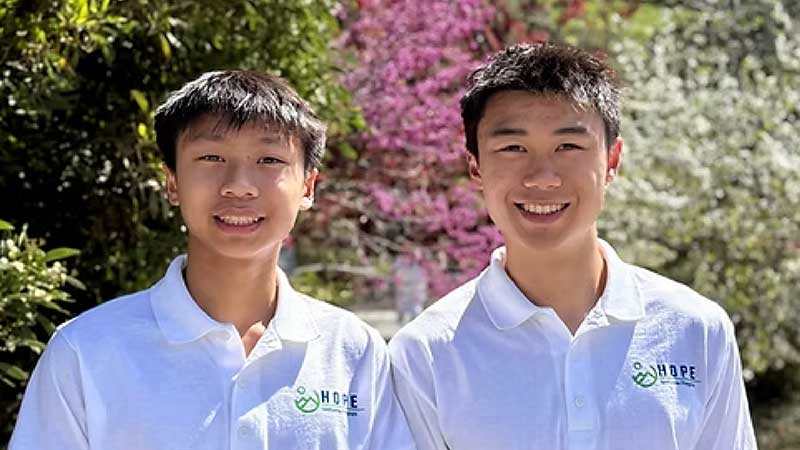
Most school uniforms are retired while they are still perfectly wearable. Children cycle through them on a predictable annual schedule as they grow, which sends a steady stream of usable clothing toward the landfill at the same moment families on tight budgets are paying to replace what their kids have grown out of. The waste side of that equation is substantial: the EPA estimates Americans generated about 17 million tons of textiles in 2018, and roughly 11.3 million tons of it was landfilled. Ethan and Desmond Hua, brothers from San Mateo, California, looked at textile waste and the cost of raising a family and saw a single solvable loop. In 2020, while they were still in middle school, they founded the HOPE Uniforms Program — HOPE stands for Help Our Planet Earth — a student-led nonprofit that collects gently used school uniforms families have outgrown and redistributes them, free, to families who need them. What began in one elementary school, run out of the family garage, now serves about 10 schools across three districts. By the brothers’ count, HOPE has kept more than 14,000 uniforms out of landfills, redistributed over 12,000 of them, and served more than 1,400 households, saving those families an estimated $141,000. On this episode of Sustainability In Your Ear, Ethan and Desmond discuss why reuse sits a rung above recycling, how two teenagers built a multilingual logistics operation with a live inventory system, and what it took to talk Costco into donating 2,000 new uniforms. Ethan’s work has earned him a 2025 Gloria Barron Prize for Young Heroes and a Samaritan House Young Samaritan Award.
Desmond and Ethan Hua, cofounders of the H.O.P.E. uniform reuse program, are our guests on Sustainability In Your Ear.
The environmental case rests on a point that’s easy to miss: the highest-value thing you can do with a garment is keep it whole and in use. What makes HOPE worth attention is the operations as much as the intent. The brothers engineered the return step directly into the model: families request uniforms through a website available in English, Spanish, and Mandarin Chinese; the uniforms are returned when kids outgrow them; and Ethan and Desmond spot-check and reissue them. That return loop, paired with a deliberate decision to treat families as repeat customers who deserve a dependable service, is what converts a one-time donation into a repeating cycle. The approach is also honest about scale — a garage operation in San Mateo County will not move the national textile-waste numbers on its own. The brothers’ wager is replication; Ethan’s dream is HOPE in another garage, and then another, and the model is plain enough for a motivated student in another district to copy. Whether thousands of small local loops can add up to a circular economy is the open question this conversation puts on the table.
Hello. Good morning, good afternoon, or good evening, wherever you are in this beautiful planet of ours. Welcome to Sustainability in Your Ear. This is the podcast conversation about accelerating the transition to a sustainable, carbon-neutral society, and I’m your host, Mitch Ratcliffe. Thanks for joining the conversation today, and it’s one I particularly enjoy — talking to a young person. Well, actually, two of them, making a positive impact.
Textile waste has become one of the most stubborn problems in the American waste stream. Americans throw away roughly 17 million tons of clothing every year, and a great majority of it ends up buried in landfills, where natural fibers slowly decompose and release methane — a greenhouse gas many times more potent than carbon dioxide. Over a century, as things break down in a landfill, clothing is uniquely wasteful, because so much of what gets discarded is still perfectly usable, and it’s simply been outgrown, or it’s gone out of style, or fallen out of someone’s rotation.
And the environmental cost we pay is paid twice: once when a still-good garment is thrown away, and again when a brand-new one is manufactured to replace it, consuming water, energy, and raw materials in the process. And nowhere is that double cost more visible than with children’s school uniforms. Kids outgrow them on a predictable annual cycle, long before the clothing wears out. And for families on a tight budget, replacing a uniform every year is a recurring expense that arrives whether the household can afford it or not.
The result is a steady stream of good clothing headed for the trash and a parallel stream of families struggling to pay for its replacement — two problems that, looked at the right way, turn out to be each other’s solution. And our guests today saw that connection when they were still in middle school.
Ethan and Desmond Hua are the founders of HOPE — H-O-P-E — the HOPE Uniforms Program. HOPE stands for Help Our Planet Earth, a student-led nonprofit that they launched in 2020 in San Mateo, California. The idea was simple: collect gently used school uniforms that families had outgrown and redistribute them for free to families who need them.
What began in a single elementary school run out of the family garage has grown into an operation serving 10 schools across three districts, and to date, HOPE has kept more than 14,000 uniforms out of landfills, redistributed over 12,000 of them back to families, and served more than 1,400 households, saving those families an estimated $141,000 in clothing costs along the way.
The spark, as Ethan has said, was a single moment: a classmate came to school in shorts on a cold day because he couldn’t afford another pair of pants to last until laundry day. And from that, Ethan and Desmond built something with real operational sophistication — an online request system with a live inventory tracker, and a website in English, Spanish, and Mandarin Chinese to reach every corner of his multilingual community. They’ve since secured a donation of 2,000 brand-new uniforms from Costco, and their work has earned Ethan a 2025 Gloria Barron Prize for Young Heroes, a Samaritan House Young Samaritan Award, and coverage on national television.
So we’re going to talk with Ethan and Desmond about what started it all, why reuse is one of the most underrated tools in the sustainability toolkit, and the environmental case for keeping a garment whole and in circulation rather than recycling or replacing it. We’ll dig into how they built a real logistics operation as teenagers and why they made the program multilingual from the start, as well as how they designed it so that asking for help feels routine rather than uncomfortable. And we’ll look ahead at what’s next for HOPE, and what they’d tell any listener sitting on an idea but waiting for money, permission, or someone else to go first.
So, to learn more, visit hopeuniformsprogram.com. That’s all one word, no space, no dash — hopeuniformsprogram.com. And if you’re a teen making a difference for the planet, check out the Barron Prize at barronprize.org. Again, all one word, no space, no dash — barronprize.org — to learn how to enter your work for recognition by the Gloria Barron Prize program.
Can a teenager with a garage, a good idea, and a little persistence really make a dent in two of our most intractable problems at once — textile waste and the cost of raising a family? Let’s find out, right after this.
Mitch Ratcliffe 4:30
Welcome to the show, Ethan and Desmond. Hey, introduce yourselves so people can recognize the difference.
Ethan Hua 4:42
Hi, I’m Ethan. I just graduated as a senior.
Desmond Hua 4:46
My name is Desmond, and I just finished my freshman year at Aragon High School.
Ethan Hua 4:51
And we’re the co-founders of the HOPE Uniforms Program, HOPE standing for Help Our Planet Earth.
Mitch Ratcliffe 4:56
You guys have done some amazing work already, and I just want to start off by — tell me about how this started. You saw a classmate come to school in shorts, and it was a cold day, and he was wearing them because they couldn’t afford a pair of pants until laundry day. What went through your mind, and how did you come to the conclusion, “I can solve that problem”?
Desmond Hua 5:13
Well, I guess what went through our minds was that when we were in elementary school, when we saw our friends, we realized that we outgrow so much clothes ourselves when we grew up, and we wondered, what do we do with them when we outgrow them? So when we went — how do…
Ethan Hua 5:27
…they go?
Desmond Hua 5:28
Yeah, like to—
Ethan Hua 5:29
Narnia. Like, some place.
Desmond Hua 5:33
Yeah. So when we went home, we talked to our parents, and we asked them, where does our clothes go? And they said we used to just throw them away, don’t usually have a better purpose. So me and my brother wanted to give them a new life, something to reuse those uniforms, and so we actually founded HOPE around five years ago.
Ethan Hua 5:54
One of the biggest travesties that we saw in these uniforms is that they’re very reusable, they’re gently used, there’s nothing wrong with them, and it’s a shame that, with this little time that we spent with the uniform, they’re going thrown away — when they’re able to be perfectly used and given a second life. In fact, we tell that these uniforms not only have a second life in them, but a third life and a fourth life as well, and because of that, it just seemed like a shame to be tossed away after one single use.
Mitch Ratcliffe 6:23
You picked the name “Help Our Planet Earth,” but this program obviously does something else. It helps families just as much as the planet. Which did you really feel like was the right focus at the time you launched?
Desmond Hua 6:34
I think the main focus at first was our community, because we, you know, grew up in the elementary school. But then at the same time our mission was also helping the earth, because this cause not only impacted the community, but also took out over 40 tons of textile waste from the landfills — 40 metric tons of textile waste, or 30, 30 metric tons of textile waste out of the landfills. So we wanted to cover both aspects while we’re doing HOPE.
Ethan Hua 7:06
So yes — when we first addressed this problem, the community, it was based on a problem that we experienced, that we witnessed from peers. However, we did act, because we’re Scouts, and we’ve been part of the Scouting program since kindergarten, so we have a lot of sustainability virtues instilled in us, like Leave No Trace principles, and we thought that there’s something we can give back to the environment.
Mitch Ratcliffe 7:33
Clothing reuse, thrift shopping, is a big deal these days. Is clothing reuse gaining traction? Is it becoming cool to say these clothes are being reused? Or is that still a point of resistance in people who you might give a uniform to?
Ethan Hua 7:48
I think that there’s, in the youth, there’s a little disparity, but I guess between the youth and the more grown-up adults. We live — me and Desmond live — 10 minutes away from San Francisco, and some people don’t know this, but San Francisco is one of the thrifting capitals of the nation, and because of that, it’s very trendy. I thrift. A lot of kids love thrifting as a hobby; it’s something fun to do on the weekends, so there’s nothing wrong with thrifting. However, there are certain stigmas surrounding getting used clothes, and it’s understandable.
However, to combat that, what we do is, once we get our donations from the community, we process them, we check them for any rips, stains, tears, make sure they’re gently used. We want these families to have — we want these uniforms to have — many, many lives, not just one life or two. We’re in for the long, the long sustainable impact, long-term impact. Because of that, we check them, and what we pride ourselves in is ensuring that our families are repeat customers.
So we get all our uniforms from families all across the community — we get them from families who no longer need to use their uniforms — so we receive them through donation bins in each of our partner schools’ offices. We drop them off in these wooden bins that we’ve built, and then once we take these uniforms back, we process them, we do the check, as I said. And on our website, a family would request, okay, I need three articles of size-medium white polo tops. And our website is multilingual, because we serve a very diverse customer base across the community, across the Bay Area.
And on these websites we see, okay, this family at so-and-so school needs this amount of uniforms at this size. Let’s go check our inventory — a spreadsheet of all the uniforms we have in our inventory. Currently, we have roughly 2,000; it’s all sitting in our garage. And then we refill this order, we put it in the bag, we drop it off to the school, and these families would receive them. And, say, it’s probably six months down the line, hopefully: they wear the uniforms, they take good care of them, and they outgrow them, and at this point they’re back at stage one. The family goes, “Hey, at least out of four, I have these uniforms that they’ve outgrown — what do I do with them?” And they send it back to us.
So because of that, we want to make sure these uniforms are kept very nice, they’ve been spot-checked, so the families are happy with their services and they will reuse us in the future, thereby forming an eco-friendly cycle — a long-term sustainability impact.
Mitch Ratcliffe 10:31
So, by getting them involved in the return process too, you’re also reinforcing the value of reuse, and that makes it feel more normal to them to get what would, in earlier generations, be described as hand-me-downs. Does that activation of their concern about the planet play a big part in that messaging?
Ethan Hua 10:49
We try to include that message — we do include that messaging in all our announcements. That’s one of our main selling points. However, it’s hard to beat the word “free” when it comes to advertising to the community, especially when it’s across different cultures or languages — Spanish, Chinese, and English. It’s a lot more direct to say, hey, we have free uniforms that are reused through our program, and it’s a really cool benefit that we prevent them from going to landfills. One of our most proud statistics, actually — Des, you might want to share the statistics. Yeah, okay. So the reason why I’m sharing this with you is that, since inception, we have diverted roughly 14,900 garments from landfills and given back out to the community roughly 12,700 uniforms. Desmond, do you want to share our most proud statistics that sprung up from that?
Desmond Hua 11:45
So I think we’ve roughly also helped around 1,400 families, and we’ve also saved families around $140,000 through uniforms, so they don’t have to keep buying uniforms over and over as they grow up. Also, the methane equivalent to carbon emissions is around 3,000 kilograms, and, as I said, the 30 metric tons is saved from the landfills through HOPE’s Uniform Program, and those are some of our proudest statistics.
Ethan Hua 12:16
When we — so this is our message to the community — when we usually talk about HOPE, we mention the 30 to 30,000 methane-equivalent carbon emissions avoided from landfill diversion. So when uniforms reach landfills, what someone might ask is, why are they so harmful to the atmosphere? The answer to that question is that when they sit in these landfills, over time they decompose — first goes the cotton, then go the poly fibers, the plastics — and throughout the years it takes for a uniform garment to decompose, it releases harmful greenhouse gases, such as methane. Especially methane: methane is 20 times more potent than carbon dioxide to our atmosphere, and throughout these many years it just releases more and more of these gases, and it builds up, adding to the greenhouse effect, warming up our planet.
Mitch Ratcliffe 13:08
Both of you have articulated a number of benefits and a number of the concerns that people should be aware of. You mentioned that “free” is the driving force in a lot of this — the messaging, and the reuse generally. When you think about how your generation is growing up in a world where it’s very difficult to be unaware of the environmental consequences of our life, are we beginning to see a change in their relationship with materials like clothing that you see as promising for a more sustainable economy?
Desmond Hua 13:42
I feel like I would say so, because — I think not just here, but around the world — there’s many ways people are trying to find ways to reuse, recycle, and, right, there’s like new methods, and, I guess, new technology now that we’re able to access, to find ways to reduce carbon emissions and make things more eco-friendly.
Ethan Hua 14:07
Just to specify your question — are you asking, is the next generation more willing to reuse?
Mitch Ratcliffe 14:13
More willing to reuse, but also, to what Desmond was just saying — are we also seeing a generation grow up that recognizes they have tools to do things with material that we weren’t able to do before? When I was growing up, there was a garbage can and there was nothing else. Now there’s a recycling bin too. How do you imagine the world will be configured to support what your generation recognizes it needs to do with regard to reuse, with creating a circular economy?
Ethan Hua 14:42
I think, of course, we’re a lot more well-equipped to deal with the climate crisis, and, more importantly, a lot of people are a lot more aware. For example, we know a lot about the textile world because we run a uniform organization. But one thing that we’ve noticed has taken on in the industry is that a lot more fabrics have been developed to become more eco-friendly, such as hemp. Hemp is a little coarse of a fabric, so… very comfortable, but it’s all plant-based. Well, it’s a lot more plant-based than just microfibers and plastics, and it’s very durable as well, and it seems like that could be a possible trend, and something that the textile industry is going towards in the future. So, trends like that — just seeing things like that — it’s very encouraging to see that there are good people concerned about our future and thinking of keeping that in mind.
Mitch Ratcliffe 15:48
So, you’ve run this out of your family’s garage, as you said, but you’ve also built an inventory management system. Tell us about how you learned to run an operation like this, because that’s another key to unlocking the potential your generation has to make a really massive difference in the way the economy runs.
Desmond Hua 16:06
I think, in the beginning, in order to talk to families and reach out to families, we actually had to do a really slow system where we just had to email back and forth. We realized, you know, if we want the operation to grow or to improve, it would require a much more mechanical process. So I think we started to use a spreadsheet, taking everything that came in, managing how much of each uniform we have, roughly, and what we’re giving out. So, like, we have a spreadsheet of our entire inventory, and even when we do orders to give out to families, we keep track of everything we give out. So I think, in order for us to have a mechanical process and to know what we have and how much we can help the families, and remove gas emissions — that’s how the spreadsheet would really help, because it just keeps everything in track.
Mitch Ratcliffe 17:11
So, how do you deliver the uniform once you have that need identified? Is it — you hand it to them, or do they pick it up?
Desmond Hua 17:21
So we actually drop it off at their school’s front office, and they can just pick it up at the school.
Ethan Hua 17:29
We send them an announcement to come pick it up, as well as the school does, to their emails.
Mitch Ratcliffe 17:33
So, is it getting easier with the new tools — the vibe-coding tools and things like that — for you to start to solve some of these problems? Have you explored them?
Ethan Hua 17:42
Oh, yeah. We have automation. We have, like, automated emails to the families that, yes, your order is in queue, it’s coming up, we’re working on it, and we have ways to let them know that, yeah, your order is ready for pickup. And social media is a very great tool for that — we use Instagram. Follow us on our HOPE Uniforms Program Instagram. It’s a very good way to let families know en masse. And one thing that I’d like to add to Desmond’s point: in our journey of collecting uniform orders from families, originally in 2020 when we started this program, we were doing it by email — literally one-on-one email chains, so we’re managing 50 email chains at once, which was very logistically challenging. On top of that, we’re receiving emails not even in English — we’re in Chinese, in Vietnamese, in Spanish — so, using Google Translate, it was just a lot of steps to take to get to the final product of getting the uniforms to the family.
Desmond Hua 18:47
Yeah.
Ethan Hua 18:47
And because of that, we set up this multilingual website to help us address the multilingual, cultural diversity in our community, which was very helpful.
Mitch Ratcliffe 18:57
I guess the question I want to get to before we take a quick commercial break is: do you think the satisfaction that both of you are expressing about the impact you’re having — as well as the satisfaction people have in participating in the program — is the catalyst for jump-starting thousands of local programs to solve thousands of different problems across the country? Like keeping uniforms in circulation, but potentially collecting a lot of other things for reuse?
Ethan Hua 19:23
Is it worth it? Is that your question?
Mitch Ratcliffe 19:24
Is this the kind of thing that can inspire people to solve local problems? Do you have a template here for a solution to jump-starting the circular economy in the many small places it needs to happen?
Ethan Hua 19:38
I think it matters — or, I think true sustainability is very hard to reach. When I hear the word “sustainability” nowadays, I think of words like gourmet and adventure. What do I mean by that? So, if you look at the Merriam-Webster definition of adventure, you see it connotes risk-taking and danger, yet when you go on adventure travel, it’s rarely ever dangerous. And for gourmet — if you eat a gourmet burger at a restaurant, sometimes it’s not even that tasty, yet it’s still labeled as gourmet. Same thing with sustainability. When you hear the word “sustainability” — sustainability buildings, for example — yes, they might be carbon-neutral, yet the process to get these net-carbon-zero buildings, it’s not sustainable, like all the building practices; it takes a lot of energy and resources to get that building to energy perfection, as you could say.
And likewise, in the real world, achieving true sustainability is very, very hard, and clothing is one of these things that we noticed could have a cyclical life cycle, and being able to be reused for these many, many life cycles. Again, we’re long-term impact; it’s something that you could reuse many times, not just one or two. So, yes, I think that we are jump-starting and inspiring a lot of grassroots efforts in achieving these reuse programs. Not everything can be reused, though. However, the idea, and getting it into people’s minds, is, I think, the biggest, most important part.
Mitch Ratcliffe 21:16
And then we’ll start to solve problems. So, this is a great conversation. I want to take a quick commercial break. Folks, we’re going to be right back to continue the conversation.
Mitch Ratcliffe 21:28
Welcome back to Sustainability in Your Ear. Let’s continue the discussion with Ethan and Desmond Hua, who created Help Our Planet Earth, or HOPE — a clothing reuse program that helps teens in need while reducing the volume of textile waste headed for landfill. And Ethan was a 2025 winner of the Gloria Barron Prize for Young Heroes. Ethan, what has that recognition — as well as the Samaritan House Young Samaritan Award that you won — done for the program? Are you getting more attention now?
Ethan Hua 21:55
Yes, we are getting more attention. The biggest thing this exposure has helped us with is that it gives us credibility to talk to new schools, and then it’s just really helpful, because when we first started this program, we started with one school — me and Desmond’s elementary school — and we started by announcing it just to the couple of families at our school, saying that we have this program available, it’d be pretty cool for the environment and for other families, if you could help out. And now, instead, with this exposure to the Gloria Barron Prize and Samaritan House, and our interviews on ABC, NBC — it just helps us a lot, because schools were like, okay, these guys are legit, they’re really in the business of helping the community, they’ll do their job, and they’ve been verified by all these organizations. And because of that, it’s all the easier to spread and make a bigger impact on the community.
Mitch Ratcliffe 22:55
So, how big can this get before you outgrow your garage, and your parents say, “Look, that’s just too many uniforms”?
Ethan Hua 23:02
Well, I would say — I’m not exactly sure about the limit, that’s a good question. Yeah, it’s certainly going to reach a limit, and I think the beauty about HOPE is that anyone can do it. Yes, me and Desmond, we do have backgrounds in scouting, and we have strong sustainability virtues, however, that does not make us that unique, and students like us could take on the program. And in the long term, what I think would be great is if we could spread HOPE to other districts — like, other districts beyond what we can manage — and we’ll have HOPE in another garage.
Desmond Hua 23:47
Yeah.
Ethan Hua 23:48
And then maybe another one. And I think that is what makes HOPE — I think that is the biggest impact that HOPE could have: it’s not, of course, only the environmental impact of diverting uniforms from landfills and saving them from decomposing into the atmosphere, but it’s also putting the idea in other kids’ minds that they could do something as well. And I see a lot of kids in the Bay Area having a lot of reuse programs, like saving food waste, or other service projects in parks. I think that’s very, very powerful — just the fact that you’re doing it, and you’re telling other people about it. It puts the idea in kids’ minds, saying, I could do something like that as well.
Mitch Ratcliffe 24:29
Well, you’re also creating new communities by connecting different lingual groups — you do English, Spanish, Mandarin on the site right now. As you think about the various communities you serve and the reuse challenges that are emerging all around you — the Bay Area being a hotspot for a variety of new trends in the world — how would you use a multilingual website and other services to help people understand what they could do together to solve some of our environmental problems?
Ethan Hua 25:00
So what we like to do is fully contextualize the problem. It’s very important for families to understand that this is an issue, in order for them to fully appreciate their usage of our services. Going back to our number-one most serious statistic — the 30 metric tons of carbon emissions prevented through uniform reuse — we tell families this. We need to fully explain what goes behind that 30 metric tons. So that 30 metric tons represents the 12,700 uniforms that we’ve given back to the community; this represents all the carbon that would have gone into making 12,700 uniforms, but was saved because they used one that was pre-existing. So this carbon waste includes — when we try to calculate a rough estimate — all the carbon used through all the land that it takes to grow the cotton for these uniforms, all the water that was used to grow the cotton, all the pesticides, all the chemical dyes used to dye the uniforms, the energy that goes into making it in the factory, and all the car emissions that are emitted through that, the transportation costs to the store. It’s a long laundry list of all the things that go into making a uniform. Although it’s a lot of carbon going into a uniform, just a rough estimate, it adds up — it does make a really sizable difference when you add up all the 12,000 uniforms. And it’s important to tell the families that, because if they don’t understand what it means to reuse the uniform, then they won’t understand the true impact of their actions, and I want them to appreciate it.
Mitch Ratcliffe 26:48
Well, so that’s really what I’m getting at. Are there other areas where you can see being able to tell that story in a variety of languages, rather than just in English, which shuts out a lot of people, that we could start to activate within many communities a lot of different circular cycles? Not just uniforms, but maybe school supplies that go unused, and so forth. Have you thought about what else HOPE could eventually manage within the circular economy?
Desmond Hua 27:16
Definitely, I think so. Actually, recently I’ve been trying to expand to some schools in San Jose. They actually do especially have a need for uniforms, and seeing that, I think it’s definitely a school that would appreciate getting free uniforms. And seeing that, I think if we showed them the true meaning of what we’re trying to aim for — which is helping, or helping Planet Earth — I think the families would be more willing to, first of all, help with the eco cycle, which is donating back to HOPE, where we can, and then we can give back to them. So it’s like a process. So, but yes, there’s definitely schools around here that would appreciate HOPE.
Mitch Ratcliffe 28:06
Now, Ethan, you’ve said that meaningful change doesn’t take a lot of resources or institutional backing — just an idea and the willingness to act. For someone who’s listening, who has an idea but assumes that they need a lot of money or some permission to get started, what would you tell them?
Ethan Hua 28:23
I remember when me and Desmond started, we were very, very scared talking to adults in that moment, but deep down, we knew what we were doing was good. It was good for the community. It was going to be a benefit for the community and the environment. We didn’t have any doubt about that. Our biggest fear was that, right now, we’re just going to say the wrong thing and embarrass ourselves, but deep down we knew that it was an ultimate good — there’s no way that it couldn’t be an ultimate good for the community. And I think most people do understand: if they’re trying to launch an initiative, and it truly is a net benefit for the community, I think people deep down know what’s good, and I would say, keep pushing on that feeling.
Mitch Ratcliffe 29:21
If a student wanted to start something like HOPE in their own district, where would you point them, so they could take a first step? What did you learn that allowed you to confidently pursue that vision you just described?
Ethan Hua 29:35
It’s like — you want to foster your idea in an environment where you know it will succeed. At first, you always want to start strong, you always want to start in a community where you understand your community 100%. So we started ours in our elementary school. We knew the principal, we spoke Chinese — it was a Chinese-immersion school — so we knew that we could address this community. And I want everyone to address their own community at first. Help your community first, make sure it survives — sorry, let me say, make sure it survives, make sure it grows — until you can expand to other areas that you know can be helped.
Mitch Ratcliffe 30:21
Knowing a community is something that a lot of brands wish they could do, and you managed to get Costco to give you 2,000 new uniforms. How did that relationship emerge, and is that potentially a pointer to the new relationships you could build in order to take HOPE to the next level?
Desmond Hua 30:40
Well, what we did with Costco is, both of us actually reached out to the CEO, Ron Vachris, and we asked him if, in our local Costco area, they had any extra uniforms they could possibly donate to us.
Mitch Ratcliffe 30:57
Wait — so you sent an email to the CEO of Costco?
Desmond Hua 31:00
So what we did is, we actually reached out to Ron Vachris, the CEO of Costco, and we told him that we had such a low supply of uniforms at that time, and for—
Ethan Hua 31:11
—the back-to-school season. Yeah, our most popular demand season is back-to-school.
Desmond Hua 31:16
Yeah, so we reached out to him asking if he had any extra uniforms he could possibly donate to HOPE’s Uniform Program, and he actually responded saying yes, he does have surplus inventory. And so—
Mitch Ratcliffe 31:31
—I think that’s a nervy move, but boy, congratulations.
Desmond Hua 31:35
Thank you. Yeah, both of us. Yeah.
Mitch Ratcliffe 31:37
That says a lot about the potential for an initiative like yours to make a difference in the world.
Desmond Hua 31:44
Yes, that actually does show — when you try to reach out, and when you have a good cause, whether it’s in the community or in the world, I think reaching out to people who could help you is definitely a thing that — it’s like an opportunity for you to expand and to improve the initiative, or your passion.
Mitch Ratcliffe 32:05
Ethan, you’ve just graduated from high school. What’s next for you?
Ethan Hua 32:10
So, in the fall, I’ll be attending Wharton at UPenn. And I think, if there’s one thing I’d like people to know about me, it’s that I enjoy addressing unmet needs in the community with self-sustaining solutions. With HOPE, I’ve done that; and in my work at the San Mateo–Foster City School District, I built a repository of Eagle Scout projects in order to create an outlet for schools to get their service projects out to the community, and to help other scouts like us find their Eagle Scout projects. By the way, an Eagle Scout project is the final step a scout can take in their scouting journey to achieve the rank of Eagle, which is the highest rank.
Mitch Ratcliffe 32:55
Desmond, what are your plans? I mean, you’ve got a couple more years of high school, but what are you thinking about doing?
Desmond Hua 33:00
Well, first of all, for HOPE, I think my mission is to keep expanding HOPE into further areas — even though I may not be as familiar with the communities, I want to reach out to as many people and families as I’m able to help, beyond the San Mateo–Foster City School District. I guess outside of HOPE, I would also love to continue Boy Scouts as the senior patrol leader this year. The senior patrol leader is basically — it’s like a CEO; not CEO, club president — yeah, the highest rank.
Ethan Hua
I’m very proud of Desmond.
Desmond Hua
Yeah, yeah. So I think — he’s been a senior patrol leader, and I’m going to be one this year, so being in that position, leading younger scouts and showing them the right path, I think that’s going to be a really fun experience. That’s what I’m looking forward to this year, too.
Mitch Ratcliffe 33:52
So, Ethan, you’re going to business school, and based on what both of you are saying, leadership is really that instigator of the change that you want to see in the world. Is business the primary lever that you see as our opportunity for change?
Ethan Hua 34:07
Yes. In fact, I think that business is going to be the discipline that helps push the world to be more sustainable. If you think about it, all too often the careers that attack the climate crisis are very siloed — for example, politicians in their chambers, engineers in their labs, or lawmakers in their courts — but all too often these disciplines are not very interconnected and working together in unity to address these issues. And I think that business is something that — its profit is what connects all these efforts together. It’s what pushes people to attempt to create a greener world: financial incentives. Okay, let me give you an example: the solar panel industry. Families would be less incentivized to purchase a solar panel for their home if they didn’t understand that it would save them money in the long term. Because they understand that solar panels will save them money on their electricity bills, they’re like, okay, not only does it save me money, but it’s also a lot greener for the planet. So because people have that — it’s an example of the power of financial incentives to motivate people to join sustainable causes. I think that’s why that cause and effect is what interests me in pursuing business.
Mitch Ratcliffe 35:31
Do you see that as the pursuit of vast wealth, or distributed prosperity?
Ethan Hua 35:38
Distributed prosperity. I think that financial incentives are what’s going to push sustainable efforts, and that’s kind of how HOPE is founded upon, too — free uniforms for families who then don’t have to go out and spend roughly $100 a year per child, with the added benefit that it saves landfill waste.
Mitch Ratcliffe 36:02
So obviously there’s a lot of opportunity in front of you, and for HOPE. What are you thinking about growing into, and where can people find out how to donate, or to request uniforms, or maybe just make a contribution to help make this bigger?
Desmond Hua 36:18
I think just helping out HOPE in general. First of all, donating to HOPE is a really big thing. Contacting HOPE — of course, we have a multilingual website, so visiting that, we have all the info on where to donate, where to request. But I think also what we’re trying to aim for is expanding into bigger schools, where we reach out with HOPE, with our mission, to help out families that, like you said, need uniforms, so they don’t have to spend that $100 to $200 every single year.
Mitch Ratcliffe 36:57
So, Ethan, how can people track what you all are doing and get involved?
Ethan Hua 37:01
Follow our Instagram, @hopeuniformsprogram. Stay on our website; we update our statistics there. You can find out a lot more about how we started this, where we are, and why we do what we do, on our website. We provide it so that families across the community, no matter what language they speak, can understand us — understand our story, understand our passion, our mission.
Mitch Ratcliffe 37:27
Congratulations, gentlemen, to both of you, for an immense good that you have brought into the world. And I wish you both the greatest success in the future. And Ethan, enjoy Wharton.
Ethan Hua 37:38
Thank you, Mitch.
Mitch Ratcliffe 37:46
Welcome back to Sustainability in Your Ear. You’ve been listening to my conversation with Ethan and Desmond Hua. They are brothers who founded the HOPE Uniforms Program. HOPE is short for Help Our Planet Earth, and that’s a student-led nonprofit that collects gently used school uniforms and redistributes them free to families who need them. You can learn more about their work at hopeuniformsprogram.com. That’s all one word, no space, no dash — hopeuniformsprogram.com.
And if you know a teenager doing this kind of work, the Gloria Barron Prize for Young Heroes is something you should point out to them. Ethan was recognized by the program last year, and you can learn more about the Gloria Barron Prize for Young Heroes at barronprize.org. Again, all one word, no space, no dash — barronprize.org, and Barron has two R’s.
The circular economy won’t be built only in boardrooms and at pilot plants; it will also grow from the grassroots, in garages like the one we’ve heard about today. That happens when people recognize human needs and take steps to address them. Ethan and Desmond started HOPE in 2020 while they were still in middle school, after a classmate showed up in shorts on a cold day. That’s a failure of material flows, in the same sense as when a species within an ecosystem struggles because something further up or down the food chain is disrupted.
Ethan kept returning to the idea that the highest-value thing you can do with a uniform is keep it whole and keep it in use, flowing through the economy. Keep the garment in circulation, and you can avoid a variety of environmental impacts, including the water used to grow the cotton, the pesticides, the oil drilled to create the synthetic textiles, the dyes, the factory energy, and the freight emissions produced simply by transporting a uniform to the store. We’ve trained a generation to feel good about the recycling bin, but reuse sits a rung above recycling, and textiles are only the clearest case for it. Americans throw away something like 17 million tons of clothing every year, most of it still wearable.
HOPE’s answer to that isn’t a new material or a chemical process; it’s a reverse-logistics system — a community solution based on a phone number and a website — that keeps uniforms in use. And you’ll note that HOPE is building a closed loop, not a one-way consumption model. That’s an important shift. Families request uniforms through the website; the uniforms come back when kids outgrow them; and the brothers spot-check and then reissue them for another use.
Ethan and Desmond built in the return mechanism, and that’s important. It’s a blocker that many big players are running into. Think back a couple of weeks ago to my conversation with Amy Fernandez and Zach Lauer of Trex, the synthetic decking company. They struggle to recapture material because contractors don’t want to separate old Trex decking from the sprues and connectors used to make the deck in the first place. HOPE started by making returns routine and building a solution for getting the material back, and then communicating about the services in three languages, so that no family is shut out. They also refuse to treat what they’re doing as charity, focusing on raising the service experience for families, which is the basis for long-term engagement and long-term behavior change.
Ethan said his goal is distributed prosperity, and that echoes the idea shared by many of our guests, that sustainability can be a profitability lever rather than a cost center, even while creating social benefits. Ethan’s pitch is that HOPE is replicable — a model that other communities can use. As he said, anyone can do it, and the dream is HOPE in another garage, and then another. And I think Desmond’s comment that the biggest impact isn’t the uniforms diverted, it’s putting the idea in another kid’s head that they could do this too — that’s an important point. We can spread this virally. We’re building the systems for the next generation, not the last.
When I was growing up, there was a garbage can, and nothing else — no recycling bin, no curbside pickup. The recycling system that we know today, the one that we take for granted, didn’t exist even within living memory. It’s going to be built again by another generation, piece by piece, by people who start small and local and don’t wait for permission to do so. And, of course, we have to acknowledge this: the scale of challenges and adverse environmental impacts faced by this generation is daunting. But every system we now treat as permanent was once somebody’s improbable idea, run out of a garage, a church, a basement, or a classroom.
What Ethan and Desmond have proven at the scale of San Mateo County is that circular economies are waiting for people willing to do the unglamorous work of moving material back to where it’s needed. Ethan heads off to Wharton this fall with a thesis already tested in the field: the belief that business is a lever for prosperity. And that’s the important point. We’ll be watching where they take HOPE, and who copies them.
And if this conversation gave you something to think about, please share it with a young person in your life who’s sitting on a great idea. You folks are the amplifiers to spread more ideas and create less waste, and I hope you’ll take a moment to share one of the more than 550 episodes in our archive to help others get up to speed on recycling, circularity, and sustainable business. Please point your friends, family, coworkers, and the people you meet on the street to Sustainability in Your Ear on Apple Podcasts, Spotify, iHeartRadio, Audible, or whatever purveyor of podcast goodness you prefer, and if you take a moment to leave a rating or review, that will go a long way toward helping others find the show.
Thanks for your support. I’m Mitch Ratcliffe. This is Sustainability in Your Ear, and we will be back with another innovator interview soon. In the meantime, folks, take care of yourself, take care of one another, and, of course, let’s all take care of this beautiful planet of ours. Have a green day.
Marvel Comics has long resurrected iconic characters for second acts. Now ElevenLabs is doing the same for Marvel’s most famous creator, Stan Lee — in a sense. The AI audio company on Wednesday said it struck an expansive deal with Stan Lee Universe, the joint venture between Genius Brands International and POW! Entertainment, to add the […]
Each year, over 11 million metric tons of plastic end up in the ocean, which is like dumping a garbage truck full of plastic every minute. For years, we’ve known that marine animals eat this debris, but no one had measured exactly how much plastic it takes to kill them. Dr. Erin Murphy, who leads ocean plastics research at the Ocean Conservancy, is the principal author of a major study published in the Proceedings of the National Academy of Sciences. Her team analyzed more than 10,000 necropsies from 95 species of seabirds, sea turtles, and marine mammals worldwide. Earth911’s summary describes this critical study, which found lethal plastic thresholds that could change how we view the plastic crisis.
Dr. Erin Murphy, Manager of Ocean Plastics Research at the Ocean Conservancy, is our guest on Sustainability In Your Ear.
The study measured how deadly different types of plastic are to sea life, which makes the results especially useful for policymakers. Each finding suggests a clear policy action, such as banning balloon releases like Florida has done, banning plastic bags as in California’s SB 54, or improving how fishing gear is marked and recovered. Still, Erin points out that focusing only on certain plastics is not enough. Her team found that even small amounts of any plastic can be dangerous. As she says, “At the end of the day, there is too much plastic in the ocean,” and we need big changes at every stage of the plastics life cycle, from production to disposal.
There’s encouraging evidence that interventions work. Communities in Hawaii conducted large-scale beach cleanups and saw the Hawaiian monk seal population rebound. A study published in Science confirmed that bag bans reduce plastic on beaches by 25 to 47%. And Ocean Conservancy’s International Coastal Cleanup, now in its 40th year, removed more than a million plastic bags from beaches last year. These actions address a parallel crisis in human health that is building from the same pollution source. Most of the microplastics now found in humans and around the world began as the same macroplastics that are killing puffins and turtles. As Erin puts it, “I do view this all as part of the same crisis.”
Editor’s Note: This episode originally aired on February 9, 2026.
Interview Transcript
Mitch Ratcliffe 0:00
Hello, good morning, good afternoon or good evening, wherever you are on this beautiful planet of ours. Welcome to Sustainability In Your Ear. This is the podcast conversation about accelerating the transition to a sustainable, carbon-neutral society, and I’m your host, Mitch Ratcliffe. Thanks for joining the conversation today.
We’re going to talk about ocean plastics. Every year, more than 11 million metric tons of plastic enters the ocean. That’s the equivalent of dumping a garbage truck worth of plastic every minute. And we’ve known for decades that marine animals eat this debris. But until recently, no one had systematically quantified how much plastic it actually takes to kill them.
And the answer is, it turns out, disturbing. Less than three sugar cubes worth of plastic increases an Atlantic puffin’s risk of dying by 90%. A loggerhead turtle reaches the same threshold at about two baseballs worth, and for a harbor porpoise, a mass of plastic roughly the size of a soccer ball can kill. More concerning, at the 50% mortality level — that is, where half the animals who consume the plastic die — the volumes that kill them shrink to less than one sugar cube for a puffin and half a baseball for a loggerhead turtle.
Our guest today, Dr. Erin Murphy, is the manager of ocean plastics research at the Ocean Conservancy, and lead author of the study that produced these findings, published last month in the Proceedings of the National Academy of Sciences. Her team’s research analyzed more than 10,000 necroscopies across 95 species of seabirds, sea turtles, and marine mammals worldwide. It’s the most comprehensive assessment yet of how different plastic types — soft film like bags, hard fragments, synthetic rubber from balloons, and abandoned fishing gear — translate into mortality across marine life.
The findings matter beyond ocean conservation. A 2024 study in the New England Journal of Medicine found microplastics embedded in human arterial plaque of cardiovascular surgery patients, and those with detectable plastics were 4.5 times more likely to suffer a heart attack, stroke, or death in the following three years. The same polymers killing seabirds and sea turtles — polyethylene, PVC, and their chemical additives — are found in human blood, lungs, liver, and placenta.
Dr. Murphy’s research offers policymakers what they’ve been asking for: science-based data to inform decisions about which plastics to regulate and how aggressively to act. Nearly half the animals in her study that had ingested plastics were threatened or endangered species, and with global negotiations on a binding plastic treaty continuing and extended producer responsibility programs expanding across the United States, the timing of this research could not be more relevant.
So we’ll talk with Erin about what her team found, why balloon fragments are amongst the deadliest items for seabirds, how fishing gear became the leading killer of marine animals, and what her research means for the humans who share a planet and a body burden with these species. You can read the full study at pnas.org and find Ocean Conservancy’s work at oceanconservancy.org. Ocean Conservancy is all one word, no space, no dash. Oceanconservancy.org.
So how much plastic is too much for wildlife and for humans? Let’s find out right after this brief commercial break.
[COMMERCIAL BREAK]
Welcome to the show, Erin. How you doing today?
Erin Murphy 3:44
I’m doing well. Thank you so much for having me.
Mitch Ratcliffe 3:46
Well, thank you for joining me, and for this really important research. It was a fascinating read. We wrote it up, and I’m really pleased that you would join us to talk about it today. So can you explain what made this study different from previous attempts to quantify plastics’ lethality to marine life?
Erin Murphy 4:01
Yeah. So first, I’ll specify that we focus specifically on macroplastics, which are just plastics that are bigger than five millimeters in length. There’s more research on how microplastics, which are these smaller plastics, can harm animals, because scientists can study these in laboratory settings. Of course, it’s not feasible or ethical to feed animals like whales, sea turtles, or seabirds large plastic items and study what happens to them in the lab. And so as scientists, we really have to depend on opportunistically collecting dead animals in the environment and looking at what’s inside them to understand what’s happening with these bigger plastics.
And so previous research has looked at these sorts of threats as well, but they focused on fewer species, on smaller geographic areas, and they didn’t differentiate by plastic type, like hard plastics versus soft plastics. So they were really important for laying the groundwork for our larger study. But we were actually able to look globally and look at a broader set of species, and also differentiate by these different plastic types and by species size as well, which allowed us to get at some of these species-level understandings.
Mitch Ratcliffe 5:13
So the unfortunate truth is, we are feeding these animals this material by throwing it all away. That is a stark way of starting this conversation. And you use a lot of illustrative examples, like three sugar cubes worth of macroplastic can kill a puffin. How did you arrive at those kind of volume-based comparisons, and why is translating your data into those relatable measures important?
Erin Murphy 5:37
Yeah, so when we did this in the study, we actually looked at the influence of volume based on the animal’s body length. So we reported all of this as a deadly volume per centimeter of body length. But telling people 0.098 centimeters cubed per centimeter doesn’t really mean anything to them. And honestly, when I first got those centimeter-based thresholds, it didn’t mean that much to me.
And so we thought that choosing some iconic species that people could picture would help, but still saying, you know, three centimeters cubed of plastic kills a puffin, or 220 centimeters cubed of plastic kills a loggerhead, doesn’t really paint a picture in people’s heads, and three sugar cubes or a baseball are much easier to picture.
So we chose to do this because I think when people can picture these items, they can really understand that volume, and people do use plastic every single day, and so having volumes like that to compare to allows them to think about how little plastic can kill animals, especially when we compare it to how much we produce or use globally.
Mitch Ratcliffe 6:42
Can you put in context how long it takes for a puffin, for instance, to eat that much plastic? What do they eat in a day or a week generally?
Erin Murphy 6:52
Yeah, that’s a great question, and it’s actually the next step in our research. So to estimate the risk that something poses to wildlife, we have to understand two things. One is your question: how likely are they to be exposed to this threat? The second is, if they are exposed to it, how likely is it to harm them? And so this research really focused entirely on that second piece.
But to fully understand risk, we have to dig deeper into the first part, and that’s what we call likelihood of exposure. And so for puffins specifically, there’s not a lot of research, but we do know a lot about what species are eating, and we know that different species are more or less likely to eat plastic based on where they live, what they eat, and how they feed. So we’re really excited to be working with some really amazing researchers over the next few years to think about how we can connect exposure for these animals to the lethality and understand risk in a more comprehensive way.
Mitch Ratcliffe 7:48
I want to get a sense of what you found. You mentioned in the study that one whale can have a three-gallon bucket in its stomach. What’s the range of objects that you encountered as you were doing the research?
Erin Murphy 8:00
Yeah, this was pretty unbelievable to me, actually, some of the things that we saw in animals, and I’ll just give a few items that stood out to me. But there’s many more. Part of an oar handle from a plastic — or a plastic belt, webbing from the back of a lawn chair, a koozie, rubber pencil topper, fake Easter grass, ice cream tubs, single-use coffee pods, bungee cords, tons of different types of gear, ropes, nets, fishing line.
But I’ll just illustrate kind of how dramatic this can look with one example that really stood out to me, on a sperm whale that researchers in Spain reported on. Sperm whales feed very deep in the ocean, and they use echolocation to find their food. So it may be particularly hard for them to tell plastic from prey. And in this case, it seems like an entire greenhouse washed into the ocean, and this sperm whale happened upon it. It had plastic film cover material for a greenhouse in its stomach, along with a flower pot, a piece of a hose, a plastic burlap sack, plastic craft, and plastic spray bottle, and even fake plastic mulch in its stomach. And unfortunately, this was one of the individuals that did lose its life to plastic ingestion.
Mitch Ratcliffe 9:23
That’s — I mean, that’s shocking in so many ways. You found that one in five animals had plastic in their digestive tract when they died. Was this percentage higher or lower, and in the context of your previous answer, more or less shocking than you expected?
Erin Murphy 9:45
Yeah, I think, you know, it was higher than I expected. And it’s funny, because all of our research was based on previous research. It was a meta-analysis. So we collected data from existing literature. And I’d seen some, you know, similar numbers then reported at more local scales. But I think it still really shocked me to look at so many studies and see, you know, for sea turtles, that was one in two. Sea turtles had plastic in their gut. And for seabirds, one in three.
And when thinking about that at a global scale, that felt higher to me than it should be, and I suppose it’s because it is higher than it should be. These really are high ingestion rates. And for some of these individuals, the bulk amount of plastic in their gut, like that sperm whale, is particularly shocking.
Mitch Ratcliffe 10:35
I want to step back just for a second and talk about how long this kind of research has been going on. Because when I was a child, oceanography was very much in its infancy. How aggressively are we trying to understand what we’re doing to the ocean environment at this point, and where do you think we are in terms of the long arc of beginning to reach that understanding?
Erin Murphy 10:58
Yeah, I don’t know if we’ll ever fully understand it, which is one of the things that makes studying the ocean so interesting. It’s so complex and vast. But, you know, we’ve come a long way, and for plastic pollution in particular, the ’70s was really when we started seeing those first reports of animals eating plastics. You know, and it’s been 50 years since then. Now we have evidence of plastic ingestion in more than 1,300 species, and we’re starting to be able to get at these really more complicated analyses that help us understand like the potential quantity that kills an animal, like this one, or what does that mean possibly for populations.
I think the thing that’s been really impressive in the last decade, though, is how much research has been done on plastics. In particular, 10 years ago, roughly, the first study came out by Jambeck et al. that gave us an idea of the amount of plastic that was getting into the environment. And since then, we have learned so much as a scientific community, and people are working really hard to try to understand what these vast amounts of ocean plastic mean for ecosystems, for human health, for fishing industries and other marine industries that really depend on a healthy ocean, and we’ve been doing a lot of research on how to address it. So I don’t think we’ll ever fully understand everything that we’re doing to the ocean, but I think we’re working hard as a scientific community to get there.
Mitch Ratcliffe 12:38
It’s really disturbing to think about, because plastic in the 1970s was really only — was 10 years into widespread use, and widespread compared to today is nothing, since half the plastic we’ve manufactured in history has been made since 2002. So it sounds like what we’re really delving into now is a real-time accounting of the damage that we’re doing. How do you as a scientist think about what your goal is in terms of bringing the consequences of our decisions back to the public so we can think about it?
Erin Murphy 13:11
Yeah, that’s why I feel very lucky to work with an organization like Ocean Conservancy. We conduct research that we know governments and decision makers need to help address these problems, and we have a policy team and a communications team that are really well trained on helping us bring this research to the decision makers.
And the type of research we’re doing here, in particular on risk assessments, is something that governments are really craving. They want to set science-based targets as they try to address plastic pollution, and part of that is understanding environmental thresholds that we should be aiming for to better protect marine wildlife, to better protect marine ecosystems.
And so when we do research like this, a big part is getting it into the literature, in this sense to the scientific community, but it’s also working with our policy team and our communications team to make sure the public hears about it, and to make sure that decision makers nationally and abroad hear about the work that we’re doing, and can use this to help inform science-based targets that they’re setting right now.
Mitch Ratcliffe 14:22
So one of the materials that you found was most dangerous is rubber, particularly from balloons. It emerged as especially deadly for seabirds, where you estimated that just six pea-sized pieces could create a 90% mortality rate. What’s happening physiologically with balloon fragments that make them so lethal?
Erin Murphy 14:45
Yeah, so if you think about the design of a balloon, they’re super stretchy, and they’re long and they’re thin, and even the fragments seem to have this shape. And so they get stuck at those junctures in the gastrointestinal tract, like between the stomach and the intestine. And the gut moves things along through these wave-like contractions. And it seems like these stretchy materials just kind of stretch with it, and so the gut just isn’t able to move them through as easily. And we see similar things for those plastic bags as well.
Mitch Ratcliffe 15:20
Well, you also point out that sea turtles appear to mistake plastic bags for jellyfish. Is there anything we could do in terms of the chemistry of soft plastics or the appearance of soft plastics to make them less attractive to sea life?
Erin Murphy 15:35
Yeah, I don’t know if there’s a way that we can make them less attractive that I know of. And it’s unfortunate, because we know there are a lot of plastic bags in the environment compared to other plastics. Every year, Ocean Conservancy organizes the International Coastal Cleanup, and plastic bags are consistently in the top 10 items we see most frequently.
That being said, we do know ways of keeping plastic bags out of the ocean and protecting turtles in that way. And so every year — or in this last year, during our Coastal Cleanup — we collected, or our partner organizations collected, more than 1 million bags off our beaches. So this is really important for helping protect ocean animals, because those bags are already very close to their environment, and by removing them from beaches, we prevent them from getting into the ocean.
We also know that plastic bag bans, like the policy that California just implemented, are very effective in reducing the threat that plastic bags pose to marine wildlife, and help by preventing them from getting into the environment in the first place. So there was a recent study published in Science that actually showed that communities that implement bag bans, whether that’s a city, a state, or a country, do meaningfully reduce the amount of plastic bags that end up on beaches by 25 to 47%. So that’s a really significant reduction, and just provides further evidence that we know how to address some of these threats. We have ways of measuring if policies are effective, and it’s really about preventing these bags from getting into the environment in the first place.
Mitch Ratcliffe 17:18
Another example of really short-term human thinking is the impact of fishing gear pollution. Can you talk a little about what you found in terms of what’s being tossed overboard by the boats that are hoping to treat the ocean as an ongoing resource and source of living?
Erin Murphy 17:36
Yeah. I mean, I think a lot of the fishing gear that’s lost is lost on accident. Fishing gear can be really expensive for fishermen. Like crab pots can cost thousands of dollars. And so these are very valuable resources for fishers, and they’re expensive to replace.
But unfortunately, one of the challenges with fishing in turbid and wavy environments around storms, especially with things that are set, is that some gear does get lost. And we did see interactions and ingestion of fishing gear by many of these animals. And partially that’s because gear attracts prey species. So we know that for some animals, they’re more likely to interact with fishing gear, and this isn’t just ingestion, but also being entangled in fishing gear, because, you know, that gear is still fishing. And for a lot of these bigger species, fish are their prey, and so they’re also being drawn to these devices, or this lost gear that might have their food in it.
Mitch Ratcliffe 18:44
And your study didn’t look at the external plastic lethality, it was only that which was consumed. So we don’t really fully understand what the consequences of, say, for instance, a net lost at sea is for the ocean yet? Or do we?
Erin Murphy 19:01
Yeah, we have — there’s some studies that have looked at this, but this is actually another study we’re working on. So one of the next papers we’re working on right now is looking at entanglement lethality, and that really will be important for understanding the impacts of plastic pollution together, because ingestion and entanglement, when we talk about these bigger plastics, are the two main threats that we see.
Mitch Ratcliffe 19:24
I feel like we’ve got our bearings and can have a really productive conversation. But folks, we’re going to take a quick commercial break. We’ll be right back.
[COMMERCIAL BREAK]
Welcome back to Sustainability In Your Ear. Now, let’s get back to my discussion with the Ocean Conservancy’s Dr. Erin Murphy, who led a groundbreaking study about the lethal effects of macroplastics in sea life. Erin, nearly half the animals that you studied that had ingested plastics were already listed as threatened. Is plastic pollution accelerating extinction risk, and what species do you feel are most endangered?
Erin Murphy 20:03
Yeah, that’s a great question. Right now, there’s not a lot of research yet on population-level effects of plastic pollution, and our study is really helping build that information out. But it’s just very difficult to understand what’s happening to populations that often we have trouble studying in the first place.
Still, for many marine species, the IUCN Red List notes plastic pollution as a significant threat. Six out of seven sea turtle species are threatened. We saw really high ingestion rates for sea turtles. We know that 5% of the turtles in our data set died from plastic ingestion.
So I think there is a lot of evidence suggesting that this could be contributing to extinction risk. And there are some studies that look at very specific populations that we know are vulnerable, like the Hawaiian monk seal, that have found that plastic pollution is contributing to extinction risk.
And the hopeful piece in the Hawaiian monk seal case was actually that as communities started doing large-scale cleanup efforts in the Hawaiian Islands, they actually saw a rebound of that population. So again, just a reminder that even though we know that this is something that is posing a threat to marine species we really care about, it’s also evidence that targeted and effective intervention strategies can be really important in helping some of these species rebound.
Mitch Ratcliffe 21:34
That’s encouraging. So it isn’t as though we’re doomed, or that nature is doomed. We can intervene in our behavior today and make a change for the better in the future. How does the Ocean Conservancy encourage people to do that?
Erin Murphy 21:49
Yeah, so there was a study that we — some of us co-authored, and the Ocean Conservancy supported — that came out in 2020 that looked at what we would really need to do on a global scale to reduce plastic pollution in the ocean meaningfully enough to hit some of our potential targets. And in this case, we were thinking about just returning to 2010 annual leakage rates into the environment.
And what we found is that we really need sweeping change to our relationship with plastic and our waste management systems. And so we found that to achieve this goal, we would need a 40% reduction in plastic production globally. We would need waste management to reach levels of 98 to 99%, depending on the income of the country. And we would need, annually, 40% of waste that gets into the environment to then be cleaned up.
And at Ocean Conservancy, we really work on policy efforts in all three of those big buckets. And so we have the International Coastal Cleanup, but we also work on upstream policies with our policy teams at the sub-national, national, and international levels to try to work towards some of those goals of reducing plastic production and better managing the plastic waste that we do use.
Mitch Ratcliffe 23:10
You used the phrase “our relationship with plastic,” which is an interesting concept. In 2024, the New England Journal of Medicine reported that microplastics were found in human arterial plaque, and that resulted in much higher risk for cardiovascular events. Do you see what you’re studying as a parallel crisis, or the same crisis, just in a different species?
Erin Murphy 23:35
Yeah, I view that — you know, so they were looking specifically at microplastics, and we focused on macroplastics in this study. That being said, most microplastics that are in the environment are breaking off of these larger macroplastics. So in that sense, I do view this all as part of the same crisis, and I think we need to think about all of the harms that plastic materials are causing to human health, to animal health, and to sociocultural outcomes like our marine and terrestrial industries that are affected by plastic pollution, and we need to think about comprehensive policies that are addressing all of those harms.
Mitch Ratcliffe 24:17
Are there studies that are showing the same types of impacts from plastic in human and non-human species that we can use to start to tell the story in that same illustrative way that you did with the sugar cube analogy, so that people really take this seriously? I mean, the problem with our society is that we’re accustomed to throwing everything away.
Erin Murphy 24:40
Yeah, so there’s a lot of really great research that’s being done on microplastic exposure in other marine and aquatic organisms, and those are more similar to what’s happening in humans. But that human research, and the research on sort of sub-lethal microplastic risks — like the risks to cardiovascular systems, nervous system, gastrointestinal tracts — those are all pretty new, and so this body of research is really building, and I think we’re going to learn a lot in the next decade.
Mitch Ratcliffe 25:14
Do you see an acceleration of your ability to make those kinds of conclusions — well-grounded conclusions — emerging as a result of the advent of something like artificial intelligence? Are we at the dawn of a scientific revolution?
Erin Murphy 25:33
You know, that’s a good question. I don’t know in what ways AI will change the way that we’re doing research. Definitely, the rate at which we are producing research has increased. There’s more people working on these issues, and the scientific process is really just about iterating as a community and building on what we know. And so I think what we’re seeing here is a large-scale interest in this plastics issue and a big concern by the scientific community and by the public.
And as we learn more, we can answer more complicated questions. And so I was only able to do my work because over the last five decades, people have been studying what plastic is in the animals and reporting on that, and we have thousands of published papers now that tell us about what animals are consuming. And each one of those papers is really important in producing this bigger picture. And as we have, you know, similarly more studies on these sort of individual systems and humans, using model organisms like mice, we will be able to do the same sort of thing of painting this bigger picture for humans as well.
Mitch Ratcliffe 26:48
So as we get this higher-resolution view of what we’re doing, both to the planet and to ourselves, how does Ocean Conservancy potentially use those storytelling opportunities to get us to think about things like plastic bans, or the impact of extended producer responsibility on not just what ends up in the environment, but what we design so that it doesn’t end up in the environment in the future? It’s a big, complicated, multifaceted story. Where are we going?
Erin Murphy 27:17
Yeah, that is true, and I am not the policy expert at Ocean Conservancy, but the work that they do is amazing. And they, you know, they go and they talk to the public about these issues and educate the public through blogs and other resources to make sure that people understand the scale of the problem. And they work really closely with local decision makers who are interested in addressing these problems and help them develop bills, help them build support for bills. And, you know, we’ll meet with legislators and other leaders to help them kind of understand the reason that these policies are useful.
So Ocean Conservancy in the last 10 years has done a lot of work on state bills, like helping to push forward California’s SB 54, or specific bills that are targeting problematic plastics. Like recently, Florida passed a balloon release ban. Ocean Conservancy was also really involved in pushing that.
And I think we have seen with plastic pollution — what, for me, one of the things that’s most comforting in studying plastic pollution is actually that people do really seem to care about this issue and do seem willing to make change. So when people find out what I research — strangers — they always tell me about what they’re doing to reduce their plastic footprint, and I think that’s just a sign that there is appetite for change, and people want to understand how to do it. And as an organization, we’re just trying to leverage that passion and that stewardship that does kind of inherently exist in people, especially when they see the plastics that they’re using, and use that and sound science to help develop policies that can actually make a change on this issue.
Mitch Ratcliffe 29:06
Building on what you mentioned a moment ago, based on your findings about which plastics are the most lethal, it sounds like it’s a blend. But should policymakers prioritize specific materials, or just look at broad categories? No more of this type.
Erin Murphy 29:23
I think we need to do both. So we did find that different plastics pose different levels of risk, and I think there’s policies that are smaller and easier to implement, like balloon release bans and bag bans, that are effective in targeting some of these problematic plastics specifically. You know, using that Hawaiian monk seal example as well, having very targeted and strategic cleanups can be really important for protecting animals at sea turtle nesting beaches or seabird nesting areas. There’s these areas that we know are of particular importance for animals.
But still, the total plastic thresholds that we found were also low, and we see all types of plastics in these animals. So at the end of the day, there is too much plastic in the ocean, and we do need sweeping reforms along the entire plastics life cycle, from production to management to disposal, to meaningfully address this issue and protect our oceans.
And it takes longer to implement these policies because it does require some pretty extensive system-wide changes. But I think policies like California’s SB 54, which aims to reduce 25% of single-use plastics used, that’s really a step in the right direction. And so our policy team is on the front lines of making sure that that bill is fully implemented and that we understand the benefits of that policy by monitoring outcomes and effectiveness of it.
Mitch Ratcliffe 30:56
You mentioned earlier that on the International Coastal Cleanup Day, which is a distributed event all over the world but a day, they collected more than a million plastic bags last year. Is the goal in the long term to no longer need to do those cleanups? Or do you anticipate that we’re always going to be needing to do those cleanups?
Erin Murphy 31:18
Yeah, I think unfortunately, at this point, it’s hard to imagine a world where cleanups aren’t necessary. I think when we did that study in 2020, that was led by Lau et al., it was pretty alarming to see how much we would have to reduce plastic production and how well we would have to manage waste to no longer need cleanups at all, and we really did find that cleanups needed to be an important part of this solution.
And there’s already a lot of legacy plastics in the ocean. So I think as far as we can look forward, cleanups will always be an important part of the suite of solutions that we use.
They’re also really effective for monitoring what’s happening in our ocean. So I mentioned earlier that study that was published in Science that showed that plastic bag bans are effective. We were really excited to see that they actually used Ocean Conservancy International Coastal Cleanup data to do that analysis, and it really just emphasizes the value of citizen science. When you go out and collect data during a cleanup on your beach, we can see what changes occur through time in terms of what debris you’re seeing, and that helps us better understand whether it’s targeted policies or these broader policies, if they’re being effective or not.
Mitch Ratcliffe 32:42
What does the Ocean Conservancy do to help people do citizen science beyond the International Coastal Cleanup?
Erin Murphy 32:49
So that program has been going on for 40 years, and that’s really, in terms of citizen science, our main body of work. But we are interested in having citizens engage in other ways. So we often have — you can sign up for our newsletter and get information about opportunities to call your senators or write your senators or legislators about important ocean issues that are coming up.
And we also just have a lot of educational material so that people can start their own cleanup events, or find cleanup events to participate in, so that individuals can be engaged in being part of the solution.
Mitch Ratcliffe 33:31
You’ve mentioned a couple of items of research that you are beginning to pursue now. But if you had unlimited resources for the remainder of your career, what would you like to investigate and build on those findings with?
Erin Murphy 33:44
Yeah, it’s pretty hard to imagine unlimited resources, especially now, I know. But yeah, you know, we already started working on answering some of these next questions that are remaining for us, and I’m really excited about the work that we’re going to be doing over the next three to five years. And I will not be surprised if, you know, this body of work, trying to understand what’s happening to ocean animals, becomes a career-long question for me.
But in the short term, the things we’re really trying to get at is, first, that entanglement piece, which you mentioned — what is the lethality of plastic entanglement. And we also just launched a working group with scientists from all over the world to take what we have learned about the lethality of plastic ingestion and to build out, include what we are learning right now in our research about entanglement, and then bring in that exposure piece.
So that question you asked earlier about how much plastic is a puffin eating, how often does it have a lethal dose — that’s really what we want to get at. We want to know if we have an idea of what’s in the environment, how likely is that to have population-level effects for species? How likely are they to eat a lethal dose? How likely are they to die? And are we worried about populations because of this?
And right now, governments around the world are really trying to determine how to effectively address plastic pollution, and these sorts of comprehensive risk assessments are really helpful in setting targets. And so that’s really what I want to keep getting at: How can we take everything we know and help decision makers better understand, you know, a reasonable goal? Because a perfect goal is an ocean with no plastic, and I think we have to keep working towards that collectively. But it’s also really important to understand what species are being adversely affected and what we can do to immediately protect them now.
Mitch Ratcliffe 35:46
Well, it’s a multi-generational challenge, and I really applaud the work that you’re doing. How can folks keep up with the work that you’re undertaking?
Erin Murphy 35:55
Yeah, we have a brand new website at oceanconservancy.org, and we have a lot of information there, you know, specifically on what our plastics team is doing, but on what our entire organization is doing in terms of bills that we’re working on. They can also sign up for our newsletter to get information about what the organization is working on, and that will give them ample opportunities to participate in being part of the solution to the plastics crisis.
Mitch Ratcliffe 36:20
Erin, thanks so much for your time today. It’s been a fascinating conversation and an encouraging one.
Erin Murphy 36:26
Thank you. It was great to be here.
[COMMERCIAL BREAK]
Mitch Ratcliffe 36:34
Welcome back to Sustainability In Your Ear. You’ve been listening to my conversation with Dr. Erin Murphy, manager of ocean plastics research at the Ocean Conservancy, and she’s the lead author of the recent study published in the Proceedings of the National Academy of Sciences that quantifies, for the first time at this scale, how much plastic it takes to kill seabirds, sea turtles, and marine mammals.
You can explore the Ocean Conservancy’s wide-ranging work and sign up for a beach cleanup event at oceanconservancy.org. Ocean Conservancy is all one word, no space, no dash. Oceanconservancy.org.
The numbers Erin and her colleagues reported should stop us in our tracks. The volumes we heard about are disturbing, but imagine — one in five animals had plastic in their gut when they died. For sea turtles, it was one in two. What makes that study especially useful for policymakers is its differentiation by plastic type. Rubber fragments can be targeted because balloons are the deadliest material for seabirds. Soft plastics like bags are the top killer for sea turtles. Ghost fishing gear poses the greatest risk to marine mammals like whales. And each of these findings points to a specific, actionable policy lever: balloon release bans like Florida’s recent legislation, bag bans like California’s, and better gear-marking and recovery programs for the fishing industry.
But the targeted approach is only part of the answer. As Erin emphasized, the total plastic thresholds her team found were low across the board, meaning that every type of plastic poses a threat. “At the end of the day,” she said, “there is too much plastic in the ocean, and we need to do sweeping reforms along the entire plastics life cycle, from production to management to disposal.” That’s a very important quote. Keep it in mind.
A 2020 Ocean Conservancy-backed study quantified what “sweeping” means: a 40% reduction in global plastic production, waste management reaching 98 to 99% effectiveness in its collection and processing of plastic so it doesn’t reach nature, and annual cleanups of the 40% of plastic that still escapes into the environment — and that’s just to return to the 2010 leakage rates.
So that brings us to the elephant in the room — or maybe more to the point, the sperm whale with an entire greenhouse in its stomach — the global plastics treaty negotiations. Which were supposed to deliver a binding international agreement, collapsed in August 2025 in Geneva after oil-producing nations blocked provisions that called for production caps and toxic chemical phase-outs. More than 100 countries in the group known as the High Ambition Coalition were pushing for full life-cycle regulation for plastics, but the requirement that the negotiations reach a consensus gave a handful of petrochemical states an effective veto power. And effective it was.
So between the Busan round in late 2024 and the end of the Geneva talks in 2025, an estimated 7.4 million more metric tons of plastic entered the ocean. The world currently produces more than 460 million metric tons of plastic annually, and only 9% of that is being recycled. Every day, the equivalent of 2,000 garbage trucks of plastic is dumped into our oceans, rivers, and lakes.
However, the collapse of the treaty talks does not mean the end of progress. Erin pointed to evidence that targeted interventions can work. For example, communities in Hawaii conducted large beach cleanups and saw the Hawaiian monk seal population rebound. A study published in Science confirms that bag bans reduce plastic on beaches by between 25 and 47%. California’s SB 54 law aims to cut single-use plastics by 25%. And Ocean Conservancy’s International Coastal Cleanup, which is now in its 40th year, removed more than a million plastic bags from beaches last year. That cleanup data, collected by citizen scientists worldwide, is a research tool providing the time-series evidence that tells us whether policies are working.
So here’s what I want you to leave with from this conversation. Erin’s research focuses exclusively on acute mortality from ingested macroplastics — that’s obstruction, perforation, and torsion of the digestive tract. It does not capture the chronic effects of plastic and chemical exposure or entanglement, which her team will study next. That means the lethal thresholds that she reported likely underestimate the total harm plastic inflicts on marine life.
And the parallel crisis in human health is building from the same source of pollution, which has scattered microscopic shards of plastic across the planet, from the seas to the highest peaks. Most of these microplastics began as macroplastics, like those that are killing puffins and turtles. They break down in the environment into fragments small enough to enter our bloodstream, lungs, liver, and even women’s placentas. As Erin put it, it is all a part of the same crisis.
So one of the most encouraging things that Erin said was also the simplest. When strangers learn about what she studies, they stop and they tell her what they are doing to reduce their plastic footprint. That instinct to environmental stewardship is a real and powerful phenomenon, even if it’s currently being actively suppressed by governments. And the public’s will to protect nature is the foundation that policy, science, and investment will ultimately build on.
The ocean doesn’t need our sympathy. It needs a 40% cut in plastic production, waste systems that actually work, and the political will to treat a binding plastics agreement as a matter of human survival rather than an inconvenience for a few petrochemical companies. Until international negotiations deliver that agreement, the work continues at every other level: state legislatures, coastal cleanups, citizen science, and research programs like Erin’s that give decision makers the evidence-based targets that they’ve been asking for.
So stay tuned, folks, for more conversations about the solutions that can still turn this crisis around. And I hope you’ll take a moment to take a look at any of the more than 540 episodes of Sustainability In Your Ear in our archives. Take the time to share just one of them with your friends or your family. Writing a review on your favorite podcast platform will help your neighbors find us. Folks, you’re the amplifiers that can spread more ideas to create less waste. So please tell your friends, family, and co-workers they can find Sustainability In Your Ear on Apple Podcasts, Spotify, iHeartRadio, Audible, or whatever purveyor of podcast goodness they prefer.
Thank you all for your support. I’m Mitch Ratcliffe. This is Sustainability In Your Ear, and we will be back with another innovator interview soon. In the meantime, take care of yourself, take care of one another, and let’s all take care of this beautiful planet and its oceans. Have a green day.
Artificial Intelligence Minister Evan Solomon has dubbed the strategy 'AI for All,' promising it will ensure AI is accessible and beneficial for every Canadian.

 Login
Login