Reading view

JAAC ban

TENSION has once again gripped Azad Jammu and Kashmir, with the region’s administration proscribing the Jammu Kashmir Joint Awami Action Committee on Friday, ahead of a protest planned on June 9. The AJK government has also ordered visitors to leave the region at the peak of the tourist season, while communications have experienced disruptions.

Such confrontations between the AJK authorities and the JAAC have become all too frequent over the past few years; the last major flare-up occurred in October, resulting in deaths as protesters and authorities clashed. The JAAC has evolved from advocating for civic rights for the local people to demanding constitutional changes. In particular, the organisation wants the abolition of 12 seats reserved for refugees from India-held Kashmir who have settled in the region. General elections are scheduled for AJK on July 27.

Though the JAAC’s demands are open to scrutiny, banning any political party or organisation — as long as it remains committed to peaceful activism — is undemocratic. Peaceful protest is a fundamental right and should not be curtailed. In fact, the JAAC’s demands are not without substance. There is some truth in the claim that mainstream parties in Pakistan use refugees’ seats to make and break governments in Muzaffarabad.

It is also true that governments in AJK usually ally themselves with the party in power in Islamabad. Moreover, many of those elected on refugees’ seats live in different parts of Pakistan, and often do not pay enough attention to affairs in AJK. But a blanket abolition of refugee seats is also not advisable.

Instead of taking maximalist positions, both sides — the Azad Kashmir administration and the JAAC — need to handle this issue and all other allied matters in a democratic manner. The government should reverse the ban on JAAC as it is an organisation with popular support, and suppressing dissenting voices will not make them go away. For their part, the JAAC’s leaders need to realise that delicate constitutional issues cannot be decided on the streets.

The right forum to discuss changes to the law is the AJK legislature. Reforms regarding the number of refugee seats and other related questions can be debated in the House. Right now all stakeholders need to step back and pursue a political solution to this deadlock, instead of digging in for a confrontation. It should also be remembered that AJK is a sensitive region, and the state can ill-afford disturbances here.

Let both sides meet halfway and discuss their differences in a rational manner. The state must listen to the genuine grievances of the JAAC, while the latter should ensure that all protest activity is peaceful, and adopt the legal and constitutional route for reform and better governance.

Published in Dawn, June 7th, 2026
  •  

The heat ahead

HEAT is becoming a defining feature of life in many parts of the world.

It influences how cities are built, how much electricity they consume, when people can work outdoors and, increasingly, how governments prepare for emergencies. The latest warning from the World Meteorological Organisation suggests that these pressures are likely to intensify. Global temperatures are expected to remain at or near record levels over the next five years, with a strong possibility that the world will experience its hottest year on record before the decade is out.

Scientists estimate that average temperatures between 2026 and 2030 will exceed 1.5°C above pre-industrial levels. Although this does not mean the Paris Agreement target has been permanently breached, it points to a future in which unusually hot years become increasingly common. The prospect of an El Niño event towards the end of 2026 may add further momentum, raising the likelihood of another exceptionally warm year in 2027.

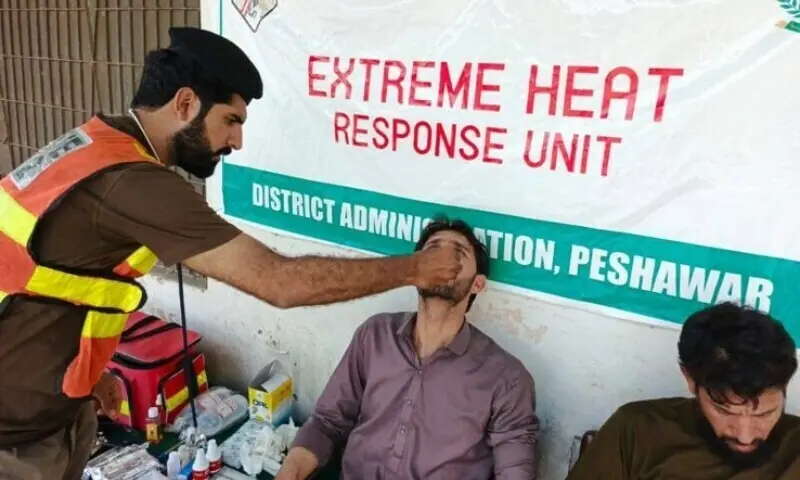
Pakistan is hardly a bystander to these trends. Summers have become longer and heatwaves more frequent. This year, Dadu recorded 51.5°C, while large parts of Sindh and Balochistan endured temperatures close to 50°C. Such conditions place enormous strain on electricity networks, reduce labour productivity and expose vulnerable groups to serious health risks. For those whose livelihoods depend on working outdoors, heat is not simply an inconvenience. It can determine how much work gets done and how much income reaches home.

Research published this year suggests that nearly 3.8bn people could face extreme heat conditions by 2050. Many of those most affected will live in developing countries where access to cooling remains limited and power supply is unreliable. Yet the challenge is not confined to traditionally hot regions. Record temperatures in 2025 stretched from Central Asia and the Sahel to parts of northern Europe, highlighting how rapidly climatic patterns are changing across continents.

Scientists estimate that extreme heat events are now almost 10 times more likely than they were a decade ago. Even countries accustomed to milder climates are beginning to confront risks that were once linked mainly with the tropics.

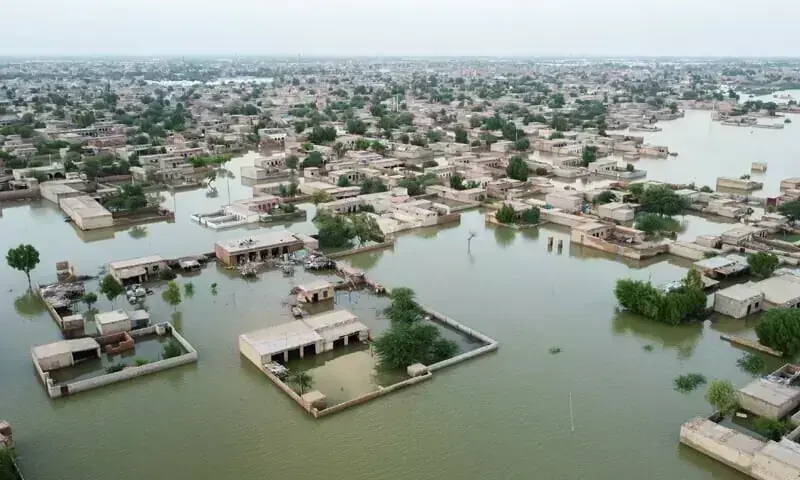
Pakistan’s adaptation efforts have often focused on floods — understandably so after the 2022 calamity. Heat, however, deserves equal attention. Urban areas need more shade and green spaces. Building standards should encourage passive cooling. Reliable electricity and public cooling facilities will become increasingly important during prolonged hot spells. Health systems must also be equipped to recognise and respond to heat-related illness.

The coming years are unlikely to resemble the climate many societies grew accustomed to during the last century. Planning for hotter conditions can no longer be treated as a peripheral environmental issue. It is increasingly becoming a question of public health, economic resilience and public safety.

Published in Dawn, May 31st, 2026

  •  

Environment deficit

WORLD Environment Day arrives as the planet edges deeper into climatic uncertainty. New global temperature records are being set with unsettling frequency, and the World Meteorological Organisation has warned that the years from 2026 to 2030 are likely to rank among the hottest ever observed. There is a strong possibility that another record-breaking year will emerge before the decade is out, while average global temperatures are expected to remain close to or above the 1.5°C threshold that governments once hoped would help avert the worst impacts of climate change.

The warning may be global, but its implications are intensely local. In May, temperatures in parts of Sindh and Balochistan climbed towards 50°C, triggering heatwave alerts and heightening concerns about pressure on already strained power, water and health systems. At the same time, scientists continue to raise the alarm about the glaciers and snow reserves that feed the Indus basin. For a country whose agriculture, food security and energy production depend heavily on the Indus basin, changes in the region’s ice reserves carry consequences that extend far beyond the mountains.

Pakistan knows all too well the consequences of environmental neglect. The catastrophic floods of 2022 inundated vast areas, displaced millions and inflicted losses running into billions of dollars. Yet, despite repeated reminders of the country’s vulnerability, environmental protection continues to occupy a peripheral place in policymaking. Climate adaptation efforts move slowly, urban expansion often proceeds with little regard for sustainability, forests remain under pressure and air pollution continues to burden public health. Shrinking green spaces leave cities increasingly exposed to extreme heat, while weak enforcement of environmental regulations allows ecological degradation to continue largely unchecked.

Pakistan is right to remind the world that it contributes only a tiny fraction of global greenhouse gas emissions and deserves greater international support. But that argument carries weight only if it is matched by seriousness at home. Fragmented planning, weak implementation and chronic underinvestment have left the country less prepared than it should be.

World Environment Day is often marked by pledges, ceremonies and symbolic gestures. This year, it should prompt something more. As the federal budget approaches, the government has an opportunity to demonstrate that climate resilience is finally being treated as a national priority. Adequate resources must be allocated for adaptation measures, disaster preparedness, water conservation, ecosystem restoration and more livable, heat-resilient cities.

Just as importantly, climate considerations must be embedded across development planning rather than confined to a handful of environmental programmes. Pakistan has received ample warning of what lies ahead. The upcoming budget should show that the state understands the scale of the challenge and is prepared to invest accordingly.

Published in Dawn, June 5th, 2026

  •  

Trump rebuked

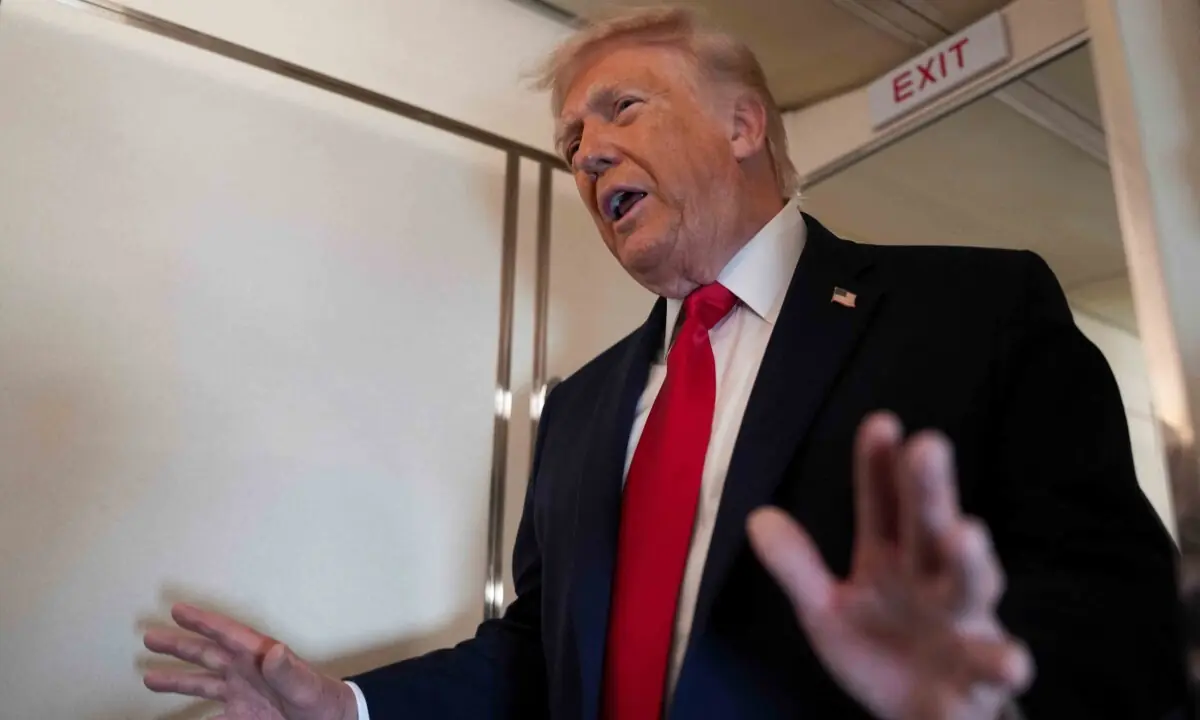
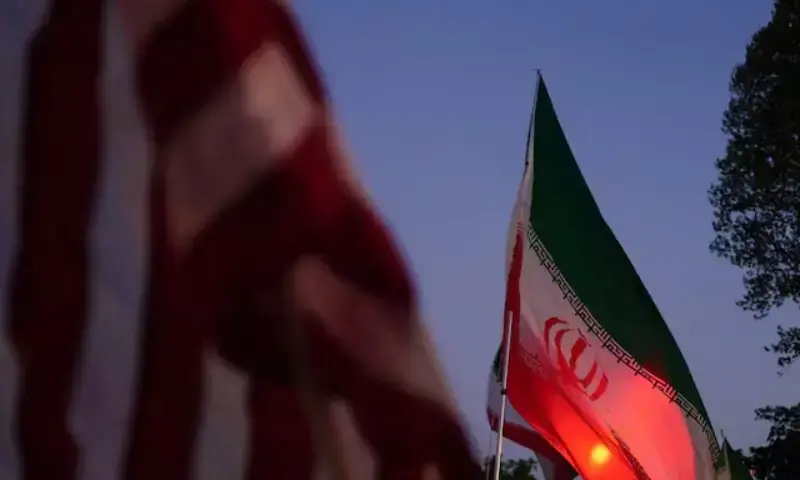
OBSERVERS across the world have long questioned the utility of Donald Trump’s now three-month-old war on Iran. But a growing number of voices from within the US president’s Republican party are saying that this futile and illegal conflict must end. A resolution calling for the withdrawal of US troops from Iran passed narrowly in the Republican-controlled House of Representatives recently, with four members of the US leader’s own party backing the resolution.

The move has expectedly incensed Mr Trump, who called it “unpatriotic”. Since the start of the war, most American lawmakers had only mildly been criticising the joint US-Israeli attack on the Islamic Republic. But now, with US mid-term elections in November inching closer, both Republican and Democratic lawmakers want to avoid the voters’ wrath at the ballot box.

Like people around the world, Americans are also paying high prices at the petrol pump and rising energy prices have sparked a global spike in inflation. Many Americans are rightly asking why they are paying the price — in blood and treasure — to protect Israeli militarism.

Moreover, the feeling that this misadventure must be brought to a close echoes across the American political spectrum. For example, House Democrats have called for an end to the “deeply unpopular and illegal war of choice”, while many conservative Republicans, including the MAGA wing, have lashed out against getting tangled in another ‘forever’ war. Only Israel and its hard-line Zionist supporters in the US have an interest in keeping the Iranian front open. Most other people of the world, including level-headed Americans, want a swift end to the war.

But the problem is that Mr Trump does not seem to have a workable game plan to extricate himself from this quagmire. For three months, he has been unable to bring to heel a militarily and economically much weaker foe. It was clear from day one that this mission was doomed to fail, and the reasons for attacking Iran kept changing. At times it was said that the Islamic Republic was being punished for its supposed crushing of internal dissent, at others it was to keep the world ‘safe’ from the Iranian nuclear ‘threat’.

All of these were flimsy pretexts for what was in reality an imperial mission to punish an unyielding foe, and forward the Israeli agenda for perpetual regional chaos. Mr Trump must listen to what his own lawmakers are saying. Instead of further escalation, he should, in all earnestness, work towards reaching a long-term ceasefire with Iran that Pakistan and other regional states are pushing for.

The deal must promise respect for sovereignty of all regional states, while all the Gulf’s littoral states should work together for a mutual security agreement without the interference of outsiders.

Published in Dawn, June 6th, 2026

  •  

Mixed messaging

THE latest US strikes on Iranian targets have added another layer of uncertainty to an already tense situation in the Middle East. Washington says the attacks were in response to Iranian actions and were meant to protect US personnel and interests. Iran has condemned the strikes and responded with military action of its own.

Every new exchange increases the risk of a wider conflict in a region that has seen more than its share of instability. Yet beyond the latest military developments lies a crucial question: what exactly is the US trying to achieve? If it believes a diplomatic deal with Iran is close, why does it continue to take steps that could push such a deal further away?

For months, American officials have spoken optimistically about negotiations with Tehran, suggesting that talks are ongoing and that a deal remains possible. That message is difficult to reconcile with the latest military action. Striking Iranian targets may send a message of strength, but it also risks provoking retaliation and deepening mistrust. It is fair to ask how these actions fit into a strategy that is supposedly aimed at reaching a negotiated settlement.

Supporters of the American approach would argue that diplomacy and pressure often go hand in hand. Governments frequently try to strengthen their position at the negotiating table by applying military, economic or political pressure. Yet, in reality, there are limits to how effective this can be. There comes a point when pressure meant to bring an adversary to the negotiating table instead makes meaningful discussions difficult to pursue.

Every strike gives hardliners in Iran another reason to oppose compromise. Every retaliation increases the chances that events will spiral beyond anyone’s control. This is why Washington’s message appears increasingly confused. On the one hand, it speaks of dialogue and the possibility of a breakthrough. On the other, it continues to engage in actions that make dialogue more difficult.

The result is a policy that risks sending mixed signals to allies, adversaries and the wider international community. Regional states that would bear the consequences of any wider conflict are left wondering where this strategy is ultimately leading. The uncertainty itself is becoming a source of regional instability.

States have a right to defend themselves. But if diplomacy remains the preferred path, military actions should support that objective rather than cast doubt on it. At present, the US appears to be pursuing two tracks simultaneously: one is aimed at negotiation and the other at escalation. The latest strikes leave observers questioning which of the two is Washington’s real priority. Until that question is answered, claims that a deal is within reach are likely to be met with growing scepticism.

Published in Dawn, June 2nd, 2026

  •  

Budget concerns

IT is ironic that a stable economy has done little to improve people’s lives. As the current PML-N government prepares its third federal budget, the macroeconomic indicators are much better than the emergency figures of 2022-23. The IMF programme is on track, primary surpluses have been recorded and the government has a defensible ‘economic management’ record to boast of.

And yet, citizens feel that the economy is going nowhere. Industries operate below capacity. Investment has stalled. Real wages have not recovered from years of inflation. Millions of young Pakistanis enter the labour market to find it cannot absorb them, and many are leaving the country for greener pastures abroad. This is not a picture of an economy recovering but of one that has been stabilised into stagnation. Sadly, the contours of the next budget offer little hope that the government understands this.

If anything, the upcoming budget will be a document designed to satisfy the IMF rather than the needs of the people. The FBR faces a revenue target of Rs15.3tr, representing a 14pc hike over a figure already revised down twice this year. The IMF has upgraded the target to ‘quantitative performance criteria’, making it binding on the government to achieve it. The budget will therefore be designed around a number that must be achieved to keep external financing flowing, and not around what citizens can bear.

The government is reportedly considering modest salary tax relief, but the concession could increase the revenue gap. To make up for this revenue loss, we will see budget-makers raise costs elsewhere. Mistaking IMF compliance for sound economic management is what is driving the economy into deeper stagnation. The growth model is broken. Every time economic activity accelerates beyond a modest threshold, imports surge because we depend heavily on foreign machinery, fuel and raw material. Exports fail to keep pace, the current account widens, reserves come under pressure — and the cycle restarts. This pattern now resembles a law of economics, when, in fact, it is sustained policy failure. This very pattern makes a case for austerity and stabilisation. Our external account remains vulnerable to oil price shocks and remittance fluctuations, and premature easing could trigger another import surge.

Clearly, stability is not enough. Nor is austerity a reform. We are already facing the consequences of austerity. Without governance reforms, it has led the economy into low-growth equilibrium — stable enough to avoid collapse, but too weak to generate jobs. Stability without growth reforms is not policy. It is a crisis waiting to return. The new budget is unlikely to respond to this challenge. Unfortunately, it will not address the structural reasons why Pakistan keeps finding itself at the IMF’s door.

Published in Dawn, June 1st, 2026

  •  

Missing confidence

AS the government prepares the budget for FY27, Prime Minister Shehbaz Sharif’s meeting with the country’s leading businessmen on Monday offered a glimpse of the wide gap that exists between the two sides’ perception of Pakistan’s economic recovery. While the businessmen pressed their case for tax relief, faster refunds and deeper economic reforms, Mr Sharif boasted of the stability his government had pulled off and his intention of converting recovery into growth.

The government’s narrative is simple. After saving Pakistan from a likely sovereign default, restoring macroeconomic stability, reducing inflation and complying with the IMF programme, officialdom believes the foundation for sustained recovery has been laid. PM Sharif argued that the next phase would focus on growth. He did not say when. But the businessmen’s proposals suggest that much of the private sector is unconvinced that the investment climate has improved.

Their proposals focused on familiar but unresolved concerns: higher taxes, stuck-up refunds, excessive compliance burdens, policy unpredictability and absence of reforms to encourage investment and exports. These concerns are not new. By repeating them, the business leaders once again laid bare the mismatch in perceptions.

For the government, the economy may be more stable now than it was three years ago, but for manufacturers and exporters, it is still difficult to do business. Credit conditions remain restrictive despite monetary easing, industrial output is subdued and private investment has yet to recover. Businesses argue that the stabilisation strategy, while necessary, has extracted a heavy toll in terms of growth and export competitiveness. To ease pressure on the business community, Mr Sharif instructed the FBR to clear all pending tax refunds by June 15. Similarly, he decided to maintain the export refinance scheme rate at 4.5pc until June 2027 to provide certainty to exporters navigating a tight financing environment.

But these measures are not likely to restore business confidence, encourage private investment, make exports competitive or boost growth. Likewise, the business community’s supportive tone during the meeting should not be taken as an expression of their satisfaction with the existing economic conditions. While the larger business community acknowledges that it was essential to restore macroeconomic stability, it is already asking when the economy will start to grow.

The PM’s emphasis on SMEs, housing, privatisation and e-vehicle manufacturing suggests he recognises the need for a growth narrative beyond fiscal consolidation. But his hands remain tied. Chances of his government pushing growth under the IMF appear dim. The upcoming budget will, therefore, be an austere document like before. And the problems that business leaders have asked the PM to address will remain unresolved even next year. This is how mismanaged economies generate crises.

Published in Dawn, June 3rd, 2026

  •  

GB election

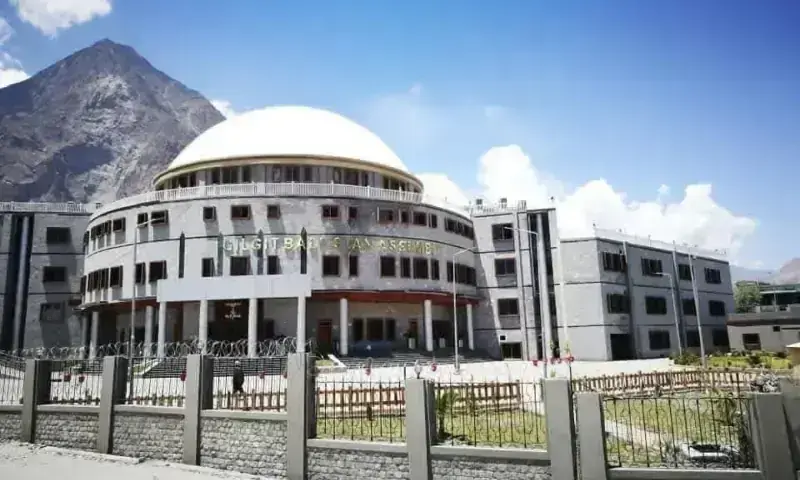
THE Gilgit-Baltistan Assembly will be elected today by the people of that region.

Yet again, themes like the region’s provincial status, the rights of its people, and ownership of its indigenous resources have headlined the run-up to the election. Each party has made many promises to the people, and they will vote today to decide whom to trust.

It is hoped that the turnout will be healthy, that the electoral process will not be hindered, and that the public’s mandate will be honoured. There are good reasons to be wary. There have been too many similarities between the events of recent weeks and what transpired in the run-up to Pakistan’s 2024 general election.

One party’s candidates have again been expected to run without a single identifiable symbol, and its leadership has repeatedly complained of significant difficulties during poll campaigning. Other political parties, especially those in power in Islamabad, seem to have faced no such restriction. Much ink has been spilt over the need to respect the political process and to allow it to unfold organically. It can only be hoped that the announced results will reflect the will of the people.

It is important that whichever party ultimately forms the government puts the needs of the people of GB above everything else. It has been a long-running complaint that, regardless of which federal party wins the election, the GB government seems more entangled with Islamabad than in addressing the concerns of its constituents.

Considering the many promises made on the campaign trail in this regard, there will also be some expectation among the people of the region that their new government will press the question of the region’s constitutional status. This is a complicated matter, with implications that go well beyond simple governance and administration. The different aspects of this question must be reviewed and debated at length, not just in the Gilgit-Baltistan Assembly but also in both Houses of the Pakistani parliament.

However, now that the people of GB have been promised this by several prominent leaders, it should not be deferred until the next election cycle.

The region faces a unique set of challenges and constraints that must be addressed proactively. The people have the opportunity today to chart a course forward at the ballot box. It is hoped that they will make good use of it.

Published in Dawn, June 7th, 2026

  •  

Budget delay

THE government has postponed the announcement of the FY27 budget without offering any explanation for the decision. In the absence of an official announcement, speculation has been rife in the media about the reasons behind the delay. The most plausible explanation appears to be unresolved issues with the IMF, particularly with regard to fiscal space for relief and the transfer of some provincial resources to support federal spending.

According to unnamed officials quoted in media reports, Pakistan and the IMF have yet to agree on revenue mobilisation steps and the expenditure cuts required under the programme. The government is reportedly seeking room for tax relief, higher development spending and increased defence allocations, while the IMF wants continued fiscal discipline to secure a primary surplus equivalent to 2pc of GDP in the next fiscal year.

Indeed, the government is facing mounting pressure from businesses, households and other segments of society to provide economic relief and revive growth. As time passes, the pressure will intensify. With economic stabilisation yet to translate into tangible improvement in living standards, the country’s leaders are finding it increasingly difficult to ignore demands for relief.

However, tensions with the IMF are not the only plausible explanation for the postponement of the budget announcement. Differences between the ruling PML-N and its principal coalition partner, the PPP, over federal development allocations for projects in Sindh are also believed to have contributed to the delay.

There is also speculation that the PPP is resisting alleged attempts by the federal government to use the budget to reduce the provinces’ effective share of resources from the divisible tax pool under the NFC Award by fully or partly assigning certain federal expenditures to the federating units. The federal goal is to obtain more space and restore a fiscal balance in favour of the centre without formally altering the NFC formula through rigorous negotiations for a new award.

Briefly, the budget’s postponement exposes the extent to which the government is unable to finalise its fiscal framework without the IMF’s concurrence. It is a reminder of our continued dependence on multilateral financing and the limited policy autonomy that accompanies such reliance. It also signifies Pakistan’s continuing struggle to reconcile the IMF’s demand for fiscal discipline with domestic political and economic realities.

Whether, and to what extent, the administration succeeds in bridging these gaps with both the IMF and its coalition partner will become clear in the next few days as the budget is finalised. The government might have been in a stronger position today to tackle competing demands had it pursued the deep reforms needed to place the economy on a firmer footing for enduring growth in the last three years, instead of just suppressing the economy to show performance.

Published in Dawn, June 4th, 2026

  •  

Ceasefire in name

THE latest exchange of fire between the US and Iran raises the question: at what point does a ceasefire cease to be one? American forces say they intercepted Iranian drones near the Strait of Hormuz before striking Iranian radar installations. Tehran responded with missiles and drones aimed at Gulf states hosting US forces. Both sides accuse the other of violating the truce that was supposed to halt the conflict in April, yet neither appears willing to abandon negotiations altogether.

Ceasefires are meant to reduce tensions and create space for diplomacy. When military exchanges become a recurring feature, that distinction begins to lose meaning. The danger is not only the violence, but the gradual erosion of confidence that disputes can still be resolved at the negotiating table.

Yet neither Washington nor Tehran seems prepared to walk away from talks. Discussions over sanctions relief, frozen Iranian assets and regional security arrangements are reportedly continuing despite the latest violence. Progress, however, remains elusive. Iran says there has been little tangible movement, while the US continues to rely on military pressure to strengthen its negotiating position.

Such an approach may yield short-term leverage but deepens mistrust. Every strike invites retaliation, and every retaliation creates fresh obstacles to compromise. Meanwhile, the conflict is becoming more complicated on several fronts. In Washington, lawmakers have sought to limit the administration’s ability to continue military action without congressional approval.

In the region, violence on other fronts continues to cast a shadow over efforts towards a broader settlement. Complicating matters further is Lebanon. Iran has increasingly linked the fate of the ceasefire to developments there, warning that Israeli military operations against Hezbollah threaten the broader framework that ended the fighting. Whether Washington accepts that interpretation is almost beside the point. What matters is that the number of potential triggers for a wider crisis has expanded.

The Strait of Hormuz is no longer the only arena capable of derailing diplomacy. A confrontation in southern Lebanon or another clash involving US forces in the Gulf could have consequences far beyond its immediate theatre. The greatest danger today is not a deliberate decision by Washington or Tehran to return to war. It is that the ceasefire is no longer confined to their relationship alone. Its survival is increasingly tied to developments across the region, making it ever more fragile.

Published in Dawn, June 8th, 2026

  •  

AJK flare-up

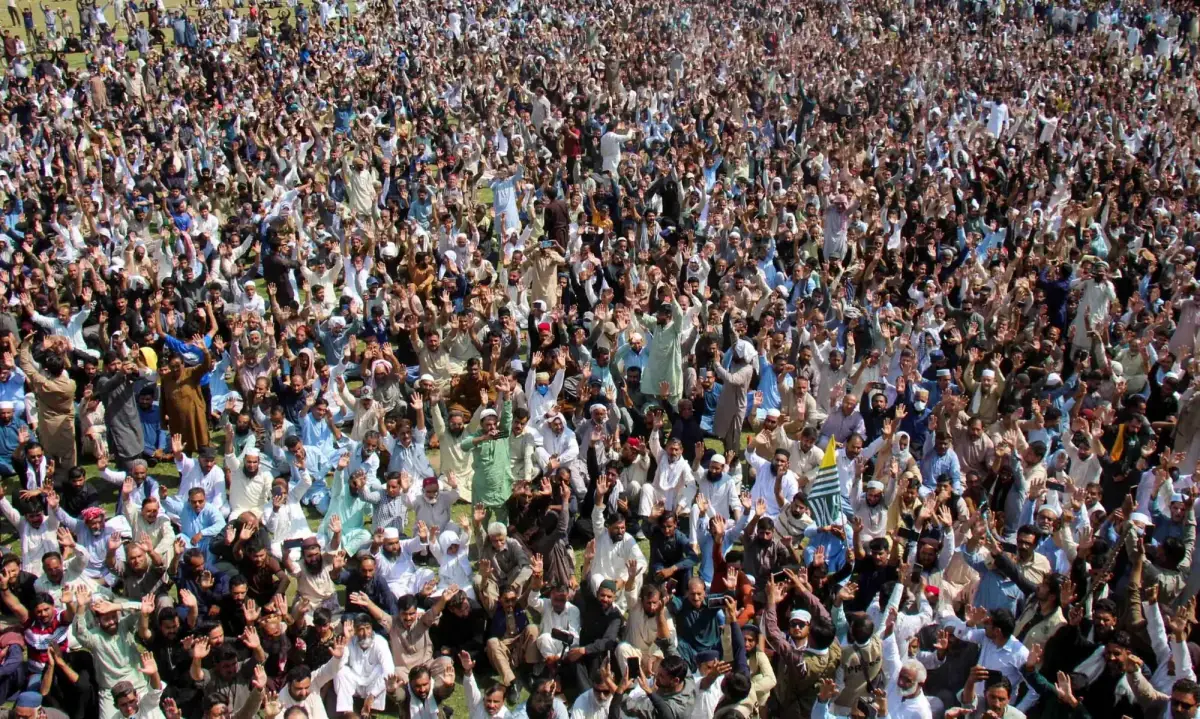
MATTERS have worsened in the stand-off between the Azad Kashmir government and the Joint Awami Action Committee, which has recently been proscribed by the regional administration. The situation started deteriorating after a trader affiliated with the JAAC was reportedly shot in an altercation with law-enforcers on Saturday. The following day protesters and LEAs clashed outside a Rawalakot hospital where the victim’s body was brought, resulting in the deaths of at least four policemen and seven protesters.

This unfortunate series of events echoes similar confrontations between the AJK government and JAAC over the past few years, where dialogue over protesters’ demands has alternated with deadly violence. The region is particularly on edge as the JAAC has called for a major strike today. With the proscription of the group and the deaths in clashes with the administration, emotions are high all round and better sense is required across the board to prevent the situation from deteriorating further.

At the core of the dilemma is the JAAC’s call for abolition of refugee seats for those who left India-occupied Kashmir and settled in AJK. Indeed, the AJK government’s banning of the JAAC has not helped matters, and has only raised the temperature. To prevent further confrontation, the AJK government should reconsider the ban, though investigations are required into the killing of the policemen and the deaths of the protesters.

This paper has argued that bans targeting popular movements are undemocratic, and have, throughout history, failed to suppress dissenting voices. At the other end, the JAAC, too, should take a less hard-line position. While the group had earlier called for civic and governance reforms, it is now demanding constitutional changes, such as the abolition of refugee seats.

These delicate constitutional matters must be decided in the House, after thorough debate by all sides. In fact, as the AJK Supreme Court has said in its opinion on a reference sent to it by the region’s president regarding the refugee seats, constitutional changes can only be achieved “by an assembly possessed of the full democratic mandate of the people, after deliberation” and cannot be “wrested from a government under duress”.

Therefore, both sides need to de-escalate. The authorities should reconsider the JAAC ban, while JAAC supporters must keep all protest peaceful, and take their demand for constitutional change to the AJK legislature.

Published in Dawn, June 9th, 2026

  •  
❌