Reading view

BUDGET 2026-27: Centre, Punjab & Sindh agree on spending cuts

• Budget likely on Friday after president summons NA, Senate sessions today
• National Economic Council finally set to meet today; KP still weighing participation
• Federal, provincial govts to jointly cover Rs800bn shortfall
• Extra FBR revenue to stay with Centre; ‘strategic needs’ may require Rs1.3-1.7tr
• Sindh, Punjab agree to cut ADPs; KP, Balochistan not yet on board
• Uplift plans worth Rs4.715tr likely to be revised down

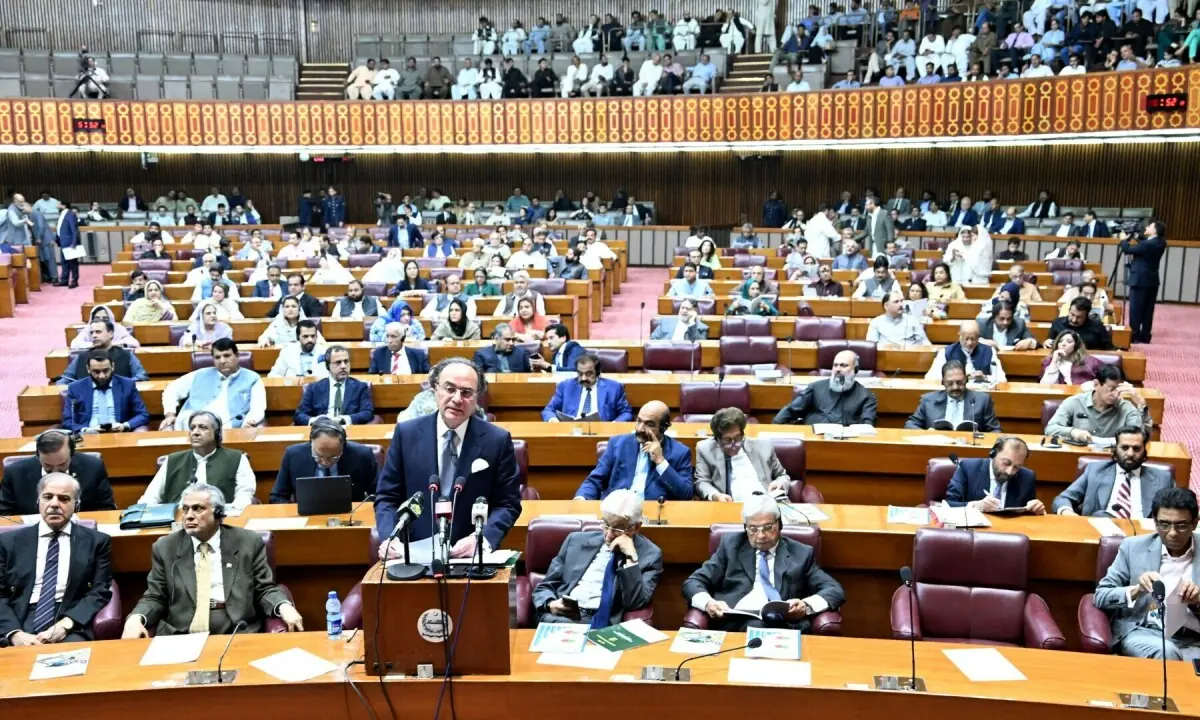
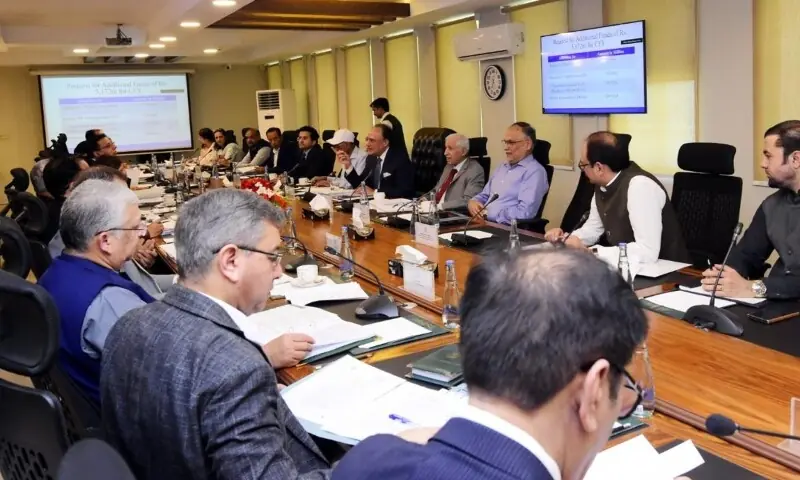
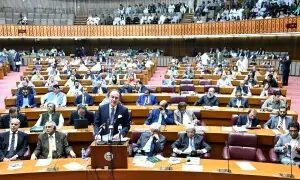
ISLAMABAD: Signs that the federal budget may be presented later this week emerged on Tuesday after the government finally called a meeting of the National Economic Council (NEC) on the same day that sessions of the National Assembly and Senate were summoned by President Asif Ali Zardari.

A source in the NA Secretariat told Dawn that both sessions have been called budget sessions for 2026–27; however, it is expected that the budget will be presented in parliament on June 12.

This echoed Parliamentary Affairs Minister Tariq Fazal Chaudhry’s words, who said on Tuesday that the budget for the next fiscal year would likely be presented in parliament on Friday.

The NEC, meanwhile, is set to meet today (Wednesday) to finalise federal and provincial development plans after a broader agreement on cutting development and other expenditures at all tiers of the federation to cover around Rs800 billion revenue shortfall this year and jointly create similar, but higher, fiscal space next year for additional “strategic needs”.

Under the agreement reached between the PPP and PML-N, provincial shares from the federal divisible pool would stay frozen at the current fiscal year’s position. Any increase in FBR revenue next year on top of the current year’s collection would be retained by the Centre, informed sources said.

To avoid permanence and legal precedent, an ad hoc mechanism would be put in place under which the Centre would transfer full provincial shares to provincial accounts and the provincial governments would then credit the extra amount — higher than what they received this year — back to the Centre.

The sources said the additional amount being discussed for next year to be given up by the provinces was not fixed but dynamic, depending on FBR revenue collection, and could range anywhere between Rs1.3 trillion and Rs1.7tr.

To ensure that these additional amounts remain protected in favour of the Centre, both Sindh and Punjab would drastically cut their planned annual development plans (ADPs) for next year and reduce other expenditures. For this, the recent pattern of utilisation of petroleum subsidy by the Centre and provinces had already been practised, the sources said.

Interestingly, smaller provinces — Balochistan and Khyber Pakhtunkhwa — were not part of the deal so far. Moreover, the KP government was reportedly still going through internal political consultations on whether to participate in the NEC meeting.

There were, however, conflicting reports about additional fiscal space for the Centre’s strategic needs next year. Some sources said the PPP had been told that customs duty was not part of the list to be included in the Federal Consolidated Fund under Article 160(3) of the Constitution, but had been made part of the divisible pool under the National Finance Commission through a presidential order and could be removed from the list through a presidential order.

This adjustment, they said, could provide close to Rs1tr in additional fiscal cushion to the Centre next year. For the current year, the target for customs duty was set at Rs1.588tr, resulting in a provincial share of Rs892bn. However, such an option involved political and permanent complications and was eventually dropped.

PPP’s former finance minister and member of the negotiating team Saleem Mandviwalla told Dawn that the idea of excluding customs duty from the divisible pool was “nonsense” and stood no­­w­­here now. He, however, confir­med that an agreement had been reached on the Centre and provinces jointly covering the revenue shortfall this year and next year.

Responding to a question, he said development expenditures as well as other expenses would be cut across the provinces and the Centre. He said next year’s additional fiscal requirement would be flexible, ranging between Rs1.2tr and Rs1.5tr or so.

“There was disagreement on procedures which has been settled now,” he said, adding that under the agreement, whatever the requirement may be, it would be jointly covered by the Centre and the provinces. Declining to share details, he said it would be done within existing resources and without additional taxes.

In return, informed sources said, the PPP reportedly secured an increase in federal funding for the Sukkur-Hyderabad Motorway (M6) from Rs20bn cleared by the Annual Plan Coordination Committee to about Rs70bn, along with commitments for its actual utilisation and accelerated progress during the coming fiscal year, not just an allocation on paper.

The sources said the federal finance ministry had earlier indicated a maximum 7pc increase in salaries based on average inflation, but the freeze on provincial shares would mean no such facility for provincial employees.

As a result, the NEC would significantly revise downwards federal and provincial development plans worth Rs4.715tr for the next fiscal year amid conflicting fiscal needs of critical political and institutional stakeholders.

The sources said the Centre’s Rs1.126tr Public Sector Development Programme, as well as the combined provincial development portfolio of Rs3.138tr, would be brought down.

Originally, the Rs3.138tr provincial ADPs for next year shared with the APCC last week included Punjab’s Rs1.45tr allocation, up 17pc and accounting for 46pc of the total. This was followed by Sindh’s restrained development indication of Rs816bn compared to its current fiscal year allocation of Rs887bn, down 8pc.

KP also showed a higher development envelope of Rs564bn for next year, up almost a quarter from Rs455bn in the current fiscal year. On top of hefty federal allocations for the province, Balochistan had also pitched its ADP size at Rs308bn next year, up 10pc from Rs279bn this year.

The NEC — the highest economic decision-making forum of the federation, led by the prime minister and comprising the four chief ministers and four federal ministers — has a four-point agenda for the meeting.

The first item pertains to a review of the Annual Plan 2025-26, approval of the Annual Plan 2026-27 and a presentation on key socio-economic indicators of the provinces.

This will be followed by a review of Public Sector Investment 2025-26, the proposed Public Sector Investment 2026-27 and confirmation of changes made in the PSDP 2025-26 through addenda, corrigenda and adjustments on the directives of the prime minister, including a cut of around Rs175bn.

The meeting will also include presentations on provincial annual development plans by the four chief secretaries.

Besides, the NEC will take up a progress report of the Central Development Working Party from April 1, 2025, to March 31, 2026, and schemes approved by the CDWP and the Executive Commi­ttee of the National Economic Council during the same period.

Syed Irfan Raza in Islamabad also contributed to this report

Published in Dawn, June 10th, 2026
  •  

Reko Diq security costs increase as upgrades discussed

• Govt and mining company conducting formal review of procurement plans for project
• Minister hints at gas tariff relief for domestic consumers from July 1

ISLAMABAD: Pakistan and Barrick Mining Corporation are working on upgrading the security requirements of the multi-billion dollar Reko Diq Copper-Gold Project in view of the prevailing situation, resulting in increased security costs.

A team of Barrick Gold is currently in Pakistan to discuss security upgrades, confirmed Ahmad Hayat Lak, chief executive officer of the Oil and Gas Development Company Limited (OGDCL), one of the key Reko Diq partners.

He told journalists that the Reko Diq project agreement had provisions for security arrangements and that the partners were discussing possible upgrades.

He said both sides were conducting a formal review of security arrangements and procurement plans for the project.

Lak added that the review, as required under the agreement, would suggest whether security upgrades and additional funding were needed, while stressing that Pakistan, as the host country, bore sole responsibility for protecting the site.

He said lenders had expressed confidence in existing security protocols during a recent meeting in Canada, having completed their own due diligence before committing funds.

New financiers are also showing strong interest in joining the venture, he added.

Petroleum Minister Ali Pervaiz Malik said Barrick Executive Chairman John L. Thornton had recently led a high-level delegation to Islamabad to discuss the security situation and procurement strategy with the government.

He said it was reassuring that Barrick, one of the world’s leading mining firms, remained committed to the project despite global and local challenges.

The delegation also reportedly explored the acquisition of advanced heavy-duty equipment through competitive bidding and the expansion of the project’s lending and credit structures.

‘Relief in gas tariff’

The minister hinted at relief in gas tariffs for domestic consumers in the upcoming pricing review from July 1, instead of an increase demanded by gas companies.“You will hear good news” on gas prices, he said.

He said the government had already decided to charge Rs2,000 per million British thermal units (mmBtu) for gas supplied to power generation, instead of Rs3,500 per mmBtu in the case of LNG, and that a formal summary would be moved for implementation shortly.

A summary would be sent to the federal cabinet to align the pricing of this gas with local rates and shield consumers from higher costs, he added.

The minister said local gas production had been increased by 400 million cubic feet per day in response to supply disruptions and that proposals had been prepared to address the chronic circular debt problem in the gas sector.

Petroleum Secretary Hamed Yaqoob Sheikh said the division was optimistic about receiving a positive response from the International Monetary Fund (IMF) regarding concessions aimed at facilitating the upgradation of local oil refineries.

He said the minister had made a strong case before the IMF and emphasised that failure to modernise refineries would not be in the country’s interest.

Published in Dawn, June 4th, 2026

  •  

4pc growth target set for FY2026–27 as macroeconomic framework sent to economic council for approval

ISLAMABAD: Having missed the growth target by half a percentage point, recording growth of 3.7pc this year, the government has set an economic growth target of 4pc and inflation at 8.2pc for the next fiscal year.

The macroeconomic framework for FY2026-27 was cleared here on Monday at a meeting of the Annual Plan Coordination Committee (APCC) for formal approval by the National Economic Council (NEC) on June 3.

The NEC — considered as the country’s highest national economic policy making body — is led by the prime minister and represented by all four provincial chief ministers besides as many federal ministers.

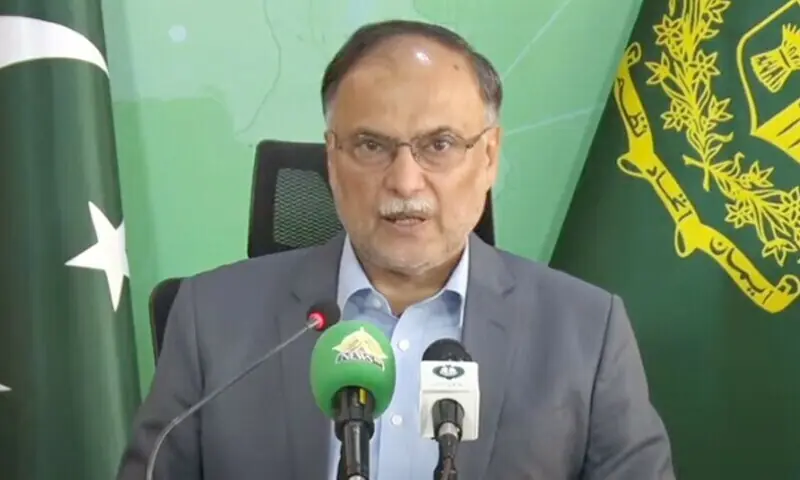
The daylong APCC meeting is being presided over by Planning Minister Ahsan Iqbal and is being attended by provincial development ministers, along with senior federal and provincial bureaucrats.

“For FY2026–27, Pakistan’s economy is targeted to grow by 4pc, signalling a continued growth trajectory,” the APCC working paper noted, while stating that GDP growth stood at 3.7pc in FY2025–26 against a target of 4.2pc.

Growth rate for FY2024-25 had finally settled at 3.2pc.

The commodity-producing sectors are targeted to expand by 3.9pc next year, driven by 3.8pc growth in agriculture and 4.5pc growth in large-scale manufacturing (LSM).

Agricultural growth will be supported by a recovery in important crops (3.6pc) and cotton ginning (2.5pc), as well as robust performance in livestock (3.9pc).

The industrial sector is targeted to grow by 4pc in FY2026-27 mainly due to a revival in LSM, alongside growth momentum in mining and quarrying, construction and energy (gas and water supply).

The services sector is targeted to grow at 4.2pc, underpinned by stronger performance in wholesale and retail trade (4.2pc); transport, storage and communications (3.7pc); and financial services (4.5pc) as well as information and communication (7.7pc).

“These targets are contingent on effective macroeconomic management and stable external conditions,” the planning commission warned as the macroeconomic framework moves to the NEC.

Under the macroeconomic outlook for FY2026-27, national savings are targeted to grow by 14.3pc of GDP compared to 14.1pc in the current fiscal year (CFY), while investment is targeted to reach 15pc of GDP, against 14.4pc in CFY.

The planning commission added that this reflects a narrowing savings-investment gap to be financed through modest external inflows.

Public investment is targeted to remain at 3pc of GDP next fiscal year instead of 3pc in CFY, while private investment is targeted to rise to 10.3pc of GDP from 9.6pc in CFY.

Inflation rate has been targeted at 8.2pc due to anticipated supportive fiscal consolidation and improved macroeconomic stability.

Highlighting a risk, the planning commission said the external sector may face pressures as easing import controls and debt repayments are likely to widen the current account deficit next year.

However, strong remittance inflows, export recovery and anticipated external financing are expected to help cushion these pressures and support external sustainability, it said.

The APCC also targeted an increase in employment of two million in FY2026–27 through higher investment and improved economic growth.

This is based on the premise that public investment crowds in private investment, thereby expanding employment opportunities across all sectors.

The Planning Commission said ongoing federal and provincial employment generation programmes are further strengthening labour market participation, entrepreneurship, technical skills and job-matching mechanisms.

These efforts are expected to create 1.1 million jobs in the services sector, 0.5 million in the industrial sector and 0.4 million in the agriculture sector in FY2026–27.

“Thus, the increasing trend of employment creation is expected to support broad-based, inclusive, and employment-intensive economic growth,” it said.

Referring to the current fiscal year, the Annual Plan document said Pakistan’s economy had demonstrated “notable stabilisation” in the first eight months, despite flash floods and the impact of the US-Iran war.

During the first eight months of the fiscal year, average inflation remained contained. Large-scale manufacturing (LSM) showed a sustained recovery after two consecutive years of contraction, reflecting a broader stabilisation of the macroeconomic environment.

Improved external sector conditions, supported by strong remittance inflows and rising services exports, strengthened the balance of payments, leading to higher foreign exchange reserves and greater exchange rate stability.

Reinforced by these gains, investor confidence improved markedly, driving the stock market to record highs, the Planning Commission noted.

However, external price shocks resurfaced inflationary pressures following the outbreak of the conflict in late February 2026, resulting in a sharp surge in global oil prices from approximately $72 per barrel (pre-conflict) to a peak of nearly $120 per barrel.

Thus, average inflation during July–April FY2025-26 rose to 6.2pc, compared to 4.7pc in the same period of the previous fiscal year.

More notably, monthly inflation rose to 10.9pc in April 2026 compared to 0.3pc in April 2025.

Pakistan’s GDP growth in FY2025–26 rose to 3.7pc from 3.2pc in the previous fiscal year, reflecting broad-based improvements across agriculture, industry and services, although several targets were missed.

Large-scale manufacturing (LSM) showed a notable turnaround, posting growth of 6.1pc in FY2025–26 compared to a contraction of 0.7pc in FY2024–25.

On the external side, weakening exports and a recovery in import demand led to a widening of the trade deficit.

However, robust remittance inflows and growing services exports helped contain pressures on the external account, supporting the balance of payments.

The resulting improvement in foreign exchange reserves contributed to exchange rate stability, while continued fiscal discipline and prudent macroeconomic management reinforced overall economic stability.

  •  

‘Provinces asked to help fill massive gap in budget’

• KP finance czar says federal govt facing Rs1.7tr ‘fiscal hole’
• Muzammil Aslam claims Centre in a tight spot due to coalition partners’ needs, IMF ‘over-commitments’

ISLAMABAD: The federal government is having problems formulating the budget, owing to an around Rs1.7 trillion fiscal hole and wants the provinces, particularly Punjab and Sindh, to shoulder a greater financial burden, Khyber Pakht­unkhwa’s finance czar claimed on Wednesday.

Speaking at a news conference, KP Ad­­viser on Finance Muzammil Aslam said the uncertainty following the cancellation of National Economic Council (NEC) meeting and the rescheduling of Annual Plan Coordination Committee (APCC) was very concerning for the markets, as was evident from the massive re­­cent plunge at the Pakistan Stock Exchange.

He said the NEC meeting called for June 3 had been unexpectedly canceled without any reason and without a new date being set, while the APCC meeting was also earlier canceled on May 21 without advance notice, and then held on June 1.

Aslam’s contentions seemed to echo points recently made by PPP leader Syed Naveed Qamar. In a recent appearance on DawnNewsTV, he said that the federal government did not have adequate funds to allocate to major heads, such as defence, debt servicing and pensions, adding that the provinces had also been asked to contribute to make up the shortfall.

Speaking to reporters on Wednesday, Aslam said the Centre did not expect the healthy profits next year and was banking on the petroleum levy, and more funds from provinces to shore up its kitty.

He said Finance Minister Muhammad Aurangzeb had earlier suggested about Rs1.7tr share out of provincial shares of the divisible pool by revisiting some taxes, like customs duties. Under this scheme, the Centre had indicated it would need a Rs700-800bn slice from Punjab, Rs500bn from Sindh and Rs200bn from KP, but claimed there had been no follow-up decision in this regard.

Highlighting Planning Minister Ahsan Iqbal’s dismay, Aslam said the government was taking its time to satisfy the demands of its coalition partners, and was finding it difficult to put together a budget that would also be acceptable to the IMF, chiefly the 2pc target for primary budget surplus.

He claimed the federal government had “over-committed” with the IMF on revenue, which was one of their key challenges. On the other hand, he said, no stakeholders were ready to stand with the finance ministry on the expenditure side.

“When you formulate budgets in such pressures, there would always be infighting and coalition partners would not get the budget passed,” he said adding the PPP’s leadership was spending long hours at the finance ministry which was matter of grave concern.

He said in one of the recent meetings, the Centre asked the provinces to extend a helping hand in revenue generation and demanded Rs430bn in additional revenue in the coming fiscal year through taxes on property and agricultural income.

Under that target, he said the KP was required to contribute Rs35bn but in a subsequent letter, the province was asked to generate Rs60-65bn and similar demands were made to other provinces. He said this additional demand had been raised because of ongoing infighting among coalition partners.

Aslam maintained that the tax relief being floated by the Centre would be only an eyewash, although it may increase the minimum threshold from Rs100,000 per month to Rs150,000 per month, but the resultant gap would then be shifted to other taxpayers. He also maintained that while the provinces were told recently about united efforts towards building wa­­ter resources, development allocations sug­­gested there was no such plan in place.

Published in Dawn, June 4th, 2026

  •  

Nepra reduces electricity charges for three months

• Regulator allows Rs1.19 per unit FCA collection in June bills
• Grants Rs1.99 per unit reduction for three months, until August

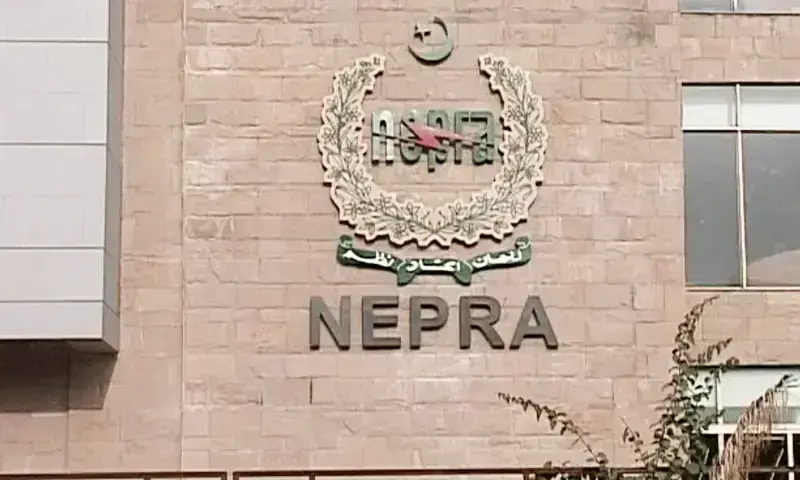
ISLAMABAD: The National Ele­­ctric Power Regulatory Autho­rity (Nepra) on Thursday notified about 80 paisa per unit net reduction in national power rates for June and then Rs1.99 per unit for July and August, with a cumulative financial impact of about Rs56 billion.

The unusual relief over the three months — June to August — has resulted owing to the combined effect of two concurrent tariff adjustments — one for the monthly fuel cost for April and another for quarterly tariff adjustments for the first quarter (January-March 2026).

In its first determination relating to the monthly fuel cost adjustment for the consumption month of April, Nepra worked out and notified Rs1.19 per unit increase in fuel costs to be recovered from consumers in the current month’s (June) billing, with an additional fiscal gain to distribution companies (Discos) of Rs11bn.

Nepra “has decided that positive FCA for April 2026 i.e (Rs1.1907/kWh)…shall be applicable to all the consumer categories of KE and XWDISCOs except lifeline consumers, Electric Vehicle Charging Stations (EVCS) and pre-paid electricity consumers of all categories who opted for pre-paid tariff”, the notification read.

It adds that positive FCA shall also apply to consumption falling under the incremental consumption package, and Discos and KE shall reflect the FCA in respect of April in the billing month of June. The Discos had demanded Rs1.74 per additional fuel cost to mop up Rs16bn more funds from consumers but the regulator scaled it down.

Simultaneously, in its second determination under quarterly tariff adjustment (QTA) for the January-March period, Nepra notified Rs1.99 per unit reduction in rates with a total financial impact of Rs67bn over three months — June, July and August.

The adjustments will be applicable to all consumer categories, except lifeline consumers, units billed for incremental consumption package, and prepaid consumers, the notification read. The Discos had proposed Rs64bn refund to consumers under QTA at the rate of about Rs1.75 per unit.

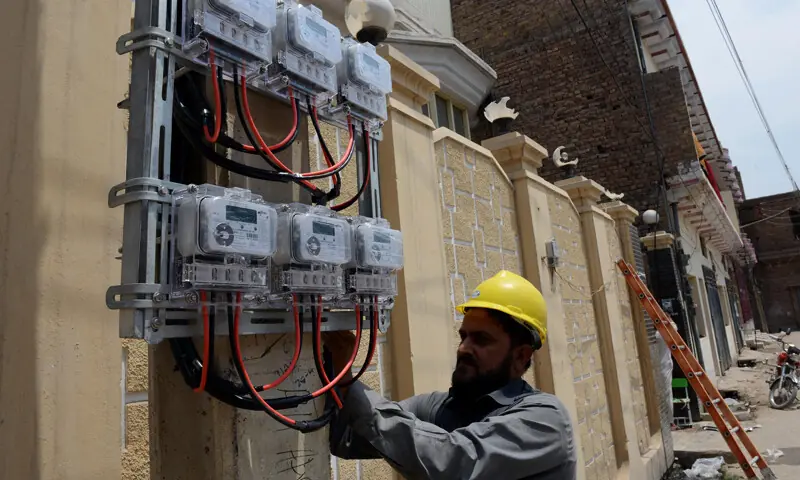
As such and with concurrent application of both notifications, the consumers would get a net relief of about Rs56bn over three months. Practically, therefore, the consumer’s rates would be down by about 80 paisa per unit in June i.e. application of Rs1.99 per QTA reduction minus Rs1.19 per unit increase in FCA. The negative Rs1.99 per unit QTA would then continue for July and August.

The net financial impact of two decisions would thus work out at Rs56bn in favour of consumers i.e. Rs67bn in relief over three months, minus Rs11bn in additional fuel cost for current month.

The lower QTAs have chiefly emerged on account of adjustments in capacity charges, transmission charges and market operator fee, the impact of incremental consumption package announced by the government for industrial and agricultural consumers for three years, besides the impact of transmission and distribution losses on monthly fuel costs and variable operations and maintenance charges for the 1st quarter of CY2026 i.e. Jan to March 2026.

Published in Dawn, June 5th, 2026

  •  

Electricity prices likely to rise by Rs1.74 per unit

• Nepra holds public hearing after CPPA asks for additional fuel cost adjustment due to Iran war disruptions
• Regulator seeks report from K-Electric over ‘excessive loadshedding’ in Karachi

ISLAMABAD: The price of electricity is likely to be increased by Rs1.74 per unit in next month’s bills due to the higher fuel cost adjustment, in light of an official demand for over Rs16 billion in additional recoveries from power consumers.

The National Electric Power Regulatory Authority (Nepra) held a public hearing on the Central Power Purchasing Agency’s (CPPA) request for an additional fuel cost recovery of Rs1.73 per unit from consumers for the June billing month.

CPPA Chief Executive Officer Rehan Akhtar told the hearing that the reference fuel cost for April had been set at Rs8.25 per unit, but the actual cost turned out to be Rs9.975 per unit, mainly because of the US-Iran war and the resultant disruption in LNG supplies, thus necessitating an additional charge of Rs1.73 per unit on consumers in the billing month of June.

Technical constraints in shifting cheaper power sources in Sindh to load centres in the upcountry regions facing shortages also contributed to the higher fuel cost adjustment (FCA). The net increase would be Rs1.74 per unit, as an existing minor negative fuel adjustment had also come to an end.

The CPPA official said the government decided to undertake load management and limit the use of furnace oil and diesel for power generation, which helped contain the additional FCA at Rs1.73 per unit.

He said special arrangements were made for LNG imports and the government decided to charge Rs2,000 per unit for its price instead of Rs3,500 per unit under normal circumstances to limit the tariff hike.

In response to a question, he confirmed that lower availability of the Karachi Nuclear Power Plant Unit-2 (K-2) had also contributed to the higher FCA, while its past claims worth Rs3.4bn were another factor behind the increase.

Another official explained that the K-2 plant was only partially available because of forced outages due to the problems in the nuclear reactor. The regulator was informed that power supply from the national grid to Karachi continued to benefit both K-Electric consumers and those connected to the national grid.

“If KE had not been provided electricity from the national grid, an overall increase of Rs1.46 per unit in FCA and an increase of Rs2.80 per unit in capacity purchase price (CPP) would have resulted for consumers, with a total impact of Rs4.26 per unit for the month of April 2026,” Rehan reported.

He said overall power consumption in April this year was 8.5pc lower than last year, as demand declined across all consumer categories except the industrial sector, where the impact of gas disconnections for captive power plants and the incremental tariff package contributed to a 13.5pc growth.

Industrial consumers from Karachi, including Rehan Javed, Tanveer Barry and Arif Bilwani, complained that the incremental tariff package had benefited only a few consumers because of its “faulty design”. They called for the package to be reviewed. It was reported that consumption in the domestic sector dropped by almost 15pc, followed by declines of 9.5pc in the commercial sector, 7.2pc in general services, 53pc in agriculture and about 13pc among bulk consumers.

Excessive loadshedding in Karachi

During the hearing on Tuesday, Nepra also sought a detailed report from K-Electric over “excessive loadshedding” in Karachi amid scorching temperatures.

Nepra pointed out that an increasing number of complaints were being received about excessive loadshedding in Karachi.

A senior Nepra official reported that these complaints were coming from both high-loss and low-loss areas, which was a matter of concern as loadshedding schedules were not being followed.

Moreover, power cuts caused by technical faults were also not being accounted for by the power utility under load management schedules, which was against regulatory performance standards.

The K-Electric management, available live online, was asked to provide a detailed report on an urgent basis so the matter could be examined. KE promised to submit its report at the earliest but did not immediately respond to the allegations.

In a statement issued after the hearing, a KE spokesperson said that its loadshedding practices were aligned with the principles of the National Electricity Policy 2021, and blamed development work in the city by civic authorities for any localised faults that were reported.

Published in Dawn, June 3rd, 2026

  •  

Ogra in disarray amid pricing probe, legal challenges

• Member (oil) steps down after FIA quizzing on price differential claims
• Legal cover for appointment of civil servant to head regulator ‘on the cards’

ISLAMABAD: The Oil and Gas Regulatory Authority (Ogra) is in disarray after one of its three members stepped down amid pricing investigations, amid a government move to depute civil servants to run the otherwise autonomous regulator.

In order to give legal cover to the appointment of civil servants in Ogra, the government has reportedly initiated the process to amend the Ogra law through a presidential ordinance before the budget.

According to sources, Ogra member (oil) Zainul Abideen Qureshi tendered his resignation from the position following his interrogation by the Federal Investigation Agency (FIA) Karachi over controversial payments to an oil marketing company (OMC) on account of price differential claims (PDCs) arising out of subsidised oil pricing after the US-Iran war.

The FIA found misreporting of oil stocks and sales, apparently for pricing benefits, leading reportedly to Rs14bn questionable claims.

While Go Petroleum secured a stay order against the FIA probe from the Sindh High Court, the federal government constituted a committee led by an additional secretary of the Ministry of Finance and comprising senior representatives of the petroleum division, the FBR, the auditor general and Ogra to examine in detail the integrity of PDC payments.

The FIA, however, quizzed Mr Qureshi and Director (Oil) General Imran Ahmad in separate sessions spanning over 72 hours. While otherwise defending the oil pricing and PDC reconciliation process, Mr Qureshi tendered his resignation upon returning to the capital last week.

On the other hand, the government has inducted at least three officers of the district management group — renamed Pakistan Administrative Service — in Ogra without legal cover. On April 8, the government appointed Secretary Establishment Nabeel Ahmed Awan as Ogra chairman for three months.

The post had fallen vacant almost 18 months ago but the government did not make a new appointment for unknown reasons.

Under the Ogra law, the vice chairman holds the charge in the absence of the chairman. Shahzad Iqbal, member gas, had actually taken over the chairman’s slot but was denotified by the government in the middle of oil supply arrangements following the Gulf conflict.

Meanwhile, even tho­ugh Mr Awan’s appointment as the Ogra chairman was challenged in the Islamabad High Court, he has acquired the services of at least two more officers on deputation last week. They include Majid Mohsin Panhwar of BS-20 and Imran Ali Sultan of BS-18.

According to sources, the cabinet committee on legislative cases has already cleared amendments to the Ogra law to provide for the appointment of BS-21 and 22 officers against the position of the chairman for four years, extendable for another term, along with the deputation of other civil servants to assist the chairman.

The amendments to the Ogra law may be made through a presidential ordinance ahead of budget sessions later this week, before the court could take cognisance of the matter.

Published in Dawn, June 8th, 2026

  •  

BUDGET 2026-27: Political, fiscal reality to reshape uplift budget as NEC meets today

• Rs4.7tr federal, provincial development plans may be revised
• Federal PSDP may rise above Rs1.3tr; provincial ADPs could be trimmed
• Mega projects face major cost, time overruns

ISLAMABAD: The National Economic Council (NEC) is set to meet on Monday (today) and may revise federal and provincial development plans worth Rs4.715 trillion for the next fiscal year amid conflicting fiscal needs of critical political and other institutional stakeholders.

The NEC — the highest economic decision-making forum of the federation, led by the prime minister and comprising the four chief ministers and four federal ministers — has a four-point agenda for the meeting.

The first item pertains to a review of the Annual Plan 2025-26, approval of the Annual Plan 2026-27 and a presentation on key socio-economic indicators of the provinces.

This will be followed by a review of Public Sector Investment (PSI) 2025-26, the proposed PSI 2026-27 and confirmation of changes made in the PSDP 2025-26 through addendums, corrigendums and adjustments on the directives of the prime minister, including a cut of around Rs175bn. The meeting will also include presentations on provincial annual development plans by the four chief secretaries.

Besides, the NEC will take up a progress report of the Central Development Working Party (CDWP) from April 1, 2025, to March 31, 2026, and schemes approved by the CDWP and the Executive Committee of the National Economic Council (Ecnec) during the same period.

Projects face delays, overruns

The Planning Commission will also present highlights of the monitoring and evaluation report of mega projects.

According to the report, the PSDP 2025-26 portfolio comprised 801 projects, including 734 ongoing and 67 new initiatives being implemented by 40 ministries, divisions and state-owned enterprises. Out of 240 projects selected for monitoring during the current financial year, 170 had been monitored by March 2026, including specially assigned cases.

Priority monitoring was accorded to mega projects, government special initiatives, donor-funded interventions and slow-moving schemes.

The monitoring exercise revealed that delays in project completion were mainly caused by inadequate financing, weak project planning and preparation, delays in land acquisition and no-objection certificates, litigation, procurement bottlenecks, delayed release of provincial shares, weak project management capacity and changes in scope.

“Analysis indicates that approximately 25 per cent of ongoing projects are facing cost overruns, while nearly 79pc are experiencing time overruns, placing additional burden on public finances and affecting development outcomes,” the report said.

Senior government officials said the consolidated federal and provincial development programme for next year, approved by the Annual Plan Coordination Committee (APCC) last week, could see significant changes because of the Centre’s greater financial needs while protecting the primary budget surplus at 2pc of GDP, or more than Rs2.8tr, as committed to the IMF.

However, the annual plan projections for next year cleared by the APCC are expected to remain mostly unchanged.

Officials said the federal PSDP of Rs1.126tr cleared by the APCC may go beyond Rs1.3tr, while the size of provincial annual development plans could be lower than the Rs3.138tr indicated last week.

They said the PSDP summary for next year contained the Rs1.126tr allocation with a request for enhancement by the NEC.

They added that these changes would be finalised during the NEC meeting as political engagements continued with coalition partners to reach common ground.

Officials said the Centre’s push for Rs1.7tr in additional fiscal space from the provinces, on top of a cash surplus of close to Rs2tr, or about 1.4pc of GDP, for next year had now been reduced by almost one-third to around Rs1tr.

However, allocations for coalition partners’ schemes and ruling party parliamentarians are expected to remain largely unchanged at Rs87bn and Rs70bn, respectively, for next year.

Slippages, targets

The NEC will also be briefed on slippages in the economic growth target, mainly because of external factors, with next year’s GDP growth target set at 4pc and inflation projected at 8.2pc.

The commodity-producing sectors are targeted to expand by 3.9pc next year, driven by 3.8pc growth in agriculture and 4.5pc growth in large-scale manufacturing.

Agricultural growth is expected to be supported by recovery in important crops, projected at 3.6pc, cotton ginning at 2.5pc and livestock at 3.9pc.

The industrial sector is targeted to grow by 4pc in 2026-27, mainly due to a revival in large-scale manufacturing, alongside growth momentum in mining and quarrying, construction and energy, including gas and water supply.

The services sector is targeted to grow by 4.2pc, underpinned by stronger performance in wholesale and retail trade at 4.2pc, transport, storage and communications at 3.7pc, financial services at 4.5pc, and information and communication at 7.7pc.

“These targets are contingent on effective macroeconomic management and stable external conditions,” the Planning Commission warned.

It projected national savings for the next fiscal year at 14.3pc of GDP compared to 14.1pc in the current fiscal year. The investment rate is targeted to reach 15pc of GDP, against 14.4pc in the current fiscal year.

Highlighting a risk, the Planning Commission said the external sector could face pressure as easing import controls and debt repayments were likely to widen the current account deficit next year.

Published in Dawn, June 8th, 2026

  •  

BUDGET 2026-27: IMF-mandated curbs squeeze development spending

• Only Rs1.13tr allocated to PSDP against Rs4.1tr requirement; minister terms shortfall ‘new circular debt crisis’
• Record Rs4.715tr development plan unveiled
• APCC resolves to divert resources to ongoing projects

ISLAMABAD: Under tight International Monetary Fund (IMF) oversight, the government has trimmed allocations for most sectors in the next federal development programme to create additional fiscal space for the PML-N’s trademark national highways, a new Rs87 billion share for coalition partners and a Rs70bn allocation for ruling party lawmakers’ schemes.

Yet, the Annual Plan Coordination Committee, led by Planning and Development Minister Ahsan Iqbal, on Monday unveiled a record national development programme of Rs4.715 trillion, made possible by an unprecedented 27pc hike in development allocations by state-owned entities and a 10pc rise in provincial allocations to an all-time high of Rs3.138tr.

The overall Rs4.715tr deve­l­opment portfolio comprises the largest share of provincial annual development plans (ADPs) at Rs3.138tr (up 9.6pc), followed by the federal Public Sector Development Programme (PSDP) of Rs1.126tr, up 12.6pc from the current year, and Rs451bn from SOEs, up 27pc from Rs355bn in the current fiscal year.

However, the federal PSDP allocation of Rs1.126tr for next year disappointed the planning minister, who described it as “a new circular debt crisis”, with almost Rs11tr in throw-forward liabilities from around 800 ongoing projects that would be impossible to complete over the next decade.

He said he had requested the prime minister for a minimum allocation of Rs2.9tr for development next year against actual requirements of Rs4.1tr, but the Ministry of Finance could spare only Rs1.126tr owing to IMF restrictions.

Mr Iqbal said development projects had come to a standstill over the past eight years after record development investments between 2013 and 2018. He said it should be a matter of shame that the country continued to celebrate raising foreign debt and issuing bonds to service liabilities instead of supporting export growth to finance national development and social welfare needs.

Even within the constrained PSDP allocation of Rs1.126tr, which includes Rs267bn in foreign assistance, about Rs125bn pertains to the N-25 highway in Balochistan, for which the prime minister had separately imposed an additional Rs10 per litre levy on petroleum products. This effectively leaves the PSDP size at Rs1.001tr — almost unchanged from the current year’s Rs1tr allocation, which was later reduced to Rs836bn to partially finance the impact of the closure of the Strait of Hormuz.

The government has allocated Rs264bn for national highways next year, up 18.4pc from Rs223bn in the current fiscal year, while the power sector has been earmarked Rs91bn, almost unchanged from this year’s Rs90.8bn.

The planning minister told the APCC that after allocating Rs87bn for coalition partners, Rs70bn for the Sustainable Development Goals (SDGs) Achievement Programme, Rs100bn for Balochistan projects excluding the N-25, and Rs153bn for AJK, GB and the newly-merged districts of KP, the actual PSDP allocation drops to a “disgraceful” Rs591bn. After meeting the Rs426bn rupee-cover requirement for foreign-funded projects, only Rs165bn remains available for other ongoing schemes.

The Rs3.138tr provincial development outlay is led by Punjab, which has allocated Rs1.450tr (46pc) for next year, up 17pc.

Sindh follows with a relatively restrained development allocation of Rs816bn compared to Rs887bn in the current fiscal year, a decline of 8pc.

KP has proposed a development envelope of Rs564bn for next year, up almost 24pc from Rs455bn in the current year.

In addition to substantial federal allocations, Balochistan has increased its ADP size to Rs308bn, up 10pc from Rs279bn this year.

Based on these financial envelopes, the government has set next year’s economic growth target at 4pc, supported by projected growth of 3.8pc in agriculture, 4pc in industry and 4.2pc in services. Inflation is targeted at 8.2pc.

Given the tight fiscal position, the APCC decided to make limited allocations, focusing on strategic and high-impact projects, ensuring adequate rupee cover for foreign-funded schemes to honour international obligations, prioritising projects with more than 70pc completion for early execution, avoiding token allocations, restricting new projects except those aimed at enhancing productivity, and discouraging projects of a provincial nature exc­ept in less-developed areas.

The sector-wise breakdown shows that the largest share — Rs729.9bn, or 65pc — has been earmarked for infrastructure projects, compared to Rs615bn budgeted in the current fiscal year, an increase of 19pc. Within infrastructure, transport and communications receive the highest allocation at Rs409bn (36pc), compared to Rs326bn in the current year, up 25pc. This is followed by water resources at Rs140bn (12.5pc), energy at Rs136bn (12pc), and physical planning and housing at Rs45bn (4pc).

The social sector has been allocated Rs187.2bn (16.6pc), including education (7pc), health (2.2pc), the SDGs Achievement Programme (6.2pc) and other social sectors (1.3pc). To help less-developed regions catch up with the rest of the country, Rs54.1bn (4.8pc) has been earmarked for AJK, GB and the newly merged districts of KP. The science, technology and information technology sector has been allocated Rs45bn (4pc), while governance and production sectors have been allocated Rs10.2bn and 0.8pc of the PSDP, respectively.

Iqbal lamented that the country was operating with an extremely reduced PSDP at a time when development needs were rising sharply. He said development space had been squeezed by mounting debt-servicing pressures, prolonged macroeconomic stress and worsening global headwinds. PSDP allocations, he noted, stood at 19.6pc of the national budget and 2.5pc of GDP in FY18, but had fallen to just 4pc of the budget and 0.6pc of GDP by 2025-26.

“The PSDP is not merely a budget line — it is a statement of national intent,” the minister said, stressing that development funding was directly linked to economic growth, national productivity and public welfare.

He warned that Pakistan was still struggling to recover from the post-2018 economic shock, with debt servicing burdens and recurring external vulnerabilities limiting the country’s ability to invest in transformative projects.

Given the limited fiscal space, the APCC decided that more than 98pc of available resources would be directed towards ongoing projects, with priority accorded to high-impact and near-completion schemes, particularly in water, ener­­gy, transport and other core infrastructure sectors.

Published in Dawn, June 2nd, 2026

  •  

OGDCL makes significant oil, gas discovery in Sindh’s Sanghar district

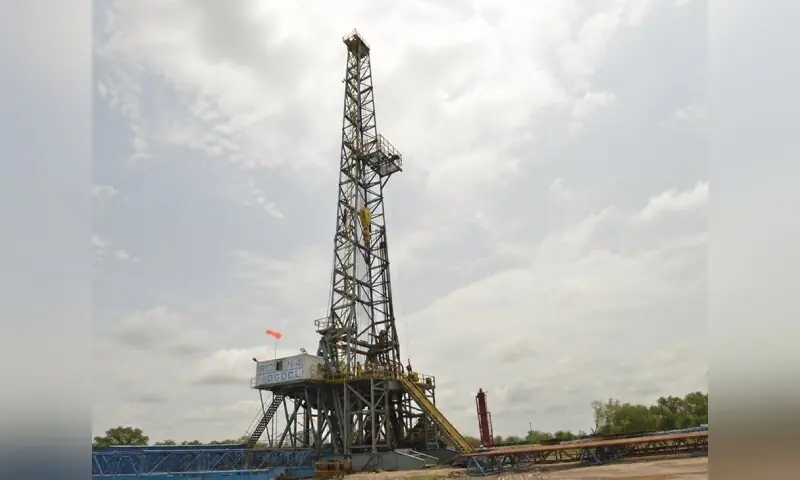
ISLAMABAD: The state-owned Oil and Gas Development Company Limited (OGDCL) on Wednesday said it made a significant oil and gas discovery from its exploratory well Bobi Deep-1, located in Sindh’s Sanghar district.

The company is the country’s largest oil and gas producer and, in April this year, began commercial production from Pakistan’s largest-ever oil and gas discovery from a single well.

In a statement issued today, OGDCL said the well successfully tested the Massive Sand interval of the Lower Goru Formation and produced 2,000 barrels of oil per day (bpd) and 1.1 million standard cubic feet of gas per day (mmscfd) through a cased-hole Drill Stem Test (DST), confirming the hydrocarbon potential of the reservoir.

A Drill Stem Test (DST) is a temporary well-completion procedure used in oil and gas exploration to assess the pressure, permeability and production potential of a geological formation. It helps determine whether a well has encountered a commercially viable reservoir without the need for costly permanent casing.

“The achievement marks a major milestone for OGDCL as the first hydrocarbon discovery from the Massive Sand play within the Bobi and Dhamraki Mining Lease,” the company stated.

“Beyond the discovery itself, the success has opened a new exploration window in the area, de-risking similar prospects in the surrounding region and creating opportunities for future reserve additions and resource growth,” said the oil company.

The discovery is particularly significant because the project had previously encountered complex subsurface challenges that led to the suspension of drilling operations.

“Rather than abandoning the prospect, OGDCL relied on indigenous expertise and adopted an innovative approach to address the issue,” it said.

A multidisciplinary team of geoscientists and engineers collaborated with the Centre for Pure and Applied Geology at the University of Sindh, Jamshoro, to investigate the formation through advanced geophysical surveys, subsurface studies and field evaluations.

The joint effort led to the development of a comprehensive geological and geophysical model, enabling OGDC to de-risk the prospect and resume operations. Multiple engineering safeguards, specialised civil works and extensive technical evaluations were carried out before the drilling rig was redeployed and the target depth successfully reached.

“The exploratory well Bobi Deep-1 success story stands as a testament to indigenous innovation, technical excellence and industry-academia collaboration. It demonstrates how local expertise can successfully resolve complex operational challenges and unlock new hydrocarbon resources for the country,” the company said.

“The discovery is expected to contribute towards enhancing Pakistan’s indigenous oil and gas production, strengthening national energy security, reducing reliance on imported energy and augmenting the hydrocarbon reserves base of the country,” it concluded.

Last April, OGDCL announced the successful revival of oil and gas production from Chak#2-2 well, a joint venture in the Sinjhoro Block in Sanghar.

The Sinjhoro Block comprises OGDCL as the operator with a 62.5 per cent working interest, alongside Government Holdings (Pvt) Ltd (GHPL) with 22.5pc, and Orient Petroleum Inc. (OPI) holding a 15pc share.

  •  

BUDGET 2026-27: ECC expands bureaucrats’ stipend, okays Rs40bn grants

• Approves Rs100bn financing facility for PSO
• Oil company facing over Rs900bn receivables from SOEs
• Special honoraria expanded to more ministries, departments
• Rs10.15bn cleared for Pakistan Navy’s Hangor Project
• Rs4.38bn granted to Gilgit-Baltistan ahead of elections

ISLAMABAD: Less than a week before the next budget, the Economic Coordination Com­mittee (ECC) of the cabinet on Friday approved more than Rs40 billion in supplementary grants and a Rs100bn sovereign-guarantee-backed financing facility for the Pakistan State Oil (PSO), which is facing over Rs900bn in receivables from other state-owned enterprises, raising concerns about smooth oil supplies.

And despite financial constraints forcing development cuts in the name of IMF restrictions, the ECC meeting, presided over by Finance Minister Muhammad Aurangzeb, also allowed Rs10bn additional funds for parliamentarians’ development schemes and expanded the scope of special honoraria running up to six-month additional salaries to more ministries and departments involved in federal budget preparations.

The benefit, already available to officials in around a dozen ministries and entities, including finance, revenue, planning, development, FBR, National Assembly, Senate and the Prime Minister’s Office, was expanded to the Law and Justice Division, Commerce Division and the Accountant General of Pakistan Revenue (AGPR). The fiscal impact was not disclosed.

The meeting also changed the composition of a committee set up to settle about Rs60bn in petroleum levy dues charged to consumers but allegedly withheld by Cnergyico Refinery since 2019, citing concerns over conflict of interest, and ordered a tightened recovery plan.

An official statement said the ECC approved a summary submitted by the Cabinet Division for Rs7.026bn through a technical supplementary grant for the Sustainable Development Goals Achievement Programme (SAP).

“The allocation will facilitate continuity of development projects, prevent cost escalations, and timely achievement of programme objectives,” the statement said.

Officials said the finance minister was under pressure from the leadership to provide funds for parliamentarians’ schemes in the outgoing fiscal year despite an about Rs175bn cut in the core development programme.

The ECC also approved a summary of the Ministry of Defence for Rs10.15bn for the Hangor Project of the Pakistan Navy under the Rafale Aircraft and Force Development Package (RAFDP)-2030.

The committee approved letters of comfort and government guarantees worth Rs100bn for PSO through a syndicated running finance facility to address its liquidity constraints and ensure uninterrupted oil supplies.

The meeting was informed that state-owned enterprises, particularly gas companies, owed more than Rs904bn to PSO, making it increasingly difficult for the company to manage supply challenges under current geopolitical conditions.

Instead of arranging recovery of those payments, the ECC approved borrowing of Rs50bn each from Habib Bank and Bank of Punjab to meet oil requirements. The borrowing will appear on PSO’s balance sheet.

The meeting also took up the Deed of Settlement with Cnergyico PK Limited, which had collected petroleum levy from consumers but allegedly did not deposit it in the government treasury. The company is also seeking benefits under the Refining Policy for the upgradation of existing brownfield refineries.

The ECC had earlier approved the constitution of a committee under the Special Investment Facilitation Council (SIFC) to resolve the late payment surcharge issue.

Subsequently, the Law and Justice Division proposed amendments to strengthen safeguards for government revenues by requiring Cnergyico to deposit incremental incentives in a joint escrow account with Ogra and restricting withdrawals until the outstanding petroleum levy and late payment surcharge amounts were fully settled.

The ECC was informed that the composition of the committee needed to be reviewed due to concerns over potential conflict of interest arising from the inclusion of the Cnergyico chief executive officer.

A new committee was constituted under the convenership of the finance secretary, comprising representatives of the Law and Justice Division, Petroleum Division and SIFC, to resolve the late payment surcharge issue with Cnergyico and strengthen recovery of around Rs60bn, including Rs47.5bn in principal amount.

The committee approved seven grants for the Ministry of Interior and Narcotics Control worth Rs2.826bn.

These included Rs693m for security arrangements for the Islamabad peace talks, Rs241m as compensation for the suicide bombing at Imambargah Khadijah-tul-Kubra in Taralai, Islamabad, Rs528m for the Pakistan Land Ports Authority, Rs800m for procurement of fast patrol boats for the Pakistan Coast Guards, Rs1.884bn for the expansion of the Safe City Islamabad project, Rs150m for the National Counter Terrorism Authority and Rs414m for security charges relating to the Reko Diq project.

The ECC approved Rs733m for Pakistan Television Corporation for payment of salaries for June 2026 and Rs183.5m for the Special Communication Organisation for installation of telecom sites and towers in Shigar district of Gilgit-Baltistan.

It also approved Rs120m for the Ministry of Parliamentary Affairs to meet employee-related expenditures arising from revised salaries and allowances of parliamentary secretaries during FY26.

The meeting approved two grants for the Ministry of Housing and Works for placement of development funds into the current account of Pakistan Infrastructure Development Company Limited. These included Rs8.759bn for Karachi and Hyderabad Urban Infrastructure Deve­lopment Packages and Rs2.84bn for parliamentary schemes in Khyber Pakhtunkhwa.

The ECC also granted Rs1.3bn for the Modernisation and Upgradation of Pakistan Mint Phase-II-A and Rs4.377bn to the Gilgit-Baltistan government to support current expenditure requirements and priority initiatives launched ahead of elections.

The committee also approved budget estimates of IPO-Pakistan for FY26, submitted by the Ministry of Commerce, comprising regular expenditure of Rs914.7m and projected revenue receipts of Rs918m.

The ECC also approved a summary of the Ministry of Maritime Affairs regarding the operational continuity of Engro Vopak Terminal Limited.

Published in Dawn, June 6th, 2026

  •  

PIDE proposes Rs45,000 minimum wage

ISLAMABAD: Pakistan Institute of Development Economics (PIDE), a state-owned think tank, has asked the government to increase the minimum wage by at least 12.5 per cent to Rs45,000 and ensure its rule-based enforcement, rather than a notional announcement, given the country’s economic conditions and inflationary pressures.

“In a period marked by persistent inflationary pressures, food and energy shocks, labour market informality, and rising household vulnerability, minimum wage policy must evolve into a credible macro-social policy instrument capable of protecting workers while remaining economically sustainable and administratively enforceable,” PIDE said in its policy note to the government ahead of FY27 budget.

This policy brief called for a shift from discretionary and symbolic annual wage announcements towards a transparent, rules-based framework grounded in official evidence and aligned with International Labour Organisation principles.

“Rather than relying on a single indicator or arbitrary adjustment, the proposed approach combines purchasing-power protection, worker-family adequacy checks, labour-market affordability, partial productivity sharing, and provincial implementation realities,” it said, adding that the proposed reform architecture was based on four linked elements: transparent evidence-based wage setting, bounded provincial calibration, credible enforcement and compliance mechanisms, and annual reporting on wage-setting evidence and implementation outcomes.

Govt think tank urges rule-based enforcement, not symbolic announcements

Last year, the Centre made a departure from even a symbolic minimum wage announcement, and Finance Minister Muhammad Aurangzeb then said businesses were unwilling to pay even the previous year’s minimum wage.

The institute said that the application of the minimum wage framework to official data from the Pakistan Bureau of Statistics (PBS) and the Ministry of Planning, Development and Special Initiatives, suggested “a national minimum wage reference benchmark of Rs45,000 per month for 2026-27, representing a 12.5pc increase over the current notified wage of Rs40,000.

“Minimum wage policy cannot remain a ceremonial annual exercise disconnected from economic realities and labour welfare. Pakistan now requires a credible wage governance system that balances worker protection, productivity, business sustainability, and macroeconomic stability within a transparent institutional framework,” said PIDE Vice Chancellor Dr Nadeem Javaid.

He emphasised that a country aspiring for export-led growth and social stability could not afford working poverty, wage uncertainty, and fragmented labour market governance. Sustainable economic reform must also translate into dignity, predictability, and economic security for workers, he added.

Under the proposed “national reference benchmark with provincial calibration” model, provinces would retain constitutional authority to notify wages at or above the national floor in accordance with local economic conditions.

Indicative provincial calibrations suggest Rs45,000 minimum wage for Punjab and Rs46,000 for Khyber Pakhtunkhwa and Sindh due to relatively higher urban living costs and formal-sector concentration, and Rs45,500 for Balochistan reflecting geographic and market access vulnerabilities.

Dr S. M. Naeem Nawaz, Professor of Economics at PIDE and co-author of the study, said: “A credible wage floor must be one that workers can realistically receive and provinces can realistically enforce. That requires moving beyond CPI-only or poverty-line-only approaches toward a hybrid methodology that respects affordability, compliance capacity, and the reality that nearly 80pc of Pakistan’s employment remains informal.”

Published in Dawn, June 3rd, 2026

  •  
❌