Reading view

Israel plans major expansion of West Bank settlements on occupied Palestinian land

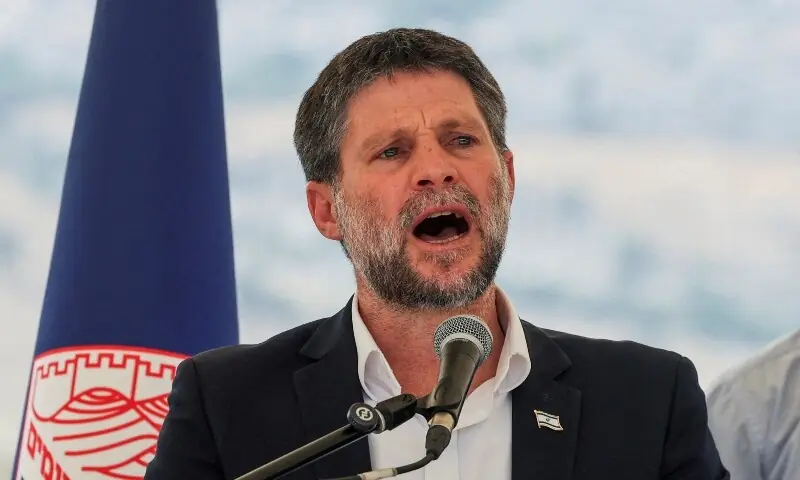
Israel’s hardline finance minister announced on Wednesday a major expansion by more than 2,000 homes of three Jewish settlements in the occupied West Bank that Palestinians hope will be part of a future independent state.

Most nations consider Israeli settlements there to be illegal under international law and a major obstacle to a two-state solution for long-term peace.

Bezalel Smotrich, who holds authority over parts of Israel’s civilian administration in the West Bank, said a planning committee approved the construction of 2,162 new Jewish homes.

They include 1,006 units in a new settlement near Jerusalem, 922 near the Palestinian city of Nablus and 234 near Hebron.

“We are continuing to build the Land of Israel in practice,” said Smotrich, an ultra-nationalist sanctioned by Britain, France and others who accuse him of inciting violence against Palestinians.

Smotrich has denounced the sanctions against him, saying the measures would not change Israeli policy.

The new homes would “strengthen our hold on the land, reinforce Israel’s security, and establish clear facts on the ground that prevent the creation of an Arab terror state in the heart of the country,” Smotrich said in a statement, without specifying when construction would begin.

Since becoming a minister three years ago, Smotrich has sought to tighten Israel’s control and presence in the West Bank while advocating against the idea of a Palestinian state.

Prime Minister Benjamin Netanyahu’s right-wing government has overseen the significant expansion of Jewish settlements in the West Bank and the establishment of new settlements.

Independence aspirations

Palestinians want the West Bank as part of a future independent state that includes East Jerusalem and Gaza.

Around half a million Israelis live in the West Bank among about three million Palestinians. US President Donald Trump’s administration has been far less critical of the fast-expanding Israeli settlements.

However, Trump did say last September that he would not allow Israel to annex the West Bank, angering some right-wing Israeli lawmakers.

The United Arab Emirates, one of the few Arab states to have official ties with Israel, has also publicly warned the Israeli government against annexation.

Condemning Wednesday’s announcement, Palestinian President Mahmoud Abbas’ office warned that Israel’s “provocative” policies were pushing the region towards more rounds of violence and called on the US to stop the Israeli “madness”.

Smotrich on May 19 said he would wage “war” on the Palestinian Authority, which exercises limited civic rule in the West Bank, after he said he was told the International Criminal Court (ICC) prosecutor had sought a confidential arrest warrant against him.

The ICC has not confirmed that.

  •  

Hundreds join protest led by India's viral 'Cockroach Party'

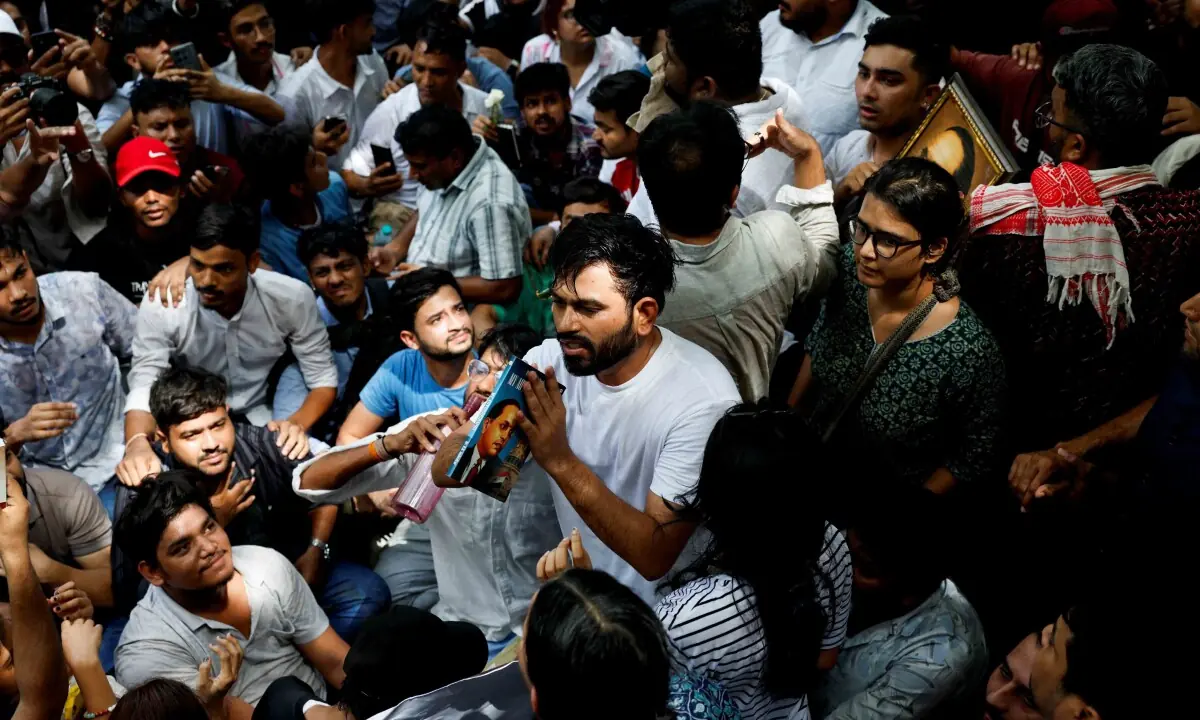
Hundreds of young students gathered in New Delhi on Saturday for the first street protest by the satirical “Cockroach People’s Party” over alleged irregularities in recent major examinations.

Carrying paper cockroach masks and pamphlets, the protesters called for the resignation of Education Minister Dharmendra Pradhan who has faced criticism over the irregularities, including question paper leaks and technical glitches.

“We want accountability from the government,” Utkarsh Raj, a medical college aspirant, told AFP at the protest site, which was watched closely by police officers in riot gear.

“How is it that exam papers get leaked in this country? How is this right?” added Raj, 16.

Protesters were led by Abhijeet Dipke, a 30-year-old Boston University graduate who arrived in New Delhi from the United States on Saturday.

“The youth of the country will no longer fear anyone, they will fight,” Dipke, a former political communications strategist for the opposition Aam Aadmi Party, told supporters at the rally.

“Cockroaches don’t ever fear, they never die either,” said Dipke, as others shouted in unison.

Protesters said young people were justifiably angry.

“India deserves better administration of such crucial exams by the government,” said 20-year-old Sarthak, who gave only one name.

Last month, authorities scrapped the nationwide medical college entrance exam after investigators uncovered a question paper leak.

Indian media reported suicides of teenagers following the fiasco over the National Eligibility Entrance Test (NEET), one of the country’s most competitive exams.

That came on top of another scandal related to online marking system in tests taken by nearly two million high school students.

“Young people have to give these exams and they can’t have a situation where these exam systems have no credibility left,” said Sapan Gyan, 52, who accompanied his sons to the protest.

Modi’s government has blocked the movement’s X account in the country, a move the Cockroach Janta Party has challenged in a Delhi court.

Senior cabinet minister Kiren Rijiju has accused the group of seeking followers from Pakistan and the “anti-India gang”.

The group, which has amassed roughly 22 million Instagram followers since launching in mid-May, is the largest online expression of dissent against the Hindu nationalist Modi’s 12-year-old rule, fuelled by persistently high youth unemployment and recurring leaks of examination papers that threaten to derail the careers of millions of students.

Political analysts say the group’s popularity has begun to dent Modi’s image despite his party’s recent victories in key state elections, even as wider frustration grows over rising fuel prices and gas shortages brought by the Middle East war.

India has nearly 400 million people aged 15 to 29, and generating non-farm jobs for them remains one of its biggest challenges despite rapid growth.

The urban youth jobless rate was nearly 14 per cent in April. Many educated young people are also stuck in low-paid or insecure jobs that do not match their skills, economists say.

  •  

China's Xi to visit North Korea as Beijing seeks deeper Pyongyang ties

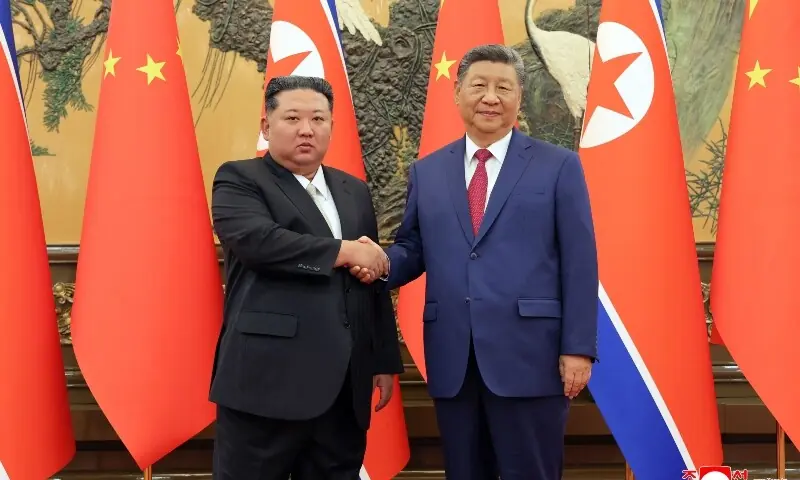
Chinese President Xi Jinping will visit North Korea from June 8 to 9, state news agency Xinhua said on Friday, his first trip in nearly seven years as Beijing looks to reassert ties with Pyongyang.

The announcement follows separate summits Xi hosted in Beijing for US President Donald Trump and Russian President Vladimir Putin last month. Trump, who met North Korean leader Kim Jong Un three times in his first term, previously said he would be open to meeting the North Korean leader again.

Xi would be visiting on an invitation from Kim, North Korean state media KCNA said. Kim was a guest at a massive military parade in Beijing last September, travelling to the Chinese capital on his signature green armoured train.

Beijing has worked to draw Pyongyang — its only formal treaty ally — back into its fold, after the Covid-19 pandemic froze exchanges and the North Korean leader deepened relations with Moscow by sending troops and weapons to support Russia’s invasion of Ukraine.

“The message implicit from the Chinese side is … we are still the principal actor when it comes to North Korea,” said John Delury, a senior fellow of the Asia Society.

“One of the audiences is Russia,” he said.

Passenger train services between Beijing and Pyongyang resumed in March, after a six-year suspension that began with the pandemic, with Air China later restarting flights between the capitals. Bookings, however, have been limited to some business travellers and exchange students, with Chinese tourists still excluded.

First overseas trip this year

Pyongyang will be Xi’s first overseas visit this year. The 72-year-old, whose trips abroad are becoming less and less frequent, last travelled internationally in late October when he went to South Korea, where he also met Trump.

“At the symbolic level, it is important for Xi to keep tabs on what’s going on in Pyongyang,” said Delury, who said Xi visiting both Koreas within a year would be a “big win” for the peninsula.

“There’s a kind of symmetry that the Chinese like to keep up” regarding the two Koreas, he said.

Since becoming China’s top leader in 2012, Xi has so far visited North Korea once and South Korea twice. He also travelled to Pyongyang in 2008 when he was vice president and Kim’s father — Kim Jong Il — was the North’s leader.

This week, KCNA reported on Kim’s visit to a newly operational nuclear material production factory at which he called for an “exponential” expansion of Pyongyang’s atomic arsenal.

Experts have linked Kim’s site visit to the impending meeting with Xi. Before travelling to Beijing in September, Kim inspected plans for a new intercontinental ballistic missile, the “Hwasong-20”.

  •  

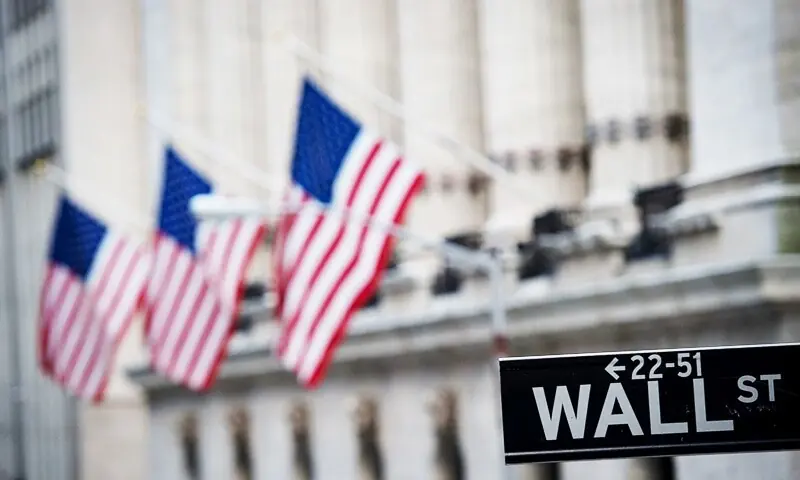
Wall Street ends sharply lower as chips slide, jobs data fuels rate hike fears

Wall Street’s nine-week winning streak ended with a thud on Friday, as red-hot technology stocks suffered their largest daily decline this year after a hot May jobs report fueled fears of a hawkish policy ‌pivot from the US Federal Reserve.

Selling was concentrated among chip stocks and other technology favorites that have surged higher in recent weeks as the ‌Nasdaq Composite Index and S&P 500 rose repeatedly to fresh highs.

All three major US stock indexes closed sharply lower, with plunging chip stocks dragging the tech-laden Nasdaq down by its largest one-day percentage ​loss since last year.

The S&P 500 ended its nine-week run of Friday-to-Friday gains, its longest weekly winning streak since one that ended in December 2023.

“After the record run we’ve seen the last nine weeks in equities, specifically tech and semiconductors, the dam just broke today,” said Ryan Detrick, chief market strategist at Carson Group in Omaha.

“Obviously, the stronger-than-expected jobs report puts the Fed in a tough spot regarding any interest rate cut for the rest of the year. And the market is throwing a ‌fit by hitting the big winners so far this ⁠year.”

Rising interest rates and the Iran war weighed on sentiment heading into the weekend, but many investors said they expected tech stocks to continue rallying.

“The market reaction today was more driven by positioning rather than fundamentals,” said Ohsung Kwon, chief equity strategist ⁠at Wells Fargo.

“The semiconductor sector was way overbought. That’s why we’re seeing the selloff. I don’t think it’s the end of the semi bull market.”

The US economy added 172,000 jobs in May, according to the Labor Department, more than double analyst expectations, while the unemployment rate held firm at 4.3 per cent. The robust report was double-edged: it provided reassurance of ​US ​economic health, but all but killed any hopes of an interest rate cut from the ​Fed in the near future.

Financial markets are pricing in a ‌growing likelihood of a rate hike at the conclusion of the Fed’s December meeting, according to CME’s FedWatch tool.

Fading hopes for a near-term resolution to the Middle East war and reopening the Strait of Hormuz are stirring fears that energy price pressures could morph into wider, systemic inflation.

According to preliminary ‌data, the S&P 500 lost 199.64 points, or 2.63pc, to end at 7,384.67 points, while ​the Nasdaq Composite lost 1,117.38 points, or 4.16pc, to 25,713.58. The Dow Jones Industrial Average fell ​684.53 points, or 1.33pc, to 50,877.40.

Nvidia, the largest company by market ​value, fell sharply, as did smaller rivals Intel, Micron, AMD and Broadcom.

Lululemon Athletica slumped after the athletic apparel maker cut its ‌annual profit forecast and projected second-quarter earnings well below Wall Street ​estimates.

Cooper Companies rose after the contact lens ​maker beat estimates for second-quarter results.

Cryptocurrency firms Coinbase and Strategy were pulled lower by bitcoin’s sharp drop.

S&P Global said it would not change the eligibility requirements for its major indices, which effectively rules out a swift entry for Elon Musk’s SpaceX to the benchmark S&P 500 after it ​goes public in what would be the world’s biggest initial ‌public offering.

S&P Dow Jones Indices will announce the results following its rebalancing after markets close. Chipmaker Marvell Technology, which boasts over $270 billion ​in valuation, is among the contenders to be added to the benchmark index.

  •  

Somali soccer referee denied US entry, will miss World Cup debut

The ​United States has denied entry to soccer referee Omar Abdulkadir Artan, who had been expected to be the ‌first Somali to officiate at a match in the World Cup.

A FIFA spokesperson said Artan would not be able to train or officiate at the World Cup — which kicks off on Thursday — after he was not allowed to enter the United States over the weekend.

Somalia’s government said it had unsuccessfully ​tried to negotiate with the US and FIFA so that Artan could enter the country and it was saddened ​by what had happened.

“His international achievements are a source of honour and pride for the Somali people,” ⁠Somalia’s sports ministry said in a statement.

In a press release issued on Tuesday, the Somali Football Federation (SFF) expressed sadness over the ​situation, calling Artan’s appointment a milestone for the country that resulted from years of dedication, professionalism and integrity.

The SFF said it has ​not received an official explanation as to why Artan was denied entry to the US, adding that it is working closely with FIFA and the relevant authorities to understand the circumstances of the situation.

FIFA says not involved in immigration policies

A senior Somali official told Reuters that diplomatic efforts were continuing ​to try to get Artan into the US for the tournament, but declined to share further details.

A FIFA spokesperson said the organisation “is ​not involved in host country immigration processes, including visa adjudications, and has been informed by authorities that Mr Artan’s status will not be changed ‌at present”.

Artan ⁠said in a statement that despite the circumstances, he was in a positive mood and focused on the next challenges of his refereeing career.

“I would like to thank FIFA and CAF (Confederation of African Football) for all their support and I promise to keep my refereeing levels up as I concentrate on the future,” he said.

It was not clear which game or games Artan would have refereed, ​although such information is typically ​only announced two to three ⁠days in advance.

US policies raise concerns ahead of world cup

Without naming him, the US Customs and Border Protection (CBP) said in a statement that a Somali national arrived at Miami International Airport from Istanbul ​on Saturday and was deemed inadmissible due to vetting concerns.

The agency did not elaborate on those ​concerns, but said ⁠the referee underwent routine additional inspection before being denied entry.

“Admissibility determinations are made on a case-by-case basis using law enforcement, national security, and immigration information available at the time of inspection,” the CBP said.

The Trump administration’s strict immigration policies have been a point of concern ahead of ⁠the World ​Cup. Last year, Washington imposed a sweeping travel ban on citizens of 12 ​countries, including Somalia.

Artan, who was named CAF’s Best Male Referee for 2025, had a valid visa, according to media reports.

  •  

Why Houthis threatening Red Sea shipping could mean more for the oil market this time

Yemen’s Houthis said on Monday that they would ban ships linked to Israel from the Red Sea after Israel renewed its military attacks on Iran, adding to concerns about global shipping and energy flows.

This is why it matters and what it means for the Iran war and the global energy crisis:

How big is the risk to global energy markets?

Iran’s closure of the Strait of Hormuz since Israel and the United States attacked it on February 28 has disrupted most oil and other energy exports from the Gulf, raising prices and causing a major energy shock.

Saudi Arabia has responded by diverting more than 70 per cent of its normal daily crude exports to the Red Sea port of Yanbu.

That has been a lifeline for the energy market, helping to keep down global oil prices.

Any sustained Houthi disruption to Red Sea shipping, including potential attacks on shipping or ports, could be a big problem.

When the Houthis launched attacks on Red Sea shipping in November 2023, Gulf oil exports were flowing freely, meaning cargoes were diverted to avoid the Red Sea, but not halted. This time, they are being loaded there.

A Houthi source told Reuters that preventing Israeli ships from transiting the Red Sea was “a first step” but that if escalation continued, the group would stop any ships heading to Israel as well as other measures.

When the group attacked shipping during the Gaza war, its stated target of Israel-linked vessels included any vessel belonging to any company that used Israeli ports and its attacks on those ships dissuaded most companies from using the route.

Who are the Houthis?

The Houthis emerged as a military, political and religious movement in north Yemen in the 1990s, fighting guerrilla wars against the government in Sanaa.

After the 2011 Arab Spring, they strengthened ties with Iran and seized on instability to capture the capital in 2014, derailing a Gulf-backed political transition plan.

As Yemen’s civil war ground to a stalemate, the Houthis attacked oil installations and other infrastructure in Saudi Arabia and the United Arab Emirates with missiles and drones.

However, a 2022 truce between Yemen’s warring sides has largely held.

Iran champions the Houthis as part of its regional “Axis of Resistance”, which includes Lebanon’s Hezbollah and Iraqi groups, though its ties with the Yemeni movement are less clear than with those other groups.

The Houthis do not recognise Iran’s supreme leader as their ultimate religious authority in the same way Hezbollah and the Iraqi groups do. Its motivations are mainly domestic, though it is ideologically aligned with Iran.

The US claims Iran has armed, funded and trained the Houthis with help from Hezbollah. The Houthis deny being an Iranian proxy and say they develop their own weapons.

What happened when the Houthis attacked Red Sea ships before?

After the Oct 7, 2023 Hamas attack on Israel, and Israel’s devastating campaign in Gaza, the Houthis began firing at Israel and on international shipping in the Red Sea, saying they were doing so in support of Palestinians.

The Houthi attacks in the Red Sea severely disrupted global shipping, prompting Maersk, Hapag-Lloyd and other major companies to divert around Africa — a far longer, more expensive route.

A US-led mission to restore free navigation in the Red Sea involved repeated strikes on Houthi targets and a campaign that shot down hundreds of drones and missiles.

But some Houthi attacks continued until last summer, only ending completely with the Gaza ceasefire in October.

What have they done during the latest Iran war?

While Hezbollah and the Iraqi groups joined the war early with rocket and drone fire after the first US and Israeli strikes on Iran, the Houthis have been comparatively quiet.

The group’s leader Abdul Malik al-Houthi said on March 5: “Our fingers are on the trigger at any moment should developments warrant it”.

Iranian military commanders have repeatedly warned the Houthis could join the war, with Revolutionary Guards Quds Force commander Esmaeil Qaani saying on June 1 they could choke off the Red Sea.

But before this week, the group’s only involvement was a few missile and drone attacks on Israel in late March and early April.

Why the Houthis have been relatively quiet so far is not entirely clear.

They and Iran may have wanted to use the threat of another major energy route closure to warn Israel and the United States off further escalations.

The Houthis may also feel less committed to Iran’s security than do Tehran’s other regional allies.

And the group may not want to antagonise its powerful, wealthy neighbour Saudi Arabia and risk reigniting the conflict at home.


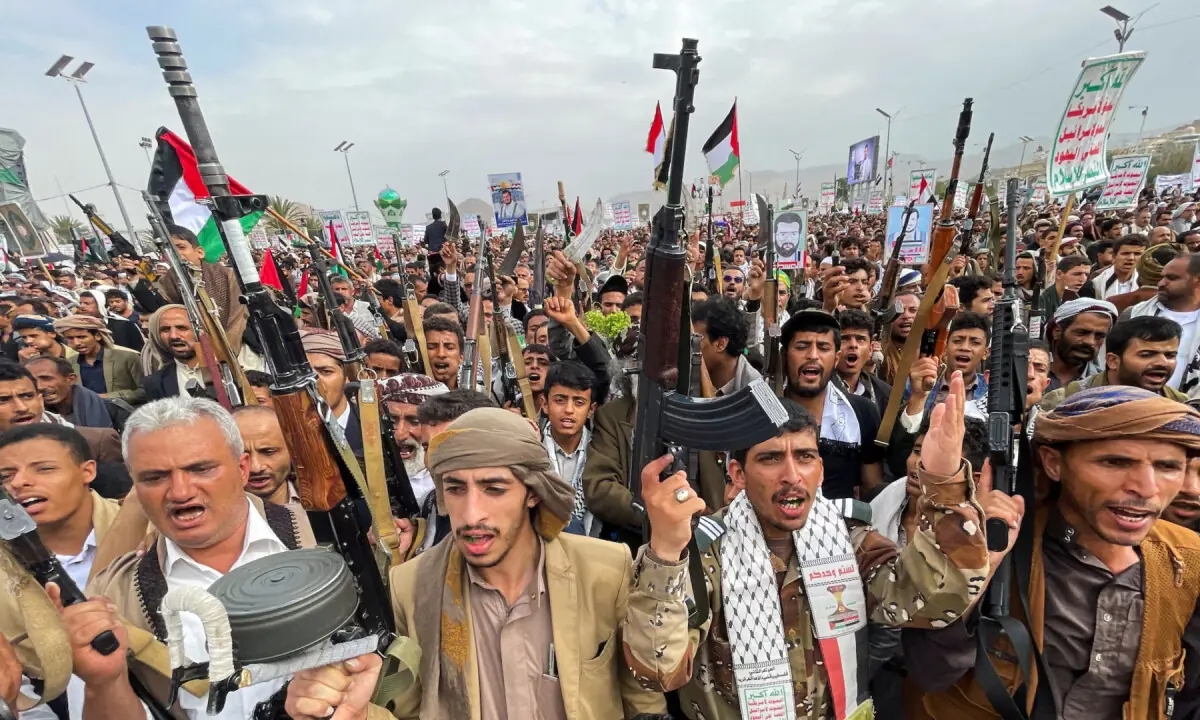
Header image: Protesters, mainly Houthi supporters, rally to show solidarity with Palestinians in the Gaza Strip, in Sanaa, Yemen on July 5, 2024. — Reuters/File

  •  

Anthropic disables Fable 5, Mythos 5 models after US order limiting foreign access

Anthropic said on Friday it will “abruptly disable” its most advanced AI models for all users after the US government ordered it to suspend access to the models for foreign nationals, citing national security concerns.

The company received the export control directive to suspend access to Fable 5 and Mythos 5 for all foreign nationals, without being given specific details of its national security concern, Anthropic said in a statement.

It is Anthropic’s understanding that the government believes there is a method of bypassing, or “jailbreaking,” a safeguard that would prevent Fable 5 from being used in identifying software vulnerabilities, the company said.

The order comes just as a previous dispute between Trump administration officials and IPO-bound Anthropic showed signs of easing across parts of the US government.

Anthropic’s relationship with the government ruptured this year after it refused to allow the US military to use its AI models for domestic surveillance and fully autonomous weapons systems.

The government responded by putting Anthropic on a supply chain blacklist, set to take effect later in the year.

The action also marks a major escalation of US efforts to halt foreign adversaries’ AI capabilities.

For years, US export controls have focused on the chips and tools that power AI rather than on restricting foreign access to AI itself.

Anthropic said the government has given it only “verbal evidence of a potential narrow, non-universal jailbreak”.

“We disagree that the finding of a narrow potential jailbreak should be cause for recalling a commercial model deployed to hundreds of millions of people,” the company said.

The government directive and Anthropic’s response highlight growing tension between AI developers and regulators over how to assess risks from so-called “jailbreaks,” or methods used to bypass model safeguards.

As recently as Wednesday, Anthropic had called for greater US oversight of AI, including the ability to block models with unacceptable risks.

It said, however, the government action on Friday did not follow principles of fair and fact-based regulation.

The Pentagon’s chief information officer, Kirsten Davies, said in a post on X that the Defense Department supported prioritising national security.

“Some things are simply more important than revenue cycles, clickbait, and pre-IPO valuation. America First. Always,” Davies said.

Anthropic confidentially filed for a US initial public offering (IPO) last month, edging ahead of rival OpenAI in the race to reach public markets.

Sophisticated cyberattacks

Earlier this week, Anthropic rolled out an AI model named Claude Fable 5, representing a new tier of capability it calls “Mythos-class.”

The model is accompanied by guardrails barring its use in risky areas such as cybersecurity, which some users have complained are “overly broad,” Anthropic said.

Experts have said that Mythos models, in the wrong hands, could dramatically accelerate sophisticated cyberattacks, particularly in sectors such as banking that rely on complex, interconnected and often decades-old technology systems.

Anthropic said it had worked with the US government, among others, on safety ahead of the Fable launch and that models from rival AI providers showed a similar ability to unearth minor bugs in code.

“The net effect of this order is that we must abruptly disable Fable 5 and Mythos 5 for all our customers to ensure compliance. Access to all other Anthropic models will not be affected,” Anthropic said.

Anthropic said that it believed there was a “misunderstanding” and that it is working to restore access to the models as soon as possible.

“If this standard was applied across the industry, we believe it would essentially halt all new model deployments for all frontier model providers,” the company said.

Amazon’s cloud unit AWS said late on Friday that Anthropic has asked it to revoke access to the models for “all users in all regions.”

A US official confirmed that the Commerce Department had issued an export control directive to suspend all access to Fable 5 and Mythos 5 by foreign nationals.

Dean Ball, a former White House official who contributed to the AI Action Plan the administration issued in the summer of 2025, said in a post on X that the order suggests all “non-Americans” would be restricted from using Anthropic’s latest models, including those based in the US.

“This means you should expect to have to prove your citizenship to use Anthropic models,” Ball said.

Several key Anthropic personnel, including co-founder Chris Olah, AI researcher Andrej Karpathy and philosopher Amanda Askell, were born outside the United States.

Reuters was unable to determine their citizenship status, and an Anthropic spokesperson declined to comment on whether such staff would lose AI model access.

  •  

Israel kills nine in Gaza amid efforts to salvage ceasefire deal

• Steps up attacks aga­inst police headquarters and per­­s­onnel
• Hamas says ending Israeli military operations is essential for progress in negotiations

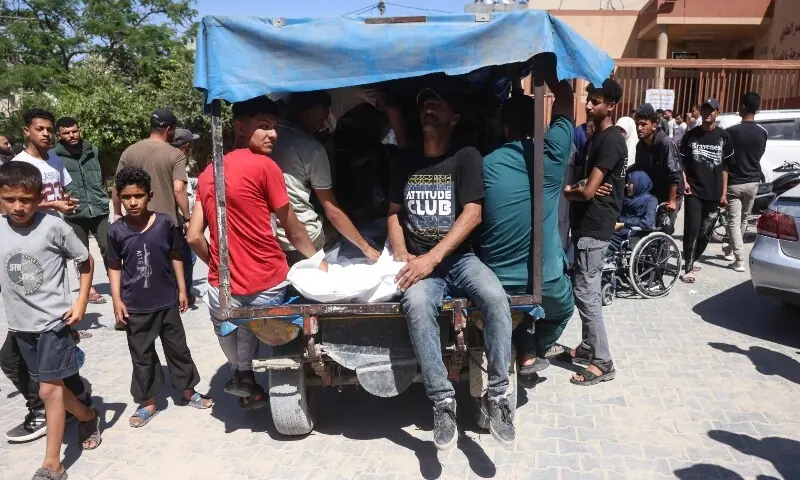
CAIRO: Israeli strikes on a Ham­as-run police station and a vehicle in the Gaza Strip killed at least nine people and wounded 20 others, health officials said, as mediators began new efforts to salvage a fragile US-brokered ceasefire deal.

One strike hit a police post adjacent to a large tent encampment of displaced families in Khan Yunis in the south of the enclave, killing five people and wounding 16 others, medics said. They did not say how many of the casualties were police.

Israel has stepped up attacks aga­inst police headquarters and per­­s­onnel

in the past several mo­n­ths, killing dozens of them, according to Hamas security officials.

Later on Sunday, another Israeli airstrike killed four people and wounded four others when it hit a vehicle driving through the middle of Gaza City, medics said.

The Israeli military did not imm­e­diately comment on the incidents.

Major fighting has been paused since October under a ceasefire after two years of war, but no agreement has been reached to implement a further US-backed plan for Israeli troops to withdraw, Hamas to disarm and Gaza to be rebuilt.

Israeli troops still control more than half of Gaza’s territory, where they have ordered residents out and destroyed remaining buildings. Nearly the entire population of 2 million now lives in a tiny strip of land along the coast, mainly in makeshift tents or damaged buildings, under Hamas control.

Hamas’ nearly 10,000 police offi­c­ers have emerged as a sticking point in talks to advance Trump’s plan for Gaza. Hamas wants them included in a new police force; Israel rejects a role for any Hamas-affiliated personnel.

Egypt began hosting a new round of truce talks with leaders from Hamas and other Palestinian factions, sources from Hamas and other sources close to the negotiations said. The talks are expected to last for a few days.

Israel and Hamas have repeatedly accused each other of violating the truce. Israeli strikes in Gaza have killed more than 950 Pales­tinians since the start of the truce, while Palestinian attacks have killed four Israeli soldiers.

Last year’s deal established a Board of Peace led by Trump to oversee a phased ceasefire and was ratified by the United Nations Security Council.

Hamas told envoys from the Board and mediators Egypt, Qatar and Turkiye that ending Israeli attacks in Gaza was essential for any progress, sources from the group and officials close to the talks said.

Hazem Qassem, a Hamas spokesperson in Gaza, said on Sunday the group was open to ideas that would lead to ending Israeli attacks in Gaza and reaching common ground over issues of the second phase of the Trump plan. But he said the Board of Peace should stop being “biased” towards Israel.­

Published in Dawn, June 8th, 2026

  •  

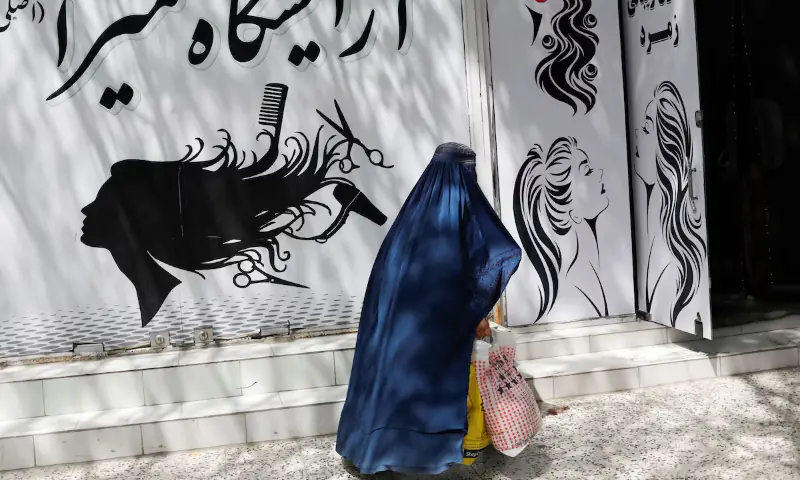
Afghanistan police crack down on anti-hijab protests in Herat

Afghan security officials dispersed a women’s rights protest in the western province of Herat on Tuesday after residents said Taliban morality police detained women accused of violating mandatory dress rules.

Witnesses said one person was killed, several others were wounded and dozens of people, including women and girls, were arrested. Taliban authorities have not confirmed casualties or arrests.

Sayed Masoud Hosseini, spokesperson for Herat police, told the state-run Bakhtar News Agency that the gathering in the Jebrail area had “created tensions” and disturbed public order under the pretext of opposing the hijab, which he described as a religious obligation.

Witnesses said the protests erupted when officials from the Ministry for the Promotion of Virtue and Prevention of Vice attempted to arrest women opposing the mandatory dress requirements.

Some residents said officials targeted women who were already observing the required dress code, which includes fully covering the face and body.

Video from Herat showed armed officials breaking up the demonstration, including fully veiled women among the protesters. In one clip, people ran for cover as gunshots were heard in the background.

Since seizing power in Kabul in 2021, the Taliban has imposed sweeping restrictions on women and girls in the war-shattered country, including limits on access to education, employment and sport, drawing widespread international criticism.

Herat, long regarded as one of Afghanistan’s most socially and culturally vibrant cities, has undergone significant changes.

On Monday, the UN Assistance Mission in Afghanistan said it was concerned by reports of women detained in western Afghanistan for allegedly failing to meet dress requirements. The mission urged Taliban authorities to respect freedom of movement and equality before the law.

Taliban say they respect women’s rights in accordance with their interpretation of Sharia.

  •  

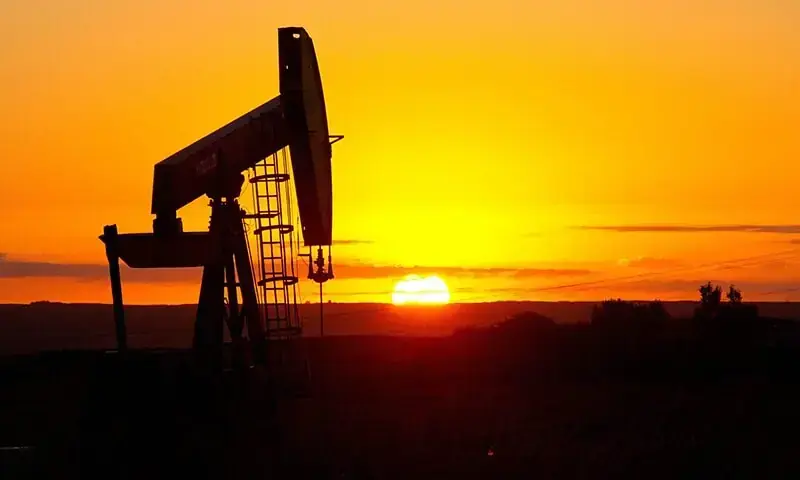
Opec+ approves fourth oil output quota hike since Hormuz closure

Opec+ agreed on Sunday on a fourth increase in its oil output targets in as many months, even though the US war with Iran is still preventing several of the group’s members from pumping more.

The war has cut oil flows via the Strait of Hormuz, creating the world’s biggest-ever supply crisis as key Opec+ members, including Saudi Arabia, have been unable to supply customers in full since the end of February.

The crisis for Opec+ deepened when the United Arab Emirates left the Organisation of the Petroleum Exporting Countries (Opec) after almost 60 years.

Seven core members of Opec+, which groups Opec and allied producers including Russia, have increased their output quotas from April to June by almost 600,000 barrels per day.

Impact of production target increase

In reality, the group’s production has collapsed due to export cuts by Gulf members, averaging 33.19 million barrels per day in April compared with 42.77m in February, according to Opec figures.

On Sunday, the seven members decided to increase targets by 188,000 bpd from July, Opec said in a statement. This is the same as the June hike, which was adjusted down from monthly increases of 206,000 bpd in May and April to take into account the UAE exit.

“An Opec+ production increase means very little while the Strait of Hormuz remains closed,” said Jorge Leon, an analyst at Rystad and a former Opec official.

When the Strait of Hormuz reopens, the market could move very quickly from fear of shortage to fear of surplus.” On Friday, oil prices fell to around $93 a barrel as traders gained confidence that renewed conflict between the US and Iran was growing less likely. Prices were close to $72 before the war began.

Open+ almost done with unwinding 2023 output cut

The seven countries are increasing production as part of the gradual unwinding of a 1.65m bpd production cut that the group, which at the time included UAE, agreed in 2023.

From July, the seven have about 567,000 bpd of the original cut to return to the market, taking into account the UAE exit from May 1, according to Reuters calculations.

That would mean the rest of the cut will be unwound by the end of September should Opec+ stick to monthly hikes of about 188,000 bpd for August and September.

The seven of 21 Opec+ members who met on Sunday are Saudi Arabia, Iraq, Kuwait, Algeria, Kazakhstan, Russia and Oman. In recent years, only the seven plus the UAE — when it was a member — have been involved in the group’s output policy decisions.

In a separate meeting on Sunday of all Opec+ members, the ministers made no change to group-wide output policy that is in place until the end of 2026, Opec+ said in another statement. Opec+ is carrying out a review of its members’ oil production capacity to be used as a reference for 2027 production baselines, from which quotas are set. The group on Sunday affirmed the importance of completing the assessment, the statement said.

  •  

Indian economy, govt finances see mounting costs from Iran war

A few months ago, India’s economy was humming along nicely. Inflation was benign and growth was steady — the strongest among the world’s leading economies.

Now, India is increasingly counting the cost of the Iran war, which economists say will keep mounting if the deadlock between the US and Iran remains unresolved and the blockage of oil supplies continues.

As the world’s third-largest oil importer and consumer, India ships in about 90 per cent of its oil, making its economy one of the most exposed to the war and the prolonged war-related disruptions, which include the effective blockade of the Strait of Hormuz through which a fifth of global oil and gas transit.

While India has announced a flurry of measures to contain the impact on the rupee and foreign exchange reserves, the latest of which were from the Reserve Bank of India (RBI) on Friday, analysts say the broader drag on economic growth, inflation and government finances is set to increase so long as oil prices remain elevated.

“India is set for a series of supply shocks,” Michael Langham, emerging markets economist at Aberdeen Investments, said.

Apart from pressure on oil prices, the country also faces supply disruptions to fertiliser as a result of the Iran war, which will impact key crops like wheat when farmers are already bracing for an El Niño weather phenomenon that often portends drought.

“This will all drag on India’s growth outlook, yet the ability of the RBI to look through the energy price shock from the Strait of Hormuz will be increasingly difficult given the overlapping nature of these supply shocks,” Langham said.

At the end of last year, India’s central bank governor, Sanjay Malhotra, talked about a “rare Goldilocks” phase for the economy as it headed into 2026. Inflation levels were falling and growth remained relatively strong.

The Iran war upended that outlook.

India’s oil-and-gas import bill jumped 53pc in April from March, prompting forecasts for the balance of payments (BoP) deficit — essentially money coming into the economy netted off against money going out — to balloon.

HSBC says that Friday’s series of steps may do a lot to limit the currency damage. Until Friday, it had expected India’s BoP deficit to swell to about $65 billion in 2026-27, but now expects the measures to improve the balance by about $30 billion.

In 2025-26, India’s BoP deficit was at $25.2bn or 0.6pc of GDP.

India is also curbing gold imports, urging citizens to limit foreign travel and calling for more use of public transport to reduce oil demand.

‘Difficult position’

But the macro picture is more challenging.

Benchmark international oil prices surged after the war began on February 28, climbing to nearly $120 per barrel. Prices have eased, but they remain about 30pc higher overall, while gas prices have risen 75pc over the same period.

As a result, the central bank sees inflation averaging 5.1pc in the financial year to the end of March 2027, up from a 3.48pc reading in April, and economic growth slipping to 6.6pc from 7.7pc in the previous year.

While the RBI kept rates on hold last week, interest rate swap markets are pricing in at least 25 basis points of rate hikes over the next three months and more than 75 basis points over the next year.

“India continues to face deeper structural challenges which has weighed on foreign direct investment, employment, manufacturing expansion, consumption, and nominal GDP growth,” said Sat Duhra, portfolio manager at Asia ex-Japan equity team at Janus Henderson Investors.

Duhra said the energy shock will undermine growth and pressure government finances.

“Any move to rein in public-sector capex to stabilise conditions would risk further slowing growth,” he said.

“This leaves policymakers in a difficult position.”

Strong oil demand

India delayed raising retail fuel prices as import costs mounted. Petrol and diesel are up less than 10pc since then, compared with 50pc or more in some other oil-importing countries in Asia.

Petrol and diesel prices are deregulated, but the government exerts significant influence as the majority shareholder of the key retail companies.

Elsewhere, high prices have reduced demand and helped balance undersupplied markets.

The government has said it will not compensate fuel retailers for losses, a strategy analysts say will come at a cost for the government, such as through reduced dividends, and so cut its financial firepower to handle the crisis.

The government’s fertiliser subsidy is likely to jump 20pc in 2026-27, a government official said.

Fertiliser is vital for India’s agrarian economy, which supports nearly half the population, but may be more so this year given the risk of drought owing to El Niño.

The government also cut gasoline and gasoil taxes, forgoing 140 billion INR in monthly revenues.

The government is targeting a fiscal deficit of 4.3pc of GDP this financial year, but a Reuters poll forecast it would swell to 4.7pc and some economists see it going as high as 5pc.

India-based credit rating agency Crisil expects further small price increases in retail oil prices, which will have a wider impact.

“The broader effect will reverberate across the economy through higher-transport costs, pushing up both food and core inflation,” it said in a report.

  •  

Trump lawyers deny BBC access to financial details in $10 billion lawsuit, FT says

US President Donald Trump’s legal team has refused to hand over financial information sought by BBC lawyers in his $10 billion defamation case against the broadcaster, the Financial Times (FT) said on Friday, citing court filings.

Trump has accused the publicly funded broadcaster of defaming him by splicing together parts of a January 6, 2021, speech to make it appear that he directed supporters to storm the US Capitol.

The impetus for Trump’s request to delay “appears to be the flat refusal by the Donald J Trump Revocable Trust … to provide any financial information under subpoena”, the newspaper cited the BBC as saying in a court filing.

That action came despite Trump’s claims that the BBC injured “the value of his brand, properties, and businesses” and the president’s “own refusal to date to provide any financial information in discovery”, the paper added.

Trump’s lawsuit, filed in Florida in December, says the BBC violated a state law that bars deceptive and unfair trade practices. He is seeking damages of at least $5bn on each of its two counts.

The broadcaster and the White House did not immediately respond to requests for comment.

A spokesperson for Trump’s legal team told the newspaper the BBC was liable for “intentionally and maliciously defaming him by distorting and manipulating his speech”.

In a statement, the spokesperson added, “President Trump will continue to hold accountable the BBC and all those who traffic in fake news.”

Trust managed by Trump’s eldest son

In its bid to ascertain the documentary’s financial impact, the BBC has subpoenaed the trust, managed by Trump’s eldest son, Donald Trump Jr, as the sole trustee, which holds the president’s business interests and assets, the paper said.

The BBC legal team has sought financial documents that reflect the trust’s holdings and value, assets, inventories and properties, the paper added, citing court filings from May that it viewed.

The request covers almost 400 entities owned by or associated with the trust, as well as requests for tax returns, the paper said.

The documentary, first broadcast in 2024 shortly before a presidential election Trump won, featured a section in which he told supporters to march on the Capitol and another, from nearly an hour later, where he said, “Fight like hell.”

The BBC apologised to Trump for the edit, but wants his lawsuit thrown out. Trump’s subsequent reelection showed the alleged defamation did not harm his reputation, the broadcaster said in court papers released in March.

  •  
❌