
Reading view

Iran’s tiered internet system sparks backlash as users pay for restricted connectivity amid blackout
Malay Mail

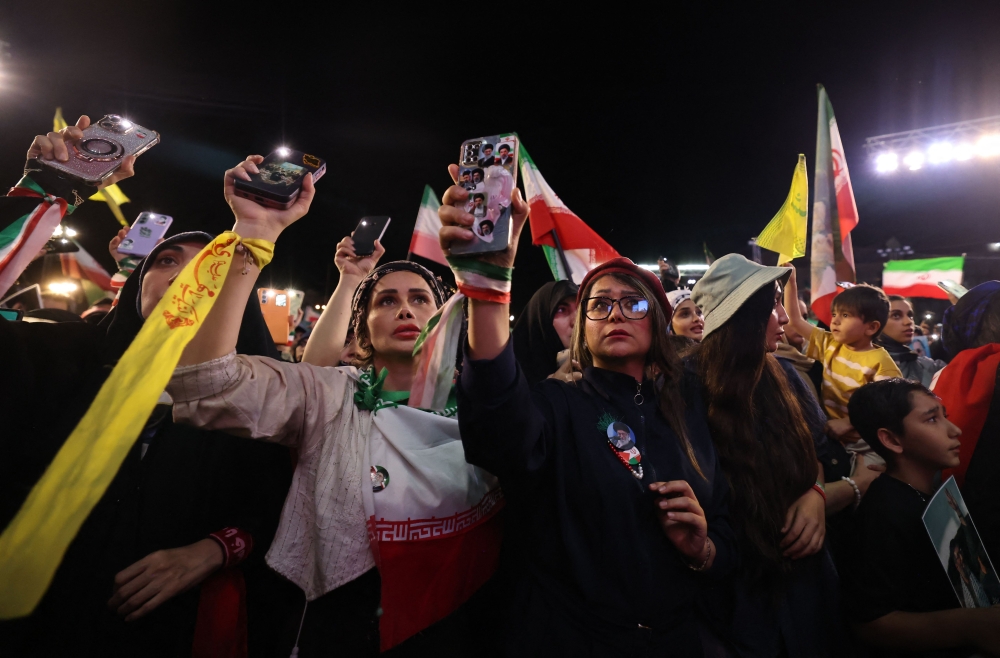
PARIS, May 14 — After months under a near-total internet blackout during the Middle East war, Iranian tech worker Amir-Hassan was finally able to get back online, but only through a privileged service that has sparked public criticism.

Millions like the 39-year-old have been unable to access the internet since the United States and Israel attacked Iran on February 28, punishing the pockets of online entrepreneurs and workers.

But he did not hesitate when a message offered him the chance to get back online by purchasing the so-called “Pro Internet” system, designed for certain professionals and business owners.

“It was out of necessity. I was forced to get internet so I could ensure the flow of my income,” he told AFP, adding that he paid around US$11 (RM43.20) for an initial 50-gigabyte package.

By April 5, internet monitor NetBlocks estimated that the blackout since the war broke out was “the longest nation-scale internet shutdown on record in any country”.

It has left most in the dark online except for some limited local websites, banking services and state-approved applications.

The web was already heavily restricted at the height of anti-government protests in January, but when war broke out the internet became another tool of control for Iran’s hardline government.

Critics are accusing authorities of creating a tiered system in which broader connectivity is reserved for select groups.

“This model of categorising and classifying the internet in Iran is not a good model... it is clearly meant to generate money,” said Amir-Hassan.

Users have to pay more for additional internet usage at higher-than-normal prices, he added.

The tiered system allowed Amir-Hassan to access WhatsApp and Telegram but not other major platforms that have long been blocked in Iran, such as Instagram, X and YouTube, without a VPN (virtual private network) to circumvent the restrictions.

Others reported varying levels of access, suggesting the service was not the same for all subscribers.

‘Third-class citizen’ 

The selective access also comes with social burdens, with criticism directed at buyers.

“There is judgement too... people say you went and put money into the pocket of a government that unfairly offers this,” said Amir-Hassan.

Yet the special access has not been given to everyone within the intended groups of professionals.

Behrooz Mahmoodi-Bakhtiari, a linguistics professor at the University of Tehran, said he had not received the same message inviting him to subscribe.

He can only reliably access the internet while on campus.

“As soon as you step out of the university, you will again become a third-class citizen, and you have no internet access,” he said, noting that other professors had received the internet offer.

The reformist Shargh daily newspaper and other outlets have described the system as “tiered internet”, criticising what they called “the transformation of the internet from a public and civic right into an allocable privilege”.

As criticism has mounted, government spokeswoman Fatemeh Mohajerani said the internet situation would return to normal “once the shadow of war is gone”.

She blamed “enemies”, referring to Israel and the United States, for creating security conditions that forced the government to impose the blackout.

‘Not worthwhile’ 

In recent years users in Iran have grown accustomed to relying on VPNs to bypass restrictions on major social media platforms.

But for many Iranians, even those eligible to subscribe to the tiered internet access, paying for the “Pro Internet” service has become an extra financial burden.

Since the outbreak of war, many households have come under growing financial strain as Iran’s economy – already battered by years of sanctions – deteriorated further.

Inflation has surged above 50 percent in recent weeks, while the rial has lost much of its value against the dollar, sending prices of basic goods sharply higher.

“The amount of data offered, in my view, is not economically worthwhile for users compared to the cost,” said Mehdi, a 34-year-old graphic designer.

He still purchased the service for his work, but acknowledged that “not everyone can afford to buy” the package.

Kaveh, a 38-year-old visual artist, said he had also been offered the option of upgrading to the “Pro Internet” plan but rejected it, saying it was not worth the cost.

He already pays separately for VPN services to bypass restrictions and said he would not pay for “a little amount of freedom to some of us as a favour, at 10 times the normal price”. —- AFP
 

  •  

Our historical absolutism loses the audience

Malay Mail

MAY 14 — We are shaped by our past.

Anyone walking past a university’s history department would half expect to come across a poster like that. Nothing gaudy like dinosaurs or Roman slaves rowing a galleon as backdrop pictures but it is not hard to imagine. The poster, not T-Rex or abused collaterals.

However, hardly anyone has a carbon copy recollection of “what occurred before” exactly like another person in the same room, even in a very large room, say the population size of a metropolis. In its very nature, history is divisive.  What is less mentioned, it is deeply personal.

Ask 10 persons in a family about a commotion 10 years ago and various accounts are produced. That’s one family. 

Multiply that by the millions living and dead over an average of a 150 years across two parts of Malaysia which is equal to the size of Germany, then imagine the infinite number of accounts to reconcile when historians try to figure out our federation. Historically, speaking.

Easy answers are a mirage. Easy answers when compiled is historical absolutism because it is lazy. Yet easy answers are what Malaysian governments tend to rely on and dish out to us.

Being a history aficionado it thrills to know there’s a massive interest uptick, recently. 

However, the enthusiasm seems less “want to learn” and instead morphs into “See, we are right” vacillations. Suffice to say, humility is constantly absent.

They are history rebels rather than history buffs, because the historical absolutism nauseates. They go off the state approved grid by going to the Internet.

Time to enter the vault to open the imaginary time capsule.

The controlling present

How fiction is treated provides an insight to how facts are filtered constantly.

Spectacularly, our fiction is obsessively contained. Made-up stuff inside novels require approval, to protect the people from threats. If even fantasy is policed, consider the paranoia about details of the past.

This leads to what are state sanctioned history facts.

Malaysians are constantly asked to respect the official account, which the government releases, and alters occasionally. Remember the time we were informed the country was never colonised to fit an ongoing separate political narrative?

Official account is truth — those in power insist — because it is official and from the officially appointed departments. Our officials can go all day and night repeating the mantra about how official “data” is true “data”.

So, to belatedly expect academia to have a spine is disingenuous. The only historians allowed to have a successful academic career are those willing to dispense with their spines.

The cynical view, those who contradict the “official” version reach their glass ceiling far quicker.

Inside the confines of academic forums, symposiums and exchanges, a degree of latitude exists, but when it is presented in our syllabus it better be close if not a printout of the official version.

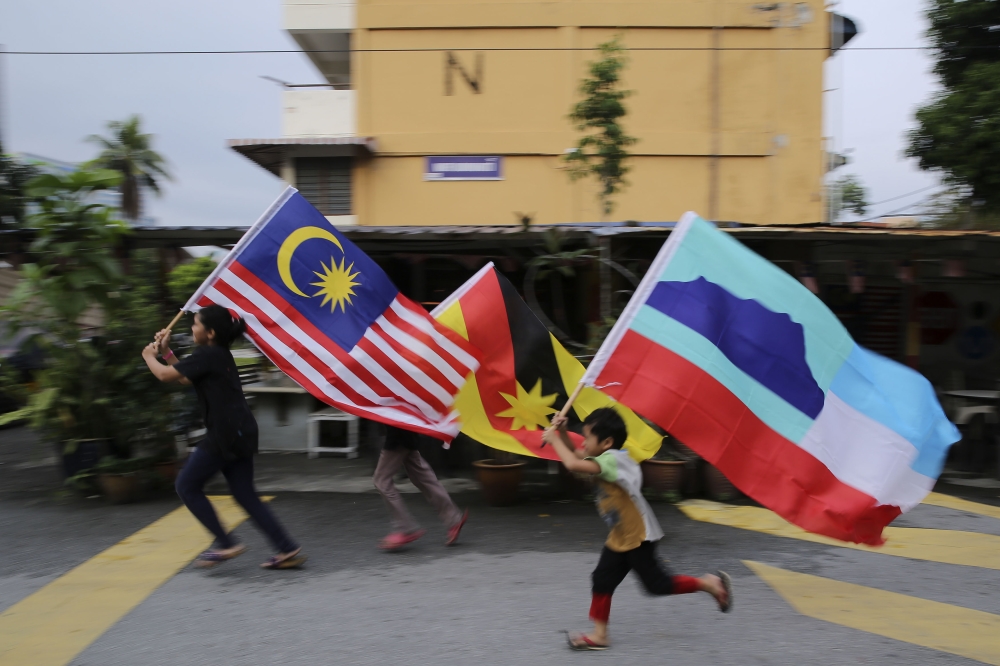
How history is taught in schools affects the tone Malaysians hold. — Picture by Yusof Mat Isa

The masses roam the Internet

This context is necessary when examining the chaotic study of the past among Malaysians.

Indoctrinated in their school years, restrained in their university years, conditioned by a dominant state media, now that they can ask their best bud Anthropic or ChatGPT, they behave like children let loose in a toy store.

Can they be blamed?

In the information age, our government is adamant to tell the people rather than to discuss with the people.

History is sanitised to a painful conclusion. Those in power have always been right. Those who are not in power receive less adulation. This is a country without any regrets, just ups and more ups, according to our leaders.

Resulting in two types of Malaysians. Those who swallow whole the state’s interpretation. And the others, the growing segment, are disillusioned and search for their own absolute version. 

And no, while the dissenting group grows by the news cycle, it is also at odds with itself. Disagreements are rife. All absolutely fixed on their version and aghast at alternative takes.

Remember this…

How history is taught in schools affects the tone Malaysians hold.

Ironically, my best history teacher back in school was the most openly racist. Mr Thiru was the most colourful for the life lessons he imparted. 

Mrs Foo for witnessing Ah Pit punch the living daylights out of Shamsula — which was history in its own way.  

On that same token Mr Baharuddin for smashing Shamsula’s face the year before. 

Learning history was easiest with Mrs Maimun. Knowing institutionalised racism is also easy through Mrs Maimun.

The temptation is to ask students to memorise. To her credit, Mrs Maimun made us live history in our classroom, even if it was primarily from her point of view.

History is about talking about it. I recoil reading comments that being reminded of the past only opens unnecessary wounds. Where is the fine print that learning should not hurt?

I cringe when people claim the past is so definitive that the only sane thing to do is to accept it verbatim. If the Americans never got their act together in the second half of World War II, this is our 80th anniversary as Indonesia Raya. 

Malaya and Kalimantan as vassal states attend the annual festivities in Jakarta. The population from Aceh to Irian Jaya, adept with Indonesian and Japanese. 

Anyways, back to the classroom.

History teachers in developing countries act primarily as propagandists, it is inevitable. But if they did not, in my utopia, they’d facilitate our young to know the material through discussions.

In fact, examinations should rely equally on regurgitation of facts and the interpretation of those very facts by the students. The test is part memory but also a test of reasoning.

Success is rated by the extent the average student wants to acquaint with history after graduation.

Greying lines

Multimedia can blur lines. The current global hit film Michael is pilloried by critics and embraced by fans. 

The slur is that it is a whitewashing exercise of pop star Michael Jackson by omitting the avalanche of sexual allegations against him. The fans are enamoured with the entertainment and dance moves.

As a movie it works, ticket purchasers are not complaining. As a biopic it crashes.

So much of the analogy applies to Malaysia.

The state supported historical absolutism is held up by many Malaysians. It still fills seats. It gives the thrills necessary for fans even if it avoids the inconvenient bits. But that is not sustainable.

Not when the Internet lurks in the shadows.

* This is the personal opinion of the columnist.


  •  
❌