Normal view

Prabowo admits Indonesia’s free meals programme ‘comes with many problems’, but doesn’t want it to stop

17 May 2026 at 01:48

Malay Mail

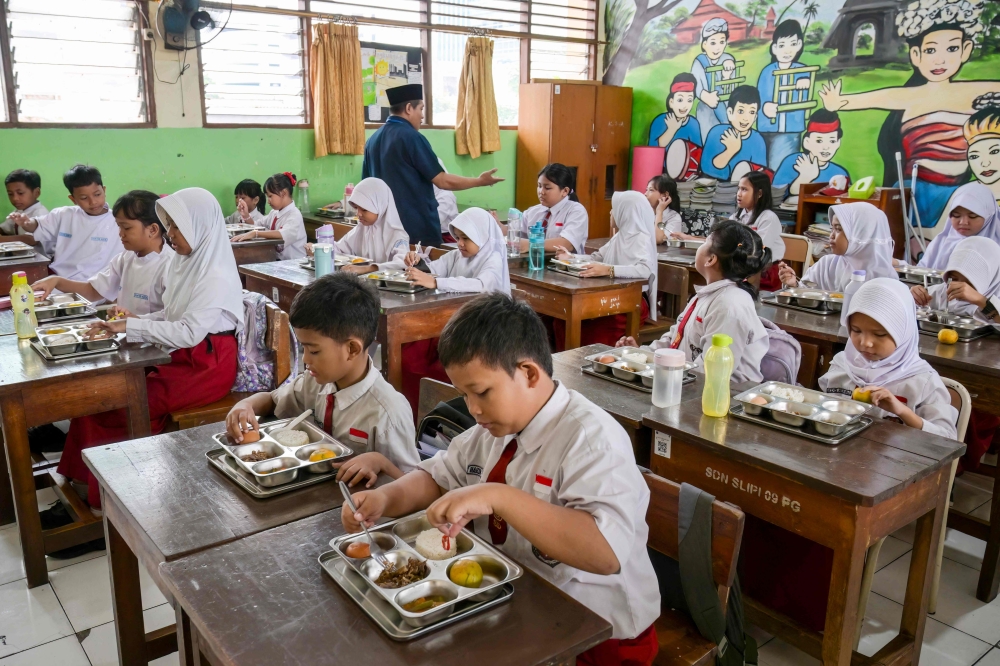
JAKARTA, May 17 — Indonesian President Prabowo Subianto acknowledged on Saturday that the government’s programme to provide free meals to combat malnutrition, his signature project, “comes with many problems”.

Thousands of people have fallen ill since the much-hyped billion-dollar scheme was launched in January 2025, with critics calling for its suspension over hygiene concerns and accusations of corruption.

“It’s true that there are many problems and challenges. Free nutritious meals comes with many problems, we must put things in order,” Prabowo said in a speech in East Java posted to his official YouTube channel on Saturday.

The scheme, which is said to have provided meals to more than 61 million people by March, was also among the first to be cut back as Jakarta seeks to counter the economic impact of the Middle East war.

Indonesia cut the programme from six days a week to five in March to save up to 40 trillion rupiah (US$2.3 billion; RM9.09 billion).

Prabowo said that the scheme still has public support despite the list of problems.

“Free nutritious meals are so important for our nation. Everywhere I go, I meet ordinary people, farmers, saying, ‘sir, please don’t stop the free nutritious meals programme, this really helps my grandchildren to be able to eat’,” he said.

The scheme was Prabowo’s flagship policy in the 2024 presidential election campaign.

Anti-graft watchdog Indonesia Corruption Watch (ICW) filed a complaint last week against Dadan Hindayana, the head of the National Nutrition Agency tasked with distributing the free meals, local media reported.

ICW claimed in its submission to the Corruption Eradication Commission that there were discrepancies of nearly US$50 million (RM197.74 million) in the halal certification procurement budget.

Prabowo said he would take swift action against anyone “who violates the rules”.

“My government has no hesitation: anyone who violates the rules, who strays, who abuses their authority, will be disciplined, we will clean them up, we will remove them from their position,” he said.

More than 20 per cent of children in Indonesia are affected by stunting caused by severe malnutrition.

The government hoped the scheme would provide meals for at least 82.9 million people, or about one-third of the country’s population, in its bid to combat food insecurity. — AFP
 

  • ✇Malay Mail - All
  • Middle East war latest developments: Israel, Lebanon extend ceasefire despite fresh violence
    PARIS, May 16 — Here are the latest developments in the Middle East war:Israel, Lebanon extend ceasefire Lebanon and Israel yesterday extended a ceasefire for 45 days, despite a new flare-up in violence, the US State Department said after mediating talks.“The April 16 cessation of hostilities will be extended by 45 days to enable further progress,” State Department spokesman Tommy Pigott said.The department would hold negotiations aimed at reaching a permanent po
     

Middle East war latest developments: Israel, Lebanon extend ceasefire despite fresh violence

16 May 2026 at 01:12

Malay Mail

PARIS, May 16 — Here are the latest developments in the Middle East war:

Israel, Lebanon extend ceasefire 

Lebanon and Israel yesterday extended a ceasefire for 45 days, despite a new flare-up in violence, the US State Department said after mediating talks.

“The April 16 cessation of hostilities will be extended by 45 days to enable further progress,” State Department spokesman Tommy Pigott said.

The department would hold negotiations aimed at reaching a permanent political agreement on June 2 and 3, he said, adding that the Pentagon would bring together delegations from the countries’ militaries on May 29.

Lebanon see path to ‘lasting stability’ 

Lebanon’s delegation at the talks in Washington said yesterday that the truce extension and the establishment of a US-facilitated security track pave the way for “lasting stability”.

“The Lebanese delegation welcomes today’s outcome,” it said, in a statement shared by the Lebanese presidency, adding that it provides “critical breathing space for our citizens.”

Lebanese PM wants end to ‘reckless’ wars -

Lebanese Prime Minister Nawaf Salam yesterday said his country has had enough “reckless” wars for foreign interests, calling for Arab and international support in Beirut’s negotiations with Israel.

Speaking at an NGO dinner, Salam said that he hoped to “mobilise all Arab and international support to bolster our position in the negotiations” with Israel, shortly after the last round of talks ended and extended the truce.

Strike hits building in Lebanon’s Tyre 

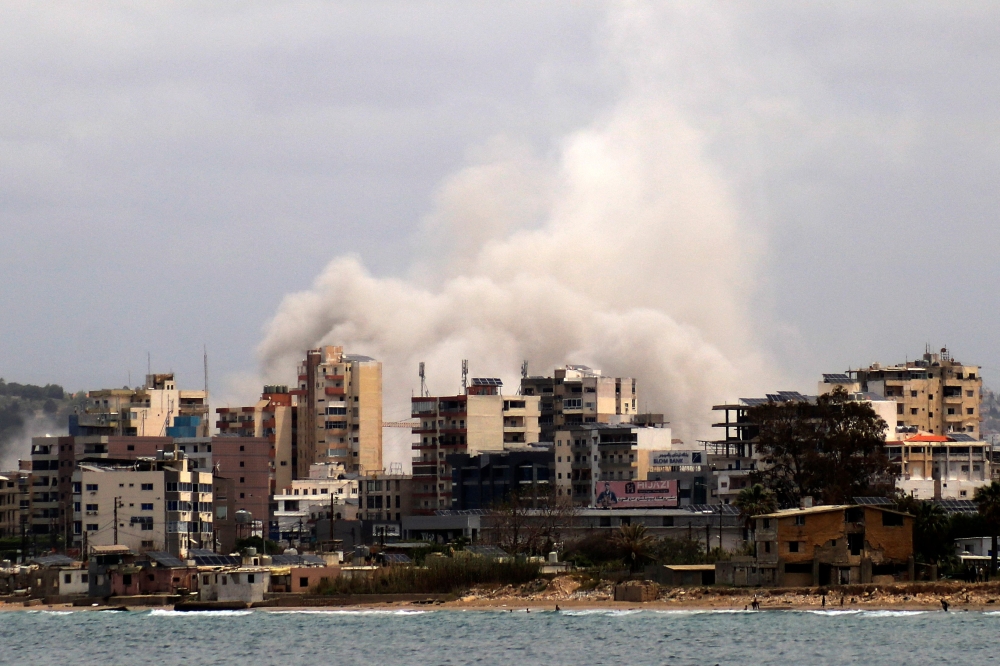
An Israeli strike hit a building in the southern Lebanese city of Tyre yesterday after an evacuation warning by the Israeli army, state media reported, despite the extension in the truce between Israel and Hezbollah.

An AFP correspondent saw a strike hit one of the threatened buildings.

Also yesterday, an Israeli strike in Haruf, south Lebanon, killed three paramedics from the Hezbollah-linked Islamic Health Committee, the Lebanese health ministry said.

Stocks slip, oil rises 

Global stocks slumped as summit talks between the US and China failed to deliver progress on reopening the Strait of Hormuz, reigniting worries of persistent inflation pressures that could derail economic growth.

Oil prices, however, rose three per cent, with the international benchmark Brent crude contract at nearly US$109 a barrel.

Israel says 220 militants killed in past week 

The Israeli military said yesterday its forces killed more than 220 Hezbollah militants in southern Lebanon over the past week.

During the same period, Israeli forces also struck more than 440 Hezbollah targets in that region, the military added.

UAE rejects Iran war role claims 

The United Arab Emirates rejected “attempts to justify Iranian terrorist attacks” after Tehran accused the wealthy Gulf state of playing an active role in the war.

Minister of State Khalifa bin Shaheen Al Marar “affirmed the UAE’s categorical rejection of Iranian claims and attempts to justify Iranian terrorist attacks targeting the UAE” and other nations, a statement said.

More ships pass Hormuz: Iran 

Iran is allowing more ships to pass through the strategic Strait of Hormuz, state television has said, because “many countries have accepted the new legal protocols” it has put in place.

Iran open to China help 

Iran’s Foreign Minister Abbas Araghchi said the US had sent messages indicating it was willing to continue talks, and that he was open to any support — including from China.

“We appreciate any country who has the ability to help, particularly China,” Araghchi said. — AFP


More Asians turning to charcoal and firewood amid fuel crisis, raising health concerns

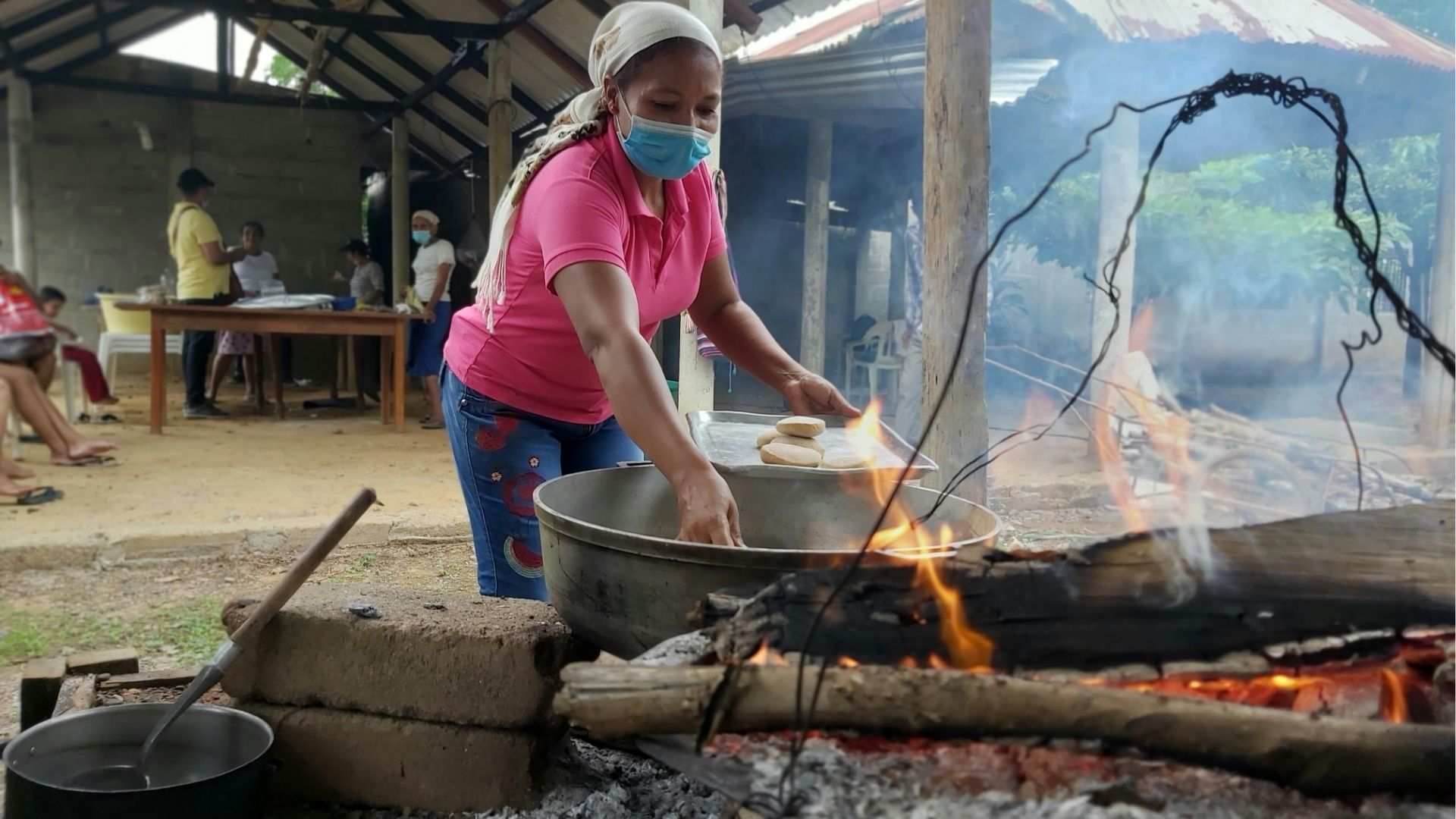
MANILA: As Asia continues to grapple with the fuel crisis brought about by the war in the Middle East, more people have resorted to using charcoal or firewood for cooking. This means higher pollution levels as well as a threat to public health.

The price of fuel rose sharply in the wake of the war due to the closure of the Strait of Hormuz, a chokepoint for 20% of the world’s fuel supply. Asia, which is heavily dependent on oil from the Middle East, has struggled to ensure sufficient supply for domestic use.

As a result, poorer people in countries such as India and the Philippines have gone back to older methods of cooking, which is likely to have an adverse effect on people’s health.

In the Philippines, the demand for charcoal has gone up as the price of the liquefied petroleum gas (LPG) canisters that many use for cooking has doubled.

The head of the LPG Marketers Association told the Philippine Congress last month that LPG consumption was reduced by 30% in comparison to the previous year as many people, especially in the provinces, shifted to charcoal and firewood. However, the price of charcoal has also gone up due to rising transport costs.

In India, over 60% of the population relies on LPG for their cooking needs. A sharp price increase and the scarcity of supplies have meant a return to “dirty” fuels such as firewood for many.

A woman told The Guardian that LPG would now cost her family 1,000 rupees (S$13.29) a week, which her family cannot afford, since her husband only earns between 400 and 500 rupees (S$5.32-S$6.53) daily. 

In late March, less than a month after the war in the Middle East began, the International Energy Agency (IEA) warned that higher fuel prices were already driving households to again use charcoal and wood, “undermining longer-term objectives to extend universal access to clean cooking.

This has implications for air quality and health. Using biomass as a traditional cooking fuel is associated with around 2.5 million premature deaths globally each year.”

The pollutants from such cooking methods have been linked to a wide range of diseases, including lung cancer, strokes, and chronic obstructive pulmonary disease.

The World Health Organization has said that the combined effects of ambient air pollution and household air pollution contribute to 7 million premature deaths each year. And, as in any crisis, it’s the poorest in society who are most exposed to these risks, with women and children being particularly vulnerable. /TISG

Read also: Poorest across Southeast Asia are the hardest hit by energy crisis due to Iran war

This article (More Asians turning to charcoal and firewood amid fuel crisis, raising health concerns) first appeared on The Independent Singapore News.

Iran’s tiered internet system sparks backlash as users pay for restricted connectivity amid blackout

14 May 2026 at 05:04

Malay Mail

PARIS, May 14 — After months under a near-total internet blackout during the Middle East war, Iranian tech worker Amir-Hassan was finally able to get back online, but only through a privileged service that has sparked public criticism.

Millions like the 39-year-old have been unable to access the internet since the United States and Israel attacked Iran on February 28, punishing the pockets of online entrepreneurs and workers.

But he did not hesitate when a message offered him the chance to get back online by purchasing the so-called “Pro Internet” system, designed for certain professionals and business owners.

“It was out of necessity. I was forced to get internet so I could ensure the flow of my income,” he told AFP, adding that he paid around US$11 (RM43.20) for an initial 50-gigabyte package.

By April 5, internet monitor NetBlocks estimated that the blackout since the war broke out was “the longest nation-scale internet shutdown on record in any country”.

It has left most in the dark online except for some limited local websites, banking services and state-approved applications.

The web was already heavily restricted at the height of anti-government protests in January, but when war broke out the internet became another tool of control for Iran’s hardline government.

Critics are accusing authorities of creating a tiered system in which broader connectivity is reserved for select groups.

“This model of categorising and classifying the internet in Iran is not a good model... it is clearly meant to generate money,” said Amir-Hassan.

Users have to pay more for additional internet usage at higher-than-normal prices, he added.

The tiered system allowed Amir-Hassan to access WhatsApp and Telegram but not other major platforms that have long been blocked in Iran, such as Instagram, X and YouTube, without a VPN (virtual private network) to circumvent the restrictions.

Others reported varying levels of access, suggesting the service was not the same for all subscribers.

‘Third-class citizen’ 

The selective access also comes with social burdens, with criticism directed at buyers.

“There is judgement too... people say you went and put money into the pocket of a government that unfairly offers this,” said Amir-Hassan.

Yet the special access has not been given to everyone within the intended groups of professionals.

Behrooz Mahmoodi-Bakhtiari, a linguistics professor at the University of Tehran, said he had not received the same message inviting him to subscribe.

He can only reliably access the internet while on campus.

“As soon as you step out of the university, you will again become a third-class citizen, and you have no internet access,” he said, noting that other professors had received the internet offer.

The reformist Shargh daily newspaper and other outlets have described the system as “tiered internet”, criticising what they called “the transformation of the internet from a public and civic right into an allocable privilege”.

As criticism has mounted, government spokeswoman Fatemeh Mohajerani said the internet situation would return to normal “once the shadow of war is gone”.

She blamed “enemies”, referring to Israel and the United States, for creating security conditions that forced the government to impose the blackout.

‘Not worthwhile’ 

In recent years users in Iran have grown accustomed to relying on VPNs to bypass restrictions on major social media platforms.

But for many Iranians, even those eligible to subscribe to the tiered internet access, paying for the “Pro Internet” service has become an extra financial burden.

Since the outbreak of war, many households have come under growing financial strain as Iran’s economy – already battered by years of sanctions – deteriorated further.

Inflation has surged above 50 percent in recent weeks, while the rial has lost much of its value against the dollar, sending prices of basic goods sharply higher.

“The amount of data offered, in my view, is not economically worthwhile for users compared to the cost,” said Mehdi, a 34-year-old graphic designer.

He still purchased the service for his work, but acknowledged that “not everyone can afford to buy” the package.

Kaveh, a 38-year-old visual artist, said he had also been offered the option of upgrading to the “Pro Internet” plan but rejected it, saying it was not worth the cost.

He already pays separately for VPN services to bypass restrictions and said he would not pay for “a little amount of freedom to some of us as a favour, at 10 times the normal price”. —- AFP


❌
Subscriptions