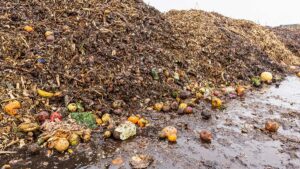
40 pounds of paper towels per American per year. The United States is the world’s most committed buyer of single-use towels, by a margin no other country approaches. Americans alone consume nearly half of all paper towels produced globally, and Europeans use roughly 50 percent fewer than we do.
Paper towels, facial tissues, toilet paper, and napkins together make up a quietly enormous share of American household disposable spending and a startlingly large share of global forest pulp demand. The
40 pounds of paper towels per American per year. The United States is the world’s most committed buyer of single-use towels, by a margin no other country approaches. Americans alone consume nearly half of all paper towels produced globally, and Europeans use roughly 50 percent fewer than we do.
Paper towels, facial tissues, toilet paper, and napkins together make up a quietly enormous share of American household disposable spending and a startlingly large share of global forest pulp demand. The U.S. uses about 13 billion pounds of paper towels each year, and producing them consumes roughly 110 million trees and 130 billion gallons of water.
The financial cost lands quietly on households, in $5 four-packs and $20 jumbo packs that add up to hundreds of dollars annually. The environmental cost lands somewhere else entirely: the boreal forest of Canada.
What 13 Billion Pounds Looks Like at Home
The average American household spends meaningfully more than the headline average suggests. Statista’s 2022 data put per-consumer-unit spending on cleansing and toilet tissue, paper towels, and napkins at $114.41. Paper towel users spend closer to $200 per year on disposable towels alone, with many families spending $400 or more. Toilet paper adds another $182 per year on average per household, with that figure rising during and after the pandemic.
Add facial tissues, napkins, and the kitchen-roll runs that don’t show up in pantry inventory, and a typical American family is spending $400 to $700 a year on products designed to be used once and thrown away. Over an adult lifetime, the math compounds: roughly $10,500 on paper towels and $9,500 on tissues per person. Think about that in relation to your monthly salary the next time you shop.
The volume side is just as striking. Americans throw out roughly 3,000 tons of paper towels every single day. Used paper towels can’t be recycled because they’re contaminated with food, grease, cleaning chemicals, or simply too short-fibered after one use, so essentially all of that volume goes to landfill or incineration. EPA’s most recent breakdown shows tissue paper and towels accounting for 3.8 million tons of municipal solid waste, or about 1.3 percent of total MSW generation. While that is a small percentage of total trash, it is a large percentage of single-use, single-purpose throwaway products.
The Boreal Forest Connection
Most of the trees used to make American at-home tissue products come from the Canadian boreal forest, one of the largest intact forest ecosystems on Earth and a globally significant carbon sink. Clear-cut logging for tissue manufacturing now consumes more than one million acres of boreal forest each year, according to the Natural Resources Defense Council (NRDC).
These forests store roughly twice as much carbon per acre as tropical rainforests. Each clear-cut releases that carbon and degrades habitat for boreal caribou, billions of migratory birds, and Indigenous communities whose traditional territories overlap with logging concessions.
The NRDC has tracked the paper products supply chain for six years through its Issue with Tissue scorecard, and the 2024 edition shows real movement at the top of the rankings — and continued failure at the bottom.
Brand owner
Notable products
2024 grade
Notes
Procter & Gamble
Charmin, Bounty, Puffs
F
Sixth year
Continues to source virgin pulp from boreal forests.
Procter & Gamble
Charmin Ultra Bamboo
B
First non-F grade for any P&G tissue product.
Kimberly-Clark
Kleenex, Cottonelle, Scott
D
New deforestation and forest-degradation commitments in 2024.
Georgia-Pacific
ARIA
A+
Relaunched as 100% recycled content; top of the scorecard.
P&G’s continued reliance on virgin pulp for its flagship at-home brands matters because Charmin, Bounty, and Puffs together command a substantial share of the U.S. retail market. The grade isn’t an abstraction; it tracks the proportion of each brand’s fiber that comes from intact, climate-critical forests rather than recycled content or alternative sources like wheat straw.
Why “Tree-Free” Doesn’t Always Mean “Impact-Free”
Bamboo tissue has become the most visible alternative to virgin pulp in U.S. retail, and it is meaningfully better than virgin forest fiber on most environmental metrics. It is not, however, the most sustainable option available — recycled content is.
NRDC’s hierarchy puts 100 percent post-consumer recycled paper at the top: it requires no new fiber, diverts paper from landfills, uses about 15 gallons of water per roll, and has the lowest carbon footprint. Bamboo uses about 25 gallons of water per roll, requires more processing, and carries a real risk of being grown on land that was previously primary forest, a problem the FSC certification system is meant to address, but which still requires consumers to read labels carefully.
Recycled-content paper towels are widely available, including from Seventh Generation, Marcal, and Trader Joe’s, and they perform competitively with virgin towels for most household uses. The case for switching is straightforward: same function, lower cost over time when bought in bulk, and dramatically lower environmental impact.
What You Can Do
The interventions here are unusually high-leverage at the household level, because per-capita consumption in the U.S. is so far above the baseline of comparable countries.
Replace the highest-volume product first:
Switch out paper towels for washable cloth towels, microfiber rags, or bar mops for an estimated 80 percent of household uses. Keep a small roll of recycled-content paper towels for genuinely unpleasant tasks ( like wiping up after raw meat, pet accidents, or automotive work.
Choose 100 percent post-consumer recycled toilet paper brands when available (Seventh Generation, Marcal, Who Gives A Crap recycled line, ARIA). If recycled isn’t available, FSC-certified bamboo is a strong second choice.
Replace paper napkins with cloth. A set of 12 cotton napkins costs roughly the equivalent of two months of paper napkin spending and lasts for years.
The math on switching is more favorable than the sticker price suggests. Who Gives A Crap’s recycled toilet paper subscription runs roughly $1.03 to $1.29 per double-length roll, comparable to or below mainstream supermarket pricing per sheet. The premium framing of “eco-friendly” tissue products often reflects packaging and marketing more than per-use cost.
Push retailers and manufacturers:
The NRDC tissue scorecard is updated annually and is the single best public reference for which brands deserve which share of the market.
Retailer pressure has worked: the 2024 scorecard shows movement at Kimberly-Clark and Georgia-Pacific in direct response to consumer and shareholder advocacy.
For the cardboard tubes and outer packaging, Earth911’s recycling search tool confirms local acceptance; most curbside programs take them, but not all.
Don’t flush, rinse
A modest bidet attachment costs $30 to $80, installs without a plumber on most U.S. toilets, and reduces toilet paper consumption by an estimated 75% or more in households that use it consistently. The water cost of a bidet is roughly an eighth of a gallon per use, vastly less than the embedded water in the toilet paper it replaces.
Paper-product consumption is one of the few household waste categories where a typical American family can cut its environmental and financial footprint by half or more with relatively small behavior changes. The leverage is unusually direct.
Fifty-seven countries representing roughly a third of the global economy walked into a coal port and agreed it was time to leave coal, oil, and gas behind. This is not the beginning of a joke. They did it without the United States, China, India, Russia, or Saudi Arabia in the room; and that was the point.
The First Conference on Transitioning Away from Fossil Fuels, co-hosted by Colombia and the Netherlands in Santa Marta, Colombia, from April 24 to 29, was conceived as an end-run petrostates th
Fifty-seven countries representing roughly a third of the global economy walked into a coal port and agreed it was time to leave coal, oil, and gas behind. This is not the beginning of a joke. They did it without the United States, China, India, Russia, or Saudi Arabia in the room; and that was the point.
The First Conference on Transitioning Away from Fossil Fuels, co-hosted by Colombia and the Netherlands in Santa Marta, Colombia, from April 24 to 29, was conceived as an end-run petrostates that have stalled U.N. climate talks for three decades. It opened against the backdrop of the Iran war, the largest oil supply disruption in history, and a growing sense in capitals from Manila to Madrid that fossil fuel dependence is no longer just a climate problem, it is a national security concern.
Whether Santa Marta marks a genuine inflection point or another diplomatic detour will depend on what the participating governments do in the next 18 months. But the debate has shifted, and that matters to the climate and U.S. energy policy.
A Coalition of the Willing, Sitting in a Circle
The Santa Marta format was deliberately unlike a United Nations Conference of Parties, or COP. Instead of plenary speeches and bracketed text, ministers and envoys sat in small circles, discussing issues with civil society and Indigenous representatives in the room. Officials, according to Carbon Brief’s on-site reporting, described the conversations as “refreshing,” “highly successful,” and “groundbreaking.”
The guest list was as much a statement as the agenda. Colombia and the Netherlands invited countries that had backed a roadmap for a fossil fuel phase-out at COP30 in Belém last year. China, India, Russia, the United States, and the Gulf states were not on the list. Co-host Irene Vélez Torres, Colombia’s environment minister, told reporters the goal was to avoid “a rehashing” of Belém and to gather a “coalition of the willing.” Among those willing were several major fossil fuel producers, including Australia, Norway, Canada, Colombia itself, and Nigeria, which acknowledged the contradictions in their own economies but committed to the conversation.
Panama’s special climate representative, Juan Carlos Monterrey Gómez, speaking at the opening plenary, captured the mood: “For 34 years, we have negotiated the symptoms of the climate crisis and bulletproofed its cause. Thirty-four years of pledges. And where are we now? Economies built on fossil fuels are unraveling in real time. Fossil fuels are not just dirty. They are unreliable, they are dangerous, and they must end.”
The Iran War Changed the Game
The conference happened in the long shadow of the Iran war. The closure of the Strait of Hormuz, through which roughly 20 percent of global oil and significant LNG volumes pass, triggered what the International Energy Agency (IEA) has called the largest supply disruption in the history of the global oil market. Brent crude hit $144 per barrel earlier this spring. U.S. gasoline averaged $4.10 a gallon. The Philippines declared an energy emergency. Pakistan moved to a four-day public sector workweek to conserve fuel.
Those disruptions reframed the energy transition argument. UK climate envoy Rachel Kyte told Santa Marta delegates it “would be irresponsible to ignore the second fossil-fuel crisis in five years,” referring to the war in Ukraine and now Iran.
“Price volatility and dependence on imports are structurally and unacceptably impacting our economies,” Dutch climate minister Stientje van Veldhoven told the attendees. “We need to move away from fossil fuels not only because it is good for the climate, but because it strengthens our energy security.”
U.N. climate chief Simon Stiell made the same point earlier this spring at a meeting with the IEA in Paris, telling reporters that the war is “supercharging” the energy transition. The IEA reports that the Iran war has “thoroughly upended” the global outlook for oil consumption, with global demand now projected to contract by 80,000 barrels per day in 2026, the first annual decline since the 2020 pandemic. The IEA had projected growth of 730,000 barrels per day before the war began.
The shift is showing up in trade flows. Chinese exports of solar panels, batteries, and electric vehicles rose 70 percent year over year in March, according to energy think tank Ember, with EV exports up 140 percent.
“The era of fossil fuel security is over,” U.K. Energy Secretary Ed Miliband said in a statement that week. “the era of clean energy security must come of age.”
What Santa Marta Produced
Santa Marta wasn’t a treaty negotiation, and the co-hosts were clear that it would not produce binding commitments. What it did produce was a structure for making progress. The closing plenary on April 29 announced four concrete deliverables:
A second conference in 2027, co-hosted by Tuvalu and Ireland—an explicit pairing of a small island state and a high-income country to signal the coalition’s membership.
A workstream to develop national fossil fuel transition roadmaps, supported by a new global science panel. France and Colombia each released their own roadmaps during the conference.
A financial reform project focused on identifying fossil fuel subsidies and addressing the debt traps that constrain developing countries. Supported by the International Institute for Sustainable Development.
An effort to decarbonize trade, supported by the OECD, with the goal of building toward a “fossil fuel–free trade system.”
The new Science Panel for Global Energy Transition was launched at the academic pre-conference. It will be based at the University of São Paulo and will involve 50 to 100 scientists. Unlike the U.N.’s seven-year assessment cycle, the panel intends to produce annual updates and country-specific analysis on request. Johan Rockström of the Potsdam Institute and Carlos Nobre of the University of São Paulo, who launched it, framed the panel as deliberately independent of government line-by-line approval, which is a major change from the U.N. model.
A science pre-conference also produced a synthesis report from roughly 400 scientists with 12 “action insights,” including explicit recommendations to halt all new fossil fuel expansion and to prohibit fossil fuel advertising on the grounds that fossil fuels are health-harming products. A separate roadmap, led by Professor Piers Forster of the University of Leeds, outlined how Colombia could cut energy emissions to 90 percent below 2015 levels by 2050, with net economy-wide savings of about $23 billion annually by mid-century.
The Brazilian COP30 presidency has committed to building these inputs into an “informal” fossil fuel roadmap to be presented at COP31 in Turkey this November. That handoff is the test. Santa Marta produced a process; COP31 will reveal whether the process has political weight.
The Limits Of Cooperation
It would be easy to oversell this. Santa Marta gathered representatives of roughly a third of the global economy. The other two-thirds, including the world’s top two emitters and its largest oil producer, the United States, were absent. Tuvalu’s climate minister Maina Talia, who will co-host the 2027 conference, told Climate Home News that the criteria for invitations would have to change “If we are missing out the main players in the discussion, then we are moving in a loop, he said. “We need to find somehow how we can engage with [them], because there is no point in talking to ourselves.”
The Fossil Fuel Treaty initiative, a binding legal instrument that 18 nations have backed, did not appear in the final report. None of the workstreams has enforcement mechanisms. And the same Iran war that is accelerating renewable adoption is also being used by some governments, including the Trump administration, as justification to roll back climate policy and expand domestic fossil fuel production. Energy security can be argued in either direction. Which argument wins is a political fight, not a technical one.
Canada’s opening statement at the conference was widely noted for managing to avoid the words “fossil fuels” entirely—a reminder that even among the willing, willingness varies.
And outside the venue, Colombian mining unions protested the conference, holding signs that read “More oil, less Petro.” Colombia heads into a presidential election in late May, and President Gustavo Petro’s successor is not guaranteed. The durability of the Santa Marta process depends on a level of continuity that no single host country can guarantee.
Why It Still Matters
Santa Marta is not the moment fossil fuels ended. It is the moment a critical mass of governments stopped pretending the COP process alone could end them. That is a meaningful diplomatic shift. For three decades, the industry’s biggest structural advantage at U.N. talks has been the consensus rule: any single petrostate could block any binding language on production. Santa Marta is the first serious attempt to route around that veto.
The Strait of Hormuz crisis made it impossible for finance ministers, defense ministers, and central bankers to keep treating fossil fuel dependence as a separate file from national security. The IEA’s Fatih Birol called the situation the “greatest global energy security challenge in history.” Solar and battery costs that have fallen 80 percent and 90 percent, respectively, over the last decade made the alternative real. Santa Marta gave that combination a forum.
Whether the world is actually pivoting away from fossil fuels faster is something we will measure in pipeline cancellations, capital flows, and emissions curves over the next several years—not in conference communiqués. But the rhetorical floor moved in Santa Marta. “Fossil fuel” went from a phrase carefully edited out of negotiated text to the title of a conference that 57 governments showed up to. Coalitions of the doers tend to start small and either grow or fade. This one is worth watching.
What You Can Do
Individual action alone will not phase out fossil fuels. But the policy decisions that will, especially over the next 18 months heading into COP31, are shaped by sustained public pressure and personal choices that signal demand:
Track the workstreams. Santa Marta’s three workstreams (national roadmaps, finance, trade) and the Brazilian COP30 presidency’s informal fossil fuel roadmap will be the substantive deliverables to watch ahead of COP31. Climate Home News, Carbon Brief, and the Fossil Fuel Treaty initiative all publish detailed updates.
Ask your representatives where they stand. In the U.S., neither party invited Santa Marta participants. State and city governments, however, can join subnational coalitions like the Beyond Oil and Gas Alliance. Local action remains the most practical lever.
Reduce your own exposure to oil price volatility. Heat pumps, EVs, and rooftop or community solar are the household-scale equivalent of energy security policy. Federal tax credits remain available for many of these in 2026, though the IRA framework is under active threat—worth acting before that changes.
Support utilities and pension funds that are divesting from fossil fuels. Where you have a vote, whether as a customer, a shareholder, or a pension participant, ask whether the organization is screening for fossil fuel transition risk.
Donate or volunteer with groups doing transition work. The Fossil Fuel Non-Proliferation Treaty Initiative, Climate Action Network, and Indigenous-led organizations like the Organisation of Indigenous Peoples of the Colombian Amazon were central to making Santa Marta happen.
Americans throw away nearly 5 million tons of film and flexible plastic packaging every year, and less than 1% of it gets recycled, according to The Recycling Partnership. The salad bag, the potato bag, the pallet wrap behind every grocery store — all of it is technically recyclable, almost none of it actually is, and food contact applications make the math even harder, because the FDA requires rigorous migration testing before a single recycled pellet can touch what we eat. Kevin Kelly, CEO of
Americans throw away nearly 5 million tons of film and flexible plastic packaging every year, and less than 1% of it gets recycled, according to The Recycling Partnership. The salad bag, the potato bag, the pallet wrap behind every grocery store — all of it is technically recyclable, almost none of it actually is, and food contact applications make the math even harder, because the FDA requires rigorous migration testing before a single recycled pellet can touch what we eat. Kevin Kelly, CEO of Emerald Packaging, the largest supplier of retail flexible packaging to the U.S. produce industry, has spent decades on that problem from inside the industry. In December 2025, his Union City, California–based, third-generation family business announced that it had eliminated more than 1 million pounds of virgin polyethylene over the previous year by replacing it with post-consumer recycled (PCR) material, including, in partnership with Walmart, Idaho Package, and Wada Farms, the first 30% PCR potato bag approved for direct food contact. On this episode of Sustainability In Your Ear, Kevin walks through what it actually took to get that bag on a Walmart shelf, why most flexible packaging companies still won’t try, and why the most ambitious recycling law in the country may push the industry in the wrong direction.
Kevin Kelly, CEO of Emerald Packaging, is our guest on Sustainability In Your Ear.
Food-grade PCR is a different animal from the recycled plastic in a milk crate or a contractor bag. To pass FDA scrutiny, the feedstock has to be traceable from a known, food-adjacent source. For Emerald, that mostly means pallet wrap collected from Walmart distribution centers, washed, dried, and repelletized by suppliers like Dow Chemical’s Circulus mechanical recycling business and Canada’s Nova Chemicals. Variation in any given load of recyclable plastic causes carbon buildup on Emerald’s extrusion lines, forcing a shutdown every eight hours for cleaning, and waste rates are higher than with virgin resin. The company has had to audit its own suppliers in person, push back on competitors who hide non-food-grade PCR in the middle layer of multilayer films and call it sustainable, and walk produce buyers through what “food-grade” actually means before they sign on. Kevin describes Emerald as “the canary in the coal mine” for food-grade PCR — he can’t find another bag in the store that’s labeled the same way.
The harder argument Kevin makes is about policy. California’s SB 54, the most ambitious extended producer responsibility (EPR) law in the country, with a 65% recycling rate target and a 25% source reduction mandate by 2032, was supposed to drive exactly the kind of work Emerald is doing. But Kevin says the rulemaking went the other way. The pound-for-pound PCR credit that would have rewarded companies for replacing virgin resin with recycled content was stripped out, and the fees are low enough that producers can hit early reduction targets through agricultural film and other low-hanging fruit without ever switching to food-grade PCR. The deeper structural problem Kevin lays out is the capital story. Family-owned manufacturers freed from quarterly returns pressure, Kevin argues, are doing more to push food-grade PCR forward today than the capital pools that are theoretically supposed to fund the energy and sustainability transition.
To find out more about Emerald Packaging, visit empack.com.
Hello, good morning, good afternoon, or good evening, wherever you are on this beautiful planet of ours. Welcome to Sustainability In Your Ear. This is the podcast conversation about accelerating the transition to a sustainable, carbon-neutral society, and I’m your host, Mitch Ratcliffe. Thanks for joining the conversation today.
Every year, Americans buy roughly 5 billion pounds of fresh produce that’s packaged in flexible plastic — that’s salads, carrots, potatoes, lots of produce. That packaging extends shelf life, reducing food waste, but most of it is made from virgin polyethylene refined from fossil fuels, and almost none of it gets recycled.
My guest today is Kevin Kelly, CEO of Emerald Packaging, the largest supplier of retail flexible packaging for the U.S. produce industry. And on December 11 of 2025, Emerald announced a significant milestone: that over the previous year, the company had replaced more than 1 million pounds of virgin polyethylene with post-consumer recycled material, or PCR, as you’ll probably hear it in this discussion.
That shift — granted that it’s only a million fewer pounds of plastic packaging in a vast sea of it — is a suggestion of what’s possible in food packaging. However, getting recycled plastic approved for direct food contact isn’t simple. Produce packaging is especially demanding, because shelf life and food safety are not negotiable. The FDA requires rigorous testing to ensure that no contaminants from that PCR migrate into food, and for years, the industry defaulted to virgin plastic because recycled content couldn’t meet those standards reliably at scale.
Emerald is working to change that equation. In collaboration with Walmart, Idaho Package, and Wada Farms, amongst others, they’ve introduced the first 30% post-consumer recycled materials potato bag approved for food contact, and Emerald’s initiative supports Walmart’s Project Gigaton, which aims to eliminate 1 billion metric tons of greenhouse gas emissions from the retailer’s supply chain by 2030. Emerald has also partnered with D’Arrigo, the company behind Andy Boy produce, to introduce another 30% PCR bag for romaine lettuce hearts — and that’s a shift that has removed over 600,000 pounds of virgin plastic from the supply chain between June 2023 and 2025.
Emerald is a third-generation, family-owned company based in Union City, California. Kevin brings the perspective of an organization that has operated through six decades of rapid, often revolutionary changes in how Americans buy and consume food. He’s led the company through its evolution from a regional bag manufacturer to becoming an industry leader, pushing the boundaries of sustainable, flexible packaging.
So we’re going to talk with Kevin about what it took to get recycled content into food contact packaging at scale, whether grocery customers are willing to pay more for sustainable options, how California’s recent SB 54 packaging law is reshaping the industry, and whether flexible packaging can ever become truly circular when most curbside programs still don’t accept it. You can learn more about Emerald Packaging at empack.com — that’s all one word, no space, no dash. Empack.com.
Can recycled content packaging go from future milestone to mainstream reality? Let’s find out, right after this. Welcome to the show, Kevin. How you doing today?
Kevin Kelly (3:33)
I’m doing great. How are you?
Mitch Ratcliffe (3:35)
I’m well, I’m well. Thanks for asking, and thanks for joining us. We’ve been working to get together for a few months now, and I’m glad that we actually now have the opportunity to complete the conversation. I’ve shared a summary of Emerald Packaging’s recent activity in my introduction, but could you share the backstory? When did your grandfather start the company?
Kevin Kelly (3:52)
It was actually my father. He started it in 1963 with three partners. They were based in Berkeley, California, and they mainly made — not produce packaging, which is what we specialize in now — they were making bread bags, because they were in the bread district. They were unionized by the bread workers’ union. It was a very different company when they started out. It also had one printing press and two bag machines.
Today, we have 32 bag-making machines, seven printing presses, and I don’t know how many other machines, and about 250 employees. It became a family business in ’93, and then gradually the other siblings retired, and I’m the last one here. So we’ve got a wonderful staff behind us — very creative, very technical, and best of all, they’re very detailed, which I’m not, which is why we’ve been having problems getting together for a couple of months.
Mitch Ratcliffe (4:52)
Tell me, how has the company changed since you’ve been involved with it? Obviously you just described a massive transition. But why the sustainability focus? When did that take hold?
Kevin Kelly (5:05)
Well, I started worrying about sustainability and packaging back in 2000, believe it or not, when the California Integrated Waste Management Board did a study of what was in landfills, and it turned out that plastic was a lot of what was in landfills, especially the ground covering that the agricultural industry uses in their growing operations. And so we started, with a bunch of California companies back then, having a conversation with the American Chemistry Council, which I can’t stand — I’m just going to be upfront about it — about creating a recycling system in California, because you could tell in the early 2000s this moment was coming. I mean, maybe it was a distant moment, but it was coming.
And the ACC told us absolutely not. The resin companies wanted nothing to do with fees. So really, back then, a bunch of small plastics companies in California couldn’t do anything if the ACC wouldn’t let us do anything. They had that much influence amongst both parties, the Democrats and the Republicans.
And so from there, I was sort of an orphan for a long time, you know — trying this, trying that. Worked with potato-based films, worked with PLA, polylactic acid. Tried different approaches. And then finally, a few years ago, post-consumer recycled resin became, I think, more affordable. It’s still about three times, four times the cost of virgin resin, but blended with virgin resin, I thought it was an affordable option now.
Trying to get people to buy anything that they can’t pass on — what a lot of people don’t know is that CPGs have year-long contracts with retailers, and there’s no causes for price increases, including acts of war, acts of God, supply disruption. So a lot of these companies are getting killed right now, but that’s another story for another day. They have no way to really pass on increases. And Walmart’s always said, we want sustainable packaging — we want it for free. They don’t say free; they say we want it for the same price as what we’re paying right now, which I take to mean free. They’ve gotten a little bit better in that stance, by the way, but there was really no way to pass things on.
So finally, in 2023, I just said, damn it. I’ve been working on this issue in one form or another for most of my career in packaging. I’m just going to do it. And so we convinced a customer to take their entire line and put 30% PCR in it, and we ate the cost of it. That was about 400,000 pounds of PCR right there. And from there, we attracted the interest of other companies. Some companies have taken surcharges, but PCR has really become our thrust at this point.
We’re still working with a lot of compostable options — in other words, experimenting — because at 5x, 6x, 7x, 10x, it’s still a very difficult proposition for most companies to take on. Companies with big margins, or specialty companies that don’t have year-long contracts, they have a little bit more leeway in this area, I think. But compostables remain — I’m not going to call it a pipe dream, because I’m feeling like the extended producer responsibility programs are making it more feasible — but they’re just not there yet.
Mitch Ratcliffe (8:39)
You’ve removed more than a million pounds of virgin plastic from your supply chain so far with recycled material, and that’s just within the last couple of years. How did you have to change the company to embrace the PCR process and address customer concerns about food safety?
Kevin Kelly (8:57)
Well, those are two great questions. I’ll break it down on a couple of different levels. Internally, when you’re the CEO of a family-run business and you say, hey, let’s go do this, people tend to start going and doing it. And there was a great deal of enthusiasm amongst the troops anyway about taking on a real project and commercializing it. So within the company, there wasn’t much opposition.
Now, Kevin walking into a room and saying, hey, there’s this really great technology — there’s a company, Circulus, that’s got an operation out in the Central Valley of California, about two hours away — let’s start working with them. Well, then my poor Director of Operations, Michael Rincon, has to make it happen. And PCR is an animal all its own. In terms of production runs, there’s a lot of variation within loads, for instance — not just between loads, but within. It causes a lot of carbon buildup on the extrusion lines, and so you have to shut down and clean them every eight hours. There’s much greater waste because of the variation within the loads, and so on and so forth. So we had a lot of learning on the production side in order to make this happen. We’re still learning.
But the other piece there has been the inconsistency amongst suppliers. Everybody talks about recycling and packaging, and yet you go to recycling conferences, and all you hear and all you really read about are the financial problems of recycling companies. The end markets really still aren’t there for them. In the case of PET, they’re competing with overseas supply that’s much cheaper. And so getting a consistent source as one company after the other goes out of business has been tough. So that’s been a challenge.
Our customers — they took us at our word that it was safe. They wanted to see what the process for ensuring that it was food-grade PCR was, you know — what were our certifications, what were the certifications of our suppliers, and then how did we trace within loads? Because the last thing you want is food-grade mixing with non-food-grade.
Mitch Ratcliffe (11:18)
You make this point already, and it was a question I wanted to dig into a bit, which is: with PCR, the sources are very mixed. Where does the feedstock come from? Is it from previously used film, or are we talking about other sources as well?
Kevin Kelly (11:33)
No, you’re talking, in the case of food-grade — you’re talking previously sourced film for, you know, plastic wrap around pallets. It’s not the salad bag that’s being brought back to the store and the store drop-off thing.
Mitch Ratcliffe (11:51)
And so this is largely a procurement management issue for you. And do you do a lot of testing of the material you get, or is this something that you take as certified? And is there a certification that you can rely on?
Kevin Kelly (12:04)
Well, I think that’s been one of the problems. You have this sort of nebulous process where a company that is making food-grade PCR — it’s nebulous. It just sounds strange. It’s not what I’m used to. When I’m used to certifications, they go to the FDA, they submit samples, they submit their process, and the FDA will come back and say — give you what’s called a letter of no objection, which hardly sounds like an endorsement, a stamp of approval. It’s like, we got no objection. So I think that process really actually has to be cleaned up.
There has to be some way — the Biodegradable Products Institute, there has to be some way of certifying companies and periodic testing that goes beyond us testing our incoming material. We’re a $90 million company. We have the ability to do some testing, and we do, but really we’re relying on Dow Chemical and Nova Chemicals to do what they say they’re doing, which is sourcing pallet wrap, washing it, washing it again, drying it, repelletizing it, drying it again, to drive out any impurities. So it is a difficult process. We have to have possession from them of the chain going all the way back to the source, but that’s a lot of documentation, and I think that’s where companies have come to rely on mass balance. But mass balance doesn’t tell you anything about food-grade, non-food-grade, and it’s also, of course, been manipulated by companies in ways that have undermined a process that could otherwise be helpful.
Mitch Ratcliffe (13:58)
Thinking about what you just said — is a transparency movement needed in order for PCR materials to be truly understood, both by the manufacturer who’s going to use the material and the consumer in the long run? Do we need that kind of full life cycle accounting to be available to say this plastic has gone through these steps, so people have confidence about the food safety issues?
Kevin Kelly (14:22)
I think so. I’m trying to imagine in my head how we would do that. That’s why there’s people smarter and greater than I involved in these things. But I think some way of tracing back, or some way of testing, or more periodic testing. Or, for instance, you could say, Emerald Packaging, you have to test your material 10, 15 times a year, submit, and it has to be done. You know, actually, that doesn’t work. I’m trying to think of a way you could possibly do it, you know, so that it’s absolutely ironclad. I’m going to say, I don’t quite know how you would do it, but I would frankly prefer that, because I know I’m making all efforts to use food-grade PCR, right? We’re documenting, we’re maintaining all of our documentation, and we’re working only with suppliers that we’ve gone and visited and certified ourselves.
There are other companies, especially at the beginning when we came out, who were saying — you can make a plastic that has three to five layers in it, right? You’re using one plastic on the surface, something in the middle, and another plastic on the surface. And they would say, well, we’re using PCR; it doesn’t have to be food-grade, because we’re putting it in the middle. You know, that protects it. And the company buying — particularly, say, in the produce industry — who aren’t educated in these things might think that that sounds reasonable. It’s not, of course, because whatever you put in the middle migrates to the surface. So if you’ve got contaminants in the damn thing, you know they’re going to get out of the middle eventually and end up on the surface, and then end up on the food.
And so we had to do a lot of customer education about what they had to get from their supplier in order for them to be reasonably certain that they were using food-grade PCR versus just any old derelict PCR that came from materials that are fine in a garbage bag, but not fine touching food. That education process largely then fell on us. I think we’re so early in this — I, you know, frankly, haven’t been able to find another bag or package in the store that says it uses food-grade PCR. We’re sort of like the canary in the coal mine. A lot of what one might hope would be coming from an industry organization, or the FDA, or a California certifying government body, or a government body that would be checking, you know, whether things were food-grade or not — randomly off the store shelf — all that’s fallen on us.
Mitch Ratcliffe (17:18)
That’s a huge undertaking, and I can understand now why it’s three or four times more expensive to use this material. How did you make the case to Wada Farms or D’Arrigo that this was a good choice? Was it a sustainable, moral suasion argument, or was it a consumers-are-going-to-love-you-for-this? How did you bring them on board?
Kevin Kelly (17:39)
For me, it starts with: this is a great way to make your packaging more sustainable. It starts with the moral argument that I always begin with — that, because that’s where I come from. I know one should be thinking about these things as huge marketing opportunities, and they are, I suppose. But for me, it’s really about: what can packaging do to move the needle on becoming more environmentally friendly? You know, I guess that just comes out of familial commitment, having to look your kids in the eye and tell them you’re actually doing something versus not. And so I always begin the conversation there.
And then I go to the marketing question — consumers will love it. And, oh, by the way, you know, Walmart has a program — that they’ve revised somewhat — but they have a program really emphasizing post-consumer resin in Walmart brand. And so this is something that will please Walmart, especially if the upcharge is very small or there’s no upcharge at all. And in the case of Wada Farms, that’s the sale they really took to Walmart. And whoever the purchasing person at Walmart on the other end was knew about the Walmart program, was committed to the Walmart program, and so jumped on the opportunity. That doesn’t always happen, but they did, and they saw it both, I think, as an internal possibility to fulfill an internal commitment to the environment, but also a way to market potatoes to consumers using packaging that was more environmentally friendly.
Mitch Ratcliffe (19:27)
If we don’t make this transition, what’s the outcome for the economy in the long term? Do we essentially choke ourselves on our waste? How do you envision the benefits of the sustainable packaging movement alleviating the crisis that we’re entering?
Kevin Kelly (19:45)
I think that the crisis operates on many different levels, right? So let’s sort of back up a little bit. You have the greenhouse gas crisis, you have the waste crisis, and they intersect, obviously, but they’re two distinct things.
And so in the case of some packaging, I believe there’s an argument to be made that it actually does reduce food waste and therefore greenhouse gas. The State of Oregon looked at that question in 2017 in a little-known study that came back and said, in the balance, produce packaging, for instance, reduces greenhouse gas through reduction of food waste, food preservation, shelf life extension, more than it actually contributes to greenhouse gas in the production thereof. So there’s this single study floating out there that says that. It’s not true in the case of every kind of packaging.
You can certainly ask yourself — and I’m not going to get into this debate — whether we need Ho Hos and Twinkies or not, and whether we need them wrapped, therefore, to get them. So, you know, there is this question on the store shelves of where is packaging beneficial and where it isn’t.
I think PCR moves the needle a little. I think it tells you where we are in this process. When one turn of this is close to being circular, right? Maybe we’ve, like, rounded the bend — one of the hundreds of bends to go to actually form a complete circle. But it’s a start. I mean, which is the way, I guess, we sort of have to look at it.
If you’re over in my world, the thing about sustainable packaging, and I think this has been true for the last 20 years, is that the technologies exist today to take the entire packaging world into compostable packaging. We’d then be choking on compostable packaging. But, you know, we’d need a lot of home compost, obviously, to deal with billions of pounds of compostable packaging. I mean, the infrastructure doesn’t exist, so on and so forth. The point I’m making here is the technology has been there. The question throughout has been, who’s going to pay for it?
Mitch Ratcliffe (22:22)
I think this is an absolutely critical question, and one we hear about with the green premium. I want to dig into this, but we’re going to take a quick commercial break, folks. We’ll be right back. Stay tuned.
Mitch Ratcliffe (22:37)
Welcome back to Sustainability In Your Ear. Let’s continue talking with Kevin Kelly. He is the CEO of Emerald Packaging in Union City, California, and we’re talking about the company’s investments in developing more sustainable food packaging options. Kevin, you mentioned that the flexible packaging recycling infrastructure in the United States is, let’s just say, still very limited. Most curbside programs don’t accept it. As you look at the material flow in your industry, are there new business opportunities in collection and processing that you see people missing, that they should be stepping into?
Kevin Kelly (23:12)
Well, I think you’re being generous when you say it’s limited. It’s virtually nonexistent, right? I mean, let’s be — the store drop-back, drop-off program is a nice — I don’t know, it’s nice, but imagine if everybody took their bags back to the store and Safeway became a solid waste dump. You know, it’d be a wake-up call to everybody.
But at any rate, I think there’s a big business opportunity in recycling, period. The issue has been on that end of things — the end markets. Okay? So you have recycled material. Where does it go? In a free market economy, you’re dealing with virgin material that’s cheaper than its recycled cousin. How do you create markets — not just create markets so that you attract capital into the recycling business, especially now where so many recyclers are going belly up because the end markets don’t exist and there’s too much competition for materials that can actually be used and resold? Which is true in the food-grade PCR business as well. I mean, how many loads of pallet wrap can you get out of a Walmart distribution center? There’s a lot of competition for what are called clean bales. They’re super expensive, and then you have to be able to turn around and sell that at a profit.
The perfect example is Circulus, which was a company that was created to make PCR, including food-grade PCR. They put a gorgeous facility in the Central Valley — some of the most sophisticated machinery I’ve ever seen in my life. And I love manufacturing lines. They put another one in Ardmore, Oklahoma, and they were going to put one in Georgia that I think they’re finally going ahead with. Was backed by venture capital — backed by a group out of Texas. And I think they looked at it as, wow, look at these EPR programs. There’s going to be a real opportunity here. And I’d say three years ago, I would have thought the same. They lasted about 18 months. And venture capital, private equity — which would be one source of capital in order to build out, you know, a private recycling system — recognized that they weren’t going to make any money soon. I always said I wanted to be the second or third owner of Circulus, because I was convinced, you know, within a few months of getting to know the market, that they were going to not make it, and that the private equity, which wants to see instantaneous returns, wasn’t going to be able to put up with the ups and downs of the current recycling system.
So they ended up selling out to Dow Chemical. You know, Dow Chemical has kept the operation going. They’ve put some money into it. They closed — I should say they closed the facility in central California. They kept the Ardmore facility going. They’re building the facility in Georgia. How much money will Dow put in to expand it? You know, they haven’t shown a great appetite to do so. The resin company that has probably put the most money in is Nova Chemicals, up in Canada, which sort of makes sense, because you have well-developed EPR programs in Canada, right? You have mandates around recycled material use in some provinces, and so Nova’s got a pretty good market just there in order to be able to sell the material.
Again, I think — you know, businesses sometimes don’t like to hear this, but the word “mandate” is going to be probably the savior of recycling in the United States, because governments mandating post-consumer resin use will drive a market and a viable one, because companies will have to actually use the material in order to hit the mandate.
Mitch Ratcliffe (27:35)
So with EPR laws taking off across the country — but particularly California’s SB 54, that requires a 65% reduction in single-use plastic waste by 2032 (so six years from now), and it has minimum recycled content thresholds in law as well. How has that changed the game? Are we moving in the right direction? Do you see that policy starting to come into place to put the weight behind the spear?
Kevin Kelly (28:02)
Good question. I think that SB 54 might actually do the opposite. Why? Because, in the original regulations, if a company used PCR, they were given a pound-for-pound credit against their fees. That got wiped out. And now, the overall program — if you get the mandate — is to reduce plastic use by 10%, the use of virgin plastic, by a certain date. I think it’s 2028. The low-hanging fruit there is, say, agricultural film, or something that is using a lot of plastic where you can use non-food-grade material all day long, and it doesn’t have to be widely used across the supply chain. 8% or 10% is an easy number to hit.
The fees themselves are small enough — believe it or not, even at, say, 60 cents a pound or 80 cents a pound for the worst sort of materials, mixed materials — that it doesn’t make sense to switch to food-grade PCR, which is still, you know — the differential before we went into the war was around $1.30 a pound between it and virgin material.
And so I think the regulation writers have to be more cognizant about the economics and the financial incentives that are being set, both within the fees and within the regulations themselves, in terms of using PCR or compostables as an offset. And one of the problems there — I think you get to the crux of this — is that there’s not a lot of conversation between all parties. The regulators aren’t talking — we’re just now starting, and, you know, it’s shame on both parties. We’re just now starting to talk to CAA, and we’re just now starting to talk to CalRecycle, and we’re really just now beginning to explain the economics of PCR within the structure of an EPR system. And I wish we had had these conversations a year, a year or two ago. It’s hard for CalRecycle to find us. It’s hard for us to find them in the mix. We’re small. I think we’ve come to more prominence because of the food-grade PCR use, and the fact that we’re one of the few doing it, and so folks have begun approaching us.
But in general, you know, having conversation with the packaging industry has been not that fruitful for regulators for decades, and so it isn’t a conversation that most have sought out. You know, even if there’s one or two of us out there who would like to genuinely have it and like to genuinely engage, it’s hard to find us in the mix of “nos” that the American Chemistry Council throws out there for every proposal for reform. So that’s a — I don’t know if the answer is discombobulated or not, but I’m finding that there’s not an easy answer to any of these questions. There has to be a thoughtful answer. To be thoughtful, you have to understand the packaging and the market and the prices within the market, and folks are very often unwilling to talk about prices and where they are today, and where they might be if we actually scale a proper recycling system, with proper PCR manufacturing, and then a proper end market. Those are the kind of conversations I think that need to be had in every state across the country that’s developing an EPR program.
Mitch Ratcliffe (32:07)
Absolutely. I couldn’t agree more. I’m surprised to hear that those conversations didn’t happen as we were preparing for SB 54 to go through the legislative process. But let me ask this: if, in fact, all the pieces fall into place — regulatory, there’s demand, and so forth — can you get past 30% PCR in this packaging? Is this a technical limit or a supply limit at this point?
Kevin Kelly (32:34)
It’s a technical limit.
Mitch Ratcliffe (32:36)
It’s a technical limit. So where can we go?
Kevin Kelly (32:39)
Right now, we’ve pushed to 50%. So we’re not at 100, and that’ll take, you know, some time. I think that would take several years, just given variations inside loads. But I think 50% is possible. It’s not the best-looking plastic on Earth, you know, but it’s certainly a reduction in virgin resin, and it is technically possible with the right company producing low-variation, high-grade PCR. And there are some out there who do that. So we found you can push it along.
I wouldn’t want to stake a claim and say all my packaging is going to be 50% PCR today, because I don’t think we could find enough consistent material, you know, to come up with 20 million pounds of PCR capable of creating 50% PCR packaging. I just wouldn’t want to do it. I think 30% is comfortable, and frankly, above what most companies are willing to attempt, which is around 20.
Mitch Ratcliffe (33:52)
Why is that?
Kevin Kelly (33:54)
It’s — I think this is where we get into, as a smaller, family-owned business, we can de-emphasize profit a little bit and say, okay, we’re going to push this to the technical limit that we’re comfortable with, and we’re going to accept more downtime for cleaning and dealing with loads that might require a lot more babysitting through the production process. We’re willing to do that. I think a lot of companies — once you, you know, if you’re owned by private equity, if you’re publicly owned, it’s a different calculus than the calculus we make. And I think that’s one of the benefits of smaller family-owned businesses. You know, if the family has a sense of social responsibility.
Mitch Ratcliffe (34:44)
Do you think that, in the private equity-dominated world that we’re in right now, we lack the sufficient patient capital to achieve a circular economy in the long term? Or are enough sources of capital starting to migrate toward this in response to things like the war and onshoring our supply chains and so forth, to get us there sometime within our lifetimes —
Kevin Kelly (35:08)
Yours and mine?
Mitch Ratcliffe (35:09)
Yeah, recognizing we’re both of a certain age.
Kevin Kelly (35:12)
My children’s, sure. You know, I’m 65. I don’t see it, unfortunately, happening in my lifetime. Now, I didn’t think I’d see an American Pope in my lifetime either, so there are surprises in the world.
Mitch Ratcliffe (35:30)
Miracles do happen.
Kevin Kelly (35:31)
They do. So I think, all things being possible, I would feel very comfortable saying my 25-year-old kids will live in a very, very different economy than the one I do today. And, you know, I think we do have to get past the private equity mindset. In fact, you know, the problem with where the social goals of society have gone, and where private equity has gone, has really shifted things far more, as you allude to, you know — getting returns within five years and flipping the company and, you know, doing this and doing this and doing this. It’s not worried, really at all, about social responsibility. So that’s where state mandates, I think, come into play, because you impose those upon companies that might not otherwise wish to engage them.
Mitch Ratcliffe (36:27)
When you imagine a grocery shopper picking up a bag of potatoes or romaine hearts, and they see that it’s made with PCR — what do you want them to understand about what that actually means to them and their health and the environment?
Kevin Kelly (36:42)
Well, I want them to know that it doesn’t affect their health in any particularly bad way. So we want them to feel comfortable that the recycled material is, in fact, food-grade, and what’s touching the food isn’t going to somehow, you know, introduce cadmium into their bodies, something like that. So you’d certainly want that — the bare minimum.
Then, I think, you next want them to know that this is a nice step along the road to a better, environmentally friendly packaging world, and that by buying this packaging and not that packaging, they’re choosing to support it. You see that most clearly in the experiment that Taylor Farms is doing at certain grocery stores with the fiber tray, fiber clamshell. You can choose the all-plastic one, or you can pay 10 cents more and actually get a little bit less spinach. Which one are you going to choose? And the consumer actually has been going for that fiber tray.
Mitch Ratcliffe (37:50)
All the data says that the consumers want those kinds of things.
Kevin Kelly (37:54)
They’re willing to pay a little bit more, or they’re willing to take a little bit less for themselves to participate, right? I mean, they feel like, okay, I’m shopping, but I’m actually making a statement in buying this and not that. So I think that allowing consumers to participate in building the world that they would like to build is important messaging that companies should be creating and making, in terms of marketing, what they’re trying to sell. Because you do want consumers to feel good about what they’re buying, but you want them also to be supporting the world they want, and the world we’d all like to see — which is a far more environmentally friendly one than the one we’re in today.
Mitch Ratcliffe (38:42)
Well, we can hope and we can work. As Jane Goodall said, hope is an active verb. It’s not something you sit back and wait for the results of.
Kevin Kelly (38:49)
That’s good.
Mitch Ratcliffe (38:51)
How can our listeners follow Emerald Packaging’s progress? Where should they tune in?
Kevin Kelly (38:56)
Well, I think we keep updates going on our website. I do a lot of interviews, and as we make progress, I tend to write about it or talk about it. Most of the articles about us, or information about us, eventually turns up in our news, the news part of our website. Or I started to use LinkedIn — we’re not a big company, so we’re not, you know, doing advertising on social media, or advertising on television, or anything like that. But we do try to get the word out there about what we’re doing and what we see as possible, both when it comes to PCR, when it comes to EPR laws, and when it comes to compostable materials.
Mitch Ratcliffe (39:43)
Well, Kevin, I hope that talking today helped spread the story, and I really appreciate it. It’s been a fascinating conversation. Thanks very much.
Kevin Kelly (39:50)
Oh, I thank you, and thanks for putting up with the complexities of the conversation. I think we captured that pretty well.
Mitch Ratcliffe (40:02)
Welcome back to Sustainability In Your Ear. You’ve been listening to my conversation with Kevin Kelly, CEO of Emerald Packaging, the largest supplier of flexible packaging to the U.S. produce industry, and the company that has now replaced more than 1 million pounds of virgin polyethylene with post-consumer recycled material, or PCR, in food contact bags that you can buy at Walmart through Wada Farms, and Andy Boy romaine hearts packages. You can learn more about Emerald and Kevin’s work at empack.com — that’s all one word, no space, no dash. Emeraldpackaging.com.
The headline here isn’t that million pounds, even though that’s an encouraging piece of news. The headline is that Kevin started having this conversation in 2000, when the California Integrated Waste Management Board first measured plastic in landfills and asked the American Chemistry Council whether the industry might participate in a recycling system. And of course, the answer from the industry was no. Now, 26 years later, Kevin’s family-owned bag maker has become, in his own words, the canary in the coal mine for food-grade PCR — because no industry body, no FDA process beyond that letter of no objection we heard about, and no California regulator has built the certification, testing, or chain-of-custody infrastructure this circular economy needs to scale.
Emerald is doing the customer education itself, walking produce companies through the difference between food-grade PCR and what Kevin colorfully called “any old derelict PCR,” which can be kind of gray. You’ve seen this in some Coke bottles, for instance. That gap between what is technically possible and corporate aspirations is the real story behind the million pounds of diverted plastic waste.
Emerald Packaging’s home state, California, can teach the rest of the country. You may remember my recent conversation with Zena Harris of Green Spark Group, in which California’s climate disclosure law is forcing a digital nervous system into being across Hollywood’s supply chain — and that regulation is doing what regulation is supposed to do. But, as Kevin said, SB 54 may do the opposite. The law mandates a 65% reduction in single-use plastic waste by 2032 and sets a minimum PCR threshold. But Kevin pointed out that a pound-for-pound PCR credit, which would have encouraged people to replace virgin polyethylene with PCR, was wiped out of the rulemaking, so the fees are low enough that companies can hit early reduction targets through agricultural film collection and other low-hanging fruit, without actually addressing food-grade PCR. And yet, several years after the law was passed, conversations are just starting between CalRecycle, the California Air Resources Board, and packaging makers.
A mandate without the right price levers doesn’t drive the necessary transition. It delivers the cheapest path to compliance. And that’s a useful warning for every other state currently writing extended producer responsibility laws — including California, Colorado, Maine, and Minnesota — where the design choices are being made right now that will determine whether or not food-grade PCR ever becomes economical at scale, or stays stuck in the boutique end of the market.
And a third point is the one that I’m going to be pondering after this conversation, and that is about Circulus. It’s a PCR plant in California’s Central Valley that was backed by Texas private equity and was supposed to be the supply-side answer to food-grade PCR, and it lasted only 18 months before Dow Chemical bought what remained, closed the California facility, while keeping an Oklahoma one running and moving slowly on a third site in Georgia. Kevin’s argument is that family-owned manufacturers, who can de-emphasize quarterly profit, are doing more to push PCR forward today than the capital pools that are theoretically supposed to fund our energy and sustainability transition.
That maps closely to the lessons from my recent conversation with Disney Petit at LiquiDonate — circular infrastructure works when there is an immediate economic pull, as her platform creates by saving retailers money the day they sign up, and it stalls when investors are asked to wait for a market that requires a mandate, a law, to exist. So the case for patient capital is also a case for mandates designed well enough to create the demand that patience requires.
The billions of pounds of produce packaging that are shipped each year is not a problem one bag maker, one retailer, or one state can solve. And the 25-year arc of Kevin’s career argues that we’ve been waiting for the wrong thing. The technology has existed. It does exist now. The willing operators have existed — a few of them. But what’s been missing is the policy architecture, the certification backbone, and the capital structure that would let these operators do at scale what one family-owned company has now proven is possible at 30% PCR levels in produce packaging. The next legislative cycle in every EPR state is where that may be decided, and we’ll be tracking it on the show.
So stay tuned, folks. And if this conversation moved you, could you do one thing for the show this week? Pick a single episode from the archive of more than 550 interviews and send it to just one person who hasn’t heard us yet. A short review on your favorite podcast platform is the other way to help, because folks, you’re the amplifiers that can spread more ideas to create less waste. So please tell your friends, your family, your co-workers, the people you meet on the street, that they can find Sustainability In Your Ear on Apple Podcasts, Spotify, iHeartRadio, Audible, or whatever purveyor of podcast goodness they prefer.
Thank you for your support. I’m Mitch Ratcliffe. This is Sustainability In Your Ear, and we’ll be back with another innovator interview soon. In the meantime, folks, take care of yourself, take care of one another, and let’s all take care of this beautiful planet of ours. Have a Green Day.
Editor’s Note: This is the first article in a new Earth911 series, Where Waste Comes From, examining the largest sources of waste in the typical American household, what each category costs the family, what it costs the country, and what it costs the climate. We begin with food because food is the biggest category, because every household touches it every day, and because the lever any one family can pull on it is unusually large.
A family of four in the United States throws out more than $3,000
Editor’s Note: This is the first article in a new Earth911 series, Where Waste Comes From, examining the largest sources of waste in the typical American household, what each category costs the family, what it costs the country, and what it costs the climate. We begin with food because food is the biggest category, because every household touches it every day, and because the lever any one family can pull on it is unusually large.
A family of four in the United States throws out more than $3,000 worth of food a year. Not “wastes” in the vague sense of eating too much or buying the wrong brand. We mean “throws out” — into the trash, into the disposal, or scraped off a plate into the bin, according to the2026 ReFED U.S. Food Waste Report, the most current accounting of the problem.
The climate bill is equally devastating. All of that uneaten food carries an annual greenhouse gas footprint of 154 million metric tons of CO₂-equivalent, the same as driving 36 million passenger vehicles for a year. That food also required about 9 trillion gallons of water to grow — water that was never consumed by a human being. None of these resources made it to a table.
The waste stream inside the house
Food is the single largest component of landfilled material in the United States by weight, based on the EPA’s most recent sustainable materials accounting. EPA discontinued the comprehensive series after that December 2020 release; budget and staffing cuts under the current Trump administration have kept the report from being revived.
State waste studies provide continuing proof of the food waste epidemic, and the potential for progress. Washington’s 2020-2021 Statewide Waste Characterization Study found food waste accounted for nearly 20% of residential garbage. California’s 2021 Disposal Facility-Based Waste Characterization Study found organics, which includes food and yard waste, made up 28.4% of landfilled material, down from 34.1% in 2018, with the reduction credited largely to SB 1383, a state law that requires curbside organics collection for composting.
Where does food waste come from inside the home? ReFED’s consumer-behavior research, published in July 2025, breaks it down into four dominant habits:
Produce that spoiled before it was used. Fresh fruits and vegetables lose freshness quickly, cost less per pound than animal proteins, and tend to be bought in larger quantities than households consume.
Prepared food left over. The restaurant-style portion has migrated into the home kitchen. Leftovers are forgotten, buried, or mentally written off the moment a newer meal enters the fridge.
Confusion over date labels. “Sell by,” “best by,” and “use by” mean different things, are not federally regulated except for infant formula, and are frequently treated by consumers as expiration warnings when they are shelf-life guidance.
Over-purchasing against oversize packaging. The family-size bag of spinach and the 48-ounce jug of milk are typically the lowest per-unit price, and the highest risk of spoilage for small households.
ReFED revised its residential-waste estimate downward in its 2024 report by roughly 40 percent, or 17 million tons — not because household behavior improved, but because earlier estimates double-counted some flows. The overall residential waste picture is still enormous. It is also not shrinking. Consumer waste rates rose in the most recent data year even as overall U.S. food waste edged down, driven by retail and manufacturing progress that the home has not yet matched.
Burning a hole in your family budget
Let’s break down the national number to look inside a single household. A U.S. family of four spending roughly $12,000 to $15,000 a year on groceries throws away, on average, somewhere between 20 and 25 percent of it. The equivalent dollar number — $3,000 a year lost in the kitchen — is larger than the average American household’s annual spending on home energy, larger than most families’ annual clothing budget, and comparable to an annual car insurance premium. It is, in most households, the biggest single lever the family has on its grocery budget, climate footprint, and water footprint simultaneously. Very few household sustainability choices compound this cleanly.
Beyond the grocery-bill number, food waste generates costs the household pays for through taxes, utility fees, and environmental damage whether it knows it or not:
Landfill tipping fees: The 2024 Environmental Research and Education Foundation’s national tipping-fee survey put the weighted-average U.S. landfill tipping fee at $62.63 per ton, which is up 10 percent year over year — the largest annual increase since 2022. Every ton of food scraps sent to landfill is a ton charged against the municipal solid-waste budget that residents fund through utility bills and property taxes.
Landfill methane: Food waste is the single largest contributor to the methane emissions from U.S. landfills, which are the third-largest source of anthropogenic methane in the country.
Food insecurity: The 35 million tons of consumer food waste translate to nearly 58 billion meals that could have gone to people in need, while roughly 14 percent of Americans (1 in 7) experience food insecurity. The waste is not just resources; it is a distribution failure with a public-health cost downstream.
Water: Nine trillion gallons is an abstract number. It is roughly the volume of Lake Okeechobee. Every drop required an energy input for pumping, treatment, and, in the western third of the country, an increasingly scarce supply.
Where the infrastructure works, and where it doesn’t
Curbside organics collection, the municipal programs that pick up food scraps along with yard waste for industrial composting or anaerobic digestion, is available in parts of California, Oregon, Washington, Massachusetts, Vermont, Colorado, Minnesota, and a growing number of metro areas in other states. Where it runs, compostable collection materially shifts the numbers. San Francisco’s mandatory program, the oldest and most cited, diverts the majority of residential organic material from landfill and produces commercial-grade compost that returns to regional farms.
Outside those states, most households have no curbside pathway. Backyard composting is the most widely available option. For households without the space or the desire to compost at home, a small ecosystem of digital services has grown up to fill the gap municipal programs don’t cover. MakeSoil and Peels operate peer-matching platforms that connect people who have food scraps with neighbors who already run a compost pile, worm bin, or chicken coop. CompostNow runs paid curbside pickup in a growing list of cities, including Atlanta, Asheville, Cincinnati, and the Raleigh-Durham area, and partners with municipalities on drop-off programs elsewhere. ShareWaste, the original neighbor-matching service and the one most commonly cited in earlier reporting, unfortunately, was shuttered at the end of 2024.
Most of the household lever on food waste is not composting. It is prevention. Composting turns discarded food into a lower-impact product. It still represents calories, dollars, and upstream water and energy that never delivered their purpose. The first line of defense is buying, storing, and planning to match the family’s actual consumption. The second line is composting what remains.
Take Action
At the individual and household level, some simple steps can make a difference:
Audit one week of your kitchen trash. Actually weigh or photograph a week of food-bin contents. Families who do this consistently identify their top three loss categories (usually produce, leftovers, and bread) within a single week, and those become the behavior targets.
Shop the fridge, then the pantry, then the store. Before writing a grocery list, list what’s already on hand. Plan at least one “use it up” meal per week built around what is about to spoil.
Learn date labels. “Use by” is the only label where food should not be eaten after the date, and only for a short list of products (infant formula, some deli meats). “Sell by” is inventory guidance for the retailer. “Best by” is quality guidance, not safety.
Freeze aggressively. Bread, cheese, cooked grains, leftovers, and most produce (with minimal prep) all freeze well. Most household waste is time-based; the freezer pauses the clock.
Start composting where collection exists, or set up a backyard or countertop system.Earth911’s recycling search tool lists local organics programs by ZIP code.
At the community and policy level, a little cooperation and activism can go a long way:
Support mandatory organics collection where your state or city is considering it, then use the services when available. Organics bans have now passed in California (SB 1383, mentioned above), Vermont, Connecticut, Maryland, New Jersey, New York, Rhode Island, and Washington. The programs work only when households participate.
Push for a unified federal date-label standard. Legislation has been introduced in every recent Congress. It has not passed.
Work on food insecurity in the same room as food waste. The two issues belong on the same municipal agenda. Rescue organizations — Feeding America, City Harvest, community food-pantry networks — need volunteers and advocacy as much as they need donations.
Corrugated cardboard makes its way from warehouse to mill in about two weeks. In contrast, plastic packaging can take centuries to break down, and even the most optimistic estimates say only 5 to 6 percent of U.S. plastic is actually recycled. This difference highlights both the promise and the challenges of creating a circular packaging economy.
Back in April 2020, when this article first appeared, the recycling industry was still struggling after China banned imported recyclables in 2018. Arou
Corrugated cardboard makes its way from warehouse to mill in about two weeks. In contrast, plastic packaging can take centuries to break down, and even the most optimistic estimates say only 5 to 6 percent of U.S. plastic is actually recycled. This difference highlights both the promise and the challenges of creating a circular packaging economy.
Back in April 2020, when this article first appeared, the recycling industry was still struggling after China banned imported recyclables in 2018. Around that time, DS Smith opened its first North American recycling plant in Reading, Pennsylvania, marking the first closed-loop corrugated packaging system. Five years later, the circular packaging sector has become a $245 billion global market and is expected to nearly double by 2034.
However, growth does not always mean true circularity. The gap between what companies promise and what recycling systems actually deliver is under more scrutiny than ever.
How the Recycling Loop Works and Where It Breaks
Many people picture recycling as a simple process: items go from the curbside bin to a materials recovery facility (MRF) and then become new products. In reality, the process is more complicated. Mixed curbside collections have about a 25 percent contamination rate in baled recyclables from MRFs, so more sorting is needed before they can be turned into new materials. In the past, this extra sorting was often done cheaply in other countries.
After China stopped buying U.S. recyclables in 2018, the U.S. was left with about a third of its collected materials and no place to send them. This led to a crisis: many communities lost their recycling programs, and it became obvious that the U.S. needed more domestic processing and cleaner materials from better recycling programs.
Paper and corrugated cardboard are still the big success stories in circular packaging. In 2024, the U.S. recycled over 33 million tons of cardboard, or about 90,000 tons each day, reaching a recovery rate between 69 and 74 percent, according to the American Forest & Paper Association. The share of recycled paper used at U.S. mills has grown from 36.6 percent in 2005 to 44.4 percent in 2024.
Plastic is still a major challenge. Only about 5 to 6 percent of U.S. plastic packaging is recovered and made into new packaging or products.
A Growing Market With Caveats
Europe is leading the way in recycling growth, thanks to strict regulations. North America is catching up through corporate ESG commitments, extended producer responsibility programs, and state-level policies.
Paper-based packaging leads in circular packaging revenue, making up about 40 percent of the global market in 2024. This is due to advances in fiber recovery technology and the fact that consumers are used to recycling cardboard. Reusable and refillable packaging is growing quickly, but it is still a small part of the market. As a result, the food and beverage sector makes up nearly 47 percent of circular packaging demand, and packaging companies are teaming up with recyclers to meet this need.
Industry consolidation signals how seriously investors have bet on this sector. In July 2024, Smurfit Kappa completed its acquisition of WestRock to form Smurfit WestRock, one of the world’s largest paper-based packaging companies, with $32 billion in combined revenue and 100,000 employees across 40 countries. Separately, International Paper announced an agreement to acquire DS Smith in a deal valuing DS Smith at approximately $9.9 billion. These deals suggest that fiber-based, recyclable packaging is a durable growth market.
The DS Smith Model, Five Years Later
In March 2020, DS Smith opened its first North American recycling plant in Reading, Pennsylvania, right next to an existing paper mill and corrugated packaging facility. These three sites could make, use, collect, and recycle corrugated boxes in about two weeks, creating a true closed loop. DS Smith got clean materials from distribution centers, packaging facilities, and retailers instead of mixed curbside collections, which helped keep contamination low.
Since then, this model has grown significantly. DS Smith, now part of International Paper, and other companies have shown that fiber-based packaging circular systems can work on a large scale. The Ellen MacArthur Foundation’s 2024 Global Commitment Progress Report, which covers over 1,000 organizations representing 20 percent of global plastic packaging production, noted that companies like Amcor have “doubled the share of recycled content in their plastic packaging, making as much progress in four years as in the four decades before,” according to EMF leader Rob Opsomer.
Where Optimism Meets Reality
But the numbers are more complex than market growth projections suggest. The Ellen MacArthur Foundation (EMF) found that the 2025 targets set by its member companies in 2018—to cut virgin plastic use by 18 percent, reach 26 percent recycled content, and achieve 100 percent reusable, recyclable, or compostable packaging—are now mostly out of reach without major changes. Together, these companies have avoided using 9.6 million tons of virgin plastic since 2018, but that is less than 3 percent of annual plastic production. At the same time, the overall market increased plastic packaging use by 8 percent.
Scaling up reusable packaging has been especially hard. Even though 64 percent of EMF Commitment participants have started pilot programs, reuse models make up only 1.3 percent of packaging, according to the Foundation’s 2024 analysis. The main obstacles are structural: the U.S. lacks a shared reverse logistics system, does not offer enough consumer incentives, and has no binding policies to make reuse practical.
Greenwashing has made the credibility problem worse. In October 2024, the legal advocacy group ClientEarth released a report saying that vague plastic recycling claims, like “100-percent recyclable” and circular loop images, mislead consumers about the real environmental impact of products and violate UK and EU consumer protection laws.
“The thing that blew my mind,” said Myles Cohen, founder of consulting firm Circular Ventures, at the September 2024 Packaging Recycling Summit, “is that in the company’s defense, they argued, ‘Hey, our statements were just classic puffery.’” Cohen called greenwashing “a pet peeve that damages not just individual companies but the packaging and recycling industries as a whole.”
Not all circular packaging strategies are equally effective. The evidence shows a clear ranking of materials:
Fiber-based packaging, like corrugated cardboard and paperboard, has proven circularity supported by real infrastructure. The DS Smith model is successful because it uses clean materials and relies on commercial, not residential, collection systems.
Aluminum is the most valuable recyclable material. Recycling just one can saves as much energy as half a gallon of gas. Beverage cans contain 73 percent recycled content, and steel cans are recycled at an 80 percent rate, so metal packaging truly supports a circular system.
Reusable packaging is most effective in closed-loop commercial settings, such as logistics, food service, and institutional supply chains. It does not work as well in consumer retail or quick-service restaurants, where returning packaging is expensive and unreliable.
Compostable packaging is only a limited solution. More industry analysts are skeptical because most communities do not have home composting, industrial composting facilities often reject packaging, and composting creates greenhouse gases instead of recovering materials.
Plastic recycling needs a very specific approach. PET bottles and HDPE containers are recycled more successfully than most other plastics. Flexible plastics like films, pouches, and sachets are still mostly unrecyclable on a large scale and often end up polluting the environment.
The EPA estimates that updating U.S. recycling infrastructure will cost between $36.5 and $43.4 billion, mainly for better packaging recovery, more composting capacity, and improved plastics processing. This investment has been slow to happen because there are no binding policy requirements.
The E.U. Regulatory Push and the U.S. Gap
Europe has moved decisively. The E.U.’s Packaging and Packaging Waste Regulation (PPWR) requires 70 percent of all packaging waste to be recycled by 2030, with plastics recycling rates targeted to double to 55 percent. Member states must cut packaging waste per capita by 15 percent by 2040 versus 2018 baselines. The European Commission is also requiring products claiming to be biobased, biodegradable, or compostable to meet minimum, verifiable standards to combat greenwashing.
In the U.S., California is leading the way with extended producer responsibility (EPR) laws and the new Voluntary Carbon Market Disclosures Act, both aimed at reducing greenwashing in sustainability claims. However, there is little action at the federal level.
At the November 2024 Busan negotiations for a UN Global Plastics Treaty, countries failed to reach a binding agreement. This has left a major policy gap and prevents a coordinated global effort.
What You Can Do
If you want to make a positive difference, it helps to be both a conscious shopper and an active citizen. Here are some steps you can take in your daily life:
Choose fiber and aluminum products. Corrugated boxes, paperboard, and aluminum cans have real end-of-use recycling systems. Recycling these materials truly closes the loop.
Don’t just trust the label. “Recyclable” does not always mean it can be recycled where you live. Check if your local program accepts the material, and use Earth911’s recycling search to see what is accepted in your area.
Focus on reducing packaging, not just recycling. Buying products with less packaging, choosing concentrates, or picking refillable options has a bigger environmental impact than recycling alone.
Support EPR policies. Extended producer responsibility moves recycling costs from cities and taxpayers to the companies that create packaging. This is a structural solution that market growth alone cannot achieve.
Ask companies for details. If you see vague claims like “eco-friendly” or “100-percent recyclable,” ask questions: Where is it recyclable? What infrastructure is used? What percentage of the material is actually recycled? Demand clear, verifiable answers.
If you value the environment, keep a variation on Smokey Bear’s familiar advice in mind: Only you can prevent the economy from burning down the planet. Your response needs to combine thoughtful choices when shopping with active communication with friends, family, the businesses you frequent, and the representatives you elect.
Editor’s Note: This article, originally authored by Gemma Alexander on April 14, 2020, was substantially updated in April 2026.
The global market for natural health products now exceeds $300 billion, and parents are leading the charge — looking for gentler, plant-based alternatives to synthetic medicines for their kids. Some natural remedies have centuries of traditional use behind them. Others have meaningful clinical support. And a few carry real safety caveats that are easy to miss when you’re shopping for a more natural medicine cabinet.
Four ingredients cover a lot of ground: coconut oil, essential oils, honey, and
The global market for natural health products now exceeds $300 billion, and parents are leading the charge — looking for gentler, plant-based alternatives to synthetic medicines for their kids. Some natural remedies have centuries of traditional use behind them. Others have meaningful clinical support. And a few carry real safety caveats that are easy to miss when you’re shopping for a more natural medicine cabinet.
Four ingredients cover a lot of ground: coconut oil, essential oils, honey, and apple cider vinegar. Here’s what the evidence says about each, including what to watch out for, especially with younger children.
Note: A trained medical professional is always your best resource for treating serious ailments. This article provides general information, not medical advice. Never delay or ignore professional care based on something you read online.
This article contains affiliate links that help fund our work.
Coconut oil has many beneficial uses. Image courtesy of Phu Thinh Co.
1. Coconut Oil
Coconut oil earns its place in a natural medicine cabinet through sheer versatility. Applied topically, it works well as a balm for chapped cheeks, a diaper rash treatment for babies, a soothing after-bath moisturizer for dry skin, and as a carrier oil when diluting essential oils for topical use. It’s also a perfectly serviceable cooking oil — just keep separate containers to avoid cross-contamination between cosmetic and kitchen uses.
Look for unrefined, virgin coconut oil — it retains more of the naturally occurring medium-chain fatty acids (including lauric acid, which has demonstrated antimicrobial properties in lab studies) compared to refined versions. Nutiva Organic Virgin Coconut Oil is a consistently available option.
2. Essential Oils: Effective, But Use With Care
Essential oils are concentrated plant extracts potent enough to have real therapeutic effects, and potent enough to cause real harm if misused. For kids, the most useful are:
Lavender oil soothes minor skin irritation, helps with relaxation, and has mild antiseptic properties. It’s one of the gentler oils for children. Plant Therapy Lavender Essential Oil is a reputable, widely available option.
Tea tree oil (melaleuca) is a well-documented antiseptic useful for skin rashes and has shown effectiveness against head lice. NOW Tea Tree Oil is a reliable choice.
Eucalyptus oil supports respiratory comfort when diffused and can be used in a natural chest rub for older children. Plant Therapy Eucalyptus Globulus is a good starting point. For children under 2, eucalyptus in any form should be avoided. For children ages 2–4, use only with extra caution and well-diluted.
Eucalyptus age limits: Eucalyptus age limits: The blanket warning “never use on children under 10” guidance circulating online is an overstatement. The European Medicines Agency concludes that eucalyptus used by inhalation, topically, or as a bath additive is appropriate from age 4, and that oral use is restricted to age 12 and up. Do not apply near the nose, mouth, or face of any young child. Robert Tisserand and Rodney Young’s Essential Oil Safety (2nd ed., 2014), the field’s standard reference, supports this more nuanced reading.
Lavender and tea tree and hormonal concerns with boys: Research published in the New England Journal of Medicine found a link between topical use of lavender and tea tree oils and hormonal disruption in prepubescent boys. Aromatherapy (diffusing) is the lower-risk alternative for this age group.
Always dilute essential oils. Undiluted oils should never be applied to a child’s skin. For children under 2, use a 0.5–1% dilution in a carrier oil (like coconut or almond oil). For ages 2–6, 1–2% is appropriate.
No peppermint for children under 30 months. Peppermint oil can increase seizure risk in very young children and should be avoided.
Honey is much more than a sweetener. Image courtesy of Rachel.
3. Honey: Powerful Medicine — With A Critical Exception
Raw honey does considerably more than sweeten tea. Applied topically, it’s an effective treatment for acne, particularly raw honey, which retains more antimicrobial compounds. Manuka honey from bees that pollinate the New Zealand mānuka bush has demonstrated well-documented antibacterial properties and is worth keeping on hand for wound care and throat soothing.
For throat relief, a spoonful of honey dissolved in warm water with lemon is effective for children over 1 year old. Look for raw Manuka honey rather than processed honey in a plastic squeeze bottle, which has been heated and filtered to the point of losing most of its beneficial properties.
Critical Safety Warning — Honey and Infants: The FDA, CDC, and American Academy of Pediatrics all recommend that honey never be given to children under 12 months of age — in any form, including baked goods, cereals, or foods that contain honey as an ingredient. Honey can harbor Clostridium botulinum spores, which can cause infant botulism, a serious and potentially fatal illness. Infants’ digestive systems are not mature enough to neutralize the spores. This restriction applies to raw honey, pasteurized honey, and honey in cooked or processed foods. After age 1, honey is safe.
4. Apple Cider Vinegar
Apple cider vinegar’s acidic properties make it useful for a handful of topical applications. Two cups diluted in bathwater can help soothe eczema flares; diluted 50/50 with water, it’s effective for sunburn relief and itchy skin.
Its strong taste makes internal use a tough sell for kids, but they can still benefit from external applications. As with honey, quality matters: get an unfiltered, unpasteurized brand that retains “the mother” — the strand-like protein-enzyme matrix that forms during fermentation. Bragg Organic Raw Apple Cider Vinegar is the go-to product and is widely available.
A note on internal use for older kids and adults: ACV is acidic enough to erode tooth enamel if taken undiluted or frequently. Always dilute in water and consult a healthcare provider before making it a regular supplement.
These four ingredients are a good starting point for your own natural healing remedies. Simple and straightforward, most will be readily available at your local health food store and are a cinch to apply or administer.
Building Your Natural Medicine Cabinet
These four ingredients give you solid coverage for common minor ailments — skin irritation, dryness, colds, scrapes, and more. Most are available at natural grocery stores; the essential oils are easy to find online from reputable brands like Plant Therapy, NOW, and Edens Garden, all of which publish third-party testing data.
Start simple, read the labels carefully (especially age guidance on essential oils), and keep products stored out of reach of young children. When in doubt, your pediatrician is the right call.
Editor’s Note: Originally written by Madeleine Summerville on April 8, 2015, this article was updated in March 2026 to reflect current pediatric safety guidance, including honey/infant botulism warnings and updated essential oil age recommendations.
It’s tough to think about “celebrating” Earth Day after the federal government rolled back over 400 environmental protections in 2025. Earth Day 2026 is a direct response to those changes. This year, organizers aren’t just asking you to reduce, reuse, or recycle. Instead, they want to spark a global response to the renewed influence of the fossil fuel industry.
Earth Day is on Wednesday, April 22, 2026. This marks the 56th anniversary of the first Earth Day in 1970, when 20 million Americans too
It’s tough to think about “celebrating” Earth Day after the federal government rolled back over 400 environmental protections in 2025. Earth Day 2026 is a direct response to those changes. This year, organizers aren’t just asking you to reduce, reuse, or recycle. Instead, they want to spark a global response to the renewed influence of the fossil fuel industry.
Earth Day is on Wednesday, April 22, 2026. This marks the 56th anniversary of the first Earth Day in 1970, when 20 million Americans took to the streets and helped lead to the Clean Air Act, Clean Water Act, and the EPA. This year’s theme, Our Power, Our Planet, was announced by EARTHDAY.ORG in January. It puts civic action, rather than personal lifestyle changes, at the center. That’s an important shift.
EARTHDAY.ORG picked Our Power, Our Planet to push back against the idea that environmental progress depends only on who is in federal office. The 2026 manifesto says that people-powered action created these protections in the first place, and that same energy can defend and rebuild them. Small steps still matter, but they need to go hand in hand with political action.
This year’s tone is noticeably more confrontational than past Earth Day framing. Where previous themes, such as “End Plastic Pollution” and “Invest in Our Planet,” emphasized personal and corporate behavior, 2026 is centered on organizing, voter engagement, and policy defense. The official call to action names town halls with elected officials, grassroots campaigns to protect environmental laws, and teach-ins at schools and universities, alongside the more familiar community cleanups and tree plantings.
Portland’s Earth Day event, for example, will be held on April 11 at Parkrose Middle School, takes a similar approach with the theme Earth in Motion. It focuses on everyday choices that link transportation, energy, and food systems. The message is the same: local actions add up.
Earth Week: April 18–25
Earth Day falls on a Wednesday this year, which can make it hard for some people to take part. EARTHDAY.ORG has made April 18, a Saturday, the main action day, with Earth Week running through April 25. If you’re planning or joining an event, you have the whole week to get involved.
You can find free planning toolkits at The Earth Hub, EARTHDAY.ORG’s resource portal. The toolkits include a Community Cleanup Kit, Tree Planting Organizer, Teach-In Curriculum, Town Hall Planning Guide, Peaceful Demonstration Guide, Voter Registration Drive Kit, and Faith Gathering Resources. Each one comes with step-by-step planning materials, promotional templates, and talking points.
Where to Find Events
Organizations across the country are running events through the full month of April. A few highlights:
The National Audubon Society’s network of over 400 chapters and 31 centers is hosting events in almost every region. Activities include bird walks, invasive species removal days, native plant sales, and family nature days. You can use Audubon’s event finder to locate the nearest activity.
The Nature Conservancy is offering volunteer habitat restoration opportunities tied to its 75th anniversary, plus free downloadable activity guides for adults and children.
EARTHDAY.ORG’s Great Global Cleanup connects individuals and groups to organized litter and debris cleanups worldwide.
Actions That Match the Moment
You can also try some of EarthDay.org’s 50 steps to make a positive difference in your daily life. Individual actions still matter, but this year, Earth Day encourages you to think about the impact you’re making. Here’s a helpful way to look at it:
Personal and household
Join or organize a local cleanup through EARTHDAY.ORG’s Great Global Cleanup or your Audubon chapter.
Plant native species in your yard or containers. Audubon’s Native Plants Database can help you find the right species for your region.
Use the Earth911 recycling search to find local drop-off options for hard-to-recycle materials before Earth Day.
Calculate your carbon footprint with The Nature Conserviancy’s free calculator. Then set one specific reduction goal, such as cutting your driving by a third through better shopping planning, and toss in a few more vegetables to replace some of the meat in your diet.
Community and civic
Attend or co-host a teach-in at a local school, library, or community center using EARTHDAY.ORG’s free toolkits.
Organize a voter registration table at any Earth Day event.
If you own a business or are an employer, use Earth Week to announce or move forward with a specific sustainability goal. This could be a new procurement policy, a waste reduction target, or a plan to switch your fleet to electric vehicles.
Critics of Earth Day have often noted the gap between the day’s symbolic energy and real, lasting change. That criticism is valid. This year’s approach addresses it more directly than most of the past 55 Earth Days. Still, the reality is that one day of awareness, no matter how big, can’t replace ongoing pressure on policies and institutions.
The best thing Earth Day 2026 can do is connect people with organizations that keep working year-round, and encourage you to stay involved after April 22. Look for events that offer ways to keep participating, like joining a chapter, plugging into an advocacy network, or helping out at a community garden throughout the season—not just on one Wednesday in April.
Most business leaders believe sustainability costs money. They’re wrong. The proof is sitting right under their noses, bleeding out quietly as waste, excess heat, and byproducts every day the factory runs. Danish manufacturing data shows that more than 20% of raw materials purchased by the average company never reach a finished product. In a sector where resource costs account for more than 50% of total operating expenses — compared to less than 25% for salaries — that’s not a compliance proble
Most business leaders believe sustainability costs money. They’re wrong. The proof is sitting right under their noses, bleeding out quietly as waste, excess heat, and byproducts every day the factory runs. Danish manufacturing data shows that more than 20% of raw materials purchased by the average company never reach a finished product. In a sector where resource costs account for more than 50% of total operating expenses — compared to less than 25% for salaries — that’s not a compliance problem or a branding challenge. It’s a structural, strategic failure that most business leaders have never been trained to see. Jasper Steinhausen spent two decades watching that failure play out across more than 100 companies in the Nordic countries. He came to sustainability not from the environmental side, but from marketing, where the core lesson was that people act on what they care about, not on what you think they should care about. When he started connecting the dots between resource-flow analysis and business strategy, the conversation changed. Leaders who tuned out every sustainability pitch suddenly leaned in when the frame was cost reduction, supply chain resilience, and competitive advantage. The “green” problem turned out to be a business problem in disguise — and a solvable one. That reframing is in his book, Making Sustainability Profitable: A Leader’s Guide to Growing a Thriving Business That Makes the World a Better Place. A free digital copy of the book is available at freebook.scoreapp.com — Jasper recommends starting with Chapter Three.
Jasper Steinhausen, Founder and CEO of Business With Impact and author of Making Sustainability Profitable, is our guest on Sustainability In Your Ear.
The argument Jasper makes is structural. Today’s business leaders have been trained rigorously in managing time and money, but almost never in managing material flows, even though materials dwarf payroll in the cost structure of most manufacturing companies. The result is a generation of leaders who are leaving more than half their cost base strategically unmanaged. The narrative problem compounds the structural one. When every leader wakes up believing sustainability is a cost, a constraint, and a compromise, they never get to the question of whether it might be something else. Jasper’s idea, which he posts about on LinkedIn and tests with clients ranging from small manufacturers to government advisory roles, is that the narrative is the first hurdle. The mental transformation has to precede the business transformation. Companies that clear that hurdle and start treating sustainability as an innovation platform consistently find themselves with a layer of competitive advantage their rivals haven’t even thought to open. Our conversation also covers the greenwashing trap, and how to avoid it by going around it entirely. The problem with leading on sustainability as a marketing message, Jasper argues, is that it inverts the logic. The job isn’t to convince customers to care about the planet. It’s to identify the problem they’re already trying to solve and deliver a better solution. Once that happens to be more sustainable because sustainability, done right, produces better outcomes. “Impact follows perceived value,” he says. A water company with a genuinely pure, chemical-free source doesn’t lead with environmental stewardship. It leads with safer drinking water for your kids. The sustainability isn’t hidden — it’s structural. It’s why the product delivers what it promises. Communicating it means doing what you say, saying what you do, and backing every claim with data and a visible roadmap. That’s not a compromise. That’s the only version of sustainability communication that survives contact with a skeptical market.
You can learn more about Jasper’s work at bwimpact.com and connect with him on LinkedIn.
Hello, good morning, good afternoon, or good evening, wherever you are on this beautiful planet of ours. Welcome to Sustainability In Your Ear. This is the podcast conversation about accelerating the transition to a sustainable, carbon-neutral society, and I’m your host, Mitch Ratcliffe. Thanks for joining the conversation.
Today we’re going to talk about sustainable business — making it sustainable, making it profitable; in other words, making it a business. Many people still believe that sustainability is just a cost center: a compliance hassle, a PR move, or something that hurts profits. This belief has kept many companies from joining the green transition. Instead, they’re waiting for rules to change or for others to show how it works. But the data tells a different story, and according to our guest today, when manufacturers in Denmark account for all their inputs, more than 20% of raw materials they purchase never reach a finished product. Instead, they bleed out as waste, excess heat, and other byproducts. That’s not just an environmental problem — that’s money leaving through a hole in the floor. And it points to something deeper: sustainability, when done right, isn’t a cost to be managed. It’s a source of competitive advantage that most business leaders have not yet learned to see.
So I’m joined today by Jasper Steinhausen, founder and CEO of Business With Impact, and the author of the book Making Sustainability Profitable. Jasper is a longtime circular economy business consultant to businesses in the Nordic countries. Over the past two decades, he’s worked with over 100 companies and has served as an advisor to the Danish government’s Green Transition Fund. He’s developed a framework — the Impact Blueprint — that guides business leaders through five key actions connecting sustainability with growth, resilience, and profit. Companies that use it have reported their best financial results ever.
So let’s talk with Jasper about common mistakes small and medium-sized companies make when starting with sustainability, how circular economy thinking is really about using resources better and making more profit, and how companies that go beyond compliance can stand out from the competition. We’ll also try to get into some tougher questions: Why isn’t the business case catching on faster? How do you tell real sustainability from greenwashing? And can businesses move quickly enough to meet what science says is needed?
To learn more about Jasper’s work, you can visit bwimpact.com — that’s all one word, no space, no dash. You can find his book Making Sustainability Profitable on Amazon or at your local bookseller. If sustainability is truly a profit driver hiding in plain sight, why do so many business leaders still see it as a burden, and what would it take to change that? Let’s find out right after this brief commercial break.
[COMMERCIAL BREAK]
Mitch Ratcliffe 2:58
Welcome to the show, Jasper. How are you doing today?
Jasper Steinhausen 3:01
Thank you, Mitch. I’m doing really, really well. Looking forward to having this conversation with you.
Mitch Ratcliffe 3:06
Well, thank you for joining me. I really appreciate it. You know, like myself, you’ve been working for 20 years or so at the intersection of sustainability and business strategy. I’m wondering — was there a moment, or maybe a specific client, that made the bell ring for you, that these two things are intimately connected?
Jasper Steinhausen 3:23
Well, for me, the problem is that most people tend to focus on only one problem at a time, right? We tend to isolate problems, especially those we don’t quite understand. And that’s not just a sustainability thing — that’s just how our brains work. But the reality is that sustainability integrates into so many areas in a business, as you probably realize yourself.
And I’ve always been looking at the positive side of things, looking for the opportunity. At some point, back in the mid-2000s or so, I was very much into climate. This was heading up towards COP 15 in Copenhagen, so climate was the thing — also for me. I started looking at climate as the opportunity to innovate and to rethink, and thereby to solve more than one problem at the same time, because there was lots of stuff that needed fixing.
My experience from working in marketing right after I left university was that the more I talked to people about what they care about, the more they listened. So I started connecting the dots: what are the types of problems they do care about? Because a lot of people don’t necessarily care enough about sustainability — it’s not their top priority. So I started to look at it this way: What if I get curious, try to understand what your top priority is, and then figure out how climate — or sustainability, or whatever your slice of this pie is — intersects with that problem? And then speak to solving that problem in a way that also has impact. Basically turning sustainability into the toolbox and using it to solve the problems people actually care about.
And things started moving more easily. Conversations were more interesting to people. From there, I’ve just been refining that process for — yeah, 20-plus years.
Mitch Ratcliffe 5:32
Well, as you say, there are a lot of problems, and the range of challenges a business or policymaker faces today is growing constantly. What do you find the primary motivation is — is it profitability, or is it a combination of financial sustainability and a genuine desire to do better? Where does the motive lie these days?
Jasper Steinhausen 5:56
Well, it depends. Usually I just start by asking people: What are your top priorities right now? What do you really want to succeed with? Not necessarily in sustainability, but where’s your head on the line — what have you promised the board, or your senior leadership, or whoever I’m speaking to in the organization? So rather than having a conversation around sustainability, I find it more interesting to have a conversation about what we really want to achieve.
But I do find that many leaders feel a fairly significant pain around the gap between the values they live by in their private life — the choices they make about food, cars, travel, housing, what they buy, what they choose to repair — and their professional life. In their private life, they make conscious, deliberate choices that factor in sustainability. Then they go to work for eight or nine hours a day, and there they just can’t connect the dots. So they’re basically living a split, unable to live up to their values in their professional life — which is a big part of your life. And that’s painful.
So for some there is an underlying personal pain point, but it always comes back to: I’m being measured on delivering business results. And if you’re not in a company that’s advanced and mature in sustainability — where it’s an integrated part of the brand — well, then it’s a distant second to cutting costs, increasing sales, and attracting talent. So to come back to your question: the short answer is that it’s the business side for the vast majority, but a lot of them have a personal drive underneath. They just can’t connect the two, so they don’t even try. When I help them do that, it becomes a real personal relief as well.
Mitch Ratcliffe 8:30
So what would you say is the most common objection you hear when you make the argument to, say, a room full of CEOs that sustainability can be profitable? Is there a common myth you can dispel right off the bat?
Jasper Steinhausen 8:42
Yeah, I guess they don’t say this, but I’m pretty sure they think it — “BS, this can’t be true” — though they’re polite people and don’t say it to my face. But the thing is, I’ve asked people on every continent, and I get the same response: sustainability is a problem, it’s expensive, it’s hard for business, and you have to compromise in so many ways. That seems to be the decisive narrative globally on what sustainability is.
The reality is that sustainability delivers competitiveness. It drives down cost. It drives innovation. It fuels engagement — and engagement equals productivity, less sick leave, attracting talent, more innovation. And combine all those, as you advance further and further, it also starts to lead to increased customer loyalty, because you make better solutions and find people and companies who see that alignment. There is so much business value to be gained, and people just don’t get that.
When we make what I call a mental transformation — before we’re capable of doing a business transformation — it’s kind of like all of a sudden thinking: well, what have I been thinking for all these years? You can read more about this process in Making Sustainability Profitable.
Mitch Ratcliffe 10:31
Well, you’re describing the recognition of a series of connections that constitute the system in which the business does its work — whatever that work might be. And one of the things that was interesting, and why I wanted to talk with you, is that you frame this all initially as a waste issue. I was surprised by the Danish manufacturing results you reported — that 20% of raw materials never make it into the product or service. For business leaders who haven’t thought about it that way, how does framing sustainability primarily as a resource-efficiency problem change the conversation? Does it make it easier to take that first step?
Jasper Steinhausen 11:08
Well, it’s a really good question. In general, it shifts things quite a lot. The thing is that business leaders don’t really know how to deal with resource flow strategically, and there’s a reason for that. From around the early 1950s to the early 1970s — what’s often referred to as the golden age of capitalism — there was a notion of seemingly endless abundance in energy and materials, and prices just kept falling. So it became less of a strategic issue and more like a cost of operations, something to hand down the chain to the head of manufacturing or wherever it sits today. In leadership literature, it gradually disappeared as a strategic topic, meaning that today’s leaders have never really been trained to strategically look at the flow of resources. They focus mainly on the flow of time and the flow of money.
So through no fault of their own — because nobody ever taught them, it was never part of their education or their portfolio — now this massive area has been ignored. I once had an opportunity to dig into Danish national statistical data — about ten years ago, though I’m quite sure the picture is the same today, perhaps even more significant. Less than 25% of costs go to salary. A bit more than 50% is tied to resources. If you combine these two things — it’s kind of mind-blowing. More than 50% of all costs are not part of leadership’s strategic focus. Let’s leave that for listeners to chew on, because that’s insane when you look at it like that. But it kind of just disappeared.
So when I come in and help rewire this connection — have them look at where the resource flows are — it becomes quite easy to see that there are things really going wrong in how we produce today. When I look at a company or a value chain, I basically see money bleeding out all over the place. If I’m asking how we can increase competitiveness and reduce cost, the first thing I’d say is: well, why don’t we start by stopping some of these holes? And the response is: “Oh, yeah, okay — I hadn’t thought about that.” Because that’s just how things run. Procurement procures, manufacturing produces, sales sells, everybody’s busy, the cost structure is baked into the price, and that’s it. Just intercept a bit and show them what it really is, and it’s kind of “holy moly.” And then you can start doing things.
Mitch Ratcliffe 14:39
Well, you’re describing what happens when suddenly the water is off and you recognize you’ve been counting on it without thinking about it for a long time. Each organization within the entity is in its own silo, focused on its own thing. So how do you move from being reactive to being proactive about sustainability? What does the sweet spot look like in practice?
Jasper Steinhausen 14:58
Yeah, well, I guess you could say that things move a little more easily once you align strategy and offering, and you and your team are working toward something bigger than yourselves. As some of your listeners probably know, we understand quite a lot about intrinsic versus extrinsic motivation. And we know that when we contribute to something beyond ourselves — something bigger — it feels really good.
So if you’re in a company that’s not just about profit, but also a profitable way to be part of making the world a better place — in whatever area fits that company — we can all see that a lot of things in this world are out of balance and moving in the wrong direction, whether that’s climate change, biodiversity, plastics, the amount of chemicals, or something in the social space. Whatever is your flavor, that’s up to you. And the second you can see: “Now I’m part of a team or a culture or movement that’s actually taking some real steps” — and you’re leveraging the full power of a business to do it — it becomes this massively leveraged change. You make better products because you use sustainability as an innovation platform. You put customers’ problems at the center, so you come up with solutions that are better for clients and better for the planet. Your team becomes more engaged, stays longer, works harder. And that’s why they beat the competition. It’s simply a better way of doing business.
Mitch Ratcliffe 17:15
Well, you see yourself within a larger system and a bigger context, and that allows you to find greater motivation as well as more opportunities for innovation. Can you share the principles of the Impact Blueprint — the five steps a leader listening right now on their commute can identify and potentially apply when they get to the office?
Jasper Steinhausen 17:39
Sure. There are five steps: mindset, mission, mapping out a course to move toward it, actually doing stuff, and then going out and talking about it. You can read through all of them in depth in Making Sustainability Profitable — and I’d be happy to gift your listeners a digital copy. Check the show notes for a link to download a free copy.
The mindset step is a lot of what we’ve already been talking about: shifting out of “it’s bad, costly, and a compromise” and into the opportunity space. Don’t start with “what environmental problems should I solve?” Start with “what business problem am I most focused on solving?” and then look at that through the lens of sustainability or resource flow. How does that intersect with the problem? Don’t go in thinking it’s more costly — it’s an innovation game. Find ways to make better solutions.
Mitch Ratcliffe 19:11
Great. We’ll include a link in the show notes.
Jasper Steinhausen 19:15
Perfect. Just read Chapter Three — that’s about a 20-minute read and you’ll be all good to go.
Mitch Ratcliffe 19:23
Chapter Three. Check it out.
Jasper Steinhausen 19:23
Check it out. The mission step is figuring out why we’re all doing this. What’s the bigger thing? Where do we want to go with this? Say you’re a smaller company, or founder-led, or owner-operated — where do I really want to go with this? What’s important to me? And making sure that matches with the business. You can look at a SWOT analysis — strengths, weaknesses, opportunities, and threats — and then match that with what’s personally important to you. Kind of like legacy thinking: what would you like to be known for? Is it children? Is it animals? Is it climate change? And then make sure those match, so you don’t choose an impact area you have no ability to actually move.
I’ve worked with clients who really wanted to do something on climate, but had a business with a very insignificant direct climate impact, or where the impact was tied into a supply chain where they had zero ability to influence anything, because they were a small company with giant suppliers on the other side of the world. So you need to match those things so you actually choose something that gives you a real chance of working on sustainability in a way that also improves your business.
Mitch Ratcliffe 20:56
And those two — mindset and mission — are a great place to anchor the rest of the conversation. What is the minimum viable move in terms of its ability to catalyze the passion you’re talking about for making the world a better place, while balancing the day-to-day challenge of covering payroll at the end of the month? Is there some initial investment or activity that takes you out of your comfort zone — where the silos stop you in your tracks?
Jasper Steinhausen 21:41
Well, you’re very right that getting out of the comfort zone is part of it. I find that the absolute majority of leaders don’t know how to lead sustainability — they see it as this separate thing.
Mitch Ratcliffe 21:54
And I would argue that they may not even know how to lead.
Jasper Steinhausen 22:00
Point taken — yes, duly noted. And especially for smaller businesses. A lot of founders or engineers who suddenly have 20 people on their hands are struggling just to keep everything going. Some even dream about going back to being in the weeds doing the actual work rather than all this leadership stuff. So, yeah.
Mitch Ratcliffe 22:28
The lone innovator is often where a lot of us begin this journey.
Jasper Steinhausen 22:32
Exactly — true. But what I would say is that there’s a lot you can do that doesn’t require big, long-horizon investments. The story about sustainability is very often that it’s about investing for the long view or future-proofing. But what I sometimes refer to as the “brilliant basics” — not a phrase coined by me, but still very valid — is to look at your company and see what you’re going to keep doing for a very long time. You’re going to keep taking raw materials, running them through process A, B, and C, and turning out a product for your customers. And your customers will keep wanting good quality, reliability, and the best possible price. OK — so here is something you can invest in, because it’s going to be ongoing. Are you doing it the right way?
And again, back to the resource flow and waste issue: you are not doing it the right way if you’ve never really looked at it. Unless you’re a very high-volume, low-margin Walmart-type operation that scrutinizes every penny — or you’ve been on the brink of bankruptcy — odds are good you’ve never really looked hard at this. When the Ukraine war broke out four years ago, what we saw here in Europe was a massive, near-overnight increase in energy prices. All of a sudden, companies saw a doubling or more of their energy costs, and for many, that was lethal. All hands on deck.
And within weeks, so many things were changed — none of which required big new investments. It was just smarter practice: let’s produce at night when energy is cheaper; maybe we don’t need the temperature at 98 degrees — maybe 92 is fine. All these things that were never looked at, because it wasn’t on the radar. You can do a lot of that. The minimum viable move is really just getting the basics right.
Mitch Ratcliffe 25:41
So you’re describing that moment of crisis when the reframing is almost automatic — because you don’t have control anymore. This is also a great place to take a quick commercial break, folks, because the wheels have been clipped off the plane. Will we land it? We’ll find out right after a quick commercial break.
[COMMERCIAL BREAK]
Mitch Ratcliffe 26:08
Welcome back to Sustainability In Your Ear. Now, let’s get back to my discussion with Jasper Steinhausen, author of Making Sustainability Profitable and founder and CEO of Business With Impact. So Jasper, one of the testimonials I read about your work is that in a single coaching session, you reframed an entire business through your questions. What do those questions look like when you sit down with somebody who says, “I know I need to do something — I think it might be sustainability.” How do you drill in to find out what they can actually do?
Jasper Steinhausen 26:41
Well, I can walk you back to that specific session, because I think it’s a story that underpins quite well what we’ve been talking about. So it’s a company that sells a water product of really, really high standard, and the founder is passionate about sustainability — but they were struggling a bit with getting traction in the marketplace and getting people to support it, whether that was investors, partners, or whatever. She was clearly more passionate about the sustainability part than a lot of the peers around her that she was trying to persuade.
But the thing is, she had really, really clear water — one of the few sources that could actually claim it was not contaminated with any man-made substances: no plastics, no chemicals, no PFAS, nothing. So I thought: what if we reframe this not as “a sustainable source” but as “better for your health”? How many people walk around caring about what they eat and drink? How many are worried about chemicals in their bodies or in their children? If this was the truly safe source of drinking water, what would that look like compared to pitching it as “the sustainable drinking water”? And she was like —
Mitch Ratcliffe 28:31
However — does that get them away from sustainability as a focus of the company? How do you avoid repositioning defocusing the mission?
Jasper Steinhausen 28:46
Well, the thing is that in order to deliver on that promise, she had to maintain exactly those sustainability standards. I was just reframing from selling the “green” solution to selling the value that comes out of doing that work.
Mitch Ratcliffe 29:03
Back to what I was asking about. So is leading with sustainability the wrong way to think about this, generally?
Jasper Steinhausen 29:12
It depends on your target market. So if you’re targeting people like you and me, it’s probably a good idea to lead with sustainability, because when I’m looking for something, my starting point is: where can I find anyone who’s done something remotely interesting in terms of sustainability? But the majority of people don’t start there. So if it’s green versus better, I’ll almost always go with better. What’s the better outcome that comes out of it?
In the water story, the pitch is cleaner and safer drinking water — P.S., it also happens to be sustainable. And that’s why she would not bottle it in plastic, obviously, because micro-plastics would migrate in and destroy the quality of the product. So it has to be in glass bottles — but you’re still not devaluing your mission. You’re just reframing the value. And basically it goes like this: impact follows perceived value. The job is to figure out what your ideal client perceives as valuable right now, and then show how your sustainable practice supports that. How do my choices become a reason for you to feel more confident in the product — because it helps you with the problem you know you have? And I know that, at the same time, it’s also good for climate or for whatever else. But that’s the icing on the cake.
Mitch Ratcliffe 31:05
One of the things I’ve learned over the years is that basing your product positioning on your own preference can be very challenging, because your preference and values may not map to the market’s. In this case, people are thirsty. They want good, clean, healthy water. Some of them — maybe not even most of them — want it delivered sustainably. Is it really important to lead with sustainability in any way, shape, or form? Or is that a subterranean activity? The thinking should be: let’s do this sustainably — but we don’t necessarily need to pitch that upfront. Let your quality speak first: you’re going to drink good, clean water; it won’t harm your kids; and, by the way, we’re going to be able to continue doing this without having destroyed nature.
Jasper Steinhausen 31:57
Yeah, I would probably go with something like that — but it depends on the room. Say I’m pitching this at Patagonia’s annual leadership assembly. Well, it’s probably a good idea to start by saying this is an amazing, sustainable product. They’re exactly the right audience for that. So it’s audience first — it’s page two of any book on selling.
So if people are on their commute back to the workplace thinking “what do I do?” — it’s just business. Sales is sales. Marketing is marketing. Innovation is innovation. What you can see is that sustainability is just an extra layer in the toolbox — and it’s one you probably haven’t utilized, and one that most of your competitors have never even thought about. That’s why you can beat the competition: by starting to utilize a layer in the toolbox nobody else is looking at, to develop better solutions, better business, lower costs, and more innovation.
And once you’ve done that, there’s a completely separate discussion: how much do you want to flag this externally? That comes back to who your target market is. Some you want to flag it a lot. Others — maybe not. “I’m trying to sell this to the White House right now, okay, I probably shouldn’t lead with sustainability. Let’s save that for later.” But if I’m selling to Patagonia, I probably want to flag it quite a lot. That’s a different discussion. You use the toolbox to make the better solution, and then you make a choice about whether and how much to flag it.
Mitch Ratcliffe 34:02
Well, in a lot of ways, what you’re doing is going around the greenwashing problem by actually focusing on why you’re making the decision. Greenwashing is a credibility killer in this space. If you were to go to Patagonia and say “we’re sustainable,” and it turns out you’re generating vast amounts of PFAS you’re dumping into the local water supply — you’re done with that audience. How do you recommend companies communicate sustainability in an authentic way, without making exaggerated claims? Because often, at the beginning of the process, they’re talking about their long-term goal rather than how they’re actually performing today. How do you begin that reveal in a way that lets people see you’re making progress, but without overpromising?
Jasper Steinhausen 34:51
Yes. If I should put this in really plain English: do what you say, say what you do, and be able to back it up with data. End of story. You could add: please don’t lie. In Europe, there’s regulation against this — it’s tied into marketing law. So making false claims is just breaking the law, the same as trying to sell liquor to minors.
But the key thing is: always be specific. Stay away from the generics — “I’m sustainable,” “I’m green,” whatever. No. We have done this specific thing. The problem is that when sustainability is pursued mainly as a branding exercise, because companies still believe it’s costly for business and the only return is PR — they try to push the envelope as far as possible. And that’s where all the greenwashing problems come from.
Whereas, if you go about it the way we’ve been discussing, the approach is: What are the three to five biggest business problems we have? What are the three to five biggest problems our clients have? Go to work on those. If you solve one of a customer’s biggest priorities, you don’t go out and say “this is amazing for climate.” You go out and say “we just fixed your problem — and, by the way, it’s also better for the climate.” See Chapter 3 of Making Sustainability Profitable for a full walk-through of this approach.
So there are three things to try to get at least a dash of in your communications. First, the mission — the bigger picture, the roadmap, the plan, whatever you call it. Show that this isn’t a standalone thing; it’s one in a series, and here’s what you plan to do next year and the year after. Then spend the majority of your time on the actual results: we have removed X, optimized Y, extended product life by Z. And be able to back it with data. In Europe, you need trusted third parties to verify the data. I’m not sure about the regulations on your end —
Mitch Ratcliffe 38:02
— here, we don’t have regulations anymore. Makes it easier, doesn’t it? Ha. You made reference earlier to potentially selling to our White House — which I’d argue is a fool’s gambit, because you’ll get stabbed in the back. But sorry, folks — it’s true. Do you see, in this environment of political pushback against sustainability, that the green transition is actually taking deeper hold — not just in Europe, but in business everywhere — because of the underlying resource-cost crisis you’ve been talking about? If we don’t find ways to reuse and reduce the cost of virgin material extraction, prices will just keep going up. Are we on the path to a greener, more environmentally responsible economy, or is it more talk than action?
Jasper Steinhausen 39:06
Well, that’s a really good question. There’s a long-form answer and a short form. Which one do you want?
Mitch Ratcliffe 39:13
Let’s go short — we’ve been talking for a while, and the commute for our listener is probably getting close to an end.
Jasper Steinhausen 39:19
I think we are nowhere near realizing the potential, simply because way too few people have the right understanding of what this is all about. There’s a great misconception we’ve referred to a couple of times, and that’s really what’s holding us back. It’s what makes politicians pass the wrong type of laws and legislation; it’s what makes decision-makers pull back again. It’s somewhere between tragic and hilarious — because in the name of cutting costs and increasing competitiveness, we’re ignoring one of the most powerful levers available to do exactly that. This is probably one of the biggest opportunities to increase competitiveness in our time, rivaled only by AI. And yet, because we don’t understand it, we’re removing focus from it.
Mitch Ratcliffe 40:20
That’s a really important point — and it goes all the way back to the beginning of the conversation. You’re in your silo, focused on your particular challenge. If you just look up a little and see the synergistic opportunities in thinking across silos — first to reduce waste overall, and potentially even to begin regenerating nature by putting raw material back into it — that can be transformative.
One problem a lot of businesses have is that they think of the circular economy only as waste management or recycling. How do you talk about that with your clients? How do you make the case for a full life-cycle approach versus “I took care of my part of the job, I hope somebody else does theirs”?
Jasper Steinhausen 41:15
Well, basically — if they’re not ready to talk circularity, I don’t talk circularity. I might get there eventually, but I use different words. If the reason for taking materials back is to get cheaper or less risky raw materials — because right now they’re sourcing everything from the other end of the world, and we’ve all learned that international supply chains are far more fragile than we thought, what with wars and conflicts and all of that — then perhaps the smarter move is to start sourcing from more regional waste streams. OK, well, then maybe we’re talking about de-risking the supply chain, or cutting cost through access to cheaper raw materials. Whatever it is, I try to listen, tune in, and translate.
I’ve trained myself to speak the language of the CFO, CEO, CTO, head of manufacturing, and sales — whatever the role, I can probably find my way into it. The goal is to make sure they feel they’re on their own turf. In reality, I’m just getting them to use my tools — they’re just not necessarily aware of it. And if they are ready to talk circularity, great — we can go as deep as you like. But for most, that’s not the case.
Mitch Ratcliffe 43:09
Well, you’re hitting on the opportunity of the times, really — the era of code-switching, being able to move from one dialogue to another while maintaining continuity. That’s the authenticity piece, the non-greenwashing part we were discussing a moment ago. If this business case is so compelling, why isn’t every company doing it? What’s the real barrier — is it knowledge, lack of incentives, the need for a new culture, or the need to connect with a bigger culture than your organization? How would you encapsulate that for a business leader who asks?
Jasper Steinhausen 43:49
Well, my analysis is that the single biggest — or perhaps the first — hurdle to get over is changing the narrative. When every business leader wakes up every morning thinking “this is bad for business, this is costly, and it’s going to restrict me and force me to compromise” — and then sits down and thinks “OK, I’m trying to cut costs, trying to find new creative ways to expand into new territory” — they immediately think: “I’m probably not going to use this tool, because I know it’s more costly. It restrains me, and I’m trying to create maneuvering space.” When they think that’s what sustainability is, it never fits the purpose.
The reality is, it fits the purpose extremely well. But nobody knows why — which is also why I spend so much time pushing this narrative by posting six days a week on LinkedIn and being lucky enough to be invited onto programs like this. We need this change in narrative, because otherwise people never even get started. They never get to ask the questions. They never open their eyes to realize: “Huh, that’s strange — maybe we should have a look at this.”
Mitch Ratcliffe 45:19
And it’s because, in a lot of ways, we tell ourselves the same old stories — both because they’re comfortable and because you don’t have to explain them to anyone. As you think about the transition we need to make, what’s that one factor you would urge a business leader to consider as they think about the story of their business — is it the missed opportunity to do the world-improving work they want? Is it missed profitability? Or something else?
Jasper Steinhausen 45:51
Well, in the world of today — where competition is as fierce as it’s ever been for most — I would probably lead with the business side. Just: stop wasting money all the time. Stop that. So you could start by simply looking at what percentage of your overall cost is tied to resources, and how much of what you buy is turning into waste.
Waste is the most expensive and idiotic thing we can create. First, you pay good money to get raw materials. Then you pay people and equipment to work on them. You also pay for marketing, advertising, and sales. And by the time you’re nearly done, some of all of this is lost — and then you pay somebody to come and take it away. It’s lose, lose, lose, lose all the way through. And it’s also bad for the world.
So if we could just eliminate some of that, you’ll save money in procurement. You’ll save money in wasted time, salary, machinery, energy — all of it. And you’ll do a really, really good thing for the planet. And you can turn that into part of your story as well — your people will love you for it, and your clients potentially will too, depending on how you position it. It could turn a lose, lose, lose, lose, lose into a win, win, win, win. Or you could stay where you are and just be damned ineffective. It’s up to you.
Mitch Ratcliffe 47:41
I almost don’t know how to follow that last line — because that is the “I’m just going to stick to my guns” approach I hear from so many business leaders: “I don’t have time for that.” But when you open your thinking to new options, almost invariably, any business can recover. How can folks keep up with your thinking? Where can they see you? Posting on LinkedIn every day?
Jasper Steinhausen 48:03
Yeah, it’s fairly simple, because there’s only one person called Jasper Steinhausen. So if you find me on LinkedIn, I’d really love to have you following and engaging with my content. Hopefully there will be something that inspires you. And, as I said, I’ll be happy to gift you a copy of the book — check the show notes for a link to download a free copy. Start with Chapter Three, as we talked about.
Mitch Ratcliffe 48:29
Well, thank you, Jasper, for your time today. It’s really been a great conversation. I appreciate it.
Jasper Steinhausen 48:34
Likewise, likewise. And thank you for doing all of this. Thank you.
[COMMERCIAL BREAK]
Mitch Ratcliffe 48:43
Welcome back to Sustainability In Your Ear. You’ve been listening to my conversation with Jasper Steinhausen — sorry about mispronouncing his name earlier, by the way. He’s founder and CEO of Business With Impact and the author of Making Sustainability Profitable. You can learn more about his work at bwimpact.com — all one word, no space, no dash. And you can download a free digital copy of his book at freebook.scoreapp.com. When you do, check out Chapter Three first.
Jasper’s reframing of sustainability as a resource-efficiency problem hiding in plain sight is an effective tool for sustainability advocates in any organization. Danish manufacturing data shows that more than 20% of raw materials purchased by the average company never reach a finished product — instead, they bleed out as waste, excess heat, and byproducts. And by the way, you can also be wasting electricity excessively or burning too much coal. Don’t do that. That’s money leaving through a hole in the floor, not to mention an environmental impact too long ignored by business.
But as Jasper points out, this isn’t a failure of character on the part of business leaders. It’s a failure of training and culture. Ever since capitalism began, it has ignored the importance of resource costs. Sure, people talk about it — but when you actually look at it, we waste so much it’s insane. Today’s leaders have been schooled in managing time and money, but almost never in managing material flows, even though resource costs dwarf payrolls and account for more than 50% of the total cost in the average manufacturing company.
The second takeaway I urge you to think about is Jasper’s argument that the single biggest barrier to a green transition isn’t regulation, capital, or technology — it’s a narrative problem. In other words, we have to tell the story that becomes behaviors, repeated over and over to become culture. When every business leader wakes up believing sustainability is a cost, a constraint, and a compromise, their mental calculation about its value is over before it begins. Jasper’s bet is that once companies make the mental transformation — recognizing waste reduction, supply-chain resilience, and innovation capacity as the actual deliverables of a sustainable practice — the business case becomes self-evident. The companies that crack this beat the competition simply by using a layer of the strategic toolbox other companies never bother to open.
Finally, there’s the idea that runs counter to much sustainability advocacy: leading with sustainability as a primary value in your marketing is often the wrong move. Jasper’s principle that “impact follows perceived value” makes the job of the sustainable business clear — it isn’t to convince the market to care about the planet; it’s to identify the problem the customer is already trying to solve, and then bring a sustainable practice to bear on that problem in a way that makes the solution visibly better. That water company with the purest, chemical-free source doesn’t lead with environmental stewardship — it leads with safer drinking water for your kids. Sustainability is structural: it goes deeper than product messaging to why the product delivers what it promises. But it’s best positioned as a consequence of quality, not a call to conscience. Yes, it works with some consumers — like myself, who really pay attention — but for most people, we need to lead with quality. And that distinction matters, especially now, because greenwashing remains one of the fastest ways to destroy trust with an audience that cares most about the environment.
Jasper’s suggestion that you should do what you say, say what you do, and back it with data summarizes the challenge for any sustainability effort — whether it’s an internal initiative or the basis for a major product launch. Communicate specific results, not general claims, which we see far too often from companies pitching stories to Earth911. Anchor your results in a visible roadmap, so that your progress today can be seen as the first accomplishment on your road to a more sustainable world — not just the first in a long series of promises not yet kept.
So here’s the tension worth sitting with. Jasper’s model depends on business leaders choosing to look up from their siloed priorities long enough to see the resource flows bleeding money all around them. The global narrative that sustainability is a burden rather than a tool is nowhere near being corrected. It’s still driving policy decisions, investment decisions, and competitive strategy in the wrong direction. The irony is almost painful: in the name of cutting costs and increasing competitiveness, companies are ignoring one of the most powerful levers available to do exactly that — reducing resource costs by eliminating waste.
The window to act is open — wide open — and people are screaming for us to do better. The question is whether enough leaders will decide to stop leaving money and a livable planet on the cutting-room floor. We’ll keep talking with the leaders who do see the light and use it to illuminate the waste we can no longer afford — as a species, as a society, and as an economy.
I hope you’ll also take a look at our archive of more than 540 episodes of Sustainability In Your Ear. We’re in our sixth season, and I guarantee there’s an interview you’ll want to share. Writing a review on your favorite podcast platform will help your neighbors find us — because folks, you’re the amplifiers that can spread more ideas to create less waste. Please tell your friends, family, co-workers, and the people you meet on the street that they can find Sustainability In Your Ear on Apple Podcasts, Spotify, iHeartRadio, Audible, or whatever purveyor of podcast goodness they prefer.
Thank you for your support. I’m Mitch Ratcliffe. This is Sustainability In Your Ear, and we’ll be back with another innovator interview soon. In the meantime, folks, take care of yourself, take care of one another, and let’s all take care of this beautiful planet of ours. Have a green day.

 Login
Login