
Normal view

  • ✇Ontario Nature Blog
  • How To Talk to Loved Ones About the Environment You Love Erin Kobayashi
    During Ontario Nature’s Bill 5 Explained webinar, Carolynne Crawley – co-founder of Turtle Protectors and Founder of Msit No’kmaq – encouraged the audience to, “Engage in meaningful conversations with those you know in a good way… It’s really important we take that time to share. And if someone has a difference of opinion and supports these bills, inquire why. Ask them. Ask them questions.” Climate change, biodiversity loss and environmental policy are complex topics that can quickly become em
     

How To Talk to Loved Ones About the Environment You Love

12 February 2026 at 14:32

During Ontario Nature’s Bill 5 Explained webinar, Carolynne Crawley – co-founder of Turtle Protectors and Founder of Msit No’kmaq – encouraged the audience to, “Engage in meaningful conversations with those you know in a good way… It’s really important we take that time to share. And if someone has a difference of opinion and supports these bills, inquire why. Ask them. Ask them questions.”

Climate change, biodiversity loss and environmental policy are complex topics that can quickly become emotional or divisive. We asked four environmental communications experts from David Suzuki Foundation, Sierra Club Canada Foundation, Greenpeace Canada and Ontario Nature about how to talk to your loved ones about the environment you love.

Here’s what we learned:

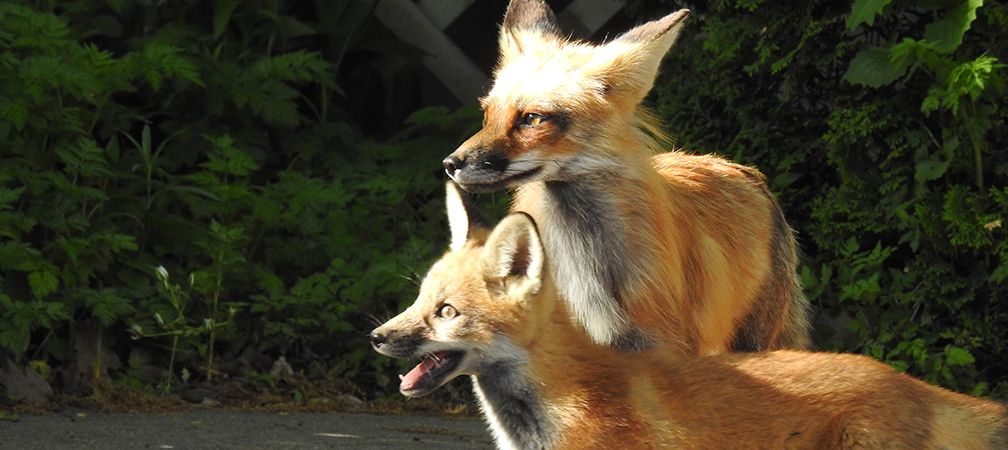
Red foxes, Mimico, mammals, canids, wildlife families
Red foxes, Mimico © Janice Guy

Start From Connection, Not Conflict

When talking about environmental issues, Becca Kram Dos Santos, Communications and Public Engagement Specialist at David Suzuki Foundation, recommends leading with what you share rather than what divides you.

“Instead of opening with the latest environmental headline or climate catastrophe, try to first connect with something you both care about like family, the cost of groceries and/or your favourite green space,” she says. This approach keeps the conservation grounded and human rather than abstract or argumentative.

Ontario Nature’s Communications Manager, Melina Damián, echoes this approach. “Focus on your shared values. Regardless of where people stand in the political spectrum, I bet everyone cares about community, family, safety and a better future,” she says. “When you have a conversation with someone with differing views, it could help to focus on what a shared future would look like – a world where everyone feels included and the wellbeing of people and nature go hand in hand.”

Connor Curtis, Director of Communications at Sierra Club Canada Foundation reinforces finding common ground. “Ask your family member what worries them most about climate change and then share what worries you – share emotions and listen to their concerns first so you know how they see things and so you establish that both of you do care on some level.”

Beaver family feeding on vegetation, three beavers in the wild, wetland builders, ecosystem enhancers, biodiversity
Beaver family feeding on vegetation © Janice Guy

Listen First, Lead with Empathy

“Simply listen,” Kram Dos Santos says. “When people feel heard, they’ll be more open to new information. From there, you can begin to gently connect the dots.”

Sien Van den broeke, Nature and Biodiversity Campaigner at Greenpeace Canada, echoes this sentiment. “Just understanding that people have different lived realities helps me meet them with empathy and care. Try to find out what their experience has been before asserting your own opinions,” she says. “Leaving space for everyone to share their thoughts, I find, helps a lot in learning where they come from and finding solutions together.”

Damián agrees that good conversations grow from focusing on shared values and deep, respectful listening. “Approach others from a place of empathy and curiosity. Or as one of my favourite authors, Edgar Villanueva from Decolonizing Wealth, would say: try to ‘listen in colour.” Damián explains that listening in colour is a superpower that can help bridge divisive views by encouraging good listening that includes being open, empathetic and holistic.

Red-breasted mergansers, female and ducklings, wildlife families, freshwater, biodiversity
Red-breasted mergansers © Peter Ferguson

Think Strategically and Make Room for Self-care

Curtis offers a practical point: you don’t have to debate everyone.

“Think strategically and talk to the right people,” they advise. “To do that you have to identify the people in the room who haven’t made their minds up yet or are truly persuadable and focus your energy and time on them.”

Rather than trying to persuade everyone at a gathering, Curtis suggests being strategic about where you invest your time and emotional effort. This is not about avoiding difficult conversations but about recognizing limits and choosing discussions where dialogue and understanding are more likely.

“My point being, don’t spend five hours talking with someone who either already agrees with you or will never agree with you. Spend one hour each talking to five different people who are on the fence or in the middle on an issue with the aim of bringing them closer to agreeing with environmental action.”

Common loon and juvenile loons, Algonquin Provincial Park, wetlands, biodiversity, Federation of Ontario Naturalists, wildlife families
Common loon and juvenile loons, Algonquin Provincial Park © Noah Cole

This approach isn’t just about being effective; it also helps keep conversations sustainable over time, so you don’t feel exhausted or discouraged by every disagreement.

It’s reminiscent of Crawley who stressed the importance of self-care during the Bill 5 Explained webinar. “When we are doing this work, whether you are First Nations, whether you are in an organization, or an individual community member, and you are trying to do whatever you can to stand up against these things… it’s really important for us to take care of ourselves in the process. So, we continue to fill up our cups, so we don’t burn out.”
  • ✇Ontario Nature Blog
  • Over 100 Species at Risk Lose Protection Under the Species Conservation Act Tony Morris
    Believe it or not, Ontario’s Endangered Species Act (ESA) was passed with all-party support back in 2007. Subsequently, of course, it was undermined through numerous exemptions and approvals for harmful activities, and now, through Bill 5, the Government of Ontario is tossing it aside completely. It is being replaced by the Species Conservation Act, 2025, (SCA) which is in no way its equal. With a view to eliminating barriers to development, it is claimed the new law will “help speed up project
     

Over 100 Species at Risk Lose Protection Under the Species Conservation Act

28 January 2026 at 16:57

Believe it or not, Ontario’s Endangered Species Act (ESA) was passed with all-party support back in 2007. Subsequently, of course, it was undermined through numerous exemptions and approvals for harmful activities, and now, through Bill 5, the Government of Ontario is tossing it aside completely. It is being replaced by the Species Conservation Act, 2025, (SCA) which is in no way its equal. With a view to eliminating barriers to development, it is claimed the new law will “help speed up project timelines and provide greater certainty for proponents.”

Devastating Changes

Under the SCA, no migratory birds, aquatic species or species of special concern will be provincially listed. The rationale for removing protections for migratory birds and aquatic species is that they already receive federal protection under the Species at Risk Act (SARA). In the case of special concern species, the provincial government is not listing them because they were not subject to “prohibitions under the ESA”. The provincial government is thus abandoning responsibility for 106 out of the 270 or so species currently deemed to be at risk in Ontario.

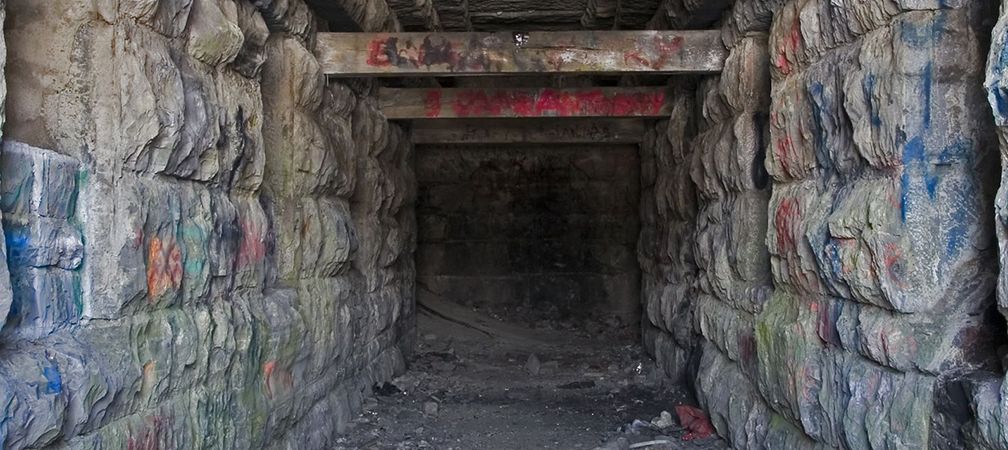
Former mine entrance
Former mine entrance © Brian Killmore CC BY 2.0

National Accord

In 1996, federal, provincial and territorial ministers responsible for wildlife committed to a national accord to protect species at risk by agreeing to “establish complementary legislation and programs that provide for effective protection of species at risk throughout Canada.” Canada and Ontario went a step further in 2011 by developing an Agreement on Species at Risk that commits to coordination and cooperation on preventing species from becoming at risk, as well as protecting and recovery identified species.

The Government of Ontario has abandoned these commitments. Species do not recognize arbitrary political boundaries, and cooperative federalism is absolutely necessary to conserve species at risk, especially amid a biodiversity crisis.

Prothonotary warbler, Endangered species, species at risk in Ontario, population declines, fewer of these birds, habitat loss, habitat degradation, negative human impacts, biodiversity loss, insectivore loss
Prothonotary warbler, Endangered species © Bill Majoros CC BY-SA 2.0

Limitations of SARA

The SARA is not equivalent to the ESA and to date, the federal government has been reluctant to exercise its power under the act on non-federal lands. The Government of Ontario has given no indication that the federal government was engaged on the draft SCA or agreed to step in and provide protections for the migratory birds and aquatic species that have lost provincial protections. On the contrary, Minister McCarthy along with the Alberta Environment Minister sent a letter to their federal counterpart in June, 2025 that requested the federal government amend SARA “to respect the constitutional jurisdiction of the provinces”, along with request to weaken other environmental regulations.

Further evidence that SARA is not fit to purpose to make up for the once gold standard provincial ESA, is that the backlog of species needing reassessment by Environment and Climate Change Canada will grow to 574 by the end of 2030. Additionally, as of 2022, the Auditor General of Canada found that 10% of federally listed species did not have recovery strategies or management plans in place as required by the act. Furthermore, of the 409 recovery strategies prepared by 2022, 20% did not identify the species’ critical habitat, which is necessary for protections under SARA.

New subdivisions and retail development displaces farmland, habitat and natural systems as well as degrading the environment with visual disturbance, noise, emissions and pollution nearby a watershed, Stayner, Ontario
New subdivision replaces previous farmland, Stayner © Noah Cole

Despite the Government of Ontario’s claims that the protections under the ESA for migratory birds and aquatic species were duplicative with federal protections, it is clear that SARA and the federal government are not equipped to provide equivalent protections.

Call to Action

Extinction threatens one million of approximately 8 million plants and animals worldwide. Responding effectively requires cooperation across all levels of government, as previously agreed to under the national accord and Canada-Ontario agreement.

Ontario’s weakening of protections for species at risk threatens our long-term well-being. Join us in urging the Government of Ontario to repeal Bill 5.

❌
Subscriptions