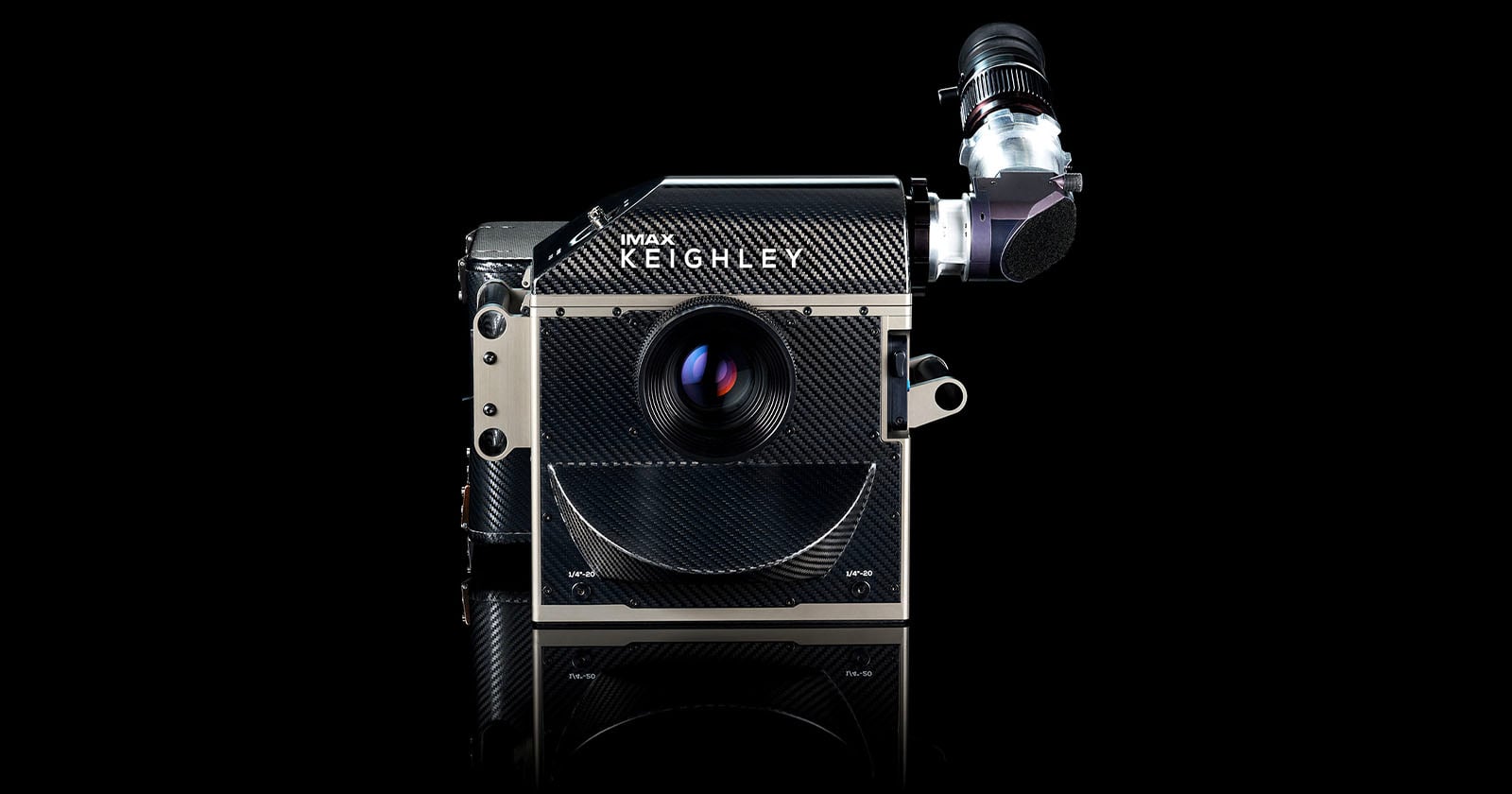
The camera used to shoot Christopher Nolan's upcoming epic The Odyssey -- the first movie ever to be shot entirely on IMAX cameras -- has gone on public display in Los Angeles.
[Read More]
The camera used to shoot Christopher Nolan's upcoming epic The Odyssey -- the first movie ever to be shot entirely on IMAX cameras -- has gone on public display in Los Angeles.
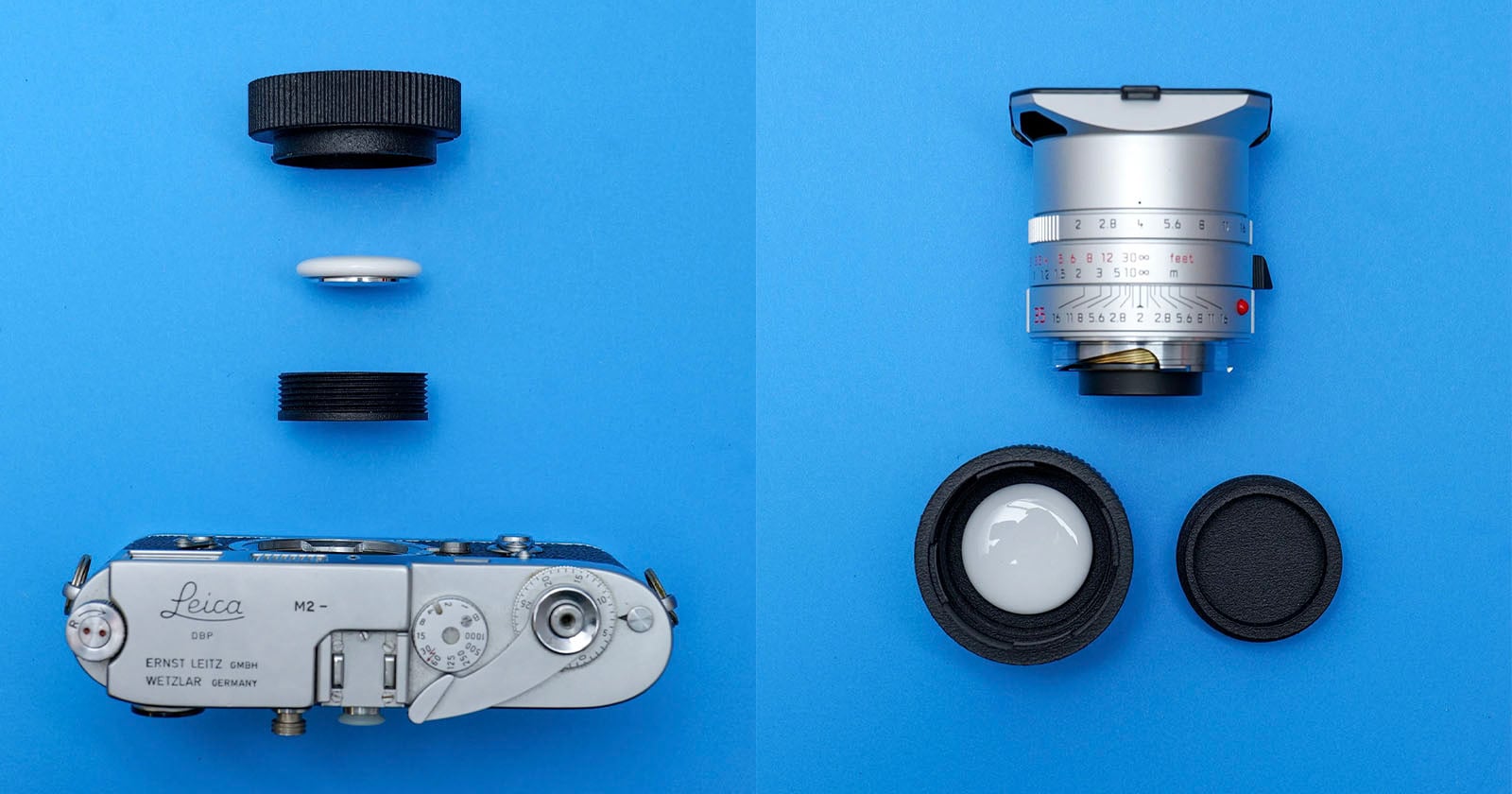
To paraphrase Jane Austen, it is a truth universally acknowledged that a photographer in possession of valuable equipment must be in want of protection against theft. It's just part of the reason why Apple’s AirTags have become so popular.
[Read More]
To paraphrase Jane Austen, it is a truth universally acknowledged that a photographer in possession of valuable equipment must be in want of protection against theft. It's just part of the reason why Apple’s AirTags have become so popular.
If you’ve tried to buy a Canon G7X or a Fujifilm X100V-series camera lately, you may already know that advanced compact cameras have made a real comeback. It’s not a full-on boom like the early 2000s, when every manufacturer cranked them out by the dozen, but there’s real demand for small cameras that produce high-quality images outside what a typical smartphone can pull off. Panasonic has introduced the new LUMIX L10 to court that growing audience, and the result is a very promising (if a littl
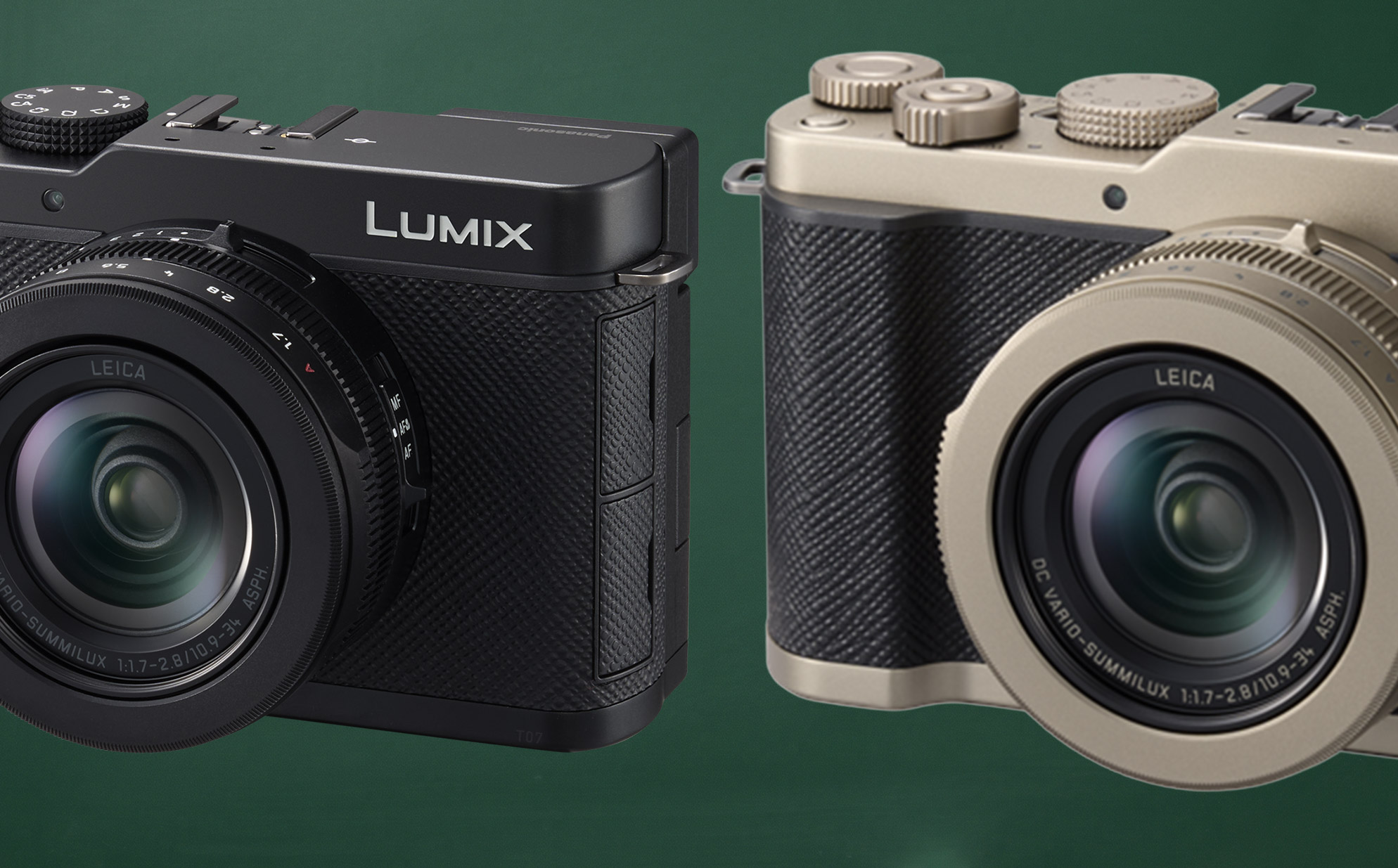
If you’ve tried to buy a Canon G7X or a Fujifilm X100V-series camera lately, you may already know that advanced compact cameras have made a real comeback. It’s not a full-on boom like the early 2000s, when every manufacturer cranked them out by the dozen, but there’s real demand for small cameras that produce high-quality images outside what a typical smartphone can pull off. Panasonic has introduced the new LUMIX L10 to court that growing audience, and the result is a very promising (if a little familiar) looking camera designed to handle just about every typical photography scenario.
The L10 ships in June for $1,499 in black or silver, with a limited $1,599 Titanium Gold special edition for LUMIX’s 25th anniversary. At its core is a Leica DC Vario-Summilux 24-75mm F1.7-2.8 zoom mounted to a 20.4-megapixel Four Thirds sensor, a pairing anyone who shot with the popular LX100 II compact will recognize on sight. The body lands between Fujifilm’s APS-C X100VI and Canon’s 1-inch G7X Mark III on both sensor size and price, slotting into territory Panasonic hasn’t covered since the LX100 II went off the menu.
The Leica zoom and Four Thirds sensor
An F1.7 maximum aperture at the wide end and F2.8 at the long end is unusual for a compact zoom at this price tier, and most compact zooms taper to a slower aperture as they extend. This one holds wide across the 24-75mm range. The same lens formula appeared on the LX100 II and powers Leica’s current D-Lux 8, though neither pairs it with a 779-point Phase Hybrid AF system. The manual aperture ring on the precision-machined metal barrel lets you change apertures without diving into a menu, and AF macro from 3 cm at the wide end opens up close-up work.
The 4/3-type BSI CMOS sensor sits in a useful spot in the size hierarchy. It’s almost twice the area of the 1-inch chip in the Canon G7X line and noticeably smaller than the APS-C sensor in the Fujifilm X100VI. The 20.4-megapixel effective resolution comes from a 26.5-megapixel total count, because the L10 uses a multi-aspect sensor design that maintains a consistent angle of view across 4:3, 3:2, and 16:9. Switching aspect ratios doesn’t recompose your shot, which is a quietly useful feature for anyone working between print and social. Dynamic Range Boost adds shadow detail in still images, though Panasonic hasn’t specified the stop count.
Fast AF, 30 fps burst
Phase Hybrid AF spreads 779 focus points across the frame, with AI-based subject recognition that covers eyes, faces, bodies, animals, vehicles, and what Panasonic calls Urban Sports. That last category is the catch-all for skateboarding, BMX, parkour, and the kind of action you’ll find in Mountain Dew commercials. Burst tops out at 30 fps with the electronic shutter and 11 fps with the mechanical, fast enough to catch peak action without abandoning a tactile shutter feel. POWER O.I.S. handles stabilization, though Panasonic hasn’t quoted a CIPA-rated stop count yet.
Composition runs through a 2.36-million-dot OLED viewfinder and a 1.84-million-dot free-angle monitor that flips out for waist-level or vertical shooting. Both displays support a vertical UI, a nod to anyone shooting primarily for phone-format video and social.
Color science from camera to phone
REAL TIME LUT (look up table) is Panasonic’s in-camera color system, and the L10 makes it easier to use than past models did. A dedicated LUT button on the body gives one-press access, and up to two LUTs can be layered for more complex grades. Two new film-inspired Photo Styles ship as defaults: L.Classic for soft, muted tones, and L.ClassicGold for warmer amber highlights with a nostalgic contrast curve. It’s similar to Fujifilm’s film “recipes” which apply specific looks to images as you shoot.
Magic LUT in the LUMIX Lab app uses AI color analysis to generate a custom LUT from a reference photo. Find an image whose color treatment you like, the app builds a profile, and you can load it back into the camera as a REAL TIME LUT. RAW editing, MP4 (Lite) clips for social sharing, and high-speed wired transfer all live in the same app. The Lab workflow pushes a step that traditionally lived in Lightroom or DaVinci onto the phone where most readers actually edit now.
Pricing across three colorways
Black and silver L10s ship in June for $1,499, both wearing a saffiano leather-textured finish over a magnesium alloy front case. At 508g with battery, card, and hot shoe cover, the body sits between a small mirrorless rig and a true pocket camera in carry weight. Panasonic is pricing the L10 about $100 below Leica’s D-Lux 8, which uses the same Leica zoom formula in a different chassis.
The Titanium Gold special edition arrives at $1,599 in limited quantities, primarily through the Panasonic Store. The kit adds a special edition lens hood, a leather strap, a threaded shutter button, and a gold-themed menu system that carries the finish from the body into the UI. The rear branding sits in a position visible only to whoever is holding the camera. The $100 premium covers the accessories and cosmetic upgrades.
The standard black L10 carries the saffiano leather-textured finish in a flat, professional matte. It ships with the standard kit and is the configuration most likely to show up on retailer shelves at launch. The Lab app, REAL TIME LUT, dedicated LUT button, and Leica DC Vario-Summilux zoom are all standard. We’re working to get one in for a full review.
The silver L10 is mechanically identical to the black model at $1,499 and leans into the LX100 II nostalgia for buyers who remember the original. It’s the same color treatment Panasonic favored across the LX100 series, and the rangefinder-adjacent look Leica has long favored for its M-line cameras. The silver model ships in June alongside the black.
Panasonic LUMIX L10 Titanium Gold Special Edition $1,599
The 25th anniversary Titanium Gold edition runs $1,599 and includes a special edition lens hood, a leather strap, a threaded shutter button, and a gold-themed menu system that carries the finish from the body into the interface. The rear branding is positioned to be visible only to the person holding the camera. Limited quantities ship through the Panasonic Store in June.
It’s one thing to marvel at the inner workings of a transistor radio or a timepiece, but for artist Manabu Kosaka, that curiosity reaches a whole new level. Using nothing but paper, the artist makes scale replicas of cameras, watches, gaming consoles, shoes, food, and more with a preternatural attention to detail. Not only does a 35mm film camera include a strap and a back hatch that opens, the lever used to advance the film and other gears are also built into the top, some of which are even
It’s one thing to marvel at the inner workings of a transistor radio or a timepiece, but for artist Manabu Kosaka, that curiosity reaches a whole new level. Using nothing but paper, the artist makes scale replicas of cameras, watches, gaming consoles, shoes, food, and more with a preternatural attention to detail. Not only does a 35mm film camera include a strap and a back hatch that opens, the lever used to advance the film and other gears are also built into the top, some of which are even moveable.
Around ten years ago, Kosaka faced uncertainty about the direction of his work. “During that time, I spoke with a friend who works in art direction, and they suggested that I try creating with simpler materials in a more minimal way,” he tells Colossal. “That advice stayed with me, and gradually I began focusing on paper as my primary material, eventually deciding to work exclusively with it.”
35mm camera
Through a meticulous process of cutting, folding, and scoring, Kosaka creates incredibly realistic depictions of everyday objects, often with a retro twist. He carefully studies the mechanics of the real objects, disassembling them in order to replicate individual components inside. He is currently working on a model of a Playstation 2 console, which was originally released in 2000.
“What I love most about paper is its incredible flexibility,” Kosaka says. “It responds to my ideas almost completely—beyond what I expect, even. It allows me to express what I want in a very direct way, while also feeling that it can become almost anything.”
35mm cameraLarge-format cameraLarge-format camera in progressGame consoleGame console in progressGame console in progressBCL RadioWristwatchAlternate view of wristwatchDetail of wristwatchBig MacBig Mac
Quellin Images posted a photo:
Kodak Tri-X 400 with the Mamiya C220 and I think this would be the 80mm lens here (must get sorted with my note taking). Film developed in 510 Pyro.
The Belfast Photo Festival is still over a week from starting in Belfast, Northern Ireland, but it has already instigated serious outrage among photographers. The Belfast Photo Festival will include a major interactive public exhibition that invites visitors to pick up a hammer and destroy "obsolete" cameras, and not everyone is on board.
[Read More]
The Belfast Photo Festival is still over a week from starting in Belfast, Northern Ireland, but it has already instigated serious outrage among photographers. The Belfast Photo Festival will include a major interactive public exhibition that invites visitors to pick up a hammer and destroy "obsolete" cameras, and not everyone is on board.
KUALA LUMPUR, June 6 — As of today, over 4,000 litterbugs have been caught so far, said Housing and Local Government (KPKT) minister Nga Kor Ming. Nga said that the Kuala Lumpur City Hall (DBKL) now has 4,000 free social workers to help clean up the streets of KL. This comes following major updates to the anti littering laws, where the government has introduced heavy fines of up to RM2,000 and mandatory community service orders (up to 12 hours) for minor offences
KUALA LUMPUR, June 6 — As of today, over 4,000 litterbugs have been caught so far, said Housing and Local Government (KPKT) minister Nga Kor Ming.
Nga said that the Kuala Lumpur City Hall (DBKL) now has 4,000 free social workers to help clean up the streets of KL.
This comes following major updates to the anti littering laws, where the government has introduced heavy fines of up to RM2,000 and mandatory community service orders (up to 12 hours) for minor offences like tossing cigarette butts, plastic bottles, or spitting in public.
“We now have 4,000 free social workers who will help us and DBKL sweep the streets for free.
“And they also have to pay us a RM2,000 fine at the same time,” Nga said.
Aside from working together with DBKL to stamp out litterbugs while also making the City Centre cleaner, Nga also pointed out that KL will be safer now, especially with the rollout of thousands of facial recognition and high definition closed circuit television (CCTV) cameras around the city.
“KL is going to have not 1,000 but 10,000 facial recognition and high definition CCTV. It will be just like in Shanghai and Beijing.
“There will no longer be any cases of snatching or stealing because the CCTV installed by DBKL can recognise your face and the Royal Malaysia Police will be waiting for you,” he said.
Previously in May, Minister in the Prime Minister’s Department (Federal Territories) Hannah Yeoh and Kuala Lumpur Mayor Datuk Seri Fadlun Mak Ujud revealed the installation of 10,000 AI powered CCTV. These units are outfitted with high resolution sensors and facial recognition technology, allowing for real time coordination.

 Login
Login