Normal view

  • ✇Popular Science
  • Animals have personalities. Here’s what shapes them. Jennifer Byrne
    We tend to think of wild animals as being spared from the messy business of personality: the family dramas, the psychological wounds, the baffling quirks that keep resurfacing like whack-a-moles. Turns out, nobody gets out of that. Animals have personalities, too, and many of the same complex forces that shape our personalities shape theirs. “They’re not spared,” says Dr. Alison M. Bell, a behavioral ecologist at the University of Illinois Urbana, tells Popular Science. “Life is hard for t
     

Animals have personalities. Here’s what shapes them.

7 June 2026 at 11:53

We tend to think of wild animals as being spared from the messy business of personality: the family dramas, the psychological wounds, the baffling quirks that keep resurfacing like whack-a-moles.

Turns out, nobody gets out of that. Animals have personalities, too, and many of the same complex forces that shape our personalities shape theirs.

“They’re not spared,” says Dr. Alison M. Bell, a behavioral ecologist at the University of Illinois Urbana, tells Popular Science. “Life is hard for them, too.”

But life is also “rich,” says Bell, full of ups and downs, wounds and triumphs, just like human lives.

It’s one of those truths that is both surprising and incredibly obvious, especially for those of us with pets. And yet the study of animals’ personalities has faced resistance—in part because accepting it means accepting that animals are far more like us than some are willing to admit.

Personality and social psychologist Dr. Sam Gosling noticed a telling pattern among his colleagues in animal research: On coffee breaks, they’d talk freely and enthusiastically about the personalities of the animals they studied, even their pets at home. Then the break would end.

“They’d finish their tea breaks, put on their scientist white coats, and stop any kind of talk about that,” he says. 

But reluctance to engage with the topic scientifically doesn’t mean the evidence isn’t there. Decades of research across species has made one thing abundantly clear: Animals do have personalities. Here’s what the science has to say about what makes your pet special, whether they’re super smart, a risk taker, or a homebody.

1. Animals are shaped by their early environment

For animals, as for humans, the earliest experiences often form the deepest scars or the greatest strengths. 

Animals are influenced by “the early life environment,” Bell says. “They’re influenced by their early interactions with parents and siblings.”

This principle is perhaps most evident in our pets. Bell cites an example familiar to many of us: the traumatized shelter dog with a troubled past.

“Pets who are coming from an animal shelter, or have maybe experienced abuse, they don’t forget that,” says Bell. “That leaves a lasting effect.” 

Yet many of us don’t extend this understanding to, say, childhood trauma in a squirrel. But according to Bell, the same concepts apply to any animal, wild or domestic. A squirrel neglected by its mother carries that experience forward, just as we do. 

“This principle definitely applies to other organisms,” says Bell. 

2. Genetics are important, but not the main factor 

As with humans, genetics are also an influential force in animal personality. Perhaps you might expect animals to be more genetically hardwired than us, driven by pure instinct and with few individual variations. But according to Bell, genetics accounts for only about 35 percent of animal personality—the same as in humans. 

Teasing apart personality traits that come from genetics versus the environment is easier in animals than in humans, according to Gosling. For example, researchers can swap bird eggs between nests to determine whether chicks end up more like their genetic parents or the birds that raised them.

“Because of the experimental control that animal studies afford, our estimates of these effects can be much more precise than they can [be] in humans,” Gosling says. “In humans, we have to deal with them in the messy world.”

Related 'Ask Us Anything' Stories

As for which matters more, genetics or environment, the answer is complicated. 

“These studies have shown that there are genetic factors, environmental factors, biological non-genetic factors, and all kinds of other things that influence animal personality,” he says.

3. Personality varies by species

Beyond factors like genetics and environment, animal personality is also shaped by something more fundamental: the species itself. 

As an evolutionary biologist, Bell says she is particularly interested in biological diversity and its role in shaping personality across species.

“What interests me is what are the behaviors animals do that are really, really important for that particular critter, that species?” she says. “If I’m studying a parrot, what’s going to be important is the food they’re eating, the predators they might encounter, their threats, their opportunities, and their habitats. What are the behaviors that matter to that animal?”

The answer, she notes, varies widely depending on the evolutionary needs and challenges of an individual species. Those factors “will be different for a parrot compared to a fish, compared to a whale, compared to a termite,” she says. 

4. Personality is stable, but changeable

Another notable aspect of personality is continuity—the extent to which an individual’s personality remains consistent or changes over time. Bell says animal personality tends to be pretty stable over a lifetime. 

Bell describes a “signature” that persists from the juvenile to the adult stage, even as behavior naturally changes across life stages. In her research on stickleback fish, Bell and her colleagues have observed consistent personality traits in individual fish.

“We can measure them repeatedly,” she said, “and find that the individuals that were risk-takers yesterday are also the risk-takers tomorrow, and next month.”

Cat on robotic vacuum cleaner in house
Some cats hide from robot vacuum. Others stand on top of them. Their risk taking or nervous approach might all come down to personality. Image: Getty Images / witthaya_prasongsin

But that signature is not immutable, says Bell. Experience can alter it. “New environments, social interactions, even changes in health might influence behavior,” Bell says.

Whether animals can change their personalities more or less than humans over a lifetime remains an open question. 

“I don’t see any theoretical reason why we should expect more or less change in humans than in other animals,” says Gosling, though Bell notes that the answer likely varies widely across species. 

5. Human nature may be holding us back

Another factor shaping our understanding of animal personality is surprisingly close to home: human resistance to accepting it.

Part of the problem, according to Bell, is that accepting the concept of animal personality requires a sort of double reckoning: We have to be willing to see ourselves as less exceptional than we thought, while simultaneously being willing to see animals as more complex than we previously believed.

“Both of those things have to happen, and I think that’s challenging to conventional thinking,” she says. 

Why that resistance persists, even in the face of mounting evidence for animal personality, may say more about human psychology than animal behavior. 

“The most surprising thing to me is how surprising it [the fact that animals have unique personalities] is to people,” says Bell. 

In Ask Us Anything, Popular Science answers your most outlandish, mind-burning questions, from the everyday things you’ve always wondered to the bizarre things you never thought to ask. Have something you’ve always wanted to know? Ask us.

The post Animals have personalities. Here’s what shapes them. appeared first on Popular Science.

  • ✇Popular Science
  • Test your dog or cat’s IQ using these simple tricks Clarissa Brincat
    If you’ve spent any time on TikTok lately, you’ve probably seen the smart dog wall test. Someone scoops up their dog (or cat!), carries them face-first toward a wall, and the internet decides whether the pet is smart or not based on whether it sticks its paw out.  A five-second intelligence test you can do in your living room sounds cool. The problem, according to the researchers who actually study animal cognition, is that it doesn’t measure intelligence at all. It’s a reflex, not a sign
     

Test your dog or cat’s IQ using these simple tricks

10 May 2026 at 12:01

If you’ve spent any time on TikTok lately, you’ve probably seen the smart dog wall test. Someone scoops up their dog (or cat!), carries them face-first toward a wall, and the internet decides whether the pet is smart or not based on whether it sticks its paw out. 

A five-second intelligence test you can do in your living room sounds cool. The problem, according to the researchers who actually study animal cognition, is that it doesn’t measure intelligence at all.

It’s a reflex, not a sign of intelligence

Dr. Murat Sırrı Akosman, a veterinary medicine professor at Afyon Kocatepe University in Turkey, recently published a letter in The Journal of Small Animal Practice calling out the TikTok trend for creating confusion. 

Experts agree: Don’t do this viral TikTok trend. Video: Will your dog pass the wall test? See how other pups fared. @USAToday

“As veterinary professionals, it is our duty to clarify that this maneuver is not a measure of canine cognition but is, in fact, a fundamental neurological assessment known as the visual and tactile placing test,” Akosman writes.

When your dog reaches out toward the wall, that’s an automatic reflex—like when a doctor taps your knee and your leg jerks forward. Vets use it to check if a dog’s nervous system is working properly, he explains. 

If your dog “fails” the test, it may be an early warning sign of serious nervous system issues, says Akosman, and you would do well to book a vet visit. (But don’t panic: If they react on the second or third try, it’s likely that they were distracted to begin with, or you moved too fast and it messed with their sense of balance.)

“The wall test is not a valid measure of a cat or dog’s intelligence,” agrees Dr. Gitanjali (Gita) Gnanadesikan, a postdoctoral fellow at the Social Cognition and Primate Behavior Lab at Emory University.

And while some pet owners see the wall test as a fun trend, pets might not feel the same way. “It’s worth noting that most cats and dogs don’t like being held like this!” Gnanadesikan notes.

“I think the wall test is a very ill-advised and potentially harmful way of treating an animal,” says Dr. Juliane Kaminski, director of the Dog Cognition Centre at the University of Portsmouth. “I would never encourage dog owners (or any pet owner) to do that to their pet.”

Don’t do the wall test on your cats either. Video: Tuxedo Cat Fails Intelligence Test, @ViralHog

“It’s not possible to put a single number on intelligence”

The idea that you could rate a pet’s intelligence through a single test is flawed, experts say.

“The term intelligence is very broad,” says Dr. Shany Dror, a postdoctoral researcher at the Clever Dog Lab at the University of Veterinary Medicine, Vienna. What scientists find more valuable is examining specific cognitive (i.e. thinking) abilities—such as physical problem-solving, spatial navigation, and social awareness—using different tests.

Pets who excel at solving physical problems, like figuring out how to open a door, have very good physical cognition, explains Dror. 

Others have very good spatial cognition, which means that they are very good at orienting themselves in space and may, for example, always know how to come back home. 

And “some animals have exceptionally good social cognition and can easily interpret social interactions and react accordingly,” Dror says. 

Gnanadesikan’s own research shows how pet intelligence is really nuanced. “The dogs who have good memories are not necessarily the dogs who have good problem-solving abilities,” she says. 

“Instead of having genius dogs that perform well on everything, we find that some dogs do better at some things and others at others. Which also means that it’s not possible to put a single number on intelligence.”

What to try instead

If you actually want to learn something about how your dog thinks, there are far better options than the wall test.

Kaminski suggests a simple cup game “that is actually fun for dogs and can at the same time potentially tell you something about your dog’s thought process” works. 

Try this simple cup game: Place two identical, non-transparent cups in front of your dog, then hide a treat under one of them while your dog isn’t looking. Once the cups are set, use a pointed finger or a deliberate gaze to signal which cup conceals the food—then let your dog choose. Getting it right depends entirely on them reading you, which is what makes it such a revealing test of social cognition. It also builds impulse control, since they have to hold back and wait for your cue before making a move.

Another test you can try at home involves placing unequal numbers of treats on two identical plates and seeing how close the quantities need to get before your dog stops reliably picking the larger pile. “Usually dogs are quite good as long as the maximum number of pieces on one tray does not go beyond 15—from then on, it becomes hard,” Kaminski notes.

If your dog seems disengaged, resist the urge to draw conclusions—they might simply lack motivation. “Just like us, they have to be motivated to learn something,” Dror cautions. “If you’re trying to teach your dog something new and they’re not interested in what you have to offer, it’s not them that’s failing the test, it’s you.”

What about cats?

Compared to dogs, researchers know far less about the thinking abilities of cats, “because cats are a lot harder to study, which I’m sure surprises absolutely no one,” Gnanadesikan jokes. 

But the same principle applies: Cat intelligence is far more nuanced than a number on a scale, she says. 

I can personally attest to this. One of my cats doesn’t pick up social cues very well, but he’s an expert at opening doors, including kitchen cupboards—low social cognition, high physical cognition.

In Ask Us Anything, Popular Science answers your most outlandish, mind-burning questions, from the everyday things you’ve always wondered to the bizarre things you never thought to ask. Have something you’ve always wanted to know? Ask us.

Related 'Ask Us Anything' Stories

The post Test your dog or cat’s IQ using these simple tricks appeared first on Popular Science.

  • ✇SoraNews24 Japan
  • Japan has a new cute and clever sunblock for cat lovers Casey Baseel
    The adorable bottle is only part of what makes this a fun and convenient way to protect yourself from UV rays. The calendar says we’re still in spring, but the thermometer shows that summer is almost here. With temperatures in Tokyo hitting 30 degrees Celsius (86 degrees Fahrenheit) last weekend, we’re closing in on the time of year when some form of sun protection is a must for many when going outside, which in turn means the time of year when many find themselves thinking “I really should pu
     

Japan has a new cute and clever sunblock for cat lovers

20 May 2026 at 01:00

The adorable bottle is only part of what makes this a fun and convenient way to protect yourself from UV rays.

The calendar says we’re still in spring, but the thermometer shows that summer is almost here. With temperatures in Tokyo hitting 30 degrees Celsius (86 degrees Fahrenheit) last weekend, we’re closing in on the time of year when some form of sun protection is a must for many when going outside, which in turn means the time of year when many find themselves thinking “I really should put on some sunblock…but it’s a hassle, so maybe I’ll just skip it…”

Thankfully, Japan’s Biore brand of sunblock is here to give us a little extra nudge towards taking the time to apply protection with its Kids Stamp UV.

Yes, the name does reveal that this was created first and foremost with kids in mind, but the appeal of cats knows no age limits, and unlike, say, children’s medicine, Kids Stamp UV is just as effective for adults as it is for children, with an SPF50 PA+++ rating.

Right away, the cute feline-eared design for the bottle catches the cat-loving eye, and things get even better when you flip open the cap.

Instead of a single opening, Kids Stamp UV has five, arranged in the pattern of a cat’s paw pads. The bottle is also designed so that instead of squeezing out a stream of liquid, you use it like a stamp, tapping it against your skin to apply the sunblock directly…

…and when you do, you get a series of paw prints, like a little kitty has been walking across your arm, leg, or cheek.

You do still need to rub the lotion in, but while there’s some initial stickiness, it quickly fades away and the Kids Stamp UV sunblock dries nicely, leaving no significant greasiness behind.

If you have kids, a big advantage of Kids Stamp UV is how it makes the process of applying sunblock fun. Our Japanese-language reporter Ninoude Punico tried it out with her 6-year-old, and it immediately turned the regular session of “Sit still! You need this!” into a much more relaxed and happy “OK, let’s get our cat prints on before we go out.”

As a matter of fact, with how easy the sunblock is to apply because of the stamp-style top, Punico’s kid has even started using it without Mom’s help.

▼ The instructions, complete with adorable illustrations, say to apply one “stamp” every 10 centimeters (3.9 inches) or so.

Of course, Biore’s cute and clever design is just as fun and convenient for adult cat fans as it is for kids, and with Japan being the land of kawaii culture, you’re not going to get side-eyed by other adults for using it yourself either.

Being jointly developed by Biore parent company Kao and Aeon Retail, Kids Stamp UV is available at Aeon, Welcia, and Tsuruha supermarkets/drugstores, and we’ll be keeping some handy for mountain- hiking, Gundam-viewing, and other outdoor summer excursions.

Photos ©SoraNews24
● Want to hear about SoraNews24’s latest articles as soon as they’re published? Follow us on Facebook and Twitter!

  • ✇Popular Science
  • Why your dog eats grass Niranjana Rajalakshmi
    If your dog stops mid-walk to chew on a patch of lawn, you’ve probably wondered whether something is wrong. Of the delicious food options available to them, why would they choose leafy, bitter grass? Many owners assume the worst: that the dog has an upset stomach and is eating grass to make itself throw up. Dr. Melissa Bain doesn’t see it that way. “My dog enjoys it every day,” says Bain, a professor of clinical animal behavior at the University of California, Davis. “If we ever mow the grass
     

Why your dog eats grass

4 June 2026 at 13:01

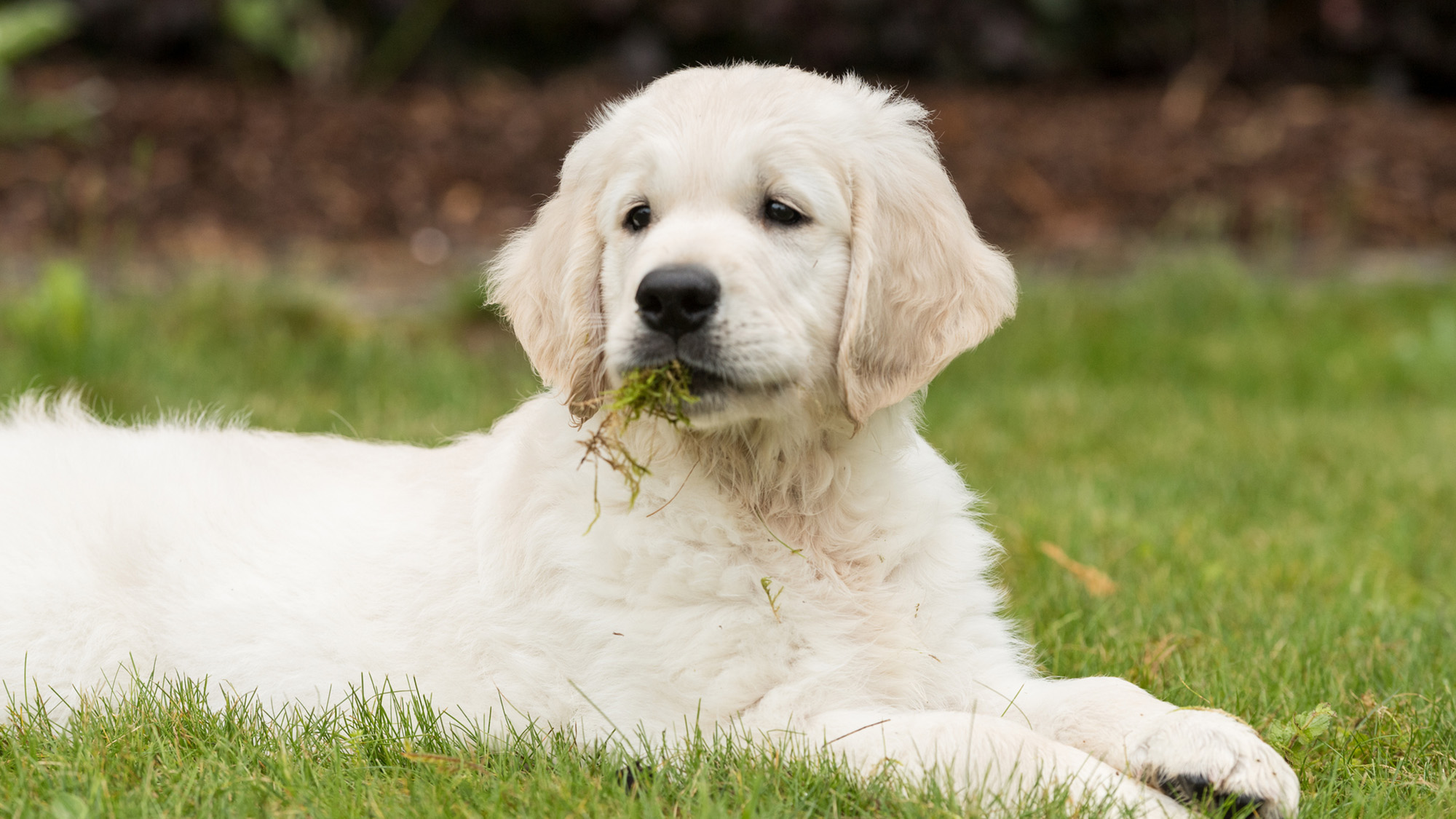
If your dog stops mid-walk to chew on a patch of lawn, you’ve probably wondered whether something is wrong. Of the delicious food options available to them, why would they choose leafy, bitter grass? Many owners assume the worst: that the dog has an upset stomach and is eating grass to make itself throw up.

Dr. Melissa Bain doesn’t see it that way. “My dog enjoys it every day,” says Bain, a professor of clinical animal behavior at the University of California, Davis. “If we ever mow the grass, [he’ll] go out there and just start chomping on it.” To her, it reads as a snack, not a symptom.

The idea that dogs graze to purge a sick stomach is one of the explanations owners reach for most. But it’s not what the research shows.

Eating grass is normal dog behavior

Grass eating is extremely common. In a 2008 UC Davis study, 79 percent of owners whose dogs had daily access to plants said their dog ate them. A follow-up internet survey of more than 1,500 owners found that 68 percent of dogs grazed daily or weekly, and grass was by far the plant they ate most.

If a behavior turns up in roughly three out of four dogs, it’s hard to call it a sign of illness.

Most dogs don’t get sick from grass

If dogs really ate grass to purge, you’d expect them to look ill first and vomit afterward. Most don’t. 

The same 2008 study found that only about 9 percent of dogs seemed sick before grazing, and only around 22 percent regularly vomited after. 

Diet made no difference either. Whether dogs were fed raw food, kibble, or a vegetarian diet had no bearing on whether they ate grass. 

There’s nothing like fresh grass. Video: Dogs eating grass, JR videos

“There is no nutritional basis for that that we know of,” Bain says of the theory that grazing makes up for something missing in a dog’s food. It’s a normal behavior, she adds, and one she sees mostly in healthy animals.

Her interviews with owners point in the same direction. When Bain asked what a dog was doing right before it ate grass, the dogs that already seemed unwell were the ones more likely to throw up afterward. The dogs that seemed fine usually didn’t. So, when sickness does show up, it tends to come before the grass, not because of it. The vomiting looks like a side effect, not the goal.

A popular version of that idea is that dogs graze to flush intestinal worms out of their gut. But many of the dogs in the survey were on monthly heartworm medication, which also clears intestinal worms—so those dogs had nothing to flush out. They grazed anyway.

They probably just like it

Once you set illness and diet aside, the explanation that’s left is appetite. “Most dogs eat grass because it is a food they enjoy,” says Carlo Siracusa, professor of clinical small animal behavior and welfare at the University of Pennsylvania.

Bain has noticed the same thing. Dogs tend to go for moist, long-stemmed grass, the tender kind that comes up early in the morning. They’re choosing what tastes good to them.

The behavior may be inherited from wild ancestors

Why dogs like grass in the first place is harder to answer. The 2008 study proposed that grazing is a normal behavior, possibly an instinct carried over from wild canid ancestors. 

Bain finds that idea convincing. One ecological version of that idea holds that grass once helped wild canids clear intestinal worms—the fibrous strands wrap around the worms and carry them out in the droppings. Bain points to wild-canid droppings to support this idea: They often hold long strands of plant material, sometimes with parasites tangled in it. But it isn’t proof, she says.

Related 'Ask Us Anything' Stories

A 2021 study of domestic cats had similar results: Very few cats looked ill before eating plants, and the behavior appeared normal and likely innate rather than a reaction to feeling sick. (Cats did vomit more often than dogs—up to a third of the time—which the authors say may reflect some gastric upset.) Why the instinct exists at all is still an open question.

When it’s worth a second look

Only rarely does grass-eating become a problem, Bain says—when it becomes compulsive. Siracusa says it can turn excessive enough to cause an intestinal obstruction. 

“I have seen this in anxious dogs, but it does not represent the norm,” he says. In nearly three decades of practice, Bain can remember only one dog whose grazing was truly compulsive, and that dog obsessively ate everything, not just plants.

What matters is the pattern. A dog that grazes constantly, looks sick before eating, or vomits regularly afterward is worth a trip to the veterinarian, since the underlying cause may be nausea or another gut problem. It’s also a good idea to keep grass-eating dogs off chemically treated lawns and away from plants that are toxic to dogs.

For most dogs, though, none of that applies. “Most owners should not be concerned if their dog eats grass,” Siracusa says. For a lot of dogs, grass is just the first snack of the day.

In Ask Us Anything, Popular Science answers your most outlandish, mind-burning questions, from the everyday things you’ve always wondered to the bizarre things you never thought to ask. Have something you’ve always wanted to know? Ask us.

The post Why your dog eats grass appeared first on Popular Science.

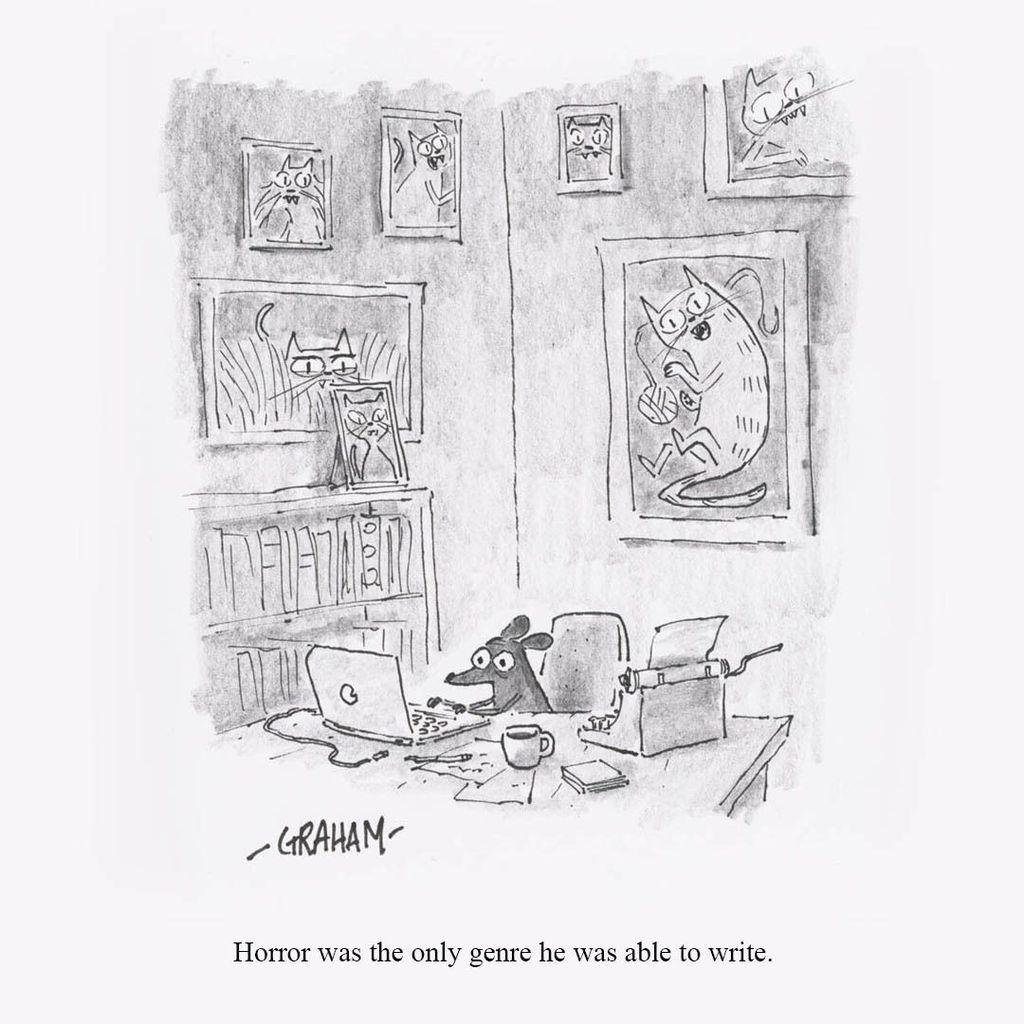
It's a living. #grickledoodle #horror #mouse #cats #writing #cartoon #art #…

1 June 2026 at 16:02

It's a living. #grickledoodle #horror #mouse #cats #writing #cartoon #art #drawing #funny #humor

A cartoon illustration of a worried looking mouse working on his laptop in a room surrounded by images of cats. Caption reads "Horror was the only genre he was able to write."

Same name tops lists of most popular dog and cat names in Japan, and there’s probably a reason why

27 May 2026 at 04:00

Cultural quirks have a hand in making the same name the favorite for dogs and cats in annual study.

Japan’s most famous fictional cat might be the one named Kitty, but when it comes to actual pets, owners tend to get a little more creative with their choices. To investigate what Japan’s most popular pet names are, Daiichi ipet, the pet insurance division of Daiichi Life Group, recently conducted a study of the animal companions it covers, and there’s a common theme among many of the top entries on its list of dog and cat names.

The rankings were compiled by examining the names of dogs and cats who were less than one year old when new insurance policies were taken out for them during the last fiscal year (April 2025-March 2026), and for the sixth year in a row, the most popular name for dogs is Mugi. Mugi is also the number-one name for cats, jumping up to take the top spot from last year’s most popular feline moniker, Latte.

● Top names for dogs
1. Mugi
2. Latte
3. Mocha
4. Cocoa
5. Komugi
● Top names for cats
1. Mugi
2 (tie). Latte/Luna
4. Kinako
5. Leo
6. Mocha

▼ There’s a pretty good chance that at least one of the cats in this photo is named Mugi.

Many pet owners choosing “Luna” are no doubt thinking of Sailor Moon’s cat mentor of the same name, and “Leo” which was the top pick for male cats, is clearly meant to invoke images of lions. Take those two out of the above-listed names, though, and every remaining name has something in common: they’re all food/drink related.

Mugi is the Japanese word for either barley or wheat, and komugi is wheat specifically. There are even more food/drink names if you look farther down the list, with Kinako (roasted soybean powder) and Marron (the French word for “chestnut,” but commonly used in Japanese by sweets fans) at numbers 6 and 8 for dogs, and Omochi (rice cake) and Cocoa at numbers 7 and 8 for dogs.

This isn’t a brand-new trend, either. All of the above-mentioned names were also in Daiichi ipet’s lists of the top 10 dog and cat names in 2024, and giving pets food/drink-related names has been a thing in Japan for much longer than that, and a lot of their enduring popularity probably comes from two reasons.

Let’s start with the obvious one, which ties in to another common thread between many of the most popular names, which is that almost all of them are some shade of brown in color. The exception is Omochi, which is usually white, but even rice cakes take on a golden-brown color if you roast them, as is often done in Japan. A lot of dogs and cats have coats of fur somewhere on the spectrum between brown and gold, so giving them a food/drink name is a way to reference that physical trait.

Another factor that’s likely that in play here, though, is that in Japan it’s not very common to give pets the same names that people have. While there are also-for-people names in English that might have someone thinking of a dog first (like Rex or Rusty), you’ll also often encounter pets in the U.S. with names like Max, Daisy, Penny, or Charlie (all of which are on the American Kennel Club’s list of the most popular dog names in the U.S. for 2025). By comparison, though, it’s rare for Japanese pet owners to give their animals a modern for-people Japanese name like Haruto or Himari, as it would come off feeling overly dry and self-serious. The common logic in Japan is that pets should have names that are playful and fun. A food/drink-based name checks off those boxes, and if it matches the color of the pet’s coat, then there’s no need to explain the name to other people either.

When picking names for pets in Japan, foreign for-people names have a bit more pizzazz (in addition to being the number 4 name for cats in Daiichi ipet’s study, Leo was also the number 8 name for dogs), but then so do foreign food/drink names like Latte, Mocha, and Cocoa. There’s an interesting wrinkle to this, though, that shows up when Daiichi ipet’s study breaks down the most popular names for dogs by breed. Mocha, Cocoa, and Latte were all somewhere within the top three names for toy poodles, Chihuahuas, Pomeranians, and miniature Dachshunds. However, for the Shiba Inu, all three of the breed’s most popular names were Japanese words for foods: Komugi, Azuki (sweet red beans), and Mugi. Odds are this stems from “Shiba Inu” itself being a pair of Japanese words that’ve come to be the internationally accepted way of referring to the breed, making a Japanese-vocabulary food name feel like the best fit.

Source: Daiichi ipet via Otona Answer via Livedoor News via Golden Times
Top image: Pakutaso
Insert images: Pakutaso (1, 2)
● Want to hear about SoraNews24’s latest articles as soon as they’re published? Follow us on Facebook and Twitter!

  • ✇Pepo Pimento
  • Valerian with morning dewThe European Medicines Agency recognises valerian…
    Valerian with morning dewThe European Medicines Agency recognises valerian root extract for relieving mild nervous tension and aiding sleep.Valeriana officinalis inflorescencehttps://en.wikipedia.org/wiki/File:Valeriana_officinalis_inflorescence_-_Niitv%C3%A4lja.jpgThe roots also have catnip-like effects on many cats. Valerian has long been used in traditional medicine, especially as a mild sedative or sleep aid,#cats #catsofmastodon #herbs #health #beehappy
     

Valerian with morning dewThe European Medicines Agency recognises valerian…

22 May 2026 at 03:10

Valerian with morning dew

The European Medicines Agency recognises valerian root extract for relieving mild nervous tension and aiding sleep.

Valeriana officinalis inflorescence

https://en.wikipedia.org/wiki/File:Valeriana_officinalis_inflorescence_-_Niitv%C3%A4lja.jpg

The roots also have catnip-like effects on many cats.

Valerian has long been used in traditional medicine, especially as a mild sedative or sleep aid,

#cats #catsofmastodon #herbs #health #beehappy

Valerian with morning dew

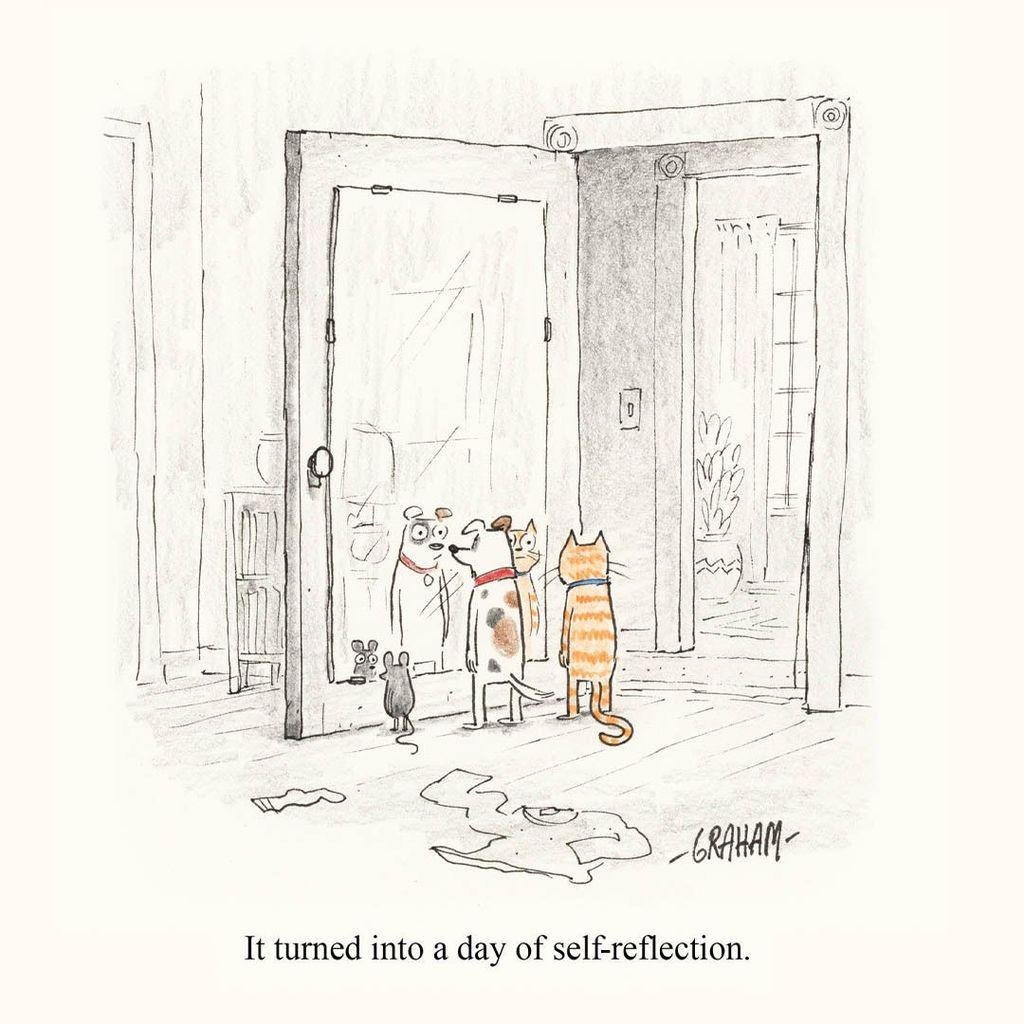
Paws in the action. #grickledoodle #cats #dogs #mice #introspection #reflec…

29 April 2026 at 16:02

Paws in the action. #grickledoodle #cats #dogs #mice #introspection #reflect #animals #cartoon #art #drawing #funny #humor

A cartoon illustration of a mouse, dog, and cat all staring together into a mirror, deep in thought. Caption reads "It turned into a day of self-reflection."
  • ✇Hong Kong Free Press HKFP
  • NGO PETA offers HK$10,000 reward over suspected mutilation and killing of Hung Hom cat Tom Grundy
    People for the Ethical Treatment of Animals (PETA) is offering a HK$10,000 reward for information that may lead to the conviction of who may be responsible for the apparent mutilation and killing of a pet cat. The funeral parlour on Lo Lung Hang Street in Hung Hom where a pet cat returned injured on May 24, 2026. Photo: Googlemaps. The cat was suspected to have died from poisoning in Hung Hom after having its tail severed, according to TVB on Sunday. The two-year-old feline was kept at
     

NGO PETA offers HK$10,000 reward over suspected mutilation and killing of Hung Hom cat

27 May 2026 at 01:20
Hung Hom

People for the Ethical Treatment of Animals (PETA) is offering a HK$10,000 reward for information that may lead to the conviction of who may be responsible for the apparent mutilation and killing of a pet cat.

The funeral parlour on Lo Lung Hang Street in Hung Hom.
The funeral parlour on Lo Lung Hang Street in Hung Hom where a pet cat returned injured on May 24, 2026. Photo: Googlemaps.

The cat was suspected to have died from poisoning in Hung Hom after having its tail severed, according to TVB on Sunday.

The two-year-old feline was kept at a funeral parlour on Lo Lung Hang Street in Hung Hom. The manager – who cared for the cat – called the police on Sunday after the pet returned injured. It had only been let out for a matter of minutes.

Several officers responded and are investigating whether animal abuse is involved.

“PETA is urging anyone with information about this incident to come forward to help ensure that whoever committed this attack is held accountable before more animals – or people – are harmed,” a spokesperson for the animal welfare NGO said in a Monday press release.

“Violence against animals is never an isolated issue—it is a well-documented warning sign of a broader capacity for violence that can escalate and pose serious risks to public safety,” added PETA Asia President Jason Baker. “Research consistently shows a strong link between cruelty to animals and violence toward humans. Authorities must act swiftly and send a clear message that such brutality will not be tolerated.”

The Society for the Prevention of Cruelty to Animals dispatched staff to help remove the cat’s body. A preliminary examination by a vet suggested the feline’s tail had been severed with a sharp object.

  • ✇Colossal
  • Anarchic Cats Are Ensnared in Chaos in Léo Forest’s Dynamic Drawings Kate Mothes
    Feline antics are notoriously chaotic. “The cat is, above all things, a dramatist,” author and Egyptologist Margaret Benson is to have said. Sacred to ancient Egyptians, domestic cats share more than 95% of their genetic makeup with tigers, and they can leap five times their height and turn into veritable spring mechanisms when startled. Also, would the Internet be the same without cat memes? For Léo Forest, these lovable, independent, wily, and territorial creatures provide an endless source
     

Anarchic Cats Are Ensnared in Chaos in Léo Forest’s Dynamic Drawings

17 April 2026 at 17:00
Anarchic Cats Are Ensnared in Chaos in Léo Forest’s Dynamic Drawings

Feline antics are notoriously chaotic. “The cat is, above all things, a dramatist,” author and Egyptologist Margaret Benson is to have said. Sacred to ancient Egyptians, domestic cats share more than 95% of their genetic makeup with tigers, and they can leap five times their height and turn into veritable spring mechanisms when startled. Also, would the Internet be the same without cat memes? For Léo Forest, these lovable, independent, wily, and territorial creatures provide an endless source of inspiration for dynamic pencil drawings.

The Paris-based artist’s playful works tap into the physical and emotional quirks of cats, from brawling pairs to individuals in the midst of grooming, scratching, or attacking. Flailing limbs and blurred motion evoke Italian Futurist painter Giacomo Balla’s seminal painting, “Dynamism of a Dog on a Leash” (1912) in which a Dachsund and its owner’s feet are fuzzily multiplied to imply very quick movement.

a pencil drawing of a dynamic, chaotic cat

Forest is currently working toward a project with Moosey in London, where prints are available. Follow him on Instagram for updates.

a pencil drawing of a dynamic, chaotic cat

Do stories and artists like this matter to you? Become a Colossal Member today and support independent arts publishing for as little as $7 per month. The article Anarchic Cats Are Ensnared in Chaos in Léo Forest’s Dynamic Drawings appeared first on Colossal.

❌
Subscriptions