JUNE 3 — There was a time when the future arrived in Malaysia wearing a hard hat. It came as highways, ports, airports, industrial parks, semiconductor factories and towers rising above old kampungs. We understood that version of development. It was visible. You could photograph it, cut a ribbon in front of it, put it in a manifesto and call it progress.
The new future arrives differently.
It comes in grey boxes outside Johor Bahru. It hums behind fences. It drinks electricity by the gigawatt and water by the million litres. It has no romance, no public face, no national anthem. It is a data centre. And increasingly, it may be one of the most important buildings in Malaysia.
Not because it employs thousands. It usually does not. Not because it transforms a neighbourhood like a port, university or factory might. Often, it does not. Its importance lies elsewhere. A data centre is where the modern economy keeps its nervous system. Cloud computing, artificial intelligence, banking, e-commerce, logistics, government databases, streaming platforms and the invisible machinery of daily life all pass through these facilities.
The great irony is that the so-called digital economy is brutally physical. Artificial intelligence may feel weightless when it appears on a phone screen, but behind every prompt sits a machine that must be powered, cooled, secured and connected. The future may be digital, but it runs on copper, concrete, gas, substations, transmission lines and political choices.
Malaysia is now discovering this at speed.
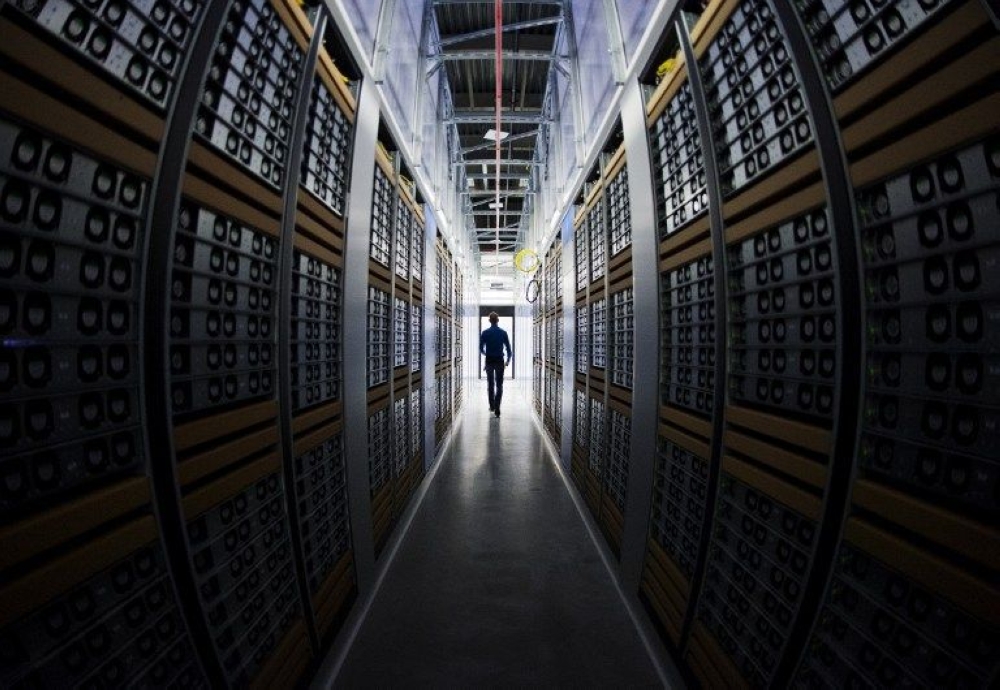
Malaysia faces a tougher question, according to the author: is it building its own digital economy, or simply becoming the utility room for someone else’s digital empire? — AFP pic
The country has stumbled into one of the defining economic opportunities of the decade. Singapore, long the region’s natural data-centre capital, became constrained by land, power and environmental limits. The island understood early what others preferred to ignore: the cloud is not in the sky. It is on the grid. It consumes land. It creates emissions. It competes with homes, factories and public infrastructure for power.
So Singapore slowed, paused, rationed and became selective. And when Singapore becomes selective, Johor becomes interesting.
Malaysia suddenly found itself in the sweet spot. Land was available. Power was cheaper. Connectivity to Singapore was close. Political leaders wanted investment headlines. Global technology companies needed capacity. Chinese cloud players wanted regional options. American hyperscalers wanted scale. Investors wanted the next big Asean infrastructure story.
On paper, this looks like a triumph. Billions in pledged investment. A stronger role in the digital economy. A chance to move Malaysia beyond assembly, commodities and low-value services. A chance to become not just a consumer of technology but a host to the infrastructure that powers it.
But this is where the romance must end.
The question is not whether Malaysia should welcome data centres. Of course it should. The question is whether Malaysia understands what it is welcoming. Because data centres are not just investments. They are long-term claims on national resources.
A factory can expand exports. A university can create talent. A port can reshape trade. A semiconductor plant can deepen industrial capability. But a poorly governed data-centre boom can become something more awkward: a country selling cheap electricity, water and land to foreign technology giants while telling itself it has joined the AI revolution.
That is the danger.
Malaysia must ask a harder question: are we building a digital economy, or are we becoming the utility room for someone else’s digital empire?
The numbers are already flashing amber. Peninsular Malaysia’s electricity demand recently hit record levels, with rising data-centre activity one of the factors behind the surge. Gas-fired generation jumped sharply, even as Malaysia says it wants to move towards cleaner energy. Coal still dominates the generation mix, while gas is being pushed harder to meet new demand.
This is the contradiction at the heart of Malaysia’s AI dream. We speak the language of green transition, digital transformation and high-value investment. But underneath the slogans, the servers need power now. Not in 2040. Not after another roadmap. Now.
And data-centre demand is not normal demand. A mall peaks in the evening. A household rises and falls with human rhythm. A factory may have shifts. A data centre wants power all the time. It does not sleep during Hari Raya. It does not take a long weekend. It is a permanent baseload animal.
This is not a Malaysian problem alone. It is happening everywhere.
Ireland is the cautionary tale. Dublin marketed itself brilliantly as a European technology hub. Big Tech came. Then came the data centres. Before long, the grid became a political issue. A small country discovered that it could run out of electricity capacity before it ran out of ambition.
Northern Virginia, the data-centre capital of the world, offers another warning. It had fibre connectivity, land, customers and early advantage. Then came congestion, transmission battles, community anger and rising power concerns. The lesson is blunt: once a region becomes a data-centre magnet, the grid becomes destiny.
Even Texas, a state that talks about energy the way others talk about football, is asking harder questions. Developers there increasingly have to think about whether they can bring their own power, manage grid impact or secure generation. When Texas starts worrying about AI load, Malaysia should not be casually waving every project through the door with a garland and a press release.
Singapore provides the most relevant comparison. It did not abandon data centres. It upgraded the terms of admission. It moved from “come one, come all” to “prove efficiency, prove sustainability, prove strategic value.” That is the discipline Malaysia now needs.
Because the real issue is not how many billions are announced. Malaysia has always loved announced investment. We are world champions at the ceremonial handshake, the oversized mock cheque and the ministerial quote about confidence in the economy.
The real issue is value capture.
What does Malaysia actually get?
If a hyperscale data centre consumes enormous power but creates limited jobs, imports much of its equipment, receives incentives, pays tariffs that do not fully reflect grid expansion costs, and serves mostly foreign customers, then the country must ask whether the bargain is as good as the press release suggests.
This does not mean the answer is no. It means the answer cannot be assumed.
A serious data-centre strategy must be judged by five questions.
First, does it create high-value Malaysian jobs, or merely security posts and maintenance contracts? The best ecosystems create engineers, energy managers, cybersecurity specialists, cloud architects, cooling experts and AI infrastructure talent. The worst create fenced warehouses of servers with minimal domestic spillover.
Second, does it deepen Malaysia’s technology stack? If data centres are paired with cloud services, AI labs, local enterprise adoption, semiconductor design, sovereign cloud capability and university partnerships, they can be transformative. If they are merely storage and compute boxes, they are closer to digital real estate.
Third, does the investor pay the true cost of power? Grid expansion is not free. Gas supply is not free. Transmission upgrades are not free. Backup capacity is not free. If the state socialises the cost while private operators capture the margin, Malaysians will eventually discover that the AI revolution has quietly appeared in their electricity bills.
Fourth, does the project help or hurt the energy transition? If AI demand forces Malaysia to burn more gas, delay fossil-fuel retirement and build more thermal capacity, then the digital economy becomes a climate contradiction. We will be selling green slogans at conferences while firing up gas turbines to cool foreign servers.
Fifth, does Malaysia retain strategic control? This is where geopolitics enters the server room.
Data centres are no longer neutral commercial assets. In the age of AI, they sit at the intersection of US export controls, Chinese technology ambition, semiconductor supply chains, cybersecurity, data sovereignty and energy security. A country that hosts data centres is not just hosting machines. It is hosting geopolitical interest.
Malaysia’s position is delicate. We want American investment, Chinese capital, Singapore connectivity, Gulf money, Japanese credibility and European standards. This is classic Malaysian hedging. It has worked before. But AI infrastructure makes hedging harder because advanced chips are now strategic assets, compute capacity is becoming national power, and Southeast Asia is increasingly viewed as a back door, buffer zone or battleground.
The danger is not merely that Malaysia gets caught between Washington and Beijing. The danger is that Malaysia becomes useful to both but respected by neither.
That is why this boom must be treated as national strategy, not just investment promotion.
Miti cannot see it only as FDI. Mida cannot sell it only as confidence. TNB cannot treat it only as load growth. Petronas cannot see it only as gas demand. State governments cannot treat it only as land conversion. This is a whole-of-government issue.
Malaysia needs a national data-centre doctrine.
Not another glossy blueprint with a foreword, a slogan and 47 pages of consultant language. A doctrine. A hard framework that says what Malaysia wants, what it will accept, what it will reject, and what price investors must pay for access to our grid, water, land and strategic location.
The doctrine should be simple.
Prioritise high-efficiency, high-value, AI-ready facilities that bring technology transfer, renewable procurement, advanced cooling, local talent development and strategic cloud capability. Be less enthusiastic about low-value, energy-hungry warehouses chasing cheap power and incentives.
Require large operators to bring or finance additional clean power. Not imaginary green certificates. Real additional capacity. Solar, storage, firmed renewable supply, grid upgrades and transparent power purchase structures.
Create a grid-impact pricing mechanism. Large loads should pay for the infrastructure they trigger. Otherwise, the cost disappears into tariffs, public balance sheets or delayed investment. There is no magic in electricity. Someone pays.
Link approvals to domestic spillover. A major data-centre project should come with commitments on Malaysian technical employment, university partnerships, cloud credits for local startups, cybersecurity capability, SME vendor development and AI adoption by local industry.
Finally, Malaysia must stop pretending that energy policy and industrial policy are separate. They are now the same conversation. In the old economy, cheap energy attracted factories. In the new economy, reliable clean energy attracts AI infrastructure, semiconductor investment, electric mobility, green manufacturing and high-value services. Power is no longer just a utility. Power is industrial strategy.
For decades, Malaysia’s political economy was built around cheapness. Cheap petrol. Cheap power. Cheap food. Cheap foreign labour. Cheap land, if you knew the right person. Cheap slogans about transformation.
But the AI economy is not cheap. It is capital-intensive, power-hungry, geopolitically sensitive and unforgiving. Countries that get the infrastructure right will move up. Countries that confuse investment announcements with strategy will become hostels for other people’s machines.
Malaysia should welcome the servers. But it should not kneel before them.
It should say: come, build, invest, innovate, hire, transfer knowledge, buy clean power, pay for the grid, respect our water, protect our data, train our people and deepen our economy.
If you want our electricity, strengthen our country.
That should be the bargain.
Because in the end, the AI race will not be won by speeches about digital transformation. It will be won by countries that understand the hard, unglamorous truth beneath the glittering language of the future.
The future needs power.
And power, in every sense of the word, is what Malaysia must learn to price.
* This is the personal opinion of the writer or publication and does not necessarily represent the views of Malay Mail.

 Login
Login