Normal view

Social media users in Malaysia must verify age with using IC or passport from June 1, says deputy minister

22 May 2026 at 11:20

Malay Mail

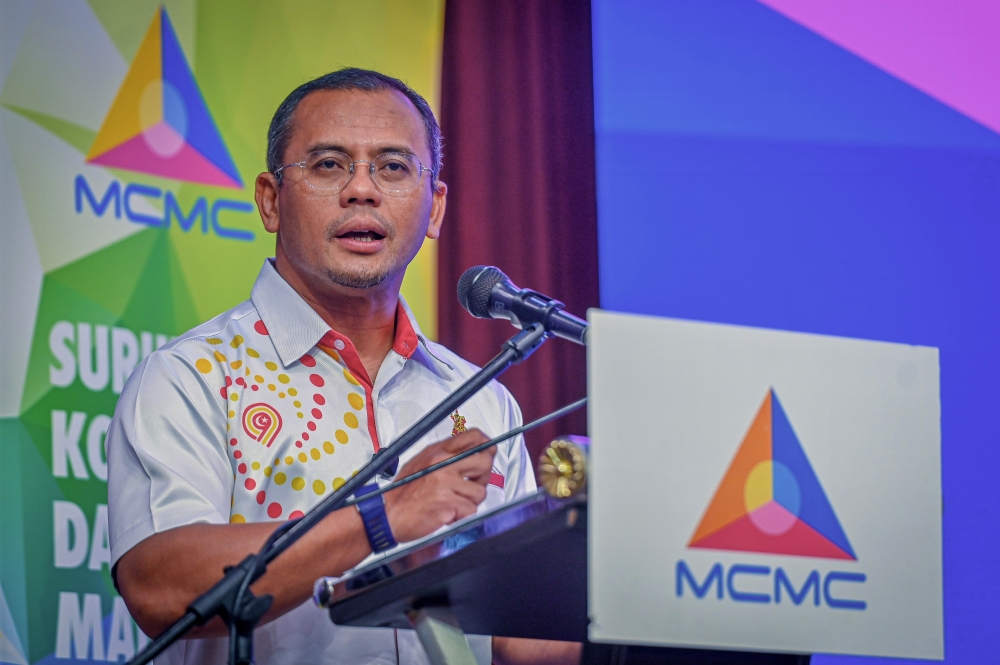
KUCHING, May 22 — Users of social media platforms will need to upload official government-issued documents for age verification following the implementation of two new codes under the Online Safety Act (ONSA) introduced by the Malaysian Communications and Multimedia Commission (MCMC), effective June 1.

Deputy Communications Minister Teo Nie Ching said under the two codes, namely the Children’s Protection Code (CPC) and the Risk Mitigation Code (RMC), documents that may be used include identity cards and passports to prevent users under the age of 16 from opening social media accounts.

“We have now asked platforms to implement age verification. Users need to verify their age using government-issued documents such as identity cards, passports or other official documents.

“If it is merely self-declared, anyone can simply click and claim they are above 18 years old,” she told reporters after officiating the Safe Internet Campaign Community Carnival here today.

Teo said MCMC, however, had not prescribed any specific technology that platforms must use for the age verification process.

According to her, the government will provide a reasonable period for social media platforms to implement the age verification process for existing accounts before enforcement action is taken.

“For existing accounts that have yet to complete age verification, MCMC is still discussing a reasonable timeframe after engaging with the involved social media platforms, including TikTok, Facebook and Instagram.

“Those who fail to complete verification may have their accounts closed, or the social media platforms may need to use artificial intelligence to ensure users are aged 16 and above,” she said.

Teo said the government had previously decided that children under the age of 16 were not allowed to open or own social media accounts on platforms with more than eight million users in Malaysia.

She said the two codes were published following engagement sessions with industry players, civil society organisations and stakeholders conducted since the beginning of this year.

Earlier, in her speech, Teo said that from January to April this year alone, a total of 23,367 online scam cases were reported involving losses amounting to RM680.3 million.

She said that since the Safe Internet Campaign was launched in January 2025 until April 30 this year, more than 11,000 programmes had been carried out nationwide involving over 1.8 million participants comprising school students, youths, parents, educators, senior citizens and local communities. — Bernama
  • ✇Malay Mail - All
  • MCMC: Failure to comply with Online Safety Act’s risk‑mitigation code may incur fines up to RM10m
    PUTRAJAYA, May 22 — Failure to comply with the requirements under the Risk Mitigation Code (RMC), as part of the obligations of licensed service providers under Part III of the Online Safety Act 2025 (ONSA), may result in enforcement action, including fines or financial penalties of up to RM10 million.The Malaysian Communications and Multimedia Commission (MCMC) explained this in its Frequently Asked Questions (FAQ) document relating to the RMC, which will come i
     

MCMC: Failure to comply with Online Safety Act’s risk‑mitigation code may incur fines up to RM10m

22 May 2026 at 08:47

Malay Mail

PUTRAJAYA, May 22 — Failure to comply with the requirements under the Risk Mitigation Code (RMC), as part of the obligations of licensed service providers under Part III of the Online Safety Act 2025 (ONSA), may result in enforcement action, including fines or financial penalties of up to RM10 million.

The Malaysian Communications and Multimedia Commission (MCMC) explained this in its Frequently Asked Questions (FAQ) document relating to the RMC, which will come into effect on June 1.

According to the document, the RMC sets out the steps that must be taken by online service providers under Section 13 of the ONSA to reduce the risk of consumers being exposed to harmful online content on their services.

“This includes assessing the risk of harmful content and implementing measures to mitigate that risk, thereby ensuring that their services are safe for users.

“Licensed service providers must develop user safety policies, community standards, community guidelines and/or terms of service and ensure that they are enforced fairly and consistently to reduce the risk of users being exposed to harmful content,” according to the FAQ.

In a statement, MCMC announced that two new codes under the ONSA, namely the Child Protection Code (CPC) and Risk Mitigation Code (RMC), will take effect on June 1, requiring digital platforms to take stricter action against harmful content and better protect children online.

It said the codes were developed following engagement sessions with industry players, civil society organisations and stakeholders, including a public consultation held from Feb 12 to March 31.

Under the RMC, the harmful content refers to child sexual abuse material (CSAM), financial fraud, obscene and indecent content, as well as content that may cause harassment or distress.

Also, content that may incite violence or terrorism, content that may induce a child to cause harm to himself, content that may promote feelings of ill‑will or hostility amongst the public, and content that promotes the use or sale of dangerous drugs.

According to the FAQ, licensed service providers must also test and adapt algorithmic systems, including recommendation systems, to mitigate the risk of users being exposed to harmful content on their services.

“This recognises that algorithmic curation can amplify or reduce harmful content exposure,” it said.

In an effort to curb online fraud, MCMC also stipulates that paid-for advertisements for goods or services may only be allowed if they come from advertisers (businesses or organisations) or users verified against government-issued records. This aims to reduce fraud and misuse of advertising for harmful activities.

MCMC said it may revoke, vary, revise or amend the whole or any part of the RMC from time to time, whenever necessary.

ONSA, effective Jan 1, 2026, aims to make the Internet environment safer, especially for children and families, by setting clear responsibilities for online platform providers who do not just delete content after it goes viral, but rather detect, prevent and act faster on content that is harmful. — Bernama


  • ✇Malay Mail - All
  • MCMC plans new telecom towers to boost internet coverage in Kelantan’s Felda Chiku 2
    GUA MUSANG, May 20 — The Malaysian Communications and Multimedia Commission (MCMC) has proposed the construction of new telecommunications towers in Felda Chiku 2 under the National Digital Network Plan (Jendela) to improve internet coverage and enhance service stability and quality.In a statement today, MCMC said the initiative was aimed at addressing residents' complaints over weak and inconsistent internet connectivity in the area.It said that although basic i
     

MCMC plans new telecom towers to boost internet coverage in Kelantan’s Felda Chiku 2

20 May 2026 at 04:55

Malay Mail

GUA MUSANG, May 20 — The Malaysian Communications and Multimedia Commission (MCMC) has proposed the construction of new telecommunications towers in Felda Chiku 2 under the National Digital Network Plan (Jendela) to improve internet coverage and enhance service stability and quality.

In a statement today, MCMC said the initiative was aimed at addressing residents' complaints over weak and inconsistent internet connectivity in the area.

It said that although basic internet infrastructure is available, monitoring found several locations to be blind spots requiring improvements in both coverage and service quality.

“Accordingly, MCMC has conducted telecommunications service quality tests at three locations identified by complainants to assess the actual coverage performance,” it said.

MCMC said the test results are being analysed in detail to determine the most appropriate follow-up measures to ensure a better user experience.

It added that the commission is also considering the installation of Starlink satellite internet devices as a temporary solution at locations to be identified later.

Meanwhile, Belia Felda Chiku 2 chairman Muhammad Zaidatul Azizi Mohd Zaidatul Azman said residents had been facing unstable internet coverage for the past three years.

He said about 200 households were forced to travel about one kilometre from their homes to obtain a stronger signal.

“Among the areas most affected are those around the mosque up to Gua Chiku 2. This has made it difficult for youths to carry out digital activities, including online learning and other daily tasks,” he said. — Bernama 

  • ✇Malay Mail - All
  • Amirudin calls for grassroots cooperation to curb cable theft disrupting digital services in Selangor
     SHAH ALAM, May 19 — Local communities have been urged to play a more active role in providing early information to help authorities combat cable theft and vandalism involving telecommunications infrastructure in Selangor.Menteri Besar Datuk Seri Amirudin Shari said public cooperation is crucial to ensure immediate action can be taken to prevent acts of sabotage, which not only damage public facilities but also disrupt the public’s digital access.“We (the state g
     

Amirudin calls for grassroots cooperation to curb cable theft disrupting digital services in Selangor

19 May 2026 at 06:54

Malay Mail


SHAH ALAM, May 19 — Local communities have been urged to play a more active role in providing early information to help authorities combat cable theft and vandalism involving telecommunications infrastructure in Selangor.

Menteri Besar Datuk Seri Amirudin Shari said public cooperation is crucial to ensure immediate action can be taken to prevent acts of sabotage, which not only damage public facilities but also disrupt the public’s digital access.

“We (the state government) want the public to be involved so that cable theft activities, including vandalism against digital facilities, can be reduced. As I mentioned, digital infrastructure is important for sustaining daily life in the state of Selangor.

“Integrated measures mobilised at the grassroots level are crucial to ensuring that every piece of the state’s digital infrastructure is continuously protected from sabotage threats,” he said after launching the state-level Telecommunications Infrastructure Vandalism Prevention Campaign 2026 here today.

Amirudin said such efforts need to be strengthened to ensure continued protection of the state’s digital infrastructure, following a high number of incidents recorded over the past year.

According to the Malaysian Communications and Multimedia Commission (MCMC), Selangor remains among the states recording the highest number of cases in Malaysia, with 1,836 cases reported in 2024, followed by 1,273 cases last year.

MCMC senior advisor (Operations) Datuk Zurkarnain Mohd Yasin, who was also present at the launch, said the impact of physical damage to infrastructure has been significant, with the telecommunications industry forced to bear losses exceeding RM20 million annually for repair works.

Several areas in Selangor have also been identified as high-risk locations experiencing repeated incidents, namely Rawang, Gombak, Bangi, the Sungai Tekali area and Hulu Langat, where service disruption periods are longer, involving critical components such as microwave transmission and certain network equipment.

“Spare parts need to be ordered from overseas, and the delivery and reinstallation process requires an additional time of between one and three years before services can be fully restored. This situation directly affects the stability of telecommunications services and impacts users and communities,” he said.

He added that his team is actively working to ensure more effective enforcement actions by strengthening prevention strategies through engagement sessions in hotspot areas.

Such an approach, he said, can foster closer cooperation with various parties, including the Royal Malaysia Police, village heads, community leaders, residents’ associations and local communities in efforts to raise awareness and encourage the reporting of suspicious activities to authorities. — Bernama


❌
Subscriptions