
 Login
Login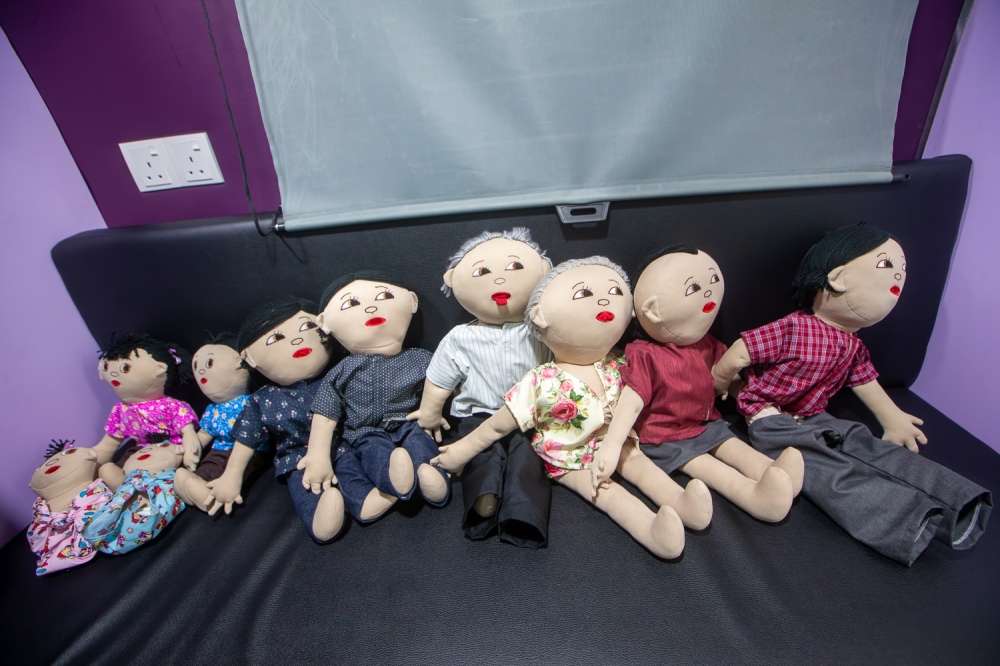


When words fail: How anatomical dolls help child abuse victims find their voice in court

PUTRAJAYA, June 10 — For child witnesses, speaking about traumatic abuse experiences in a courtroom setting can be overwhelming and distressing, especially when they struggle to recount important details of what they endured.
Enter the anatomical dolls — seemingly ordinary playthings with facial features (including a retractable tongue), limbs, clothing and realistic body proportions, including private parts — used by the Malaysian Judiciary in child witness proceedings.
Though unable to speak themselves, these specially tailored anatomical dolls play a crucial role in giving child witnesses a voice when trauma, shyness or limited vocabulary makes verbal testimony difficult.
In almost all cases involving sexual abuse, Registrar of the Subordinate Courts of Malaya Mohammed Mokhzani Mokhtar noted that anatomical dolls tend to play their most important role precisely when language falls short.
“In a psychological course I attended many years ago, we were told that there are almost 80 different names for the male genitalia in Bahasa Malaysia.
“Sometimes children go to court with that knowledge (of euphemistic terms), like they refer to the male genitalia as burung or ‘birdbird’, but they don’t use the correct terminology, right?
“So, instead of explaining it to the court, they explain it by showing, which is what the anatomical doll does,” he told Malay Mail during a recent interview at the Palace of Justice here.
Mohammed Mokhzani explained that prosecutors or judicial officers use the anatomical doll during interviews with child witnesses to indicate where a child was abused, either physically or sexually.
Describing a real-life example, he recalled handling a case involving a five-year-old victim sent to a nursery, whose molestation by the premises owner’s father was communicated through a brushing gesture made using the anatomical doll’s finger, indicating that she had been touched on her private parts.
“We ask the child what their abuser did, and then use the doll to help them narrate or describe their ordeal.”
The child’s account, conveyed through the anatomical doll, is then recorded as evidence and is admissible in court, he added.
While the use of anatomical dolls is not new, Mohammed Mokhzani said each Children’s Court — designated courtrooms that hear sexual offence cases involving children — in every court complex in Peninsular Malaysia is equipped with a full set, totalling five pairs.
Each pair is assigned to a specific age group and comprises both male and female dolls, representing infants, children, teenagers, adults and older persons.
Due to their importance in evidence-taking, he said anatomical dolls are a staple of the Judiciary’s Children’s Mobile Court initiative, with a set also kept in the Victims’ Nexus to Justice (VNEJ) — a specially designed van that serves as a mobile child witness room.
The VNEJ, which forms one of the initiative’s three components, is generally used in proceedings involving sexual offences against minors under the Sexual Offences Against Children Act.
*If you suspect child abuse, call the following hotlines for free and confidential support: Talian Kasih at 15999 or WhatsApp 019-2615999 (24/7); Talian BuddyBear at 1800-18-2327(BEAR) (noon-midnight daily); and One Crisis Centre (24/7) Wilayah Persekutuan at 03-26155555 (Kuala Lumpur General Hospital), 03-61454333 (Sungai Buloh Hospital) or 03-83124200 (Putrajaya Hospital).
