Login
Login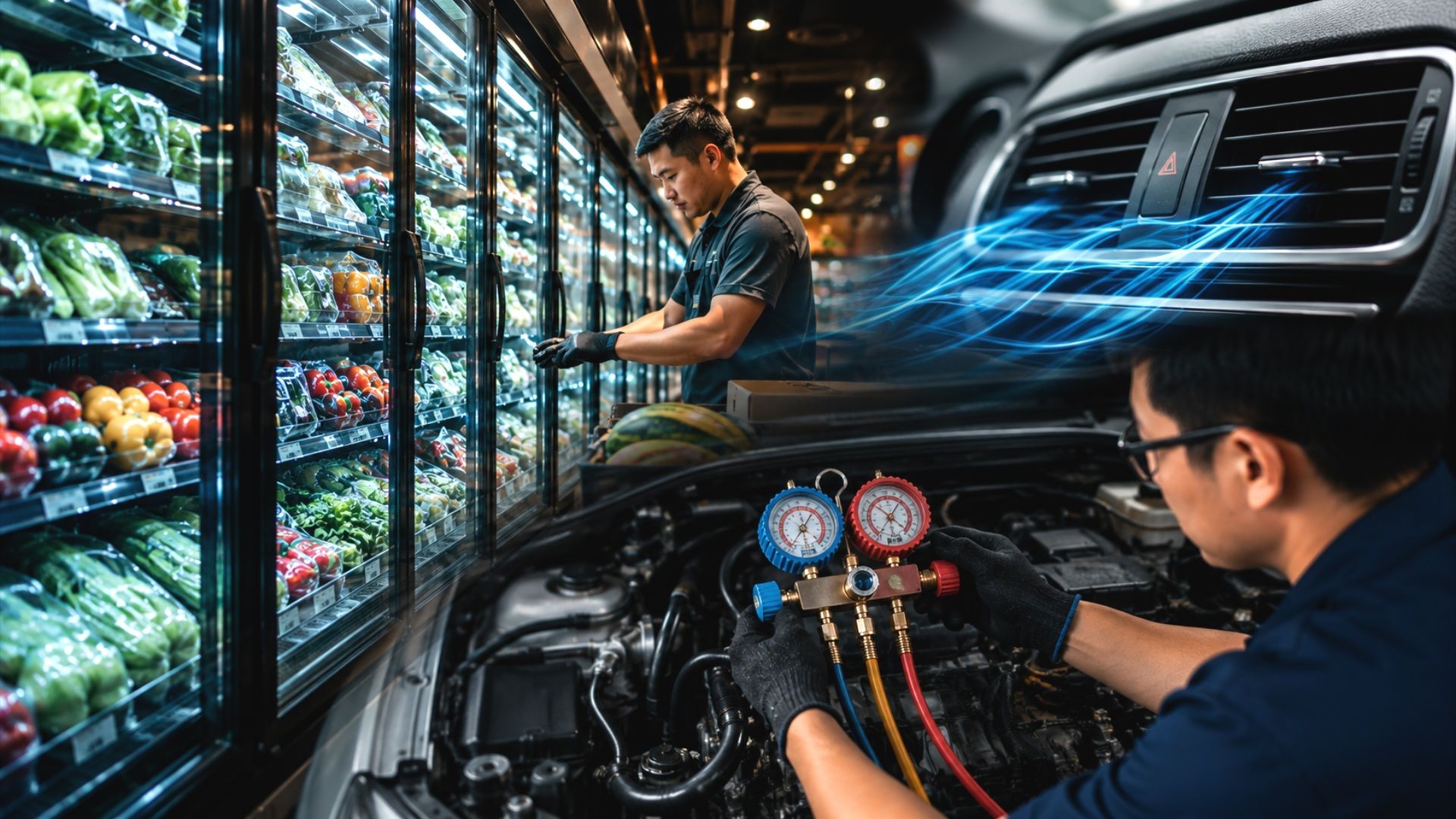


NEA: Singapore to enforce stricter refrigerant standards for vehicles and supermarkets to reduce greenhouse gas emissions

SINGAPORE: Singapore will introduce stricter refrigerant standards for supermarkets, refrigerated transport and vehicle air-conditioning from 2027 as part of its push to cut greenhouse gas emissions and move towards net-zero emissions by 2050.
The initiative, announced by the National Environment Agency (NEA) on May 28, 2026, targets refrigeration and air-conditioning systems that rely on hydrofluorocarbon (HFC) gases. These gases can trap heat far more effectively than carbon dioxide, making them a significant contributor to climate change.
The new rules will primarily affect newly installed systems, allowing businesses and vehicle owners to continue using existing equipment until it reaches the end of its lifespan.
Supermarkets first, vehicles next
Under the new framework, refrigeration systems used in supermarkets must use refrigerants with a Global Warming Potential (GWP) of 150 or below from July 1, 2027.
A year later, from July 1, 2028, air-conditioning systems in new passenger cars and light goods vehicles will need to meet the same standard.
According to NEA, the later timeline for vehicles gives suppliers more time to prepare, as lower-GWP refrigerants aren’t yet available across all vehicle models. The standards are aligned with those already adopted in markets such as the European Union and Japan.
Many businesses have already started using lower-GWP refrigerants
NEA noted that several major supermarket operators in Singapore have already adopted refrigeration systems that use lower-GWP refrigerants.
Suppliers and manufacturers are also offering equipment designed to meet the newer environmental standards while maintaining energy efficiency.
Rather than forcing an immediate replacement of existing systems, authorities are focusing on new installations, reducing disruption and allowing businesses to transition gradually.
For consumers, the changes will largely happen behind the scenes. Shoppers are unlikely to notice a difference when buying groceries, while future vehicle buyers may eventually find lower-emission air-conditioning systems becoming the norm.
New disposal requirements for refrigerants
Beyond what is installed, the measure also covers what happens when equipment reaches the end of its useful life. From July 2027, companies that dismantle commercial refrigeration systems, industrial cold-room systems, vehicle air-conditioning units and refrigerated trucks must register with NEA and follow approved procedures when handling used refrigerants.
From July 2027, companies that dismantle commercial refrigeration systems, industrial cold-room systems, vehicle air-conditioning units and refrigerated trucks must register with NEA and follow approved procedures when handling used refrigerants.
The agency said many companies are already following similar practices, and specialist service providers are available to properly recover and manage spent refrigerants. The goal is to prevent harmful gases from being released into the atmosphere during disposal, an often overlooked part of the refrigeration lifecycle.
Replacing high-emission refrigerants with cleaner alternatives can help reduce Singapore’s carbon footprint
Air-conditioning and refrigeration are essential in a tropical country like Singapore. They keep homes cool, preserve food and support logistics networks that move temperature-sensitive goods every day. This convenience, however, comes with an environmental cost.
By aiming for high-warming-impact refrigerants, Singapore is tackling a source of emissions that receives far less public attention than vehicles, power stations, or industrial facilities. The latest measures also build on NEA’s earlier restrictions, introduced in 2022, on household air conditioners, refrigerators, and large building cooling systems.
Replacing high-emission refrigerants with cleaner alternatives is a practical step that can help reduce Singapore’s carbon footprint without changing how people live or work.
As Singapore moves towards its climate initiatives, the challenge will be balancing environmental goals with business readiness. In this case, NEA appears to be taking a gradual approach that gives industries time to adapt while still moving the country toward lower emissions.
This article (NEA: Singapore to enforce stricter refrigerant standards for vehicles and supermarkets to reduce greenhouse gas emissions) first appeared on The Independent Singapore News.