Normal view

  • ✇Malay Mail - All
  • What it actually takes for companies like OpenAI and SpaceX to go public
    NEW YORK, May 17 — Hundreds of companies raised a combined US$70 billion (RM280 billion) by selling shares to the public in the United States last year.But 2026 could shatter records, with rocket and AI company SpaceX, ChatGPT-maker OpenAI and AI startup Anthropic all potentially making their stock market debuts.So what exactly does it take for a company to “go public”? The process, known as an initial public offering or IPO, typically takes months or years and c
     

What it actually takes for companies like OpenAI and SpaceX to go public

17 May 2026 at 13:00

Malay Mail

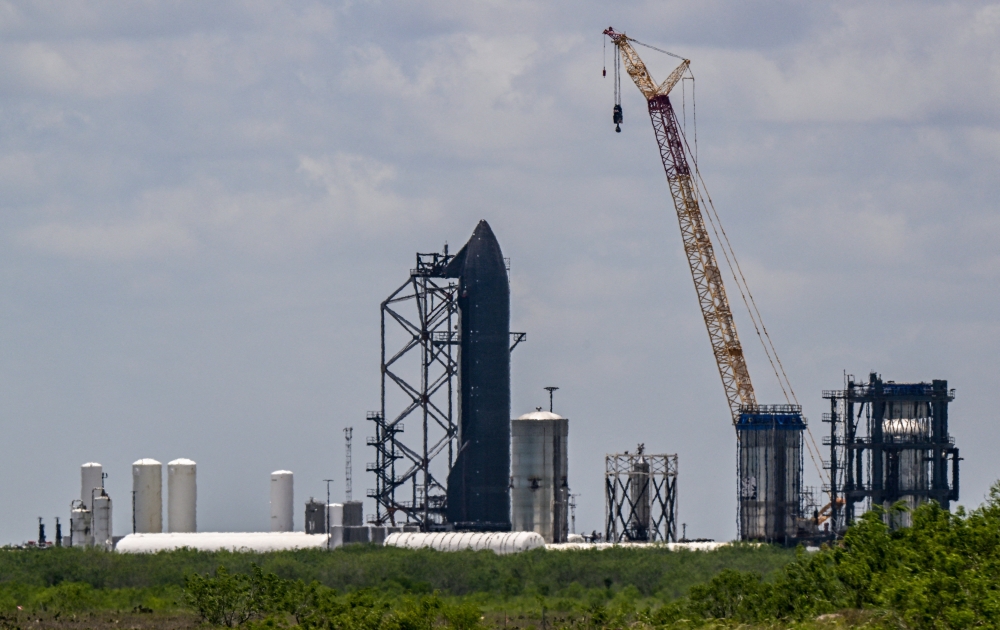
NEW YORK, May 17 — Hundreds of companies raised a combined US$70 billion (RM280 billion) by selling shares to the public in the United States last year.

But 2026 could shatter records, with rocket and AI company SpaceX, ChatGPT-maker OpenAI and AI startup Anthropic all potentially making their stock market debuts.

So what exactly does it take for a company to “go public”? The process, known as an initial public offering or IPO, typically takes months or years and can cost millions of dollars.

Here is how it works:

Picking a stock exchange 

The first big decision is where to list.

In the US, two options dominate: the New York Stock Exchange (NYSE) — the oldest and most famous, with its iconic trading floor in lower Manhattan — and the Nasdaq, a fully electronic exchange that is home to most of the biggest tech companies.

Together, they account for roughly half of the total value of all stocks traded worldwide.

Companies also have to pick a “ticker” — the short letter code that identifies their stock.

Some keep it simple (MSFT for Microsoft), while others get creative (DNUT for Krispy Kreme donuts, CAR for rental company Avis).

Hitting the road 

Before a company can sell shares to the public, it has to file a detailed document called an S-1 with the Securities and Exchange Commission (SEC), the US government agency that oversees financial markets, and Wall Street’s de facto referee.

The S-1 is essentially a deep dive into the company’s finances, business model and risks, designed to help ordinary investors make informed decisions.

As JPMorgan puts it, it has “the dual purpose of registering the securities with the SEC and educating investors on the opportunity.”

The SEC reviews the filing and can ask lots of questions.

“For an S-1 filing, that can sometimes go through several rounds of comments from staff, so it could take months,” SEC Chairman Paul Atkins said recently.

He added that the agency is working to speed things up.

SpaceX is expected to file its S-1 this week, according to a source close to the matter.

The pitch 

Once the paperwork is underway, company executives hit the road — literally. They travel city to city (and hop on video calls) in what is known as a “roadshow,” pitching their company to big institutional investors like pension funds and hedge funds, as well as everyday retail investors.

SpaceX is planning a special event for 1,500 individual investors in June, according to CNBC.

Not every company makes it through this stage. Fintech firm Clear Street pulled the plug on its IPO plans in February after failing to drum up enough interest, blaming market volatility.

Deciding on a price 

The trickiest part may be settling on a share price — the cost of one piece of ownership in the company when it first hits the market.

“Pricing an IPO is probably more art than science,” said Matthew Kenney, IPO specialist at Renaissance Capital.

Banks advising the company want to raise as much money as possible, but they also need to leave room for the stock to rise once trading begins — otherwise, no one will want to buy it.

“If you really seek to maximize the share price, you’re going to have very little aftermarket demand and the IPO can flop and nobody wants to be ringing the opening bell and see their stock price fall,” Kenney said.

Sometimes companies get it wrong and have to adjust.

Chip startup Cerebras revised its target price twice before finally going public at US$185 a share — then watched the stock soar 68 per cent on its very first day of trading. — AFP
  • ✇Malay Mail - All
  • SpaceX, OpenAI and Anthropic could make 2026 the biggest IPO year yet
    NEW YORK, May 17 — Wall Street is licking its chops over an unprecedented slate of massive IPOs set to arrive in the coming months, beginning with Elon Musk’s SpaceX in June.That is expected to be followed by artificial intelligence rivals OpenAI and Anthropic. The trio of mega listings, each eyeing valuations around US$1 trillion (RM4 trillion) or more, constitutes a heady period of elevated risk and reward.SpaceX is targeting an initial public offering that wou
     

SpaceX, OpenAI and Anthropic could make 2026 the biggest IPO year yet

17 May 2026 at 13:00

Malay Mail

NEW YORK, May 17 — Wall Street is licking its chops over an unprecedented slate of massive IPOs set to arrive in the coming months, beginning with Elon Musk’s SpaceX in June.

That is expected to be followed by artificial intelligence rivals OpenAI and Anthropic. The trio of mega listings, each eyeing valuations around US$1 trillion (RM4 trillion) or more, constitutes a heady period of elevated risk and reward.

SpaceX is targeting an initial public offering that would raise up to US$80 billion, roughly double the funds generated from all 2025 IPOs.

OpenAI and Anthropic are eyeing IPOs raising US$60 billion, also huge numbers compared with the norm.

“We’re really in unprecedented times,” said Emily Zheng, an analyst for PitchBook, a research platform specialising in private capital. “And this concentration is more extreme than ever.”

The trio is poised to enter public markets as the Middle East war adds to inflationary pressures and fogs the geopolitical landscape.

But that factor is not expected to impede the arrival of SpaceX, OpenAI and Anthropic.

“These three companies are kind of unique,” said Jay Ritter, a specialist in IPOs at the University of Florida.

Mark Roberts, managing partner at the Blueshirt Group, also expects the offerings to be well subscribed.

“There’s enough capital to enthusiastically embrace these three companies if they are priced correctly,” Roberts said.

Nasdaq, where SpaceX will trade, announced earlier this spring that it would speed up the timeframe for including such mega listings in its main benchmark index.

The shift is expected to prod additional stock purchases of SpaceX from investment funds built around the index.

Reward or reckoning? 

Among portfolio managers for larger funds, SpaceX “is probably viewed as a must-have stock,” said Roberts.

In anticipation of the listings, there has been a throng of activity on secondary markets where investors are buying unlisted securities, pushing Anthropic’s theoretic value to more than US$1 trillion.

Both OpenAI and Anthropic have warned investors against securities not authorised by the companies.

Once they begin trading on public markets, their performance will serve as a gauge of the market’s appetite for additional offerings, particularly in the AI market.

“If these companies do really well — especially the AI ones, like OpenAI and Anthropic — it would be a confirmation of these really massive private-market valuations,” Zheng said.

“But the opposite could also be true,” she added. “If the companies don’t perform well, investors might conclude they’re overvalued.”

Some investors who have backed the three heavyweights in private markets are poised to cash out, potentially positioning them for the next round of tech companies.

Private equity firms currently hold more than 30,000 companies that they hope to exit, a backlog that has slowed availability of capital for new prospects. A recent Wall Street Journal article highlighted the slowdown, citing one firm that called the dynamic a “winter of exits.”

A poor performance by the new entrants could hit the valuations of these private companies, Zheng said.

By going public, the companies will also subject themselves to greater scrutiny from investors.

The market will “be laser-focused on the performance of those stocks from an operational perspective,” Roberts said. “So they can’t miss their earnings.”

Ritter predicted all three companies could see volatility.

“There’s going to be big upswings and big downswings, because nobody knows the future,” he said. “Owning these stocks is not for the faint of heart.” — AFP

  • ✇Malay Mail - All
  • SpaceX shareholders approve 5-for-1 stock split ahead of planned IPO
    CALIFORNIA, May 16 — A majority of SpaceX shareholders have approved a 5-for-1 stock split recommended by the company’s board, Bloomberg News reported yesterday, citing people familiar with the matter.Shareholders of IPO-bound SpaceX were informed via email that the stock’s fair market value was adjusted to US$105.32 (RM415.96) per share from US$526.59 (RM2,079.77) following the split, the report said.The stock split will be processed during the week of May 18 an
     

SpaceX shareholders approve 5-for-1 stock split ahead of planned IPO

16 May 2026 at 07:26

Malay Mail

CALIFORNIA, May 16 — A majority of SpaceX shareholders have approved a 5-for-1 stock split recommended by the company’s board, Bloomberg News reported yesterday, citing people familiar with the matter.

Shareholders of IPO-bound SpaceX were informed via email that the stock’s fair market value was adjusted to US$105.32 (RM415.96) per share from US$526.59 (RM2,079.77) following the split, the report said.

The stock split will be processed during the week of May 18 and is expected to be completed by May 22, Bloomberg reported.

Reuters exclusively reported on yesterday that Elon Musk’s rocket and satellite maker SpaceX is aiming to list its shares as early as June 12 and has picked the Nasdaq as the trading venue for its blockbuster market debut.

The company is likely to seek to raise about US$75 billion at a valuation of roughly US$1.75 trillion, which would make it the largest stock market flotation of all time, Reuters has previously reported.

SpaceX did not immediately respond to a request for comment outside regular business hours. — Reuters


  • ✇Malay Mail - All
  • Elon Musk’s complicated love affair with China enters a new chapter
    BEIJING, May 15 — In China, Elon ‌Musk has been the object of love — and occasional loathing.The Tesla boss has been both lauded as a visionary and criticised by Chinese regulators and the public for the alleged bungling of customer complaints. In addition, the dominance of SpaceX and its Starlink satellite unit has raised the ire of the People’s Liberation Army. And as the gap between Tesla and its Chinese EV rivals narrows, Musk is at risk of losing prestige an
     

Elon Musk’s complicated love affair with China enters a new chapter

15 May 2026 at 00:50

Malay Mail

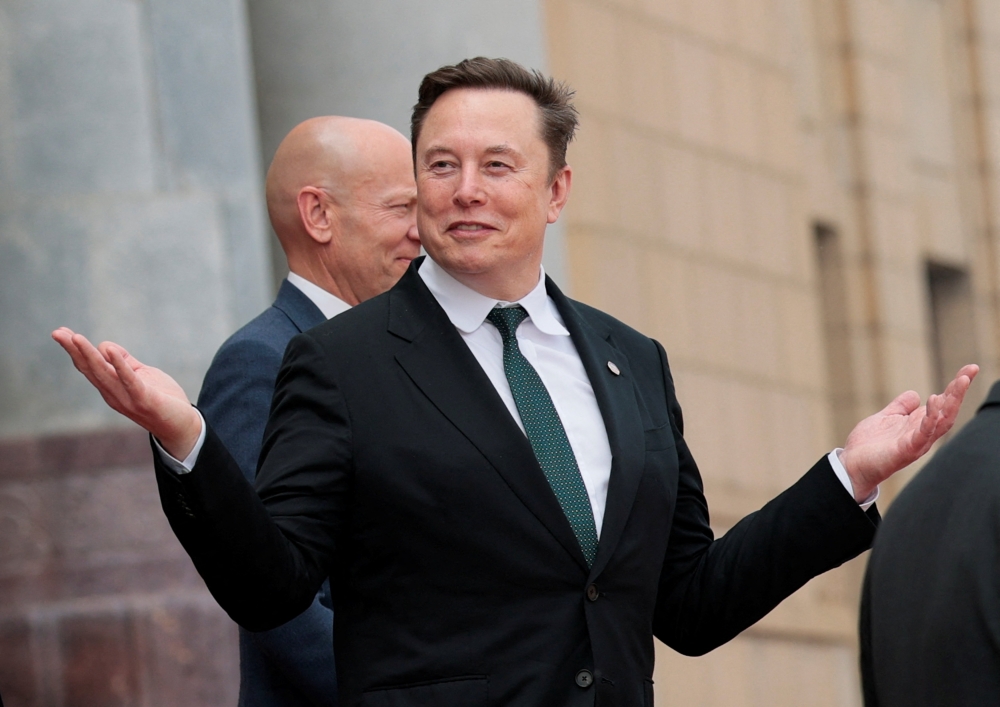
BEIJING, May 15 — In China, Elon ‌Musk has been the object of love — and occasional loathing.

The Tesla boss has been both lauded as a visionary and criticised by Chinese regulators and the public for the alleged bungling of customer complaints. In addition, the dominance of SpaceX and its Starlink satellite unit has raised the ire of the People’s Liberation Army. And as the gap between Tesla and its Chinese EV rivals narrows, Musk is at risk of losing prestige and influence.

Musk ‌is now among a group of more than a dozen CEOs and top executives accompanying US President Donald Trump to Beijing for a summit with Xi Jinping, along with Apple’s Tim Cook and Nvidia boss Jensen Huang.

The delegation largely consists of executives seeking to resolve issues with Beijing, and the world’s richest man is no stranger to the ups and downs of doing business with China.

Responding to reporters on his way out of the Great Hall of the People yesterday, Musk said he wants to accomplish “many good things” in China.

While Tesla is being hit by local electric vehicle makers on technology and price, the company - and Musk - remain influential in China. That is in part because Musk’s interests align with those of Beijing, said Kyle Chan, a fellow in Chinese technology at the Brookings Institution.

“When you look at Beijing’s tech priorities, many of them line up almost perfectly with Elon Musk’s,” Chan said, pointing to EVs, autonomous vehicles, AI and humanoid robots, as well as brain-computer interfaces and satellites.

Tesla’s self-driving technology is still considered the industry standard in China, Chan said.

EV maker Chery draws its inspiration from Tesla and Toyota, its chairman, Yin Tongyue, said in an interview with Reuters last month. Chery, which is now making inroads in Europe, aims to blend Tesla’s focus on innovation with Toyota’s obsession with quality, Yin said.

In 2018, Tesla ‌became the first foreign car company allowed to set up an automaking operation in China without a local partner.

It sold around 626,000 cars in China last year, making it the country’s fifth-largest automaker ⁠in terms of sales of EVs and plug-in hybrids, according to the China Passenger Car Association, an ⁠industry group. China accounted for around a fifth of Tesla’s revenue last year, according to company data.

Tesla’s focus on designing cars ⁠around battery performance and software is “definitely one of the biggest ⁠inspirations for many Chinese carmakers,” said Felipe Munoz, ⁠a veteran auto analyst.

During the pandemic, while traditional automakers were dealing with lockdowns and a shortage of semiconductors, Chinese firms hunkered down to study Tesla’s cars and work out their own versions of them, Munoz said.

However, Beijing has railed against other parts of Musk’s business empire. The near-monopoly that his SpaceX holds in lower-Earth orbit satellites, which provide cheaper and more reliable communications, and its importance in the ongoing conflict between ⁠Russia and Ukraine, have alarmed Beijing and spurred it to create domestic alternatives.

“The excellent performance of ‘Starlink’ satellites in this Russian-Ukrainian conflict will certainly prompt the U.S. and Western countries to use ‘Starlink’ extensively' in possible hostilities in Asia, said a September 2022 article co-written by researchers at an engineering university run by the People’s Liberation Army.

Global idol

While his X social media platform is banned in China, Musk has 2.3 million followers on China’s Weibo and has been feted on local social media as “a pioneer,” “Brother Ma” and a “global idol” during some past trips. Even Musk’s mother has become something of a celebrity in China.

His visit this week comes as he is looking to buy US$2.9 billion worth of equipment for manufacturing solar panels from Chinese suppliers, Reuters reported in March. That effort could now be complicated ⁠as China considers limiting exports of its most advanced technologies to the US

Tesla is also seeking clearance from regulators to expand adoption of its Full Self-Driving assistance system.

Musk has maneuvered carefully in China, as the world’s largest auto market and its massive supply chains remain essential to support his broad business empire across EVs, solar power ⁠and space programme.

In 2021, Tesla was forced to apologise to Chinese consumers for failing to address a customer’s complaints promptly. That came after an unhappy customer climbed atop a Tesla model at ⁠the Shanghai auto show ⁠to protest the company’s handling of her complaints about malfunctioning brakes, a moment that went viral on Chinese social media and sparked criticism in state media.

In 2021, Teslas were barred from entering military compounds due to security concerns over the cameras installed on the vehicles. That ban was only lifted after Musk visited China in 2024 and the auto industry association endorsed its data compliance.

Longer term, the biggest threat to Musk’s popularity in China could come ‌from the continuing rise of its homegrown auto industry.

“As Chinese companies catch up or even overtake Elon Musk’s tech empire, his stature in China may start to dim,” said Chang Yan, the founder of Supercharged, a popular blog on Weibo focused on EVs.

“But he will likely remain an icon among China’s tech industry for what he’s accomplished.”  — Reuters 


  • ✇The Guardian World news
  • Pentagon inks deals with seven AI companies for classified military work Guardian staff and agency
    OpenAI, Google, Nvidia and others agreed to ‘any lawful use’ of their tech. Anthropic, feuding with Pentagon over potential AI misuse, was not includedSign up for the Breaking News US email to get newsletter alerts in your inboxThe Pentagon said on Friday it had reached agreements with seven leading artificial intelligence (AI) companies: SpaceX, OpenAI, Google, Nvidia, Reflection, Microsoft and Amazon Web Services.“These agreements accelerate the transformation toward establishing the United St
     

Pentagon inks deals with seven AI companies for classified military work

OpenAI, Google, Nvidia and others agreed to ‘any lawful use’ of their tech. Anthropic, feuding with Pentagon over potential AI misuse, was not included

The Pentagon said on Friday it had reached agreements with seven leading artificial intelligence (AI) companies: SpaceX, OpenAI, Google, Nvidia, Reflection, Microsoft and Amazon Web Services.

“These agreements accelerate the transformation toward establishing the United States military as an AI-first fighting force and will strengthen our warfighters’ ability to maintain decision superiority across all domains of warfare,” the Pentagon said in statement.

Continue reading...

© Photograph: Anadolu/Getty Images

© Photograph: Anadolu/Getty Images

© Photograph: Anadolu/Getty Images

Satellites Could Start Smashing into Each Other in Less Than Three Days, Study Finds

1 May 2026 at 12:57

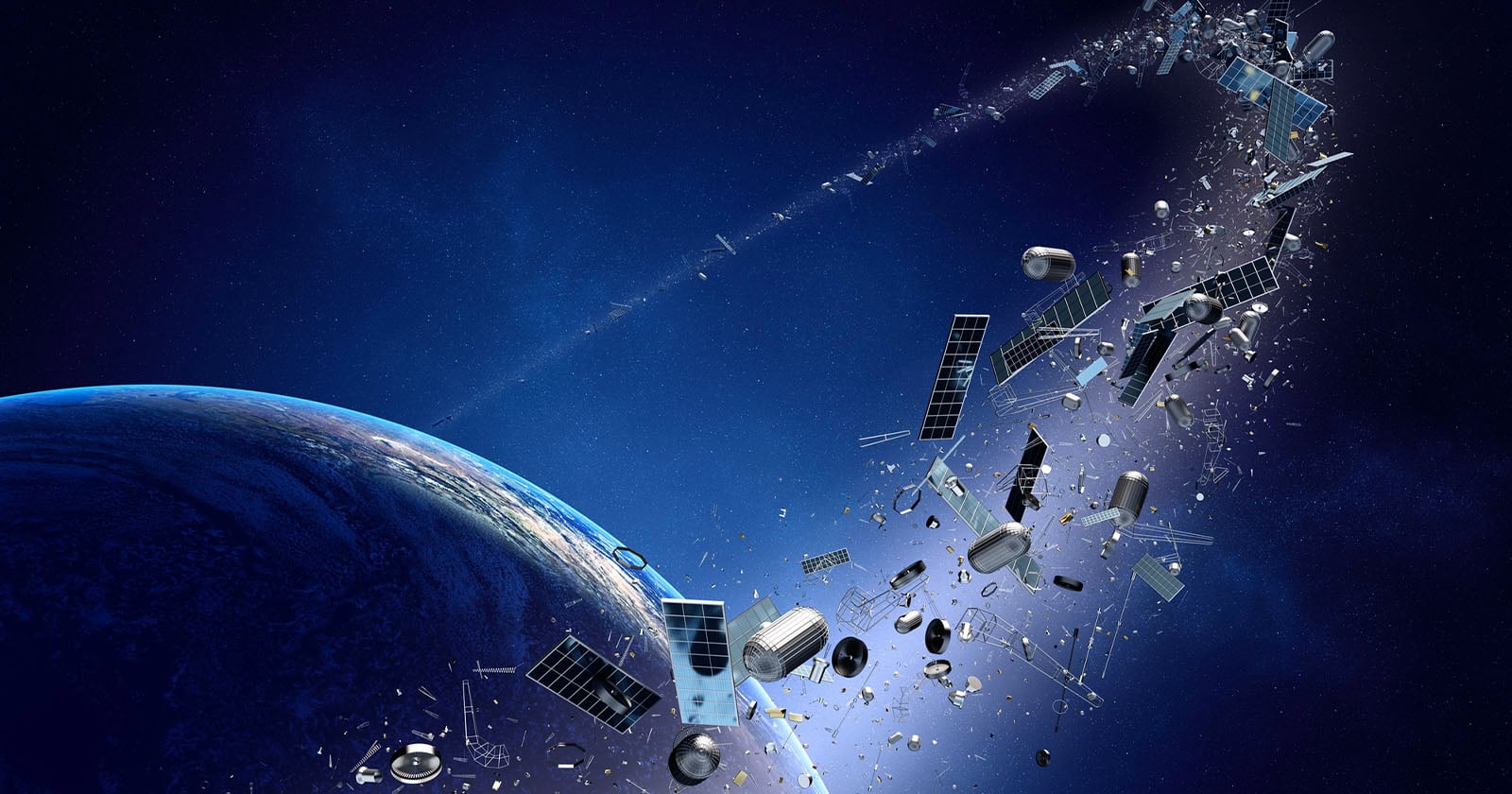
A large collection of space debris, including broken satellites and fragments, orbits above Earth against a dark blue, starry background.

They fly above us unseen -- some are taking photos of outer space -- but the intense network of satellites that orbit Earth in perfect coordination could collapse in just a couple of days, according to a new study.

[Read More]

Musk v Altman: Tech titans face off in court 

27 April 2026 at 17:39
Tesla CEO Elon Musk and OpenAI CEO Sam Altman are poised to face off in court Monday, as the yearslong feud between the two tech titans comes to a head at a trial over the ChatGPT maker’s corporate structure. Musk, who helped found OpenAI in 2015 before leaving and later launching his own AI company,...

❌
Subscriptions