Following the successful ten-year run of the Ontario Reptile and Amphibian Atlas, Ontario Nature developed a Long-Term Monitoring Protocol (LTMP) to fill important knowledge gaps about Ontario’s common and at-risk snakes. Since 2019, we’ve expanded the LTMP from nine monitoring locations to over 60 sites across the province! We recently published a Story Map where you can learn all about this project and how to get involved.
The Long-Term Monitoring Protocol (LTMP)
Ontario Nature’s Long-Te
Following the successful ten-year run of the Ontario Reptile and Amphibian Atlas, Ontario Nature developed a Long-Term Monitoring Protocol (LTMP) to fill important knowledge gaps about Ontario’s common and at-risk snakes. Since 2019, we’ve expanded the LTMP from nine monitoring locations to over 60 sites across the province! We recently published a Story Map where you can learn all about this project and how to get involved.
The Long-Term Monitoring Protocol (LTMP)
Ontario Nature’s Long-Term Monitoring Protocol (LTMP) for snakes was launched in 2019. It uses standardized survey methods across a large geographic area to help improve our understanding of snake populations, detect changes over time, and guide conservation efforts. The LTMP brings together First Nations, scientists, landowners and volunteers to monitor snakes across the province, using plywood boards placed within snake habitat.
Sites conducting snake surveys using the Long-Term Monitoring Protocol. Sites in darker green have been part of the project for longer; sites in lighter green have joined the project more recently.
Help us monitor snakes!
You can participate in snake surveys as a volunteer or set up a new snake monitoring site! Many of the existing sites are monitored by volunteers and may be looking for more people to help with surveys. If you have access to land with suitable snake habitat, you could set up your own site with plywood boards, survey for snakes, and contribute data to our province-wide database.
Rabbits and hares are often overlooked, even though they are a crucial part of our ecosystems serving as a key food source for many species and even an indicator of climate change.
“Poor rabbits. It’s the exact reason I started rehabbing them, because I felt sorry for them,” says Tallulah, founder of My Wildlife Rescue, the only authorized wildlife custodian in Ontario that specializes in rehabilitating neonatal and juvenile wild rabbits and hares. “Other animals have the ability to defend the
Rabbits and hares are often overlooked, even though they are a crucial part of our ecosystems serving as a key food source for many species and even an indicator of climate change.
“Poor rabbits. It’s the exact reason I started rehabbing them, because I felt sorry for them,” says Tallulah, founder of My Wildlife Rescue, the only authorized wildlife custodian in Ontario that specializes in rehabilitating neonatal and juvenile wild rabbits and hares. “Other animals have the ability to defend themselves.”
Tallulah, who opened her rescue in 2018, suggests there are two reasons that rabbits and hares are underrated animals: people see rabbits as common and often assume wild native rabbits and domestic rabbits are similar, so they lose interest in learning about wild ones. “Basically, they are just seen as common, and you can just get [a domestic] one in the store,” she says.
And unlike bears, lynx and wolves, “They aren’t charismatic megafauna…Humans like to learn about predators, I don’t know why, but it seems like something we can relate to,” Tallulah hypothesizes, “They are also very hard to study because they are small, quiet and active at dusk and dawn.”
Although largely understudied in Ontario, Tallulah argues that native rabbits and hares are sensitive indicators of climate change. Droughts, for example, can drastically reduce rabbit litters mid-summer, as extreme heat stresses mothers, limits food, and increases mortality among kits. “Last year, we had loads of babies in the spring, then nothing in the middle of the summer, and it picked up again in the fall,” says Tallulah, reflecting how a summer drought directly affects rabbit populations.
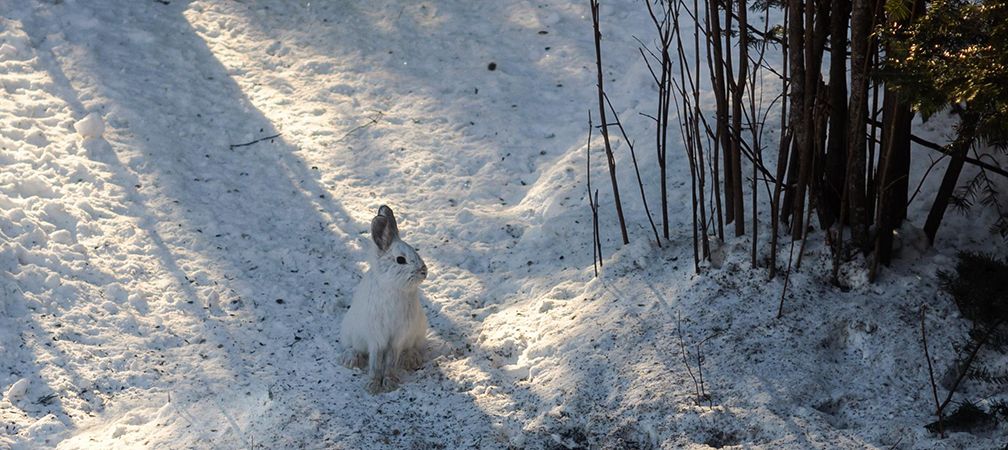
Snowshoe hares face another challenge: their fur changes colour based on day length, not snow cover. With winters arriving later and ending earlier, the white hares stand out against snowless ground, making them more vulnerable to predators. Changes in populations and survival rates of these animals reflect the broader impacts of shifting weather patterns.
Because wild rabbits and hares are often not seen as having economic value, rescues that care for them tend to receive limited public or government support and fewer donations. This is unfortunate, as species like the snowshoe hares form a crucial part of the food web. “They basically feed everybody. For example, the Canada lynx lives and dies by the cycle of the snowshoe hare. If there are very few hares, there will be very few lynx because that’s usually what they eat.”
At her Ottawa-based rescue, Tallulah cares for two of Ontario’s most common young rabbits (kits) and hares (leverets): Eastern cottontails and snowshoe hares. In total, Ontario is home to five species, including the white-tailed jackrabbit, Arctic hare in the far north, and the non-native European hare, which was introduced over a century ago but is rarely seen today. Chances are that the Eastern cottontail and snowshoe hare are the two you’ll most likely spot in the wild.
The Main Difference Between Rabbits and Hares
If you come across a young rabbit or hare, these key differences can help you identify them:
Rabbits are born blind, hairless, and completely helpless. They grow fur and open their eyes around seven to eight days old. Eastern cottontail rabbits build small nests, shallow indentations in the grass lined with fur and vegetation.
Hares are born with fur, with their eyes open, and are ready to move. Snowshoe hares do not burrow; instead, their leverets are born in the open. Within a day, the young start exploring and hiding, though they remain near the birthplace because the mother returns twice daily to feed them, similar to Eastern cottontails. Additionally, mature hares fur changes colour with seasons, helping them blend into their environment.
How to Help Rabbits and Hares
“Everybody can do something [to help rabbits and hares this spring],” says Tallulah. Here’s what she recommends:
Let grass grow the entire season, from early spring until late fall. Avoid mowing certain areas as tall grass provides food, cover and nesting spots. Mowing grass risks destroying nests and hurting or killing the kits and leverets.
For adult rabbits and hares living in the wild, provide clean water, not food. Never feed or attempt to tame wild rabbits and hares.
Plant native vegetation. Include extra vegetables in your garden for the rabbits instead of chasing them or letting pets harass them. “They don’t have a grocery store they can go to. Be kind,” says Tallulah.
Keep pets in check: Leash dogs and keep cats indoors or build a catio to protect wildlife.
Avoid rodenticides. Hire professionals that use humane ways to capture animals and keep harmful chemicals out of the food chain.
For wild rabbits and hares that need help, contact a wildlife centre that takes in rabbits. Tallulah also warns that domestic rabbits should never be released into the wild. Their bright colours make them easy targets for predators, and they lack the camouflage, instinct and hardiness of wild rabbits and hares. Additionally, they are too friendly towards humans and pets and the harsh climate is fatal for them. Released domestic rabbits often die quickly from starvation, predation or disease. Contact a rabbit rescue like https://rabbitrescue.ca/ or use this rabbit rescue resource page https://wabbitwiki.com/wiki/Ontario to rehome an unwanted pet.
At a friend’s cottage I recently uncovered a copy of The Reptiles of Ontario published in 1939 by the Royal Ontario Museum of Zoology. It’s an artifact that thrills with the mention of the extraordinary nature once found near human settlement.
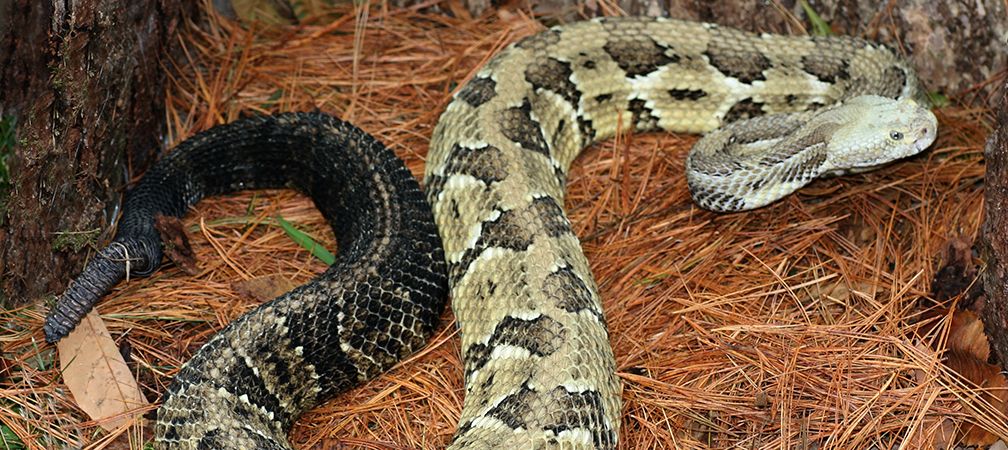
It says that, in 1877, a timber rattlesnake, a species now extirpated from Ontario, was discovered a mile from Niagara Falls and even into the late 1930s this large snake—which can be five feet or longer—was found at Niagara Glen.
The book’s most uplifting section is devoted to the Massasauga rattlesnake. The author, E.B.S. Logier, offers it a measure of empathy. In fact, he hints that it has intrinsic value.
This is extraordinary given that it’s long been reviled in the province. From the time of early settlement on, many considered it dangerous. Elizabeth Simcoe, wife of the first lieutenant-governor of Upper Canada, wrote in her diary in the 1790s that 700 rattlesnakes were killed during the building of a mill on the Humber River.
Logier laments that the creature is rarely seen and adds, “There will be multitudes of serious-minded people in the generations yet to come who will wish to see and study rattlesnakes…so there is a responsibility incumbent on us who are living today, and who by the very nature of the case are trustees of an estate to be passed on, not to wantonly destroy any living thing, regardless of whether from our point of view it is a desirable creature or not.”
Logier says we should protect rattlers because it would benefit humans: future Ontarians may want to experience them. But by urging their preservation even if they aren’t desirable ‘from our point of view’ he also suggests wildlife has inherent worth. It’s his use of ‘our point of view’ — coming decades before the modern environmental movement — that’s impressive here.
Further, in calling us “trustees of an estate”, he implies our job is not to exploit the natural world but to safeguard it. This echoes the message and conservation work of Ontario Nature, which reminds us that the environment is entrusted to us for future generations, not as something to own, but as something to steward.
Logier isn’t ready to grant the Massasauga constitutional rights (what might be called “security of the serpent”), but he’s gesturing in that direction.
And given he was writing 87 years ago, that’s admirable.

 Login
Login