
Normal view

  • ✇Popular Science
  • Marie Antoinette probably got braces to straighten her teeth Popular Science Team
    What’s the weirdest thing you learned this week? Well, whatever it is, we promise you’ll have an even weirder answer if you listen to Popular Science’s hit podcast. The Weirdest Thing I Learned This Week hits Apple, Spotify, YouTube, and everywhere else you listen to podcasts every-other Wednesday morning. It’s your new favorite source for the strangest science-adjacent facts, figures, and Wikipedia spirals the editors of Popular Science can muster. If you like the stories in this post, we guar
     

Marie Antoinette probably got braces to straighten her teeth

3 June 2026 at 17:05

What’s the weirdest thing you learned this week? Well, whatever it is, we promise you’ll have an even weirder answer if you listen to Popular Science’s hit podcast. The Weirdest Thing I Learned This Week hits Apple, Spotify, YouTube, and everywhere else you listen to podcasts every-other Wednesday morning. It’s your new favorite source for the strangest science-adjacent facts, figures, and Wikipedia spirals the editors of Popular Science can muster. If you like the stories in this post, we guarantee you’ll love the show.

FACT: Marie Antoinette probably had braces

By Rachel Feltman

The idea of Marie Antoinette in orthodontic braces probably sounds like something out of my favorite Sofia Coppola film, but it’s not as anachronistic as it sounds. While I couldn’t find a definitive primary source on the subject, there are historical mentions of Marie Antoinette undergoing orthodontic treatment. And in some ways, it would be more surprising if she didn’t do a stint in braces: modern dentistry as we know it was essentially invented in France in the early 1700s, and by the time Marie and Louis got hitched, French people were practically known for having straight, pretty teeth. We know that Marie Antoinette was given an intense French makeover in all things before being shipped off to Versailles, so it’s plausible that she had a bit of dental work done, too. 

If the idea of 18th century orthodontia makes you want to put your head between your knees, you’re not wrong. The hardware designed by Pierre Fauchard, called a bandolet or bandeau, used a horseshoe-shaped piece of metal that pressed against the inside or outside of the dental arch. Dentists would manually tie individual teeth to the appliance using either silk threads or thin metal wires. That is, admittedly, pretty identical to how braces work today—they exert constant pressure on teeth to help move them into new positions, then hold them there while everything settles into place. But modern braces are designed to move teeth more effectively and with as little pain as possible, and the bandeau was much more of a blunt instrument. 

For a fun French dental bonus fact, I dug into the weird social history of smiling on the eve of the Revolution. Check out this week’s episode to learn more! 

FACT: One woman’s cells have fueled most medical research for decades 

Featuring Hari Kondabolu and Dr. Priyanka Wali

Today’s special guests are comedian Hari Kondabolu and physician-slash-comedian Priyanka Wali. Together they host the podcast Health Stuff, where they dive into everything from earwax to sleep hygiene.

On this week’s episode of Weirdest Thing, Hari and Priyanka share the story of Henrietta Lacks. While being treated for cervical cancer at Johns Hopkins in the 1950s, this African American mother of five unknowingly—and involuntarily—changed the course of medical history. Cancer cells from one of her biopsies were sent off for research without her knowledge or consent. Unlike other cancer cells in the lab, hers kept doubling instead of dying off. They were the first human cells that were discovered to multiply easily in a lab setting, making them perfect for studying the impact of various drugs, hormones, viruses, and toxins. While the cell line that originates from Henrietta Lacks’ tissues—called the HeLa line—has been used in research that’s saved countless lives over the decades, they also serve as a reminder of the entrenched racism of our medical system.

Listen to this week’s episode to learn more about Henrietta’s story. And for a deeper dive, check out “The Immortal Life of Henrietta Lacks.” 

FACT: It’s possible that neanderthals knew how to treat cavities 

By Rachel Feltman

Surprise, more teeth! Scientists recently reported that a 59,000-year-old tooth—a neanderthal molar, to be precise—could conceivably have been drilled to treat a cavity. They came to that conclusion by tinkering with three modern teeth, AKA subjecting them to the horrors of prehistoric dental treatment, to show that the ancient chomper showed signs of the same. 

Unsurprisingly, not everyone is 100 percent convinced by the experimental evidence. But even if hominids weren’t drilling cavities that long ago, there’s good reason to believe we’ve been at it for longer than you might guess. A couple of teeth from the Stone Age (about 13,000 years ago) show less ambiguous signs of dental drilling, and dentistry has been a flourishing (if often misguided) practice for thousands of years. Many of our ancient ancestors even wore dental bridges made out of gold and other precious metals—so grills have a long, proud history. 

The post Marie Antoinette probably got braces to straighten her teeth appeared first on Popular Science.

  • ✇Popular Science
  • There’s more than one way to sterilize a cocaine hippo. Unfortunately, both ways suck.  Popular Science Team
    What’s the weirdest thing you learned this week? Well, whatever it is, we promise you’ll have an even weirder answer if you listen to Popular Science’s hit podcast. The Weirdest Thing I Learned This Week hits Spotify, YouTube, Apple, and everywhere else you listen to podcasts every-other Wednesday morning. It’s your new favorite source for the strangest science-adjacent facts, figures, and Wikipedia spirals the editors of Popular Science can muster. If you like the stories in this post, we guara
     

There’s more than one way to sterilize a cocaine hippo. Unfortunately, both ways suck. 

20 May 2026 at 15:09

What’s the weirdest thing you learned this week? Well, whatever it is, we promise you’ll have an even weirder answer if you listen to Popular Science’s hit podcast. The Weirdest Thing I Learned This Week hits Spotify, YouTube, Apple, and everywhere else you listen to podcasts every-other Wednesday morning. It’s your new favorite source for the strangest science-adjacent facts, figures, and Wikipedia spirals the editors of Popular Science can muster. If you like the stories in this post, we guarantee you’ll love the show.

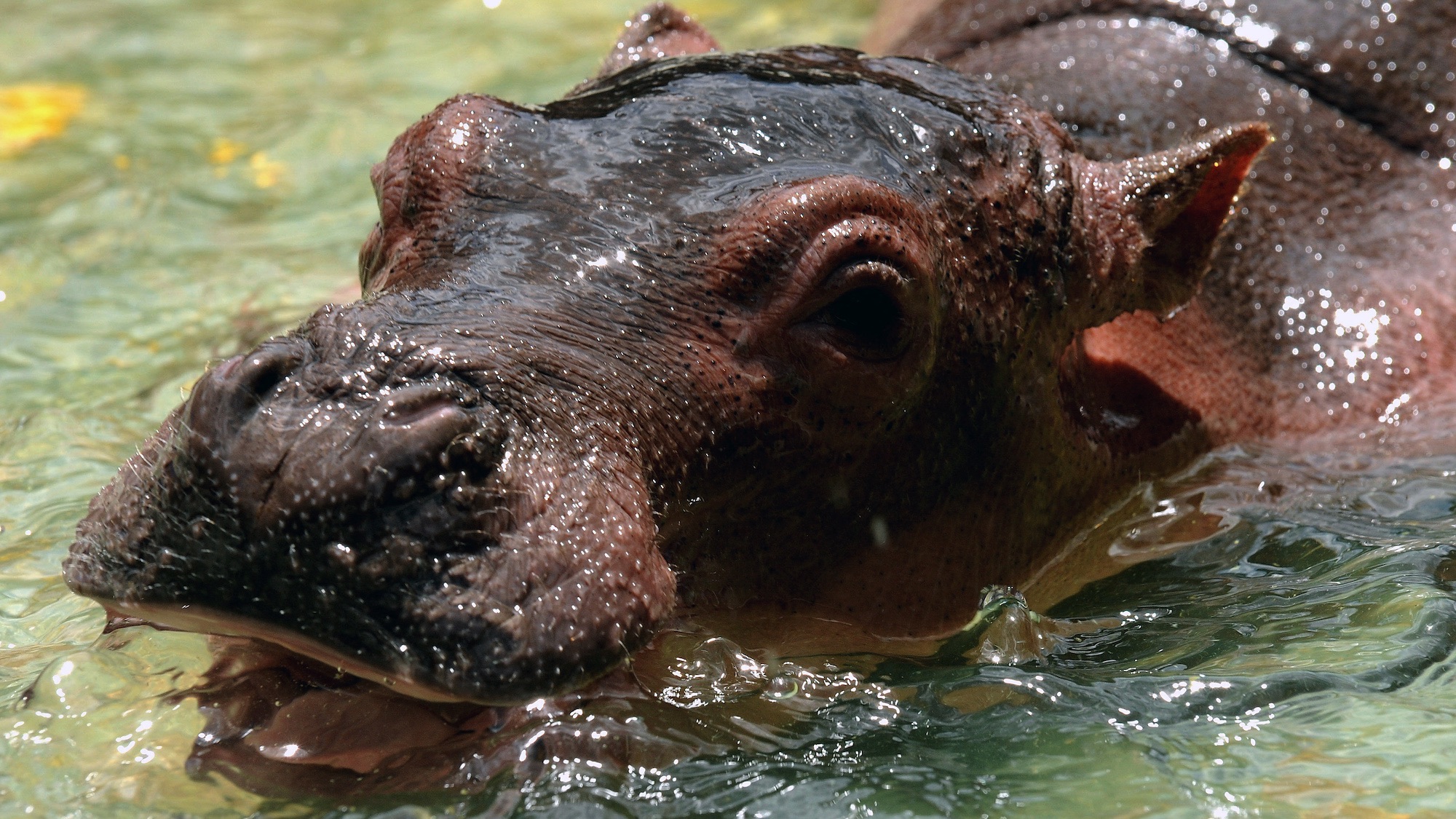
FACT: There’s more than one way to sterilize a hippo, but there’s no easy way to sterilize a hippo

By Rachel Feltman

If you’re a longtime fan of Pablo Escobar’s hippos, you may have heard that their time is running out. After years of trying to deal with these feral hippos conservatively, the Colombian government recently announced that they’ll have to cull some of them to curb their rampant population growth. An Indian billionaire did recently make a last-minute offer to save the hippos at any cost, but transporting a grown hippo—an incredibly deadly animal that weighs literal tons—is no easy feat, so it’s likely that some, if not all, of the planned culling will still take place.

This is not for lack of trying. Like, seriously: The government really, really tried to avoid killing any hippos. But the years-long effort to sterilize these animals has largely failed, and researchers say we’re running out of time to avoid a population too large to deal with. That got me wondering… what makes it so difficult to sterilize a hippo?

As you’ll learn in this week’s episode, sterilizing a hippo surgically is a difficult, dangerous, and expensive endeavor. And while chemical castration (AKA shooting hippos with birth control darts) might sound simpler, it’s… still difficult, dangerous, and expensive. 

For a hippo palate cleanser, I also dive into the herculean effort made to save Fiona the hippo a few years back, which required milking a hippo (a feat never before attempted!) and replicating hippo milk.    

FACT: John Steinbeck took part in a failed deep-sea drilling expedition

Featuring Ben Lillie (the co-founder of Caveat, our favorite venue in NYC!)

This week’s episode features special guest Ben Lillie, otherwise known as the keeper of our favorite place to do Weirdest Thing live shows! He spun a yarn about Project Mohole, a failed deep-sea drilling expedition that took place back in the 1960s. The expedition featured a surprising crew member: John Steinbeck, who covered the endeavor for LIFE Magazine in… very Steinbeck-ian fashion

Ben came across this story while working on a live show all about jargon. You can catch that show live and in-person at Caveat on Wednesday, May 27

FACT: Joseph Pilates didn’t mean for his workout to get so bougie

By Sara Kiley Watson

Pilates is a super trendy workout modality right now, and it’s gotten a reputation for being pretty elitist. But Joseph Pilates—yes, he was a real guy, and his name was Pilates—didn’t set out to create a workout that looked good on the ‘gram. He didn’t even set out to create a workout that people would spend loads of money on. The former circus performer actually dreamed up the exercises that would become pilates while interned in a prison camp. You can learn more about the reformer’s journey from janky hospital bed to sleek boutique workout equipment in this week’s episode, or by checking out this article I wrote about the history of Pilates

The post There’s more than one way to sterilize a cocaine hippo. Unfortunately, both ways suck.  appeared first on Popular Science.

  • ✇Popular Science
  • Movies use this one musical trick to make you feel miserable  Popular Science Team
    What’s the weirdest thing you learned this week? Well, whatever it is, we promise you’ll have an even weirder answer if you listen to Popular Science’s hit podcast. The Weirdest Thing I Learned This Week hits Spotify, YouTube, Apple, and everywhere else you listen to podcasts every-other Wednesday morning. It’s your new favorite source for the strangest science-adjacent facts, figures, and Wikipedia spirals our editors can muster. If you like the stories in this post, we guarantee you’ll love th
     

Movies use this one musical trick to make you feel miserable 

6 May 2026 at 16:02

What’s the weirdest thing you learned this week? Well, whatever it is, we promise you’ll have an even weirder answer if you listen to Popular Science’s hit podcast. The Weirdest Thing I Learned This Week hits Spotify, YouTube, Apple, and everywhere else you listen to podcasts every-other Wednesday morning. It’s your new favorite source for the strangest science-adjacent facts, figures, and Wikipedia spirals our editors can muster. If you like the stories in this post, we guarantee you’ll love the show.

FACT: This musical motif is works like an emotional cheat code 

By Jess Boddy

So I played a lot of Hollow Knight: Silksong last year. And if you’ve played or even watched some of that game, you’ll recognize the core motif that’s embedded in the game’s entire soundtrack. In fact, it might even sound familiar if you’ve never played Silksong at all. That’s because that motif is actually an 800-year-old Latin chant called the “Dies irae.”

After it made the rounds in the Catholic church as a part of funeral requiems, it jumped to secular music and eventually movies. Most memorably, the opening of The Shining copies the exact melody of this ancient church song. But composers also sneak it into less obviously menacing movie scores like Star Wars, The Lion King, Shrek, and hundreds more. (Another more recent example is Frozen 2.)

Of course, it’s also trickled into video games like Silksong—and Elden Ring, The Witcher 3, and many others. I was curious why this often four-note motif is so prevalent, so I interviewed a musicology professor at the Berklee College of Music. He helped me break down why this motif sounds so sad, both contextually, psychologically, and sonically. Listen to the full episode to hear the motif and see for yourself just how sad it is! (And keep an eye out for my upcoming YouTube video essay on the topic, too!)

FACT: A roller coaster ‘thoosie’ on the latest advances in amusement park tech

By Grant O’Brien

This week’s episode features special guest Grant O’Brien, who you’ve probably seen on the streaming network Dropout

The last time Grant joined us on Weirdest Thing, we broke format to quiz him on weird historical gossip:

This time, we let Grant go wild on his favorite nerdy hyperfixation: roller coasters. Check out this week’s episode to learn about the hottest new technological features in coaster design—and why he has a few notes for the folks who designed Falcon’s Flight.

FACT: This disabled bird is the alpha male of his flock 

By Rachel Feltman

Here’s a riddle for you: What do you call a bird with a busted beak? An alpha male, apparently.

This is the story of a kea—which is a species of alpine parrot from New Zealand—named Bruce. Bruce made the media rounds a few years ago because of his unique methods for adapting to a lack of top beak. After losing this seemingly necessary chunk of himself, researchers found, he found new ways to incorporate tools into his grooming and eating routine. Bruce was thriving! What a wholesome tale.

A new study sheds light on some arguably less adorable, but to my mind no less inspiring, behaviors from Bruce. To make a long story short, this disabled parrot uses his half-beak to stab his adversaries. And it works really, really well. In fact, the researchers studying Bruce say he serves as the alpha male of his flock (or “circus,” to use the correct term for a group of cheeky kea) by just about every metric they could measure. Far from being shunted aside due to his undeniable handicap, Bruce has basically invented a method of fighting that’s so foreign to his peers that they can’t figure out how to beat him. 

You can read more about Bruce’s innovative fisticuffs here

The post Movies use this one musical trick to make you feel miserable  appeared first on Popular Science.

❌
Subscriptions