
Normal view

  • ✇Malay Mail - All
  • Transforming mosques into lifesaving community —Mohd Afiq Mohd Nor and Mohd Hafyzuddin Md Yusuf
    MAY 19 — A mosque is more than a place of worship. In the heart of every community, it is a space where people gather, connect, learn and support one another. In today’s world, it can also become something even more powerful – a place that helps save lives.Imagine the scene after tarawih prayers. Congregants are greeting one another, families are resting at the mosque compound, and the atmosphere is calm. Suddenly, someone collapses and becomes unresponsive. In t
     

Transforming mosques into lifesaving community —Mohd Afiq Mohd Nor and Mohd Hafyzuddin Md Yusuf

19 May 2026 at 09:00

Malay Mail

MAY 19 — A mosque is more than a place of worship. In the heart of every community, it is a space where people gather, connect, learn and support one another. In today’s world, it can also become something even more powerful – a place that helps save lives.

Imagine the scene after tarawih prayers. Congregants are greeting one another, families are resting at the mosque compound, and the atmosphere is calm. Suddenly, someone collapses and becomes unresponsive. In that moment, time is no longer counted in minutes. It is counted in seconds.

The person standing closest may not be a doctor, nurse or paramedic. More often, it is an ordinary member of the public – a fellow worshipper, a student, a teacher, a father or a neighbour. Yet that person may hold the key to survival.

Out-of-hospital cardiac arrest does not wait for the perfect setting. It happens at home, in schools, at shopping malls, at workplaces and, yes, even in mosques. When it happens, the first few minutes are critical. Waiting passively for an ambulance may cost a life. Early cardiopulmonary resuscitation, or CPR, can keep blood flowing to the brain and vital organs while professional help is on the way.

This is why community readiness matters. CPR is not an advanced medical procedure reserved only for healthcare workers. Basic CPR can be learned by almost anyone. It is simple, practical and empowering. More importantly, it gives ordinary people the confidence to act when every second counts.

Recent stories of young children using CPR to help their friends remind us of a powerful truth: lifesaving skills are not limited by age or profession. If a child can learn and respond with courage, then surely adults, institutions and communities can do the same.

This is where mosques have an important role to play. Across Malaysia, mosques are already centres of spiritual development, education and social support. With the right training and partnerships, they can also become centres of emergency preparedness.

Programmes such as Selangor Beriktikaf ’26 at Masjid Raja Bendahara Tengku Badar Shah, Denai Alam, show how this can be done meaningfully. Through collaboration involving community organisations, healthcare professionals and the MyResQ initiative from Universiti Malaya, supported by Yayasan Inovasi Malaysia, worshippers were not only encouraged to strengthen their spiritual connection during Ramadan, but also equipped with basic lifesaving knowledge.

Participants were introduced to how to recognise an unresponsive person, how to perform effective chest compressions, and how to use an automated external defibrillator, or AED. 

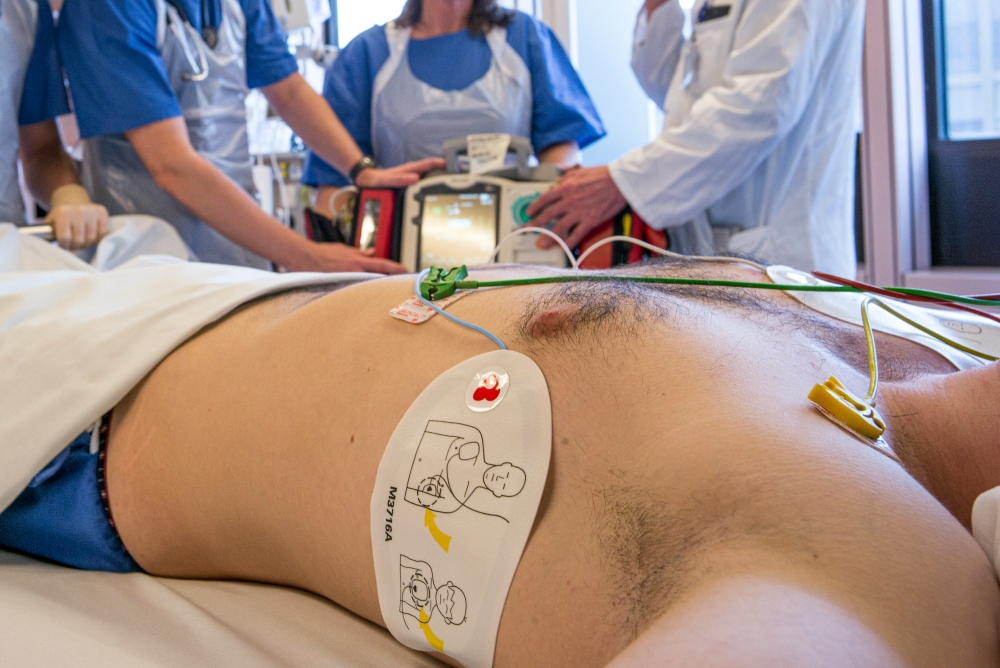
Emergency treatment using an AED is seen in this image, as calls grow for mosques and community spaces to be equipped with lifesaving emergency response tools and CPR-trained volunteers. — Unsplash pic

These are not abstract skills. They are practical actions that can make the difference between life and death.

Some may ask: what if an emergency happens during prayer? The principle is clear. Saving a life takes priority. In Islam, the preservation of life is a fundamental value. In a medical emergency, prayer can be paused or resumed later so that urgent help can be given. 

Compassion, courage and action are all part of serving a higher purpose.

However, knowledge alone is not enough. The greater challenge is hesitation. In emergencies, many people freeze. Some assume someone else will act. Others fear making a mistake. This bystander effect is common, but it can be changed through training, repetition and confidence-building.

Universities have a special responsibility in this space. A higher education institution should not only produce graduates and research papers. It should translate knowledge into public benefit. It should bring science, innovation and compassion into the community.

MyResQ reflects this mission. The initiative aims to connect emergency victims with trained responders nearby through digital technology. By using real-time alerts, AED location mapping, emergency call integration and CPR learning modules, MyResQ helps strengthen the chain of survival before professional responders arrive.

This is especially important because ambulance response may take several minutes, while cardiac arrest demands almost immediate action. In many cases, the community itself is the true first responder.

Now imagine if every mosque in Malaysia had trained CPR volunteers, accessible AEDs and congregants who knew exactly what to do when someone collapsed. The mosque would remain a place of worship, but it would also become a place of protection – a sanctuary not only for the soul, but also for life.

The question is no longer whether CPR should be learned. The real question is this: if someone collapses in front of us today, are we ready to act?

Higher education, faith institutions and communities must now work together. With knowledge, technology and compassion, we can build a Malaysia where help begins not only when the ambulance arrives, but from the very first person who chooses to step forward.

* Dr Mohd Afiq Mohd Nor and Dr Mohd Hafyzuddin Md Yusuf are Consultant Emergency Physicians at Universiti Malaya Medical Centre.

** This is the personal opinion of the writer or publication and does not necessarily represent the views of Malay Mail.


 

  • ✇Malay Mail - All
  • The shape of wisdom — Ng Kwan Hoong
      MAY 19 — Not long ago, I was reading a draft journal article submitted by one of my postgraduate students. The structure was sound. The language was clear and precise. The arguments were presented in a logical sequence, supported by appropriate references. Everything seemed in order. It was only when I reached the discussion section that I paused.The writing remained polished, and the analysis appeared coherent. Yet there was something about it that felt incomp
     

The shape of wisdom — Ng Kwan Hoong

19 May 2026 at 03:56

Malay Mail


MAY 19 — Not long ago, I was reading a draft journal article submitted by one of my postgraduate students. 

The structure was sound. The language was clear and precise. The arguments were presented in a logical sequence, supported by appropriate references. 

Everything seemed in order. It was only when I reached the discussion section that I paused.

The writing remained polished, and the analysis appeared coherent. Yet there was something about it that felt incomplete. 

The conclusions followed from the findings, but they did not seem to fully engage with the deeper implications of the work. The argument moved forward, but it did not quite arrive. 

I read the section again, trying to understand what was missing.

It was not a question of correctness. The analysis was not wrong. It was simply incomplete in a way that was difficult to articulate. 

The words were there, the structure was there but the sense of insight that comes from careful reflection seemed absent. 

In recent years, tools powered by artificial intelligence have become increasingly capable of producing text that is coherent, well-structured and persuasive. 

Intelligence, as it is often expressed in such systems, is closely tied to the ability to process information, identify patterns and generate responses that align with those patterns. — Reuters pic

They can summarise complex ideas, generate explanations and assist in drafting academic work. In many ways, they have changed how we engage with knowledge.

There is much to appreciate in these developments. They can support learning, improve efficiency and make knowledge more accessible. 

For students and researchers alike, they offer new ways of exploring ideas and organising thoughts.

Yet experiences like this raise a quieter question about how we recognise understanding when we encounter it.

Intelligence, as it is often expressed in such systems, is closely tied to the ability to process information, identify patterns and generate responses that align with those patterns. 

It can be fast, efficient and, at times, remarkably convincing. Wisdom, however, seems to take shape in a different way.

It does not emerge from the arrangement of knowledge alone, but from a sustained engagement with ideas over time. 

It is formed through reflection, through the willingness to remain with questions that are not immediately resolved, and through the gradual development of judgement that comes with experience. 

It involves not only asking what can be concluded, but also considering what those conclusions mean and how they should be understood.

In academic work, this distinction can be subtle, but it is significant. A piece of writing may accurately describe results and connect them to existing literature, yet still leave unanswered the deeper questions that give the work its meaning. 

What does this finding change? How does it challenge existing assumptions? Where might it lead next? 

These are questions that cannot always be addressed through structure or language alone, but require a level of attentiveness that develops over time.

Such understanding is not always immediate. It often takes shape through revision, reconsideration and, at times, through recognising that an answer has not yet fully emerged. 

This process may appear slow, but it is where genuine learning resides.

In this context, the presence of increasingly capable and powerful systems invites not only technical adaptation but also a renewed awareness of how we think. 

The clarity and fluency of generated responses can give the impression that understanding has already been achieved, when in fact something more is still unfolding.

The more subtle challenge, perhaps, is not that such systems can produce convincing responses, but that we may begin to accept them without asking whether they are complete.

This does not diminish their value. Rather, it highlights the importance of remaining engaged in the process of thinking, of reading with care, and of recognising when an argument has been fully considered and when it is still in formation.

As I returned to the student’s draft, I realised that the task was not simply to refine the writing, but to encourage a deeper engagement with the work itself. 

What was needed was not more knowledge but more reflection, not a clearer sentence, but a clearer understanding.

That distinction is not always visible on the surface but it is where much of intellectual growth takes place.

We are entering a time when the ability to produce intelligent responses is no longer the primary challenge. 

That capability is becoming increasingly available. What remains, and what perhaps becomes more important, is the cultivation of a different kind of understanding.

And it is in that gradual process of reflection, shaped by time, experience and a willingness to think beyond what is immediately given, that we begin to recognise the shape of wisdom.

*Ng Kwan Hoong is an Emeritus Professor of Biomedical Imaging at the Faculty of Medicine, Universiti Malaya. A 2020 Merdeka Award recipient, he is a medical physicist by training but also enjoys writing, drawing, listening to classical music, and bridging the gap between older and younger generations. He may be reached at ngkh@ummc.edu.my

** This is the personal opinion of the writer or publication and does not necessarily represent the views of Malay Mail.

 

  • ✇Malay Mail - All
  • Bridging the polar and tropical worlds — Goh Hong Ching and Muhammad Fardy Md Ibrahim
     MAY 19 — As world leaders and scientists gather in Hiroshima this week for the Antarctic Treaty Consultative Meeting (ATCM), it is a timely moment to reflect on why Antarctica, the world’s most remote continent, matters deeply to a tropical nation like Malaysia.Although separated from Antarctica by thousands of kilometres, Malaysia has long played a distinctive role in shaping international Antarctic discourse. In the 1980s, former Prime Minister Tun Dr Mahathir
     

Bridging the polar and tropical worlds — Goh Hong Ching and Muhammad Fardy Md Ibrahim

19 May 2026 at 01:35

Malay Mail


MAY 19 — As world leaders and scientists gather in Hiroshima this week for the Antarctic Treaty Consultative Meeting (ATCM), it is a timely moment to reflect on why Antarctica, the world’s most remote continent, matters deeply to a tropical nation like Malaysia.

Although separated from Antarctica by thousands of kilometres, Malaysia has long played a distinctive role in shaping international Antarctic discourse. In the 1980s, former Prime Minister Tun Dr Mahathir Mohamad brought Malaysia’s voice to the United Nations, calling for more equitable governance of Antarctica and greater participation of developing nations in decisions affecting this shared global space. That advocacy helped set the tone for Malaysia’s continued engagement as a Non-Consultative Party to the Antarctic Treaty System.

Today, while Malaysia does not hold voting rights at the ATCM, the country remains an active contributor through scientific collaboration, academic research, and environmental diplomacy.

For many Malaysians, Antarctica may seem a world away. But the science tells a different story. Melting ice sheets and shifting polar climate systems are directly linked to rising sea levels, coastal erosion, changing monsoon patterns, and increasingly erratic weather, all of which are already being felt in Malaysian coastal communities. Reports by the Intergovernmental Panel on Climate Change (IPCC) consistently highlight that the effects of polar change extend far into the tropics.

Researchers are also examining what scientists call “tropical-polar teleconnections” — the ways in which environmental changes in Antarctica can influence weather, ocean circulation, and climate systems across equatorial regions. For a maritime nation like Malaysia, these findings carry serious implications.

Recent data from the International Association of Antarctica Tour Operators (IAATO) shows that Malaysian travellers now rank among the top 20 visitor source countries to Antarctica. This is actually a trend that speaks to growing curiosity about one of the world’s last great wildernesses. However, this comes with a responsibility that should not be taken lightly.

Antarctica is not merely a bucket-list destination. It is one of the most fragile ecosystems on Earth, where even the smallest human footprint can have lasting consequences. Every Malaysian who makes the journey south has the potential to return as more than a tourist, e.g., as an educator, advocate, and storyteller who helps their community understand the profound connection between this distant continent and our own tropical shores.

Researchers are also examining what scientists call “tropical-polar teleconnections” — the ways in which environmental changes in Antarctica can influence weather, ocean circulation, and climate systems across equatorial regions. — Unsplash pic

Antarctica may feel remote, but its story is inseparable from our own. Every Malaysian whether a student curious about climate science, a teacher looking to broaden horizons, or simply someone who cares about the future of our coastlines and communities has a stake in what happens at the ends of the Earth.

Learning more about polar science, talking about it, and supporting policies that protect our shared environment are small but meaningful steps anyone can take. The more Malaysians understand the connection between the frozen south and our tropical home, the stronger our collective voice becomes in shaping a sustainable future for all.

Antarctica is not a distant curiosity. It is a barometer of planetary health and what happens there will shape the world we and our children inherit.

* Prof. TPr Dr Goh Hong Ching is a member of the Department of Urban and Regional Planning, Faculty of Built Environment, Universiti Malaya, and currently serves as Deputy Director of the Malaysia National Antarctic Research Centre and can be reached at gohhc@um.edu.my, while Muhammad Fardy Md Ibrahim is the Head of Corporate Affairs and Communication at the Sultan Mizan Antarctic Research Foundation and can be reached at fardy@ypasm.my.

** This is the personal opinion of the writer or publication and does not necessarily represent the views of Malay Mail.


  • ✇Malay Mail - All
  • Let’s have more good days, together — Haslina Muhamad
      MAY 15 — Every May, Mental Health Awareness Month reminds us that mental health is not only about the individual. It is also about the people, places, and systems around us.This year’s theme, “More Good Days, Together,” introduced by Mental Health America, is especially meaningful for Malaysia’s adolescents and young adults, who are growing up in a world that is fast, competitive, and deeply connected online.For many young Malaysians, daily life can be demandin
     

Let’s have more good days, together — Haslina Muhamad

15 May 2026 at 02:24

Malay Mail


MAY 15 — Every May, Mental Health Awareness Month reminds us that mental health is not only about the individual. It is also about the people, places, and systems around us.

This year’s theme, “More Good Days, Together,” introduced by Mental Health America, is especially meaningful for Malaysia’s adolescents and young adults, who are growing up in a world that is fast, competitive, and deeply connected online.

For many young Malaysians, daily life can be demanding.

A school student may be worried about SPM, tuition, peer pressure, or family expectations. A university student may be struggling with assignments, future job prospects, or living away from home. A young worker may be trying to manage career uncertainty, financial pressure, and the challenge of proving themselves in the workplace.

On the outside, many may appear fine; inside, some are quietly overwhelmed.

A good day may simply mean getting through school, university, or work without feeling alone.

For a teenager, it may mean being able to talk to a parent without being judged. For a student, it may mean going through the school day without feeling anxious or left out. For a young adult, it may mean having a friend, lecturer, colleague, or supervisor who notices when something is wrong.

Sometimes, it is enough to feel that someone cares.

This is important because mental health is shaped not only by what happens inside a person, but also by the environment around them.

From a social psychology perspective, our emotions, confidence, behaviour, and sense of identity are strongly influenced by our relationships and surroundings.

A young person who feels accepted at home, respected in school, included by friends, and safe online is more likely to cope with pressure. A young adult who feels supported at university or work is more likely to recover from difficult periods.

Parents can create more good days by listening calmly before advising. Teachers can create good days by noticing students who have become quiet, withdrawn, or unusually irritable. Friends can create good days by checking in instead of assuming everything is fine. — Picture via Pexels

In Malaysia, many young people still hesitate to talk about mental health.

Some fear being seen as weak, dramatic, ungrateful, or lacking faith. Others keep quiet because they do not want to worry their parents or disappoint their teachers.

This silence can make emotional struggles feel heavier.

Changing this culture does not always require big speeches; it often begins with small, everyday responses.

When a young person says they are tired, stressed, or overwhelmed, adults should avoid quickly saying, “Just be positive,” or “Other people have it worse”.

A more helpful response is: “I’m listening. Tell me what has been difficult”.

That simple sentence can make support feel safer.

The theme also reminds us that responsibility must be shared.

Parents can create more good days by listening calmly before advising. Teachers can create good days by noticing students who have become quiet, withdrawn, or unusually irritable. Friends can create good days by checking in instead of assuming everything is fine.

Universities and employers can create good days by building environments that value well-being, not only results and performance.

Schools and universities have a particularly important role.

Mental health education should not only appear during campaigns or special events. It should be part of student life through accessible counselling, peer support, anti-bullying action, balanced academic expectations, and training for teachers and lecturers to recognise early signs of distress.

Young people should grow up knowing that asking for help is normal, not shameful.

In today’s Malaysia, this discussion must also include the role of AI apps and digital mental health tools.

For many young people, the first place they express stress may not be a counselling room, but a phone screen.

A student who is anxious before SPM, a university student feeling overwhelmed by assignments, or a young worker struggling with burnout may first turn to an AI chatbot, mood tracker, wellness app, or online counselling platform.

This is not necessarily a bad thing.

Used wisely, AI tools can help young people put their feelings into words, track their moods, practise breathing exercises, or learn simple ways to manage stress.

For those who feel shy or afraid of stigma, these tools may become a first step towards seeking proper help.

But AI should not become the only support system.

An app cannot fully understand a young person’s family expectations, cultural background, religious values, school pressure, financial worries, or personal history.

It also cannot replace the comfort of a parent who listens, a teacher who notices, a friend who checks in, or a counsellor who is trained to help.

Malaysia should therefore treat AI as a bridge to support, not a replacement for human connection.

Schools, universities, families, and policymakers need to guide young people to use these tools safely, while ensuring that real counselling services, trusted adults, and professional help remain available.

In the spirit of “More Good Days, Together,” technology may open the door, but people must still walk through it together.

Families also need support in this conversation.

Many Malaysian parents care deeply for their children but may not always know how to talk about emotions. Some grew up in households where feelings were rarely discussed openly.

Mental health awareness should therefore include parents, not blame them.

Parents need simple guidance on how to listen, when to seek help, how to manage digital boundaries, and how to support children without adding more pressure.

Mental Health Awareness Month should not end when May ends.

For adolescents and young adults, the goal is not only awareness, but a Malaysia where help is easier to ask for, support is easier to find, and technology is used responsibly.

“More Good Days, Together” is a call to build a culture of care.

In Malaysia, more good days will come not from one campaign alone, but from the daily care we show at home, in classrooms, on campus, at work, and online.

*The author is an Associate Professor at the Department of Anthropology & Sociology, Faculty of Arts & Social Science, Universiti Malaya.

** This is the personal opinion of the writer or publication and does not necessarily represent the views of Malay Mail.  


❌
Subscriptions