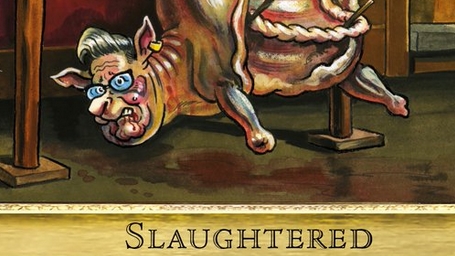
The general opinion around the world seems to be that Dear Leader is in way over his head in attempting to pull “The Art of the Deal” on Xi Jinping, and that, as MacKay illustrates, Xi is playing with him as a cat plays with a mouse, before eating it.Trump has said he and Xi […]
The general opinion around the world seems to be that Dear Leader is in way over his head in attempting to pull “The Art of the Deal” on Xi Jinping, and that, as MacKay illustrates, Xi is playing with him as a cat plays with a mouse, before eating it.Trump has said he and Xi […]
NEW YORK, June 10 — Use of GLP-1 drugs for diabetes or obesity early in the first trimester of pregnancy, before a woman realises she is pregnant, is not a cause for alarm, a large new data analysis suggests.These medications, which include Novo Nordisk’s semaglutide, sold as Ozempic and Wegovy, and Eli Lilly’s tirzepatide, sold as Zepbound and Mounjaro, are not recommended for use during pregnancy because their safety for the fetus is unknown and animal studie
NEW YORK, June 10 — Use of GLP-1 drugs for diabetes or obesity early in the first trimester of pregnancy, before a woman realises she is pregnant, is not a cause for alarm, a large new data analysis suggests.
These medications, which include Novo Nordisk’s semaglutide, sold as Ozempic and Wegovy, and Eli Lilly’s tirzepatide, sold as Zepbound and Mounjaro, are not recommended for use during pregnancy because their safety for the fetus is unknown and animal studies have suggested potential risks.
A box of Ozempic made by Novo Nordisk is seen at a pharmacy in London March 8, 2024. — Reuters pic
Researchers at the Harvard T.H. Chan School of Public Health analysed 3,572 pregnancies in women who were taking GLP-1 drugs prior to conception, including 1,467 in women with type 2 diabetes. They looked at outcomes that occurred with continued GLP-1 use into the first trimester, comparing them to non-continuation of the medicines.
After taking individual risk factors into account, the risk for non-live birth was 29.7 per cent with medication continuation versus 27.1 per cent with non-continuation, a difference that was not deemed statistically significant.
Staying on the drugs also did not appear to substantially increase the risks for low or high birth weight or major congenital malformations, although estimates for these outcomes were imprecise.
As GLP-1 use among women of reproductive age becomes more prevalent, “this provides some reassurance regarding unintentional exposure to GLP-1s early in pregnancy,” said study leader Dr. Jeremy Brown.
GLP-1 drugs can improve fertility in some obese women through weight reduction and enhanced insulin sensitivity. — Reuters pic
GLP-1 drugs can improve fertility in some obese women through weight reduction and enhanced insulin sensitivity. In addition, tirzepatide in particular has been found to compromise the absorption of oral contraceptives, which can contribute to accidental pregnancy.
Medical guidelines advise stopping GLP-1 drugs at least one or two months before pregnancy, and “our study cannot on its own change such recommendations,” said Dr. Sonia Hernandez-Diaz, senior author of the report published in Annals of Internal Medicine.
It is not possible to guarantee the drugs are safe, but women who used them before discovering they were pregnant needn’t panic, she said.
“Based on accumulated evidence, it does not seem like GLP-1 drugs when used during the months after conception increase the risk of common (adverse) outcomes substantially. That is as much as we can tell right now, which is reassuring,” Hernandez-Diaz said.
“The message would still need to be for pregnant women and those planning pregnancy to follow the label and their clinicians’ advice regarding GLP-1 when pregnant or planning pregnancy,” she said. — Reuters
Paramount+ today announced the surprise premiere of its new original animated series Among Us based on the globally popular social deception game. Series stars Yvette Nicole Brown and Liv Hewson announced all ten episodes are now available, exclusively on Paramount+, at Summer Game Fest Friday in Los Angeles. Created by Owen Dennis (Infinity Train) and […]
Paramount+ today announced the surprise premiere of its new original animated series Among Us based on the globally popular social deception game. Series stars Yvette Nicole Brown and Liv Hewson announced all ten episodes are now available, exclusively on Paramount+, at Summer Game Fest Friday in Los Angeles. Created by Owen Dennis (Infinity Train) and […]
Nat King Cole sang it best: “Roll out those lazy, hazy, crazy days of summer!” That’s exactly what we will do over the next several days, as Memorial Day Weekend unofficially kicks off the summer season.
With this easygoing season comes summer vacation. In 2021, 2024, and 2025, summer was celebrated with classic cartoons centering on summer vacations.
From these articles came suggestions from Cartoon Research readers for more classic cartoons on summer vacation, and here are just three of them:
Nat King Cole sang it best: “Roll out those lazy, hazy, crazy days of summer!” That’s exactly what we will do over the next several days, as Memorial Day Weekend unofficially kicks off the summer season.
With this easygoing season comes summer vacation. In 2021, 2024, and 2025, summer was celebrated with classic cartoons centering on summer vacations.
From these articles came suggestions from Cartoon Research readers for more classic cartoons on summer vacation, and here are just three of them:
“The Land of Fun” (1941), Columbia – suggested by Paul Groh
This “Columbia Favorite,” directed by Sid Marcus, features a number of gags that take satirical jabs at vacationers. The short parodies a travelogue, opening with a book that previews activities on vacation. The narrator (Frank Bingham) tells us we’re going to see “charm, beauty and good taste everywhere.” At this point, we cut away from two women sunbathing to a man sitting on his luggage with a toe that pops out of his sock.
From here, it’s a parade of jokes, including a lovely waterfall that seems to go on forever, then ends with a vacationer catching a tiny drop in a cup, a sheep herder (Mel Blanc) on the highland passage, who is asked how’s it’s going and answers “Not Baaa-ad,” snow capped mountains that acknowledge each other with such greetings as “Hi Sierra,” a beach goer who must walk across the heads of sunbathers, as the beach is so jam-packed and fisherman who wait while a fish down below shaves with their electric razor that’s plugged into an electric eel.
There’s also the recurring gag of “Joe Tourist,” who continually attempts to pass the car in front of him on a dangerous mountain road, until finally giving up, leaves his car behind and rides away on a bicycle.
The short ends with the sun literally sinking into the horizon, boiling the water and burning the rear end of a duck floating by.
The Land of Fun features a number of well-timed gags, set against lush, beautiful backgrounds, both of which remind us that while vacations can be picturesque, they can also come with a lot of work and provide a lot of laughs.
“Bee at the Beach” (1950), Disney – suggested by Tony Ginorio
This Jack Hannah-directed Donald Duck short brings the Disney star together with Spike the Bee, an entertaining supporting player from this era of Disney shorts.
As the short opens, Spike flies over a lovely background of the beach. He finds an open spot and is about to take it, when Donald (Clarence Nash) stakes his claim and puts up his umbrella, but Spike (James Mac Donald) still sets up his umbrella, (a flower), and a clam shell.
What then follows is Donald tormenting poor little Spike by stepping on him, and rinsing his towel off on him, while Spike gets revenge by using his stinger to poke holes in the straw of Donald’s soda bottle.
When Donald takes his raft out on the water, Spike deflates it. Donald manages to reinflate it but is surrounded by sharks. Spike seizes upon this situation and begins stinging holes in the raft, while Donald attempts to plug up the holes with his hands and webbed feet.
Spike cuts a hole in the bottom, causing Donald’s rear end to fall into the water, and the bee taunts the shark with the scent of one of Donald’s feathers, with the shark then pursuing Donald. This results in some good moments between Donald and the shark, including one with the shark’s tongue beckoning Donald to come forward.
It all ends with Donald being chased into the horizon by the shark, while Spike “buzzes” a laugh.
With animation from Bill Justice, Bob Carlson, Judge Whitaker, and Volus Jones, there is plenty of well-choreographed comedy here and solid animation of the two rivals. This Disney short also includes an opening shot of wall-to-wall beach umbrellas that will ring true with anyone who has ventured to the seaside during summer.
“It Was a Short Summer, Charlie Brown” (1969) – suggested by Doug
In one of the opening scenes of this Peanuts special, Charlie Brown asks Linus if he knows why English teachers go to college for four years. When Linus replies, “No,” Charlie Brown answers furiously, “So they can learn how to make stupid little kids write stupid essays about what they did all stupid summer!”
So begins this Peanuts adventure, which actually opens on the first day of school and “flashes back” to summer vacation, as Charlie Brown (Peter Robbins), Linus (Glen Gilger), Lucy (Pamelyn Ferdin), and the gang write their essays about summer vacation when they were all together at camp.
While at camp, the boys and girls compete in various events, including swimming and softball. The boys are defeated in each. Looking for a win, the boys challenge the girls to an arm-wrestling contest, with Snoopy disguised as the mighty wrestler “The Masked Marvel.”
During the arm-wrestling competition, Snoopy kisses Lucy, and pins her arm, but Lucy declares the kiss a foul.
When we return to the first day of school, Charlie Brown receives a “C-“ on his essay. “Oh well,” says Linus, “it was a short summer, Charlie Brown.” To this, Charlie Brown responds, “And it looks like it’s going to be a long winter.”
Directed by Bill Melendez, It Was a Short Summer Charlie Brown brings the usual on-point humor from Charles M. Schulz, (evidenced by such lines as when Charlie Brown says “I feel like I’ve been drafted!,” when he finds out that Lucy has signed everyone up for Camp). And all of this is combined with nostalgia and memories that those who have ever attended summer camp will no doubt feel.
Here’s the first three minutes…
And, as we enter these longer days and endless nights, feel free to drop more of your favorite cartoons that celebrate summer vacation in the comments below. Wishing all a safe and happy summer.
The other day I was thinking about Edward Sorel‘s famous New Yorker cover featuring a punker riding in a hansom cab — you know, the one that received a huge amount of attention because it marked the beginning of Tina Brown’s short reign as New Yorker editor.
Sorel’s cover got me to wonder about other New Yorker covers featuring a hansom cab. I would’ve guessed there’ve been at least a half dozen over the years, but I found — having just revisited The Complete Book of Covers From The New York
The other day I was thinking about Edward Sorel‘s famous New Yorker cover featuring a punker riding in a hansom cab — you know, the one that received a huge amount of attention because it marked the beginning of Tina Brown’s short reign as New Yorker editor.
Sorel’s cover got me to wonder about other New Yorker covers featuring a hansom cab. I would’ve guessed there’ve been at least a half dozen over the years, but I found — having just revisited The Complete Book of Covers From The New Yorker: 1925-1989 (Knopf, 1989) — the number is two. Now if we started counting covers featuring horses, well…that would be a much much bigger number.
It’s possible there was a stray hansom cab cover, post 1989, but I doubt it (please advise if you know of one).
Below are the two known (to me) New Yorker hansom cab covers. The first one was also used as the cover of The New Yorker’s Fifth Album of Drawings (Harper & Brothers, 1932).
In one of those interesting interesections, my copy, sans dust jacket, of the Fifth Album was given to me by Edward Sorel. The Album’s dust jacket was later given to me by Chris Wheeler, thus completing the set of dust-jacketed New Yorker Albums in the Spill library.
Julian De Miskey’s April 2, 1932 cover:
And this one from Robert Kraus, December 2, 1961:
Hansom cabs, cartoons-wise: it would take a lot (a whole lot) of searching to discover how many there’ve been. The magazine’s database turned up just one, and the hit was incorrect (the lone result was for a Ralph Barton drawing in the July 10, 1925 issue. The Barton drawing is there, but there’s not a hansom cab in sight). However(!), looking through that July 10, 1925 issue, I did find this:
Dave Brown, staff cartoonist for the UK’s Independent, has been let go from the newspaper after 30 years. From Dave Brown’s X/Twitter account: The final cartoon; after just under 30 years and something over 6,000 cartoons @Independent are letting me go to save a few quid! Thanks to everyone who followed me and for all […]
Dave Brown, staff cartoonist for the UK’s Independent, has been let go from the newspaper after 30 years. From Dave Brown’s X/Twitter account: The final cartoon; after just under 30 years and something over 6,000 cartoons @Independent are letting me go to save a few quid! Thanks to everyone who followed me and for all […]
EXCLUSIVE: Darren Aronofsky has joined the creative team of Dustin Brown’s upcoming feature Solidarity, exploring contemporary migrant realities in the U.S through an intimate portrait of two lives on the margins of L.A., as an executive producer. Elpidia Carrillo (Salvador) and Mantas Valentiejus (El Freeman) star as a Mexican seamstress and a Lithuanian butcher who […]
EXCLUSIVE: Darren Aronofsky has joined the creative team of Dustin Brown’s upcoming feature Solidarity, exploring contemporary migrant realities in the U.S through an intimate portrait of two lives on the margins of L.A., as an executive producer. Elpidia Carrillo (Salvador) and Mantas Valentiejus (El Freeman) star as a Mexican seamstress and a Lithuanian butcher who […]
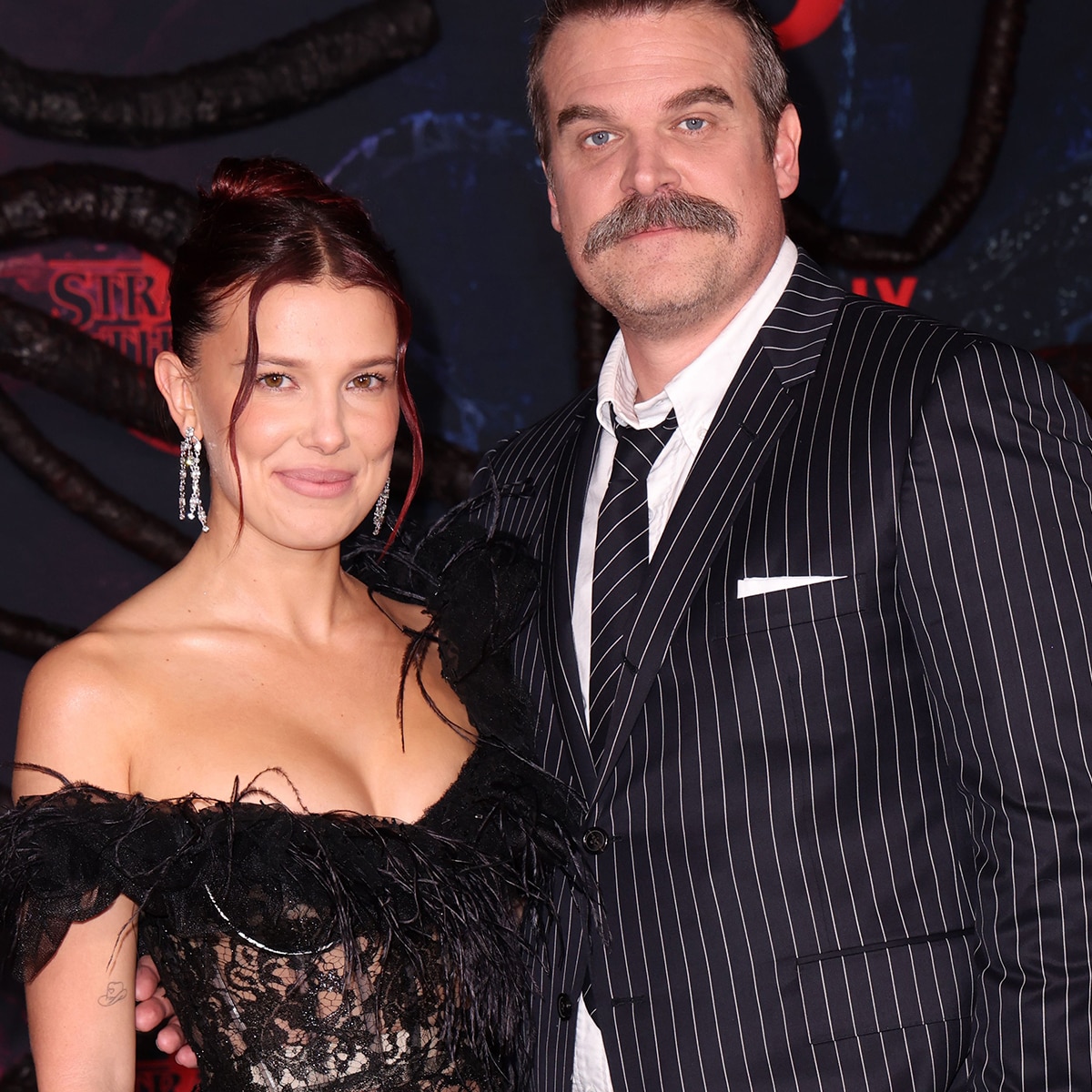
Friends don’t lie—not even to protect fans’ feelings.
And David Harbour did not hold back when sharing his POV on what happened to Millie Bobby Brown’s Eleven in the series finale of Stranger...
Friends don’t lie—not even to protect fans’ feelings.
And David Harbour did not hold back when sharing his POV on what happened to Millie Bobby Brown’s Eleven in the series finale of Stranger...
 Login
Login







 “Bee at the Beach” (1950), Disney – suggested by Tony Ginorio
 Spike cuts a hole in the bottom, causing Donald’s rear end to fall into the water, and the bee taunts the shark with the scent of one of Donald’s feathers, with the shark then pursuing Donald. This results in some good moments between Donald and the shark, including one with the shark’s tongue beckoning Donald to come forward.