 Login
LoginBelgian Tradecard - Savon Violettes, 1895
22 May 2026 at 05:36



v3rmiciousknid posted a photo:

05.23.2026 Circa 1960s tourist postcard depicting Comanche & Kiowa tribes

v3rmiciousknid posted a photo:
05.29.2026 Postcard Oklahoma City OK Rocket Skating Sign from Betty Browns 1979. The 815 N. Virginia Ave. location (the main/long-term Rocket Skating Club rink) was the one associated with “Betty Brown’s.”


Six years in the making, Christina Mrozik’s new project tackles “the feelings of all things.” Fifty cards comprise the richly illustrated oracle deck, which delves into a vast emotional terrain through the artist’s distinctive visual metaphors of flora and fauna. Monochromatic in palette and surreal in subject matter, the individual works portray a variety of curious pairings from twin turtles with eyes nested into their shells to a bird speared by a spindly tree to a lily pad bursting from an open alligator jaw.
“Each drawing took between 20 to 40 hours of focused work,” Mrozik writes. “I built every image in layers—starting with rough sketches, researching forms, refining the composition, and slowly developing the final drawing in pencil until it felt complete.”
What results is an “emotional ecosystem designed to help you witness your feelings, understand their purpose, and build a relationship with your inner world. It is not a tool for fixing yourself, but a practice for meeting yourself,” they add.
As with much of Mrozik’s work, The Feelings of All Things melds beauty and pain, death and life. The deck is designed to be used on its own or alongside a preferred tarot set, either by selecting an illustration that feels most alluring or profound in the moment or simply choosing a card and reflecting on the imagery.
The Feelings of All Things has just under a week to go on Kickstarter, where it’s blown past its original goal, although there are still a few rewards available. Find more on Mrozik’s website and Instagram.
Do stories and artists like this matter to you? Become a Colossal Member today and support independent arts publishing for as little as $7 per month. The article Christina Mrozik Illustrates an ‘Emotional Ecosystem’ Oracle Deck with Fantastical Forms appeared first on Colossal.
One of Japan’s most popular dessert mascots is set to go with you as you tap through ticket gates.
Last year, one of Japan’s many railway companies, JR East, announced that they would be retiring their iconic mascot character featured on their rechargeable prepaid transit card, Suica, much to the dismay of many of its fans. Meanwhile, JR Central, another rail company, has decided to celebrate the 15th anniversary of Nagoya’s beloved dessert Piyorin with a special release of its Toica card.
Despite the similar sounding names, the massive JR (Japan Railways) network is split into independent regional companies that operate within their own territories. For example, JR East handles Tokyo and northern Japan, while JR Central manages the lines surrounding Nagoya and the central Tokai region. Unlike several countries where trains are state-run, Japan’s rail networks are entirely privately owned by companies such as these (though the JR network was previously the government-run Japanese National Railways from 1949 until 1987).
As a result of this regional division, each JR company issues its own transit card, commonly referred to as an IC card, for daily travel. Travelers arriving into Tokyo are usually introduced to the Suica (JR East) or Pasmo (Tokyo Metro and many other non-JR lines around Tokyo) cards that let them tap through ticket gates seamlessly. In the Central Japan region around Nagoya, the local equivalents are the Toica (JR Central) and Manaca (Nagoya Subway, Meitetsu, and other non-JR lines around Nagoya) cards.
While these cards are issued separately within their own regions and feature different mascots, which can lead some to travel around Japan collecting them, many of the cards are completely interoperable.
▼ I have a long way to go.
A Toica card purchased in Nagoya, for example, can be used on Tokyo subways, Kyoto buses, and at thousands of convenience stores nationwide.
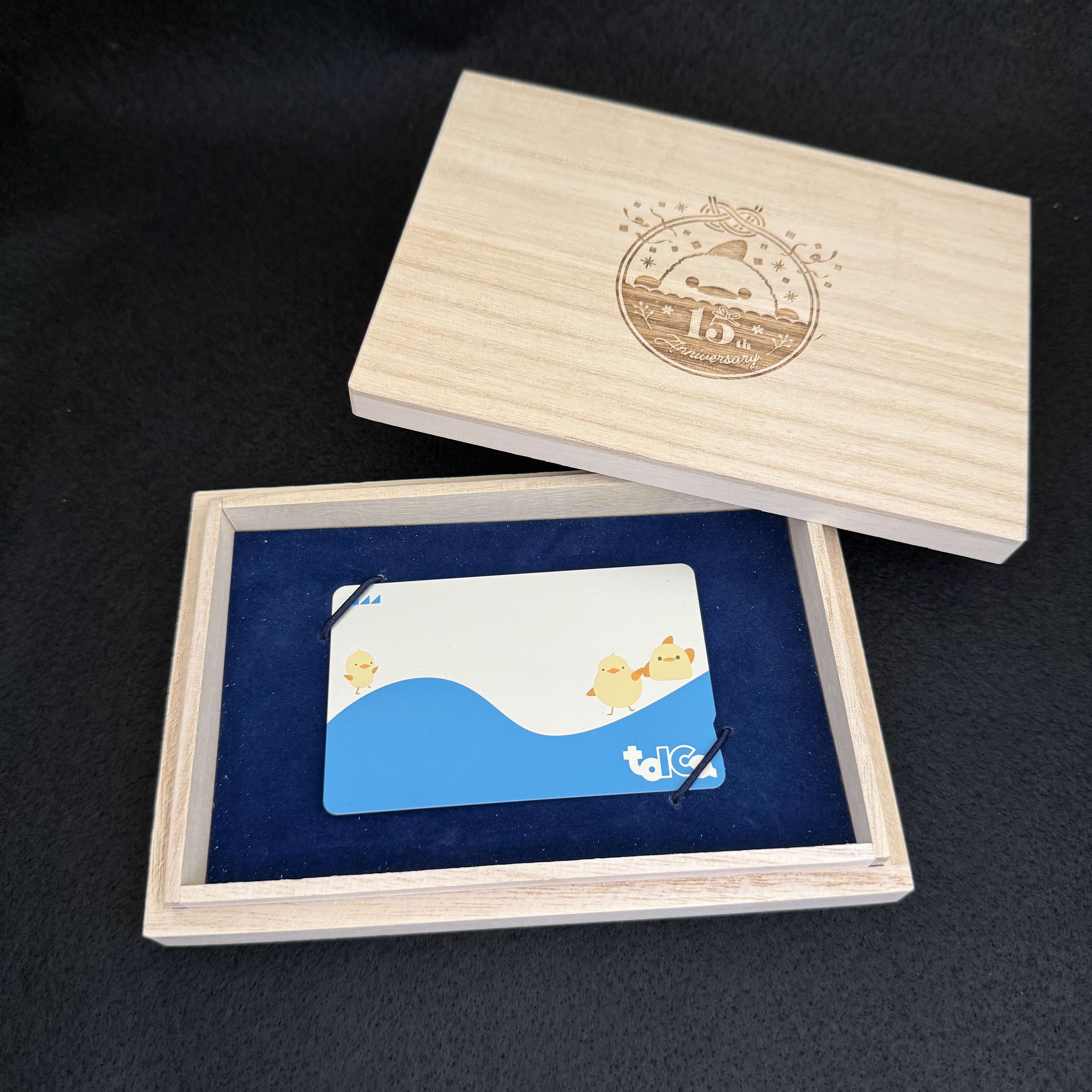
The commemorative Piyorin Toica card has the standard Toica chick mascots alongside Piyorin on the face of the card.
Piyorin itself is a famous Nagoya fresh dessert made from locally sourced eggs, consisting of pudding wrapped in vanilla bavarois and covered in crumbly sponge cake.
People looking to grab the new Piyorin Toica card will need to make their way to the region operated by JR Central (Nagoya and its surroundings) where it will begin being dispensed in late May 2026 from automatic ticket vending machines and customer service windows at major train stations. For those further away, sales will start at JR Tokai ticket windows at major Shinkansen stations along the Tokaido line from September 1, 2026. Smaller stations within the coverage area will also get access to the Piyorin card supply at this time. Each card will cost 2,000 yen (US$13), which includes 1,500 yen as a usable amount and a 500 yen deposit.
As part of the celebration JR Central released a special online-exclusive Piyorin Toica card in a paulownia wood storage box costing 4,980 yen. However, the 3,000 sets were completely sold out within a couple of days of its launch, attesting to Piyorin’s popularity.
If you’re expecting to go out tomorrow and pick up a Piyorin Toica, you might face some disappointment, as they’ll only start to be dispensed when current Toica card stocks run out, so the start date of the sales will vary depending on the station. Sales of the Piyorin cards will also end when they run out at each station, so there is definitely an element of luck to getting one, if the online sales are anything to go by. That being said, a Piyorin card is a great way to make a souvenir of your travels just a little bit sweeter.
Related: Online-Exclusive Piyorin Toica Card, JR Tokai Ticket Window Locations, Toica Usage Information
Source: PR Times
Top and insert images: PR Times
Insert IC card collection photo ©SoraNews24
● Want to hear about SoraNews24’s latest articles as soon as they’re published? Follow us on Facebook and Twitter!
New system would prevent non-residents from buying certain items from Pokémon Center Online.
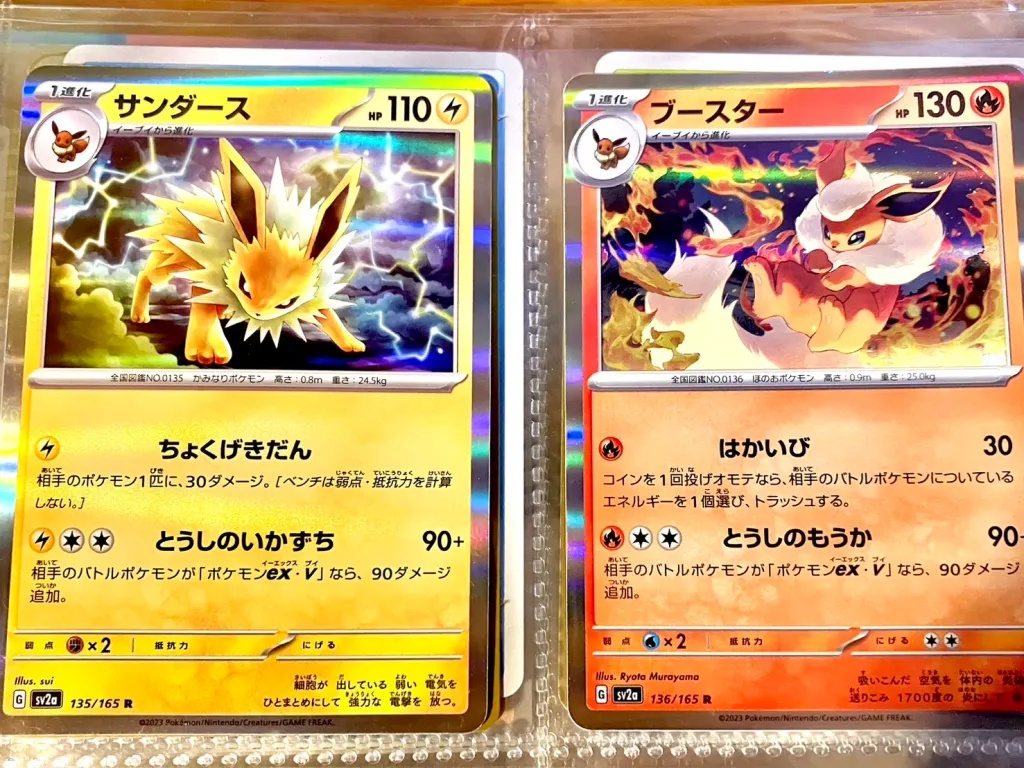
Scalping is becoming an increasingly big problem for the Pokémon franchise in Japan, and we’ve been seeing increasingly inventive attempts to counter resellers’ attempts to snatch up in-demand items and flip them for profit, such as stores making shoppers pass a Pokémon quiz before they can make a purchase or taking scissors to the packaging afterwards. Now the Pokémon Company itself is considering possibly the strictest measure yet: requiring would-be Pokémon card buyers to show a government-issued ID card before buying packs.
While Pokémon is an even bigger deal in its home country than in the many other nations around the world where it’s phenomenally popular, this wouldn’t be a card issued by the Japanese government specifically for Poké-purchases. In a statement posted to the official Pokémon Trading Card Game website on Thursday, the company says that it is looking into requiring buyers to confirm their identity via their My Number Card. Introduced in 2016, the My Number Card is an ID card that includes the bearer’s name, address, date of birth and photo, along with a 12-digit unique personal identification number.
As of 2021, My Number Cards also include an embedded IC chip, and it’s this technological feature that the Pokémon Company wants to apply to the purchase of Pokémon cards via the Pokémon Center Online, the Pokémon franchise’s official online store. Under the system, would-be buyers would use a third-party service to read their My Number Card’s IC chip and confirm their identify, after which they would be authorized to make the applicable purchases.
▼ A My Number Card interfacing with a smartphone
The Pokémon Company isn’t planning to make My Number Card verification a requirement for any and all online purchases, but the announcement says it would be applied to “the purchase and lottery registration for certain items,” most likely referring to new releases and high-demand items (which are often offered through a lottery system in which purchase rights are randomly awarded if demand is expected to be much greater than supply).
Ostensibly, this system would allow the Pokémon Company to more easily identify scalpers who are buying in bulk and block them from making further purchases. However, there are other groups which would also be shut out from making purchases by a My Number requirement, starting with people who aren’t Japanese residents. My Number Cards are only issued to Japanese citizens and foreign residents of Japan, so tourists or overseas shoppers would be out of luck. This might actually be an intended effect of the system, though, as there’s a perception in Japan that foreign resellers make up a sizable portion of the scalper demographic.
Non-residents wouldn’t be the only ones affected by this system, though. Japanese citizens/residents aren’t legally required to have a My Number Card, and need to file application paperwork in order to obtain one. As such, there’s a portion of the Japanese population that doesn’t have a My Number Card yet, and simply uses other forms of ID, such as a driver’s license, insurance card, or foreign resident card, instead. My Number Cards also aren’t normally issued to children under 15 (though that probably won’t make a difference for buying things from the Pokémon Center Online, since kids that young won’t have their own credit card either).
The Pokémon Company says it’s also planning to make My Number Card identification verification a requirement for registration for certain official Pokémon Card Game tournaments in Japan. This seems like it could present a problem for younger competitors, but it’s likely that official registration requires a parent or guardian’s consent, and so the adult’s My Number Card would be used as a proxy form of identification.
The Pokémon Company’s announcement says that the goal of the My Number system would be to “ensure fair opportunities and safe, secure service to all customers,” and while the Pokémon Card Game website says that they are “looking into the introduction” of the system, the Pokémon Company’s official Twitter account is firmer in its declaration that they “are planning to introduce” a My Number Card requirement. The system is projected to be in place as early as August, and with application processing time sometimes taking up to two months, passionate fans will need to get their paperwork started soon.
Source: Pokémon Trading Card Game official website, Pokémon Company official Twitter account via Kinisoku
Top image ©SoraNews24
Insert images: Pakutaso, SoraNews24
● Want to hear about SoraNews24’s latest articles as soon as they’re published? Follow us on Facebook and Twitter!
