Normal view

Brace for impact: Malaysian retailers warn worst price increases still coming as US-Iran war festers

12 June 2026 at 01:43

Malay Mail

KUALA LUMPUR, June 12 — Malaysian consumers, already weathering months of relentless price hikes, face a sobering warning: the worst may yet be coming.

According to the latest industry report from Retail Group Malaysia (RGM), a fresh wave of retail price increases is expected to hit this month.

This new surge arrives as the country grapples with an inflationary environment that has been steadily deteriorating since the start of the year. Inflation rose 1.6 per cent in the first quarter of 2026, only to jump further to 1.9 per cent in April alone.

The categories driving this spike mirror the daily struggle of the average household: insurance and financial services surged 4.9 per cent, personal care and miscellaneous services climbed 4.8 per cent, and transport costs rose 4.1 per cent.

Even the simple act of dining at restaurants, cafes, and takeaway outlets saw a rise of 2.6 per cent.

“To make matters worse, new wave of retail price increases is expected to begin from June this year,” RGM said in its report.

The root cause of this mounting pressure is thousands of kilometres away. The escalation of conflict between the US, Israel, and Iran in February has sent fuel prices spiralling.

Between the first week of March and the first week of June, unsubsidised RON95 jumped 39 per cent, from RM2.67 to RM3.72 per litre. Diesel prices in Peninsular Malaysia were hit even harder, climbing 45 per cent to reach RM4.67.

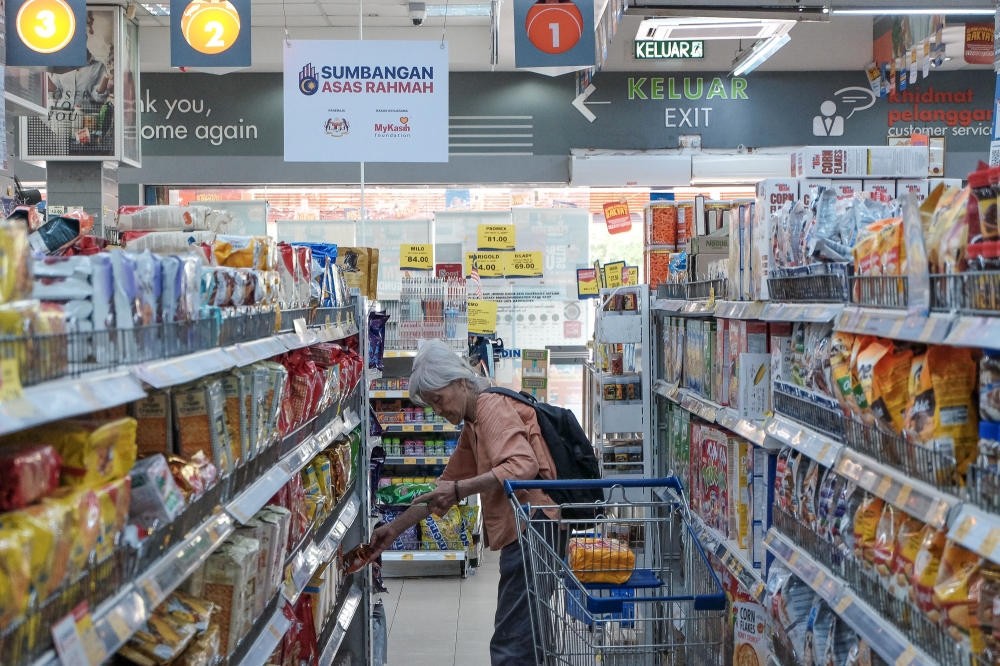
These costs do not stay confined to the petrol pump; they bleed into every corner of the economy. RGM notes that the “fuel effect” has already inflated prices for a staggering array of essentials: from groceries and dining out to car repairs, house rentals, medical consultations, tuition fees, and even airline tickets.

The latest warning suggests this list is about to grow longer.

The timing is particularly precarious. RGM’s initial projection of 3.7 per cent retail growth for Q1 2026 already fell short of the 4.4 per cent retailers had hoped for in March.

Now, heading into the second half of the year, RGM has slashed its full-year retail sales growth forecast from 4.0 per cent to 3.8 per cent, citing the direct hit the conflict has taken on consumer purchasing power.

This caution is echoed at the highest levels of government. The Malaysian government has revised its annual inflation forecast upward to between 1.5 per cent and 2.5 per cent,a significant jump from the previous estimate of 1.3 per cent to 2.0 per cent.

RGM suggests the final figure will likely lean toward the upper end of that range.

For the manufacturing sector, the pressure is compounding. Prolonged conflict in the Middle East has not only spiked energy prices but disrupted supply chains and inflated logistics costs.

Manufacturers are now trapped in a difficult balancing act: absorb these costs and risk their margins, or pass them on to the consumer.

For the ordinary Malaysian, the implication is straightforward: the pinch felt at the petrol station, the grocery store, and the dining table is set to intensify.

With retailers across multiple sectors already adjusting prices to survive rising input costs, households must brace for a tighter budget.

RGM’s report also offers no sign of a reversal before the year ends, marking the second half of 2026 as a period of high-stakes navigation for both businesses and consumers.

  • ✇Malay Mail - All
  • How Trump’s forced labour tariffs could do more harm than good
    EU officials, analysts argue EU’s forced labour rules are stricter, more comprehensive than those in USCritics warn tariffs may be counterproductive, driven by trade politics not human rights concernsLONDON, June 5 — President Donald Trump’s threat to slap new tariffs on trade partners the US accuses of failing to crack down on forced labour will do little to fight modern slavery — and could even make things worse, experts, business groups and some human rights g
     

How Trump’s forced labour tariffs could do more harm than good

5 June 2026 at 09:12

Malay Mail

  • EU officials, analysts argue EU’s forced labour rules are stricter, more comprehensive than those in US
  • Critics warn tariffs may be counterproductive, driven by trade politics not human rights concerns

LONDON, June 5 — President Donald Trump’s threat to slap new tariffs on trade partners the US accuses of failing to crack down on forced labour will do little to fight modern slavery — and could even make things worse, experts, business groups and some human rights groups say.

In its latest trade salvo, the Trump administration proposed additional duties of 10 per cent or 12.5 per cent on imports from 60 countries for failing to curb trade in goods made with forced labour, an assertion that US trading partners rejected.

The plan from the US Trade Representative’s office comes from a Section 301 unfair trade practices investigation designed to help restore Trump’s emergency tariffs, struck down by the US Supreme Court in February.

Trade and human rights experts said it would do little to solve widespread issues of child labour, forced labour and other abusive employment practices in the global supply chain.

“The essence of this new measure has very little or anything to do with forced labour. It’s just a new justification for trade tariffs,” said Ram Ben Tzion, co-founder and CEO of digital shipment-vetting platform Publican.

According to the International Labour Organization’s most recent global estimates, there are 27.6 million people in forced labour — an increase of about 2.7 million since 2016. Nearly half of all forced labour cases in the private economy are found in export-related sectors: manufacturing, construction, agriculture and fishing, and mining.

The EU comparison

The US case against the European Union, one of its largest trading partners, has drawn particular scrutiny.

The USTR report criticised the EU’s Forced Labour Regulation, which starts to apply in December 2027. It sets a higher bar for proof of violations than US rules and requires authorities to establish a substantiated concern before acting.

The European Commission said the tariffs were unjustified, reiterating its commitment to the trade deal sealed with Washington last year that capped the US tariff rate on most EU goods at 15 per cent.

International human rights group Walk Free said no G20 country is doing enough to combat forced labour relative to its wealth. The US is among the top 10 countries with the largest number of people living in modern slavery, Walk Free said.

International Chamber of Commerce Deputy Secretary-General Andrew Wilson said the “arbitrary nature” of the tariffs was a cause for concern.

“It doesn’t make sense if the object of this is to enhance controls on modern slavery,” he said, adding planned EU measures once implemented would eventually be broader than US ones.

“The EU regime may ultimately have broader market reach because it covers imports, products sold in the EU, and exports from the EU.”

Sebastian Ruenz, ESG and supply chain specialist at law firm Taylor Wessing, agreed the EU’s framework was not as weak as Washington implied. The EU ban covers products made with forced labour worldwide, regardless of the country of origin.

“It will be structurally far more comprehensive than the US law,” he said, noting that Germany, with the Supply Chain Due Diligence Act, and France, with a similar law, have already established national standards regarding forced labour.

Tariffs as a tool: potentially counterproductive

Businesses, struggling to navigate Trump’s volatile trade war, which has piled on costs and upended supply chains over the past year, were still digesting the latest threat of levies.

Rick Woldenberg, CEO of educational toy maker Learning Resources, disputed the premise of the investigation which linked efforts to tackle modern slavery with US commercial interests.

“The reason that ... countries have signed up in opposition to forced labour is not because of competitive reasons, it’s because it’s immoral,” he told Reuters.

Even those who broadly support import bans as a weapon against modern slavery doubted whether tariffs like those threatened by Trump, calibrated to trade volumes rather than to the severity of exploitation, could achieve meaningful change.

The most extreme forms of forced labour — state-imposed systems in China’s Xinjiang region, Turkmenistan’s cotton sector, and North Korea — are not the primary targets of the tariffs, which are instead shaped by trade volumes and geopolitical considerations, said Hélène de Rengerve, senior advocate for corporate accountability at Human Rights Watch.

“It is also not clear how will this be an incentive to actually improve the situation,” she said. “It might even create more political resistance in some countries. I fear it might be counterproductive to the objective of fighting forced labour.” — Reuters


  • ✇Malay Mail - All
  • The robot in the warehouse isn’t the enemy, complacency is — Ahmad Ibrahim
     JUNE 9 — A recent paper, “The Impact of AI on Job Opportunities and Challenges in the Supply Chain Sector,” didn’t scream about a robot apocalypse. It didn’t promise a frictionless utopia, either. Instead, it did something far more useful: it told the truth. And the truth is this—AI is not coming for your warehouse job tomorrow. But it is coming for the version of your job that involves mind-numbing repetition, manual data entry, and staring at a spreadsheet to
     

The robot in the warehouse isn’t the enemy, complacency is — Ahmad Ibrahim

9 June 2026 at 02:55

Malay Mail


JUNE 9 — A recent paper, “The Impact of AI on Job Opportunities and Challenges in the Supply Chain Sector,” didn’t scream about a robot apocalypse. It didn’t promise a frictionless utopia, either. Instead, it did something far more useful: it told the truth. And the truth is this—AI is not coming for your warehouse job tomorrow. But it is coming for the version of your job that involves mind-numbing repetition, manual data entry, and staring at a spreadsheet to predict next quarter’s demand. The question isn’t whether AI will transform supply chains. That battle is over. The question is whether we—educators, executives, and workers—are brave enough to manage the messy, human transition that follows.

For decades, supply chain was the back office of the global economy—undervalued, underpaid, and drowning in inefficiency. We now see how a disruption in the supply chain at the Hormuz Strait is creating havoc for the world economy. AI is changing that. The paper highlights that automation of routine tasks (inventory tracking, route optimization, basic procurement) is freeing human workers to do what humans actually do best: solve problems, negotiate with suppliers, and manage exceptions.

The researchers note a clear shift. Entry-level “data entry clerk” roles are shrinking. But “inventory AI auditor,” “supply chain exception handler,” and “last-mile delivery analyst” are on the rise. These are not sci-fi jobs. They are real, and they pay better.

One striking finding from the analysis was that companies that integrated AI responsibly didn’t reduce headcount—they reallocated it. Workers who once scanned barcodes for eight hours are now being trained to manage the algorithms that predict when those barcodes will run out. That is not job destruction. That is job evolution. But here is where the conference paper stops being a pep talk and becomes a warning label.

The authors identify a brutal challenge: the gap between what AI can do and what the current workforce can manage is widening into a canyon. Most supply chain workers today were never trained to question an algorithm’s output. They were trained to follow orders. AI, by contrast, requires constant oversight, ethical judgment, and digital literacy. Without massive, urgent reskilling, we will end up with a two-tiered system: a small elite of data scientists who understand the black box, and a mass of confused workers who fear it. That is not efficiency. That is a recipe for resentment and operational disaster.

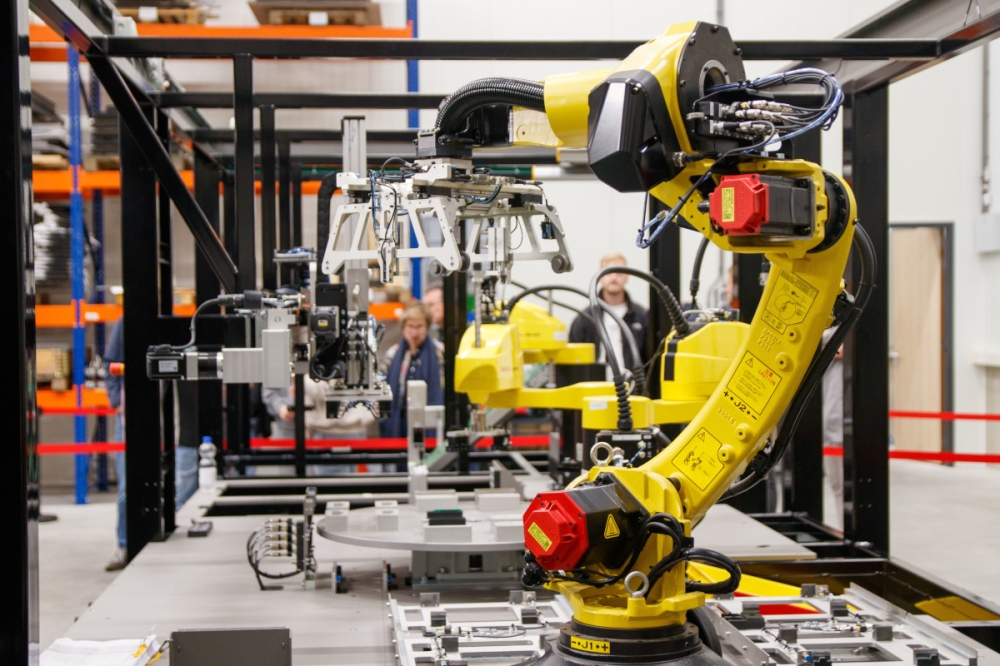
One striking finding from the analysis was that companies that integrated AI responsibly didn’t reduce headcount—they reallocated it. — Pexels pic

The paper is particularly sharp on the “transparency” problem. When an AI system flags a shipment for rerouting, or denies a supplier payment, who would explain the decision to the human on the other end? Currently, no one. The researchers call this the “accountability vacuum”—and it is the single biggest ethical risk in the sector today. So, what should we do? The authors have suggested a few measures.

First, stop treating AI as a cost-cutting hammer. Every executive in that conference room knows the temptation. Use AI to replace people, and you’ll save money for two quarters. Then your remaining workers will be terrified, your systems will drift out of alignment, and your “efficiency” will crumble. The researchers’ data is clear: the firms that succeed are those that invest more in human training, not less.

Second, unions and industry bodies need to wake up. The supply chain sector is notorious for thin margins and thinner training budgets. Collective bargaining in 2025 must include “upskilling clauses”—guaranteed hours for workers to learn AI oversight, not just fight against automation.

Finally, a word to the young person considering a supply chain career: ignore the doomsayers. Subaithani and Karthika’s paper shows that AI is creating more interesting, less soul-crushing work. The forklift driver who learns to manage a fleet of autonomous pallet movers becomes a logistics supervisor. The clerk who understands demand forecasting becomes a planner. The robots are here. But they are still stupid. They need humans to set their morals, interpret their errors, and take the blame when things go wrong. That’s your job now. Don’t waste it.

*The author is affiliated with the Tan Sri Omar Centre for STI Policy Studies at UCSI University and is an Adjunct Professor at the Ungku Aziz Centre for Development Studies, Universiti Malaya. He can be reached at ahmadibrahim@ucsiuniversity.edu.my.

**This is the personal opinion of the writer or publication and does not necessarily represent the views of Malay Mail.


  • ✇Ontario Nature Blog
  • Rabbits and Hares: The Unsung Heroes of Ontario’s Ecosystem Erin Kobayashi
    Rabbits and hares are often overlooked, even though they are a crucial part of our ecosystems serving as a key food source for many species and even an indicator of climate change. “Poor rabbits. It’s the exact reason I started rehabbing them, because I felt sorry for them,” says Tallulah, founder of My Wildlife Rescue, the only authorized wildlife custodian in Ontario that specializes in rehabilitating neonatal and juvenile wild rabbits and hares. “Other animals have the ability to defend the
     

Rabbits and Hares: The Unsung Heroes of Ontario’s Ecosystem

2 April 2026 at 16:24

Rabbits and hares are often overlooked, even though they are a crucial part of our ecosystems serving as a key food source for many species and even an indicator of climate change.

“Poor rabbits. It’s the exact reason I started rehabbing them, because I felt sorry for them,” says Tallulah, founder of My Wildlife Rescue, the only authorized wildlife custodian in Ontario that specializes in rehabilitating neonatal and juvenile wild rabbits and hares. “Other animals have the ability to defend themselves.”

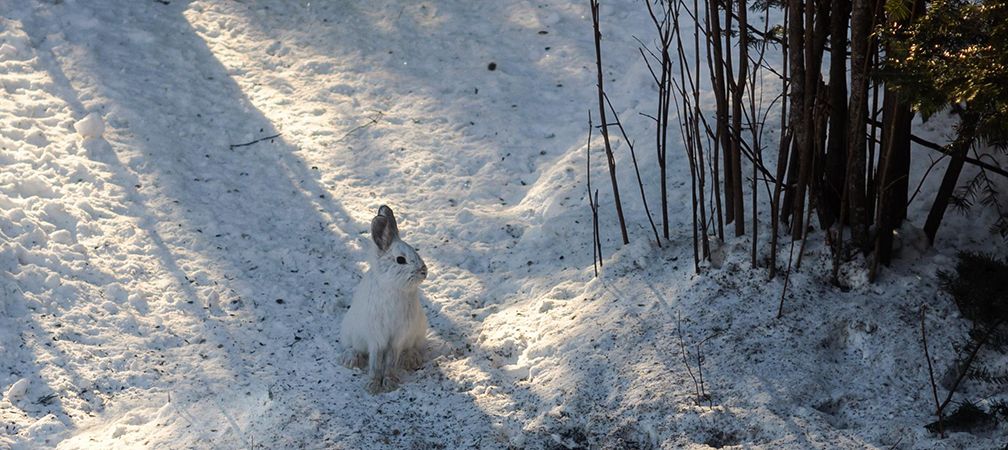
snowshoe hare, lagomorph, winter pelt, camouflage, adaptation, northern species
Snowshoe hare © TheRealKam75 CC BY-SA 2.0

Tallulah, who opened her rescue in 2018, suggests there are two reasons that rabbits and hares are underrated animals: people see rabbits as common and often assume wild native rabbits and domestic rabbits are similar, so they lose interest in learning about wild ones. “Basically, they are just seen as common, and you can just get [a domestic] one in the store,” she says.

And unlike bears, lynx and wolves, “They aren’t charismatic megafauna…Humans like to learn about predators, I don’t know why, but it seems like something we can relate to,” Tallulah hypothesizes, “They are also very hard to study because they are small, quiet and active at dusk and dawn.”

Although largely understudied in Ontario, Tallulah argues that native rabbits and hares are sensitive indicators of climate change. Droughts, for example, can drastically reduce rabbit litters mid-summer, as extreme heat stresses mothers, limits food, and increases mortality among kits. “Last year, we had loads of babies in the spring, then nothing in the middle of the summer, and it picked up again in the fall,” says Tallulah, reflecting how a summer drought directly affects rabbit populations.

Snowshoe hares face another challenge: their fur changes colour based on day length, not snow cover. With winters arriving later and ending earlier, the white hares stand out against snowless ground, making them more vulnerable to predators. Changes in populations and survival rates of these animals reflect the broader impacts of shifting weather patterns.

cottontail rabbit, lagomorph, rodent, prey species, herbivore
Cottontail rabbit © Peter Ferguson

Because wild rabbits and hares are often not seen as having economic value, rescues that care for them tend to receive limited public or government support and fewer donations. This is unfortunate, as species like the snowshoe hares form a crucial part of the food web. “They basically feed everybody. For example, the Canada lynx lives and dies by the cycle of the snowshoe hare. If there are very few hares, there will be very few lynx because that’s usually what they eat.”

At her Ottawa-based rescue, Tallulah cares for two of Ontario’s most common young rabbits (kits) and hares (leverets): Eastern cottontails and snowshoe hares. In total, Ontario is home to five species, including the white-tailed jackrabbit, Arctic hare in the far north, and the non-native European hare, which was introduced over a century ago but is rarely seen today. Chances are that the Eastern cottontail and snowshoe hare are the two you’ll most likely spot in the wild.

The Main Difference Between Rabbits and Hares

If you come across a young rabbit or hare, these key differences can help you identify them:

Rabbits are born blind, hairless, and completely helpless. They grow fur and open their eyes around seven to eight days old. Eastern cottontail rabbits build small nests, shallow indentations in the grass lined with fur and vegetation.

Hares are born with fur, with their eyes open, and are ready to move. Snowshoe hares do not burrow; instead, their leverets are born in the open. Within a day, the young start exploring and hiding, though they remain near the birthplace because the mother returns twice daily to feed them, similar to Eastern cottontails. Additionally, mature hares fur changes colour with seasons, helping them blend into their environment.

How to Help Rabbits and Hares

“Everybody can do something [to help rabbits and hares this spring],” says Tallulah. Here’s what she recommends:

  • Let grass grow the entire season, from early spring until late fall. Avoid mowing certain areas as tall grass provides food, cover and nesting spots. Mowing grass risks destroying nests and hurting or killing the kits and leverets.
  • Protect their habitat. Join a local conservation group to support their environment.
  • Observe respectfully. Watch from a distance or use a trail cam.
  • For adult rabbits and hares living in the wild, provide clean water, not food. Never feed or attempt to tame wild rabbits and hares.
  • Plant native vegetation. Include extra vegetables in your garden for the rabbits instead of chasing them or letting pets harass them. “They don’t have a grocery store they can go to. Be kind,” says Tallulah.
  • Keep pets in check: Leash dogs and keep cats indoors or build a catio to protect wildlife.
  • Avoid rodenticides. Hire professionals that use humane ways to capture animals and keep harmful chemicals out of the food chain.
  • For wild rabbits and hares that need help, contact a wildlife centre that takes in rabbits. Tallulah also warns that domestic rabbits should never be released into the wild. Their bright colours make them easy targets for predators, and they lack the camouflage, instinct and hardiness of wild rabbits and hares. Additionally, they are too friendly towards humans and pets and the harsh climate is fatal for them. Released domestic rabbits often die quickly from starvation, predation or disease. Contact a rabbit rescue like https://rabbitrescue.ca/ or use this rabbit rescue resource page https://wabbitwiki.com/wiki/Ontario to rehome an unwanted pet.

❌
Subscriptions