Normal view

  • ✇W Magazine
  • May Horoscope 2026: The 4 Zodiac Signs Making Major Life Changes With the Sagittarius Full Moon Cole Prots
    Illustration by Kimberly DuckIt’s no coincidence that May is bookended by full moons. The universe is practically screaming at us to take a leap of faith. The path is cleared, the plan is made, and all that’s left to do is to simply go for it. If the work’s been done, is there anything preventing you from starting the journey? On May 31, the Sagittarius full moon points out the pieces of the puzzle we’ve been missing. Sagittarius’s fiery spirit moves through life with an almost blind fury—howeve
     

May Horoscope 2026: The 4 Zodiac Signs Making Major Life Changes With the Sagittarius Full Moon

28 May 2026 at 16:12
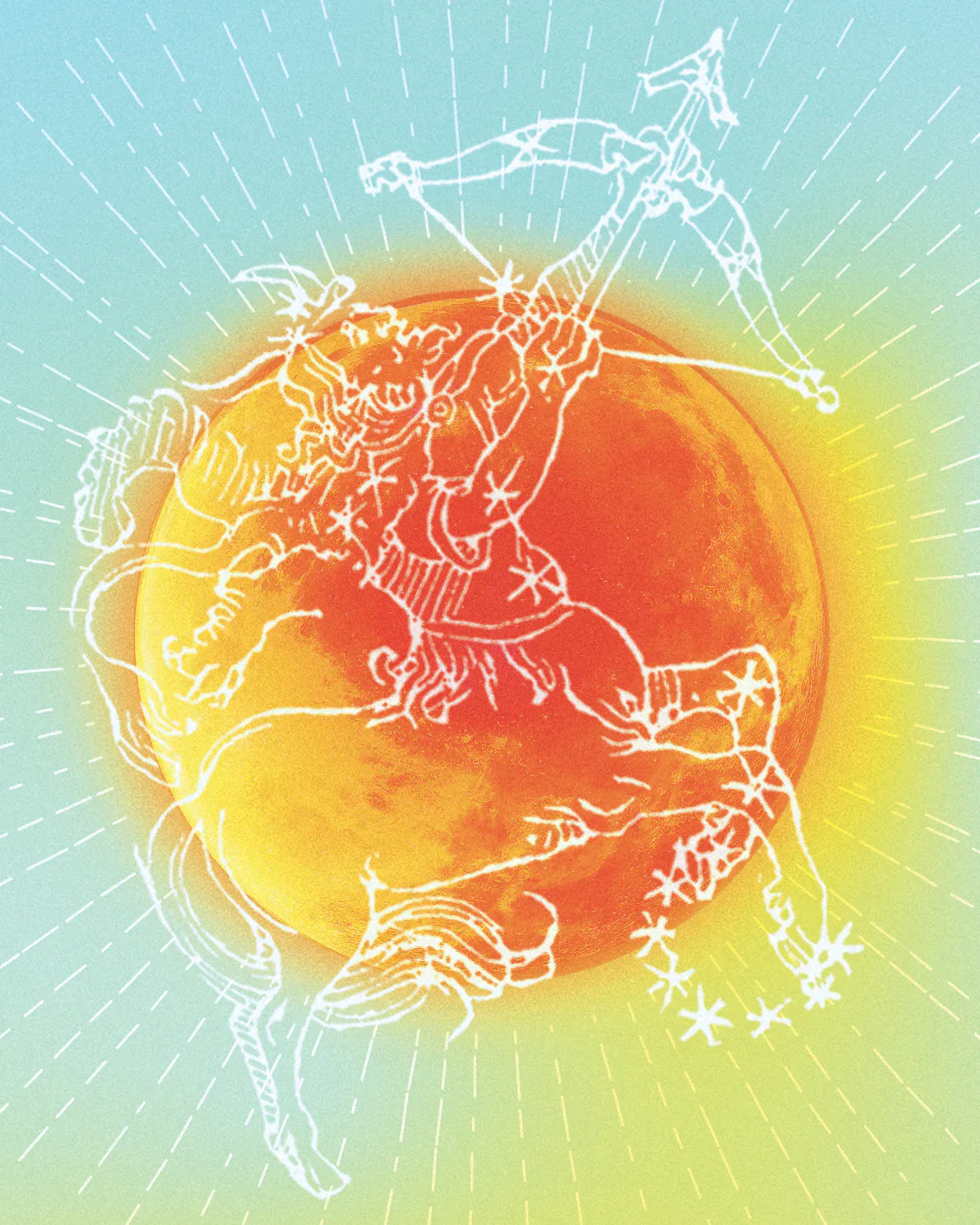
Illustration by Kimberly Duck

It’s no coincidence that May is bookended by full moons. The universe is practically screaming at us to take a leap of faith. The path is cleared, the plan is made, and all that’s left to do is to simply go for it. If the work’s been done, is there anything preventing you from starting the journey? On May 31, the Sagittarius full moon points out the pieces of the puzzle we’ve been missing. Sagittarius’s fiery spirit moves through life with an almost blind fury—however, the archer is on a constant mission to uncover what has yet to be discovered. The full moon will show us the way to stay curious, take the path less traveled, and how to take in the bigger picture.

Full moons bring awareness to the themes associated with its corresponding sign. This Sagittarius full moon might feel like a giant lightbulb turning on above you. Sagittarius and Gemini sit on the axis of knowledge, making this a time to reflect on what you know, what you don’t know, what you want to learn, and who can teach it to you. They say curiosity killed the cat, but I believe curiosity keeps us alive. If there was nothing else to add to the encyclopedia of your life, you’d be a closed book, collecting dust on the shelf. But if you open yourself up to new things, you might realize an old dog can learn new tricks. There just has to be a willingness to accept that you don’t know everything, and you will grow by taking the time to learn something new.

Additionally, the Sagittarius full moon is an opportunity to consider new ways to move through life. Taking the road less traveled is one of the best ways to learn something new. Perhaps there’s a cute café in your neighborhood you never knew about, or even a community garden you can join. Do you know where you want to go and what you need to do to get there? Did you perhaps start moving without prepping enough? Remember not to rush the journey. Carry out the necessary preparations ahead of time.

Finally, you’d be remiss not to take in the bigger picture. The image of solving a puzzle often comes to mind during the annual Sagittarius full moon. Gemini season can feel like all the minutiae of life is piling up, and the honeymoon phase of a project or an idea is gone as quickly as it started. This full moon helps us balance the mountain and the molehill; it’ll also make sure we aren’t underestimating a hurdle in the distance. By tapping into your community, new information sources, traveling a bit, or even stepping back to consider all the pieces splayed out on the table, you might feel a jolt of inspiration.

Ultimately, the Sagittarius full moon is a lesson in perspective. Under this full moon, we want to remove the blinders keeping us from seeing the big picture. Sagittarius is, whether we like it or not, a serial optimist. The natural state of the mutable fire sign is to keep moving forward with a smile (it’s probably why so many comedians have strong Sagittarius placements). Taking in the whole picture will help you get the perspective you need to move forward with confidence and optimism. Gemini season can make us all a bit antsy with a microscopic POV. However, the Sagittarius full moon reminds us that there is a beautiful horizon of endless possibilities ahead of us. As long as the sun rises in the morning, there is another opportunity to learn something new.

For extra astro guidance, read for your rising sign below! These are sign-specific reflections to help you look deeper at your current situation—and to help you navigate the next phase of life after this beautiful Sagittarius full moon.

Aries

Oh, the places you’ll go—and oh, the places you’ve been! A journey in your life is about to come to an end. What have you learned along the way? This Sagittarius full moon is asking you to ponder your own growth, and how your ability to say yes to new experiences is what continually keeps that growth coming. Take some time to reflect on what you believe. These ideas or belief systems are coming into question now, to make sure that you’ve actually retained the lessons of your most recent journeys.

Taurus

Do you have the freedom to give and take? The Sagittarius full moon is pushing you toward finding balance between what you need to feel safe enough to explore, and what those who rely on you need. This is a good time to clear the air, have honest conversations, and clear any debts (karmic or otherwise). Let this full moon remind you of what you and those closest to you need to feel open enough to share.

Gemini

It’s still Gemini season, but that doesn’t mean you’re the only one who matters. The Sagittarius full moon comes in hot to get you focused on your relationships. Perhaps right now you need to clear house and let some relationships end to make space for more fulfilling ones. Or you might look at them from a new perspective—spend a minute or two in the others’ shoes. What kind of people are you attracting and do they give you the freedom to be yourself?

Cancer

The full moon will shake off the dust that’s been settling in your life at the moment. You could feel a huge urge to make a drastic change in your daily life, or even start the new routine you’ve been eyeing. A bit of reflection on work-life balance and healthy habits is essential right now. How can you stay consistent but have the flexibility for fun and new experiences?

Leo

Summer is almost here, and this full moon reminds you of what will bring you the most joy over the next few months! This Sagittarius full moon will lend you a passion-filled wave of inspiration—and that should encourage you to explore all of your pleasure centers. That said, you could be ending a creative project (or a romantic fling) that no longer tickles your fancy. Just trust that as long as you love what you’re doing, you’ll find fulfillment.

Virgo

Perhaps this full moon will feel like a wake-up call. There could be some emotional crisis or feelings of abandonment arising with the Sagittarius energy. Have you been running from your problems or facing them head on? Take some time to reflect on how you’ve been taking care of yourself. Have you learned the lessons from your past about what does and doesn’t truly regulate and refresh your emotional core?

Libra

There will be plenty of a ha moments with this Sagittarius full moon. You could have a few moments of overwhelming ideas, messages, conversations, etc. swirling around you all at once. This full moon energy is bringing forward a bit of the daily life chaos that throws you out of whack. But it’ll help you realize what is simply an unnecessary distraction so you can close those loops and make more time for adventure and play.

Scorpio

As the full moon approaches, you’ll probably notice you’re feeling a bit uncomfortable. The universe isn’t trying to throw unnecessary drama your way, so don’t worry. Rather, the Sagittarian energy is asking you to question whether you’ve dug your heels in too deep, and now you’re living in a false sense of comfort. Could it be high time to make some changes on how you use your resources and where you place the most value in your life?

Sagittarius

This is your full moon! It will remind you of who you are, and it will help wash away fears, anxieties, or stress that’s keeping you from sharing your full self with the world. The lesson here is reflecting on how you may shift yourself from time to time based on the feedback of others. Perhaps you show a heightened variation of who you are to impress, appease, or clap back. That’s restrictive and unnecessary—be your genuine self and know that those who are meant to celebrate you will stick around.

Capricorn

As the full moon approaches, you might feel an overwhelming need to retreat into your inner world. Alone time is good: it will help you reflect, process, and learn more about yourself. The Sagittarius energy is drawing you toward what you believe, which dreams keep you alive, and how you can look toward a brighter future. Something that has been resting deep within you is bubbling to the surface. It will allow one era to end so you can embrace the new one that’s beginning.

Aquarius

With the Sagittarius full moon, you might have to reflect on a situation that requires you to play nicely with others. This lunation could feel like you need to start surrounding yourself with a community that encourages your free spirit to run wild. Who are the people that make you feel alive and give you the confidence to pursue your dreams? Right now is a perfect moment to find the balance between your passions and what brings joy to others.

Pisces

The Sagittarius full moon could be the beginning of a new chapter in your professional life and legacy. You might be feeling a bit restricted at the moment, like you aren’t able to flourish and grow in your current position. What are some ways you could start exploring new opportunities that give you the freedom to play? Under this full moon, give yourself the chance to explore wide-open spaces to find fulfillment.

  • ✇Vox
  • Smartphones broke dating. AI might finish the job. Eric Levitz
    This photo taken on February 1, 2018, shows an engineer holding a silicon face against the head of a robot at a lab of a doll factory of Exdoll, a firm based in the northeastern Chinese port city of Dalian. | AFP via Getty Images Humanity may be scrolling its way out of existence.  Across the globe, fertility rates are plummeting. In 2023, the average number of births per woman worldwide fell beneath 2.1 — the minimum level necessary for averting population decline (also known as the “r
     

Smartphones broke dating. AI might finish the job.

8 June 2026 at 10:00
A man puts a face on a robot.
This photo taken on February 1, 2018, shows an engineer holding a silicon face against the head of a robot at a lab of a doll factory of Exdoll, a firm based in the northeastern Chinese port city of Dalian. | AFP via Getty Images

Humanity may be scrolling its way out of existence. 

Across the globe, fertility rates are plummeting. In 2023, the average number of births per woman worldwide fell beneath 2.1 — the minimum level necessary for averting population decline (also known as the “replacement rate”). And this collapse is not concentrated in just a handful of places; more than two-thirds of all nations now have below-replacement fertility.

While this crisis has been building for decades, its nature recently changed. In the 20th century, fertility fell primarily because couples started having fewer children. Now, it is falling mostly because fewer people are forming couples — or having sex at all.

If these trends continue, the consequences will be transformative — and possibly, catastrophic, as graying populations place unprecedented burdens on the remaining young. Vast countries will swiftly shrivel into city states. Today, Thailand is home to 63 million people. In two centuries, that will fall to 2 million, if the country’s current fertility rate persists. 

Key takeaways

  • Global fertility has fallen below the “replacement rate” of 2.1 births per woman.
  • The collapse in the 2010s in romantic partnership tracks closely with mass smartphone adoption.
  • AI chatbots and companion apps may accelerate the trend by offering on-demand emotional support and validation.

These are just 23rd-century problems. If sustained indefinitely, today’s global fertility rate would ensure humanity’s extinction.

And it’s partly your phone’s fault. 

Or so one leading theory goes. To make sense of recent fertility trends, some analysts have turned to the devices in their pockets. In the view of the journalist John Burn-Murdoch and social scientist Alice Evans, the smartphone helped birth the global spike in singledom. 

Their argument goes (partly) like this: As smartphone ownership skyrocketed globally during the 2010s, more and more young people tapped into a vast, omnipresent trove of personalized entertainment, which reduced their incentives to socialize in person. When you have virtually every movie, TV show, and pornography ever made at your fingertips, you no longer need parties for stimulation or diversion. And when you have an X or Facebook account, you can participate in a public conversation — and experience communal recognition — without ever leaving the comfort of your goon cave

Yet this withdrawal from in-person socializing reduces young people’s opportunities to meet romantic partners or develop social skills. Relationship formation falls as a result.

“The digital revolution has played a signal role in both degrading socialization for young adults and dividing young adults from one another,” Brad Wilcox, a senior fellow at the Institute for Family Studies, told me.

And that revolution is only just beginning. After all, the tech sector’s quest to make social isolation more appealing did not end with the advent of the iPhone, Netflix, or TikTok.

Since 2022, more than 1 billion people have gained access to an infinitely patient conversation partner — one who can speak knowledgeably about all of their interests and listen compassionately to all of their problems. Thanks to Claude and ChatGPT, hermits can not only enjoy perpetual stimulation without social contact but also forms of emotional support that had previously required an intimate friend, family member, lover, or licensed therapist. 

And these are the worst versions of these products we’ll ever see. Future iterations may take even more engaging forms; someday, Claude might be able to get it on

This makes the “smartphone theory” one of the more important hypotheses of our time. If its narrative is correct — and there is some compelling evidence in its favor — then the fertility crisis is liable to deepen in the coming years. And AI might be replacing more than just our jobs. 

Amusing ourselves to abstinence

Before digging into the “smartphone theory” of falling birth rates, it’s worth clarifying its scope. 

No one thinks that digital technology is the primary cause of declining fertility, a trend that predates the iPhone by more than a century in wealthy countries (Swedish farmers did not start having fewer kids in the 1880s because of TikTok). 

Rather, the main drivers of the long-term fertility descent appear to be foundational features of modernity: When scientific systems of healthcare and sanitation reduce child mortality, couples feel less compelled to have six kids in the hopes that three might survive. When industrial progress boosts the returns to education, parents have an incentive to invest more resources in each individual child’s development, making large families harder to sustain. And when women secure political rights, economic autonomy, and reliable contraception, fewer choose to spend decades of their lives perpetually pregnant.

Yet these structural forces only get us so far. Modern medicine, economic development, and women’s emancipation may have put humanity on the path to collapsing fertility. But some other factor recently sped us on our way: In the aughts, fertility rates actually plateaued globally and rose in advanced economies — before abruptly plummeting in the 2010s. 

During that same decade, rates of singledom also spiked. In countries as varied as the United States, South Korea, Turkey, Tunisia, and Finland, young adults became less likely to have a romantic partner. And this “relationship recession” seems to have fueled the post-2010 drop in fertility. According to a 2025 study published in Nature, mothers in most high-income countries are having about as many children as they did decades ago. Yet fertility rates are falling nonetheless, due to a steep drop in the share of women who have any children at all.

The coupling collapse can’t be explained by a sudden expansion of women’s rights; it is happening even in deeply patriarchal societies like Saudi Arabia. Nor is it easily attributed to economic turmoil; rates of romantic partnership have fallen in both high-growth and low-growth nations, advanced economies and developing ones, countries rattled by the 2008 crisis and those largely unharmed by it.

Smartphones, on the other hand, were in the right places at the right times.

In country after country, the rise in singles — and drop in birth rates — coincided with the mass adoption of smartphones, according to an analysis from Burn-Murdoch, the journalist at the Financial Times.

Correlation isn’t causation. But there’s reason to think this timing isn’t coincidental.

In one recent study, economists from the University of Cincinnati examined how teen fertility changed in different American and British localities as they gained access to 4G mobile networks. They found that the arrival of high-speed internet consistently accelerated declines in adolescent birth rates and conceptions. Their explanation for this phenomenon is straightforward: When the center of adolescent life moves online, in-personal socializing declines — and with it, opportunities for one thing to lead to another.

Time-use data lends credence to this theory. Across 21 European nations, the share of people who got together with their friends on a daily basis fell from 21 percent in 2006 to 12 percent in 2022. In the US, meanwhile, time spent on in-person social interaction has plunged during the smartphone era.

Taken together, these data points appear to tell a simple story: When humans acquire 24/7 access to social media platforms and unlimited digital entertainment, they feel less need to hang out with peers in the real world — and demand more from potential partners.

“When phones become ever more engaging and ever more exciting, then you want a super engaging person,” Evans, the social scientist, said. “He’s got to be better than an episode of Bridgerton.”

Thus, some retreat from the frictions of in-person socialization entirely. Others forfeit opportunities to hone their social skills or  find suitable but imperfect mates. Sexlessness ensues. 

How AI could make sex obsolete

It isn’t hard to see how AI could accelerate these trends. 

Streaming and social media might have made the solitary life less dull and uncomfortable. But Pornhub won’t talk with you about your career anxieties, favorite Civil War battle, or debilitating fear of iguanas. And TikTok won’t provide discrete reassurance about that new mole on your chest. Before 2022, securing this sort of sympathetic ear typically required forging and sustaining real-world relationships. 

But now, Claude, Gemini, and ChatGPT are happy to oblige.

Thus, if smartphones were outcompeting offline interaction before they hosted chatbots, they seem even better equipped to do so today. 

Separately, AI may also widen the gap between young people’s romantic expectations and dating realities.

Frequent interaction with a chatbot — who perpetually centers your concerns, never loses patience, and always has something to say about your topics of interest — could  encourage unrealistic standards for human conversation, particularly among those who’ve used AI intensively from an early age. 

Of course, these are mere speculations. And research into AI’s impacts on in-person socialization and dating is limited. But there is some evidence that chatbots could be expediting young people’s drift towards solitude and sexlessness. 

In a study published in 2025 from OpenAI and MIT, researchers tracked 981 participants’ use of AI chatbots over a four-week period. They found that subjects who voluntarily spent more time talking with LLMs during that span became more socially isolated by the study’s end. 

This doesn’t necessarily mean that heavy chatbot use caused people to socialize less with other humans. After all, those who lack hangout opportunities might be more inclined to talk with chatbots. And yet, those who used AI intensively during the study had roughly as active social lives as other participants when the trial period began. Therefore, it seems likely that — at least in some cases — bonding with ChatGPT led to social isolation rather than vice versa.

Meanwhile, survey data suggest that people are turning to chatbots for companionship or romantic stimulation in growing numbers. In a 2025 poll from Brigham Young University’s Wheatley Institute, 19 percent of American adults — including 31 percent of young men — said they had chatted with an AI system meant to simulate a romantic partner. 

More recently, the institute examined the use of these pseudo-significant others by young Americans in committed relationships. In its survey, 15 percent of young adults with human partners reported having a secret AI romantic relationship. And among this significant minority, more than 70 percent of men — and nearly 60 percent of women — agreed with the statement, “I wish conversations with my partner were like AI.” And more than half of both male and female users of AI companions said they wished their human partners “behaved like my AI.”

Perhaps more concerningly, respondents who used AI companions regularly were more likely to be in unstable relationships — in which they often thought that their partnership was in trouble, or discussed ending the relationship, or had broken up and gotten back together.

Once again, causality is difficult to determine. People in unstable relationships might be more inclined to seek artificial companionship. But chatbots’ influence on their users’ expectations are likely a factor, according to the report’s co-author Brian Willoughby. 

“The more I talk to an AI companion that is always validating me, always taking my side, and always talking about what I want to talk about,” Willoughby said, “the more conversations with my real-life partner — who has their own views — will start paling in comparison to those AI interactions.”

And silicon substitutes for human intimacy will only grow more sophisticated and holistic in the coming decades. Or so many in and around the tech industry believe. 

Daniel Faggella, founder of Emerj Artificial Intelligence Research, believes that advances in AI, virtual reality, and mechanized sex toys will eventually render human intercourse an obsolete pastime — one largely confined to nostalgists and connoisseurs, like driving stick shift. 

“The great sexual organ is the brain,” Faggella told me. “If you have the visuals, the voice, the haptics, the sound, real-time biofeedback — and even very crude physical implements to go along with them — I think you’re going to beat the human flesh experience every time.”

I suspect that sex has more staying power than Faggella allows. But erotic AI doesn’t need to fully displace intimacy to accelerate the dating recession and fertility crisis. It merely needs to lure a sizable minority of men and women away from the hassle and heartbreak of human relationships. Judging by existing trends, superintelligent sexbots seem liable to meet that challenge.

The future could be brighter

AI’s effects on human sociality remain uncertain. In theory, artificial intelligence could benefit human relationships and fertility — by, for example, helping awkward adolescents refine their conversational skills or providing troubled couples with on-demand counseling.

Moreover, some experts question how much smartphones actually changed fertility trends. In the view of University of Pennsylvania economist Jesús Fernández-Villaverde, the fundamental causes of the 2010s fertility collapse are long-term structural forces — among them, secularization, the “dissolution of old social networks,” and the rise of a service economy in which women’s relative economic power has increased. 

Social media and streaming may have accelerated these processes, in Fernández-Villaverde’s view, by diffusing feminist ideas: Over the past decade, women in patriarchal societies have gained unprecedented access to commentary and dramas that affirm their desire for autonomy and idealize egalitarian marriages (Evans and Burn-Murdoch also put considerable weight on this dynamic). But he believes that this merely hastened already inevitable declines. 

“Cellphones matter a little bit,” Fernández-Villaverde said. “But it’s not because people are spending their whole life playing Pokémon. It’s because they’re seeing what the rest of the world looks like and deciding that they want to do things differently.”

Nevertheless, it is clear that mass smartphone adoption coincided with falling in-person socialization — and rising singledom — in all manner of different countries. And there are some signs that AI is further displacing face-to-face interaction and distorting relationship expectations. In any case, the tech industry has a strong incentive to generate evermore compelling substitutes for human connection.

“Here in the Bay Area, all these startups are trying to make apps that will compete in the attention economy,” Evans said. “All these genius software engineers are trying to make something that hooks you in. So I’d predict that the market will enable AI to outcompete humans — they will be funnier, more charming, and enticing.”

At the very least, that possibility warrants concern, given the potential consequences for both fertility and human welfare. 

If the past decade is any guide, technological progress may be speeding us toward a future of ubiquitous ghost towns, scarce children, and nursing homes full of gray-haired hermits, each passing their days with VR paramours as civilization slowly unwinds. 

There are worse fates. But ideally, humanity would hold out for a better one.

Kevin Hart Says Tony Hinchcliffe ‘Arguably Had the Best Set’ at His Netflix Roast Despite Backlash: ‘I Don’t Expect Less. I Don’t Expect More’

27 May 2026 at 01:38
Kevin Hart is speaking out about Tony Hinchcliffe’s controversial set at his Netflix roast. “Yeah, the George Floyd joke, it wasn’t a tasteful joke to our culture, to our audience, but our audience that’s watching the roast, if you’re watching the roast, you get why they’re doing it. You get why the racial humor is […]

  • ✇Popular Science
  • Pigeons use their livers to sense Earth’s magnetic field Margherita Bassi
    For decades, scientists have known that Earth’s magnetic field helps migratory birds and homing pigeons navigate. Just how our feathered friends sense the invisible sphere around the Earth, however, has been less clear.  At least part of the answer appears to be hiding inside a seemingly random organ. Immune cells inside pigeon livers called macrophages are sensitive to the planet’s magnetic field. These cells function like an internal compass, according to a new study published today in the
     

Pigeons use their livers to sense Earth’s magnetic field

28 May 2026 at 18:00

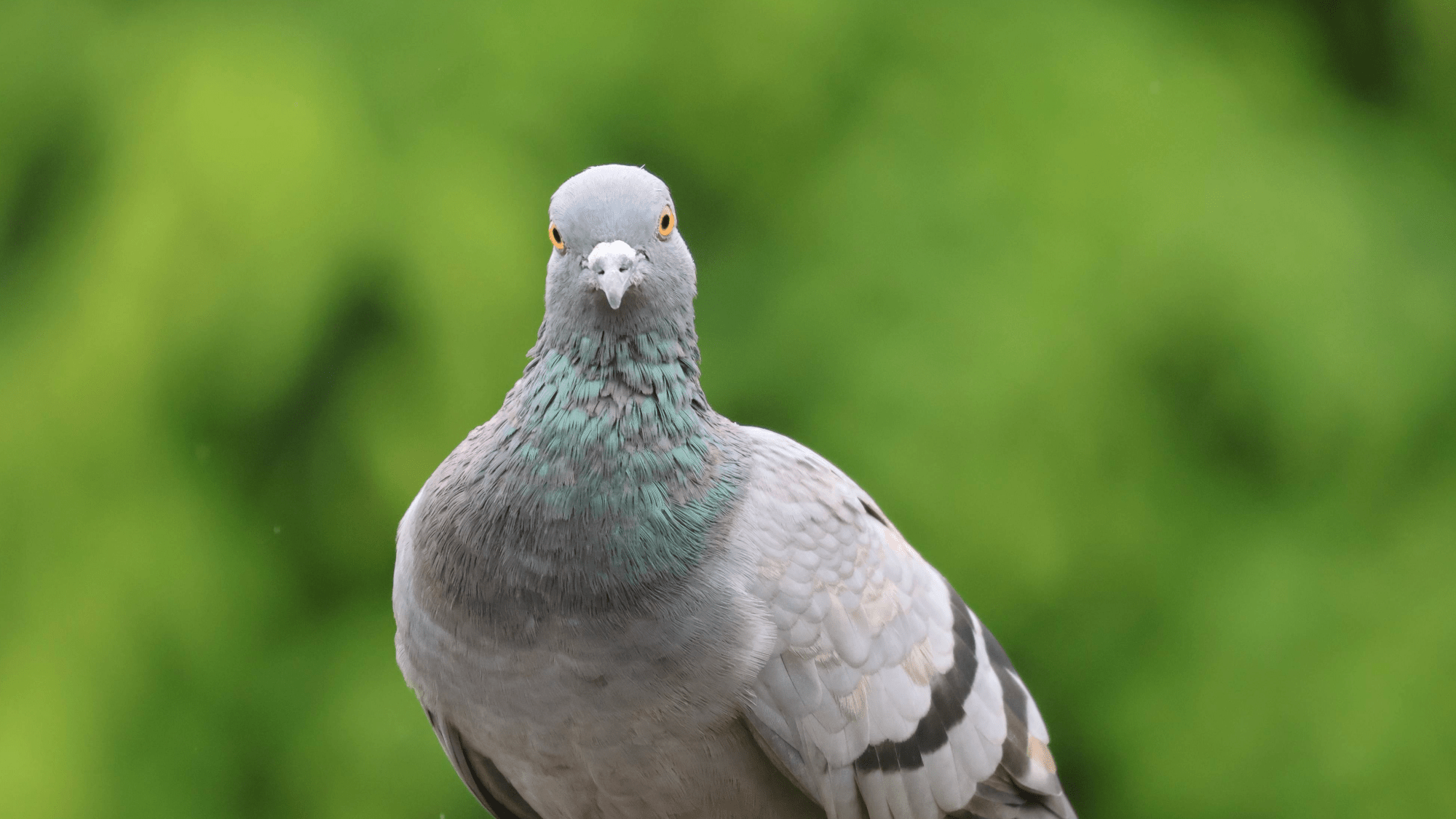
For decades, scientists have known that Earth’s magnetic field helps migratory birds and homing pigeons navigate. Just how our feathered friends sense the invisible sphere around the Earth, however, has been less clear. 

At least part of the answer appears to be hiding inside a seemingly random organ. Immune cells inside pigeon livers called macrophages are sensitive to the planet’s magnetic field. These cells function like an internal compass, according to a new study published today in the journal Science

Macrophages destroy old red blood cells, which makes them accumulate iron. The iron makes the macrophages  superparamagnetic, a kind of magnetism that takes place in particular nanoparticles. The nanoparticles can then be magnetized if a magnetic field is applied to them. 

“When pigeons fly, the nanoparticles align with the magnetic field and become ‘magnetized,’” Clivia Lisowski, a co-author of the study and a post-doctoral researcher in Immunology at the University of Bonn, tells Popular Science. “Like that, pigeons can sense Earth’s magnetic field.”

Electron microscopy image of pigeon liver tissue shows hepatic macrophage (blue) in contact with nerve fiber (yellow), which enables them to transmit (“magnetic”) information to the pigeon brain. Image: Lisowski et al. (2026) Science.

To understand how these particles help the pigeons navigate, Lisowski and her team tracked down where magnetic cells are in pigeons’ bodies. Because the liver and spleen store significant quantities of iron, researchers thought these might be good candidate organs. The  liver had a significantly stronger magnetic response than any of the other tissues in the study, according to study co-author Ulf Wiedwald, an expert in nanoscience at the University of Duisburg-Essen in Germany, 

From there they homed in on macrophages, and put these important immune cells  to the test. They studied  pigeons that were trained to fly back to their aviary in Konstanz, Germany, from over 12.4 miles away. Pigeons whose macrophages had been removed got lost when the weather was overcast. But when the sun was out, the pigeons reached the aviary, probably with the aid of solar cues. 

The findings show  how the birds employ magnetic sensing to find their way, as well as the sun’s orientation. 

“Our study has implications for both the immune research landscape as well as for research on animal navigation or magnetoreception, respectively. For animal navigation it’s a new concept of how animals sense/perceive Earth’s magnetic field,” Lisowski says. “We think that this ferrimagnetic mechanism can actually explain how birds migrating at night, or sharks or bats or other animals migrating in dark environments can perceive Earth´s magnetic field.”

The team also found that the iron-rich macrophages are close to nerve fibers, indicating that magnetic information can get to the brain via this route. Ultimately, this shows how important  interdisciplinary research, involving immunologists, behavioral biologists, and physicists, carries  significance for more than just birds. 

As for the immune system, Lisowski explains that to accomplish its different fuctions—such as defending our bodies from pathogens and healing wounds—it has to sense the environment.

“Our finding that the immune system can also sense the Earth´s magnetic field is a complete new layer in this concept of ‘immuno-sensation’ and opens the door to new research,” Lisowski explains. 

The post Pigeons use their livers to sense Earth’s magnetic field appeared first on Popular Science.

  • ✇Vox
  • You can do everything right and things can still go wrong. “Moral luck” is a way to live with that. Sigal Samuel
    Your Mileage May Vary is an advice column offering you a unique framework for thinking through your moral dilemmas. It’s based on value pluralism — the idea that each of us has multiple values that are equally valid but that often conflict with each other. To submit a question, fill out this anonymous form.  The questions I tackle in this column usually come from strangers. But this time, the call is coming from inside the house.  My partner is due to give birth to our first baby any
     

You can do everything right and things can still go wrong. “Moral luck” is a way to live with that.

24 May 2026 at 12:30
an illustration of a young parent walking on a tight rope, anxiously spotting their child as they happily walk forward. A pair of dice are falling from the parent’s pocket.

Your Mileage May Vary is an advice column offering you a unique framework for thinking through your moral dilemmas. It’s based on value pluralism — the idea that each of us has multiple values that are equally valid but that often conflict with each other. To submit a question, fill out this anonymous form

The questions I tackle in this column usually come from strangers. But this time, the call is coming from inside the house. 

My partner is due to give birth to our first baby any day now. And as parenthood approaches, she’s started grappling with a nagging question. I decided to tackle her dilemma in my last column before beginning my parental leave because, as you’ll see, it’s not only relevant to parents. It’s relevant to anyone who worries about failing someone or making lasting mistakes, and who wonders how they’d deal with the guilt they might feel afterward. 

We’re about to have our first baby. I’m so excited! But I’m also a bit overwhelmed by all the actions and choices that go into trying to raise a kid who’s happy and healthy. I feel like the modern world’s never-ending desire to optimize everything has crept into parenting. Yet the world is so unpredictable. And there are so many opportunities to mess up and harm a kid in ways both big and small.

The questions swirling through my mind range from “How soon after birth should we take the baby into crowded indoor places, knowing their immune system isn’t fully formed?” to “When should we introduce our kid to sugar?” to “How much unsupervised play time should we let them have as they get older?”

There’s not a lot of definitive data about certain things. And a lot of kid stuff involves situations where the risk of something bad happening is very low, but if it does happen, then it’s really terrible. For example, I’ve heard some parents aren’t letting their kids go to sleepovers anymore because they’re worried someone will touch them inappropriately. The likelihood is that sleepovers are going to be positive experiences for most kids, but there’s always a small chance of something negative happening. Trying to think through these situations feels like a little bit of torture. If I make a certain parenting decision and something bad happens, am I always going to blame myself?

Dear Parent-to-Be,

Can I confess something? When you voiced this question, I actually felt relieved, because the same question has been secretly hammering at me for months. 

I haven’t talked about it much because I thought maybe it was just a function of my own anxiety. But I’m starting to think it’s more common than I realized. So I’m going to share the idea that has helped me the most with it. It doesn’t come from a parenting book or even the mental health field, but from that philosopher I’m always yammering on about, Bernard Williams. 

In 1976, Williams coined the term “moral luck.” It’s a surprising term, because what does morality have to do with luck, right? Surely what matters for my moral status is “what I did” and not “what the world did”! But Williams’s point is that life does seem to present us with situations where our goodness or badness depends a lot on factors that are out of our control — on whether we get lucky or unlucky. 

Have a question you want answered in the next Your Mileage May Vary column?

Just fill out this anonymous form! Newsletter subscribers will get my column before anyone else does, and their questions will be prioritized for future editions. Sign up here.

How can that be?

To illustrate, Williams invites us to imagine a truck driver who accidentally runs over a kid. The driver isn’t drunk or careless or negligent. He’s just driving along when suddenly a child darts out into the road. The kid gets hit and dies.

Clearly, a terrible harm has occurred. But has the driver done anything wrong?

Now let’s imagine another truck driver. He sets out that same day on that same road. But this guy is drunk. He careens down the road carelessly. He could easily hit somebody. But guess what? It just so happens that no kid darts into the road. The driver makes it home without incident.

In this scenario, no one’s been harmed. Yet the driver has obviously done something wrong. But for fortune, he would forever be branded a killer. He just got morally lucky.

What’s useful about this thought experiment is the way it clarifies that harm and wrongdoing are two separate things. We usually clump them together in our minds, because it’s often the case that a harm results from someone doing something wrong. But they can occur separately.

And when they do, how guilty should a person feel? Take the first driver, who wasn’t drunk or careless and yet ended up killing a child. It wouldn’t make rational sense to feel remorse, per se, because it’s not like he voluntarily did a bad thing. It’s more like the bad thing happened to him. At the same time, he certainly won’t feel nothing. He’ll probably feel pained in some nebulous, hard-to-name way. 

Well, Williams came up with a name for that: “agent-regret.” It’s the feeling you might experience if you inadvertently do a bad thing through bad luck.  

What’s the upshot for you, me, and everyone who fears failing or accidentally harming someone they love? 

Your goal is not to control every possible outcome. The reality of luck makes that impossible: You could do everything right and something terrible could still happen. Plus, trying to prevent every possible harm often leads to exhaustion and paralysis — you’ll feel like you can’t make any decision or take any action, because, as you said, everything has some small chance of a bad outcome.

Instead, your goal is to live in line with your values as best you can. The trick here is recognizing that you have values, plural. Sometimes, two values will be in tension with each other — keeping a kid safe from possible harm, say, and allowing a kid unsupervised time to play, grow, and form social bonds with other kids. In those cases, you have to weigh all the different factors and make a decision that seems best on balance.

Could something bad still happen? Yes, and that’s gutting. But remember that even if harm occurs, that doesn’t mean you were guilty of any wrongdoing. It doesn’t mean you deserve blame. It means you deliberated as well as anyone could have expected of you and something terrible happened anyway. That’s not your fault. 

Risk of tragedy is just the cost of living in our world. 

And I do think you should live in it. Fully. Bravely. Without endlessly second-guessing every move you make.

That brings me to the contemporary philosopher Susan Wolf, one of Williams’s best interpreters. In her essay “The Moral of Moral Luck,” she questions what we should take away from his concept.

“Morality is deeply and disquietingly subject to luck,” Williams wrote. But, Wolf asks, is that just the result of our own irrational judgments?

Wolf considers a slightly different truck driver thought experiment. In her version, two equally negligent truck drivers set out on the road. One has good luck: No child darts into the road, so no one gets hurt. But the other has bad luck: A child darts in front of the truck and is instantly killed. 

If humans were purely rational beings, surely we’d judge both drivers just as harshly, even though one killed a kid and the other didn’t. That’s because they’re both equally guilty of wrongdoing. But Wolf observes that, in reality, the driver who strikes the child is probably going to feel a lot more guilt. And members of society are likely to direct a lot more blame at him — after all, he actually killed someone, and they’re going to feel angry about that (while they won’t even know the other guy was ever driving negligently).

It’s tempting to say that this condemnation doesn’t tell us anything real about the unlucky driver’s moral status — it’s just an artifact of human irrationality, and we should toss it out. But Wolf doesn’t want to go that far. She thinks it’d be “positively eerie” if the driver who struck a child saw himself as being in the exact same moral position as the driver who didn’t. He’d be revealing a sense of himself “as one who is, at least in principle, distinct from his effects on the world.” 

Wolf suggests that there’s a better way to see ourselves: 

We are beings who are thoroughly in-the-world, in interaction with others whose movements and thoughts we cannot fully control, and whom we affect and are affected by accidentally as well as intentionally, involuntarily, unwittingly, inescapably, as well as voluntarily and deliberately. 

To form one’s attitudes and judgments of oneself and others solely on the basis of their wills and intentions, to draw sharp lines between what one is responsible for and what is up to the rest of the world, to try in this way, to extricate oneself and others from the messiness, and the irrational contingencies of the world, would be to remove oneself from the only ground on which it is possible for beings like ourselves to meet. 

This is a beautiful passage that describes a beautiful virtue: the ability to recognize that none of us is a separate and independent self. Wolf says this virtue has lived without a name, so she calls it “the nameless virtue.”

But I think it’s only nameless in Western philosophy. In Buddhism, it’s a foundational principle known as “dependent co-arising” or “interbeing.” The idea is that nothing has its own fixed, boundaried essence. Everything is always changing, because everything is subject to different causes and conditions, which act upon it all the time. That includes us human beings. We are constantly remaking each other — through the kind or unkind things we say to each other, through the ideas we expose each other to, through the actions we do or don’t perform. 

We are all each other’s causes and conditions. 

This undercuts the traditional Western understanding of agency. According to that view, I’m a discrete agent and when I decide to take a certain action, that decision starts in my own mind. My intent is what sets a causal chain in motion. Therefore, if I decide to do a bad action and harm results, I’m blameworthy.

But from the Buddhist perspective, we can’t say that my decision “started” with me. The “I” that decides isn’t a self-contained originator of action — it’s a node in a web that runs in every direction. That means the clean line between “what I did” and “what the world did” was always a kind of fiction. All my decisions have been conditioned by everything and everyone that ever influenced me in life. Which means blame, in the clean Western sense, doesn’t really hold up.

Williams found moral luck disquieting because it seemed to undermine the self-originating agent at the heart of Western ethics. But in the Buddhist view, there was never such an agent. That means that when something bad happens, it’s appropriate to recognize that you’re part of the causal web that yielded harm — but not to blame yourself as an individual.

You asked me: “If I make a certain parenting decision and something bad happens, am I always going to blame myself?”

No, I don’t think you always will. Although you’ll probably feel pained if some decision of yours leads to harm, eventually, your pain will not take the form of “I’m a terrible person.” It’ll take the form of “I was doing the best I could with the information and awareness I had at the time — with the conditions I was given. I wish that the conditions could have been different.” 

We’re all so used to the Western understanding of agency that our brains default to it in situations of crisis or panic, making us prone to self-blame. But I’ll be there to remind you of this other understanding. And I feel lucky knowing you’ll do the same for me.  

Bonus: What I’m reading

  • ✇Popular Science
  • Want stronger concrete? Just add oysters. Andrew Paul
    Concrete is everywhere, and that’s a problem. Manufacturing the essential material accounts for around eight percent of annual global carbon dioxide emissions, making it one of the single biggest contributors to the climate crisis. Researchers are investigating all types of creative solutions to the issue, often by replacing ingredients with more eco-friendly alternatives. Recent propositions include adding coffee grounds, bacteria, and even recycled diapers into the mix.But engineers at Purd
     

Want stronger concrete? Just add oysters.

6 May 2026 at 20:01

Concrete is everywhere, and that’s a problem. Manufacturing the essential material accounts for around eight percent of annual global carbon dioxide emissions, making it one of the single biggest contributors to the climate crisis. Researchers are investigating all types of creative solutions to the issue, often by replacing ingredients with more eco-friendly alternatives.

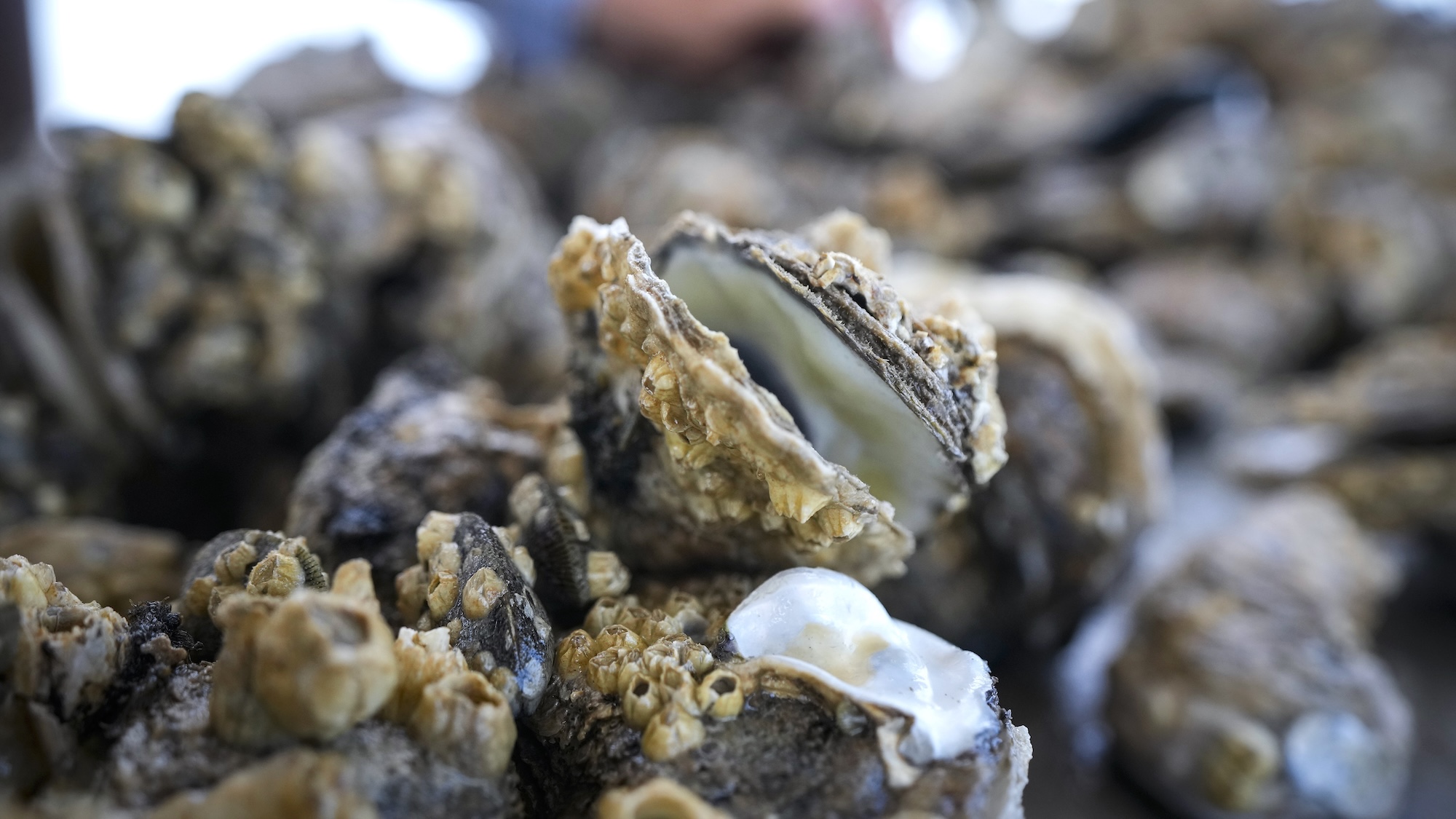
Recent propositions include adding coffee grounds, bacteria, and even recycled diapers into the mix.But engineers at Purdue University in Indiana think the answer can already be found in the natural world. According to a study recently published in the journal Chemistry of Materials, one solution may be swapping out the cement for shellfish.

“Oysters generate a natural cement. They use this material for attaching to each other when building reef structures,” chemist and study co-author Jonathan Wilker explained in a recent university profile.

Wilker has spent years examining the biological properties of oyster cement in hopes of recreating the sturdy adhesive for other applications. They have since learned that the bivalves bind together by producing the inorganic compound calcium carbonate—basically chalk. While calcium carbonate isn’t usually adhesive by itself, oysters also produce a small amount of stickier organic materials like phosphorylated proteins. This allows the shellfish to fuse together, even when saturated in water.

After breaking down the chemical composition of oyster cement, Wilker’s team recreated it in a laboratory. They then collected a bunch of limestone bathroom tiles, since their calcium carbonate is virtually identical to oyster shells. From there, they glued stacks of tiles together using their artificial, biomimetic cement. In nearly every stress test, the tiles broke before the bond itself.

Confident in their faux-oyster cement’s abilities, Wilker and colleagues finally tried combining a polymer from their creation into commercially available concrete mix. In lab tests, their oyster-inspired concrete was 10 times stronger while doubling its compressive strength. On top of all that, it also took less time to cure.

Wilker’s team plans to continue testing their patent-pending recipe. He notes that it’s not simply stronger. It’s even more eco-friendly when compared to most adhesives on the market.

“Most of the adhesives that you see at the hardware store are made of organic compounds, derived from petroleum,” he said. “There is so much more that we can learn from nature.

The post Want stronger concrete? Just add oysters. appeared first on Popular Science.

  • ✇Vox
  • How to make the most important choice of your life Shayna Korol
    The average person works 80,000 hours over the course of their career. Ideally, that time should be fulfilling, well-paid, and spent doing things that make the world a better place. Of course that’s much, much easier said than done. In an increasingly fragile job market made still more fraught by AI, there’s no longer such a thing as a safe bet.  According to Benjamin Todd, most people lack a systematic approach to thinking about their career choice. Todd is the co-founder and preside
     

How to make the most important choice of your life

25 May 2026 at 11:15
an illustration of a lone, empty chair surrounded by a complex tile pattern in blues and purples

The average person works 80,000 hours over the course of their career. Ideally, that time should be fulfilling, well-paid, and spent doing things that make the world a better place.

Of course that’s much, much easier said than done. In an increasingly fragile job market made still more fraught by AI, there’s no longer such a thing as a safe bet. 

According to Benjamin Todd, most people lack a systematic approach to thinking about their career choice. Todd is the co-founder and president of 80,000 Hours, a nonprofit dedicated to helping people move into careers focused on tackling the “world’s most pressing problems” — issues that include AI safety, biosecurity, global health, and animal welfare. 80,000 Hours uses the effective altruism framework of importance, neglectedness (how many resources are devoted to the problem), and tractability (or solvability) to decide which causes to prioritize. 

In his new book 80,000 Hours: How to Have a Fulfilling Career That Does Good, which was released this week, Todd pulls together more than a decade of research and advising into a guide for making career decisions. It’s aimed at people just starting out as well as more experienced workers looking to make a switch, providing a framework to make career choices. 

I spoke with Todd about careers and skill sets that are more resistant or adaptable to AI job disruptions, why “going with your gut” (usually) isn’t good advice, tips for landing a high-impact job offer, and other topics. 

Our conversation below has been lightly edited for length and clarity.


There’s a lot of anxiety around advances in AI and job displacement, how that affects people’s job prospects and how they should think about career choices. 

Yeah, I feel like when I talk to people about their careers these days, that’s the main thing that’s on their mind. … I think a lot of the simple answers about which jobs will be best [in the age of AI] are too simple.

How have the last few years — thinking about AI but also other disruptions and changes to the job market — changed your core assumptions about how people should choose their careers?

The main thing that comes to mind is we seem to be getting more and more evidence that far more capable AI will be here soon. 

Then I think that just has a lot of implications for which problems are most pressing, and then potentially also which skills are most valuable. If there’s going to be a lot of change and things will be more unpredictable 10 years from now, then it makes sense to focus on shorter-term plans than to spend 10 years training to do something. Starting medical school now seems a lot more risky than it would have been 10 or 20 years ago. 

When you say AI is coming and going to change things, are you talking about artificial general intelligence (AGI) specifically?

I mean there’s multiple levels. I think [where the technology is now], if it just froze here, would be kind of similar to the internet and how important it was. But the big-picture thing that seems most important is the idea that you could get to some kind of AI that can do a lot of remote work jobs at roughly a human level. That seems like it could bring the economy and science into a significantly different regime.

I’m probably a bit more skeptical than most technologists of mass near-term unemployment from AI, though I also think that most economists are still underrating how big a deal it could eventually be.

You mention in the book that managing AI agents is a skill less likely to be replaced by AI. Why is that?

I talk about four things that could make skills become more valuable in the future given technology and automation. And the second one is complementarity to AI. So it’s not that AI won’t be able to do that, it’s that it’s a skill where as AI gets better, that skill becomes more valuable. Because if AI is more useful and being used to do more things, and you can make it like 1 percent or 10 percent more efficient, then the value of that additional efficiency increases as AI becomes more useful.

Right now, AI is pretty bad at these messy, nebulous, long-horizon things where you need to coordinate between lots of people and decision-makers. I think in an intermediate future there will be a lot of the more routine work tasks that are being done by AI agents, but then there’s human managers who are needed to stitch them together.

That seems to me like that might be a very lucrative job, but that might not add up to a lot of jobs.

That comes down to how much more stuff can get done in total. And those people would be way more productive than people have been in the past, because everyone is running a team of 10 AIs. So we would want many more people doing that type of thing.

One way to think about it is that a lot of things that in the past would have been too expensive to do would become economically feasible because now you don’t need a team of 30 people to start this new nonprofit. You can do it with a team of three people and a bunch of AI. So then a lot of people could start new projects and you just get a lot more total things being done with [the aid of] AI rather than, “Oh, we have to do the same stuff as before, but with only 10 percent as many people employed.”

I think that’s maybe good for people at a mid- or senior level in their career, but it could make things harder for more entry-level people.

I think that’s a little bit too early to say. So there is some research that finds that skilled human managers are also better at managing AI agents, and there’s a kind of correlation in that skill set. There is research about the most junior software engineers, [that finds] their jobs are down 20 percent. But in some ways young people are just much more adaptable to new technology, and I find a lot of college students seem to be significantly more sophisticated at using AI.

So in some ways, and because it’s changing so fast as well, young people might be better placed to learn how to use these tools faster and adapt as they keep changing. I’m a bit less confident it’s going to be bad for the younger workers.

That’s interesting because I’ve seen quite a lot of headlines and quite a lot of anxiety from younger people around their job prospects.

I think it’s very understandable to be anxious because they’re facing far more change to the job market than any recent generation has had to face. No one really knows exactly how it’s going to shake out. I would say one point for optimism is in theory it will mean that many projects are possible that weren’t possible before. That does also open up a lot of extra opportunities for young people who I think in some ways are better placed to take on these more risky and novel things because they’re less set in their ways.

“I would say one point for optimism is in theory it will mean that many projects are possible that weren’t possible before.”

Because better or worse, AI is a force multiplier.

Totally. We were talking about this skill [at managing AI agents] being lucrative. It would also be applicable to a lot of social problems as well.

What does effective altruism get right about career choice — and wrong?

I think most people just aren’t thinking enough about the impact of their career at all, and they actually have this amazing opportunity to at a minimum save people’s lives and maybe do a lot more by helping prevent the next pandemic or being one of the only people working on AI risks. 

When people are thinking about choosing a career, that should really be one of the first things they say: “The world’s facing massive problems. You could do something about them. Wouldn’t that be fulfilling and interesting? Why not do it?”

But people within effective altruism can think too much about their impact. I think people naturally compare themselves to others, but then people who get into effective altruism will tend to compare themselves based on impact. That’s better than comparing it based on how many yachts you have, but there’s still always someone who has more impact than you, and it’s easy for people to have this sense they’re not doing enough. They can potentially go into careers where they think there’s an intellectual case for being really impactful, but it’s not actually a good day-to-day lifestyle for them and they can end up getting pretty demoralized several years down the line. Those are some of the more common pitfalls. 

I think you make a very compelling case that when people go with their gut, when they try to make career choices based on intuition, they aren’t always very good at that. You recommend a more systematic approach to thinking this through. Do you think people usually benefit from an outside observer acting as a sounding board?

I do encourage people to work through a systematic approach, especially when it comes to assessing personal fit. A lot of the advice is really about getting out of your head. I think oftentimes the most useful thing people can do is just apply to lots of positions and see what they get.  

Often the best way to assess your fit is to speak to someone who has experience hiring in [that] area, they’re the people who’ve done the most assessing of who is going to succeed in a path.

In general, getting an outside perspective is super useful. That’s part of one of the big benefits of the one-on-one advice we offer on the 80,000 Hours website. … You can not consider enough options or factors, so getting an outside perspective is one of the best ways to help broaden your frame and make sure you haven’t missed something.

The key is to have a mixture of a more systematic approach and not do something your gut is actively worried about without understanding the reasons. There’s lots of research that shows that guts are bad at stock picking or predicting which person is going to succeed in some 10-year career path. But your gut is really good at things like, “Do I trust this person?” because that’s what we’ve evolved to be really good at guessing, and it’s something you have had a decent amount of practice about over your life. So if your gut is worried about a path, that might be picking up on something that actually you’re not excited about. The advice I give is don’t go with your gut, but do check with it. So I also wouldn’t say to totally ignore your gut either.

I think some people will chafe at the idea that some career paths are far more impactful than others. What would you say to more skeptical readers? People who would be reluctant or unable to retrain?

In the introduction, I mention this study where people were surveyed on how much they thought different charities more effectively save lives than others. They thought the best charity would be about 50 percent more effective than an average one at saving lives. Our intuitions are very bad at grasping big differences in scale. … When you ask experts in global health, they say there’s a hundred times difference between the most effective charity and the average for saving lives. It seems like no one knows about these differences even though it’s a huge deal. It means you could work for 10 years on a path and then retire and do whatever you most enjoy for the remaining 30 years and still achieve what would have taken hundreds of years working in one of the less effective charities.

I would actually advocate that people keep working rather than retire, but because there’s these huge differences in impact, it actually means it should be possible to find something that is both better for you personally and more impactful for the world. 

There is a chapter in the book about what you can do that’s the most impactful thing without changing jobs if you’re already in a career. I talk about donating 10 percent of your income [to effective charities], political advocacy, and even just “slacktivism.” When most people do that they just tweet into their echo chamber … but if you’re talking about something that actually is a huge deal that no one knows about, [it can be effective.] 

Another example I use is if you can help someone else find a really impactful job, then that has just as much impact as doing the job yourself. … I talk about being a multiplier.

How can people realistically transition into higher-impact careers, especially if those paths come with greater uncertainty in the age of AI?

It depends a lot where someone is starting from. … There’s more and more fellowships that are designed to help people transition [into higher-impact careers] quickly. You did the Horizon Institute for Public Service fellowship, which I would say is in this genre.

For more experienced people, if you’re an accountant or something like that, lots of organizations need people doing operations and accounting so they might sometimes hire people from outside the field pretty quickly. If that doesn’t work, it’s more of a case of thinking over one or two years, asking, “How can I best position myself to get one of these jobs?”

For that, you could look at the list of skill sets in the guide and think about whether you could learn any of these skills. There’s also a chapter on types of jobs that are really good for gaining skills quickly. One example is working at smaller, rapidly growing organizations, because you can advance faster and those roles tend to be more generalist. That type of generalist skill set is really useful in a lot of social impact organizations, and it means you can do things with AI earlier and get stuff done using those tools. Whereas if you go to a larger organization instead where the work tends to be more routine, that’s closer to something that AI is going to be able to do sooner.

What advice do you have for people with financial constraints that require them to secure a role right away, even if it may not be the highest impact or greatest fit?

I see impact as one important factor, but your own well-being matters too. You might also have dependents as well. Ultimately, you have to make your list of options and then choose the one that’s best given your goals. If money is a priority for you right now, then I think you should focus on that. There’s no shame in it.

I also talk about the idea of having a plan Z, [if your plan A and B don’t work out] that on some level you’re okay with. If you can’t do that, then you should focus on getting yourself into a stronger position first. Maybe you need to focus more on things like building skills or saving money which will mean you can take bigger risks later.

There’s this axiom that the best time to get a job is when you have a job, so you have more leverage or experience. How true do you think that is?

What most helps in getting a job is doing something as close as possible to the actual work. Obviously being in a job already is a very good way to demonstrate that you can do the work. But people who don’t have jobs already can often find ways to do that, like a portfolio project.

I talk about the “pre-interview” project, where you come to the interview with a specific proposal [to the company you’re applying] for how you would help them with some challenge the organization is facing … most jobseekers don’t have that level of understanding of a position. So you’re already standing out just by having thought about it.

  • ✇Popular Science
  • Hamsters run on wheels for a surprisingly joyful reason Jennifer Byrne
    Everyone who has ever owned a hamster knows the sound: the small, relentless squeak of the exercise wheel, usually starting around two in the morning. As you watch your cute furball running toward no destination whatsoever, you might wonder: What’s going on here? Is little Hammy acting out of restlessness or boredom?  For decades, scientists assumed it was exactly that: a neurosis, an artifact of captivity, the hamster equivalent of doing push-ups in prison.  But in 2014, researcher Joh
     

Hamsters run on wheels for a surprisingly joyful reason

27 May 2026 at 13:03

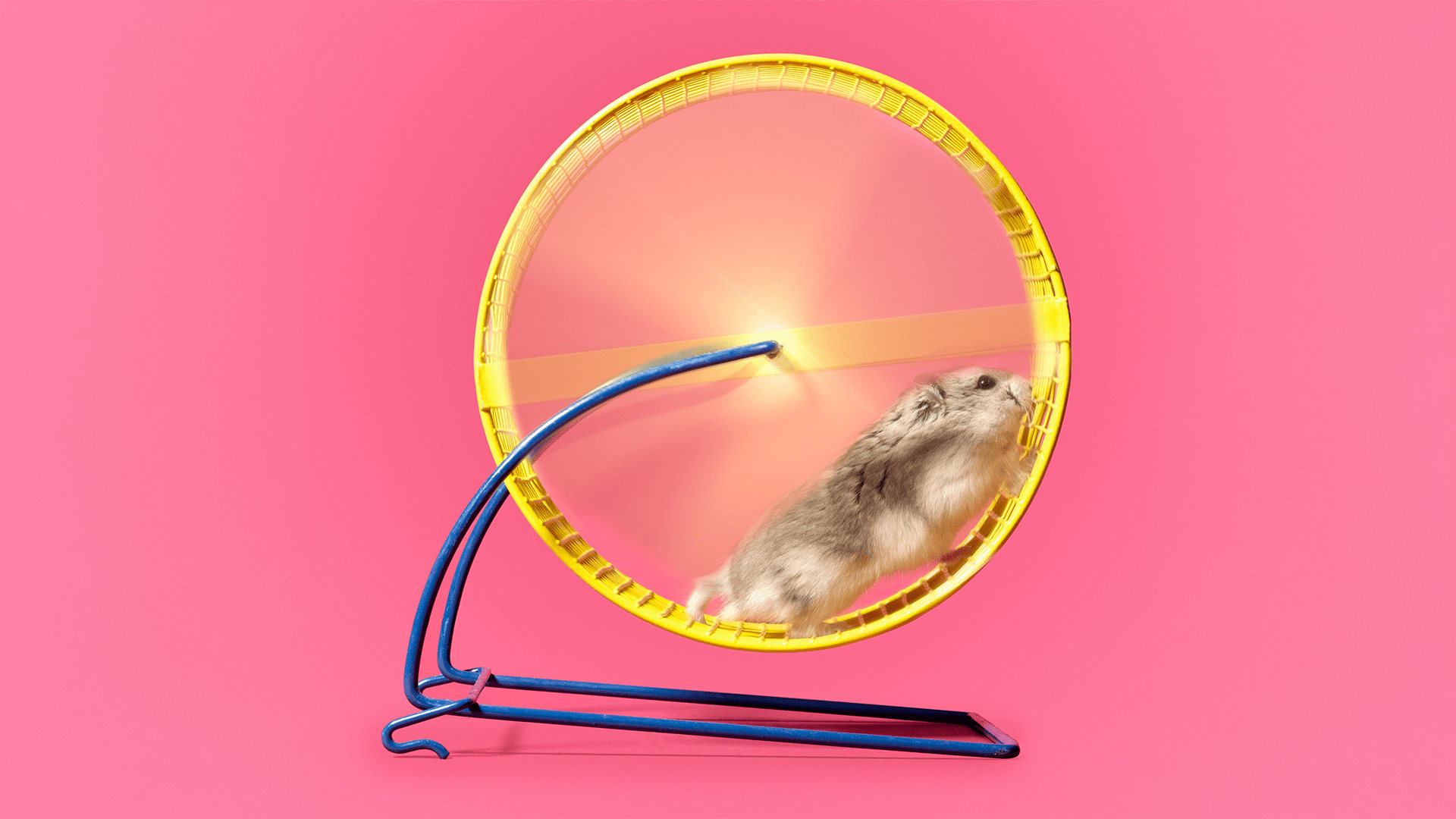
Everyone who has ever owned a hamster knows the sound: the small, relentless squeak of the exercise wheel, usually starting around two in the morning.

As you watch your cute furball running toward no destination whatsoever, you might wonder: What’s going on here? Is little Hammy acting out of restlessness or boredom? 

For decades, scientists assumed it was exactly that: a neurosis, an artifact of captivity, the hamster equivalent of doing push-ups in prison. 

But in 2014, researcher Johanna Meijer conducted a study that suggested a less depressing scenario. When wild mice came across a wheel in their natural habitat, they got on the wheel and ran—sometimes for up to 18 minutes at a stretch.

So if it’s not boredom or neurosis (wild mice surely have plenty of more important tasks than wheel running), what is it? 

Dr. Theodore Garland Jr., a professor of biology at UC Riverside, has spent more than 30 years trying to figure that out. 

“There’s still a lot of controversy about what, exactly, wheel running means to an organism,” Garland says. “What is it? What is the organism trying to do?”

Why wild mice run on wheels just like your hamster

In Meijer’s 2014 study, published in Proceedings of the Royal Society B, she and her colleagues placed exercise wheels in two different locations: a green urban area and a dune area not accessible to the public. For more than three years, they recorded wildlife activity at both locations.

They found that wild mice closely mirrored the behavior of their cage-dwelling counterparts. At both locations, the mice frequently ran on the wheels—often for lengths of time equal to the “workout” durations of captive mice.

Although food was initially used to attract animals to the wheel, the researchers found that wheel running continued even after the food was removed. This suggests that the animals not only ran voluntarily on the wheel, but did so without any external reward. 

The wheels attracted more than just mice, too. Shrews, frogs, and even slugs were recorded using the equipment (a few snails were excluded from the study due to “haphazard” movements on the wheel). But wild mice used the wheel far more than another animal, accounting for 88 percent of all wheel runners. 

Hamsters aren’t the only creatures that like running on wheels. Video: Wild Animals Caught On Hamster Wheel, Live Science

So, why do rodents specifically enjoy a run to nowhere? Are slugs simply less committed to their cardio?

According to Garland, rodents are simply built for it—bigger home ranges, faster metabolisms, and the aerobic capacity to sustain speed over distance.

“A toad isn’t going to be running 10 kilometers in a day,” Garland says. “Whereas a chipmunk could be.”

Dopamine keeps mice and hamsters coming back for more

But that’s only part of the story. The more interesting question is why any animal would choose to do it at all.

According to Garland, the drive to run on wheels among free-ranging animals is not fully understood, but the behavior is likely tied to the reward centers of the brain. 

Dopamine is viewed as the final common denominator,” Garland says, referencing the neurotransmitter that delivers a sense of pleasure to the brain’s reward system. Similar to a human working out at the gym, mice get a dopamine boost every time they run on their trusty wheel. 

In Garland’s own lab, mice placed in larger, rat-sized wheels will sometimes slow down mid-run and rather than jumping off as the wheel keeps spinning, complete a full 360, and keep going. It serves no obvious purpose. It looks, for all the world, like a bit of acrobatics, as if the little mouse is creating its very own roller coaster.

“I’m hesitant to use the ‘F-word’ about lower vertebrates,” he says, “but it’s hard to ignore the idea that they’re getting some sort of pleasure or enjoyment out of it.” 

Related 'Ask Us Anything' Stories

The reward system may explain the drive, but Garland sees something even more elemental at work—something similar to the “zoomies” dogs and other young animals get. 

A baby horse, Garland notes, will sometimes just tear around a field for no apparent reason—solo, unprompted, burning energy for the sheer joy of it. “We used to call it nip-norting,” he says, “just going crazy, even without another individual to egg it on.”

Exercising at a young age leads to lifelong habits, even for hamsters

Rodents’ love of running on wheels might even have implications for humans. Some of Garland’s work suggests that, when introduced at a young age, wheel running can become a lifelong habit.

In his study, Garland found that mice given access to a running wheel immediately after weaning, at just three weeks old, ran significantly more as adults.

“It’s got to be something up here,” Garland says, indicating the brain. “Their reward system has been permanently tweaked.”

Whatever it is keeping these little guys running, an early start seems to predict an ongoing practice. The implications, Garland believes, extend well beyond mice. For instance, cutting physical education from school curricula, he says, could be “a huge public policy disaster,” leading to adults who aren’t used to exercising.

“If you’re a kid who never gets to play basketball or tennis,” he says, “and then you get to college, and your friends are playing pickup games, it’s probably not even on your radar to do that kind of thing.”

Of course, none of this is on your hamster’s radar at all. They’re just galloping away, keeping you awake with the endless rotation of their squeaky wheel. But all that running can also lead to some good: Recently, a resourceful young YouTuber rigged his brother’s hamster wheel to charge his phone.  

But no need to worry—the clever teen isn’t exploiting the toil of a joyless captive. Hammy, it seems, is just doing what comes naturally. 

In Ask Us Anything, Popular Science answers your most outlandish, mind-burning questions, from the everyday things you’ve always wondered to the bizarre things you never thought to ask. Have something you’ve always wanted to know? Ask us.

The post Hamsters run on wheels for a surprisingly joyful reason appeared first on Popular Science.

  • ✇SoraNews24 Japan
  • New Square Enix Cafe reveals Final Fantasy, Dragon Quest, Nier, and Fullmetal Alchemist menu items Casey Baseel
    Tokyo’s new video game/anime eatery has a lot to love (and eat). June 12 is the grand opening of the brand-new Square Enix Cafe in downtown Tokyo’s Shinjuku neighborhood, and the eatery has released a sneak peek at what’s going to be on the menu. As you might expect, food and beverages inspired by the Final Fantasy and Dragon Quest franchises will be on offer, but there’s one other dark-horse candidate for your dining and drinking attention, and an anime/manga mega-hit too. Beginning with Fina
     

New Square Enix Cafe reveals Final Fantasy, Dragon Quest, Nier, and Fullmetal Alchemist menu items

9 June 2026 at 17:30

Tokyo’s new video game/anime eatery has a lot to love (and eat).

June 12 is the grand opening of the brand-new Square Enix Cafe in downtown Tokyo’s Shinjuku neighborhood, and the eatery has released a sneak peek at what’s going to be on the menu. As you might expect, food and beverages inspired by the Final Fantasy and Dragon Quest franchises will be on offer, but there’s one other dark-horse candidate for your dining and drinking attention, and an anime/manga mega-hit too.

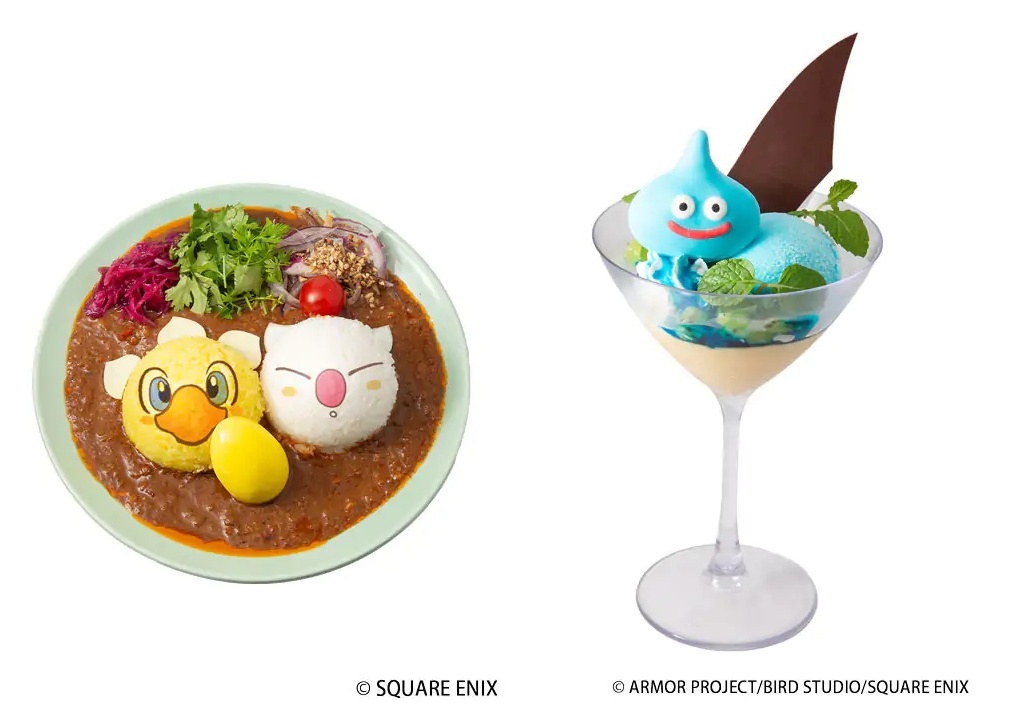
Beginning with Final Fantasy, the entrée options are the Chocobo and Moogle Spice Curry, milder Moogle Kids Curry

Chocobo and Friends Burger Plate (with a special appearance by Cactuar on one of its mini buns), and Chocobo Balanced Salad, designed as a for-humans equivalent of the Gysahl Greens so loved by the avian steeds.

And for dessert, Final Fantasy fans can look forward to the FF Version Purin Parfait, a Japanese-style custard pudding served in a classy cocktail glass with toppings including a marshmallow Chocobo and ice cream.

The “FF Version” part of the name suggests the existence of other pudding parfaits as well, and the DQ Version, of course, stars Dragon Quest’s adorable Slime.

The DQ mascot monster also appears in the Slimes Draw Near Jiggly Sweets Plate

…and there are savory Slime plates too, such as the Healslime Burger Basket, in which the restorative creature’s tentacles are represented by a sliced sausage, and the Taco Rice-Style Hamburger Plate with Bubble Slime On Top.

Getting back to that third video game inspiration we mentioned, it’s none other than Nier: Automata, whose version of the purin parfait gives you a triple dose of Emil marshmallows…

…and his smiling (?) face is also present in the Lunar Tear Milk Tea Float plate.

Things get a little abstract with the 2B YoRHa Skirt-style Crepe Salad (with edible bamboo charcoal the most likely ingredient giving it its color), and things get really abstract with the On-Site Procurement Bullet Hell Pasta, meant to evoke memories of the enemy bullet barrages in the game’s shooting segments.

Now we come to the anime/manga part of the menu, which is saluting Fullmetal Alchemist.

Though Square Enix is most famous for video games, the company is also a major manga publisher, and within Japan handles the tale of brothers Al and Ed Elric, who are featured in a purin parfait, plus steamed buns with sweet custard and savory stew fillings. Fellow alchemist Roy Mustang also contributes to the menu with a Flame Alchemist shrimp pasta topped with shredded chili for extra heat.

Drinks come in two tiers, with the fancier ones consisting of a Final Fantasy Potion, Dragon Quest Traveler’s Healing Herb Set, and Fullmetal Alchemist Dwarf in the Flask.

The lower drink tier is made up of standard soft drinks such as coffee, tea, cola, orange juice, and melon soda. The cold drinks come with your choice of illustrated cup sleeve

…while hot drinks let you pick one of two latte art designs per series.

The Square Enix Cafe has a service charge of 1,200 yen (US$7.60) per person, but that price does include one lower-tier drink of your choice, plus an illustrated placemat (you can pick which title you want, but the exact design is random).

▼ In keeping with Nier’s unabashed weirdness, its placemats are vertically oriented.

And as anyone who’s been to one knows, you can’t have a proper themed cafe in Japan without art coasters, and you’ll receive one at random when ordering any of a series’ associated food items or premium drinks.

Prices for the premium drinks and desserts are generally in the 1,000-1,500 yen range, with most of the main dishes priced between 1,500 and 2,200 yen (though the Fullmetal Alchemist steamed buns are just 770 yen each).

Again, the Square Enix Cafe’s grand opening takes place on June 12, and while walk-ins are allowed if space is available, reservations can be made through the restaurant’s website.

Restaurant information
Officially Licensed Square Enix Cafe & Shop Shinjuku
Address: Tokyo-to, Shinjuku-ku, Shinjuku 3-36-1
東京都新宿区新宿3丁目36-1
Open 11 a.m.-10 p.m.
Website

Source, images: Officially Licensed Square Enix Cafe & Shop Shinjuku official website
● Want to hear about SoraNews24’s latest articles as soon as they’re published? Follow us on Facebook and Twitter!

  • ✇Popular Science
  • Watch adorable animals compete for best chewer in 2026 Crunch-a-Thon Margherita Bassi
    Social media is widely considered to be bad for one’s mental health, at least anecdotally. However, it can have some positive impacts, such as videos of animals chewing food very loudly. What could possibly be better than a closeup of an animal’s snout as it crunches on a carrot?  This week, zoos around the United States have been using social media to highlight one particularly cute muncher—tree kangaroos. Ahead of World Tree Kangaroo Day on May 21, conservation organization AZA SAFE (Saving
     

Watch adorable animals compete for best chewer in 2026 Crunch-a-Thon

16 May 2026 at 14:01

Social media is widely considered to be bad for one’s mental health, at least anecdotally. However, it can have some positive impacts, such as videos of animals chewing food very loudly. What could possibly be better than a closeup of an animal’s snout as it crunches on a carrot? 

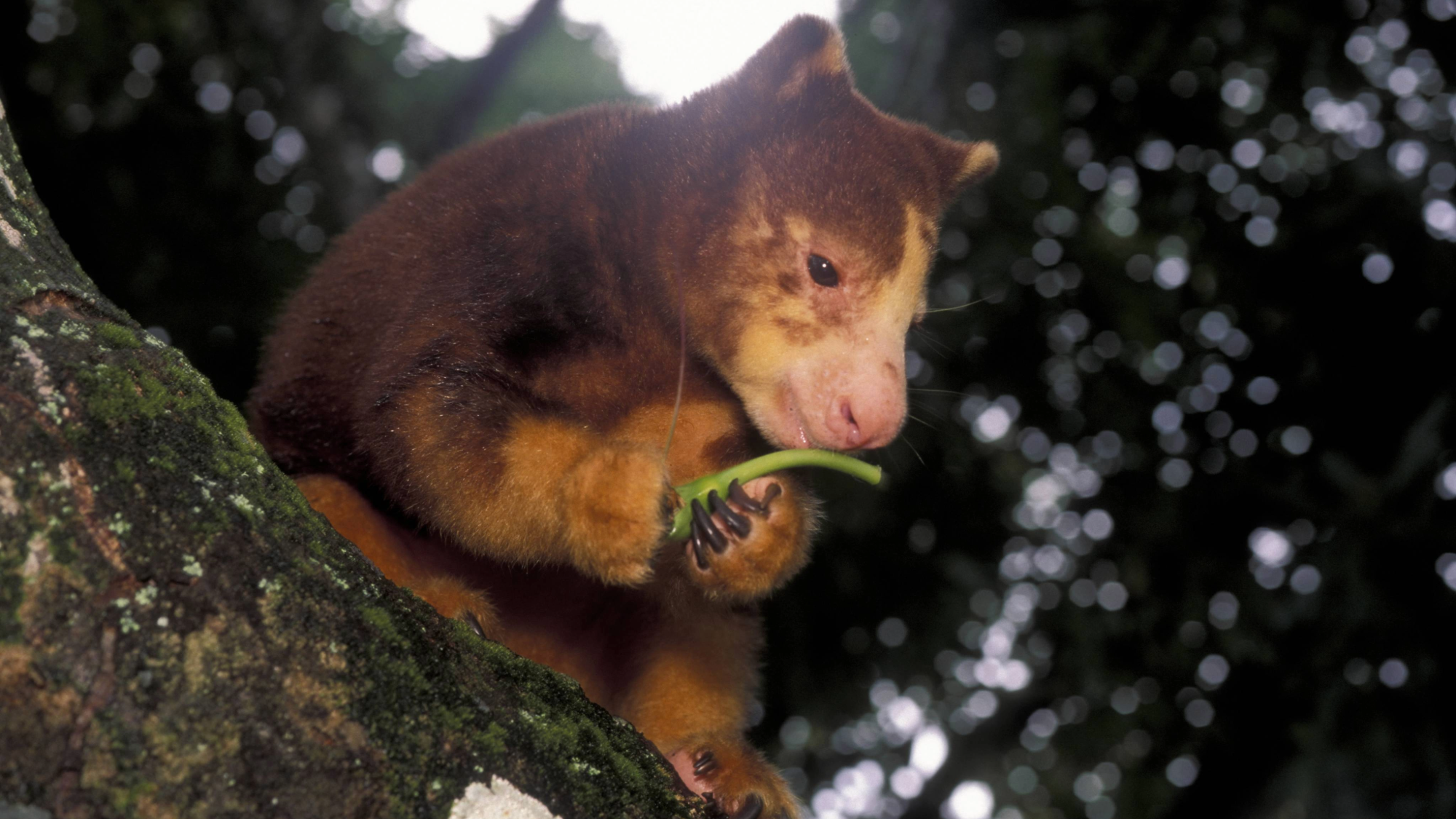
This week, zoos around the United States have been using social media to highlight one particularly cute muncher—tree kangaroos. Ahead of World Tree Kangaroo Day on May 21, conservation organization AZA SAFE (Saving Animals From Extinction): Tree Kangaroo of Papua New Guinea is inviting organizations working with tree kangaroos to compete in this year’s International Tree Kangaroo Crunch-a-Thon. 

In the aptly-named competition, participants posted videos on Instagram and/or Facebook of their tree kangaroo eating something. The competition categories are Most Likes, Most Views, and Judges’ Choice, and winners will be announced on May 17, Australian Eastern Standard Time. 

The organizers even provide crunchy food recommendations: bell peppers, celery, romaine hearts, snap peas, green beans, cucumbers, and zucchini—with the caveat that the last two vegetables might not have the best crunch. 

“In partnership with the AZA Tree Kangaroo SAFE program, we’re participating in the Tree Roo Crunch-a-Thon to help shine a spotlight on this endangered species,” reads a social media post by Roger Williams Park Zoo & Carousel Village featuring three munching, pink-nosed brown and white tree kangaroo. “Our Zoo is home to three Matschie’s tree kangaroos – a species of tree kangaroo native to the cloud forests of Papua New Guinea.”

Tree kangaroos are 14 species in the Dendrolagus genus, the sole arboreal kangaroo group. They are herbivorous marsupials with bushy tails, and usually have long arms and padded back feet. Tree kangaroos live in parts of Australia, Indonesia, and New Guinea’s rainforests. The Golden-mantled tree kangaroo (Dendrolagus pulcherrimus) is among the world’s most endangered mammals and only lives in a small area of Papua New Guinea. 

In the words of the Crunch-a-Thon organizers, “let the crunching begin!” 

The post Watch adorable animals compete for best chewer in 2026 Crunch-a-Thon appeared first on Popular Science.

  • ✇Popular Science
  • Big wings and sweet songs: The mating lives of Panama’s katydids Laura Baisas
    When it comes to reproduction, animals will pull out all the stops to attract a mate. Sending out noisy mating calls, showing off colorful wings, inflating a throat pouch, and shaking a literal tailfeather all ensure that the next generation of a species happens. Some insects will go as far as making themselves look like an entirely different living thing—leaves.  Usually used as a means of camouflage, male katydids appear to use their leafy disguise to amplify mating calls and make themselve
     

Big wings and sweet songs: The mating lives of Panama’s katydids

3 June 2026 at 00:05

When it comes to reproduction, animals will pull out all the stops to attract a mate. Sending out noisy mating calls, showing off colorful wings, inflating a throat pouch, and shaking a literal tailfeather all ensure that the next generation of a species happens. Some insects will go as far as making themselves look like an entirely different living thing—leaves. 

Usually used as a means of camouflage, male katydids appear to use their leafy disguise to amplify mating calls and make themselves more attractive to the opposite sex. The findings are detailed in a study published today in the journal Proceedings of the Royal Society B, and offer one of the first demonstrations of how leaf mimicry enhances a male katydids’ sexual signals. 

To shield themselves from predators, various species of katydids have evolved wings with structures that look like leaves. Panama’s leaf-masquerading katydids (Arota festae) will even change from green to hot pink in order to better mimic leaves. What’s been less clear to entomologists is whether or not these leaf-mimicking structures play a role in katydid mating. 

This new study looked at a species called Viadana brunneri from Barro Colorado Island, Panama. To attract mates, katydids create songs by rubbing together specialized structures on their wings. In many tropical species like V. brunneri, the portion that mimics leaves makes up the majority of their wing’s surface area.  

a green insect with a large, green wing that looks like a leaf hands upside down on a stick
Most of the wing structure is devoted to helping male katydids look more like a leaf. Image: Christian Ziegler.

Previously, scientists believed physical adaptations for survival and for attracting mates can function in conflict with one another, particularly if they are physically connected. A male peacock’s flashy tail feathers may help it attract a female, but it also makes it easier for predators to find them. Male katydids, on the other hand, are able to use the acoustic properties of the structures that they use for defense to their reproductive advantage. They are a rare example of how an adaptation for self-defence and reproduction can work together without necessarily putting the animal in jeopardy. 

The team performed a series of bioacoustic, behavioral, and biophysical experiments, showing that these leafy structures on their wings make them more attractive to females, while also helping conceal them. After removing the leafy portions of a male V. brunneri’s wings, the pitch became higher and the volume of their songs also changed. The team then played these calls for females who preferred the lower pitch calls from males with their leafy wing sections still intact. 

While male katydids do all the singing, females indicate their interest by replying to the song with clicks. The insects produce short, sporadic and infrequent calls, possibly for only two seconds in a single night. They perform these calls in ultrasounds, which our ears can’t pick up. They also found that the leafy portions of the male katydid wing will vibrate to amplify their songs, making them more detectable to females. 

“Our study provides a rare example of natural and sexual selection acting in harmony, producing traits that simultaneously improve survival and mating success,” Dr. Benito Wainwright, a study co-author and evolutionary biologist at the University of St Andrews, said in a statement. “We are now extremely excited to start exploring how such an interesting interaction evolved in katydids.” 

The post Big wings and sweet songs: The mating lives of Panama’s katydids appeared first on Popular Science.

❌
Subscriptions