Normal view

  • ✇W Magazine
  • Olivia Rodrigo's Best Red Carpet Moments Prove She Has Major ‘Guts’ Matthew Velasco
    ANGELA WEISS/AFP/Getty ImagesOlivia Rodrigo has been in the spotlight since her pre-teens but it seems that her star is continually on the rise. Though she is most known for her musical prowess, the California-native got her start in acting via kiddie comedy series Bizaardvark. Shortly after, she landed the then biggest role of her young career as Nini Salazar-Roberts in the Disney+ series High School Musical: The Musical: The Series (which she eventually left in 2022 to focus on music.)In only
     

Olivia Rodrigo's Best Red Carpet Moments Prove She Has Major ‘Guts’

13 May 2026 at 18:16
ANGELA WEISS/AFP/Getty Images

Olivia Rodrigo has been in the spotlight since her pre-teens but it seems that her star is continually on the rise. Though she is most known for her musical prowess, the California-native got her start in acting via kiddie comedy series Bizaardvark. Shortly after, she landed the then biggest role of her young career as Nini Salazar-Roberts in the Disney+ series High School Musical: The Musical: The Series (which she eventually left in 2022 to focus on music.)

In only a few years, Rodrigo has gone from Disney star to reigning pop-punk princess, not only thanks to her critically-acclaimed albums Sour and GUTS, but also due to her unique style sense. On the red carpet, she’s gravitated towards bright, Gen Z styles that are never without an added edge. She’s championed designers both rising and established—from vintage Versace and Miu Miu to Ludovic de Saint Sernin and Fancí Club. Through it all, Rodrigo has cemented herself as one of the most exciting voices in music and fashion. Below, take a look back at Olivia Rodrigo’s best red carpet moments from High School Musical to now.

2026: Met Gala After Party

Ilya S. Savenok/Getty Images Entertainment/Getty Images

Though she skipped the main event, Rodrigo popped into Saint Laurent’s Met Gala after party in a knitted archival Vivienne Westwood mini dress from 1994.

2026: Vanity Fair Oscar Party

Jamie McCarthy/WireImage/Getty Images

Rodrigo went for party girl opulence at VF’s big Oscars bash. Her pink fathered dress was custom Saint Laurent.

2026: Paris Fashion Week

WWD/WWD/Getty Images

Rodrigo made a rare Paris Fashion Week appearance to catch the Chloé show. She was wearing of course head-to-toe Chloé.

2025: Lily Allen’s Christmas Party

Dave Benett/Dave Benett Collection/Getty Images

Rodrigo attended Lily Allen’s Christmas shindig in London in a dress that’s older than she is. Her lacy number is from Tom Ford’s spring 1996 collection for Gucci.

2025: Academy Museum Gala

Taylor Hill/FilmMagic/Getty Images

At the 2025 Academy Museum Gala, Rodrigo scoured the archives for this elegant Armani Privé two-piece look from the label’s spring 2005 collection.

2025: Grammy Awards

Axelle/Bauer-Griffin/FilmMagic/Getty Images

The singer delivered classic va-va-voom glamour in a cut-out Versace dress at the Grammys in 2025.

2025: Guts World Tour Premiere

Axelle/Bauer-Griffin/FilmMagic/Getty Images

Rodrigo’s vintage Dior gown, designed by John Galliano in 1998, is older than she is.

2024: Grammy Awards

Axelle/Bauer-Griffin/FilmMagic/Getty Images

In a vintage Versace dress from 1995, Rodrigo embraced full old Hollywood glamour for music’s biggest night in 2024.

2024: Governors Awards

VALERIE MACON/AFP/Getty Images

Rodrigo’s archival Saint Laurent gown, from the brand’s fall 1997 couture collection, just so happens to be three years older than she is.

2023: Variety Hitmakers Brunch

Axelle/Bauer-Griffin/FilmMagic/Getty Images

The singer ventured on the casual side for the Variety Hitmakers Brunch with this floral mini dress and platform Mary Janes.

2023: GQ Men of the Year Awards

Steve Granitz/FilmMagic/Getty Images

Rodrigo slipped into this party-ready fringe dress from Tom Ford’s spring 2024 collection for the GQ Men of the Year Awards.

2023: Hunger Games: The Ballad Of Songbirds & Snakes Premiere

Steve Granitz/FilmMagic/Getty Images

This Rodarte halter gown, complete with sequins and floral appliqués, fit Rodrigo like a glove during The Hunger Games: The Ballad Of Songbirds & Snakes premiere.

2023: MTV Video Music Awards

Taylor Hill/Getty Images Entertainment/Getty Images

All that glitters is, well, silver. At the 2023 MTV Video Music Awards, Rodrigo dazzled in a custom Ludovic de Saint Sernin gown.

2023: Met Gala

Michael Buckner/Variety/Getty Images

For an impressive third Met Gala appearance at age 20, the singer went with a dramatic black and white Thom Browne look in keeping with the Karl Lagerfeld theme.

2023: Grammy Awards

Axelle/Bauer-Griffin/FilmMagic/Getty Images

Rodrigo got in on the sheer red carpet craze with this skin-baring Miu Miu dress she wore to the 2023 Grammy Awards.

2022: iHeartRadio Music Awards

Billboard/Penske Media/Getty Images

Though Rodrigo took home three awards at the 2022 iHeartRadio Music event, her purple Versace mini dress and skin-tight boots were just as much of a winner.

2022: Grammy Awards

Axelle/Bauer-Griffin/FilmMagic/Getty Images

At the 2022 Grammy Awards, Rodrigo graced the red carpet in a black and purple Vivienne Westwood gown and coordinating opera gloves.

2022: Met Gala

Jeff Kravitz/FilmMagic/Getty Images

The singer turned heads in this glittering Versace gown, complete with a sizable slit, that she paired with statement heels, voluminous hair, and butterfly clips.

2022: Driving Home 2 U Premiere

Kyusung Gong/Disney General Entertainment Content/Getty Images

Well ahead of the current bow trend, the star sported a dainty Fancí corset and pink mini skirt to the 2022 Driving Home 2 U premiere.

2022: Billboard Women in Music Awards

ROBYN BECK/AFP/Getty Images

This belted maxi dress from New York label Area was the ensemble of choice for Rodrigo when she attended the 2022 Billboard Women in Music Awards.

2022: Brit Awards

Ian West - PA Images/PA Images/Getty Images

Rodrigo was certainly amongst the best dressed at the 2022 Brit Awards in this chainmail Alexandre Vauthier number.

2021: Opening Gala for the Academy Museum of Motion Pictures

Jay L. Clendenin/Los Angeles Times/Getty Images

Rodrigo was a vision in Saint Laurent for the 2021 opening gala of the Academy Museum of Motion Pictures.

2021: Met Gala

Mike Coppola/Getty Images Entertainment/Getty Images

Rodrigo turned heads at the 2021 Met Gala in this lace Saint Laurent bodysuit.

2021: MTV Video Music Awards

Rob Kim/FilmMagic/Getty Images

For her first time at the MTV Video Music Awards, the songstress made quite the statement in a pastel Versace gown.

2021: Brit Awards

JMEnternational/Getty Images Entertainment/Getty Images

Rdorgio somehow made the highlighter yellow of this Dior dress work at the 2021 Brit Awards.

2021: American Music Awards

Matt Winkelmeyer/Getty Images Entertainment/Getty Images

This feather and sheer David Koma look that Rodrigo wore to the 2021 American Music Awards would double as the perfect party dress.

2019: D23 Expo

Frazer Harrison/Getty Images Entertainment/Getty Images

Before her solo breakout, Rodrigo was a mainstay on the Disney circuit—here, she wore a white turtleneck and corduroy pants to the D23 Expo in 2019.

2018: Radio Disney Music Awards

Jon Kopaloff/FilmMagic/Getty Images

Even as a teenager, Rodrigo still had a passion for pink and lots of sparkle.

2017: Coco Premiere

Jason LaVeris/FilmMagic/Getty Images

The singer was lightyears ahead of the ballet shoe trend when she wore a red lace-up pair to the Coco premiere in 2017.

2016: The Swap Premiere

Matthew Simmons/Getty Images Entertainment/Getty Images

15-year-old Rodrigo stepped out to The Swap premiere in a patterned chiffon dress and leather boots.

In Eastern Africa, the Cradle of Humankind Is Tearing Apart

23 April 2026 at 12:25
Researchers have found that Earth’s underlying crust in the Turkana Rift region has been significantly thinned, presaging Africa’s eventual breakup—and with that finding, the researchers offer a new perspective on Turkana’s fossil record of human evolution.

  • ✇Popular Science
  • World’s biggest scorpions were the size of baseball bats Laura Baisas
    Giant scorpions the size of a baseball bat with pincers the size of a pencil once stalked what is now England and Wales. Praearcturus gigas is believed to be the largest scorpion to ever roam the Earth, and was discovered from fossils that have been tucked away in London’s Natural History Museum for more than 150 years. The findings are detailed in a study published in the journal Palaeontology. Praearcturus gigas stalked the region’s floodplains about 415 million years ago, during the Early
     

World’s biggest scorpions were the size of baseball bats

4 June 2026 at 13:27

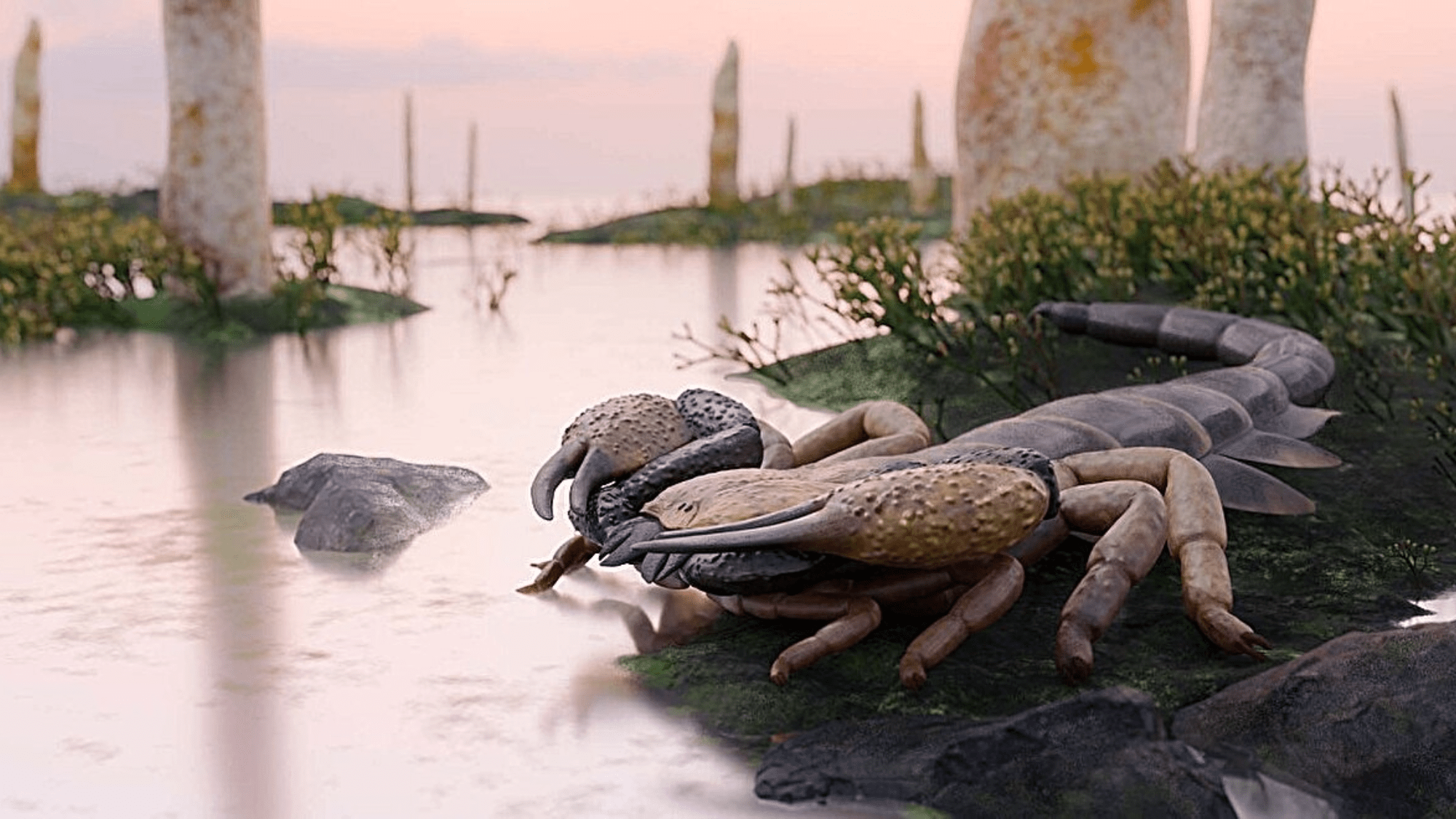
Giant scorpions the size of a baseball bat with pincers the size of a pencil once stalked what is now England and Wales. Praearcturus gigas is believed to be the largest scorpion to ever roam the Earth, and was discovered from fossils that have been tucked away in London’s Natural History Museum for more than 150 years. The findings are detailed in a study published in the journal Palaeontology.

Praearcturus gigas stalked the region’s floodplains about 415 million years ago, during the Early Devonian. Small plants and fungi had only recently begun to spread, and more complex land ecosystems like forests did not exist yet.

“When we think of giant arthropods, people often picture Carboniferous rainforests with giant millipedes or dragonfly-like insects from later in Earth’s history,” Dr. Richard J. Howard, a study co-author and the Curator of Fossil Arthropods at the Natural History Museum, said in a statement. “But Praearcturus lived at least 50 million years earlier, well before the evolution of trees, when life on land was only just getting started.”

Howard and the team believe that Praearcturus’ enormous size indicates that they had very little competition from other large predators roaming around. Praearcturus might have grown to three-feet-long with six-inch pincers simply because there weren’t any other large animals nearby, so it could dominate its environment in a way that wouldn’t be possible years down the road. 

Praearcturus gigas was first scientifically decided in 1871. Scientists originally thought it was some kind of giant crustacean, similar to a woodlouse. The fossils were very fragmented, and lacked key features (such as a tail) that help classify it. To get a better picture, the team compared their fossils with some more well-preserved specimens found in 1972 and 2010.

“Praearcturus has puzzled us palaeontologists for more than a century,” added Dr. Russell Garwood, a study co-author and palaeontologist at The University of Manchester. “By bringing together material from several collections and using cutting edge imaging techniques, we’ve been able to build a clearer picture of the animal than was previously possible, which is really exciting.”

The fossils hint that this giant scorpion may have lived in the water some of the time. Some specimens have flap-like structures on the abdomen that are similar to those found in modern crustaceans like lobsters. These flaps suggest Praearcturus may have been capable of moving between water and land. Their place in the wider arachnid fossil record shows that most scorpions are unusually abundant in rocks dating back to this time period, compared with other arachnid species. This supports the idea that Praearcturus may have lived in freshwater environments, where they are more likely to survive as fossils. Excitingly, it shows that Praearcturus lived at a pivotal moment in our planet’s history, when animals were first experimenting with living life outside the oceans.

a scorpion pincer fossil
Pincer of scorpion (about the size of today’s largest scorpion). Image: Natural History Museum.

“The boundary between land and sea was much less defined at this time,” said Dr. Greg Edgecombe, a study co-author and Natural History Museum researcher. “Praearcturus gives us a fascinating glimpse into how early animals adapted to these changing environments. It may even represent a lineage that returned to the water after earlier ancestors had already begun living on land.”

According to the team, a breakthrough like this shows how important discoveries are still being made from museum collections. It also challenges assumptions about why prehistoric arthropods reached such enormous sizes. Instead of being driven solely by environmental factors like oxygen levels, a lack of competition, and other ecological opportunities may have played a crucial role.

“Confirming that this animal is a scorpion fundamentally changes our understanding of how and when these creatures evolved to such extraordinary sizes,” said Howard. 

The post World’s biggest scorpions were the size of baseball bats appeared first on Popular Science.

  • ✇Popular Science
  • 700,000-year-old squirrel poop helps scientist recreate an ancient world Laura Baisas
    A treasure trove of prehistoric squirrel poop is painting a picture of a lost world. Some of the oldest DNA ever discovered and sequenced lies deep inside these ancient rodent droppings. That fossilized poop (or coprolite) is full of 700,000-year-old environmental DNA from numerous plants, insects, microbes, and large mammals that once lived in Canada’s Yukon, many of which are long gone. A study published today in the journal Nature Communications describes the findings. Researchers analyzed
     

700,000-year-old squirrel poop helps scientist recreate an ancient world

9 June 2026 at 15:00

A treasure trove of prehistoric squirrel poop is painting a picture of a lost world. Some of the oldest DNA ever discovered and sequenced lies deep inside these ancient rodent droppings. That fossilized poop (or coprolite) is full of 700,000-year-old environmental DNA from numerous plants, insects, microbes, and large mammals that once lived in Canada’s Yukon, many of which are long gone. A study published today in the journal Nature Communications describes the findings.

a large squirrel with brown fur laying in grass
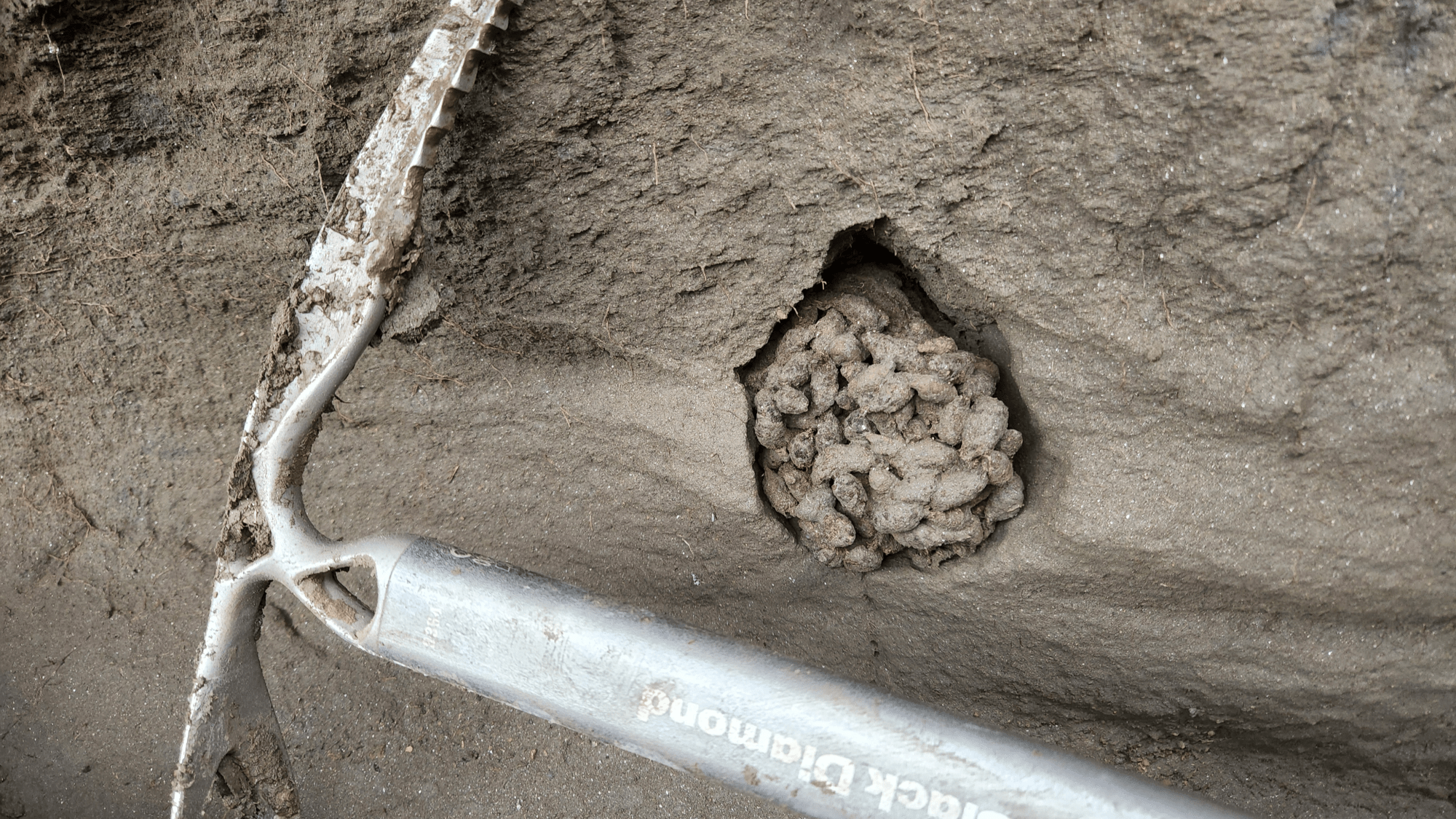
Researchers analyzed permafrost samples collected from ground squirrel burrows that span several glacial periods and can remain frozen and sealed for thousands of years. Image: Government of Yukon.

A rodent time capsule

Arctic ground squirrels (Urocitellus parryii) are still alive today. They are widely found within Beringia, a region spanning the Yukon in Canada and Alaska in the United States. They are opportunistic feeders that eat a wide variety of plants, fungi, and insects. They will also eat meat, including dead flesh, whale meat, and even other rodents. They can also hibernate for up to seven months. Their wide diet and long-term hibernation in frozen burrows have helped create a detailed biological record of their environment.

“I’ve been describing them as acting a bit like tiny Arctic pack rats,” Tyler Murchie, a study co-author and McMaster University biomolecular archaeologist, tells Popular Science. “These squirrels are interesting both because of what they collected from the environment and because of their own evolutionary histories and how they adapted to the far north during previous glacial periods.”

The proof is in the poop

In the study, Murchie and his team analyzed 13 Arctic ground squirrel coprolite samples from the central Yukon. This research took place on the territory of the Tr’ondëk Hwëch’in First Nation and was conducted with permission. 

Compared to bones or sediments, fossilized feces like these coprolites are not used as often for DNA analysis since they can degrade more easily. However, the ground squirrel burrows in Arctic regions can remain frozen and sealed for thousands of years, preserving genetic material in the poop. The ground squirrel burrows here span several glacial periods, and the organic material inside can remain frozen and sealed for thousands of years. The samples in this study date back 30,000 to approximately 700,000 years ago and the biomolecules from ancient animals can be preserved in the coprolites.  

“Ancient squirrel poop was one of those ideas that sounded a bit ridiculous at first,” says Murchie. “Scott [Cocker, a study co-author] and I did it initially in part for fun and out of curiosity, not knowing what to expect. But scientifically, it made a lot of sense that these sorts of remains would be really information dense given how dense the burrows can be with macro-remains and given that they’ve been frozen continually for millenia. The squirrels were basically collecting pieces of the landscape and storing them in frozen burrows.”

To tell that something is coprolite, context matters. The scientists didn’t find a random poop pellet here or there, but found the droppings as part of a greater burrow system. 

“They are small pellets, roughly rabbit-dropping sized, and they look like dried or fossilized fecal pellets rather than random sediment clumps or plant fragments,” Murchie explains. “When you’re working with them though, they very much seem like frozen poop. When we subsample them and go to digest a portion to extract DNA, it smells like poop. So the organics are all still in there.”

Inside of these DNA samples they not only found smaller organisms like plants and microbes, but larger animals—woolly mammoths (Mammuthus primigenius), American cheetahs (Miracinonyx), horses (Equus), steppe bison (Bison priscus), and more. The team was able to reconstruct 18 mitochondrial genomes from the poop samples, including 12 ground squirrels, one hare, two bison, and three horses.

an illustration of squirrels in burrows with others on top in the grass
An artist’s reconstruction of Pleistocene Yukon, showing Arctic ground squirrels scavenging meat and foraging on plants within the mammoth-steppe ecosystem. Ancient DNA from their preserved burrows and faeces reveals this complex food web—where even small rodents fed on megafauna like mammoths. Image: Mercedes Minck/Hakai Institute.

A humbling timeline

The team also found a previously unknown genetic diversity among Arctic ground squirrels, including one lineage that dates back 700,000 years. While this squirrel does not live in the Yukon, its relatives can be found in western Siberia.

“There’s something humbling in the timescale. Some of these samples are older than our species. Homo sapiens in our modern anatomical form are usually placed at around 300,000 years ago, and our oldest sample is roughly 700,000 years old,” says Murchie. “So these squirrels were living, collecting, eating, caching, and leaving behind these tiny biological archives long before humans like us existed.”

The team acknowledges that some of the DNA may have been picked up from the coprolite’s surface at a later time and species identification may be affected by incomplete genetic reference databases for animals that lived so long ago. However, these findings show that permafrost coprolites can be part of a high-resolution snapshot of prehistoric environments and complement more typical findings like bones and teeth. 

“Science is sometimes at its best when it takes something ordinary, weird, or even funny, and shows that it contains a much larger story,” says Murchie. “In this case, squirrel poop can turn out to be a window into deep time, climate change, extinction, evolution, and ecosystems that no longer exist.”

The post 700,000-year-old squirrel poop helps scientist recreate an ancient world appeared first on Popular Science.

  • ✇Eos
  • Interstellar Comet Was Born in a Very Cold Place Kimberly M. S. Cartier
    In late 2025, astronomers spotted an interstellar comet making a quick trip through the solar system. 3I/ATLAS was discovered in July when it was just inside Jupiter’s orbit. It’s now about halfway between Jupiter and Saturn and getting farther away every day. The European Space Agency’s Jupiter Icy Moons Explorer (ESA JUICE) mission, on its way to Jupiter, imaged 3I/ATLAS on 5 November 2025 when the comet was 64 million kilometers from the spacecraft. Credit: ESA/Juice/JANUS, CC BY-SA 3.0 I
     

Interstellar Comet Was Born in a Very Cold Place

7 May 2026 at 13:11
A bright white point is surrounded by a large, soft blue glow that fades gradually into a dark background. Thin, faint streaks appear diagonally across the image, suggesting motion or stars in the distance. The overall effect is of a luminous object in space, radiating light against a deep, dark backdrop.

In late 2025, astronomers spotted an interstellar comet making a quick trip through the solar system. 3I/ATLAS was discovered in July when it was just inside Jupiter’s orbit. It’s now about halfway between Jupiter and Saturn and getting farther away every day.

A bright, oval shape glows near the center of a black, star-filled sky as it moves diagonally toward the top right of the frame. It has a soft halo around it and a faint, wispy tail stretching downward. Countless tiny white stars dot the background.
The European Space Agency’s Jupiter Icy Moons Explorer (ESA JUICE) mission, on its way to Jupiter, imaged 3I/ATLAS on 5 November 2025 when the comet was 64 million kilometers from the spacecraft. Credit: ESA/Juice/JANUS, CC BY-SA 3.0 IGO

Astronomers have been observing 3I/ATLAS throughout its journey inward toward the Sun and back out again, compiling the most comprehensive and detailed view thus far of an interstellar object, including the chemistry of the gases that sublimated from its surface and formed its coma and tail.

In a first-of-its-kind observation of an interstellar object (ISO), researchers have discovered that the ratio of deuterium to hydrogen in 3I/ATLAS’s outgassed water is 30–40 times higher than in solar system objects. That suggests that the comet formed in a much colder environment than our own solar system did.

“It is always hard to really pinpoint where these objects form,” said Luis E. Salazar Manzano, the lead researcher on these observations and a doctoral student at the University of Michigan in Ann Arbor. “We know that they were formed in different parts of the galaxy, but it’s hard to connect what we measure with how they were formed. These types of measurements, such as the relative abundance of deuterium to hydrogen in water, are one of the best ways we have to actually [learn] about their forming conditions and their evolution.”

Coming In from the Cold

Water appears to be ubiquitous throughout the universe, sprinkled within distant galaxies and in star-forming nebulae. But there are different flavors of water: heavy, semiheavy, and plain old H2O. In the molecular clouds where stars form, the cold environment favors a chemical reaction that increases the amount of gaseous deuterium (D), an isotope of hydrogen, relative to regular hydrogen atoms. That deuterium then bonds with hydrogen and oxygen atoms to create semiheavy water, or HDO.

By measuring the quantity of semiheavy water relative to regular water in an object, scientists can infer the object’s ratio of deuterium to hydrogen, or D/H, and decode the physical conditions in which that water formed. Astronomers have made such measurements for baby stars, planet-forming disks, solar system comets, and meteorites, as well as Earth’s ocean.

“What is fundamentally important about ISOs is that they are physical leftovers of the process of forming another planetary system and they can give us clues to that process,” said Karen Meech, an astrobiologist at the University of Hawaiʻi at Mānoa who was not involved with this research.

“The conditions in the stellar system in which 3I/ATLAS formed may have been quite different from the one in the solar system.”

The team observed 3I/ATLAS with the Atacama Large Millimeter/submillimeter Array (ALMA) in Chile on November 2025 when the comet was 335 million kilometers (208 million miles) from Earth. It had just passed its closest approach to the Sun and was as bright as it was ever going to be. This timing was critical for the measurements the team wanted to make because the signal for HDO is very subtle, especially when it has to compete with the much more abundant H2O in the comet and within Earth’s atmosphere, Salazar Manzano explained.

Those measurements showed that for every 1,000 hydrogen atoms in 3I/ATLAS, there were about 5–7 deuterium atoms. While that’s not a lot, the ratio is still at least 40 times more than what’s found in ocean water and at least 30 times the average value in solar system comets.

“The conditions in the stellar system in which 3I/ATLAS formed may have been quite different from the one in the solar system,” said Paul Hartogh, a physicist and atmospheric science researcher at the Max Planck Institute for Solar System Research in Göttingen, Germany.

The first interstellar object, 1I/ʻOumuamua, did not outgas any material, and although the second object, 2I/Borisov, did, it was not bright enough to detect deuterium. 3I/ATLAS was the first opportunity astronomers had to measure the D/H ratio of an interstellar comet. Those measurements suggest that 3I/ATLAS formed in a much colder galactic environment than the solar system did, less than 30°C above absolute zero. The team published these results in Nature Astronomy in April.

Planning for the Next Interstellar Visitor

Hartogh, who was not involved with this research, said that on the one hand, 3I/ATLAS’s high deuterium enrichment is surprising because it is higher than that of any known comet. On the other hand, he added, some scientists predicted such high values for cometary water several decades ago.

Meech said she found these results “really interesting.” She never expected all other solar systems to have formed just like ours, and 3I/ATLAS fits with that idea.

“This gives us an intriguing look into the processes of planetary system formation—and that there are differences from our own solar system,” Meech said. “It is too early to tell what this implies for the formation of planets or habitable worlds. We are just at the beginning of an exciting story.”

“The fact that we were able to make this measurement with 3I will allow us to better prepare what to expect with the next generation of interstellar objects.”

3I/ATLAS is getting harder to see with telescopes, but astronomers still have a lot of data from when it was much brighter to go through, Salazar Manzano said. Teams around the world are working on creating a holistic picture of the comet’s chemistry and evolution.

What’s more, “the fact that we were able to make this measurement with 3I will allow us to better prepare what to expect with the next generation of interstellar objects,” Salazar Manzano said.

Scientists expect that the Vera C. Rubin Observatory could discover between 6 and 51 interstellar objects within the next 10 years. If objects are detected early enough in their journey through the solar system, “there may be enough time to coordinate observations with ground-based and spaceborne telescopes, taking advantage of the recent experience gained by the multiple 3I/ATLAS observations,” Hartogh said.

“These are rare opportunities to study another planetary nursery up close, and we have to take advantage of each new ISO to learn as much as we can,” Meech said. “It may be harder for a large number of individual teams to get all the data they want, so I think coordination and collaboration is needed more than ever.”

—Kimberly M. S. Cartier (@astrokimcartier.bsky.social), Staff Writer

Citation: Cartier, K. M. S. (2026), Interstellar comet was born in a very cold place, Eos, 107, https://doi.org/10.1029/2026EO260141. Published on 7 May 2026.
Text © 2026. AGU. CC BY-NC-ND 3.0
Except where otherwise noted, images are subject to copyright. Any reuse without express permission from the copyright owner is prohibited.
  • ✇Popular Science
  • 745-mile whale graveyard found at the bottom of Indian Ocean Laura Baisas
    The ocean floor is covered with dead whales–but it is everything but a biohazard. When a whale dies, its body sinks to the ocean floor in a process called whale fall. The carcass then becomes its own complex ecosystem, nourishing and housing all types of marine life. Whale bones can then fossilize over time, leaving behind traces of what life looked like millions of years ago. Now, scientists in the Indian Ocean have discovered an enormous whale graveyard. The collection of bones and communit
     

745-mile whale graveyard found at the bottom of Indian Ocean

10 June 2026 at 15:00

The ocean floor is covered with dead whales–but it is everything but a biohazard. When a whale dies, its body sinks to the ocean floor in a process called whale fall. The carcass then becomes its own complex ecosystem, nourishing and housing all types of marine life. Whale bones can then fossilize over time, leaving behind traces of what life looked like millions of years ago.

Now, scientists in the Indian Ocean have discovered an enormous whale graveyard. The collection of bones and communities supported by these whale falls stretches 745 miles across the seafloor 13,779 to 22,965 feet deep. The oldest whale fossil is roughly 5.3 million years old and the graveyard even includes a new species of extinct whale. The findings are detailed in a study published today in the journal Nature

“The deep sea is far from barren—it’s dynamic, full of life and history,” Dr. Xiaotong Peng, a study co-author and engineer at the Chinese Academy of Sciences (CAS), tells Popular Science. “When a whale dies and sinks, it becomes an oasis, supporting unique communities for decades or centuries.”

In 2023, CAS team was studying the geology and biology of the southeast Indian Ocean’s hadal zone—the ocean’s deepest zone, extending from 19,680 to 36,000 feet-deep. While inside of a submersible, the divers spotted the first whale fossil 22,972 feet below the surface.

a robotic hand picks up a fossil on the ocean floor
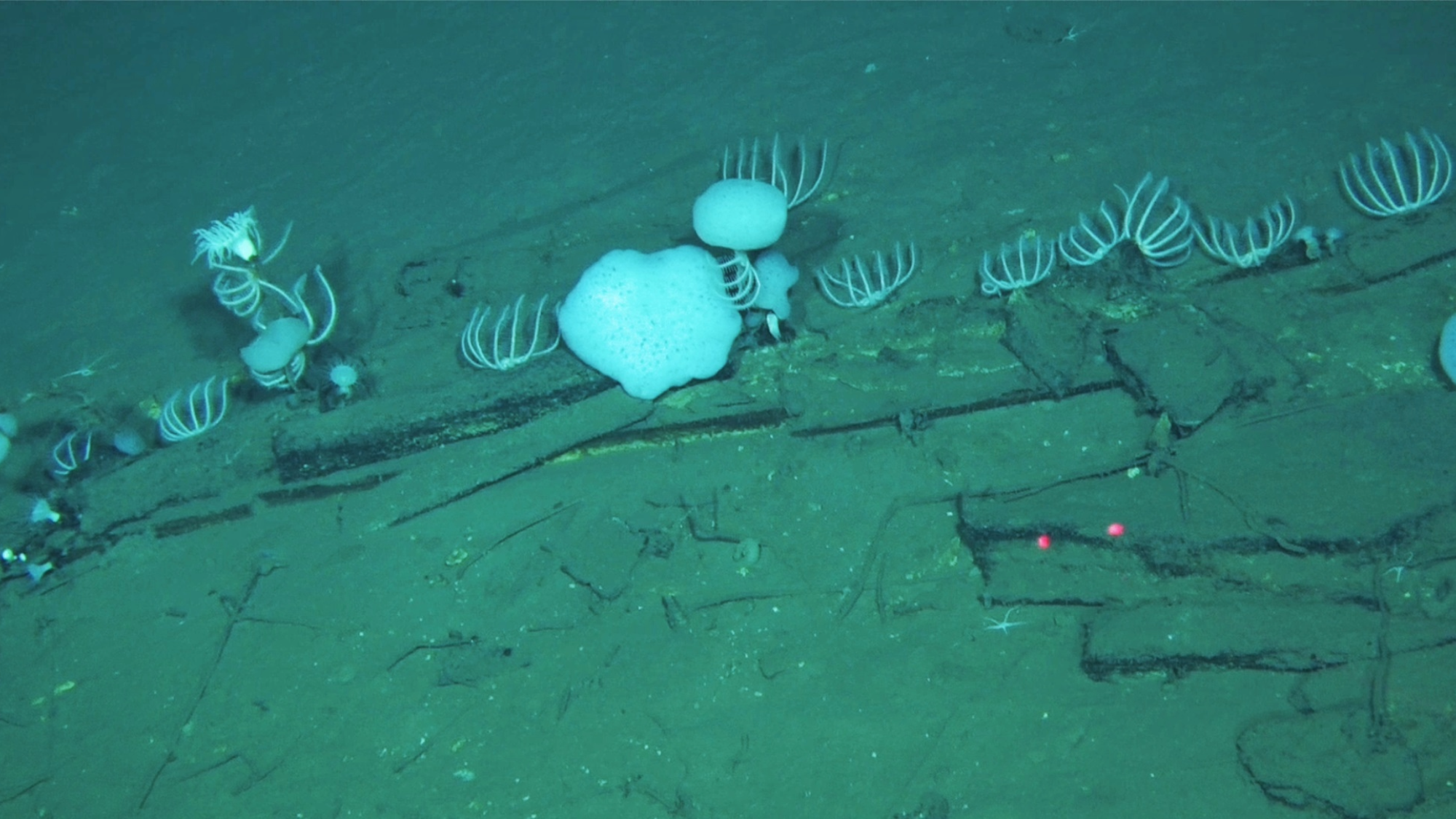
Recovery of whale fossil bones using the manipulator arm of the Chinese submersible Fendouzhe on the deep seafloor of the Diamantina Zone, a deep-sea rift in the Indian Ocean. Image: Global TREnD, IDSSE.

According to study co-author and geologist Dr. Peng Zhou, the remains were actually “quite easy to find” once the team began to search. “They looked unusual, so when the dive scientists first encountered them, they wanted to figure out what they were,” Zhou tells Popular Science

Peng adds, “We immediately pivoted our objectives to systematically map, document, and sample these whale remains. So it really came down to curiosity meeting the technological capability to explore depths that had been largely inaccessible.”

They documented 485 whale fossil sites from five active whale falls. The whale carcasses are home to a large community of jellyfish, brittle stars, bone-boring worms, and bivalves. Some of these species living in the carcasses may even be new to science, but that has not been confirmed. The oldest have been in the area for about 5.3 million years ago (the Pliocene era).

four whale skulls
Fossil skulls of three beaked whales recovered from the seafloor at hadal depth of the Diamantina Zone, 6,584–-6,878 meters. The image shows two extinct beaked whale species, Pterocetus diamantinae sp. nov. (new species to science, on the top) and Izikoziphius rossi (the second skull), as well as an extant Andrews’ beaked whale, Mesoplodon bowdoini (two skulls on the bottom). Image: Global TREnD, IDSSE

Most of the whale fossils come from several species of deep-diving beaked whales. Some of the bones belong to beaked whales that still exist today. Others are from extinct whales, including a species new to science named Pterocetus diamantinae.

“Finding both extinct genera like Pterocetus and living species like Mesoplodon bowdoini preserved together in the same region, across 1,200 kilometres [745 miles] of seafloor at such extreme depths—that was truly unexpected,” says Zhou.

This fossil record is also continuous, so the team can track the population dynamics and evolution of deep-diving whales over time. 

“These fossils give us a direct window into the Pliocene, about 5.3 million years ago,” study co-author and biologist Dr. Xikun Song tells Popular Science. “They show that beaked whales were already specialized deep‑divers in the Indian Ocean by that time. Beyond the whales themselves, the associated fossil fauna also tells us about the structure of ancient deep‑sea whale‑fall communities and broader deep‑sea biodiversity back then.”

This whale graveyard could reshape our understanding of both living and extinct beaked-whales. There are roughly 24 species of beaked-whale living today. However, their deep-sea habitat, likely low population numbers, and reclusive behavior make them difficult to study. Having such a large fossil deposit like this could help explain more about their reclusive lives.

The fossils are also shedding more light on the mysterious ecosystems living at the ocean’s deepest depths.

“Discoveries like this are possible because of curiosity, collaboration, and technology,” Peng concludes. “We’ve barely scratched the surface of the deep ocean, and there’s so much more waiting to be found.”

The post 745-mile whale graveyard found at the bottom of Indian Ocean appeared first on Popular Science.

  • ✇Popular Science
  • Sex jumpstarted Earth’s animal biodiversity Andrew Paul
    Evolution is responsible for Earth’s stunningly diverse spectrum of life, but that wasn’t always the case. In fact, the earliest eras of living organisms were comparatively boring. The earliest known animals date back about 635 million years (during the Ediacaran Period), yet they look remarkably similar to their descendents 96 million years later at the dawn of the Cambrian. Why did evolution remain so stable for so long? It might be simply because Earth’s first creatures simply weren’t havi
     

Sex jumpstarted Earth’s animal biodiversity

9 June 2026 at 15:45

Evolution is responsible for Earth’s stunningly diverse spectrum of life, but that wasn’t always the case. In fact, the earliest eras of living organisms were comparatively boring. The earliest known animals date back about 635 million years (during the Ediacaran Period), yet they look remarkably similar to their descendents 96 million years later at the dawn of the Cambrian.

Why did evolution remain so stable for so long? It might be simply because Earth’s first creatures simply weren’t having much sex.

“Life was pretty nice during the Ediacaran, so the need for sex was rather limited,” Emily Mitchell, a paleozoologist at the University of Cambridge, explained in a statement. “There was relatively little competition, so there was no real pressure to change anything.”

Along with her colleague Andrea Manica, Mitchell recently combined spatial analysis and laser scanning with machine learning to analyze 574-million-year-old fossils excavated from southernmost Newfoundland’s Mistaken Point. Their findings, published today in the journal Nature Ecology & Evolution, show that the earliest animals’ reliance on asexual reproduction kept things largely uniform, and reduced the struggle for resources.

Fossils of Fractofusus
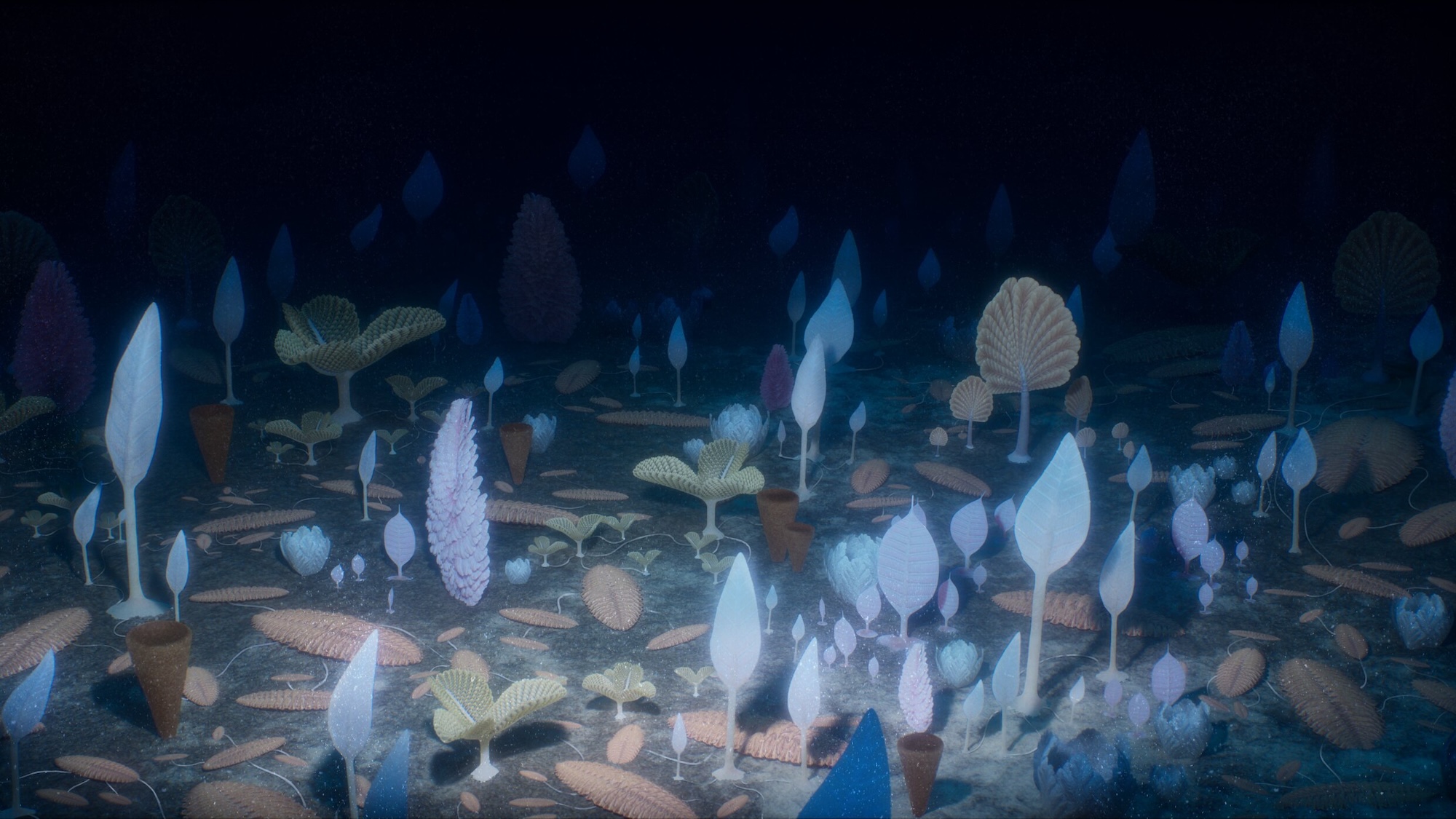
Fossils of Fractofusus, an animal from the Ediacaran period. Credit: Emily Mitchell

They offered Fractofusus as a prime example. At over 6.5 feet tall, the fern-like creatures dwarfed most of their oceanic relatives and likely lacked organs or mouths. They also absorbed food from the surrounding water while remaining anchored in place, reproducing through clones distributed by stolons or runners like present-day strawberry plants.

“If you’re connected to your neighbor by these runners, then you’re sharing nutrients and you don’t need to compete with them,” said Manica.

From there, the team constructed a machine learning model to approximate how Fractofusus and its fellow Ediacaran animals possibly behaved through varying reproductive strategies. The program’s neural network then identified simulations that aligned with known fossil record diversity patterns. Known as Approximate Bayesian Computation let them basically travel back in time to estimate how animals proliferated and squared off for limited resources.

They now believe the Ediacaran Period’s overall tranquility (and sexlessness) began to get complicated as species gradually migrated from deep waters to shallower regions. Once there, ancient animals endured new stressors like temperature swings, nutrient deficits, tides, and even storms. Life then adapted to face these increased threats—and left behind more fossils. The story they tell indicates that environmental stress often precedes a rise in sexual reproduction versus other methods of procreation. 

“When that happens, we can see a massive increase in dispersal distances as animals attempt to colonize new areas due to an increase in competition,” said Mitchell.

These shifting trends eventually ushered in what’s known as the Ediacaran “second wave” of animal evolution, which further amplified millions of years later during the Cambrian era, as animals started physically moving through their environments.

“If you’re suddenly in an environment where you’re essentially getting killed a couple of times per year, then that changes everything,” Mitchell explained.

The post Sex jumpstarted Earth’s animal biodiversity appeared first on Popular Science.

  • ✇Popular Science
  • ‘Two-headed snake’ confuses predators Andrew Paul
    Only around 600 of the nearly 4,000 known snake species are venomous. The recently discovered Guangxi reed snake (Calamaria incredibilis) in China is not one of those species, but its alternative defense mechanism is strange enough to keep most predators at bay. According to a study recently published in the journal Zoosystematics and Evolution by biologists at the Natural History Museum of Guangxi, C. incredibilis wields its wide, stubby tail like a second head to scare away potential threats.
     

‘Two-headed snake’ confuses predators

15 May 2026 at 15:22

Only around 600 of the nearly 4,000 known snake species are venomous. The recently discovered Guangxi reed snake (Calamaria incredibilis) in China is not one of those species, but its alternative defense mechanism is strange enough to keep most predators at bay. According to a study recently published in the journal Zoosystematics and Evolution by biologists at the Natural History Museum of Guangxi, C. incredibilis wields its wide, stubby tail like a second head to scare away potential threats.

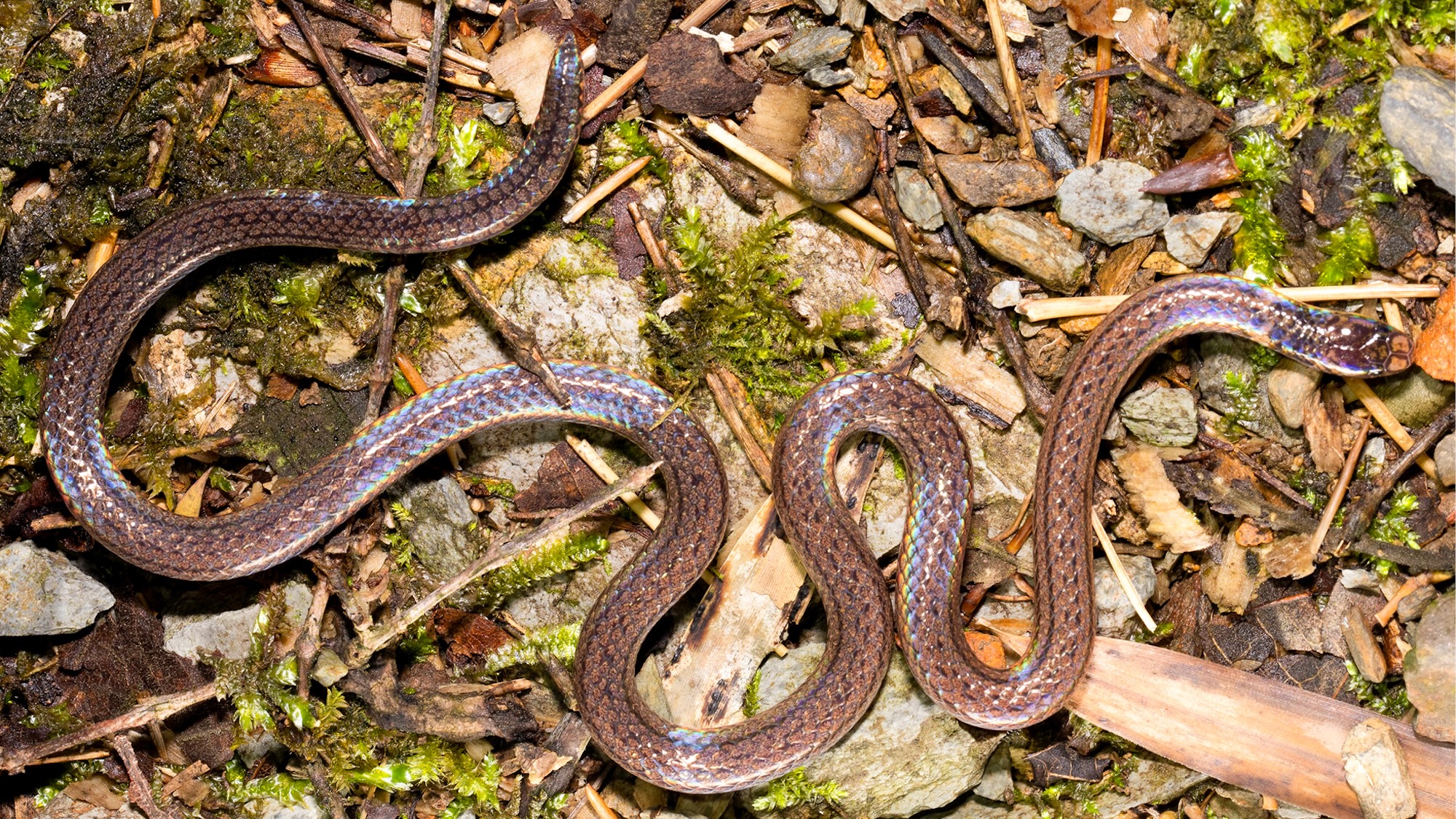
Researchers first spotted the Guangxi reed snake during a biodiversity study in China’s Huaping National Nature Reserve near the nation’s southern border with Vietnam. The mostly nocturnal, non-venomous serpent grows to about eight-inches-long, and is identifiable by its small brown scales and seven darker stripes. Largely docile, it prefers to hide away between rocks and underneath leaves, and prefers a diet of insect larvae and earthworms.

Although largely timid, the Guangxi reed snake has evolved a strategy to bluff its way out of dangerous situations. Whenever it feels threatened, the reptile raises its tail off the ground and begins waving it like an additional head. The tail even features similar markings to those seen on the snake’s head, which adds to the overall realism. 

As People recently noted, the reed snake is far from the first new snake species discovered in 2026. Earlier this year, researchers identified both a vibrantly turquoise pit viper and a flying snake in a Cambodian cave alongside previously unknown geckos, millipedes, and microsnails.

The study’s authors explained the Guangxi reed snake “highlights the underestimated diversity” in the reptile’s larger family, as well as underscores the region’s role as an “ important hotspot” of unique animals.

The post ‘Two-headed snake’ confuses predators appeared first on Popular Science.

  • ✇Popular Science
  • Velociraptor’s cousin flew like a flying squirrel Andrew Paul
    The Changma Basin in northwest China’s Gansu province is famous for its many ancient bird fossils. Or, at least, pieces of fossils. Paleontologists have documented over 100 prehistoric avian dinosaur remains buried across the region, many resembling the digestive pellets regurgitated by owls living today. For years, researchers suspected that a similar predator was responsible for the fossil fragments, but lacked a convincing candidate. Experts now have a plausible suspect. According to a stu
     

Velociraptor’s cousin flew like a flying squirrel

4 June 2026 at 17:39

The Changma Basin in northwest China’s Gansu province is famous for its many ancient bird fossils. Or, at least, pieces of fossils. Paleontologists have documented over 100 prehistoric avian dinosaur remains buried across the region, many resembling the digestive pellets regurgitated by owls living today. For years, researchers suspected that a similar predator was responsible for the fossil fragments, but lacked a convincing candidate.

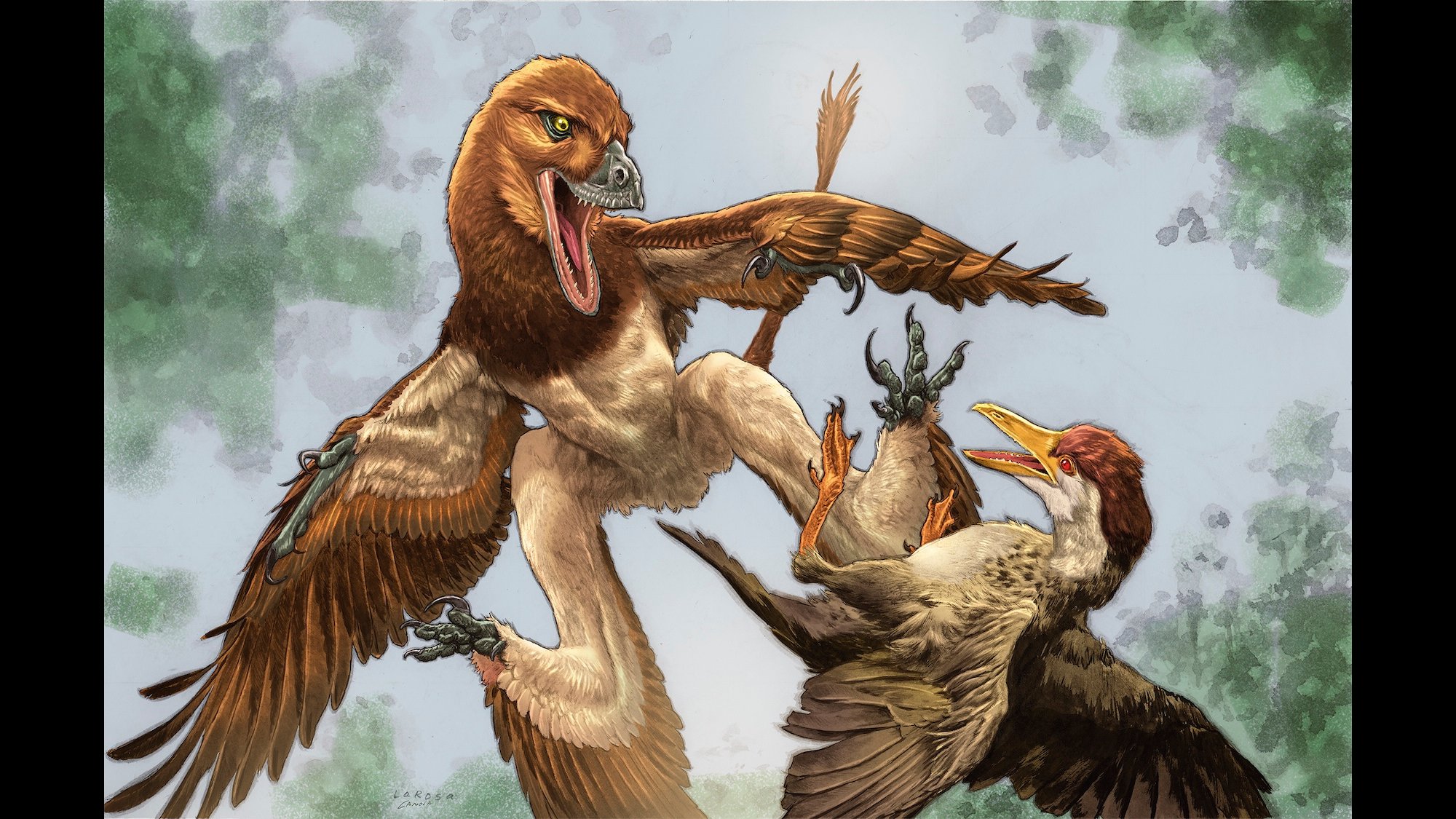
Experts now have a plausible suspect. According to a study published today in the Annals of Carnegie Museum, a cousin of the fearsome Velociraptor stalked the Changma Basin around 120 million years ago. But with its long feathers and four “wings,” Jian changmaensis didn’t ambush its prey from high in the air like a falcon. Instead, it more likely swooped in like a flying squirrel.

“It’s the only dinosaur found at this site that wasn’t a bird, it was a carnivore, and it was much bigger than everything else that we’ve found there,” Jingmai O’Connor, a study co-author and Field Museum associate curator of fossil reptiles, explained in a statement.

Diagram showing where upper arm bone fit into overall anatomy of J. changmaensis
Paleontologists theorized the dinosaur’s anatomy based on its upper arm fossil. Credit: O’Connor et al.

Named after a winged mythological creature from Chinese folklore, J. changmaensis belongs to a dinosaur subgroup known as microraptors. These feathered predators were speedy and small, often only about the size of a crow. J. changmaensis was comparatively large, however. While O’Connor’s team has so far only recovered a portion of its upper arm, they believe the dinosaur likely featured a roughly four-foot wingspan. That puts it at about the size of a barn owl.

Although larger than its fellow microraptors, paleontologists believe J. changmaensis physically resembled its relatives. This means the dinosaur likely featured both forearm wings as well as rudimentary “wings” on its hind legs. Microraptors couldn’t soar through the skies, but their feathers served a purpose

Jian and the other microraptors probably weren’t capable of true, powered flight, but they could probably glide like a flying squirrel,” explained O’Connor.

Matt Lamanna, a study co-author and Carnegie Museum’s curator of vertebrate paleontology, said the team’s discovery offers “critical new insight” into the Changma region’s biological history while helping contextualize today’s avian dinosaur descendents.

“For decades, the Changma site has been renowned among paleontologists for its extraordinary bird fossils,” Lamanna added. “Now, with the discovery of Jian, we finally know what was eating them.”

The post Velociraptor’s cousin flew like a flying squirrel appeared first on Popular Science.

  • ✇Popular Science
  • Big wings and sweet songs: The mating lives of Panama’s katydids Laura Baisas
    When it comes to reproduction, animals will pull out all the stops to attract a mate. Sending out noisy mating calls, showing off colorful wings, inflating a throat pouch, and shaking a literal tailfeather all ensure that the next generation of a species happens. Some insects will go as far as making themselves look like an entirely different living thing—leaves.  Usually used as a means of camouflage, male katydids appear to use their leafy disguise to amplify mating calls and make themselve
     

Big wings and sweet songs: The mating lives of Panama’s katydids

3 June 2026 at 00:05

When it comes to reproduction, animals will pull out all the stops to attract a mate. Sending out noisy mating calls, showing off colorful wings, inflating a throat pouch, and shaking a literal tailfeather all ensure that the next generation of a species happens. Some insects will go as far as making themselves look like an entirely different living thing—leaves. 

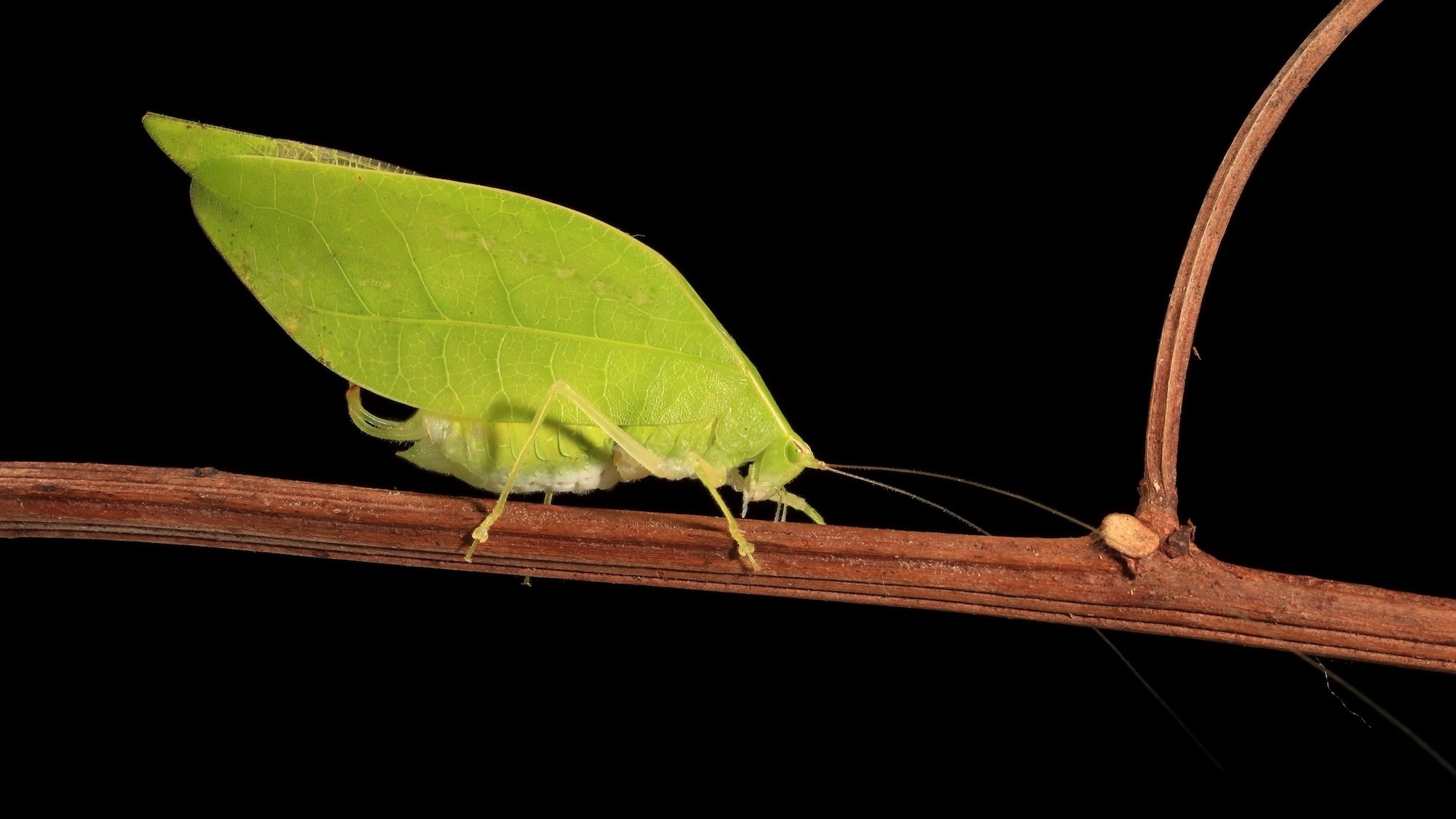
Usually used as a means of camouflage, male katydids appear to use their leafy disguise to amplify mating calls and make themselves more attractive to the opposite sex. The findings are detailed in a study published today in the journal Proceedings of the Royal Society B, and offer one of the first demonstrations of how leaf mimicry enhances a male katydids’ sexual signals. 

To shield themselves from predators, various species of katydids have evolved wings with structures that look like leaves. Panama’s leaf-masquerading katydids (Arota festae) will even change from green to hot pink in order to better mimic leaves. What’s been less clear to entomologists is whether or not these leaf-mimicking structures play a role in katydid mating. 

This new study looked at a species called Viadana brunneri from Barro Colorado Island, Panama. To attract mates, katydids create songs by rubbing together specialized structures on their wings. In many tropical species like V. brunneri, the portion that mimics leaves makes up the majority of their wing’s surface area.  

a green insect with a large, green wing that looks like a leaf hands upside down on a stick
Most of the wing structure is devoted to helping male katydids look more like a leaf. Image: Christian Ziegler.

Previously, scientists believed physical adaptations for survival and for attracting mates can function in conflict with one another, particularly if they are physically connected. A male peacock’s flashy tail feathers may help it attract a female, but it also makes it easier for predators to find them. Male katydids, on the other hand, are able to use the acoustic properties of the structures that they use for defense to their reproductive advantage. They are a rare example of how an adaptation for self-defence and reproduction can work together without necessarily putting the animal in jeopardy. 

The team performed a series of bioacoustic, behavioral, and biophysical experiments, showing that these leafy structures on their wings make them more attractive to females, while also helping conceal them. After removing the leafy portions of a male V. brunneri’s wings, the pitch became higher and the volume of their songs also changed. The team then played these calls for females who preferred the lower pitch calls from males with their leafy wing sections still intact. 

While male katydids do all the singing, females indicate their interest by replying to the song with clicks. The insects produce short, sporadic and infrequent calls, possibly for only two seconds in a single night. They perform these calls in ultrasounds, which our ears can’t pick up. They also found that the leafy portions of the male katydid wing will vibrate to amplify their songs, making them more detectable to females. 

“Our study provides a rare example of natural and sexual selection acting in harmony, producing traits that simultaneously improve survival and mating success,” Dr. Benito Wainwright, a study co-author and evolutionary biologist at the University of St Andrews, said in a statement. “We are now extremely excited to start exploring how such an interesting interaction evolved in katydids.” 

The post Big wings and sweet songs: The mating lives of Panama’s katydids appeared first on Popular Science.

  • ✇W Magazine
  • Helena Bonham Carter's Best Red Carpet Moments are Eccentric Whimsy Brooke Marine
    Getty ImagesSince the beginning of her career in A Room With a View, Helena Bonham Carter has always brought a layer of eccentricity to everything she does. Whether a dramatic period piece, an offbeat collaboration with former partner Tim Burton, or family fare like the Harry Potter films or Cinderella, you know you’re in for a dash of whimsy with Carter. When it comes to the performer’s fashion sense, you can similarly always count on the actress to serve up a trademark witchy goth moment, whet
     

Helena Bonham Carter's Best Red Carpet Moments are Eccentric Whimsy

26 May 2026 at 13:56
Getty Images

Since the beginning of her career in A Room With a View, Helena Bonham Carter has always brought a layer of eccentricity to everything she does. Whether a dramatic period piece, an offbeat collaboration with former partner Tim Burton, or family fare like the Harry Potter films or Cinderella, you know you’re in for a dash of whimsy with Carter. When it comes to the performer’s fashion sense, you can similarly always count on the actress to serve up a trademark witchy goth moment, whether she’s photographed on a red carpet for a film premiere or just out and about in London. In honor of Bonham Carter’s 60th birthday, take a look at her most daring red carpet style moments, here.

2025: Royal Academy Summer Exhibition Preview Party

Karwai Tang/WireImage/Getty Images

The actor channeled a gothic English rose in a layered tulle look from the quintessential London designer Simone Rocha.

2021: BAFTA TV Awards

Dave Benett/Dave Benett Collection/Getty Images

Carter leaned into the ’80s at the BAFTA TV Awards styling her voluminous polka dot Dolce & Gabbana gown with a high ponytail, red lips and nails.

2020: SAG Awards

Getty Images

Bonham Carter gave an over-the-top sequined moment when she turned up to the 26th Annual Screen Actors Guild Awards in a sparkling blue gown and silver sunnies.

2019: The Crown Premiere

Getty Images

The Crown star arrived at the season three premiere wearing a feathered black and white gown.

2018: Ocean’s 8 Premiere

Getty Images

At the Ocean’s 8 London premiere in 2018, Bonham Carter turned up in a silver Vivienne Westwood Couture gown.

2017: TIFF

Getty Images

Florals may not always be groundbreaking, but on Bonham Carter at the 2017 Toronto International Film Festival, her full floral look—from matching headband to handbag—was certainly adventurous.

2015: Cinderella Premiere

Getty Images

This green and black floral number worn by Bonham Carter at the 2015 premiere of Cinderella was nothing short of a fairytale.

2011: Critics’ Choice Awards

Getty Images

Bonham Carter wore a simple black gown with a bodice, paired with a handbag shaped like red lips and glasses to the 2011 Critics’ Choice Awards.

2010: Harry Potter Premiere

Getty Images

Bonham Carter gave Bellatrix Lestrange a run for her money with this witchy glam look at the London Premiere of Harry Potter And The Deathly Hallows: Part 1 in 2010.

2010: The King’s Speech Premiere

Getty Images

A chic glasses and plaid moment from Bonham Carter was served at the 2010 premiere of The King’s Speech.

2005: Venice Film Festival

Getty Images

The 2005 Venice Film Festival saw Bonham Carter in an all white ensemble paired with pearls.

2003: Big Fish Premiere

Getty Images

Bonham Carter wore a black dress with white fur stole to the 2003 premiere of Big Fish.

2001: Planet of the Apes premiere

Getty Images

Bonham Carter went for a see-through moment at the 2001 premiere of The Planet of the Apes in New York City.

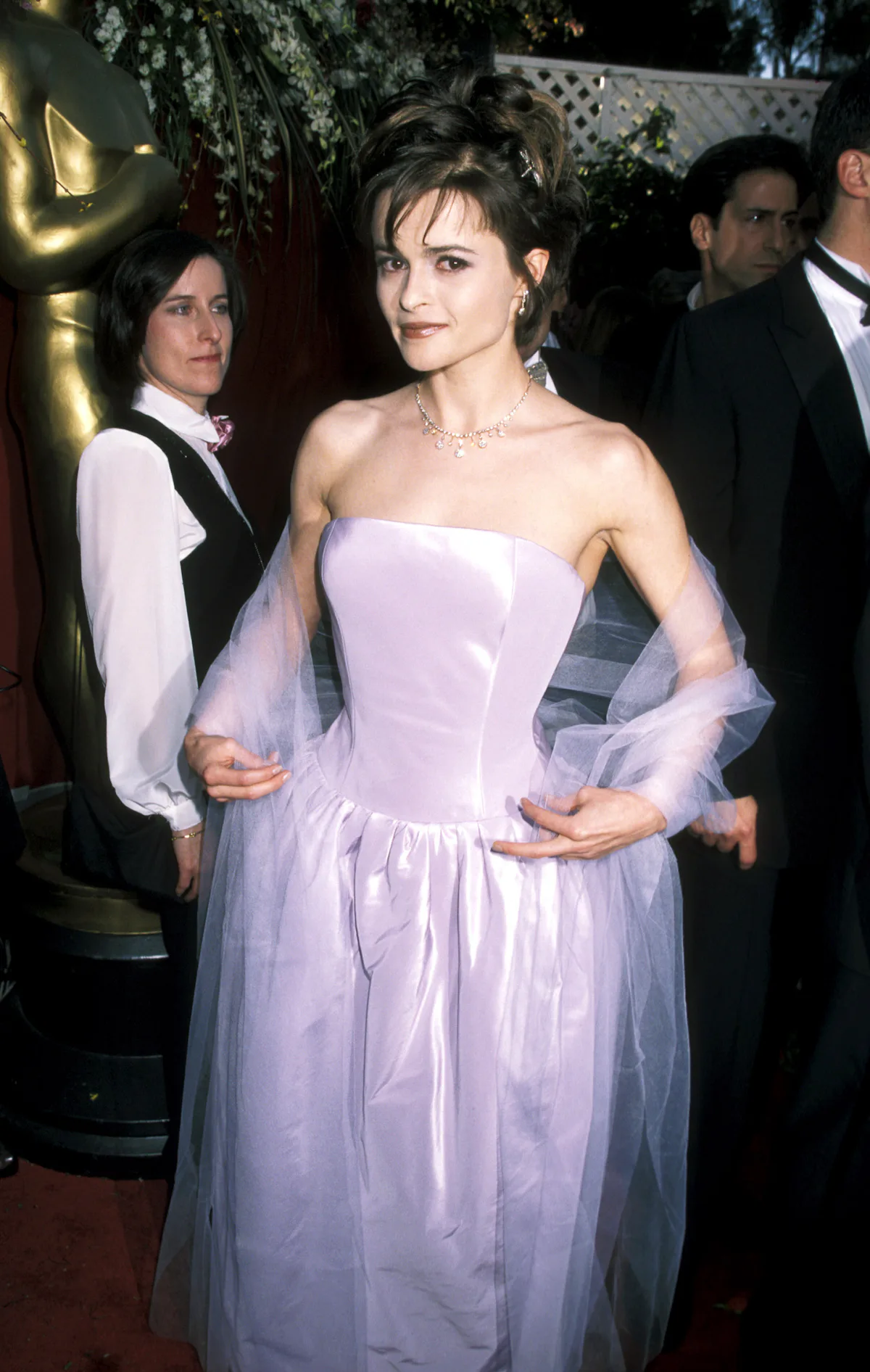
1998: The Academy Awards

Getty Images

Bonham Carter wore an icy purple-pink gown with tulle accents to the 1998 Oscars.

1998: Oscar Nominees’ Luncheon

Getty Images

This very ‘90s look worn by Bonham Carter included a semi-sheer green cardigan and pink midi skirt.

1997: The Wings Of The Dove Premiere

Getty Images

In a blush pink custom Vivienne Westwood gown, Bonham Carter TK at the 1997 premiere of The Wings of the Dove at the Odeon.

1994: Mary Shelly's Frankenstein Premiere

Getty Images

Bonham Carter went for a sophisticated goth look at the 1994 premiere of Mary Shelley’s Frankenstein.

1989: Getting It Right Premiere

Getty Images

A young Bonham Carter wore a velvet ensemble to the Getting It Right premiere in 1989.

1987: The Academy Awards

Getty Images

Bonham Carter attended the 1987 Oscars (though not pictured, with Matthew Broderick by her side).

  • ✇Popular Science
  • Why were T. rex’s arms so tiny? Paleontologists finally find an answer. Andrew Paul
    Tyrannosaurus rex is iconic for its ferocity and big teeth, as well as those teeny-tiny arms. The Cretaceous Period apex predator wasn’t the only carnivore with underdeveloped forelimbs, however. At least five groups of two-legged, mostly meat-eating theropod dinosaurs experienced a shortening of the upper arms over the course of their evolutionary journey. But why did they have such comically small claws? One team of researchers believes the answer is simple. “It’s a case of ‘use it or lose
     

Why were T. rex’s arms so tiny? Paleontologists finally find an answer.

19 May 2026 at 23:05

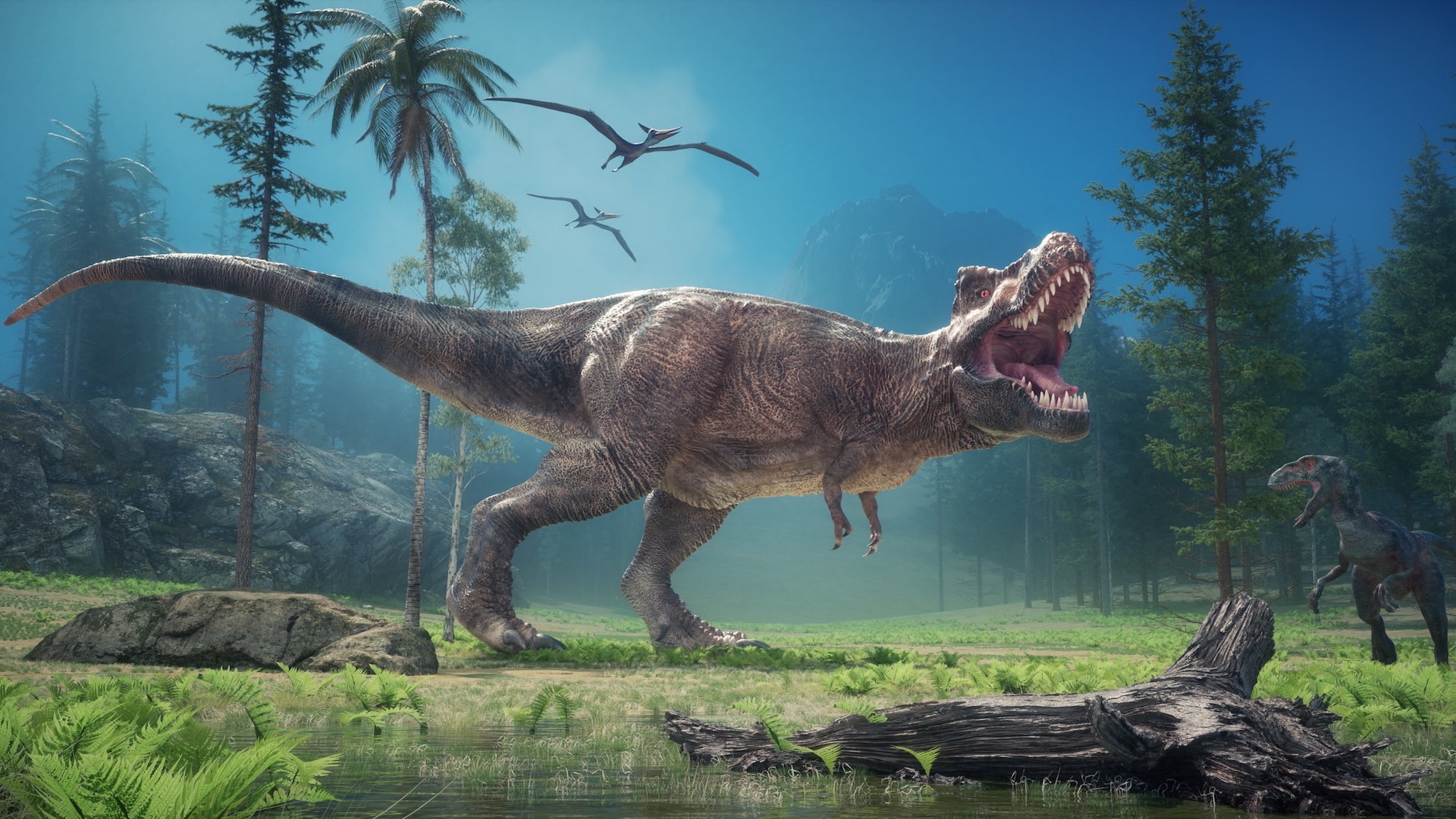
Tyrannosaurus rex is iconic for its ferocity and big teeth, as well as those teeny-tiny arms. The Cretaceous Period apex predator wasn’t the only carnivore with underdeveloped forelimbs, however. At least five groups of two-legged, mostly meat-eating theropod dinosaurs experienced a shortening of the upper arms over the course of their evolutionary journey. But why did they have such comically small claws? One team of researchers believes the answer is simple.

“It’s a case of ‘use it or lose it,’” University College London paleontologist Charlie Scherer said in a statement.

Scherer and his colleagues recently examined the data for 82 theropod species, including those in T. rex’s tyrannosaurid family. Their study published today in the Proceedings of the Royal Society B Biological Sciences argues a combination of massive skulls and crushing jaws—coupled with increasingly large prey—had many theropods relying increasingly less on their forearms.

“We sought to understand what was driving this change and found a strong relationship between short arms and large, powerfully built heads,” explained Scherer. “The head took over from the arms as the method of attack.”

The team based their conclusions on a new system of assessing dinosaur skull strength based on attributes like overall dimensions, how tightly bones were joined in the head, and bite force. Unsurprisingly, T. rex came in first place for bite force, followed by the Tyrannotitan. Almost as large as a T. rex, the Tyrannotitan lived in present-day Argentina during the Early Cretaceous over 30 million years before its famous descendent. In each example, the reason for short arms likely coincided with hunting larger and larger dinner targets.

“Trying to pull and grab at a 100–foot–long sauropod with your claws is not ideal. Attacking and holding on with the jaws might have been more effective,” added Scherer.

Overall, the team identified a bigger correlation between skull strength and smaller arms than with either skull or body size. This conclusion is further supported by some theropod dinosaurs with strong heads, tiny forelimbs, and a relatively small stature. For example, Majungasaurus roamed present-day Madagascar 70 million years ago while weighing about 1.75 tons—around a fifth the size of T. rex.

Not every dinosaur’s limbs shrank in the same way, either. Abelisaurids like Majungasaurus exhibited smaller arms past their elbows as well as their hands, while tyrannosaurid arms reduced proportionally. In each case, it seems that the theropods initially had far more success latching onto prey with their powerful jaws, then evolution did the rest of the work.

As to which dinosaur had the teeniest forearms, the answer according to Scherer is clear.

“The Carnotaurus had ridiculously tiny arms, smaller than the T. rex,” he said.

The post Why were T. rex’s arms so tiny? Paleontologists finally find an answer. appeared first on Popular Science.

❌
Subscriptions