Manuel Gual posted a photo:
A Cinematic Journey Through the History of Aviation
Description:
A wide cinematic collection celebrating the evolution of aviation, from fragile early biplanes and daring pioneer pilots to flying boats, wartime fighters, classic airliners, supersonic icons, stealth aircraft, and futuristic aerospace designs. The series combines golden hour light, dramatic skies, ocean crossings, misty runways, military silhouettes, retro travel atmosphere, and science fiction con
A Cinematic Journey Through the History of Aviation
Description:
A wide cinematic collection celebrating the evolution of aviation, from fragile early biplanes and daring pioneer pilots to flying boats, wartime fighters, classic airliners, supersonic icons, stealth aircraft, and futuristic aerospace designs. The series combines golden hour light, dramatic skies, ocean crossings, misty runways, military silhouettes, retro travel atmosphere, and science fiction concepts to create a visual timeline of flight as both engineering achievement and human dream.
These images have been generated by Artificial Intelligence.
Manuel Gual posted a photo:
A Cinematic Journey Through the History of Aviation
Description:
A wide cinematic collection celebrating the evolution of aviation, from fragile early biplanes and daring pioneer pilots to flying boats, wartime fighters, classic airliners, supersonic icons, stealth aircraft, and futuristic aerospace designs. The series combines golden hour light, dramatic skies, ocean crossings, misty runways, military silhouettes, retro travel atmosphere, and science fiction con
A Cinematic Journey Through the History of Aviation
Description:
A wide cinematic collection celebrating the evolution of aviation, from fragile early biplanes and daring pioneer pilots to flying boats, wartime fighters, classic airliners, supersonic icons, stealth aircraft, and futuristic aerospace designs. The series combines golden hour light, dramatic skies, ocean crossings, misty runways, military silhouettes, retro travel atmosphere, and science fiction concepts to create a visual timeline of flight as both engineering achievement and human dream.
These images have been generated by Artificial Intelligence.
Manuel Gual posted a photo:
A Cinematic Journey Through the History of Aviation
Description:
A wide cinematic collection celebrating the evolution of aviation, from fragile early biplanes and daring pioneer pilots to flying boats, wartime fighters, classic airliners, supersonic icons, stealth aircraft, and futuristic aerospace designs. The series combines golden hour light, dramatic skies, ocean crossings, misty runways, military silhouettes, retro travel atmosphere, and science fiction con
A Cinematic Journey Through the History of Aviation
Description:
A wide cinematic collection celebrating the evolution of aviation, from fragile early biplanes and daring pioneer pilots to flying boats, wartime fighters, classic airliners, supersonic icons, stealth aircraft, and futuristic aerospace designs. The series combines golden hour light, dramatic skies, ocean crossings, misty runways, military silhouettes, retro travel atmosphere, and science fiction concepts to create a visual timeline of flight as both engineering achievement and human dream.
These images have been generated by Artificial Intelligence.
Manuel Gual posted a photo:
Echoes of the 1940s Circus: Steam Trains, Big Top Lights and Forgotten Wonders
Description
A cinematic journey through a fictional vintage circus world inspired by the atmosphere of the 1940s: steam trains arriving through clouds of smoke, crowded railway platforms, canvas tents rising at dawn, performers preparing behind the scenes, glowing fairground lights, brass bands, trapeze artists, ringmasters, clowns, fortune tellers, animal acts, travelling caravans an
Echoes of the 1940s Circus: Steam Trains, Big Top Lights and Forgotten Wonders
Description
A cinematic journey through a fictional vintage circus world inspired by the atmosphere of the 1940s: steam trains arriving through clouds of smoke, crowded railway platforms, canvas tents rising at dawn, performers preparing behind the scenes, glowing fairground lights, brass bands, trapeze artists, ringmasters, clowns, fortune tellers, animal acts, travelling caravans and the quiet moments hidden between spectacle and exhaustion.
This collection evokes the golden age of travelling circuses as if seen through the lens of an old documentary photographer, but with the visual richness of modern cinematic photography. Warm amber lights, deep shadows, smoky interiors, velvet costumes, weathered wood, worn posters, dusty roads and dramatic faces create a world suspended between memory, theatre and dream. Each image suggests a fragment of a larger story: the arrival of the circus by train, the construction of the tent, the anticipation of the crowd, the tension before the performance, the intimacy of backstage rituals and the melancholy beauty of a show that exists only for one night before disappearing again.
The series blends realism and fantasy, presenting the circus not only as entertainment but as a temporary city of artists, workers, animals, music, mystery and human emotion. It captures both the grand spectacle and the fragile backstage humanity of a travelling world built from canvas, light, discipline and illusion.
All images have been generated by Artificial Intelligence.
MJAlford98 posted a photo:
A view of a traditional Wiltshire farm house on the bend of the road, edited with a slight sepia effect to convey a vintage heritage atmosphere.
Sitting at a beautiful rooftop overlooking the sprawling streets of Italy’s Taormina, Oscar-nominated Brazilian actor Fernanda Torres still can’t quite believe she has finally made it to Sicily. Torres, who is in town to receive the Taormina Film Festival Achievement Award, tells Variety that visiting the region has been a “longtime dream” of hers. “I […]
Sitting at a beautiful rooftop overlooking the sprawling streets of Italy’s Taormina, Oscar-nominated Brazilian actor Fernanda Torres still can’t quite believe she has finally made it to Sicily. Torres, who is in town to receive the Taormina Film Festival Achievement Award, tells Variety that visiting the region has been a “longtime dream” of hers. “I […]
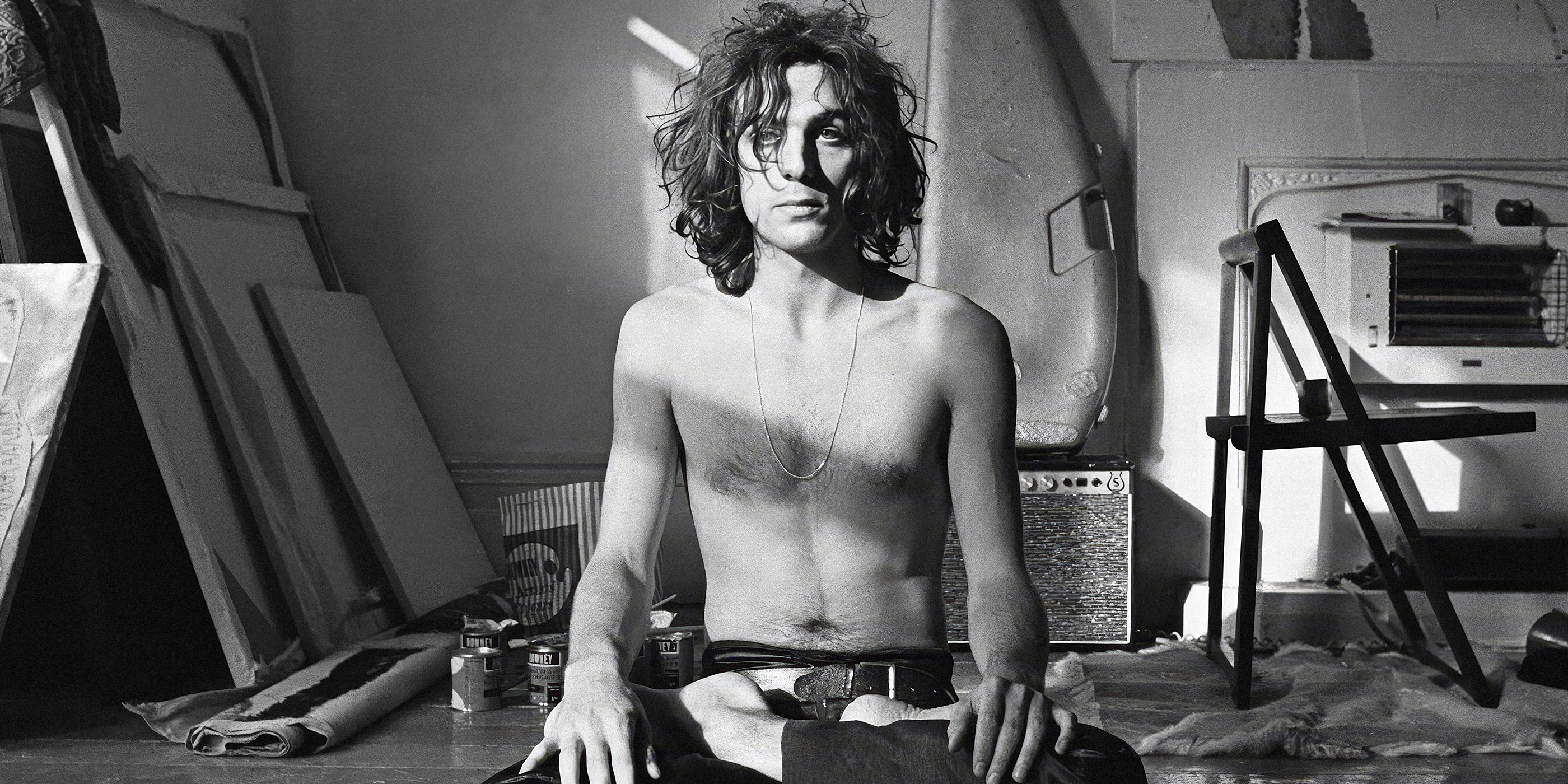
Following up on one of the greatest albums of all time is no easy feat. When Pink Floyd was tasked with doing just that, following up on Dark Side of the Moon, they were struggling. The record and its success had left the band jaded with the music industry. Eventually, the four-note riff of “Shine on You Crazy Diamond” became the catalyst for the album, as it reminded bassist Roger Waters of the somber story of their former lead singer, Syd Barrett. As the song finally came together, what none o
Following up on one of the greatest albums of all time is no easy feat. When Pink Floyd was tasked with doing just that, following up on Dark Side of the Moon, they were struggling. The record and its success had left the band jaded with the music industry. Eventually, the four-note riff of “Shine on You Crazy Diamond” became the catalyst for the album, as it reminded bassist Roger Waters of the somber story of their former lead singer, Syd Barrett. As the song finally came together, what none of the band expected was an unexpected appearance by Barrett in their studio.
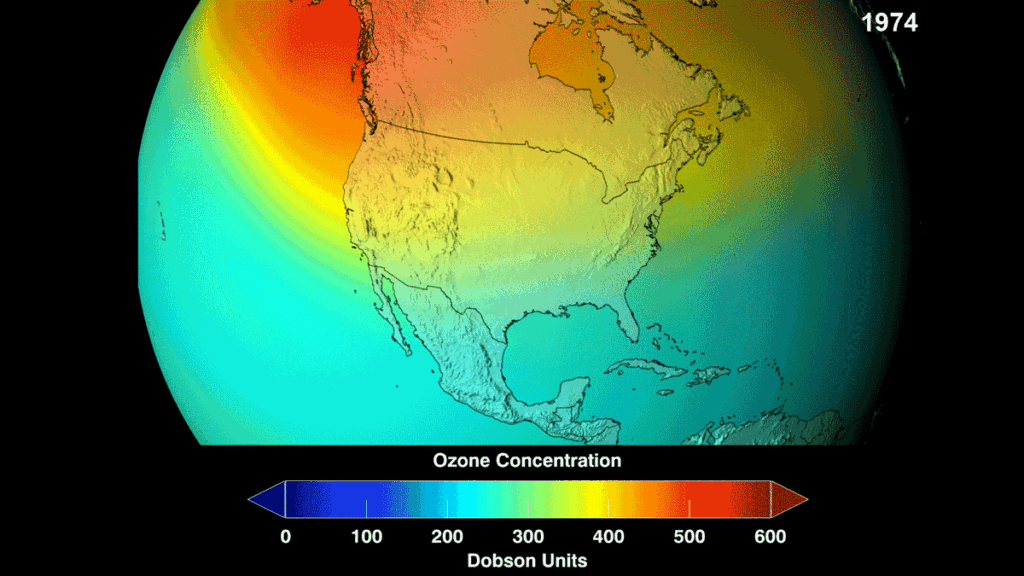
A hole in the Montreal Protocol could delay the recovery of Earth’s ozone layer by about 7 years. New research found that the use of ozone-depleting substances used as feedstocks—chemicals used in the making of other chemicals—has not waned over time. In fact, their use has increased since the treaty’s adoption in 1987.
“The Montreal Protocol is such a success story that these ozone-harming sources are becoming relevant. A few decades ago, they were drowned out.”
“The Montreal Protocol is
A hole in the Montreal Protocol could delay the recovery of Earth’s ozone layer by about 7 years. New research found that the use of ozone-depleting substances used as feedstocks—chemicals used in the making of other chemicals—has not waned over time. In fact, their use has increased since the treaty’s adoption in 1987.
“The Montreal Protocol is such a success story that these ozone-harming sources are becoming relevant. A few decades ago, they were drowned out.”
“The Montreal Protocol is such a success story that these ozone-harming sources are becoming relevant. A few decades ago, they were drowned out,” said Luke Western, who researches greenhouse gases and ozone-depleting substances at the Massachusetts Institute of Technology. Western is a coauthor of a new study on the findings published in Nature Communications.
Almost 40 years ago, the Montreal Protocol banned the production and consumption of almost 100 long-lived gases that harm Earth’s ozone layer, such as chlorofluorocarbons (CFCs) and hydrochlorofluorocarbons (HCFCs), then largely used as coolants in refrigerators and air conditioners. These uses were the primary problem that needed to be solved and were the Montreal Protocol’s main target, Western explained.
However, ozone-depleting substances used in the production of other chemicals—including CFCs themselves—had so little impact at the time that they were not included in the ban. Only about 0.5% of feedstock chemicals, such as carbon tetrachloride (used in the making of some CFCs and a by-product of the manufacture of plastics like polyvinyl chloride, or PVC), were emitted into the atmosphere. With the production and use of the most prevalent ozone-harming gases banned, scientists thought the use of feedstocks such as carbon tetrachloride would die out over time.
However, not only did the die-out not happen, but the use of ozone-depleting substances as feedstock actually increased by 163% between 2000 and 2024. Western and his team found that associated emissions increased as well: Now, about 3.6% of these ozone-depleting feedstock chemicals are leaking into the atmosphere. The increase comes partly from their use in producing the non-ozone-depleting gases that replaced HCFCs and CFCs after the Montreal Protocol went into force.
“It’s almost the same as charging your electric car with fossil fuel–based energy.”
“This is quite ironic,” Western said. “It’s almost the same as charging your electric car with fossil fuel–based energy.”
If maintained at current levels, these emissions could delay full recovery of Earth’s ozone layer by anywhere from 6 to 11 years. Currently, recovery to 1980 levels is expected by 2040 for most of the world, by 2045 over the Arctic, and by 2066 over Antarctica, according to the World Meteorological Organization.
Filling a Gap
To estimate feedstock emissions, the researchers used datasets from the Advanced Global Atmospheric Gases Experiment (AGAGE) and NOAA containing information on about 50 chemicals from 1978 to 2023. The team used these data to model feedstock production and consumption between 2025 and 2034 and then between 2035 and 2100 for business-as-usual and low-emission scenarios.
When measured from now until the end of this century, feedstock emissions in the models tended to stabilize, but the real problem could be in the short and medium terms, the study suggested. Under a business-as-usual scenario, the production of some chemicals, such as methyl chloroform (used in solvents and found in household cleaners), is projected to decrease by 6% per year until 2050. But others, such as halon 1301 (used in the making of insecticides and pharmaceuticals), are set to increase (in halon 1301’s case, by 4% a year until 2050). With the estimates at hand, the team modeled feedstock emissions and their potential effect on the ozone layer.
“This is a very important study because it addresses several questions that remained open not just in the Montreal Protocol, but in research on the ozone layer recovery in general,” said Marco Aurélio Franco, an atmospheric sciences researcher at the University of São Paulo in Brazil.
Franco, who did not take part in the study, said research like this is fundamental to improving estimates for atmospheric chemistry and physics models. After all, some feedstock chemicals, including carbon tetrachloride—whose production is set to increase by 4% a year through 2034—are also greenhouse gases.
Carbon tetrachloride, Franco pointed out, acts differently depending on where it is in the atmosphere. In the troposphere, Earth’s lowest atmospheric layer, the substance traps heat by reflecting infrared radiation back to Earth. At this level, carbon tetrachloride is still stable. But any amount of the substance that reaches the atmosphere’s next layer, the stratosphere, wreaks havoc on the ozone layer. “Ultraviolet radiation is able to break carbon tetrachloride, liberating chlorine,” Franco said. “Chlorine then breaks ozone molecules in a chain reaction. It’s the same mechanism as CFCs.”
The world, said Franco, needs to walk the last mile in refraining from producing and using ozone-depleting substances as feedstock, as we still need to understand their long-term effects. “These [feedstock emission] estimates could be appended to the Montreal Protocol, which proved to be a great success. We need to incorporate them into emission reports and atmospheric models. These emissions should not be neglected,” he said.
Citation: Rodrigues, M. (2026), Repairing the ozone layer may take longer than expected, Eos, 107, https://doi.org/10.1029/2026EO260175. Published on 29 May 2026.
Manuel Gual posted a photo:
The Soul of the Stout: A Journey Through Traditional Pub Culture
Description
A cinematic and evocative photographic collection capturing the essence of traditional pub culture and the artistry of dark beer. From the warm, rain-slicked exterior of historic stone taverns to the precise craft of pouring the perfect pint, this series explores the deep textures and rich atmosphere of classic gathering spaces. Visual highlights include extreme macro shots of cascading
The Soul of the Stout: A Journey Through Traditional Pub Culture
Description
A cinematic and evocative photographic collection capturing the essence of traditional pub culture and the artistry of dark beer. From the warm, rain-slicked exterior of historic stone taverns to the precise craft of pouring the perfect pint, this series explores the deep textures and rich atmosphere of classic gathering spaces. Visual highlights include extreme macro shots of cascading nitrogen bubbles, the rich velvety texture of the creamy foam head, raw roasted malts held in weathered hands, and intimate moments shared under dim, candlelit interiors. The imagery seamlessly blends rustic wood elements, polished brass taps, and vibrant neon reflections to evoke a timeless sense of warmth, companionship, and brewing heritage.
Note: This entire photo series was conceptually designed and generated using Artificial Intelligence.
Manuel Gual posted a photo:
Echoes of the 1940s Circus: Steam Trains, Big Top Lights and Forgotten Wonders
Description
A cinematic journey through a fictional vintage circus world inspired by the atmosphere of the 1940s: steam trains arriving through clouds of smoke, crowded railway platforms, canvas tents rising at dawn, performers preparing behind the scenes, glowing fairground lights, brass bands, trapeze artists, ringmasters, clowns, fortune tellers, animal acts, travelling caravans an
Echoes of the 1940s Circus: Steam Trains, Big Top Lights and Forgotten Wonders
Description
A cinematic journey through a fictional vintage circus world inspired by the atmosphere of the 1940s: steam trains arriving through clouds of smoke, crowded railway platforms, canvas tents rising at dawn, performers preparing behind the scenes, glowing fairground lights, brass bands, trapeze artists, ringmasters, clowns, fortune tellers, animal acts, travelling caravans and the quiet moments hidden between spectacle and exhaustion.
This collection evokes the golden age of travelling circuses as if seen through the lens of an old documentary photographer, but with the visual richness of modern cinematic photography. Warm amber lights, deep shadows, smoky interiors, velvet costumes, weathered wood, worn posters, dusty roads and dramatic faces create a world suspended between memory, theatre and dream. Each image suggests a fragment of a larger story: the arrival of the circus by train, the construction of the tent, the anticipation of the crowd, the tension before the performance, the intimacy of backstage rituals and the melancholy beauty of a show that exists only for one night before disappearing again.
The series blends realism and fantasy, presenting the circus not only as entertainment but as a temporary city of artists, workers, animals, music, mystery and human emotion. It captures both the grand spectacle and the fragile backstage humanity of a travelling world built from canvas, light, discipline and illusion.
All images have been generated by Artificial Intelligence.
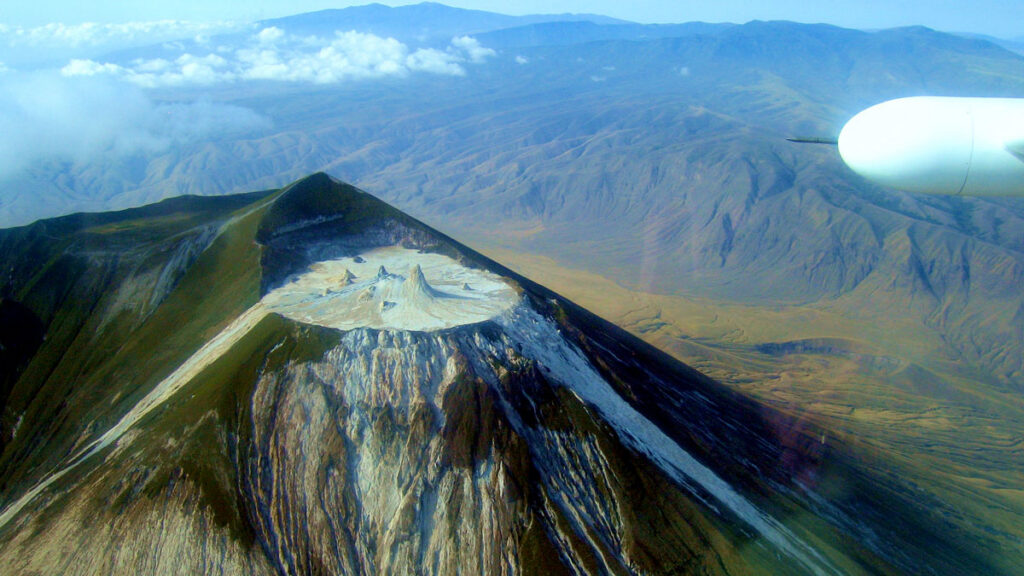
The weirdest volcano in the world may be Tanzania’s towering Ol Doinyo Lengai, an active peak that squeezes out a strange, low-temperature lava called carbonatite. Carbonatites are composed of more than 50% carbonate minerals, the same substances that form the ocean’s reefs. At Ol Doinyo Lengai, they are key components of the coldest lava on the planet.
Carbonatites are found on every continent and range in age from today-ish years old (in Tanzania) to about 3 billion years old (in Greenland
The weirdest volcano in the world may be Tanzania’s towering Ol Doinyo Lengai, an active peak that squeezes out a strange, low-temperature lava called carbonatite. Carbonatites are composed of more than 50% carbonate minerals, the same substances that form the ocean’s reefs. At Ol Doinyo Lengai, they are key components of the coldest lava on the planet.
In a new study published in Science Advances, a team of scientists led by Carl Spandler from Adelaide University in Australia identified a compelling correlation between carbonatites and specific sections of Earth’s continents—those proximal to past subduction zones.
Carbonatites and Critical Minerals
In the United States, the federal government defines critical minerals as those essential to the nation’s economic or national security. These minerals must also have supply chains that are vulnerable to distortions such as demand surges and foreign conflict. For example, most of the world’s terbium, used for everything from naval sonar systems to indoor lighting, comes from China. The United States considers terbium a critical mineral because the possibility of political or economic conflict within China or between China and another polity could directly or indirectly threaten the world’s supply of the element.
If you wanted to identify a rock that likely hosts rare earth elements, “carbonatite would be a good place to start.”
Critical minerals are either chemical elements (like terbium) or minerals. Important elements range from the familiar, like the lithium we need for batteries, to the sesquipedalian, like praseodymium, used for high-strength magnets. (Sesquipedalian means “having to do with a very long word.”)
Praseodymium is one of the 17rare earth elements (terbium is another), all of which are considered critical minerals. Rare earth elements are not actually rare and are often (but not always) found in carbonatites. If you wanted to identify a rock that likely hosts rare earth elements, “carbonatite would be a good place to start,” said Kathryn Goodenough of the British Geological Survey, who was not involved in this study.
Fertilizing the Mantle
Much of Earth’s mantle is rock that remains after magma has been extracted—this mantle has been depleted. But carbonatites must come from mantle that’s quite the opposite—from parts that had to have been fertilized with volatiles containing trace metals, often critical minerals of interest. The question of how the mantle source for carbonatites came to be fertilized has no definitive answer.
Just as a garden can be fertilized in many ways ranging from synthetic sprays to coplanted cover crops, Earth’s mantle can be fertilized via myriad methods. “You must have volatiles or melts rising up from deeper in the mantle that are carrying metals with them,” Goodenough said.
For example, as a slab subducts beneath another tectonic plate, a volcanic arc typically arises above the zone at which the subducting slab reaches about 100 kilometers below Earth’s surface. This is the approximate depth at which the slab releases water, triggering melting in the overlying plate.
But fluids and melts can continue to exit the subducting slab far beyond the trace of the volcanic arc. That far out, the overriding plate almost always comprises a complete section of lithosphere—crustal lithosphere on top and mantle lithosphere on the bottom. The fluids and melts from the underlying slab, rich in halogens, carbon dioxide, phosphorus, and the like, rise into the overriding plate’s mantle lithosphere, changing the rocks via a process called metasomatism, Goodenough explained.
On the other hand, mantle plumes ascending from the core-mantle boundary are thought to be fertilized from a graveyard of subducted slabs that pond in the very deepest part of the mantle.
Spandler and his colleagues focused on testing whether that first method of fertilization, subduction-driven metasomatism, spatially correlates with carbonatites and rare earth element deposits. TL;DR—it does.
Fertilized Mantle Lithosphere
GPlates is a piece of software that allows users to rewind the movements of tectonic plates, exploring how continents have shifted their locations over the past 2 billion years. Using GPlates, Spandler’s coauthors Andrew Merdith and Amber Griffin, also of Adelaide University, mapped 43 polygons that denote regions of subduction lasting 100 million years or longer. These polygons, the authors infer, mark the locations of fertilized mantle lithosphere, which they call FML. These zones are thought to contain the good stuff—the critical minerals of interest.
“If [the correlation were] 100%, I wouldn’t believe it myself.”
Spandler and his colleagues compared the locations of carbonatites and rare earth elements with the polygons. They found that 67% of carbonatites and 72% of rare earth element ore deposits lie within these polygons. This correlation, though not perfect, suggests that mantle lithosphere fertilized by subduction could provide the source for many of these curious and critical deposits.
“If [the correlation were] 100%, I wouldn’t believe it myself because geology doesn’t work that way,” Spandler said.
Two Stepping
Spandler and his colleagues argue that carbonatites form in a two-step process. He emphasized that the new paper focuses on the first step—the process that led to fertilization of the eventual sources for carbonatites and rare earth element deposits.
The second step—the trigger—generates the carbonate-rich magma itself. It’s this event that provides the heat that causes melting of the mantle, said Richard Ernst, a scientist in residence at Carleton University in Canada who was not involved in this study.
“The trigger can be almost anything,” said Spandler, because the lithosphere needs only a nudge to melt. A plume can disrupt the structure of the lithosphere, triggering carbonatite magmatism, but so can continental rifting, he said. Indeed, Ol Doinyo is one of the mountains presiding over the East African Rift (which some scientists think also sits atop a plume).
Previous work by Ernst considered whether plumes could provide at least part of the source for some carbonatites by looking at the age of the deposits and those of nearby large igneous provinces—dramatic, long-lived outpourings of hot basalt thought to result from mantle plumes. In that work, Ernst and his colleague, the late Keith Bell, found the ages of large igneous provinces correlate with the ages of nearby carbonatite deposits; in short, the examples in that paper are potentially linked in both space and time.
Where carbonatite ages match those of nearby flood basalts from large igneous provinces, Spandler said, “I suspect that may just be the trigger mechanism.”
Plume Problems
For some carbonatites, there’s a time difference between when the mantle was fertilized and when the magmas were emplaced, explained Goodenough. “We can track that in several different localities,” she said. This observation would support something like the two-step process outlined above, as opposed to plumes driving the entire sequence.
Another problem with associating carbonatite formation exclusively with plumes, Goodenough said, is that carbonatites require cool conditions that result in relatively minor mantle melting. Plumes, and the large igneous provinces they appear to produce, are hot, and a lot. Plume proponents counter this critique by arguing that carbonatites are often found near the edges of large igneous provinces, away from the hottest zones.
Ernst noted, however, that though Spandler and his colleagues have made the spatial argument for subduction, “they haven’t made the isotopic argument that requires a subduction zone mechanism [for the source].” That sets up a testable hypothesis for future studies that could make use of existing data-rich geochemical studies of deposits within FMLs.
Moreover, even newer research may link the two camps, at least in some cases, with geochemical indicators pointing to both mantle plumes and mantle lithosphere being involved in forming some carbonatites. The latter component, said Ernst, may result from subduction-based fertilization as proposed by Spandler and his colleagues.
The Future of FMLs
“This is just an example of what we could do [with GPlates],” said Spandler. “In the next decade, we’ll see these models getting much more sophisticated and applied to all sorts of things.”
Computing power has improved to allow these models to run in a reasonable time frame. Plus, there’s lots of data. “We have a much better understanding about the history of each little bit of the continental crust around the planet,” he said.
And although people rightly point out that details become fuzzy in plate models that reach into the Proterozoic and beyond, “you’ve just got to pick one model and use it,” said Goodenough. “They’ve…taken the most widely available, repeatable model out there and used that.”
And on the basis of that model, Spandler and colleagues have shown a correlation between subduction—via FMLs—and carbonatites and rare earth element deposits. If someone comes up with another explanation, Spandler said, “that’s fine as well.”
Citation: Tripathy-Lang, A. (2026), Ancient subduction may have seeded today’s critical mineral deposits, Eos, 107, https://doi.org/10.1029/2026EO260173. Published on 29 May 2026.

 Login
Login