40 pounds of paper towels per American per year. The United States is the world’s most committed buyer of single-use towels, by a margin no other country approaches. Americans alone consume nearly half of all paper towels produced globally, and Europeans use roughly 50 percent fewer than we do.
Paper towels, facial tissues, toilet paper, and napkins together make up a quietly enormous share of American household disposable spending and a startlingly large share of global forest pulp demand. The
40 pounds of paper towels per American per year. The United States is the world’s most committed buyer of single-use towels, by a margin no other country approaches. Americans alone consume nearly half of all paper towels produced globally, and Europeans use roughly 50 percent fewer than we do.
Paper towels, facial tissues, toilet paper, and napkins together make up a quietly enormous share of American household disposable spending and a startlingly large share of global forest pulp demand. The U.S. uses about 13 billion pounds of paper towels each year, and producing them consumes roughly 110 million trees and 130 billion gallons of water.
The financial cost lands quietly on households, in $5 four-packs and $20 jumbo packs that add up to hundreds of dollars annually. The environmental cost lands somewhere else entirely: the boreal forest of Canada.
What 13 Billion Pounds Looks Like at Home
The average American household spends meaningfully more than the headline average suggests. Statista’s 2022 data put per-consumer-unit spending on cleansing and toilet tissue, paper towels, and napkins at $114.41. Paper towel users spend closer to $200 per year on disposable towels alone, with many families spending $400 or more. Toilet paper adds another $182 per year on average per household, with that figure rising during and after the pandemic.
Add facial tissues, napkins, and the kitchen-roll runs that don’t show up in pantry inventory, and a typical American family is spending $400 to $700 a year on products designed to be used once and thrown away. Over an adult lifetime, the math compounds: roughly $10,500 on paper towels and $9,500 on tissues per person. Think about that in relation to your monthly salary the next time you shop.
The volume side is just as striking. Americans throw out roughly 3,000 tons of paper towels every single day. Used paper towels can’t be recycled because they’re contaminated with food, grease, cleaning chemicals, or simply too short-fibered after one use, so essentially all of that volume goes to landfill or incineration. EPA’s most recent breakdown shows tissue paper and towels accounting for 3.8 million tons of municipal solid waste, or about 1.3 percent of total MSW generation. While that is a small percentage of total trash, it is a large percentage of single-use, single-purpose throwaway products.
The Boreal Forest Connection
Most of the trees used to make American at-home tissue products come from the Canadian boreal forest, one of the largest intact forest ecosystems on Earth and a globally significant carbon sink. Clear-cut logging for tissue manufacturing now consumes more than one million acres of boreal forest each year, according to the Natural Resources Defense Council (NRDC).
These forests store roughly twice as much carbon per acre as tropical rainforests. Each clear-cut releases that carbon and degrades habitat for boreal caribou, billions of migratory birds, and Indigenous communities whose traditional territories overlap with logging concessions.
The NRDC has tracked the paper products supply chain for six years through its Issue with Tissue scorecard, and the 2024 edition shows real movement at the top of the rankings — and continued failure at the bottom.
Brand owner
Notable products
2024 grade
Notes
Procter & Gamble
Charmin, Bounty, Puffs
F
Sixth year
Continues to source virgin pulp from boreal forests.
Procter & Gamble
Charmin Ultra Bamboo
B
First non-F grade for any P&G tissue product.
Kimberly-Clark
Kleenex, Cottonelle, Scott
D
New deforestation and forest-degradation commitments in 2024.
Georgia-Pacific
ARIA
A+
Relaunched as 100% recycled content; top of the scorecard.
P&G’s continued reliance on virgin pulp for its flagship at-home brands matters because Charmin, Bounty, and Puffs together command a substantial share of the U.S. retail market. The grade isn’t an abstraction; it tracks the proportion of each brand’s fiber that comes from intact, climate-critical forests rather than recycled content or alternative sources like wheat straw.
Why “Tree-Free” Doesn’t Always Mean “Impact-Free”
Bamboo tissue has become the most visible alternative to virgin pulp in U.S. retail, and it is meaningfully better than virgin forest fiber on most environmental metrics. It is not, however, the most sustainable option available — recycled content is.
NRDC’s hierarchy puts 100 percent post-consumer recycled paper at the top: it requires no new fiber, diverts paper from landfills, uses about 15 gallons of water per roll, and has the lowest carbon footprint. Bamboo uses about 25 gallons of water per roll, requires more processing, and carries a real risk of being grown on land that was previously primary forest, a problem the FSC certification system is meant to address, but which still requires consumers to read labels carefully.
Recycled-content paper towels are widely available, including from Seventh Generation, Marcal, and Trader Joe’s, and they perform competitively with virgin towels for most household uses. The case for switching is straightforward: same function, lower cost over time when bought in bulk, and dramatically lower environmental impact.
What You Can Do
The interventions here are unusually high-leverage at the household level, because per-capita consumption in the U.S. is so far above the baseline of comparable countries.
Replace the highest-volume product first:
Switch out paper towels for washable cloth towels, microfiber rags, or bar mops for an estimated 80 percent of household uses. Keep a small roll of recycled-content paper towels for genuinely unpleasant tasks ( like wiping up after raw meat, pet accidents, or automotive work.
Choose 100 percent post-consumer recycled toilet paper brands when available (Seventh Generation, Marcal, Who Gives A Crap recycled line, ARIA). If recycled isn’t available, FSC-certified bamboo is a strong second choice.
Replace paper napkins with cloth. A set of 12 cotton napkins costs roughly the equivalent of two months of paper napkin spending and lasts for years.
The math on switching is more favorable than the sticker price suggests. Who Gives A Crap’s recycled toilet paper subscription runs roughly $1.03 to $1.29 per double-length roll, comparable to or below mainstream supermarket pricing per sheet. The premium framing of “eco-friendly” tissue products often reflects packaging and marketing more than per-use cost.
Push retailers and manufacturers:
The NRDC tissue scorecard is updated annually and is the single best public reference for which brands deserve which share of the market.
Retailer pressure has worked: the 2024 scorecard shows movement at Kimberly-Clark and Georgia-Pacific in direct response to consumer and shareholder advocacy.
For the cardboard tubes and outer packaging, Earth911’s recycling search tool confirms local acceptance; most curbside programs take them, but not all.
Don’t flush, rinse
A modest bidet attachment costs $30 to $80, installs without a plumber on most U.S. toilets, and reduces toilet paper consumption by an estimated 75% or more in households that use it consistently. The water cost of a bidet is roughly an eighth of a gallon per use, vastly less than the embedded water in the toilet paper it replaces.
Paper-product consumption is one of the few household waste categories where a typical American family can cut its environmental and financial footprint by half or more with relatively small behavior changes. The leverage is unusually direct.
Americans throw away nearly 5 million tons of film and flexible plastic packaging every year, and less than 1% of it gets recycled, according to The Recycling Partnership. The salad bag, the potato bag, the pallet wrap behind every grocery store — all of it is technically recyclable, almost none of it actually is, and food contact applications make the math even harder, because the FDA requires rigorous migration testing before a single recycled pellet can touch what we eat. Kevin Kelly, CEO of
Americans throw away nearly 5 million tons of film and flexible plastic packaging every year, and less than 1% of it gets recycled, according to The Recycling Partnership. The salad bag, the potato bag, the pallet wrap behind every grocery store — all of it is technically recyclable, almost none of it actually is, and food contact applications make the math even harder, because the FDA requires rigorous migration testing before a single recycled pellet can touch what we eat. Kevin Kelly, CEO of Emerald Packaging, the largest supplier of retail flexible packaging to the U.S. produce industry, has spent decades on that problem from inside the industry. In December 2025, his Union City, California–based, third-generation family business announced that it had eliminated more than 1 million pounds of virgin polyethylene over the previous year by replacing it with post-consumer recycled (PCR) material, including, in partnership with Walmart, Idaho Package, and Wada Farms, the first 30% PCR potato bag approved for direct food contact. On this episode of Sustainability In Your Ear, Kevin walks through what it actually took to get that bag on a Walmart shelf, why most flexible packaging companies still won’t try, and why the most ambitious recycling law in the country may push the industry in the wrong direction.
Kevin Kelly, CEO of Emerald Packaging, is our guest on Sustainability In Your Ear.
Food-grade PCR is a different animal from the recycled plastic in a milk crate or a contractor bag. To pass FDA scrutiny, the feedstock has to be traceable from a known, food-adjacent source. For Emerald, that mostly means pallet wrap collected from Walmart distribution centers, washed, dried, and repelletized by suppliers like Dow Chemical’s Circulus mechanical recycling business and Canada’s Nova Chemicals. Variation in any given load of recyclable plastic causes carbon buildup on Emerald’s extrusion lines, forcing a shutdown every eight hours for cleaning, and waste rates are higher than with virgin resin. The company has had to audit its own suppliers in person, push back on competitors who hide non-food-grade PCR in the middle layer of multilayer films and call it sustainable, and walk produce buyers through what “food-grade” actually means before they sign on. Kevin describes Emerald as “the canary in the coal mine” for food-grade PCR — he can’t find another bag in the store that’s labeled the same way.
The harder argument Kevin makes is about policy. California’s SB 54, the most ambitious extended producer responsibility (EPR) law in the country, with a 65% recycling rate target and a 25% source reduction mandate by 2032, was supposed to drive exactly the kind of work Emerald is doing. But Kevin says the rulemaking went the other way. The pound-for-pound PCR credit that would have rewarded companies for replacing virgin resin with recycled content was stripped out, and the fees are low enough that producers can hit early reduction targets through agricultural film and other low-hanging fruit without ever switching to food-grade PCR. The deeper structural problem Kevin lays out is the capital story. Family-owned manufacturers freed from quarterly returns pressure, Kevin argues, are doing more to push food-grade PCR forward today than the capital pools that are theoretically supposed to fund the energy and sustainability transition.
To find out more about Emerald Packaging, visit empack.com.
Hello, good morning, good afternoon, or good evening, wherever you are on this beautiful planet of ours. Welcome to Sustainability In Your Ear. This is the podcast conversation about accelerating the transition to a sustainable, carbon-neutral society, and I’m your host, Mitch Ratcliffe. Thanks for joining the conversation today.
Every year, Americans buy roughly 5 billion pounds of fresh produce that’s packaged in flexible plastic — that’s salads, carrots, potatoes, lots of produce. That packaging extends shelf life, reducing food waste, but most of it is made from virgin polyethylene refined from fossil fuels, and almost none of it gets recycled.
My guest today is Kevin Kelly, CEO of Emerald Packaging, the largest supplier of retail flexible packaging for the U.S. produce industry. And on December 11 of 2025, Emerald announced a significant milestone: that over the previous year, the company had replaced more than 1 million pounds of virgin polyethylene with post-consumer recycled material, or PCR, as you’ll probably hear it in this discussion.
That shift — granted that it’s only a million fewer pounds of plastic packaging in a vast sea of it — is a suggestion of what’s possible in food packaging. However, getting recycled plastic approved for direct food contact isn’t simple. Produce packaging is especially demanding, because shelf life and food safety are not negotiable. The FDA requires rigorous testing to ensure that no contaminants from that PCR migrate into food, and for years, the industry defaulted to virgin plastic because recycled content couldn’t meet those standards reliably at scale.
Emerald is working to change that equation. In collaboration with Walmart, Idaho Package, and Wada Farms, amongst others, they’ve introduced the first 30% post-consumer recycled materials potato bag approved for food contact, and Emerald’s initiative supports Walmart’s Project Gigaton, which aims to eliminate 1 billion metric tons of greenhouse gas emissions from the retailer’s supply chain by 2030. Emerald has also partnered with D’Arrigo, the company behind Andy Boy produce, to introduce another 30% PCR bag for romaine lettuce hearts — and that’s a shift that has removed over 600,000 pounds of virgin plastic from the supply chain between June 2023 and 2025.
Emerald is a third-generation, family-owned company based in Union City, California. Kevin brings the perspective of an organization that has operated through six decades of rapid, often revolutionary changes in how Americans buy and consume food. He’s led the company through its evolution from a regional bag manufacturer to becoming an industry leader, pushing the boundaries of sustainable, flexible packaging.
So we’re going to talk with Kevin about what it took to get recycled content into food contact packaging at scale, whether grocery customers are willing to pay more for sustainable options, how California’s recent SB 54 packaging law is reshaping the industry, and whether flexible packaging can ever become truly circular when most curbside programs still don’t accept it. You can learn more about Emerald Packaging at empack.com — that’s all one word, no space, no dash. Empack.com.
Can recycled content packaging go from future milestone to mainstream reality? Let’s find out, right after this. Welcome to the show, Kevin. How you doing today?
Kevin Kelly (3:33)
I’m doing great. How are you?
Mitch Ratcliffe (3:35)
I’m well, I’m well. Thanks for asking, and thanks for joining us. We’ve been working to get together for a few months now, and I’m glad that we actually now have the opportunity to complete the conversation. I’ve shared a summary of Emerald Packaging’s recent activity in my introduction, but could you share the backstory? When did your grandfather start the company?
Kevin Kelly (3:52)
It was actually my father. He started it in 1963 with three partners. They were based in Berkeley, California, and they mainly made — not produce packaging, which is what we specialize in now — they were making bread bags, because they were in the bread district. They were unionized by the bread workers’ union. It was a very different company when they started out. It also had one printing press and two bag machines.
Today, we have 32 bag-making machines, seven printing presses, and I don’t know how many other machines, and about 250 employees. It became a family business in ’93, and then gradually the other siblings retired, and I’m the last one here. So we’ve got a wonderful staff behind us — very creative, very technical, and best of all, they’re very detailed, which I’m not, which is why we’ve been having problems getting together for a couple of months.
Mitch Ratcliffe (4:52)
Tell me, how has the company changed since you’ve been involved with it? Obviously you just described a massive transition. But why the sustainability focus? When did that take hold?
Kevin Kelly (5:05)
Well, I started worrying about sustainability and packaging back in 2000, believe it or not, when the California Integrated Waste Management Board did a study of what was in landfills, and it turned out that plastic was a lot of what was in landfills, especially the ground covering that the agricultural industry uses in their growing operations. And so we started, with a bunch of California companies back then, having a conversation with the American Chemistry Council, which I can’t stand — I’m just going to be upfront about it — about creating a recycling system in California, because you could tell in the early 2000s this moment was coming. I mean, maybe it was a distant moment, but it was coming.
And the ACC told us absolutely not. The resin companies wanted nothing to do with fees. So really, back then, a bunch of small plastics companies in California couldn’t do anything if the ACC wouldn’t let us do anything. They had that much influence amongst both parties, the Democrats and the Republicans.
And so from there, I was sort of an orphan for a long time, you know — trying this, trying that. Worked with potato-based films, worked with PLA, polylactic acid. Tried different approaches. And then finally, a few years ago, post-consumer recycled resin became, I think, more affordable. It’s still about three times, four times the cost of virgin resin, but blended with virgin resin, I thought it was an affordable option now.
Trying to get people to buy anything that they can’t pass on — what a lot of people don’t know is that CPGs have year-long contracts with retailers, and there’s no causes for price increases, including acts of war, acts of God, supply disruption. So a lot of these companies are getting killed right now, but that’s another story for another day. They have no way to really pass on increases. And Walmart’s always said, we want sustainable packaging — we want it for free. They don’t say free; they say we want it for the same price as what we’re paying right now, which I take to mean free. They’ve gotten a little bit better in that stance, by the way, but there was really no way to pass things on.
So finally, in 2023, I just said, damn it. I’ve been working on this issue in one form or another for most of my career in packaging. I’m just going to do it. And so we convinced a customer to take their entire line and put 30% PCR in it, and we ate the cost of it. That was about 400,000 pounds of PCR right there. And from there, we attracted the interest of other companies. Some companies have taken surcharges, but PCR has really become our thrust at this point.
We’re still working with a lot of compostable options — in other words, experimenting — because at 5x, 6x, 7x, 10x, it’s still a very difficult proposition for most companies to take on. Companies with big margins, or specialty companies that don’t have year-long contracts, they have a little bit more leeway in this area, I think. But compostables remain — I’m not going to call it a pipe dream, because I’m feeling like the extended producer responsibility programs are making it more feasible — but they’re just not there yet.
Mitch Ratcliffe (8:39)
You’ve removed more than a million pounds of virgin plastic from your supply chain so far with recycled material, and that’s just within the last couple of years. How did you have to change the company to embrace the PCR process and address customer concerns about food safety?
Kevin Kelly (8:57)
Well, those are two great questions. I’ll break it down on a couple of different levels. Internally, when you’re the CEO of a family-run business and you say, hey, let’s go do this, people tend to start going and doing it. And there was a great deal of enthusiasm amongst the troops anyway about taking on a real project and commercializing it. So within the company, there wasn’t much opposition.
Now, Kevin walking into a room and saying, hey, there’s this really great technology — there’s a company, Circulus, that’s got an operation out in the Central Valley of California, about two hours away — let’s start working with them. Well, then my poor Director of Operations, Michael Rincon, has to make it happen. And PCR is an animal all its own. In terms of production runs, there’s a lot of variation within loads, for instance — not just between loads, but within. It causes a lot of carbon buildup on the extrusion lines, and so you have to shut down and clean them every eight hours. There’s much greater waste because of the variation within the loads, and so on and so forth. So we had a lot of learning on the production side in order to make this happen. We’re still learning.
But the other piece there has been the inconsistency amongst suppliers. Everybody talks about recycling and packaging, and yet you go to recycling conferences, and all you hear and all you really read about are the financial problems of recycling companies. The end markets really still aren’t there for them. In the case of PET, they’re competing with overseas supply that’s much cheaper. And so getting a consistent source as one company after the other goes out of business has been tough. So that’s been a challenge.
Our customers — they took us at our word that it was safe. They wanted to see what the process for ensuring that it was food-grade PCR was, you know — what were our certifications, what were the certifications of our suppliers, and then how did we trace within loads? Because the last thing you want is food-grade mixing with non-food-grade.
Mitch Ratcliffe (11:18)
You make this point already, and it was a question I wanted to dig into a bit, which is: with PCR, the sources are very mixed. Where does the feedstock come from? Is it from previously used film, or are we talking about other sources as well?
Kevin Kelly (11:33)
No, you’re talking, in the case of food-grade — you’re talking previously sourced film for, you know, plastic wrap around pallets. It’s not the salad bag that’s being brought back to the store and the store drop-off thing.
Mitch Ratcliffe (11:51)
And so this is largely a procurement management issue for you. And do you do a lot of testing of the material you get, or is this something that you take as certified? And is there a certification that you can rely on?
Kevin Kelly (12:04)
Well, I think that’s been one of the problems. You have this sort of nebulous process where a company that is making food-grade PCR — it’s nebulous. It just sounds strange. It’s not what I’m used to. When I’m used to certifications, they go to the FDA, they submit samples, they submit their process, and the FDA will come back and say — give you what’s called a letter of no objection, which hardly sounds like an endorsement, a stamp of approval. It’s like, we got no objection. So I think that process really actually has to be cleaned up.
There has to be some way — the Biodegradable Products Institute, there has to be some way of certifying companies and periodic testing that goes beyond us testing our incoming material. We’re a $90 million company. We have the ability to do some testing, and we do, but really we’re relying on Dow Chemical and Nova Chemicals to do what they say they’re doing, which is sourcing pallet wrap, washing it, washing it again, drying it, repelletizing it, drying it again, to drive out any impurities. So it is a difficult process. We have to have possession from them of the chain going all the way back to the source, but that’s a lot of documentation, and I think that’s where companies have come to rely on mass balance. But mass balance doesn’t tell you anything about food-grade, non-food-grade, and it’s also, of course, been manipulated by companies in ways that have undermined a process that could otherwise be helpful.
Mitch Ratcliffe (13:58)
Thinking about what you just said — is a transparency movement needed in order for PCR materials to be truly understood, both by the manufacturer who’s going to use the material and the consumer in the long run? Do we need that kind of full life cycle accounting to be available to say this plastic has gone through these steps, so people have confidence about the food safety issues?
Kevin Kelly (14:22)
I think so. I’m trying to imagine in my head how we would do that. That’s why there’s people smarter and greater than I involved in these things. But I think some way of tracing back, or some way of testing, or more periodic testing. Or, for instance, you could say, Emerald Packaging, you have to test your material 10, 15 times a year, submit, and it has to be done. You know, actually, that doesn’t work. I’m trying to think of a way you could possibly do it, you know, so that it’s absolutely ironclad. I’m going to say, I don’t quite know how you would do it, but I would frankly prefer that, because I know I’m making all efforts to use food-grade PCR, right? We’re documenting, we’re maintaining all of our documentation, and we’re working only with suppliers that we’ve gone and visited and certified ourselves.
There are other companies, especially at the beginning when we came out, who were saying — you can make a plastic that has three to five layers in it, right? You’re using one plastic on the surface, something in the middle, and another plastic on the surface. And they would say, well, we’re using PCR; it doesn’t have to be food-grade, because we’re putting it in the middle. You know, that protects it. And the company buying — particularly, say, in the produce industry — who aren’t educated in these things might think that that sounds reasonable. It’s not, of course, because whatever you put in the middle migrates to the surface. So if you’ve got contaminants in the damn thing, you know they’re going to get out of the middle eventually and end up on the surface, and then end up on the food.
And so we had to do a lot of customer education about what they had to get from their supplier in order for them to be reasonably certain that they were using food-grade PCR versus just any old derelict PCR that came from materials that are fine in a garbage bag, but not fine touching food. That education process largely then fell on us. I think we’re so early in this — I, you know, frankly, haven’t been able to find another bag or package in the store that says it uses food-grade PCR. We’re sort of like the canary in the coal mine. A lot of what one might hope would be coming from an industry organization, or the FDA, or a California certifying government body, or a government body that would be checking, you know, whether things were food-grade or not — randomly off the store shelf — all that’s fallen on us.
Mitch Ratcliffe (17:18)
That’s a huge undertaking, and I can understand now why it’s three or four times more expensive to use this material. How did you make the case to Wada Farms or D’Arrigo that this was a good choice? Was it a sustainable, moral suasion argument, or was it a consumers-are-going-to-love-you-for-this? How did you bring them on board?
Kevin Kelly (17:39)
For me, it starts with: this is a great way to make your packaging more sustainable. It starts with the moral argument that I always begin with — that, because that’s where I come from. I know one should be thinking about these things as huge marketing opportunities, and they are, I suppose. But for me, it’s really about: what can packaging do to move the needle on becoming more environmentally friendly? You know, I guess that just comes out of familial commitment, having to look your kids in the eye and tell them you’re actually doing something versus not. And so I always begin the conversation there.
And then I go to the marketing question — consumers will love it. And, oh, by the way, you know, Walmart has a program — that they’ve revised somewhat — but they have a program really emphasizing post-consumer resin in Walmart brand. And so this is something that will please Walmart, especially if the upcharge is very small or there’s no upcharge at all. And in the case of Wada Farms, that’s the sale they really took to Walmart. And whoever the purchasing person at Walmart on the other end was knew about the Walmart program, was committed to the Walmart program, and so jumped on the opportunity. That doesn’t always happen, but they did, and they saw it both, I think, as an internal possibility to fulfill an internal commitment to the environment, but also a way to market potatoes to consumers using packaging that was more environmentally friendly.
Mitch Ratcliffe (19:27)
If we don’t make this transition, what’s the outcome for the economy in the long term? Do we essentially choke ourselves on our waste? How do you envision the benefits of the sustainable packaging movement alleviating the crisis that we’re entering?
Kevin Kelly (19:45)
I think that the crisis operates on many different levels, right? So let’s sort of back up a little bit. You have the greenhouse gas crisis, you have the waste crisis, and they intersect, obviously, but they’re two distinct things.
And so in the case of some packaging, I believe there’s an argument to be made that it actually does reduce food waste and therefore greenhouse gas. The State of Oregon looked at that question in 2017 in a little-known study that came back and said, in the balance, produce packaging, for instance, reduces greenhouse gas through reduction of food waste, food preservation, shelf life extension, more than it actually contributes to greenhouse gas in the production thereof. So there’s this single study floating out there that says that. It’s not true in the case of every kind of packaging.
You can certainly ask yourself — and I’m not going to get into this debate — whether we need Ho Hos and Twinkies or not, and whether we need them wrapped, therefore, to get them. So, you know, there is this question on the store shelves of where is packaging beneficial and where it isn’t.
I think PCR moves the needle a little. I think it tells you where we are in this process. When one turn of this is close to being circular, right? Maybe we’ve, like, rounded the bend — one of the hundreds of bends to go to actually form a complete circle. But it’s a start. I mean, which is the way, I guess, we sort of have to look at it.
If you’re over in my world, the thing about sustainable packaging, and I think this has been true for the last 20 years, is that the technologies exist today to take the entire packaging world into compostable packaging. We’d then be choking on compostable packaging. But, you know, we’d need a lot of home compost, obviously, to deal with billions of pounds of compostable packaging. I mean, the infrastructure doesn’t exist, so on and so forth. The point I’m making here is the technology has been there. The question throughout has been, who’s going to pay for it?
Mitch Ratcliffe (22:22)
I think this is an absolutely critical question, and one we hear about with the green premium. I want to dig into this, but we’re going to take a quick commercial break, folks. We’ll be right back. Stay tuned.
Mitch Ratcliffe (22:37)
Welcome back to Sustainability In Your Ear. Let’s continue talking with Kevin Kelly. He is the CEO of Emerald Packaging in Union City, California, and we’re talking about the company’s investments in developing more sustainable food packaging options. Kevin, you mentioned that the flexible packaging recycling infrastructure in the United States is, let’s just say, still very limited. Most curbside programs don’t accept it. As you look at the material flow in your industry, are there new business opportunities in collection and processing that you see people missing, that they should be stepping into?
Kevin Kelly (23:12)
Well, I think you’re being generous when you say it’s limited. It’s virtually nonexistent, right? I mean, let’s be — the store drop-back, drop-off program is a nice — I don’t know, it’s nice, but imagine if everybody took their bags back to the store and Safeway became a solid waste dump. You know, it’d be a wake-up call to everybody.
But at any rate, I think there’s a big business opportunity in recycling, period. The issue has been on that end of things — the end markets. Okay? So you have recycled material. Where does it go? In a free market economy, you’re dealing with virgin material that’s cheaper than its recycled cousin. How do you create markets — not just create markets so that you attract capital into the recycling business, especially now where so many recyclers are going belly up because the end markets don’t exist and there’s too much competition for materials that can actually be used and resold? Which is true in the food-grade PCR business as well. I mean, how many loads of pallet wrap can you get out of a Walmart distribution center? There’s a lot of competition for what are called clean bales. They’re super expensive, and then you have to be able to turn around and sell that at a profit.
The perfect example is Circulus, which was a company that was created to make PCR, including food-grade PCR. They put a gorgeous facility in the Central Valley — some of the most sophisticated machinery I’ve ever seen in my life. And I love manufacturing lines. They put another one in Ardmore, Oklahoma, and they were going to put one in Georgia that I think they’re finally going ahead with. Was backed by venture capital — backed by a group out of Texas. And I think they looked at it as, wow, look at these EPR programs. There’s going to be a real opportunity here. And I’d say three years ago, I would have thought the same. They lasted about 18 months. And venture capital, private equity — which would be one source of capital in order to build out, you know, a private recycling system — recognized that they weren’t going to make any money soon. I always said I wanted to be the second or third owner of Circulus, because I was convinced, you know, within a few months of getting to know the market, that they were going to not make it, and that the private equity, which wants to see instantaneous returns, wasn’t going to be able to put up with the ups and downs of the current recycling system.
So they ended up selling out to Dow Chemical. You know, Dow Chemical has kept the operation going. They’ve put some money into it. They closed — I should say they closed the facility in central California. They kept the Ardmore facility going. They’re building the facility in Georgia. How much money will Dow put in to expand it? You know, they haven’t shown a great appetite to do so. The resin company that has probably put the most money in is Nova Chemicals, up in Canada, which sort of makes sense, because you have well-developed EPR programs in Canada, right? You have mandates around recycled material use in some provinces, and so Nova’s got a pretty good market just there in order to be able to sell the material.
Again, I think — you know, businesses sometimes don’t like to hear this, but the word “mandate” is going to be probably the savior of recycling in the United States, because governments mandating post-consumer resin use will drive a market and a viable one, because companies will have to actually use the material in order to hit the mandate.
Mitch Ratcliffe (27:35)
So with EPR laws taking off across the country — but particularly California’s SB 54, that requires a 65% reduction in single-use plastic waste by 2032 (so six years from now), and it has minimum recycled content thresholds in law as well. How has that changed the game? Are we moving in the right direction? Do you see that policy starting to come into place to put the weight behind the spear?
Kevin Kelly (28:02)
Good question. I think that SB 54 might actually do the opposite. Why? Because, in the original regulations, if a company used PCR, they were given a pound-for-pound credit against their fees. That got wiped out. And now, the overall program — if you get the mandate — is to reduce plastic use by 10%, the use of virgin plastic, by a certain date. I think it’s 2028. The low-hanging fruit there is, say, agricultural film, or something that is using a lot of plastic where you can use non-food-grade material all day long, and it doesn’t have to be widely used across the supply chain. 8% or 10% is an easy number to hit.
The fees themselves are small enough — believe it or not, even at, say, 60 cents a pound or 80 cents a pound for the worst sort of materials, mixed materials — that it doesn’t make sense to switch to food-grade PCR, which is still, you know — the differential before we went into the war was around $1.30 a pound between it and virgin material.
And so I think the regulation writers have to be more cognizant about the economics and the financial incentives that are being set, both within the fees and within the regulations themselves, in terms of using PCR or compostables as an offset. And one of the problems there — I think you get to the crux of this — is that there’s not a lot of conversation between all parties. The regulators aren’t talking — we’re just now starting, and, you know, it’s shame on both parties. We’re just now starting to talk to CAA, and we’re just now starting to talk to CalRecycle, and we’re really just now beginning to explain the economics of PCR within the structure of an EPR system. And I wish we had had these conversations a year, a year or two ago. It’s hard for CalRecycle to find us. It’s hard for us to find them in the mix. We’re small. I think we’ve come to more prominence because of the food-grade PCR use, and the fact that we’re one of the few doing it, and so folks have begun approaching us.
But in general, you know, having conversation with the packaging industry has been not that fruitful for regulators for decades, and so it isn’t a conversation that most have sought out. You know, even if there’s one or two of us out there who would like to genuinely have it and like to genuinely engage, it’s hard to find us in the mix of “nos” that the American Chemistry Council throws out there for every proposal for reform. So that’s a — I don’t know if the answer is discombobulated or not, but I’m finding that there’s not an easy answer to any of these questions. There has to be a thoughtful answer. To be thoughtful, you have to understand the packaging and the market and the prices within the market, and folks are very often unwilling to talk about prices and where they are today, and where they might be if we actually scale a proper recycling system, with proper PCR manufacturing, and then a proper end market. Those are the kind of conversations I think that need to be had in every state across the country that’s developing an EPR program.
Mitch Ratcliffe (32:07)
Absolutely. I couldn’t agree more. I’m surprised to hear that those conversations didn’t happen as we were preparing for SB 54 to go through the legislative process. But let me ask this: if, in fact, all the pieces fall into place — regulatory, there’s demand, and so forth — can you get past 30% PCR in this packaging? Is this a technical limit or a supply limit at this point?
Kevin Kelly (32:34)
It’s a technical limit.
Mitch Ratcliffe (32:36)
It’s a technical limit. So where can we go?
Kevin Kelly (32:39)
Right now, we’ve pushed to 50%. So we’re not at 100, and that’ll take, you know, some time. I think that would take several years, just given variations inside loads. But I think 50% is possible. It’s not the best-looking plastic on Earth, you know, but it’s certainly a reduction in virgin resin, and it is technically possible with the right company producing low-variation, high-grade PCR. And there are some out there who do that. So we found you can push it along.
I wouldn’t want to stake a claim and say all my packaging is going to be 50% PCR today, because I don’t think we could find enough consistent material, you know, to come up with 20 million pounds of PCR capable of creating 50% PCR packaging. I just wouldn’t want to do it. I think 30% is comfortable, and frankly, above what most companies are willing to attempt, which is around 20.
Mitch Ratcliffe (33:52)
Why is that?
Kevin Kelly (33:54)
It’s — I think this is where we get into, as a smaller, family-owned business, we can de-emphasize profit a little bit and say, okay, we’re going to push this to the technical limit that we’re comfortable with, and we’re going to accept more downtime for cleaning and dealing with loads that might require a lot more babysitting through the production process. We’re willing to do that. I think a lot of companies — once you, you know, if you’re owned by private equity, if you’re publicly owned, it’s a different calculus than the calculus we make. And I think that’s one of the benefits of smaller family-owned businesses. You know, if the family has a sense of social responsibility.
Mitch Ratcliffe (34:44)
Do you think that, in the private equity-dominated world that we’re in right now, we lack the sufficient patient capital to achieve a circular economy in the long term? Or are enough sources of capital starting to migrate toward this in response to things like the war and onshoring our supply chains and so forth, to get us there sometime within our lifetimes —
Kevin Kelly (35:08)
Yours and mine?
Mitch Ratcliffe (35:09)
Yeah, recognizing we’re both of a certain age.
Kevin Kelly (35:12)
My children’s, sure. You know, I’m 65. I don’t see it, unfortunately, happening in my lifetime. Now, I didn’t think I’d see an American Pope in my lifetime either, so there are surprises in the world.
Mitch Ratcliffe (35:30)
Miracles do happen.
Kevin Kelly (35:31)
They do. So I think, all things being possible, I would feel very comfortable saying my 25-year-old kids will live in a very, very different economy than the one I do today. And, you know, I think we do have to get past the private equity mindset. In fact, you know, the problem with where the social goals of society have gone, and where private equity has gone, has really shifted things far more, as you allude to, you know — getting returns within five years and flipping the company and, you know, doing this and doing this and doing this. It’s not worried, really at all, about social responsibility. So that’s where state mandates, I think, come into play, because you impose those upon companies that might not otherwise wish to engage them.
Mitch Ratcliffe (36:27)
When you imagine a grocery shopper picking up a bag of potatoes or romaine hearts, and they see that it’s made with PCR — what do you want them to understand about what that actually means to them and their health and the environment?
Kevin Kelly (36:42)
Well, I want them to know that it doesn’t affect their health in any particularly bad way. So we want them to feel comfortable that the recycled material is, in fact, food-grade, and what’s touching the food isn’t going to somehow, you know, introduce cadmium into their bodies, something like that. So you’d certainly want that — the bare minimum.
Then, I think, you next want them to know that this is a nice step along the road to a better, environmentally friendly packaging world, and that by buying this packaging and not that packaging, they’re choosing to support it. You see that most clearly in the experiment that Taylor Farms is doing at certain grocery stores with the fiber tray, fiber clamshell. You can choose the all-plastic one, or you can pay 10 cents more and actually get a little bit less spinach. Which one are you going to choose? And the consumer actually has been going for that fiber tray.
Mitch Ratcliffe (37:50)
All the data says that the consumers want those kinds of things.
Kevin Kelly (37:54)
They’re willing to pay a little bit more, or they’re willing to take a little bit less for themselves to participate, right? I mean, they feel like, okay, I’m shopping, but I’m actually making a statement in buying this and not that. So I think that allowing consumers to participate in building the world that they would like to build is important messaging that companies should be creating and making, in terms of marketing, what they’re trying to sell. Because you do want consumers to feel good about what they’re buying, but you want them also to be supporting the world they want, and the world we’d all like to see — which is a far more environmentally friendly one than the one we’re in today.
Mitch Ratcliffe (38:42)
Well, we can hope and we can work. As Jane Goodall said, hope is an active verb. It’s not something you sit back and wait for the results of.
Kevin Kelly (38:49)
That’s good.
Mitch Ratcliffe (38:51)
How can our listeners follow Emerald Packaging’s progress? Where should they tune in?
Kevin Kelly (38:56)
Well, I think we keep updates going on our website. I do a lot of interviews, and as we make progress, I tend to write about it or talk about it. Most of the articles about us, or information about us, eventually turns up in our news, the news part of our website. Or I started to use LinkedIn — we’re not a big company, so we’re not, you know, doing advertising on social media, or advertising on television, or anything like that. But we do try to get the word out there about what we’re doing and what we see as possible, both when it comes to PCR, when it comes to EPR laws, and when it comes to compostable materials.
Mitch Ratcliffe (39:43)
Well, Kevin, I hope that talking today helped spread the story, and I really appreciate it. It’s been a fascinating conversation. Thanks very much.
Kevin Kelly (39:50)
Oh, I thank you, and thanks for putting up with the complexities of the conversation. I think we captured that pretty well.
Mitch Ratcliffe (40:02)
Welcome back to Sustainability In Your Ear. You’ve been listening to my conversation with Kevin Kelly, CEO of Emerald Packaging, the largest supplier of flexible packaging to the U.S. produce industry, and the company that has now replaced more than 1 million pounds of virgin polyethylene with post-consumer recycled material, or PCR, in food contact bags that you can buy at Walmart through Wada Farms, and Andy Boy romaine hearts packages. You can learn more about Emerald and Kevin’s work at empack.com — that’s all one word, no space, no dash. Emeraldpackaging.com.
The headline here isn’t that million pounds, even though that’s an encouraging piece of news. The headline is that Kevin started having this conversation in 2000, when the California Integrated Waste Management Board first measured plastic in landfills and asked the American Chemistry Council whether the industry might participate in a recycling system. And of course, the answer from the industry was no. Now, 26 years later, Kevin’s family-owned bag maker has become, in his own words, the canary in the coal mine for food-grade PCR — because no industry body, no FDA process beyond that letter of no objection we heard about, and no California regulator has built the certification, testing, or chain-of-custody infrastructure this circular economy needs to scale.
Emerald is doing the customer education itself, walking produce companies through the difference between food-grade PCR and what Kevin colorfully called “any old derelict PCR,” which can be kind of gray. You’ve seen this in some Coke bottles, for instance. That gap between what is technically possible and corporate aspirations is the real story behind the million pounds of diverted plastic waste.
Emerald Packaging’s home state, California, can teach the rest of the country. You may remember my recent conversation with Zena Harris of Green Spark Group, in which California’s climate disclosure law is forcing a digital nervous system into being across Hollywood’s supply chain — and that regulation is doing what regulation is supposed to do. But, as Kevin said, SB 54 may do the opposite. The law mandates a 65% reduction in single-use plastic waste by 2032 and sets a minimum PCR threshold. But Kevin pointed out that a pound-for-pound PCR credit, which would have encouraged people to replace virgin polyethylene with PCR, was wiped out of the rulemaking, so the fees are low enough that companies can hit early reduction targets through agricultural film collection and other low-hanging fruit, without actually addressing food-grade PCR. And yet, several years after the law was passed, conversations are just starting between CalRecycle, the California Air Resources Board, and packaging makers.
A mandate without the right price levers doesn’t drive the necessary transition. It delivers the cheapest path to compliance. And that’s a useful warning for every other state currently writing extended producer responsibility laws — including California, Colorado, Maine, and Minnesota — where the design choices are being made right now that will determine whether or not food-grade PCR ever becomes economical at scale, or stays stuck in the boutique end of the market.
And a third point is the one that I’m going to be pondering after this conversation, and that is about Circulus. It’s a PCR plant in California’s Central Valley that was backed by Texas private equity and was supposed to be the supply-side answer to food-grade PCR, and it lasted only 18 months before Dow Chemical bought what remained, closed the California facility, while keeping an Oklahoma one running and moving slowly on a third site in Georgia. Kevin’s argument is that family-owned manufacturers, who can de-emphasize quarterly profit, are doing more to push PCR forward today than the capital pools that are theoretically supposed to fund our energy and sustainability transition.
That maps closely to the lessons from my recent conversation with Disney Petit at LiquiDonate — circular infrastructure works when there is an immediate economic pull, as her platform creates by saving retailers money the day they sign up, and it stalls when investors are asked to wait for a market that requires a mandate, a law, to exist. So the case for patient capital is also a case for mandates designed well enough to create the demand that patience requires.
The billions of pounds of produce packaging that are shipped each year is not a problem one bag maker, one retailer, or one state can solve. And the 25-year arc of Kevin’s career argues that we’ve been waiting for the wrong thing. The technology has existed. It does exist now. The willing operators have existed — a few of them. But what’s been missing is the policy architecture, the certification backbone, and the capital structure that would let these operators do at scale what one family-owned company has now proven is possible at 30% PCR levels in produce packaging. The next legislative cycle in every EPR state is where that may be decided, and we’ll be tracking it on the show.
So stay tuned, folks. And if this conversation moved you, could you do one thing for the show this week? Pick a single episode from the archive of more than 550 interviews and send it to just one person who hasn’t heard us yet. A short review on your favorite podcast platform is the other way to help, because folks, you’re the amplifiers that can spread more ideas to create less waste. So please tell your friends, your family, your co-workers, the people you meet on the street, that they can find Sustainability In Your Ear on Apple Podcasts, Spotify, iHeartRadio, Audible, or whatever purveyor of podcast goodness they prefer.
Thank you for your support. I’m Mitch Ratcliffe. This is Sustainability In Your Ear, and we’ll be back with another innovator interview soon. In the meantime, folks, take care of yourself, take care of one another, and let’s all take care of this beautiful planet of ours. Have a Green Day.
Female mud snails are developing male reproductive organs near marinas. In Florida, alligators living in lakes contaminated with pesticides are being born with smaller genitals and disrupted hormones. Sea turtle populations are becoming almost entirely female as nesting sands get warmer. The same types of chemicals responsible for these wildlife changes are now found in human placentas, testes, and semen. A new peer-reviewed review brings all of this evidence together for the first time.
A cross
Female mud snails are developing male reproductive organs near marinas. In Florida, alligators living in lakes contaminated with pesticides are being born with smaller genitals and disrupted hormones. Sea turtle populations are becoming almost entirely female as nesting sands get warmer. The same types of chemicals responsible for these wildlife changes are now found in human placentas, testes, and semen. A new peer-reviewed review brings all of this evidence together for the first time.
A cross-species review published April 23 in npj Emerging Contaminants, led by Oregon State University toxicologist Susanne Brander and Mount Sinai researcher Shanna Swan, brings together evidence from many animal groups, including invertebrates, fish, birds, reptiles, amphibians, marine mammals, rodents, and humans. The main finding is that pollution and climate change together are now the biggest single cause of biodiversity loss. The chemicals at the heart of this problem—phthalates, bisphenols, PFAS, and microplastics—are lowering fertility and reproductive success in many species, including humans.
Of more than 140,000 synthetic chemicals registered under the EU’s REACH chemical safety regulation, only about 1% have been properly tested for safety, and over 1,000 are known endocrine-disrupting chemicals (EDCs). Each year, more than 2,000 new chemicals are introduced worldwide. The review’s authors say these chemicals can be effective at concentrations so low they are “analogous to a whisper that is powerful enough to redirect a hurricane.” Because the endocrine system is very similar across vertebrates, scientists have used fish to predict effects in mammals. This is why the human findings in the review are not surprising when compared to what has happened in wildlife.
The article provides new clarity on how climate change and chemical exposure interact. Warmer temperatures have been shown to worsen endocrine disruption. In some fish, heat combined with EDCs changes sex ratios more than either factor alone. At the world’s largest green turtle rookery, almost all hatchlings are now female. In humans, an 80-year study of U.S. birth data found that hotter weather is linked to fewer conceptions. Other studies show that higher temperatures are connected to lower semen volume, sperm count, and sperm quality.
Plastics aren’t inert and “BPA-free” doesn’t mean safe
The article pays special attention to microplastics and nanoplastics, which were only recently recognized as reproductive toxicants. In 2021, researchers found microplastics in human placentas. In 2023, another study found microplastics in human testis and semen samples. A follow-up study found microplastics in every canine and human testis examined, with higher levels in humans. Several studies in the review show that polystyrene microplastics lower fertility, fertilization, and hatching rates in fish, and these effects can last for generations.
The issue of chemical substitution is important here as well. Older PFAS chemicals like PFOA have mostly been replaced, but their substitutes, such as GenX chemicals and other similar compounds, show equal or even stronger estrogen-like effects in lab tests. BPA substitutes like BPS and BPF act almost the same way on hormones. The review also points out that bio-based plastics like polylactic acid (PLA) caused reproductive harm in earthworms, similar to regular polyethylene. This pattern of “regrettable substitution,” where a banned chemical is swapped for a similar, unregulated one that causes the same harm, is now well documented.
The federal regulatory response is the focus of much controversy. EPA finalized the first national drinking water limits for six PFAS in 2024, setting PFOA and PFOS at 4 parts per trillion. In May 2025, the agency announced it would keep those two limits but extend the compliance deadline to 2031, and eliminate limits on four other PFAS. In January 2026, the D.C. Circuit denied EPA’s request to summarily vacate those four limits; final briefs are due this spring, and a decision is expected in the second half of 2026. While that plays out, individual filtration is the only consumer-side lever that actually removes PFAS from the water already in the tap.
What you can do to reduce your family’s exposure
Individual actions alone cannot solve a problem this big. The review’s main point is that we need broad regulatory changes for whole classes of chemicals, not just one at a time. Still, you can lower your own exposure, and the most effective changes come from a few key steps. The list below is ordered by impact, not by how easy the steps are.
Drinking water: this is where to start
Start by checking your water. Enter your ZIP code into EWG’s Tap Water Database to find out what has been found in your local water supply. You can also use the EPA’s PFAS Analytic Tools for more information. If you have a private well, have it tested by an EPA-certified lab. Mail-in kits from SimpleLab and Cyclopure cost between $85 and $300.
Use a filter for your tap water. Choose filters that are certified to NSF/ANSI 53 (carbon-based) or NSF/ANSI 58 (reverse osmosis) for reducing PFAS. Be aware that “tested to NSF standards” is just a marketing term that can be abused, so check that the filter is actually certified. Reverse osmosis and granular activated carbon are proven to work, but most pitcher and refrigerator filters are not certified for PFAS.
Change filter cartridges on time. EWG senior scientist Tasha Stoiber points out that a used-up filter can release more PFAS than untreated tap water. Keeping up with the maintenance schedule is essential for protection.
Avoid using bottled water as a long-term fix. A 2024 Columbia University study found about 240,000 plastic particles per liter of bottled water, which is 10 to 100 times higher than earlier estimates. Around 90% of these particles are nanoplastics.
Food contact materials
Do not heat food in plastic containers. Phthalates are more likely to leach out when heated. Use glass or ceramic in the microwave. If you plan to reuse plastic food containers, avoid putting them through the dishwasher’s high-heat cycle.
Reduce takeout and fast food when possible. A 2016 study found that people who ate more fast food had higher levels of phthalate metabolites in their urine, likely due to plastic gloves, wraps, and containers. Maine will ban PFAS in food packaging starting in May 2026, with a wider ban by 2030. Other states are following Maine’s lead, but for now, eating fewer plastic-wrapped meals means less exposure.
Replace nonstick cookware when it becomes chipped or scratched, as it is damaged. PTFE-coated pans can release particles into food. Stainless steel, cast, good, long-lasting alternatives. Also, nonstick pans are not ideal for high-heat cooking like searing.
Store food in glass or stainless steel containers. This is the easiest change you can make. Glass jars and stainless containers do not release microplastics or phthalates and can last for decades. Replace plastic containers only when they break or stain, instead of buying more. products
Be cautious when you see the word “fragrance” on a product label. Diethyl phthalate (DEP) is often used as a fragrance carrier and does not have to be listed separately under U.S. labeling rules; it just appears as “fragrance” or “parfum.” Choose products that list all fragrance ingredients or are certified EWG VERIFIED or EPA Safer Choice.
Plug-in air fresheners are especially high in phthalates, so the easiest solution is to remove them and use ventilation instead.
Get rid of vinyl shower curtains. The “new shower curtain” smell comes from phthalates being released from PVC. Cotton, hemp, and PEVA shower curtains are easy to find and cost about the same as vinyl ones.
Check your cleaning products for parabens, triclosan, and APEs. EWG’s Guide to Healthy Cleaning rates products based on an EDC database. Laundry detergent and fabric softener residues stay on clothes and touch your skin for hours, so exposure can add up quickly.
Be careful with plastic toys labeled with codes 3, 6, or 7, especially for young children who put toys in their mouths. Code 3 is PVC, which contains phthalates. Code 6 is polystyrene. Code 7 is a general category that often includes polycarbonate, a source of BPA. Safer alternatives include wood, natural rubber, organic cotton, and silicone.
Stop pesticides at the property line.
Think twice before using pyrethroid-based treatments for your home or lawn. Bifenthrin, one of the most common pesticides in the U.S., has been shown to disrupt estrogen receptors in fish at levels often found in urban runoff after rain. The review also notes that people with higher levels of pyrethroid metabolites in their urine tend to have lower semen quality and more sperm DNA damage. If you hire a pest control service, ask about the active ingredients they use and request safer alternatives.
Buy organic for the produce items with the highest pesticide loads. EWG’s Shopper’s Guide to Pesticides in Produce (the “Dirty Dozen” / “Clean Fifteen”) lets you prioritize organic where it matters most, rather than treating the produce aisle as all-or-nothing.
Where individual action stops working
The authors of the review make it clear that consumer choices alone are not enough. These chemicals are found even in Arctic rainwater, can cross the placenta, and last for centuries in the environment. The solution they propose is coordinated regulatory action: a strong Global Plastics Treaty that targets harmful chemicals, not just plastics in general; regulations that cover whole classes of chemicals rather than one at a time; and rules that make polluters responsible for cleanup costs, rather than passing those costs to utilities and customers.
The reason the review looks at different species is to show that what happens to snails, alligators, and seabirds also happens to humans, just at a different pace. Wildlife data have been warning us for 40 years, and now human data are starting to show the same patterns.
Manuel Gual posted a photo:
The Soul of the Stout: From Field to Brew
This evocative visual series documents the atmospheric journey of crafting a legendary dark stout. The narrative begins in the sun-drenched barley fields at the peak of harvest, transitioning into the tactile selection of raw grains. It captures the intense, glowing heat of the roasting process where the barley acquires its characteristic deep color and charred aroma.
The collection moves through the mechanical energy of
This evocative visual series documents the atmospheric journey of crafting a legendary dark stout. The narrative begins in the sun-drenched barley fields at the peak of harvest, transitioning into the tactile selection of raw grains. It captures the intense, glowing heat of the roasting process where the barley acquires its characteristic deep color and charred aroma.
The collection moves through the mechanical energy of the milling room into the heart of the brewery, where steam rises from massive copper vats and fresh hops are introduced to the boiling wort. Each frame emphasizes the balance between industrial heritage and artisanal precision, concluding with a scientific look at the final ruby-black liquid. A cinematic tribute to the alchemy of water, malt, and fire.
These images have been generated by Artificial Intelligence.
Manuel Gual posted a photo:
The Soul of the Stout: From Field to Brew
This evocative visual series documents the atmospheric journey of crafting a legendary dark stout. The narrative begins in the sun-drenched barley fields at the peak of harvest, transitioning into the tactile selection of raw grains. It captures the intense, glowing heat of the roasting process where the barley acquires its characteristic deep color and charred aroma.
The collection moves through the mechanical energy of
This evocative visual series documents the atmospheric journey of crafting a legendary dark stout. The narrative begins in the sun-drenched barley fields at the peak of harvest, transitioning into the tactile selection of raw grains. It captures the intense, glowing heat of the roasting process where the barley acquires its characteristic deep color and charred aroma.
The collection moves through the mechanical energy of the milling room into the heart of the brewery, where steam rises from massive copper vats and fresh hops are introduced to the boiling wort. Each frame emphasizes the balance between industrial heritage and artisanal precision, concluding with a scientific look at the final ruby-black liquid. A cinematic tribute to the alchemy of water, malt, and fire.
These images have been generated by Artificial Intelligence.
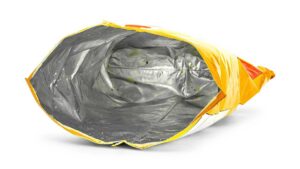
The bag your potato chips come in is seven layers deep. Metalized polyester, a plastic coated with a thin layer of metal, keeps out light. Polyethylene, a common plastic, holds the seal. A printed film provides the label. An oxygen barrier, a layer that blocks oxygen, helps prevent spoilage. There’s another sealant (a layer that helps bond the package), another structural layer for strength, and a food-contact inner skin that directly touches the chips. Each of those layers solves a problem for
The bag your potato chips come in is seven layers deep. Metalized polyester, a plastic coated with a thin layer of metal, keeps out light. Polyethylene, a common plastic, holds the seal. A printed film provides the label. An oxygen barrier, a layer that blocks oxygen, helps prevent spoilage. There’s another sealant (a layer that helps bond the package), another structural layer for strength, and a food-contact inner skin that directly touches the chips. Each of those layers solves a problem for the manufacturer: preserving freshness, supporting branding, and extending shelf life. Together, these layers are a package no U.S. recycling system can recover for future use.
To put the potato chip bag problem in context, consider American packaging waste as a whole. Americans generated roughly 82.2 million tons of containers and packaging in 2018, about 28 percent of all municipal solid waste, according to the EPA’s most recent national accounting. Plastic packaging contributed more than 14.5 million tons of the total. Those figures are now seven years old. EPA has not issued an updated Facts and Figures report since, even as e-commerce shipments and single-serve formats keep multiplying the number of small, lightweight, hard-to-recycle packages moving through American homes.
The freshest picture comes from California, which is now doing what the federal government has stopped doing. CalRecycle’s SB 54 Material Characterization Study, conducted by Cascadia Consulting Group at 16 landfills in early 2025, found that about 8.5 million tons of single-use packaging and foodware were buried in California landfills in 2024, roughly 21 percent of everything the state landfilled that year. Plastic accounted for about 3.1 million tons of that covered material. Flexible and film plastics — the category that includes chip bags — turned up across all sampling sectors, from single-family curbside collection to commercial routes and self-haul loads. One state, one year, and the composite pouch is everywhere the waste auditors looked.
While composite pouches present a recycling challenge, some rigid plastics fare better. The rigid side of the plastic waste stream — PET water bottles, HDPE milk jugs, some polypropylene tubs — has a functioning recovery system. NAPCOR’s 2024 PET Recycling Report put the U.S. PET bottle collection rate at 30.2 percent; over 70 percent of bottles that reach a curbside bin actually are sorted, baled, and reprocessed into new material.
The situation shifts again when looking at flexible packaging specifically. Flexible bags, pouches, wrappers, and refill sacks that have quietly taken over the grocery aisle are a different story. The U.S. Plastics Pact’s most recent impact report reported a combined U.S. plastic packaging recycling rate of 13.3 percent. Flexibles within that number are a rounding error. Most estimates put flexible-packaging recycling in the United States below 2 percent.
Greenpeace’s 2022 assessment concluded that no type of U.S. plastic packaging meets the Ellen MacArthur Foundation’s definition of ‘recyclable,’ a 30 percent recycling rate across a region of 400 million people.
Why does the material resist recovery
Three things make flexible plastic packaging structurally hard to recycle:
Flexible plastic packaging is not made of a single resin but is often three to nine layers of different plastics and metals bonded together. Mechanical recycling requires a clean, mono-material feedstock, and these laminates cannot be separated into their constituent materials.
Flexible bags are too light for materials recovery facilities (MRFs) to sort effectively. They tangle in screens intended for separating paper from containers, and often jam equipment, prompting shutdowns for removal.
It has no domestic end market. Before China’s 2018 National Sword policy, a ban on imports of many types of foreign waste, much of the U.S. flexible-packaging stream was exported. That relief valve closed. Domestic reprocessing capacity (U.S.-based facilities to clean and reuse the material) for multi-layer flexibles has not been built because no private processor can make the economics work at the price a commodity market will pay for the bale (a compressed block of collected plastic packaging).
Composite film is what industry insiders call a “residual cost material”—meaning the combined cost of collecting, transporting, and processing it exceeds what any buyer will pay for the recovered commodity. The private market will not recycle it.
What store drop-off actually does
For a decade, the polite answer to “what do I do with this bag?” has been: take it to the front of your grocery store. The bins marked for plastic bags and film — operated by the Wrap Recycling Action Program (WRAP) and branded by retailers including Walmart, Kroger, and Target — accept clean polyethylene films: grocery bags, bread bags, dry-cleaning bags, produce bags, and some case-pack overwrap, but not chip bags and other packaging made with composites that combine plastics, paper, and metals.
Most of the polyethylene that does get captured at drop-off goes into composite lumber — Trex decking is the dominant end market, which is a form of downcycling rather than a closed-loop system. It’s a better outcome than landfill. It is also not what the word “recyclable” on the package implies.
Advanced recycling: real, overstated, and controversial
When mechanical recycling cannot process a feedstock, industry increasingly points to “advanced” or “chemical” recycling, which includes pyrolysis, gasification, and solvent-based depolymerization, as the solution for films and flexibles. The promise: break the polymer down to monomer or fuel-feedstock molecules that can be re-polymerized or combusted.
The promise is technically real, though many critics question its promised results. The scale is not yet. Most operating U.S. pyrolysis facilities produce pyrolysis oil sold as fuel, which, from a climate perspective, is combustion with extra steps. A 2023 NRDC analysis found most “advanced recycling” projects in the U.S. are either producing fuel rather than new plastic or operating at a pilot scale. Facilities designed for polymer-to-polymer chemical recycling, such as Eastman’s Kingsport, Tennessee, plant, and Alterra’s Akron facility, process a small fraction of national flexible-packaging generation.
Twenty-five states have now classified advanced recycling as “manufacturing” rather than waste management, easing permitting requirements and exempting the facilities from solid-waste oversight (regulatory supervision for handling waste). Environmental-justice advocates (groups focused on pollution impacts on vulnerable communities) argue the reclassification moves emissions and solid-residue handling out from under the permitting regime designed to protect fenceline communities (neighborhoods directly next to industrial sites). The argument is not settled.
The EPR turn
The meaningful change in the flexible-packaging story over the past eighteen months has not come from new recycling technology. It has come from policy: seven U.S. states now implement Extended Producer Responsibility laws for packaging.
Oregon’s program went operational on July 1, 2025, with the Circular Action Alliance serving as the producer responsibility organization (PRO) that manages the program, supported by roughly $200 million in producer funding for the first year. The state plans to build out 144 PRO-operated recycling collection centers across the state. Colorado, California, Minnesota, Maryland, Washington, and Maine are at various stages behind Oregon, with California’s SB 54 program — the most expansive of the group — scheduled to be fully activated in 2027.
What EPR changes, in plain terms, is that the producer — the brand that chose the seven-layer laminate for branding and shelf life reasons — now pays for the collection and recovery of the package after a consumer uses it. The fees are eco-modulated: simpler, mono-material, more-recyclable packaging pays less; hard-to-recycle multi-layer flexibles pay more. Over time, the fee differential is intended to push producers toward redesigning packaging.
Why we’re paying for the old ways
The externalities the household pays for without seeing them, from flexible packaging specifically:
Landfill tipping fees. At the Environmental Research & Education Foundation’s 2024 weighted-average U.S. tipping fee of $62.63 per ton, the flexible-packaging share of the ~14 million tons of plastic packaging generated annually represents hundreds of millions of dollars in direct municipal disposal cost funded through utility bills and solid-waste budgets.
MRF fire risk. Flexible packaging is the stream that most commonly carries lithium-ion batteries — from disposable vapes, earbud cases, and lithium cells — into the recycling system. Fire Rover’s 2024 annual review reported that publicly tracked MRF and transfer-station fires rose roughly 20 percent year over year, with total damage and operational impact estimated at $1.2 billion annually. Much of that cost is passed through to municipalities in the form of higher processing fees.
Marine and microplastic pollution. Lightweight flexible packaging is disproportionately represented in litter and marine-debris inventories because it is light enough to blow out of collection vehicles, bins, and landfills. Microplastic shedding from degrading film is a growing concern for surface waters and the food chain.
Incinerator air quality. When flexibles are combusted in waste-to-energy plants, the emissions include PM2.5 particles, hydrogen chloride from chlorinated layers, and metals from inks and lamination, which disproportionately fall on the communities that host those plants. Sixteen of the twenty largest U.S. incinerators operate in majority or above-average communities of color.
None of these costs appear on the grocery receipt. Yet, you’re paying these fees until EPR programs force producers to do so.
What You Can Do
For individuals and households, you can make these choices:
Buy the format that’s actually recyclable where you live. Rigid containers — a jar, a bottle, a tub — can be recycled; flexible pouches in most places cannot. When the product is available in both formats, the rigid is the better environmental choice, even when weight is accounted for.
Separate clean polyethylene film for store drop-off. Grocery bags, bread bags, dry-cleaning bags, produce bags, and case-pack overwrap are the films that the WRAP system actually handles. Anything with foil, zippers, or mixed layers should not go in the drop-off bin.
Do not put flexible packaging in your curbside bin. In most municipal systems, composite packaging is treated as contamination that reduces the value of the entire load.
At the community and policy level, you can get involved:
Support packaging EPR in your state. Seven states have laws; a dozen more have active bills. The programs work only when constituents push, and they push when the programs pass.
Ask brands directly. Eco-modulated EPR fees move producers toward better design only if producers perceive consumer pressure alongside the fee. Social-media and direct-contact campaigns targeting specific CPG brands have moved packaging decisions before and will again.
Be skeptical of “chemical recycling” claims. When a brand points to a pyrolysis partnership as evidence of circular packaging, ask which facility, what output, and at what scale relative to the package volume the brand puts into the market.
Each year, the U.S. discards 38 to 40 percent of its food, a stubbornly high figure. Yet, other countries like the Czech Republic, Israel, and Denmark show promising solutions that American cities are beginning to adopt.
The global challenge is similarly daunting. The UN Food and Agriculture Organization estimates that about one-third of all food produced for people worldwide is lost or wasted each year. This is not just a moral issue, since so many people go hungry, but also a big climate probl
Each year, the U.S. discards 38 to 40 percent of its food, a stubbornly high figure. Yet, other countries like the Czech Republic, Israel, and Denmark show promising solutions that American cities are beginning to adopt.
The global challenge is similarly daunting. The UN Food and Agriculture Organization estimates that about one-third of all food produced for people worldwide is lost or wasted each year. This is not just a moral issue, since so many people go hungry, but also a big climate problem. Project Drawdown lists cutting food waste as one of the top three ways to fight climate change. Some countries have been working on this for years and offer lessons for others.
Czech Republic: Rooted in Preservation Culture
Home-grown produce from backyard vegetable gardens supplements family meals throughout the Czech Republic. Residents tend fruit trees, greenhouses, and chicken coops. Many rent municipal allotment plots to use as supplemental gardens. Home composting is common and deeply normalized.
Czechs don’t just eat what their gardens yield—they savor the adventure! During mushroom and wild garlic season, families head outdoors to forage together. Extra produce finds a second life as jams or pickles, or gets frozen and fermented into tangy cabbage. Got leftover fruit? Send it to a local distillery for a splash of homemade liquor. Even stale bread avoids the bin, reborn as crispy breadcrumbs straight from your kitchen.
Apps like Nesnězeno let Czech restaurants, bakeries, cafés, and grocery stores sell extra food as discounted ‘rescue bags,’ priced 50 to 70% below retail — for pickup before closing. This connects surplus food with local buyers looking for a good deal. By the end of 2024, Nesnězeno had 1,487 partner businesses, a 132% increase from the year before, and had expanded across all Czech regions. Prague led with 239,000 rescued packages (41% of the total), followed by South Moravian and Pilsen, according to MediaGuru.
The app has been downloaded by more than 3 million users and has saved over 3 million packages of unsold meals overall.
The Czech Republic’s recycling rate for municipal waste went up from 32% in 2017 to 44% in 2021, just below the EU average. However, separating and collecting food waste is still inconsistent. A new national program for collecting kitchen animal-based waste, starting in 2026, aims to fix this.
Mahane Yehuda Market, Jerusalem, Israel. Photo: Roxanne Desgagnés on Unsplash
Israel: Food Rescue as National Resilience
Food and water security in Israel are inseparable from politics. Leket Israel, the country’s largest food bank, pursues a mission of “food rescue” that serves Israelis regardless of background, coordinating with farms, packing houses, hotels, and catering operations to redirect surplus food to 200 nonprofits serving those in need.
Bustling outdoor food markets are traditional fixtures in Israeli cities, bringing consumers closer to the source of their food. In such busy places, edible food regularly ends up on the ground. Volunteers with Leket collect leftovers to distribute to people in need.
Leket released its 10th annual Food Waste and Rescue Report in late 2025. The report showed that Israel threw away 2.6 million tons of food, or 39% of what it produced, similar to the U.S. This wasted food was worth about $7 billion, or 1.3% of the country’s GDP. Still, there has been progress: food waste per person dropped 13.3% over the last ten years, from 300 kg to 260 kg per year. This improvement is thanks to more public awareness, serving food on individual plates in cafeterias, and more online food orders. But population growth and higher food prices have kept the total amount of wasted food high.
Leket and its partners now rescue about 45,000 tons of food each year, 2.25 times more than a decade ago. Still, this is only 5% of the food that could be saved in Israel. The Food Donation Encouragement Law, first passed in 2018, was updated in 2024 to give more legal protection to donors and require large public institutions to donate food.
In September 2025, Israel released its first national plan to cut food loss and waste, written by the Ministries of Environmental Protection and Agriculture. This was a big step toward better policy coordination. Israeli AgTech companies are also known worldwide for using technology to reduce food waste. For example, Sufresca makes edible coatings to keep produce fresh longer, and Taranis uses drones and AI to spot crop problems early.
Denmark: Culture as Infrastructure
In Denmark, people often leave free food in boxes on the sidewalk. Signs in front of homes might offer free apples or potatoes, or eggs for sale using the honor system. There are also Facebook groups in every major Danish city for dumpster diving, where people collect edible food that supermarkets throw away after the best-by date.
Supermarkets in Denmark lower prices on food that is close to its best-by date, especially baked goods, which are marked down every evening after 7 or 8 p.m. Food producers and supermarket chains work with groups like Too Good To Go and WeFood, Denmark’s first surplus food supermarket, to sell rescued food at big discounts. Chains like REMA 1000, Coop, and LIDL have also stopped offering bulk-buy discounts that encouraged people to buy more than they needed.
Too Good To Go started in Copenhagen in 2015 and has grown quickly. In 2023, the app saved 121.7 million meals worldwide, up 46% from 2022, and helped prevent about 362,000 tons of CO2 emissions. The app now works in over 17 countries and has more than 85 million users.
The WeFood surplus grocery network, which began as a single location in Copenhagen in 2016, has grown to six stores across Denmark. And a voluntary national commitment, “Denmark Against Food Waste,” united more than 25 food producers and retailers behind a shared goal of halving food waste by 2030. An independent third party measures and publishes annual progress.
What the U.S. Has Borrowed
Some of the ideas first used in these three countries are now catching on in the United States. However, there are still big challenges slowing progress.
Too Good To Go started in the U.S. in late 2020 and has been growing ever since. By mid-2025, the app was available in almost half of U.S. states, including cities such as Boston, Chicago, Denver, Los Angeles, New York, Portland, San Francisco, and Seattle. The number of meals saved grew by 67% each year. In 2024, Circle K convenience stores joined the app nationwide. Too Good To Go now also works with big chains like Whole Foods, Peet’s Coffee, and Just Salad.
Since 2020, most progress on food waste in the U.S. has happened at the state level. In 2024, 29 states introduced 100 distinct food waste bills, and 18 passed. California’s SB 1383, which started in 2022, brought organics collection to 94% of communities and rescued 217,000 tons of surplus food in 2023. Washington state also passed a major law in 2022, requiring businesses that generate large amounts of organic waste to compost or arrange for collection.
Federal legislation has moved slowly. As of 2024, 13 pending federal food waste bills were before Congress, including the bipartisan Food Date Labeling Act of 2023, which would standardize confusing “best by” and “sell by” date labeling — but none had passed. The lack of national date-label standards is a key driver of household waste, as consumers discard food that is still safe to eat.
In 2015, the U.S. promised to cut food waste in half by 2030. But a 2025 study in Nature Food found that the amount of food wasted per person in 2022, at 328.5 pounds, was about the same as in 2016. The study said that no state is on track to meet the federal goal with current policies. It also pointed out that the U.S. focuses too much on recycling food waste instead of preventing or rescuing it. In contrast, Denmark and the Czech Republic work to keep food from becoming waste in the first place, while U.S. policy mostly deals with food after it’s already lost.
What You Can Do
Download Too Good To Go or a similar app to save extra food from restaurants and grocery stores in your area.
Volunteer at a local food bank to help get rescued food to people who need it. You’ll also learn more about food inequality in your community.
Check out local CSAs and farmers’ markets to help cut down on food lost in big supply chains.
Composting at home is a simple way to recycle food scraps. If you live in an apartment, see if your city has a compost drop-off program.
Ask your supermarket to start marking down food that is close to its best-by date. This is common in Denmark but not in the U.S.
Reach out to your congressional representatives and ask them to support the Food Date Labeling Act. Standardized date labels could make a big difference at the national level.
Corrugated cardboard makes its way from warehouse to mill in about two weeks. In contrast, plastic packaging can take centuries to break down, and even the most optimistic estimates say only 5 to 6 percent of U.S. plastic is actually recycled. This difference highlights both the promise and the challenges of creating a circular packaging economy.
Back in April 2020, when this article first appeared, the recycling industry was still struggling after China banned imported recyclables in 2018. Arou
Corrugated cardboard makes its way from warehouse to mill in about two weeks. In contrast, plastic packaging can take centuries to break down, and even the most optimistic estimates say only 5 to 6 percent of U.S. plastic is actually recycled. This difference highlights both the promise and the challenges of creating a circular packaging economy.
Back in April 2020, when this article first appeared, the recycling industry was still struggling after China banned imported recyclables in 2018. Around that time, DS Smith opened its first North American recycling plant in Reading, Pennsylvania, marking the first closed-loop corrugated packaging system. Five years later, the circular packaging sector has become a $245 billion global market and is expected to nearly double by 2034.
However, growth does not always mean true circularity. The gap between what companies promise and what recycling systems actually deliver is under more scrutiny than ever.
How the Recycling Loop Works and Where It Breaks
Many people picture recycling as a simple process: items go from the curbside bin to a materials recovery facility (MRF) and then become new products. In reality, the process is more complicated. Mixed curbside collections have about a 25 percent contamination rate in baled recyclables from MRFs, so more sorting is needed before they can be turned into new materials. In the past, this extra sorting was often done cheaply in other countries.
After China stopped buying U.S. recyclables in 2018, the U.S. was left with about a third of its collected materials and no place to send them. This led to a crisis: many communities lost their recycling programs, and it became obvious that the U.S. needed more domestic processing and cleaner materials from better recycling programs.
Paper and corrugated cardboard are still the big success stories in circular packaging. In 2024, the U.S. recycled over 33 million tons of cardboard, or about 90,000 tons each day, reaching a recovery rate between 69 and 74 percent, according to the American Forest & Paper Association. The share of recycled paper used at U.S. mills has grown from 36.6 percent in 2005 to 44.4 percent in 2024.
Plastic is still a major challenge. Only about 5 to 6 percent of U.S. plastic packaging is recovered and made into new packaging or products.
A Growing Market With Caveats
Europe is leading the way in recycling growth, thanks to strict regulations. North America is catching up through corporate ESG commitments, extended producer responsibility programs, and state-level policies.
Paper-based packaging leads in circular packaging revenue, making up about 40 percent of the global market in 2024. This is due to advances in fiber recovery technology and the fact that consumers are used to recycling cardboard. Reusable and refillable packaging is growing quickly, but it is still a small part of the market. As a result, the food and beverage sector makes up nearly 47 percent of circular packaging demand, and packaging companies are teaming up with recyclers to meet this need.
Industry consolidation signals how seriously investors have bet on this sector. In July 2024, Smurfit Kappa completed its acquisition of WestRock to form Smurfit WestRock, one of the world’s largest paper-based packaging companies, with $32 billion in combined revenue and 100,000 employees across 40 countries. Separately, International Paper announced an agreement to acquire DS Smith in a deal valuing DS Smith at approximately $9.9 billion. These deals suggest that fiber-based, recyclable packaging is a durable growth market.
The DS Smith Model, Five Years Later
In March 2020, DS Smith opened its first North American recycling plant in Reading, Pennsylvania, right next to an existing paper mill and corrugated packaging facility. These three sites could make, use, collect, and recycle corrugated boxes in about two weeks, creating a true closed loop. DS Smith got clean materials from distribution centers, packaging facilities, and retailers instead of mixed curbside collections, which helped keep contamination low.
Since then, this model has grown significantly. DS Smith, now part of International Paper, and other companies have shown that fiber-based packaging circular systems can work on a large scale. The Ellen MacArthur Foundation’s 2024 Global Commitment Progress Report, which covers over 1,000 organizations representing 20 percent of global plastic packaging production, noted that companies like Amcor have “doubled the share of recycled content in their plastic packaging, making as much progress in four years as in the four decades before,” according to EMF leader Rob Opsomer.
Where Optimism Meets Reality
But the numbers are more complex than market growth projections suggest. The Ellen MacArthur Foundation (EMF) found that the 2025 targets set by its member companies in 2018—to cut virgin plastic use by 18 percent, reach 26 percent recycled content, and achieve 100 percent reusable, recyclable, or compostable packaging—are now mostly out of reach without major changes. Together, these companies have avoided using 9.6 million tons of virgin plastic since 2018, but that is less than 3 percent of annual plastic production. At the same time, the overall market increased plastic packaging use by 8 percent.
Scaling up reusable packaging has been especially hard. Even though 64 percent of EMF Commitment participants have started pilot programs, reuse models make up only 1.3 percent of packaging, according to the Foundation’s 2024 analysis. The main obstacles are structural: the U.S. lacks a shared reverse logistics system, does not offer enough consumer incentives, and has no binding policies to make reuse practical.
Greenwashing has made the credibility problem worse. In October 2024, the legal advocacy group ClientEarth released a report saying that vague plastic recycling claims, like “100-percent recyclable” and circular loop images, mislead consumers about the real environmental impact of products and violate UK and EU consumer protection laws.
“The thing that blew my mind,” said Myles Cohen, founder of consulting firm Circular Ventures, at the September 2024 Packaging Recycling Summit, “is that in the company’s defense, they argued, ‘Hey, our statements were just classic puffery.’” Cohen called greenwashing “a pet peeve that damages not just individual companies but the packaging and recycling industries as a whole.”
Not all circular packaging strategies are equally effective. The evidence shows a clear ranking of materials:
Fiber-based packaging, like corrugated cardboard and paperboard, has proven circularity supported by real infrastructure. The DS Smith model is successful because it uses clean materials and relies on commercial, not residential, collection systems.
Aluminum is the most valuable recyclable material. Recycling just one can saves as much energy as half a gallon of gas. Beverage cans contain 73 percent recycled content, and steel cans are recycled at an 80 percent rate, so metal packaging truly supports a circular system.
Reusable packaging is most effective in closed-loop commercial settings, such as logistics, food service, and institutional supply chains. It does not work as well in consumer retail or quick-service restaurants, where returning packaging is expensive and unreliable.
Compostable packaging is only a limited solution. More industry analysts are skeptical because most communities do not have home composting, industrial composting facilities often reject packaging, and composting creates greenhouse gases instead of recovering materials.
Plastic recycling needs a very specific approach. PET bottles and HDPE containers are recycled more successfully than most other plastics. Flexible plastics like films, pouches, and sachets are still mostly unrecyclable on a large scale and often end up polluting the environment.
The EPA estimates that updating U.S. recycling infrastructure will cost between $36.5 and $43.4 billion, mainly for better packaging recovery, more composting capacity, and improved plastics processing. This investment has been slow to happen because there are no binding policy requirements.
The E.U. Regulatory Push and the U.S. Gap
Europe has moved decisively. The E.U.’s Packaging and Packaging Waste Regulation (PPWR) requires 70 percent of all packaging waste to be recycled by 2030, with plastics recycling rates targeted to double to 55 percent. Member states must cut packaging waste per capita by 15 percent by 2040 versus 2018 baselines. The European Commission is also requiring products claiming to be biobased, biodegradable, or compostable to meet minimum, verifiable standards to combat greenwashing.
In the U.S., California is leading the way with extended producer responsibility (EPR) laws and the new Voluntary Carbon Market Disclosures Act, both aimed at reducing greenwashing in sustainability claims. However, there is little action at the federal level.
At the November 2024 Busan negotiations for a UN Global Plastics Treaty, countries failed to reach a binding agreement. This has left a major policy gap and prevents a coordinated global effort.
What You Can Do
If you want to make a positive difference, it helps to be both a conscious shopper and an active citizen. Here are some steps you can take in your daily life:
Choose fiber and aluminum products. Corrugated boxes, paperboard, and aluminum cans have real end-of-use recycling systems. Recycling these materials truly closes the loop.
Don’t just trust the label. “Recyclable” does not always mean it can be recycled where you live. Check if your local program accepts the material, and use Earth911’s recycling search to see what is accepted in your area.
Focus on reducing packaging, not just recycling. Buying products with less packaging, choosing concentrates, or picking refillable options has a bigger environmental impact than recycling alone.
Support EPR policies. Extended producer responsibility moves recycling costs from cities and taxpayers to the companies that create packaging. This is a structural solution that market growth alone cannot achieve.
Ask companies for details. If you see vague claims like “eco-friendly” or “100-percent recyclable,” ask questions: Where is it recyclable? What infrastructure is used? What percentage of the material is actually recycled? Demand clear, verifiable answers.
If you value the environment, keep a variation on Smokey Bear’s familiar advice in mind: Only you can prevent the economy from burning down the planet. Your response needs to combine thoughtful choices when shopping with active communication with friends, family, the businesses you frequent, and the representatives you elect.
Editor’s Note: This article, originally authored by Gemma Alexander on April 14, 2020, was substantially updated in April 2026.

 Login
Login