
Normal view

‘Social cohesion takes a long time to build; it can be broken if not careful’ — Josephine Teo urges Singaporeans not to re-share divisive social media content

9 June 2026 at 04:34

SINGAPORE: Singapore’s racial harmony didn’t appear overnight. It took decades of effort, daily interaction, and a willingness among different communities to live, work and grow together.

That was the message from Minister for Digital Development and Information Josephine Teo after authorities ordered three social media platforms to block access to 14 posts that sought to target Singapore’s Indian community and undermine the country’s multicultural values.

Speaking to reporters on June 6, Mrs Teo said Singaporeans should resist attempts to weaken the bonds that hold society together. According to Channel NewsAsia (CNA), she stressed that social cohesion is valuable precisely because it takes so long to build and can be damaged much more quickly if people become complacent.

The warning came after investigations by the Ministry of Home Affairs (MHA) and the police found that the content likely originated from a China-based platform before being circulated elsewhere online. Mrs Teo added that the videos didn’t come from Singapore and did not reflect the views of Singaporeans.


Harmful narratives aimed at the Indian community in Singapore

MHA said the posts that were ordered to be blocked contained narratives aimed at the Indian community and sought to cast doubt on Singapore’s multicultural model.

While Singapore has long maintained strict laws against content that could inflame racial or religious tensions, authorities are increasingly dealing with online material produced outside the country.

The latest case also shows that harmful narratives don’t always come from within a community. In the age of social media, messages created elsewhere can travel rapidly and reach local audiences within minutes.

Avoiding the need to re-share harmful content, even if to just express disagreement

Mrs Teo said blocking harmful content is only one part of the solution. She urged Singaporeans not to forward or re-share such material if they come across it online. Sharing content, even to express disagreement, can make it reach a wider audience.

Mrs Teo also stressed the importance of strengthening community ties through everyday interactions. Building relationships with neighbours, colleagues, and people from different backgrounds creates resilience against attempts to divide communities. When people know one another personally, it becomes harder for outsiders to sow suspicion or hostility.

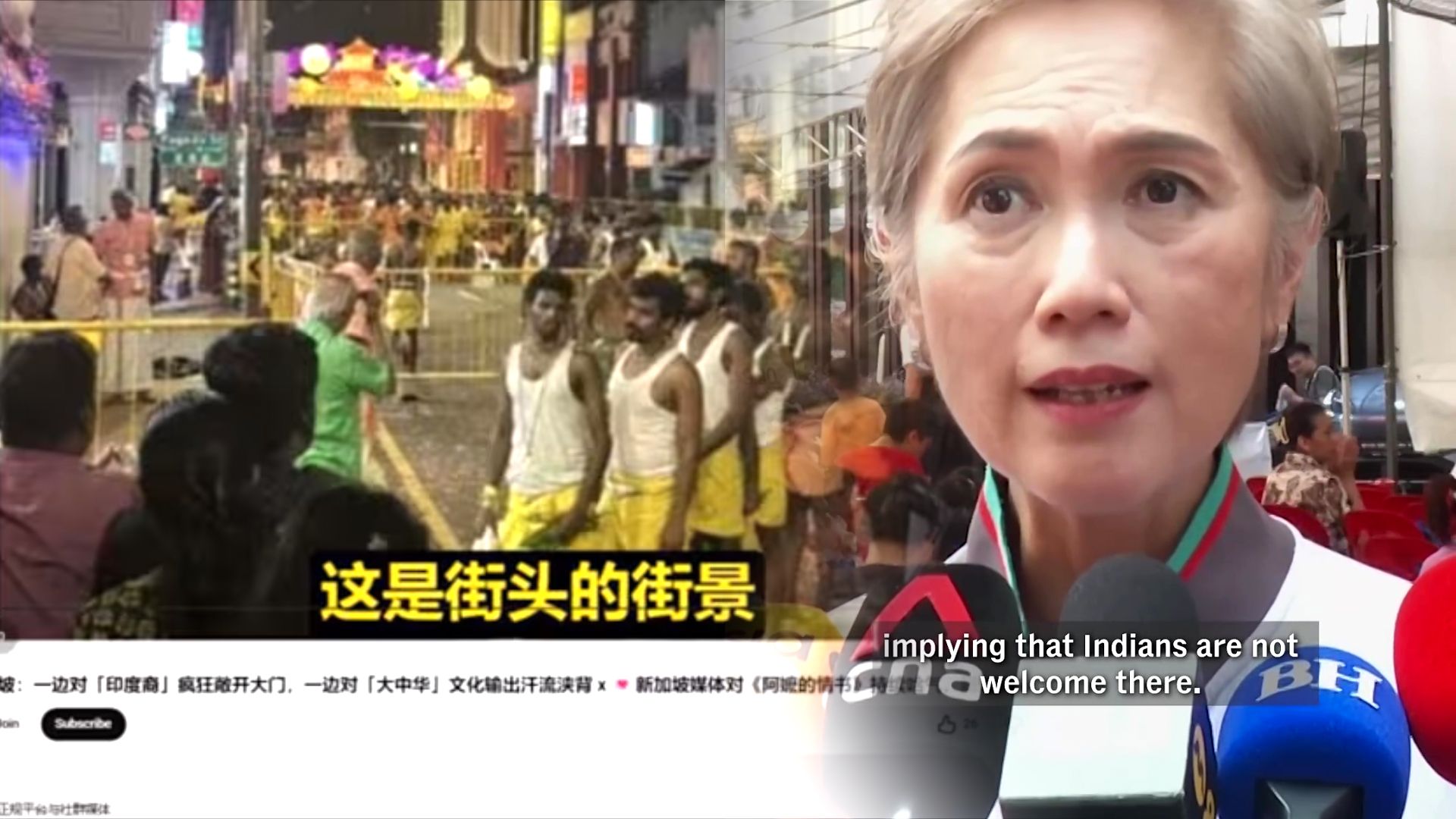
An image of a religious procession in Chinatown is used to suggest that Indians are not welcome in Singapore

The minister pointed to an example found in one of the disputed posts. The content used an image of a religious procession along Pagoda Street in Chinatown to suggest that Indians are not welcome in Singapore.

YouTube video screenshot using an image of Indian devotees at a religious festival in Pagoda Street, Chinatown, claiming that Singapore is “overcrowded” with Indians, and that they are unwelcome there
Ministry of Home Affairs (MHA)
YouTube video screenshot using an image of Indian devotees at a religious festival in Pagoda Street, Chinatown, claiming that Singapore is “overcrowded” with Indians, and that they are unwelcome there

The minister then rejected that portrayal and noted that within her Jalan Besar Group Representation Constituency, places of worship from different faiths sit within walking distance of one another. These include Buddhist and Hindu temples, a mosque and a Methodist church.

Mrs Teo was speaking while attending the Jalan Besar Family Sports Carnival at Zhongshan Park, which she described as an example of how Singaporeans from different backgrounds can come together through shared community activities.

Treating fellow Singaporeans as neighbours, regardless of race, colour, or ethnic origin

Singapore’s multicultural identity is cited as one of the country’s strengths, but it also requires constant maintenance. Past incidents have shown how rapidly misinformation and divisive rhetoric can gain traction online.

The rise of social media has made it easier for false narratives to easily spread like wildfire, especially when they touch on sensitive issues such as race, religion and national identity.

Mrs Teo warned that while the Indian community may be the target today, other racial or religious groups could become targets tomorrow.

A society built on mutual respect cannot rely solely on laws and platform controls. It also depends on people choosing not to amplify harmful content and continuing the everyday work of getting to know one another.

As Singapore navigates an increasingly connected online environment, that may be one of the most effective safeguards against those seeking to divide communities.

Harmful content loses much of its power when people refuse to spread it. The strongest response is the simplest: verify before sharing, ignore attempts to provoke division, and continue treating fellow Singaporeans, regardless of race, colour, or ethnic origin, as neighbours rather than as stereotypes.


Read related: MHA: 3 social media platforms have been ordered to block content targeting Indian community and undermining Singapore’s multiculturalism; suspected from China-based platform

This article (‘Social cohesion takes a long time to build; it can be broken if not careful’ — Josephine Teo urges Singaporeans not to re-share divisive social media content) first appeared on The Independent Singapore News.
MHA: 3 social media platforms have been ordered to block content targeting Indian community and undermining Singapore’s multiculturalism; suspected from China-based platform

8 June 2026 at 01:30

SINGAPORE: Singapore has ordered YouTube, Facebook, and X (Twitter) to block access to 14 social media posts that authorities say targeted the Indian community and threatened the country’s racial harmony.

The action came after the Singapore Police Force (SPF) issued Disabling Directions under the Online Criminal Harms Act (OCHA), requiring the platforms to prevent Singapore-based users from accessing the content. According to the Ministry of Home Affairs (MHA), the posts promoted divisive narratives about race and multiculturalism in Singapore.

Such negative content raises concerns about how foreign-origin content can inflame tensions in a society built on a delicate balance of different cultures, languages and religions.

Content traced to overseas sources likely originated from a China-based platform

In a statement released on June 6, MHA said investigations found the content likely originated from a China-based platform before spreading to other websites and social media channels.

Authorities stressed there is currently no evidence linking the content to any foreign government. Instead, it appears to have been created and shared by overseas individuals.

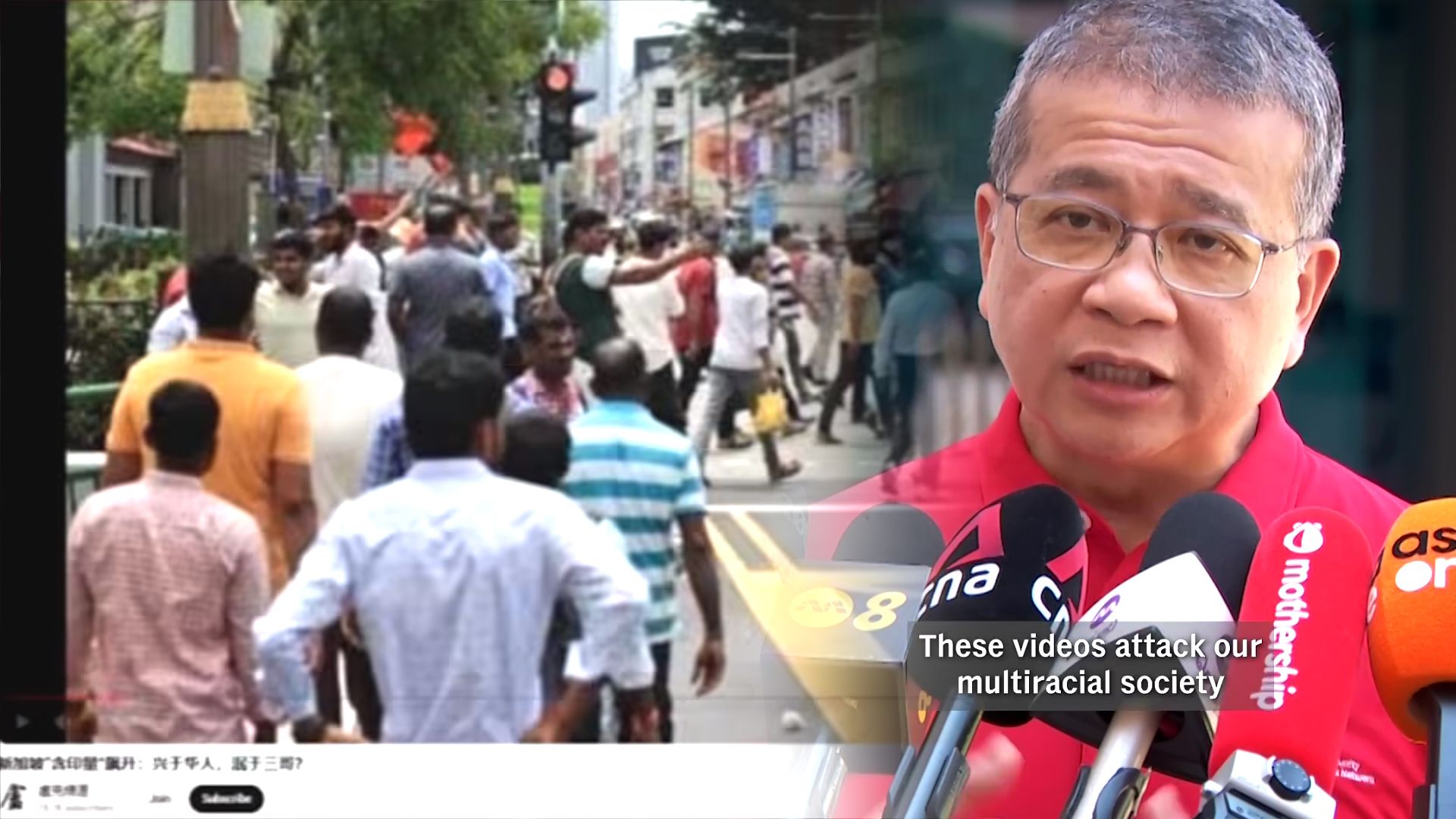
Second Minister for Home Affairs and Minister for Law, Edwin Tong, said the videos promoted the idea that one ethnic group had a stronger claim to Singapore than others and attempted to portray multiculturalism as superficial.


Mr Tong added that the content sought to divide people along racial lines and challenged the principles that have shaped Singapore’s society since independence.

Selective images used to support claims that Singapore was being “overrun” by Indians

According to MHA, the posts relied on selective images and videos to support their arguments. Some featured crowded scenes in Little India, likely filmed during weekends when migrant workers gather on their day off. Others showed religious events involving Indian devotees.

MHA: 3 social media platforms have been ordered to block content targeting Indian community and undermining Singapore’s multiculturalism; ‘content likely from China-based platform’
Ministry of Home Affairs (MHA)
YouTube video screenshot that selectively uses images and videos of crowded streets along Little India to support their arguments targeting the Indian community

Authorities said these visuals were presented out of context to support claims that Singapore was being “overrun” by Indians. The posts also contained derogatory language directed at the Indian community.

Facebook posts screenshot that uses images and videos of crowded streets along Little India to portray Singapore as being “overrun” by Indians
Ministry of Home Affairs (MHA)
Facebook posts screenshot that uses images and videos of crowded streets along Little India to portray Singapore as being “overrun” by Indians

MHA assessed that the content may fall foul of Section 298A of the Penal Code, which covers acts that promote hostility between racial groups or threaten racial harmony. The offence carries penalties of up to three years’ imprisonment and a fine.

MHA: Indian migrant workers contribute significantly to Singapore and shouldn’t be vilified

Speaking to reporters, Mr Tong said the concern was the potential damage such narratives could cause to social cohesion, regardless of view counts or online traction. He added that foreign attempts to divide Singaporeans along racial lines couldn’t be ignored.

Video screenshot depicting President Tharman Shanmugaratnam as over-representation of Indians in Singapore’s government
Ministry of Home Affairs (MHA)
Video screenshot depicting President Tharman Shanmugaratnam as over-representation of Indians in Singapore’s government

MHA also warned that it had observed efforts to push more of this content into Singapore’s online space. The ministry said Indian migrant workers, particularly those working in sectors such as construction, contribute significantly to Singapore and shouldn’t be singled out or vilified.

No community enjoys greater rights than another, regardless of race, in Singapore

Singapore’s approach has long rested on the idea that no community enjoys greater rights than another, regardless of race or background, which is why authorities viewed these posts as more than offensive comments. They were seen as attempts to challenge a core principle that allows a diverse population to live and work together.

Harmful narratives no longer need physical borders to spread. A video uploaded overseas can reach local audiences within minutes and shape perceptions before facts catch up.

So check where information comes from, question its intent and avoid resharing or circulating content that seeks to turn neighbour against neighbour. A multiracial society works only when people refuse to let others define one community as less deserving than another.

This article (MHA: 3 social media platforms have been ordered to block content targeting Indian community and undermining Singapore’s multiculturalism; suspected from China-based platform) first appeared on The Independent Singapore News.

❌
Subscriptions