The U.S. government is requiring travelers that have been to African countries where Ebola outbreaks are occurring within the last three weeks to go through enhanced screening at Washington Dulles International Airport (IAD). The State Department issued a travel advisory on Thursday stated that all U.S.-bound American citizens and lawful permanents that have been in...
The U.S. government is requiring travelers that have been to African countries where Ebola outbreaks are occurring within the last three weeks to go through enhanced screening at Washington Dulles International Airport (IAD). The State Department issued a travel advisory on Thursday stated that all U.S.-bound American citizens and lawful permanents that have been in...
Government releasing 11 documents relating to Andrew Mountbatten-Windsor’s appointment as trade envoyThe Home Office has also published asylum figures this morning. These show that the number of asylum seekers being housed temporarily in hotels stood at 20,885 at the end of March 2026, down 35% year-on-year from 32,326. The Press Association says:It is the lowest figure since data was first reported in 2022, Home Office figures show.The total had climbed as high as 56,018 at the end of September
Government releasing 11 documents relating to Andrew Mountbatten-Windsor’s appointment as trade envoy
The Home Office has also published asylum figures this morning. These show that the number of asylum seekers being housed temporarily in hotels stood at 20,885 at the end of March 2026, down 35% year-on-year from 32,326. The Press Association says:
It is the lowest figure since data was first reported in 2022, Home Office figures show.
The total had climbed as high as 56,018 at the end of September 2023.
Brits are leaving on a massive scale and non-EU immigration remains far too high. Mass immigration undermines our society and low wage immigration is bad for the economy. British families feel it in lower wages, longer waiting lists for public services and housing shortages.
Labour must go further and reform indefinite leave to remain before their hard-left flank forces them to abandon it altogether.
Chancellor says she will raise tax on global oil giants to help meet costs of plans and confirms freeze on fuel duty increasesBusiness live – latest updatesRachel Reeves will cut VAT to 5% on summer attractions such as theme parks and softplay centres during the school holidays, as she aims to ease the impact of the war in Iran on cash-strapped households.The chancellor told MPs on Thursday she would also raise more tax from global oil firms operating in the UK, to help meet the costs of her pla
Rachel Reeves will cut VAT to 5% on summer attractions such as theme parks and softplay centres during the school holidays, as she aims to ease the impact of the war in Iran on cash-strapped households.
The chancellor told MPs on Thursday she would also raise more tax from global oil firms operating in the UK, to help meet the costs of her plans.
A guide to what receipts, documents and forms must be saved, and for how long, to satisfy the IRS. Plus, tips for storing, scanning and shredding all that paper.
A guide to what receipts, documents and forms must be saved, and for how long, to satisfy the IRS. Plus, tips for storing, scanning and shredding all that paper.
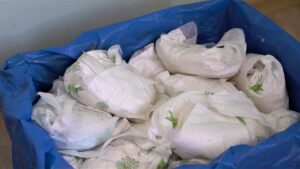
A typical American baby goes through roughly 2,500 to 3,000 disposable diapers in the first year of life — seven or eight a day, every day, for two to three years. The bill lands somewhere between $840 and $1,200 a year, depending on brand, size, and the tariffs that quietly raised diaper prices in 2025.
Multiply it across the country, and the picture changes again. The last time it counted, the Environmental Protection Agency estimated U.S. disposable diaper generation at 4.1 million tons in 20
A typical American baby goes through roughly 2,500 to 3,000 disposable diapers in the first year of life — seven or eight a day, every day, for two to three years. The bill lands somewhere between $840 and $1,200 a year, depending on brand, size, and the tariffs that quietly raised diaper prices in 2025.
Multiply it across the country, and the picture changes again. The last time it counted, the Environmental Protection Agency estimated U.S. disposable diaper generation at 4.1 million tons in 2018, about 1.4 percent of everything Americans threw away that year. The agency found no significant recycling or composting of disposable diapers.
The diaper is one of the most engineered, most subsidized, most disposed-of consumer products ever invented, yet we still have almost no idea what to do with it when it’s full.
Rising Household Costs
Diaper costs have crept up. Industry sources put the average disposable at $0.22 to $0.33 each, with monthly outlays of $70 to $100 typical for a home with a new baby. Tariff-affected brands imported from overseas are running higher. Over a full diapering cycle of roughly 2.5 years, a single child produces around 6,500 soiled disposables.
That bill is not evenly distributed. The National Diaper Bank Network (NDBN) Diaper Check 2024 found that 46 percent of U.S. families with children under four reported diaper insecurity, meaning they could not always afford enough diapers to keep a child clean and dry. That share has climbed from roughly one-third a decade earlier. The Urban Institute estimates nearly 8 million American children live in households that struggle to afford diapers. Diapers are not covered by SNAP or WIC, and in 23 states, they are still taxed at rates as high as 7 percent, though Missouri, Nevada, and Alabama all eliminated or paused their diaper taxes in 2025.
Diaper insecurity carries a mental-health load too. NDBN’s research found that caregivers without enough diapers were twice as likely to report near-daily depression. The household story of diapers is not just an environmental story. It is a poverty story dressed up in a baby-aisle marketing budget.
What’s Actually in That Diaper
The modern disposable is an unrecyclable marvel of materials engineering. According to EDANA, the European nonwovens trade body, the average baby diaper is roughly 35 percent fluff pulp made from wood-derived cellulose, 33 percent super-absorbent polymer (SAP, usually sodium polyacrylate, made from petrochemicals), 17 percent polypropylene plastic, 6 percent polyethylene plastic, 4 percent adhesives, 4 percent other materials, and 1 percent elastics.
The composition has shifted dramatically. Absorbent content rose from about 1 percent in 1987 to nearly 38 percent by 2019 as manufacturers pursued a thinner, more absorbent product. The “ultra-thin” diaper marketing of the last two decades is, in materials terms, a fossil-fuel story: fewer trees, more polymers.
That polymer matters as the diaper heads for a landfill. Polyethylene, polypropylene, and sodium polyacrylate are not biodegradable. The elastics aren’t either. Even the adhesives are designed to hold a wet load together for hours, so they don’t readily break down in conventional recycling streams.
Do Diapers Persist for 500 Years?
The widely cited statistic is that a disposable diaper takes up to 500 years to decompose in a landfill. That number deserves a closer look. Disposable diapers in their modern form have existed only since 1948, so no one has ever seen one fully decompose. The 500-year figure is an extrapolation from polymer breakdown rates, not a measured outcome. Because the plastic and SAP components are not biodegradable on any human timescale, and a sealed modern landfill design inadvertently inhibits decomposition, not accelerates it. The estimated timescale is likely correct, or even conservative.
Instead of decomposing, soiled diapers in a landfull produce methane. As the cellulose fraction breaks down anaerobically, it generates methane, a greenhouse gas that traps roughly 80 times more heat than carbon dioxide over a 20-year window. Landfill gas capture varies widely by locale. Where it isn’t captured, diaper waste contributes directly to near-term climate warming.
There is also a public-health dimension. The EPA has noted that disposable diapers introduce pathogens into the waste stream through the human waste they contain, including rotavirus, hepatitis, and other viable organisms that survive in landfill leachate. Most municipal solid-waste systems treat diapers as ordinary trash even though their contents would, in any other context, require infectious-waste handling.
Recycling Exists — Barely
Curbside-style diaper recycling does not exist in the United States. Diaper recycling is one of the harder problems in the circular economy. The product is wet, fouled, fastened to itself, and built from a chemistry that resists separation. A handful of programs have tried.
FaterSMART, the joint venture between Procter & Gamble and Italy’s Angelini Group, has operated a diaper recycling plant in Treviso, Italy, since 2017, using high-temperature steam pressure to sterilize used diapers and separate plastic, cellulose, and SAP. P&G expanded the approach into a pilot in Amsterdam with TerraCycle and the Dutch municipal waste authority AEB, which distributed recycling bins in two districts. The technology works. Whether it can scale is a political and economic question.
NappiCycle, a Welsh company, takes another route, converting used diapers and other absorbent hygiene products into fibers that are blended into asphalt for road resurfacing. A 1.4-mile stretch of highway in Wales now contains the equivalent of more than 107,000 used diapers in its road surface. The fibers reportedly make the asphalt quieter and longer-lasting. Fifteen of Wales’ 22 local authorities now collect or plan to collect absorbent hygiene products separately.
Knowaste, a UK company that ran a 70,000-ton-per-year diaper recycling plant in the Netherlands, closed in 2007 after a new incinerator beat it on price. It turned out burning dirty diapers was cheaper, which may be a short-sighted perspective. That failure is worth remembering. Diaper recycling is a problem of cheap landfilling and cheap incineration crowding out higher-value end-of-life alternatives.
DYPER and TerraCycle offer the closest thing to a U.S. consumer option, a bamboo-pulp diaper subscription paired with a mail-back composting service. Used diapers ship via UPS to a TerraCycle facility, where they are commercially composted over three to six months and end up as soil used in highway medians and similar applications. The catch is cost: the ReDYPER service adds about $39 a month to an already premium subscription. It is a workable model for households that can afford to pay roughly double the average disposable bill.
The Cloth Question, Honestly
The cloth-versus-disposable debate has raged for decades. The most rigorous public assessment remains the UK Environment Agency’s 2008 update of a lifecycle analysis that concluded both cloth and disposable diapers had broadly similar overall environmental footprints — but in different categories. Disposables dominated in waste generation and raw-material extraction. Cloth dominates water and energy use from laundering. Neither produces a sustainable environmental benefit.
The interesting finding was that the comparison was highly sensitive to parent behavior. Washing at 60°C instead of 90°C, line drying instead of tumble drying, and reusing diapers across multiple children reduced the cloth-diaper footprint by up to 40 percent. The UK updated the analysis in 2023, reporting that reusable nappies produced about 25 percent less CO₂ than single-use ones under typical conditions, which is a meaningful but not enormous advantage.
The life cycle analysis literature suggests that cloth, used well, has a lower footprint and a vastly smaller waste stream. Where the real impact sits — fluff pulp and SAP — is exactly where the consumer has no options to change their habits.
Upstream: The Trees and Oil You Don’t See
While the conversation about diapers usually ends at the curb. The bigger story is upstream.
Fluff pulp, the softwood cellulose that gives a diaper its bulk and wicking, comes overwhelmingly from southern pine plantations in the U.S. and from boreal forests in Canada and Scandinavia. Industry estimates put U.S. diaper-driven softwood consumption at about 250,000 trees a year, and an analysis from the Ellen MacArthur Foundation, summarized by the World Economic Forum, places global crude oil consumption for the disposable diaper industry at roughly 248 million barrels a year, about the same amount of oil used by Belgium annually.
FSC certification of fluff pulp varies sharply by manufacturer. Pampers states that all of its wood pulp is third-party certified and that it uses FSC-certified pulp; Huggies, Seventh Generation, and The Honest Company make similar claims on their premium lines. But the disclosures rarely specify whether the certification is FSC 100% (entirely from certified forests), FSC Mix (which can include a minority of uncertified fiber), or FSC Recycled. Beneath the certified labels, most diaper marketing leans on the phrase “responsibly sourced,” a term with no industry-wide definition and no audit requirement, which a manufacturer can use without any independent verification of the supply chain. Aparent comparing two boxes on a shelf cannot map the certification language to a provable environmental outcome.
The SAP absorptive supply chain is even less visible. Sodium polyacrylate is synthesized from acrylic acid, which is derived from propylene, a petrochemical feedstock. Every “ultra-thin” generation of diaper has increased that dependency on fossil fuels. There is no commercial bio-based SAP at scale yet, though research programs are ongoing.
Each diaper is a small unit of forest, a smaller unit of crude oil, and a packet of human waste, tied together by adhesives engineered to hold for eight hours and then sit in the ground indefinitely.
Policy Is Moving — Slowly
The regulatory landscape is starting to catch up. The European Union’s Single-Use Plastics Directive requires extended producer responsibility (EPR) schemes for absorbent hygiene products and mandates clearer labeling on plastic content and proper disposal. France banned a list of chemicals used in diapers in 2020 after a national agency found measurable levels of pesticides and dioxins in retail products.
In the United States, the policy conversation has focused almost entirely on affordability, such as by eliminating sales tax on diapers and pushing to include them in WIC and SNAP eligibility. Both are needed. Neither addresses the waste stream. A handful of states are beginning to consider EPR frameworks that include hygiene products, but the U.S. is years behind Europe on this issue.
What You Can Do
At home:
Consider a hybrid system: cloth at home, disposables for travel and daycare use. The approach captures most of the cloth waste reduction without the all-or-nothing commitment that derails many cloth attempts.
If you stay with disposables, look for FSC-certified fluff pulp and skip varieties with added fragrance or lotion — neither offers any benefit and both add chemistry your child doesn’t need.
Donate unopened diapers your child has outgrown to your local diaper bank rather than throwing them away. The NDBN locator maps member organizations.
In your community:
Ask your municipal waste authority whether they are tracking absorbent hygiene product recycling pilots. The Welsh model is replicable; what’s missing in most U.S. cities is the political will to act.
Support state-level legislation eliminating sales tax on diapers. As of mid-2025, 23 states still tax them. The NDBN state issues tracker lists active bills.
Support inclusion of diapers in WIC and SNAP. Both programs explicitly exclude diapers despite being intended to cover basic needs.
At the policy level:
Push for federal EPR consideration of absorbent hygiene products. The EU has shown that this is administratively feasible. The U.S. has not yet taken the step, but momentum is growing.
Engage with state-level circular-economy bills that would extend producer responsibility to products beyond packaging.
Taiwan’s President Lai Ching-te said Thursday he would be “happy” to talk to US leader Donald Trump — a conversation that would break more than four decades of diplomatic protocol and risk angering China.
Taiwan President Lai Ching-te delivers a speech to mark his second anniversary in office on May 20, 2026. File photo: Taiwan’s Presidential Office, via Flickr.
Trump told reporters on Wednesday that he would speak to Lai, as the White House weighs arms sales to the democratic island.
Taiwan’s President Lai Ching-te said Thursday he would be “happy” to talk to US leader Donald Trump — a conversation that would break more than four decades of diplomatic protocol and risk angering China.
Taiwan President Lai Ching-te delivers a speech to mark his second anniversary in office on May 20, 2026. File photo: Taiwan’s Presidential Office, via Flickr.
Trump told reporters on Wednesday that he would speak to Lai, as the White House weighs arms sales to the democratic island.
It was the second time since a summit in Beijing last week that Trump has said he would call the Taiwanese leader.
Such communication would be the first time since Washington switched diplomatic relations from Taipei to Beijing in 1979 that serving presidents of Taiwan and the United States would speak to each other.
Lai said Taiwan was “committed to maintaining the stable status quo in the Taiwan Strait” and that “China is the disruptor of peace and stability”, the foreign ministry said in a statement.
Lai would be “happy to discuss these matters with President Trump”, the statement said.
“I’ll speak to him. I speak to everybody,” Trump said, adding that he had a great meeting with Chinese President Xi Jinping during his state visit to Beijing last week.
US President Donald Trump addresses the nation on the shooting of two National Guard soldiers in Washington, DC, on November 26, 2025, from his residence in Mar-a-Lago in Palm Beach, Florida. Photo: White House, via Flickr.
“We’ll work on that, the Taiwan problem,” Trump said.
After wrapping up his trip to Beijing, Trump suggested arms sales to Taiwan could be used as a bargaining chip with China, which claims the island is part of its territory and has threatened to seize it by force.
Since then, Lai’s government has been on the offensive, insisting that US policy on Taiwan has not changed and that Trump made no commitments to China on arms sales to the island.
Taiwan relies heavily on US support to deter any potential Chinese attack, and has been under intense pressure to increase its spending through investment in American firms.

 Login
Login