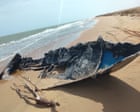
All victims of US strikes in eastern Pacific and the Caribbean identified so far came from extremely poor communitiesSign up for the Breaking News US newsletter emailA five-month investigation has named 13 previously unidentified victims of US attacks on boats allegedly carrying narcotics in a campaign that has killed nearly 200 people in the Caribbean and the eastern Pacific.It is unclear if the US has ever identified any of its 194 victims before attacking them, and the names of just three had
A five-month investigation has named 13 previously unidentified victims of US attacks on boats allegedly carrying narcotics in a campaign that has killed nearly 200 people in the Caribbean and the eastern Pacific.
It is unclear if the US has ever identified any of its 194 victims before attacking them, and the names of just three had previously emerged, after their families launched legal cases against the White House.
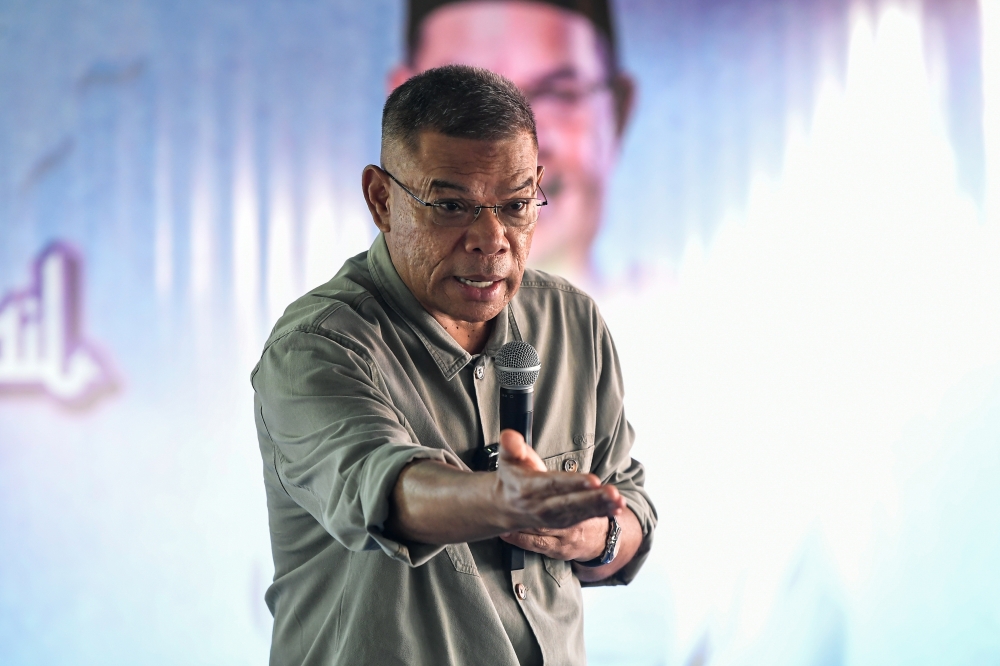
KULIM, May 15 — Home Minister Datuk Seri Saifuddin Nasution Ismail has denied a news report that likened drug trafficking activities in Langkawi to the operations of an international cartel.According to him, the magnitude of drug trafficking on the resort island cannot be likened to the drug cartel led by drug trafficker Pablo Escobar who controls the entire drug trafficking complex.“In Langkawi, it’s not that big of a deal, but that’s okay, the media (Harian Met
KULIM, May 15 — Home Minister Datuk Seri Saifuddin Nasution Ismail has denied a news report that likened drug trafficking activities in Langkawi to the operations of an international cartel.
According to him, the magnitude of drug trafficking on the resort island cannot be likened to the drug cartel led by drug trafficker Pablo Escobar who controls the entire drug trafficking complex.
“In Langkawi, it’s not that big of a deal, but that’s okay, the media (Harian Metro) chose to say that, that’s okay, that’s their choice.
“We just know, we act on all the intelligence information we have and our spying is not just after the media reveals it, no, it’s spying all the time and when the time comes, we will take action to raid, then we do it,” he said.
He told reporters after the ceremony on Instilling Noble Values at his Community Service Centre in Taman Sejahtera, Lunas here today.
He said that the investigation into drug trafficking activities in Langkawi was carried out comprehensively by focusing on all elements including organised crimes and allegations of involvement of law enforcement officers.
Saifuddin Nasution said that the police would not protect any individuals including members who were involved in the activity and would open investigation papers according to existing laws.
Commenting on the proposal of Kedah Menteri Besar, Datuk Seri Muhammad Sanusi Md Nor for the police to shoot drug dealer, Saifuddin Nasution said the drug issue needs to be addressed rationally.
He also explained that Kedah is among the states with the most serious drug problems, especially involving cases under Section 39C of the Dangerous Drugs Act 1952, which is a repeat offence.
“So we have to sit calmly, with a cooler head, rationally and objectively. It is not as easy as saying ‘shoot’, that is to be popular, but it is not certain that it will solve the problem,” he said. — Bernama
Faig Ahmed is known for his vibrant textile sculptures that take traditional Azerbaijani ornamental carpets as starting point, often appearing to melt, pool, or glitch. In his current solo presentation at the 61st Venice Biennale, where he is representing Azerbaijan, the Baku-based artist branches out into more conceptual territory, exploring science, alchemy, spirituality, and perceptions of self in a sprawling, maze-like installation called The Attention.
Curated by Gwendolyn Collaço, th
Faig Ahmed is known for his vibrant textile sculptures that take traditional Azerbaijani ornamental carpets as starting point, often appearing to melt, pool, or glitch. In his current solo presentation at the 61st Venice Biennale, where he is representing Azerbaijan, the Baku-based artist branches out into more conceptual territory, exploring science, alchemy, spirituality, and perceptions of self in a sprawling, maze-like installation called The Attention.
Curated by Gwendolyn Collaço, the exhibition expands upon Ahmed’s interest in the dialectic between digital processes and time-honored, hand-crafted techniques. The artist considers how advanced scientific inquiry, such as quantum physics and neuroscience, relates to how we “articulate cosmologies of belonging,” says a statement.
“Garden of Awakening” (2026), directional audio system
Ornamental carpets continue as a through-line in The Attention, undulating, scrunching, distending, and balling up through a series of rooms. They even extend outdoors, creating a kind of continuous runner that spills out of doorways and stretches into long lines of color.
“Ahmed bridges the 15th-century Hurufi mystic tradition—which viewed the universe as a coded text—with modern information theory,” says a statement. “By channeling the ‘human energy’ of the weave, he uses this ancient textile paradigm to address our era’s information overload and collective grief.”
Ahmed taps into a theoretical framework coined by physicist John Wheeler that can be summed up, rather enigmatically, as “it from bit.” It’s a short way of describing an approach to information theory that string theorists and quantum mechanics researchers have tested. In other words, “…every it—every particle, every field of force, even the spacetime continuum itself—derives its function, its meaning, its very existence entirely—even if in some contexts indirectly—from the apparatus-elicited answers to yes-or-no questions, binary choices, bits.”
In The Attention, the binaries of “it from bit” are not only present in the way digital methods and the physical labor of the loom converge but also in Ahmed’s interests.
Detail of “Ancestors”
“I have always been drawn to exploring consciousness for as far back as I can remember,” he says in a statement, continuing:
This search has guided my attention in two directions: on one hand, toward science—biology, physics, and mathematics—and on the other, toward spirituality, art, poetry, and creative expression. At first glance, these fields appear opposite, even contradictory. One form of knowledge is directed out-ward, toward what can be measured, calculated, observed, and verified. The other turns inward, toward the subjective, the unprovable, and the inexpressible. It is an experience that cannot be confirmed or fully shared with another, just as it is impossible to truly know what it feels like to be someone else.
Merging 15th-century Hurufi mysticism with science, digital interfaces with the analog, and introspective personal experiences with objective data, Ahmed’s carpets guide visitors through the immersive space. The largest one, a monumental machine-woven piece, is titled “I Can Contain Both Worlds But I Do Not Fit Into This One.” It forms what the artist describes as a “breathing body” that climbs the architecture, knots itself, collapses, and spills. “Ancestors,” a faintly anthropomorphic wall piece that glows psychedelically in black light is woven by hand. And a work called “Entropy Altar” uses a quantum random number generator to translate visitor presence into an evolving language.
The Attention remains on view through November 22 at Campo della Tana, Castello 2124/A–2125, Venice. See more on Ahmed’s Instagram and Vimeo.
Installation view of ‘The Attention’“Ancestors” (2026), handmade wool carpet, 170 x 385 centimeters“The Knot” (2026), part of “I Can Contain Both Worlds But I Do Not Fit Into This One,” 200 centimeters in diameterDetail of “I Can Contain Both Worlds But I Do Not Fit Into This One”“I Can Contain Both Worlds But I Do Not Fit Into This One” (2026), site-specific machine-printed carpet spanning all seven roomsFaig Ahmed at the entrance to ‘The Attention’
MANILA, May 13 — Volleys of gunshots were heard at the Philippine Senate today and people were told to run for cover, Reuters witnesses heard, as chaos mounted in anticipation of an attempt to arrest a top senator wanted by the International Criminal Court.It was unclear what was happening or who fired the shots. More than 10 military personnel in camouflage fatigues had earlier arrived at the Senate building, some carrying assault rifles, Reuters journalists s
MANILA, May 13 — Volleys of gunshots were heard at the Philippine Senate today and people were told to run for cover, Reuters witnesses heard, as chaos mounted in anticipation of an attempt to arrest a top senator wanted by the International Criminal Court.
It was unclear what was happening or who fired the shots. More than 10 military personnel in camouflage fatigues had earlier arrived at the Senate building, some carrying assault rifles, Reuters journalists saw.
It was not immediately clear why troops were there and military officials could not immediately be reached for comment. It was unclear if other security personnel were inside the building.
It came as Ronald dela Rosa, the chief enforcer in former Philippine President Rodrigo Duterte’s bloody “war on drugs”, said on Facebook his arrest was imminent and urged people to mobilise to prevent his handover to the ICC.
Dela Rosa, who has taken refuge in his legislative office since Monday, called on the public to turn out and block his arrest, saying that law enforcement agents were on the way following the ICC’s unsealing of an arrest warrant.
The warrant, dated November and made public on Monday, seeks the arrest of the former police chief on charges of crimes against humanity, the same crimes 81-year-old Duterte is accused of as he awaits trial in The Hague following his arrest last year.
“I am appealing to you, I hope you can help me. Do not allow another Filipino to be brought to The Hague,” dela Rosa said in a video posted on Facebook from his Senate office.
Dela Rosa, 64, was Duterte’s top lieutenant overseeing a fierce crackdown during which thousands of alleged drug dealers were slain, with human rights groups accusing police of systematic murders and cover-ups.
Police reject the allegations and say the more than 6,000 killed in anti-drugs operations were all armed and had resisted arrest. — Reuters
Contradictory policies that gut harm reduction programs while supporting naloxone access are confusing expertsWithin just a few weeks, the Trump administration has proposed multiple contradictory policies related to overdose prevention – some that could help save lives and others that experts say could further strain health resources and put people at risk for overdose.These policies include a new prohibition on funding for fentanyl test strips, which help people avoid overdoses; proposed budget
Contradictory policies that gut harm reduction programs while supporting naloxone access are confusing experts
Within just a few weeks, the Trump administration has proposed multiple contradictory policies related to overdose prevention – some that could help save lives and others that experts say could further strain health resources and put people at risk for overdose.
These policies include a new prohibition on funding for fentanyl test strips, which help people avoid overdoses; proposed budget cuts that would gut the country’s overdose prevention efforts; and an ambitious drug control strategy that will be impossible to implement if the aforementioned cuts go through.
Exclusive: Regime, which executed 243 people last year for drug offences, accused of investing in entertainment to whitewash its human rights recordThe acclaimed Australian film-maker Phillip Noyce is being paid by the Saudi regime to make a feature film portraying the repressive state’s narcotics officers as heroes.The Watchful Eyes, based on a real Saudi ministry of interior narcotics case, is billed as a dramatic depiction of the “heroism of security men in combating drugs”. Continue reading.
Exclusive: Regime, which executed 243 people last year for drug offences, accused of investing in entertainment to whitewash its human rights record
The acclaimed Australian film-maker Phillip Noyce is being paid by the Saudi regime to make a feature film portraying the repressive state’s narcotics officers as heroes.
The Watchful Eyes, based on a real Saudi ministry of interior narcotics case, is billed as a dramatic depiction of the “heroism of security men in combating drugs”.
Justice department targets MacArthur Park, which has long struggled with fentanyl use, overdoses and homelessnessFederal authorities arrested 18 people in Los Angeles in a crackdown on drugs in MacArthur Park, the Department of Justice announced on Wednesday.The DoJ said it was targeting an “open-air drug market” in the park near downtown, which has long struggled with fentanyl use and overdoses and has at times had large encampments of unhoused people. Continue reading...
Justice department targets MacArthur Park, which has long struggled with fentanyl use, overdoses and homelessness
Federal authorities arrested 18 people in Los Angeles in a crackdown on drugs in MacArthur Park, the Department of Justice announced on Wednesday.
The DoJ said it was targeting an “open-air drug market” in the park near downtown, which has long struggled with fentanyl use and overdoses and has at times had large encampments of unhoused people.
A furore among Barrie, Ontario parents has developed after a harm reduction booklet entitled "safer snorting" was distributed by the Canadian Mental Health Association at a local high school. Read More
A furore among Barrie, Ontario parents has developed after a harm reduction booklet entitled "safer snorting" was distributed by the Canadian Mental Health Association at a local high school. Read More

 Login
Login