
Normal view

  • ✇Colossal
  • The Photographs that Shaped the Black Arts Movement in the Mid-20th Century Grace Ebert
    Photography is often touted as the most democratic and accessible medium in the visual arts. Today, the majority of us carry phones equipped with powerful, easy-to-use cameras that capture our lives and the world around us, transforming each of us into a documentarian at a moment’s notice. This omnipresence shapes our understanding of art and culture and often serves as a critical tool for political and social change. The same is true for a forthcoming exhibition at the Mississippi Museum
     

The Photographs that Shaped the Black Arts Movement in the Mid-20th Century

22 May 2026 at 15:07
The Photographs that Shaped the Black Arts Movement in the Mid-20th Century

Photography is often touted as the most democratic and accessible medium in the visual arts. Today, the majority of us carry phones equipped with powerful, easy-to-use cameras that capture our lives and the world around us, transforming each of us into a documentarian at a moment’s notice. This omnipresence shapes our understanding of art and culture and often serves as a critical tool for political and social change.

The same is true for a forthcoming exhibition at the Mississippi Museum of Art. Photography and the Black Arts Movement, 1955-1985 transports viewers to the mid-20th century, when the medium rose to prominence not only for artists but also for organizers, activists, and cultural icons. Featuring works by more than 100 photographers, the expansive exhibition ranges from editorial and commercial commissions to self-portraits and mixed-media social critiques. Many of the works push back against the state-sanctioned racism of the Jim Crow era and highlight the acts of protest that emerged from such discrimination.

a black and white photo of a crowd picketing
Ernest Withers, I Am A Man, Sanitation Workers Strike, Memphis, Tennessee, March 28, 1968. Gelatin silver print, 7 ½ x 12 13/16 inches. Image © Dr. Ernest C. Withers, Sr., courtesy of the Withers Family Trust

Included is a graphic collage by Ralph Arnold titled “Above This Earth, Games, Games” that splices cut-outs of football matches with images of war and destruction. Taken that same year, 1968, was Ernest Withers’s captivating shot of Memphis sanitation workers picketing following the death of two employees. Creating a visual wall of signs declaring “I Am A Man,” the strikers in suits and hats demand both better working conditions and dignity and respect.

Cultural touchstones like the enigmatic musician and philosopher Sun Ra also appear. In a dynamic, black-and-white photo by Ming Smith, the jazz leader spins in front of the band, his glittering garb appearing like a halo of brilliant sparks.

Exhibition curators contextualize the show in a quote from Julian Bond, a civil rights leader who helped establish the Student Nonviolent Coordinating Committee: “Pictures told, for those who could not see themselves, of the strength and beauty of the people, of the hostility and anger of the opposition, and of the promise of a world free of racism.”

Photography and the Black Arts Movement, 1955-1985 is on view from July 25 to November 8 in Jackson.

a collage with fields of color and cutout figures preaching, playing football, at war, and more
Ralph Arnold, Above This Earth, Games, Games, 1968, collage and acrylic on canvas, 45 x 45 inches. Image courtesy of Museum of Contemporary Photography at Columbia College, Chicago
a black and white photo of the musician in a space costume
Ming Smith, Sun Ra Space II, New York, New York, 1978, gelatin silver print, 6 x 8 13/16 inches. Image © Ming Smith
a portrait of a young Black woman with a sculptural silver necklace
Kwame Brathwaite, Untitled (Portrait of Manasie Ree Horn with Reels as Necklace), c. 1970, inkjet print, 29 ½ x 29 ½ inches. Image © Kwame Brathwaite
a black and white photo of a photographer capturing a young Black girl looking into a shop window
Doris Derby, Member of Southern Media photographing a young girl, Farish Street, Jackson, Mississippi, 1968, gelatin silver print, 12 7/8 x 8 5/8 inches. Image © Doris A. Derby
a photo of a stylish couple walking along a street with their backs to the photographer
Horace Ové, Walking Proud, Notting Hill Carnival, c. 1972, inkjet print, 34 x 24 inches. Image © Sir Horace Ové
a photo of a photographer capturing himself in a mirror while wearing a red sweater
Barkley L. Hendricks, Self-Portrait with Red Sweater, 1980 (printed 2023), chromogenic print. Image © Barkley L. Hendricks, courtesy of the Estate of Barkley L. Hendricks and Jack Shainman Gallery, New York

Do stories and artists like this matter to you? Become a Colossal Member today and support independent arts publishing for as little as $7 per month. The article The Photographs that Shaped the Black Arts Movement in the Mid-20th Century appeared first on Colossal.
  • ✇PetaPixel
  • Before the Frame: A Filmmaker’s Approach to Street Photography Michael Bonocore
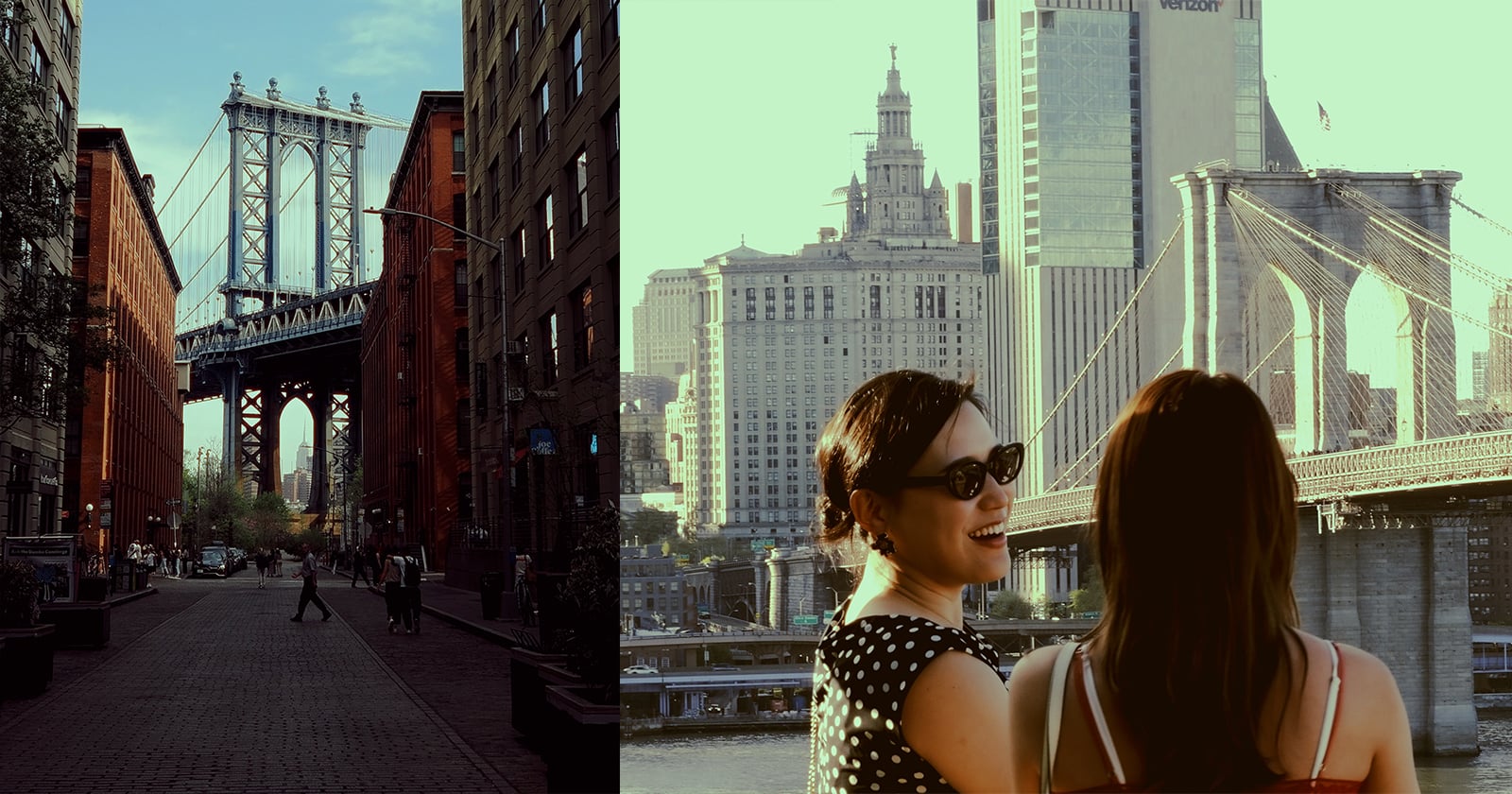
    Six in the morning on the Brooklyn Bridge, and New York City is something it rarely is. It is quiet. Not empty, but quiet. Dan Aragon is standing on the walkway watching the light come up across the East River. The bridge holds a few early walkers, runners, and cyclists. A ferry is just starting to move on the water below. He has not raised the camera yet. He is still enjoying the silence. [Read More]
     

Before the Frame: A Filmmaker’s Approach to Street Photography

21 May 2026 at 20:08

Split image: On the left, a view of the Manhattan Bridge framed by red brick buildings. On the right, two women face the Brooklyn Bridge and city skyline, one smiling and wearing sunglasses.

Six in the morning on the Brooklyn Bridge, and New York City is something it rarely is. It is quiet. Not empty, but quiet. Dan Aragon is standing on the walkway watching the light come up across the East River. The bridge holds a few early walkers, runners, and cyclists. A ferry is just starting to move on the water below. He has not raised the camera yet. He is still enjoying the silence.

[Read More]

  • ✇Colossal
  • Janusz Jurek Embraces the Weirdness of Everyday Life in Captivating Street Photographs Kate Mothes
    Humor and happenstance take the front seat in Polish photographer Janusz Jurek’s wry images. Working as a graphic designer and commercial photographer by day, he finds the greatest creative freedom in the candid and incidental—the things he notices as he moves about town, travels, and attends festivals and other events. These are the places where he observes some of the most unique individuals and the quirkiest coincidences. “The less commercial and more bizarre, the better—people are more au
     

Janusz Jurek Embraces the Weirdness of Everyday Life in Captivating Street Photographs

5 May 2026 at 18:30
Janusz Jurek Embraces the Weirdness of Everyday Life in Captivating Street Photographs

Humor and happenstance take the front seat in Polish photographer Janusz Jurek’s wry images. Working as a graphic designer and commercial photographer by day, he finds the greatest creative freedom in the candid and incidental—the things he notices as he moves about town, travels, and attends festivals and other events. These are the places where he observes some of the most unique individuals and the quirkiest coincidences. “The less commercial and more bizarre, the better—people are more authentic then, less in control of what they’re doing,” he tells Colossal.

Jurek is drawn to situations that happen outside of the mainstream, often turning his back on whatever the present attraction is in order to observe what’s happening all around him. He focuses on “the people, their reactions, small gestures, and strange coincidences. This is where moments that are truly surprising often appear,” he says.

A candid street photograph by Janusz Jurek of textiles hanging on a drying line and someone's legs sticking out from behind one of the pieces

As Jurek has learned over time, some of the best images happen right at home. The crux of the process is all about noticing what’s going on, not where it happens. And beauty is never the objective. “I don’t care about the photos being pretty,” he says. “Quite the opposite—for me, street photography is the antithesis of all the technical perfection and imperfection that’s everywhere on the internet these days.” Instead, he’s fascinated by the ability to raise questions and provoke reactions in the viewer, from curiosity to amusement to slight discomfort.

Jurek is working toward the release of a collection of photos titled Look, Before It’s Gone, chronicling his street photography over a period of five years. See more on Behance, and follow updates on Instagram. You might also enjoy the work of Eric Kogan and perusing top images in the Pure Street Photography Awards.

A candid street photograph by Janusz Jurek of two elderly women walking by costumed and masked figures during a folk festival
A candid street photograph by Janusz Jurek of a man stopped on a bicycle near a large fire in a field, and the smoke looks as though it's coming out of his head
A candid street photograph by Janusz Jurek of a man seated in his market stall, with melons next to his head
A candid street photograph by Janusz Jurek of people exercising in a park and one young man is just lying on the ground
A candid street photograph by Janusz Jurek of people sitting on a wall in a city, view through a portal
A candid street photograph by Janusz Jurek of two young men walking across a festival grounds with green watering cans on their heads
A candid street photograph by Janusz Jurek of a man standing in front of a blue tractor with smoke covering his face
A candid street photograph by Janusz Jurek of an older couple standing in front of an apartment building, with other people observing from their windows

Do stories and artists like this matter to you? Become a Colossal Member today and support independent arts publishing for as little as $7 per month. The article Janusz Jurek Embraces the Weirdness of Everyday Life in Captivating Street Photographs appeared first on Colossal.

❌
Subscriptions