Normal view

  • ✇Eos
  • Scientists Find Thousands of Cubic Kilometers of Magma Hiding Beneath Tuscany Nathaniel Scharping
    It’s long been clear that Italy’s Larderello region is supplied with abundant heat from Earth’s interior. The area, located in the center of Tuscany, is home to the world’s very first geothermal power plant and once bore the nickname “Devil’s Valley” for the steam vents that dot the rolling landscape. The source of all of that heat has never been clear because the region has little volcanic activity. But now, new research points to the existence of a massive reservoir of magma, thousands of
     

Scientists Find Thousands of Cubic Kilometers of Magma Hiding Beneath Tuscany

18 May 2026 at 12:57
Italy’s Larderello region

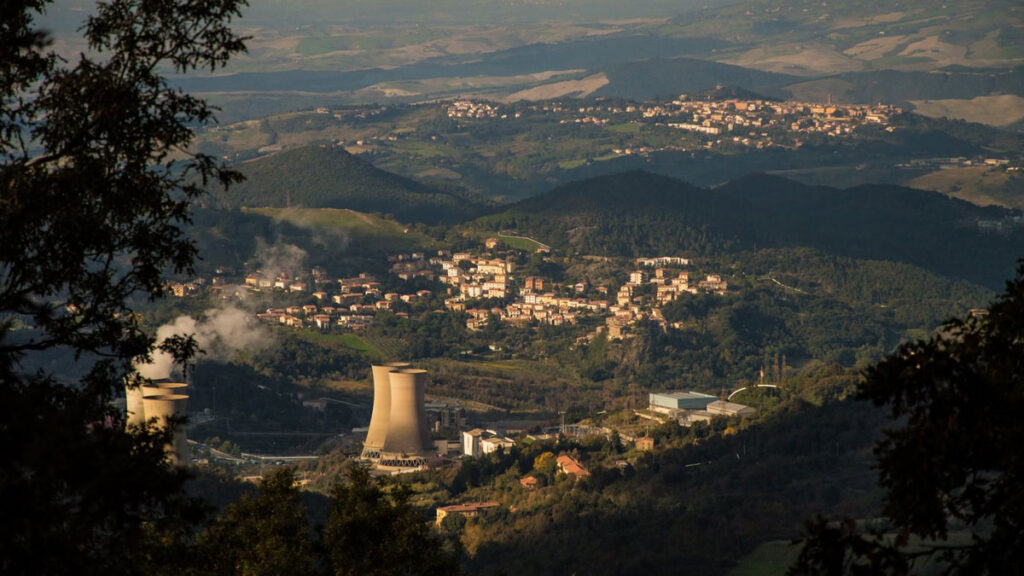
It’s long been clear that Italy’s Larderello region is supplied with abundant heat from Earth’s interior. The area, located in the center of Tuscany, is home to the world’s very first geothermal power plant and once bore the nickname “Devil’s Valley” for the steam vents that dot the rolling landscape.

The source of all of that heat has never been clear because the region has little volcanic activity. But now, new research points to the existence of a massive reservoir of magma, thousands of cubic kilometers in volume, hiding beneath Larderello.

“It’s beautiful to think that in a few hundred thousand years, we might find a supervolcano in there.”

The reservoir was discovered by University of Geneva geophysicist Matteo Lupi and his colleagues using a relatively new technique called ambient noise tomography (ANT). With ANT, the researchers peered deeper beneath the crust in the region, discovering anomalies that pointed to large volumes of magma.

The reservoir sits about 10 kilometers beneath the surface and is around 20 kilometers in diameter, the authors reported in a paper published in Communications Earth and Environment. Those dimensions make the reservoir comparable in size to those underlying so-called supervolcanoes like Yellowstone and Toba, though Lupi said there’s no apparent danger of an eruption anytime soon.

“I don’t think that, in human time frames, we should change the way we perceive the area,” he said. “Nevertheless, it’s beautiful to think that in a few hundred thousand years, we might find a supervolcano in there as well.”

Listening for Magma

Previous studies had posited the existence of large amounts of magma somewhere beneath Tuscany but never provided definitive evidence. A borehole project that concluded in 2018 revealed sudden temperature increases several kilometers down. Other studies using seismic vibrations to infer the structure of the crust in the region hinted at the presence of magma.

Lupi, along with colleagues in Italy, has been working to expand the use of ANT in Tuscany and elsewhere to make new and better images of structures deep underground. The technique involves using a network of seismometers to pick up on surface waves traveling through Earth that record a kind of background noise created by wind, ocean waves, and other subtle forces. Then, statistical algorithms help scientists find relevant seismic signals amid the static.

“Surface waves are sensitive to the shear properties of the rock,” said Brandon Schmandt, a geophysicist at Rice University who wasn’t affiliated with the research. “If you heat something or introduce a little melt, the shear properties weaken a lot. And so it’s a good way to find a big magma reservoir [in Earth’s crust].”

Using more than 60 seismometers spread across Tuscany and islands just offshore, Lupi and his team cross correlated surface wave data to produce a map of seismic velocities beneath Larderello. That map contains a large blob where seismic signals travel markedly slower than in other places. Those speeds align with a body of partially melted rock, Lupi said, surrounded by a region of slightly cooler and more solid “crystal mush.”

The researchers estimate the reservoir is about 5,000 cubic kilometers in volume, with molten rock making up about 80% of its innermost contents and about 20% of the surrounding crystal region.

A Missing Supervolcano?

The magma reservoir’s existence provides an explanation for the abundant geothermal activity in the Larderello region while simultaneously raising another question. The quantity of magma discovered could fuel a massive eruption on the scale of other supervolcanoes worldwide—yet no supervolcano exists in Tuscany.

Why Tuscany doesn’t host a caldera similar to Yellowstone in the United States is still an open question. There are several nonexclusive possibilities for the lack of eruptivity, said Federico Farina, a geologist and professor of geochemistry at the University of Milan who was also an author of the study. The magma under Larderello might be drier and therefore less eruptive, or it could have been produced, and therefore intruded into the crust, more slowly. Additionally, the structure of the crust in the region could have helped to trap the magma and prevent it from getting out.

Another clue to the region’s geological history comes from dating zircons, small crystals formed when magma cools and hardens. Farina has found zircons with different ages very close to each other in the rock matrix, which he said indicates a long-lived system where magma moves through different reservoirs as it cools. He said these zircons may also enable the researchers to model the size of the reservoir and better understand the speed and amount of magma accumulation there.

More to Come

Discovering so much magma underneath Tuscany is a surprise, but Lupi thinks it’s likely to be far from the only large magma reservoir hiding beneath a volcanically quiet region. He noted that research he carried out in the Andes around a decade ago also suggested, though not conclusively, the existence of a large, hidden magma reservoir. That experience was, in part, what convinced him to use ANT’s deep imaging capabilities elsewhere.

“This is good momentum to encourage people to look at it from a magmatic system standpoint and not just focus on the vents at the surface.”

Schmandt agreed that large reservoirs are likely to exist in other places even when there’s little for human eyes to see. “This is good momentum in that direction to encourage people to look at it from a magmatic system standpoint and not just focus on the vents at the surface,” he said.

Lupi may not have to go far to discover his next massive pool of molten rock. He said his data indicated there may be another reservoir buried under nearby Mount Amiata that’s twice as big as the one beneath Larderello. That area was just at the edge of their seismometer network, meaning the team couldn’t fully resolve it.

—Nathaniel Scharping (@nathanielscharp), Science Writer
Citation: Scharping, N. (2026), Scientists find thousands of cubic kilometers of magma hiding beneath Tuscany, Eos, 107, https://doi.org/10.1029/2026EO260157. Published on 18 May 2026.
Text © 2026. The authors. CC BY-NC-ND 3.0
Except where otherwise noted, images are subject to copyright. Any reuse without express permission from the copyright owner is prohibited.
  • ✇Eos
  • A Swarm of Earthquakes in South Africa’s Karoo Basin Poses Questions for Oil and Gas Development Ray Mwareya
    Roughly the size of Texas, the Karoo Basin of central western South Africa is brutally dry, sparsely populated, and known in part for its potentially “massive” hydrocarbon deposits. South Africa, which consumes more energy than any other country in sub-Saharan Africa, has shown a growing interest in commercial fracking for shale gas and oil across the Karoo hinterland, with the country moving in late 2025 to lift a 13-year ban on shale gas exploration in the area. However, a recent study
     

A Swarm of Earthquakes in South Africa’s Karoo Basin Poses Questions for Oil and Gas Development

20 May 2026 at 12:26
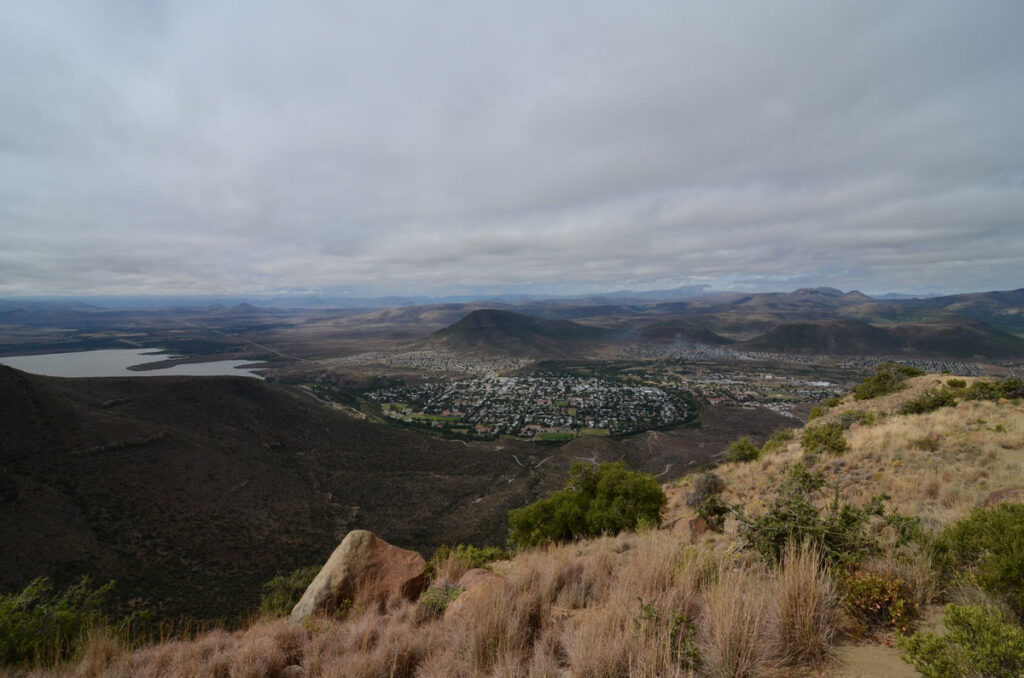
A photo taken from on a hill shows a populated valley surrounded by brown mountains on a cloudy day.

Roughly the size of Texas, the Karoo Basin of central western South Africa is brutally dry, sparsely populated, and known in part for its potentially “massive” hydrocarbon deposits.

South Africa, which consumes more energy than any other country in sub-Saharan Africa, has shown a growing interest in commercial fracking for shale gas and oil across the Karoo hinterland, with the country moving in late 2025 to lift a 13-year ban on shale gas exploration in the area.

However, a recent study from the University of Cape Town, published in Seismological Research Letters, cautioned that the Karoo might not be as seismologically calm as it appears, meaning fracking efforts could have the potential to induce earthquakes in the region.

A Swarm of Earthquakes

The researchers observed 66 earthquakes in this cluster between 2007 and 2022, ranging from 0.7 to 4.8 in magnitude.

The researchers investigated what they call a sudden swarm of earthquakes that occurred in the Leeu Gamka cluster, a region of the Karoo that was previously considered seismically stable. They observed 66 earthquakes in this cluster between 2007 and 2022, ranging from 0.7 to 4.8 in magnitude.

“The individual earthquakes here are very small,” said Alastair Sloan, a tectonics and structural geologist at the University of Cape Town.

Using ambient noise tomography, previous geophysical surveys, and information about the locations of past earthquakes, the researchers identified a critically stressed fault underlying the region. The fault appears to extend for at least 30 kilometers roughly west-northwest to east-northeast.

Looking at South Africa more generally, there are other places where there have been “fairly large” earthquakes with a similar orientation, Sloan said. He cited a series of large earthquakes in the early 20th century in a place called Koffiefontein, north of the study area, and the disastrous 1969 Tulbagh earthquake, west of the team’s study area.

Both of those earthquakes occurred in regions that are geologically similar to the Karoo, though they’re outside of the area being considered for shale gas exploration, Sloan said.

Fracking Risks?

In other parts of the globe, such as Oklahoma in the United States, processes related to oil and gas extraction have led to “induced earthquakes.” Most of these earthquakes have been triggered by wastewater disposal associated with oil production, not by fracking directly.

Researchers are unsure if industrial fluid injection in the Karoo, as is applied in shale gas fracking processes, could trigger significant seismic action in the region’s existing faults.

“Some locations which undergo shale gas development don’t see very much seismicity, and there is a catalog of things which need to be present for [seismicity] to be something that you would particularly worry about,” Sloan said.

For instance, if faults are only within the crystalline basement and therefore separated from the sedimentary layers where the fracking occurs, then it’s not likely they’ll be reactivated, because there’s no way for the fracking fluid to get down to the fault zone itself. Another factor, Sloan added, is that for significant earthquakes to occur, large faults that are already critically stressed need to be present in the region undergoing fracking.

The new study showed that both of these conditions may be met in the Karoo: Microseismicity does extend to the depths at which the carbonaceous shale is present. And this microseismicity is occurring on a reasonably extensive structure with a similar orientation to larger earthquakes that have already occurred in the region.

However, Sloan stressed, this isn’t a cause for immediate panic.

“I don’t want to be too alarmist; the size of the structure revealed by the microseismicity is not huge, and so we do not have evidence to expect an earthquake much larger than the damaging historical earthquakes that we have already seen in the wider region,” he said. “Globally, large earthquakes triggered by fracking (rather than associated deep wastewater exposure) are very rare, but the study suggests the necessary preconditions are present. And so the possibility needs to be considered and monitored carefully.”

Not Unique

Raymond Durrheim, a geoscientist and the South African Research Chair in Exploration, Earthquake and Mining Seismology at the University of the Witwatersrand, and who also examined the Ph.D. thesis on which the new study is based, said no area is perfectly seismically quiet.

“We know the way seismicity works in this whole area of southern Africa is that swarms occur,” he said. “They’ll last for years or even decades, and then they’ll die away. This is not a unique occurrence.”

This study was “useful,” though, Durrheim added, especially with the possibility of shale gas development in the Karoo. “It’s very important that we understand this because we know that when you inject fluid under high pressure, there’s always a chance you could trigger an earthquake,” he said, noting examples of fluid injection triggering earthquakes in places such as Canada. “It’s always a risk.”

To mitigate risks, Sloan suggested it would be useful to have a much denser network of seismometers within this region of South Africa.

—Ray Mwareya (@RMwareya), Science Writer

Citation: Mwareya, R. (2026), A swarm of earthquakes in South Africa’s Karoo Basin poses questions for oil and gas development, Eos, 107, https://doi.org/10.1029/2026EO260159. Published on 20 May 2026.
Text © 2026. The authors. CC BY-NC-ND 3.0
Except where otherwise noted, images are subject to copyright. Any reuse without express permission from the copyright owner is prohibited.
  • ✇Eos
  • What’s Below the Great Salt Lake? More Water Anaise Aristide
    Since 1989, Utah’s Great Salt Lake has lost some 70% of its surface area, reducing its ecosystem services and creating stretches of drying lake bed (playa) that send toxic dust into the air. That drying ground has also provided opportunities for scientists to survey what lies below the lake’s floor. In a study published in Geosciences, researchers revealed glimpses of fresh water and salt water, with some fresh water lurking only a few meters below the surface. The work could provide clues f
     

What’s Below the Great Salt Lake? More Water

21 April 2026 at 12:44
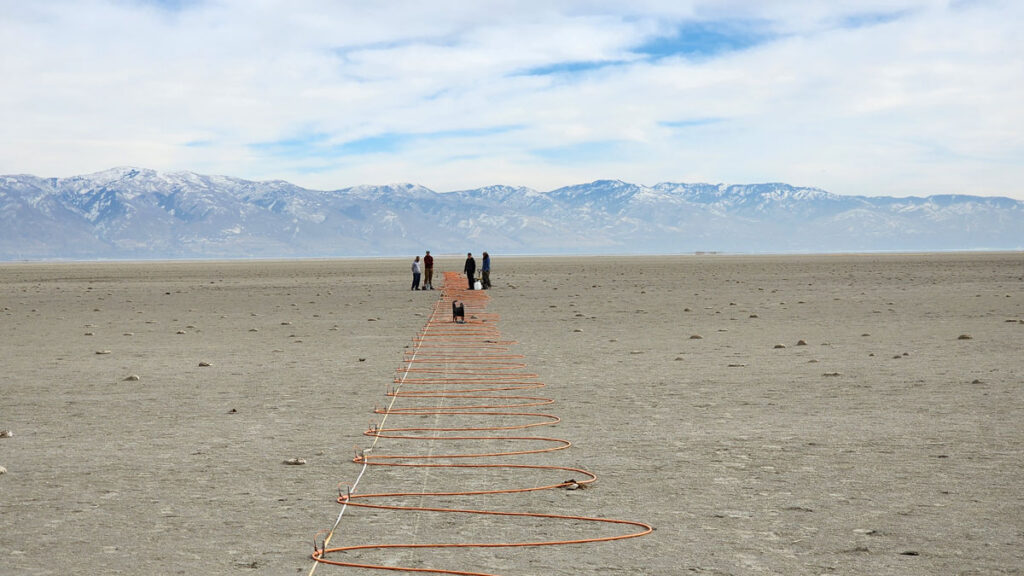
Researchers stand in the distance as an orange electrical cord snakes across a dry lake bed in the Great Salt Lake.

Since 1989, Utah’s Great Salt Lake has lost some 70% of its surface area, reducing its ecosystem services and creating stretches of drying lake bed (playa) that send toxic dust into the air.

That drying ground has also provided opportunities for scientists to survey what lies below the lake’s floor. In a study published in Geosciences, researchers revealed glimpses of fresh water and salt water, with some fresh water lurking only a few meters below the surface. The work could provide clues for conserving the lake, a crucial resource for both the ecology and the economy of the region.

Salt Lake, Fresh Water

In 2023, Michael Thorne and colleagues began using a technique known as electrical resistivity tomography (ERT), which can reveal the presence of fresh or salty water, at dozens of spots near the southern and eastern edges of the Great Salt Lake. Thorne is a geophysicist at the University of Utah in Salt Lake City and a coauthor of the new study.

The lake’s desiccation allowed the researchers to access areas where “at previous times, you would never be able to do measurements because [they] would be underwater,” said Thorne.

Establishing a network of ERT sensors requires robust fieldwork. Over the course of long days in the field, Mason Jacketta, lead author of the new study, and others placed electrodes into the ground a few meters apart, making lines that stretched hundreds of meters. Between pairs of electrodes, they measured the resistance to electrical current. Salty water, filled with electricity-conducting ions, has lower resistance than fresh water.

Paired with information on the rock and sediment beneath the surface, as well as with measurements from nearby wells, the ERT data allowed the team to work out a profile of how electrical resistance varied with depth and to figure out what kind of water seeped through pores in the ground below. The team shared the results of their work on the southern part of the lake in Geosciences, while more in-depth findings about the eastern shore will appear in an upcoming publication.

“What this is really showing is that [fresh water is] prevalent all over the place.”

At many of the sites, Jacketta and others found fresh water near the surface.

“What this is really showing is that [fresh water is] prevalent all over the place,” said Elliot Jagniecki, a geologist at the Utah Geological Survey who wasn’t part of the work.

That fresh water was often in close proximity to patches of salty groundwater. At one spot in the southeastern part of the lake, the team found a shallow layer of brine. But right below that, at only 5 meters of depth, they encountered fresh water. At the team’s most northern study site, they found fresh water around 2 meters deep. On the southern shore, they found fresh water in some places as shallow as 2.8 meters.

Mysterious Formations

The team’s results also helped explain curious features around the Great Salt Lake, including mounds made of salt and islands made of reeds.

The lacy-looking layers of the lake’s so-called mirabilite mounds form in the winter, when the cold freezes upwelling salty water, concentrating its salts. With measurements taken next to where some mirabilite mounds form, the researchers could visualize the underground conduits that send salty water to the surface.

While mirabilite mounds form close to shore, mounds made of Phragmites reeds appear in the lake’s interior as well as along its periphery. Thorne and his colleague William Johnson first noticed these mysterious circles popping up in Google Maps more than a decade ago. When they went to investigate, they found Phragmites.

“The population of Phragmites around the Great Salt Lake is really not allowing fresh groundwater to go back into the Great Salt Lake.”

In the new work, the team placed a line for electrical resistivity tomography straight through a Phragmites mound. These reeds wouldn’t be able to survive in the lake’s briny water, Thorne said, but the team’s results showed fresh water rising right to where the invasive reeds grew thick.

“The population of Phragmites around the Great Salt Lake is really not allowing fresh groundwater to go back into the Great Salt Lake,” said study coauthor Tonie van Dam, a geophysicist at the University of Utah. The reeds suck up some 70,000 acre-feet of fresh water that could go back into the lake, she said. In “sucking up [fresh water] for their own existence,” van Dam explained, the reeds crowd out native plant species that provide habitat for native birds.

More Than a Beautiful Landscape

Overall, the study provides a new picture of the fresh and salty groundwater beneath the lake and how these resources feed what people observe at the surface.

It’s also helped to prompt other work, Thorne said, including one recent study in which researchers used a helicopter carrying a wire loop to create and sense electrical currents underground. That study, published in Scientific Reports, suggested there could be a large amount of fresh water under one part of the lake.

But that work is a proof of concept, Jagniecki said, and accessing such potential aquifers might not be sufficient to help address the lake’s current desiccation. Even if they could, refilling them could take thousands of years. “I just don’t think that’s a solution,” he said.

Saline lakes are fragile ecosystems sensitive to climate change, Jagniecki said. The Great Salt Lake harbors plenty of life, such as brine shrimp that become food for a host of migratory birds that use the lake as a stopover. Mineral extraction and the use of brine shrimp for feed in aquaculture are important drivers of Utah’s economy.

Getting a better understanding of how saline lake systems function could be helpful in conserving them and maintaining the resources they provide humans, Jagniecki explained.

“It’s actually more than that. It’s a beautiful landscape,” he said.

—Carolyn Wilke, Science Writer

Citation: Wilke, C. (2026), What’s below the Great Salt Lake? More water, Eos, 107, https://doi.org/10.1029/2026EO260127. Published on 21 April 2026.
Text © 2026. The authors. CC BY-NC-ND 3.0
Except where otherwise noted, images are subject to copyright. Any reuse without express permission from the copyright owner is prohibited.
❌
Subscriptions