 Login
Login.
25 May 2026 at 07:35



Painted Raven photography posted a photo:

Located in Holyoke, MA, USA. Explored during a photography workshop group, with permission granted by the property owner.

Painted Raven photography posted a photo:
Located in Holyoke, MA, USA. Explored during a photography workshop group, with permission granted by the property owner.
:max_bytes(150000):strip_icc():format(jpeg)/Frankie-Grande-Ariana-Grande-060826-b3470a3af05d40c291f94e66a476cee4.jpg)
© <p>Christopher Polk/Billboard via Getty</p>

Dietz Dolls Pinup Photography posted a photo:
Today's brand new Dietz Dolls pinup artwork is another tribute in the style of Bill Randall and classic 1940s/1950s 'Greetings From' postcards with ‘Greetings from the Front’! What could be a souvenir from a soldier to back home during World War 2, showcasing somewhere in the Pacific Theater with the Sherman Tank and Willys Jeep.
New for 2026: As I rebuild the online store, I've opened a temporary one on Fine Art America with some pinups already on there. I'll be adding more in the coming months: fineartamerica.com/profiles/vintagepinups
Created: Concept/Digital Artwork/Editing by Britt Dietz
Online Pinup Print and Poster Store: fineartamerica.com/profiles/vintagepinups
© Dietz Dolls Vintage Pinup Photography: www.dietzdolls.com
Instagram: instagram.com/vintagepinups
Facebook: facebook.com/DietzPinupPhotography

The spots people queue for despite bad weather might surprise you.
When you live and work in a city, you tend to move through it in different ways to a tourist who might be seeing it with fresh eyes. So when Typhoon Jangmi approached Tokyo on 3 June, bringing strong winds and heavy rain to the capital, locals who could work from home did just that, while others took earlier trains on their morning commute to avoid being late for work. For many tourists, though, sightseeing was still on the agenda.
Our reporter Seiji Nakazawa, who lives in Shibuya, could’ve worked from home on the day of the typhoon but decided to stick to his usual routine of catching the subway to the office in Shinjuku. That meant he was able to get a feel for what Shibuya was like, and to his surprise, it was much, much emptier than usual.
▼ The typhoon was eventually downgraded to a tropical storm, but the rain remained heavy throughout the day.
▼ In some areas there was more water than people.
Shops, streets, and even the area around the station felt strangely deserted, but there were two places where people gathered, with the first being the Dotonbori Theater.
Though most people will associate the word “Dotonbori” with the lively theatre and entertainment district of the same name in Osaka, this theatre is located in Shibuya’s Dogenzaka district, a short walk away from the station.
The retro, lantern-style sign out front is evocative of Dotonbori’s exciting atmosphere, and that excitement continues inside because this is a Japanese strip club. Popular with older locals and curious tourists, this live adult entertainment venue is restricted to adults aged 18 and over.
Bemused at the realisation that people will brave extreme weather conditions to watch an erotic performance, Seiji wondered what else might have the power to draw crowds in a typhoon-turned-tropical-storm. That’s when he saw another gathering of umbrellas right outside the station.
▼ What were they queuing for?
▼ The Hachiko statue.
Seiji was surprised to see so many people taking commemorative photos with Hachiko in the pouring rain, and what’s more, they were all foreign tourists with big smiles on their faces. As a local, Seiji usually walks by the statue of Shibuya’s famously loyal dog without giving it a second thought, but seeing the joy it brought these tourists made him appreciate its significance. It also made him realise how these people in the queue might be visiting Japan only once in their lives, and this might be their only day to see Hachiko, so his appreciation for the statue, and the tourists who braved the weather to see it, grew exponentially.
As he walked by, Seiji was struck by another surprise – the vibe of the queue. Usually, lines like these have a sense of tension to them that can make you feel a little on edge, but this one gave off a sense of warmth, due to the joy and passion of everyone in line. It was as if everyone here was living life with no regrets, and as he thought about it, that’s kind of what he felt outside the strip club too.
The pure warmth, free from negativity at the weather, transferred itself onto Seiji as he walked past the strip club and the line of Hachiko admirers. It was as if everyone’s emotions had intensified in the rain, and the energy he felt buoyed his own spirits as he dodged puddles on his way to work. He soon found himself smiling like the tourists, and as he did he realised that’s the power of Shibuya, a place that never loses its magical charm, even in the pouring rain.
Images©SoraNews24
● Want to hear about SoraNews24’s latest articles as soon as they’re published? Follow us on Facebook and Twitter!

Painted Raven photography posted a photo:
Located in Holyoke, MA, USA. Explored during a photography workshop group, with permission granted by the property owner.

SEOUL, June 2 — Actor and ballet dancer Jeong Min‑chan has been removed from a Seoul musical after a social media post referencing a Starbucks drink triggered online criticism and a swift backlash from fans.
According to reporting from Korea Herald, Jeong posted a photo on Instagram on May 20 showing himself trying a new Starbucks menu item. The post appeared just as public anger was rising over Starbucks Korea’s “Tank Day” marketing image, which coincided with the anniversary of the 1980 Gwangju Democratisation Movement. Critics said the company’s campaign was insensitive to victims of the military crackdown.
Two days after Jeong’s upload, musical producer Showplay announced that he would exit Diaghilev, where he had been playing Vaslav Nijinsky in Seoul’s Daehangno theater district. Jeong later said he had not been aware of the controversy and apologised, calling his post a result of ignorance.
However, his first apology — written in a Chungcheong regional dialect he had not used publicly before — drew further criticism. Some fans associated the dialect with Ilbe, a far‑right online community, intensifying the backlash.
Four days after his removal from the musical, Shahar Ballet Theater’s artistic director Ji Woo‑young publicly defended Jeong, saying he had not intended to comment on the Starbucks controversy and that the drink simply tasted unexpectedly like makgeolli. She described the criticism as a “witch hunt” and said the ballet company would not drop him from any performances.
The contrasting responses underscore the different dynamics of Korea’s musical and ballet sectors. The Daehangno musical scene operates on a strong “star‑and‑fan” economy, where a small number of leading actors and highly dedicated repeat audiences can significantly influence productions. Producers often respond quickly when fan sentiment turns negative.
By contrast, ballet companies typically stage short runs with limited performances, leaving less room for fan‑driven pressure campaigns.
Industry observers quoted in the article said Jeong’s case reflects a broader trend in which performers face rapid and intense public judgment. Musical critic Choi Seung‑youn noted that fans often view their support as an extension of personal identity, making perceived ethical missteps feel personal.
Jeong was one of three actors rotating in the Nijinsky role, allowing the production to continue without disruption. For now, his prospects in Daehangno appear uncertain.

:max_bytes(150000):strip_icc():format(jpeg)/sag-awards-2025-ethan-slater-ariana-grande-022525-21ee0efb65f440f197c3f45fec191590.jpg)
© <p>Michael Buckner/Variety via Getty </p>
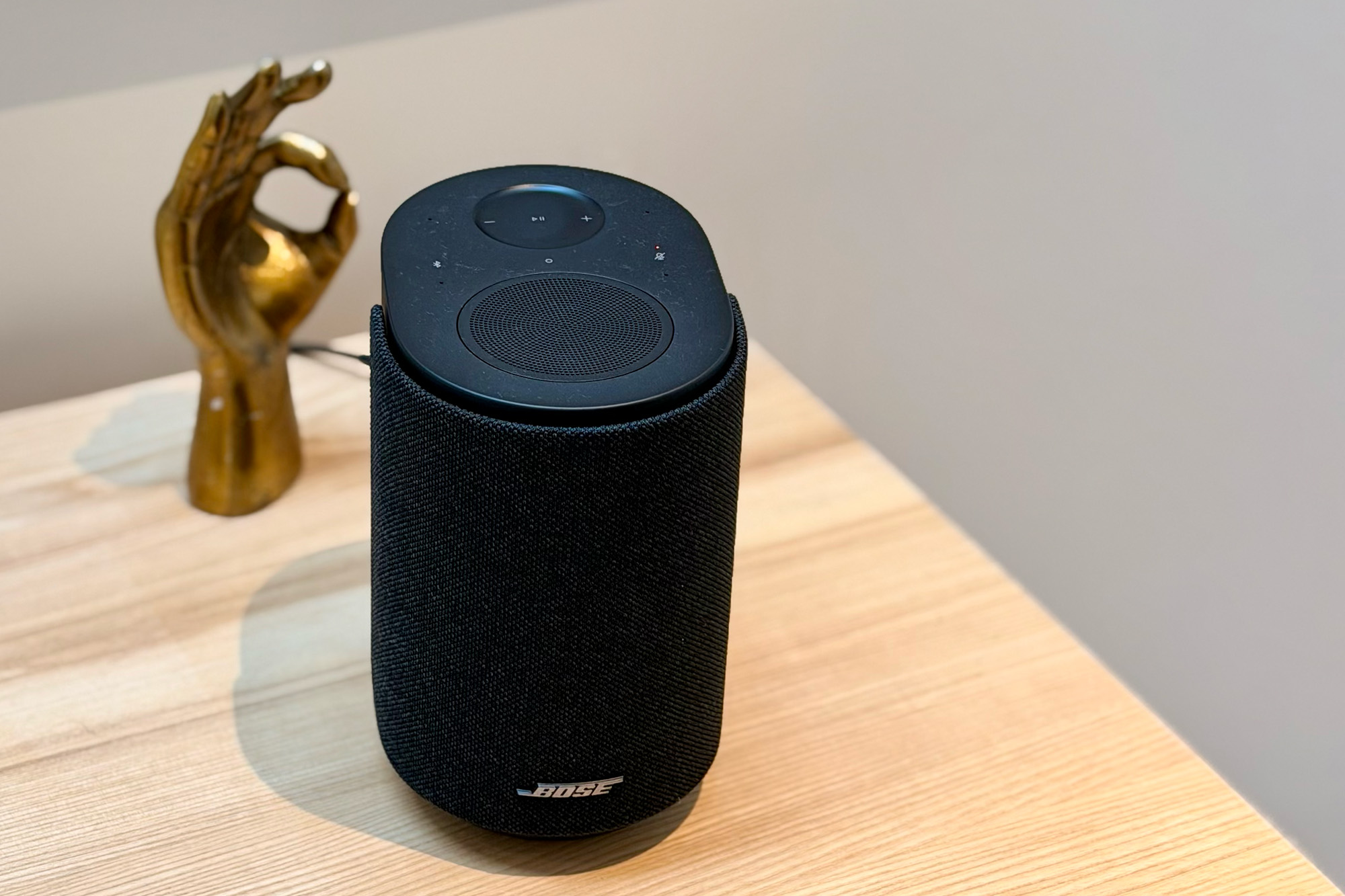
In a townhouse on New York’s Upper West Side, Bose revealed its new Lifestyle speaker collection through a multi-story demo involving quite a few stairs and equally ascending audio. From a company so well-known for actively canceling noise, this was about generating buzz.
Part of a small group of tech writers navigating the narrow stack of immaculately accessorized rooms, I was escorted to the first floor and to my first glimpse of a WiFi-connected sound system that our hosts said represented over four years of research and development. [Disclosure: Bose provided travel accommodations during the creation of this story.]
Solo, part of a stereo pair, one endpoint in a whole-home system, or acting as the rears in a surround-sound system, the Lifestyle Ultra Speaker ($299-$349, based on Black/White Smoke or limited-edition Driftwood Sand colorway) was presented as high-immersion and low-friction. Easily set up, room-filling sound from a compactly sculpted, furnishings-friendly speaker made to blend into any real estate. High-class to humble.
And with its front-firing three-inch woofer and accompanying tweeter, but most of all its upfiring driver, the Lifestyle Ultra made the ceiling work as hard as our legs did going from landing to landing. A combination of the physical Direct/Reflecting array and proprietary TrueSpatial digital signal processing [not native Dolby Atmos support] lifted the center image and expanded the sweet spot. How high and wide that reaches compared to competitors will be revealed when we get a pair to compare.
As for the bass, it delves lower than the Ultra Speaker’s fabric-fronted capsule belies, thanks to CleanBass technology with a proprietary rear QuietPort treatment that uses resistive materials to detune disruptive resonances. This allows long ports in small enclosures without obvious turbulence.
Up a level, up the driver count to nine. The Bose Lifestyle Ultra Soundbar ($1,099, in Black/White Smoke) shares the contours and capacitive touch controls and CleanBass of the Ultra Speaker, stretched into a calmly modern 5.0.2 configuration [which does support Dolby Atmos via HDMI eARC]. Featuring what the team describes as the most radical acoustic redesign of Bose soundbars in a decade, the Ultra Soundbar has four full-range drivers under the front textured knit, two facing upwards, plus a center tweeter flanked by proprietary PhaseGuide radiators, derived from classic ribbon-tweeter thinking. “Leaky,” these waveguides use tiny radiating points that add up coherently in the direction of sonic travel, allowing sound to be placed off to the sides and present more width without additional drivers. Paired with an 85″ TV, motion felt like it was stretched beyond the constraints of the credenza.
Taking advantage of that focused frequency is Speech Clarity, an evolution of AI Dialog features on previous soundbars. Instead of simply boosting center-channel levels, it uses AI to distinguish, isolate, and amplify dialogue above muddying effects. As someone who watches with subtitles, I immediately noticed when this mode was toggled on and was pleased by the bump in clarity, cutting through but not carving up the natural-feeling midrange.
A few more flights … of fancy and stairs. While the Ultra Soundbar can operate standalone, you might want a more immersive experience. Take a pair of Ultra Speakers and add them as wireless rears in the Bose app. And if you want to augment the low end, the new Lifestyle Ultra Subwoofer ($899, in Black/White Smoke) is glass-topped and makes the bottom drop with its 10.5-inch woofer. Now it’s a 7.1.4 system (or you can pair just the Ultra Soundbar + Ultra Subwoofer for 5.1.2). Custom Tune, an updated version of ADAPTiQ, does room calibration tailored to your specific setup and unique space (no brownstone required) using your smartphone microphone. So long, dedicated headset.
The Ultra Speakers and Soundbar share support for AirPlay 2/Google Cast, allowing for a multi-room audio setup that includes both Ultra and non-Bose products. The company made a conscious choice to let users operate outside a walled garden, using Spotify Connect, for instance (TIDAL Connect coming later via firmware), instead of forcing the Bose app to control music and set up what speakers play. The app can build a home theater system progressively and offers controls, but so do the on-product touch points. There’s also Bluetooth 5.3 baked in. And the Lifestyle Ultra Speaker supports both an analog 3.5mm input (think a turntable with built-in preamp) and next-gen Alexa+, allowing for natural-language interaction. You can also physically mute the speaker for complete privacy. One thing the Lifestyle Ultra collection doesn’t support is pairing with previous Bose home-theater products.
The post The new Bose Lifestyle Collection is whole-home audio that won’t take up your whole room, and it’s ready to ship today appeared first on Popular Science.

Known for his atmospheric photographs of landscapes, interiors, and urban centers that feel mysteriously locked in a not-so-distant past, Andrew Moore’s enigmatic images invite us into a slippage of time. Often—but not always—devoid of people, his scenes have a timelessness about them, as if they could have unfolded at any point over the past several decades. Sometimes it feels as though someone may have just walked by; others, it’s as if no one has viewed the scene for many years.
In his current solo exhibition, Theater, the artist’s photographs of grand staircases, aging stages, and box office ticket booths hearken to a bygone era before screens. Additional compositions featuring a bar, art restoration studio, and grand staircase in Cuba emphasize theatricality in architecture and design. Dreamy lighting, well-worn furnishings, and varying levels of decay invoke a distinct nostalgia.
Theater continues through March 21 at Jackson Fine Art.
Do stories and artists like this matter to you? Become a Colossal Member today and support independent arts publishing for as little as $7 per month. The article Nostalgia and Decay Meet Theatricality in Andrew Moore’s Dramatic Photos appeared first on Colossal.
