Normal view

  • ✇Eos
  • What’s Below the Great Salt Lake? More Water Anaise Aristide
    Since 1989, Utah’s Great Salt Lake has lost some 70% of its surface area, reducing its ecosystem services and creating stretches of drying lake bed (playa) that send toxic dust into the air. That drying ground has also provided opportunities for scientists to survey what lies below the lake’s floor. In a study published in Geosciences, researchers revealed glimpses of fresh water and salt water, with some fresh water lurking only a few meters below the surface. The work could provide clues f
     

What’s Below the Great Salt Lake? More Water

21 April 2026 at 12:44
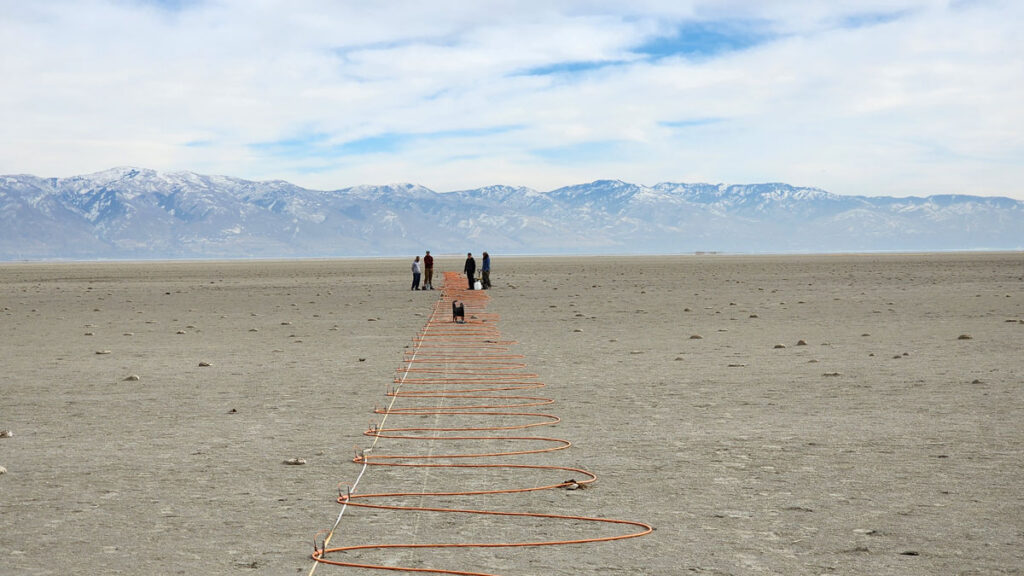
Researchers stand in the distance as an orange electrical cord snakes across a dry lake bed in the Great Salt Lake.

Since 1989, Utah’s Great Salt Lake has lost some 70% of its surface area, reducing its ecosystem services and creating stretches of drying lake bed (playa) that send toxic dust into the air.

That drying ground has also provided opportunities for scientists to survey what lies below the lake’s floor. In a study published in Geosciences, researchers revealed glimpses of fresh water and salt water, with some fresh water lurking only a few meters below the surface. The work could provide clues for conserving the lake, a crucial resource for both the ecology and the economy of the region.

Salt Lake, Fresh Water

In 2023, Michael Thorne and colleagues began using a technique known as electrical resistivity tomography (ERT), which can reveal the presence of fresh or salty water, at dozens of spots near the southern and eastern edges of the Great Salt Lake. Thorne is a geophysicist at the University of Utah in Salt Lake City and a coauthor of the new study.

The lake’s desiccation allowed the researchers to access areas where “at previous times, you would never be able to do measurements because [they] would be underwater,” said Thorne.

Establishing a network of ERT sensors requires robust fieldwork. Over the course of long days in the field, Mason Jacketta, lead author of the new study, and others placed electrodes into the ground a few meters apart, making lines that stretched hundreds of meters. Between pairs of electrodes, they measured the resistance to electrical current. Salty water, filled with electricity-conducting ions, has lower resistance than fresh water.

Paired with information on the rock and sediment beneath the surface, as well as with measurements from nearby wells, the ERT data allowed the team to work out a profile of how electrical resistance varied with depth and to figure out what kind of water seeped through pores in the ground below. The team shared the results of their work on the southern part of the lake in Geosciences, while more in-depth findings about the eastern shore will appear in an upcoming publication.

“What this is really showing is that [fresh water is] prevalent all over the place.”

At many of the sites, Jacketta and others found fresh water near the surface.

“What this is really showing is that [fresh water is] prevalent all over the place,” said Elliot Jagniecki, a geologist at the Utah Geological Survey who wasn’t part of the work.

That fresh water was often in close proximity to patches of salty groundwater. At one spot in the southeastern part of the lake, the team found a shallow layer of brine. But right below that, at only 5 meters of depth, they encountered fresh water. At the team’s most northern study site, they found fresh water around 2 meters deep. On the southern shore, they found fresh water in some places as shallow as 2.8 meters.

Mysterious Formations

The team’s results also helped explain curious features around the Great Salt Lake, including mounds made of salt and islands made of reeds.

The lacy-looking layers of the lake’s so-called mirabilite mounds form in the winter, when the cold freezes upwelling salty water, concentrating its salts. With measurements taken next to where some mirabilite mounds form, the researchers could visualize the underground conduits that send salty water to the surface.

While mirabilite mounds form close to shore, mounds made of Phragmites reeds appear in the lake’s interior as well as along its periphery. Thorne and his colleague William Johnson first noticed these mysterious circles popping up in Google Maps more than a decade ago. When they went to investigate, they found Phragmites.

“The population of Phragmites around the Great Salt Lake is really not allowing fresh groundwater to go back into the Great Salt Lake.”

In the new work, the team placed a line for electrical resistivity tomography straight through a Phragmites mound. These reeds wouldn’t be able to survive in the lake’s briny water, Thorne said, but the team’s results showed fresh water rising right to where the invasive reeds grew thick.

“The population of Phragmites around the Great Salt Lake is really not allowing fresh groundwater to go back into the Great Salt Lake,” said study coauthor Tonie van Dam, a geophysicist at the University of Utah. The reeds suck up some 70,000 acre-feet of fresh water that could go back into the lake, she said. In “sucking up [fresh water] for their own existence,” van Dam explained, the reeds crowd out native plant species that provide habitat for native birds.

More Than a Beautiful Landscape

Overall, the study provides a new picture of the fresh and salty groundwater beneath the lake and how these resources feed what people observe at the surface.

It’s also helped to prompt other work, Thorne said, including one recent study in which researchers used a helicopter carrying a wire loop to create and sense electrical currents underground. That study, published in Scientific Reports, suggested there could be a large amount of fresh water under one part of the lake.

But that work is a proof of concept, Jagniecki said, and accessing such potential aquifers might not be sufficient to help address the lake’s current desiccation. Even if they could, refilling them could take thousands of years. “I just don’t think that’s a solution,” he said.

Saline lakes are fragile ecosystems sensitive to climate change, Jagniecki said. The Great Salt Lake harbors plenty of life, such as brine shrimp that become food for a host of migratory birds that use the lake as a stopover. Mineral extraction and the use of brine shrimp for feed in aquaculture are important drivers of Utah’s economy.

Getting a better understanding of how saline lake systems function could be helpful in conserving them and maintaining the resources they provide humans, Jagniecki explained.

“It’s actually more than that. It’s a beautiful landscape,” he said.

—Carolyn Wilke, Science Writer

Citation: Wilke, C. (2026), What’s below the Great Salt Lake? More water, Eos, 107, https://doi.org/10.1029/2026EO260127. Published on 21 April 2026.
Text © 2026. The authors. CC BY-NC-ND 3.0
Except where otherwise noted, images are subject to copyright. Any reuse without express permission from the copyright owner is prohibited.

Bringing Climate Research to New York City’s Classrooms

13 March 2026 at 14:06
The NYC Mid-Winter Climate Institute brought together K-12 educators to identify meaningful entry points for climate education lessons in their classrooms and beyond.

  • ✇Social Lifestyle Magazine
  • Off-Season Fireworks Buying: Is It Worth It? Livia Auatt
    Buying fireworks can feel stressful when the season is near. Prices go up fast, popular items sell out, and you are often left choosing from what is still available instead of what you actually want. Many buyers also worry about safety rules, storage, and whether they are getting real value for their money. These problems make it harder to plan a good show, especially if you wait until the last minute. Some buyers avoid this pressure by shopping early. Retailers like Chicago Fireworks offer a
     

Off-Season Fireworks Buying: Is It Worth It?

27 March 2026 at 15:01

Buying fireworks can feel stressful when the season is near. Prices go up fast, popular items sell out, and you are often left choosing from what is still available instead of what you actually want. Many buyers also worry about safety rules, storage, and whether they are getting real value for their money. These problems make it harder to plan a good show, especially if you wait until the last minute.

Some buyers avoid this pressure by shopping early. Retailers like Chicago Fireworks offer a wide selection throughout the year, which gives customers more time to plan and compare options. This raises a simple question. Is buying fireworks during the off-season really worth it, or does it create new problems?

What Off-Season Fireworks Buying Really Means

Off-season buying refers to purchasing fireworks months before major holidays like the Fourth of July or New Year’s Eve. This often happens in late summer, fall, or early spring when demand is lower.

During this period, stores are less crowded, inventory is more stable, and pricing is usually not affected by holiday demand. Buyers are not rushed, which leads to better decisions. Instead of reacting to limited stock, you can build a planned selection that fits your space, budget, and show goals.

Price Advantages And Hidden Savings

One of the biggest reasons people buy early is price. Fireworks prices are heavily influenced by demand. As holidays get closer, costs increase due to higher traffic and limited stock.

Off-season buying often allows you to:

  • Lock in lower prices before seasonal markups
  • Take advantage of promotions or clearance items
  • Avoid premium pricing on high-demand products

There is also a hidden saving factor. When you are not rushed, you are less likely to overspend on items you do not need. Many last-minute buyers purchase extra products just to complete their show. Early buyers tend to stick to a plan, which helps control the total cost.

Better Product Availability And Selection Control

Another key benefit is product availability. During peak season, popular items like 500g cakes, assortments, and specialty effects sell out quickly.

Buying off-season gives you:

  • Access to the full inventory before it becomes limited
  • More time to compare similar products
  • A better chance of getting specific effects you want

This is especially important if you are planning a themed show or trying to match colors and timing. Waiting too long often forces you to compromise, which affects the overall experience.

Storage Responsibility And Safety Considerations

Buying early comes with one important responsibility. You need to store fireworks safely for a longer period of time.

Safe storage includes:

  • Keeping fireworks in a cool, dry place
  • Avoiding direct sunlight or heat exposure
  • Storing them away from flammable materials
  • Keeping them out of reach of children

Fireworks are designed to be stable, but poor storage conditions can affect performance. Moisture can damage fuses, while heat can weaken the structure of certain items. If you are not prepared to store fireworks properly, off-season buying may not be the best option.

Planning A More Structured Fireworks Show

One advantage that is often overlooked is better show planning. When you buy early, you have time to organize your fireworks instead of using them randomly.

This allows you to:

  • Arrange fireworks by duration and effect
  • Plan the sequence of your show
  • Balance loud and quiet moments
  • Match products to your available space

A well-planned show feels smoother and more engaging. Even with a smaller budget, proper timing and variety can create a stronger impact than a larger but unplanned setup.

Avoiding Last-Minute Supply Chain Issues

Fireworks are imported products, and supply chains can change. Delays, shipping costs, and regulations can affect what is available during peak season.

Off-season buying reduces the risk of:

  • Missing out due to delayed shipments
  • Paying higher prices due to limited stock
  • Settling for lower-quality alternatives

By purchasing early, you are working with what is already in stock instead of relying on incoming inventory that may or may not arrive on time.

When Off-Season Buying May Not Be Ideal

Despite the benefits, off-season buying is not always the right choice for everyone.

It may not work well if:

  • You do not have a safe storage space
  • You are unsure about your event plans
  • Local laws or usage dates might change
  • You prefer to see new product releases closer to the season

Some buyers like to wait for new arrivals or updated product lines. While early buying offers stability, it may limit access to newer items released closer to major holidays.

How To Maximize Value When Buying Early

If you decide to buy fireworks during the off-season, a few simple steps can help you get the most value.

Start with a clear plan. Know your budget, your space, and the type of show you want to create. This helps you avoid unnecessary purchases.

Focus on core items first. Cakes, assortments, and fountains often form the base of most shows. Once these are secured, you can add specialty items later if needed.

Check product details carefully. Look at duration, effect type, and performance level. This helps you build a balanced lineup instead of repeating similar effects.

Store everything properly. Use sealed containers if needed and keep products in a stable environment. Good storage protects your investment and ensures reliable performance.

Buy Early, Plan Better, And Stay In Control

Off-season fireworks buying can be a smart choice if you plan ahead and handle storage properly. It gives you lower prices, better selection, and more control over your show without the pressure of peak-season crowds.

For buyers who want reliable options year-round, Chicago Fireworks offers a wide range of products beyond the busy season. Shopping early helps you avoid last-minute stress and gives you time to plan your display with more care.

Buying ahead also lets you organize your setup, prepare safe storage, and make better decisions about what works for your space. With more time and fewer limits, you can build a smoother and more enjoyable fireworks experience.

The post Off-Season Fireworks Buying: Is It Worth It? appeared first on Social Lifestyle Magazine.

  • ✇Eos
  • Fixing Baltimore’s Unequal Weather Data Coverage Rebecca Owen
    Source: Community Science Heat, air pollution, and flooding can affect a city and the health of city residents. Yet few cities have a comprehensive network of weather stations providing accurate measurements of rainfall, humidity, and air temperature across different neighborhoods. Some of this information can be filled in by community members’ personal weather stations, like those connected through Weather Underground. But because of a lack of sensors and inconsistencies in data collection,
     

Fixing Baltimore’s Unequal Weather Data Coverage

13 April 2026 at 12:37
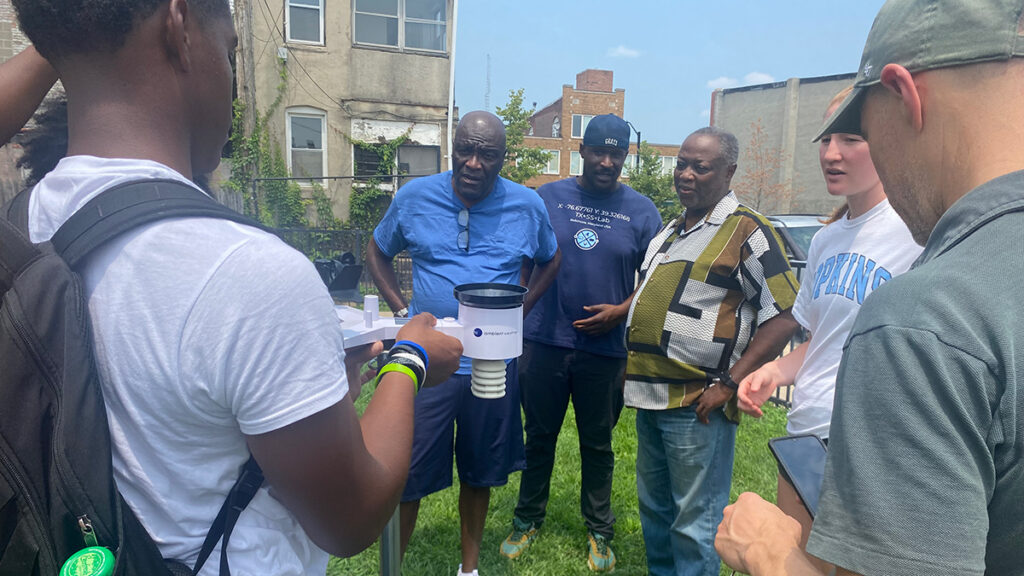
Six adults stand around a tripod that holds a personal weather station device. They are standing on grass, and several buildings are visible not far behind them.
Source: Community Science

Heat, air pollution, and flooding can affect a city and the health of city residents. Yet few cities have a comprehensive network of weather stations providing accurate measurements of rainfall, humidity, and air temperature across different neighborhoods. Some of this information can be filled in by community members’ personal weather stations, like those connected through Weather Underground. But because of a lack of sensors and inconsistencies in data collection, these types of community networks are often not reliable on their own. Furthermore, most personal weather stations are located in higher-income neighborhoods, with very few in lower-income, underserved neighborhoods.

The same is true in Baltimore, where personal weather stations are more prevalent in higher-income, majority-white neighborhoods around and stretching north from the Inner Harbor but are lacking in lower-income and majority-Black neighborhoods to the west and east. Furthermore, only one National Weather Service sensor is present in the city itself, in the Inner Harbor, and another sensor is located about 12 kilometers (8 miles) away at Baltimore/Washington International Airport.

Waugh et al. describe a partnership between universities, state agencies, and Baltimore residents to build the Baltimore Community Weather Network (BCWN) that addresses the missing data coverage around the city. Unlike the patchwork of personal weather stations, community members participating in the BCWN are from underserved areas in the city and are actively involved in data collection and interpretation.

Weather stations are placed in open spaces to avoid obstacles like buildings or trees affecting measurements of temperature, rainfall, or wind. This careful placement is designed to ensure that the data collected are as close as possible to the conditions experienced by actual residents.

BCWN sites are carefully monitored and managed by community members. Baltimore residents are actively involved in data collection, weather station management, and decisionmaking with scientists and local organizations to help promote engagement, education, and community empowerment.

Because Baltimore is not the only U.S. city that has historically lacked accurate weather data coverage, the BCWN system could be applied to other locations—or even used to monitor other environmental exposures, such as air pollution, the authors say. (Community Science, https://doi.org/10.1029/2025CSJ000154, 2026)

—Rebecca Owen (@beccapox.bsky.social), Science Writer

The logo for the United Nations Sustainable Development Goal 11 is at left. To its right is the following text: The research reported here supports Sustainable Development Goal 11. AGU is committed to supporting the United Nations 2030 Agenda for Sustainable Development, which provides a shared blueprint for peace and prosperity for people and the planet, now and into the future.
A photo of a telescope array appears in a circle over a field of blue along with the Eos logo and the following text: Support Eos’s mission to broadly share science news and research. Below the text is a darker blue button that reads “donate today.”
Citation: Owen, R. (2026), Fixing Baltimore’s unequal weather data coverage, Eos, 107, https://doi.org/10.1029/2026EO260108. Published on 13 April 2026.
Text © 2026. AGU. CC BY-NC-ND 3.0
Except where otherwise noted, images are subject to copyright. Any reuse without express permission from the copyright owner is prohibited.
❌
Subscriptions