Login
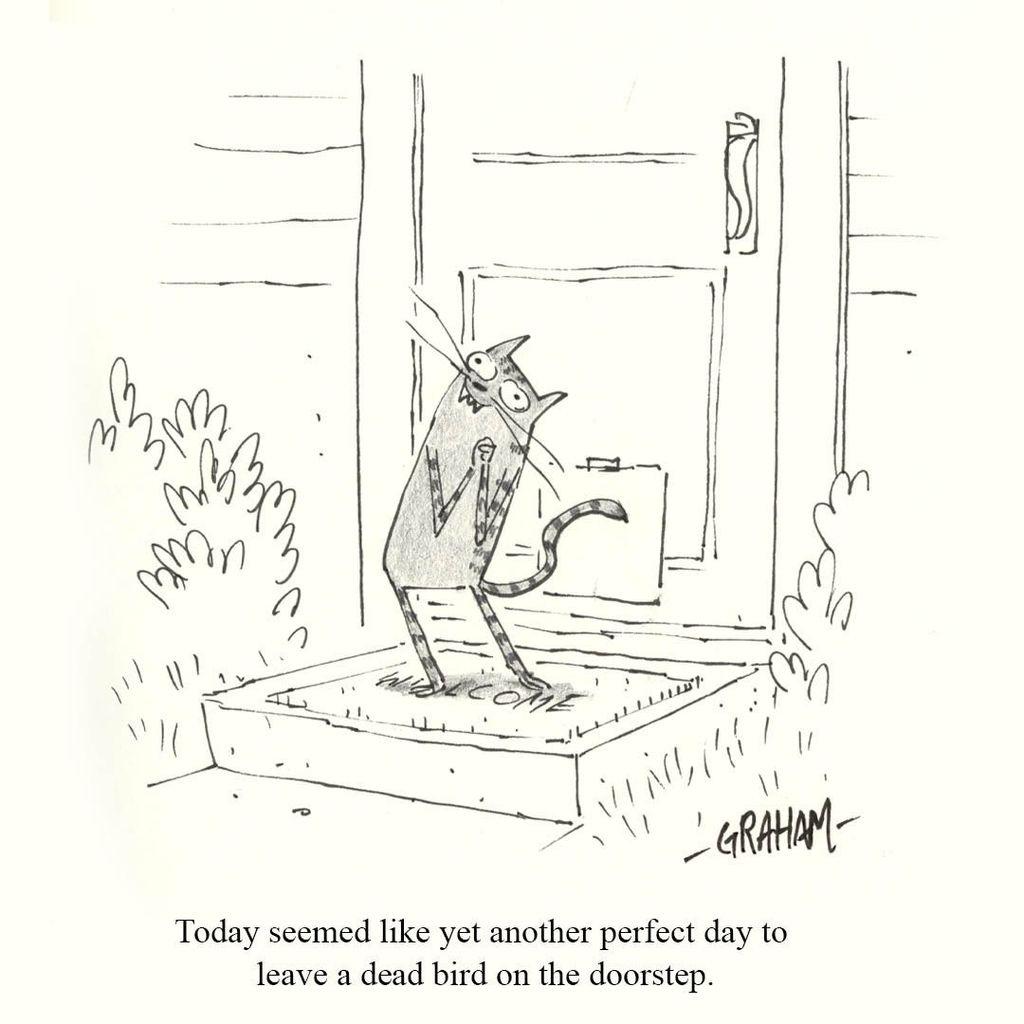
LoginOh glorious joy. #grickledoodle #cat #bird #perfect #cartoon #art #drawing…
20 April 2026 at 16:01



Believe it or not, Ontario’s Endangered Species Act (ESA) was passed with all-party support back in 2007. Subsequently, of course, it was undermined through numerous exemptions and approvals for harmful activities, and now, through Bill 5, the Government of Ontario is tossing it aside completely. It is being replaced by the Species Conservation Act, 2025, (SCA) which is in no way its equal. With a view to eliminating barriers to development, it is claimed the new law will “help speed up project timelines and provide greater certainty for proponents.”
Devastating Changes
Under the SCA, no migratory birds, aquatic species or species of special concern will be provincially listed. The rationale for removing protections for migratory birds and aquatic species is that they already receive federal protection under the Species at Risk Act (SARA). In the case of special concern species, the provincial government is not listing them because they were not subject to “prohibitions under the ESA”. The provincial government is thus abandoning responsibility for 106 out of the 270 or so species currently deemed to be at risk in Ontario.

National Accord
In 1996, federal, provincial and territorial ministers responsible for wildlife committed to a national accord to protect species at risk by agreeing to “establish complementary legislation and programs that provide for effective protection of species at risk throughout Canada.” Canada and Ontario went a step further in 2011 by developing an Agreement on Species at Risk that commits to coordination and cooperation on preventing species from becoming at risk, as well as protecting and recovery identified species.
The Government of Ontario has abandoned these commitments. Species do not recognize arbitrary political boundaries, and cooperative federalism is absolutely necessary to conserve species at risk, especially amid a biodiversity crisis.
Limitations of SARA
The SARA is not equivalent to the ESA and to date, the federal government has been reluctant to exercise its power under the act on non-federal lands. The Government of Ontario has given no indication that the federal government was engaged on the draft SCA or agreed to step in and provide protections for the migratory birds and aquatic species that have lost provincial protections. On the contrary, Minister McCarthy along with the Alberta Environment Minister sent a letter to their federal counterpart in June, 2025 that requested the federal government amend SARA “to respect the constitutional jurisdiction of the provinces”, along with request to weaken other environmental regulations.
Further evidence that SARA is not fit to purpose to make up for the once gold standard provincial ESA, is that the backlog of species needing reassessment by Environment and Climate Change Canada will grow to 574 by the end of 2030. Additionally, as of 2022, the Auditor General of Canada found that 10% of federally listed species did not have recovery strategies or management plans in place as required by the act. Furthermore, of the 409 recovery strategies prepared by 2022, 20% did not identify the species’ critical habitat, which is necessary for protections under SARA.
Despite the Government of Ontario’s claims that the protections under the ESA for migratory birds and aquatic species were duplicative with federal protections, it is clear that SARA and the federal government are not equipped to provide equivalent protections.
Call to Action
Extinction threatens one million of approximately 8 million plants and animals worldwide. Responding effectively requires cooperation across all levels of government, as previously agreed to under the national accord and Canada-Ontario agreement.
Ontario’s weakening of protections for species at risk threatens our long-term well-being. Join us in urging the Government of Ontario to repeal Bill 5.

Incorporating nature into local development can have a significant impact on human health. Examples include improved sleep and academic performance in children, metabolic risk reduction in adults, and longevity in seniors. Though there is evidence for human benefit, it is particularly important for other species who may call these spaces home.
This is highlighted by a rare visitor to the Simcoe area this winter, as a great grey owl took up residence in a local wooded lot. Great grey owls are not known to be migratory species, however, will travel south during particularly harsh winter months in search of food sources. Great grey owls typically live in coniferous forests and muskegs. They will hunt during the day while watching prey from a low perch as they are elusive and often go unnoticed.
The owl brought birders from hours away for a chance to observe and photograph the rare visitor. It has been given the nickname, the “Phantom of the North” for its elusive nature, silent flight and ability to disappear into the forest, making it particularly special to witness.
With the rarity of the species brings challenges with ethical implications. Here are some practical tips to keep in mind:
As the owl spent several months in the area, it was an amazing opportunity to observe such a magnificent species. It also highlighted the large role that humans play in their survival. The area that the owl spent most of the winter in is approximately 0.1-0.2 km² and is surrounded by commercial, industrial and medical infrastructure.
Though a strong case can be made for larger uninterrupted green spaces, the small size of the area highlights the significant impact a small area can have in conservation and wildlife protection. While urban development can follow many models, the 3-30–300 rule developed by Dr. Cecil Konijnendijk suggests that every resident see at least three decently-sized trees from home, have 30 percent tree canopy in their neighbourhood and live within 300 metres of the nearest park or public green space. These small changes can have a significant impact on both human health and provide valuable habitat for migratory species. For this rare visiting great grey owl this small green space meant survival in the harsh winter months.

The Scrappy cartoons have always been a favorite of mine, and maybe always will be-but, in the past,the collectors of 16mm cartoons I was often chatting with would often here a less-than-favorable review of them – saying “The Krazy Kats are better”. While I *had* a lot of Krazy Kats, I usually wouldn’t pursue them in the same way I would the Scrappys, so I ended up with a lot of Scrappys and only a handful of Krazys comparatively over the years. That isn’t to say I didn’t enjoy them. They were just in a category somewhere below the Scrappys, and when I found some for sale, the Scrappy I didn’t have would be bought first.
Now, all these years later, I’m way, way less likely to focus on collecting film and more about restoring things from film. There’s just too much to do, but I do think, possibly, at some point, I’ll still want to get more Krazys than I have currently.
Of course, The Columbia Krazy Kat isn’t really Krazy Kat at all, at least not in the sense of the brilliant comic strip. The Columbia Krazys are their own entity, bearing more a resemblance to every other studio’s cute 30s characters and the expected population of animals. I have to admit I really like most anything with that formula, so, in that way, the early ones are great. This one, Ritzy Hotel (1932) has all the elements of the best of the series – great animation, funny gags and a happy Joe DeNat score. What could be better?
 Ben Harrison and Manny Gould were exclusively helming the direction of the series from 1926, when Mitnz’s studio was in New York, moved to the west coast into the beginning of the sound era though 1933, then continuing to direct some of the cartoons along with the Color Rhapsodies series. It was a popular enough series through those early 30s years, then really began to lose steam in the mid-30s as so many cartoon series do.
I’ve been really enjoying reading your thoughts on these cartoons, and the information each person brings as well. I can’t wait until the end of the school year and the current giant pile of restoration and Blu-ray stuff I’m sorting through to be a little less overwhelming so I can spend a little time writing a little more too!
This week’s print is from Tommy Stathes’ collection- he was kind enough to lend. It’s sadly warping a little here and there, but still a good watch. Thanks Tommy, and have a good week all!


Does anyone (besides us geeks at Cartoon Research) really miss or even care about Conrad the Cat?
After all, he only appeared in three cartoons, all in 1942, and in two of them he was a mere co-star. Chuck Jones created the character, then abandoned him after that trifecta. A doughy yellow cat specializing in physical comedy, viewers remember Conrad as a knockoff of Disney’s Goofy, especially when Pinto Colvig voiced him in Conrad the Sailor. (Side note: Ink and Paint veteran Martha Sigall related that the I&P department thought that Conrad was a caricature of Jones himself).
 Conrad, however, can be seen as a transitional figure in Chuck Jones’ development as a Warner animator and director. From the bones of Conrad would arise a snappier and more cosmopolitan Jones, one capable of perhaps more nuance than any of his contemporaries. Let’s examine this thesis.
Chuck Jones became a Warner director in 1938. His first cartoon, starring an unnamed kitten in The Night Watchman, featured a cute character that very much resembled his next “star’ Sniffles the mouse, whom Jones created and first directed in 1939 (Naughty but Mice). Siffles was childlike and super-cute. His gabby voice, provided by Margaret Hill-Talbot (later by Marjorie Tarlton), reinforced this take on the character. Sniffles went on to headline a dozen cartoons between 1939 and 1946, showing little evolution.
During those years, Jones was obsessed with laborious drawings and layouts, lighting effects, and showed a strong predilection for Disney-flavored action. Conflict tended to be character-versus-object (or self), a far cry from the later interplay between Bugs and Daffy, for example.
 Jones’ cartoons tended to be gentle, with visual references to Disney’s Silly Symphony period. Nowhere is this more evident than in the 1940 cartoon Tom Thumb in Trouble. His characters were adorable and mild, and until Jones found a more individual voice, they seemed most anchored in Pluto Pup. The Jones unit at this time had some outstanding talent: animators Robert Cannon, Ken Harris, Robert McKimson, Ben Washam, and background artist Paul Julian. Yet the best this group could achieve was shorts that recalled Disney but could not be confused with its output.
By the time Conrad Cat appeared in The Bird Came C.O.D. (1942), there were signs of Jones transitioning to a different comic style. Although Conrad strongly recalled Goofy (minimal vocals by Mel Blanc), especially when wrestling with a palm tree, there are glimpses of Jones’ future work; in one scene, while watering the tree, Conrad mugs to the camera. After smacking into a door for the second time, he gives the audience a frustrated side glance. After finally getting the plant through the door, more fourth-wall facial expressions are seen.
 Skip ahead to Conrad’s encounter with the bird(s) in a magician’s hat. The bird (a visual predecessor to Henery Hawk) treats Conrad with far more violence than could be imagined in a Sniffles cartoon. Notably, the bird recalls Jones’ Minah Bird (first appearing in 1939) in that he marches to a distinct musical theme. Jones is clearly using comedy differently in this short.
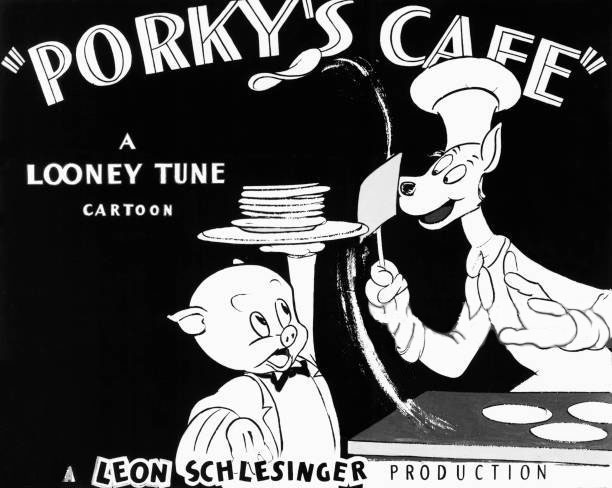
In his final two cartoons, both in 1942, Conrad was a co-star, paired with two of Warner’s biggest stars. Such pairings are likely as good as they could be for the goofy yellow cat, since he was far too weak to be a stand-alone character. In Porky’s Café, Conrad is a short-order cook who still manages to show glimpses of Jones’ future work; there are more gags and more telling reaction shots from Conrad. Jones was to become a master of expressing emotion through the twitch of an eye or a tiny movement of the mouth. These precursors can be glimpsed in the scene where Conrad attempts to beckon a recalcitrant pancake.
Conrad’s final cartoon was Conrad the Sailor, in which Daffy Duck harassed the poor cat in a total mismatch. Not only was Conrad constantly defeated by Daffy (who was far more like Bob Clampett’s duck than the egotist Jones would later fashion him into). As related earlier, Conrad’s voice was unfortunately provided by Pinto Colvig, the longtime portrayer of Disney’s Goofy, with no tweaking of the Goofy vocalization. Fairly or not, Colvig’s dialogue and singing reinforced the observation that Jones had not quite abandoned his Disneyesque tendencies.
As stated, while Conrad was not a character that could ever be featured independently, Conrad did offer occasional glimpses of Chuck Jones’ evolving style. Conrad was better built for comedy than Sniffles was, and he worked far better in gag situations than, say, the childlike Porky Pig in Old Glory (1939) or Tom Thumb. Conrad at least suggested an adult figure, and that represented a step forward.
Later, with writers such as Michael Maltese and a more developed sense of how to underplay a gag, Jones would blossom into one of Warners most sophisticated directors. If Jones reshaped the personalities of the studio’s stars during his heyday, it still started with a single step. Conrad the Cat may not stir many fond memories, but his three cartoons during 1942 just might have been that step.

A few more this week from Hanna-Barbera, then more bullfighting action from UPA, Terrytoons, the Disney Afternoon, and even from Japan.
Smurf Me No Flowers (The Smurfs, 11/27/82). Lazy Smurf, true to his name, loves to spend the day performing no work, and snoozing away. Oddly, he’s experiencing a problem he’s never faced before – inability to doze off, no matter what position, and no matter where he tries to sleep. Experimenting with new sleeping locales in the underbrush of Smurfette’s garden, inside Baker Smurf’s cupboards, and even down the village well, is driving the other Smurf’s crazy with fright at discovering his wide-awake eyes in the darkness. Brainy Smurf suggests Lazy see Papa Smurf for some sort of magical cure. But even Papa Smurf claims to have nothing for Lazy in his bag of tricks. The best cure he knows for sleeplessness is good old fashioned exercise. Exercise? Not a permissible word in Lazy’s vocabulary. Lazy leaves Papa Smurf’s home with a feeling of hopelessness, just as Vanity Smurf bursts in, panicking at the condition of a withering plant in a pot, and hoping that the wrinkles in the plant’s leaves aren’t catching. Papa tells him to leave the plant with him to see if there’s anything he can do. Meanwhile, Lazy breaks the news to Brainy outside that Papa had no magical solution. Brainy is unconvinced that these words could have come from Papa, and advances to Papa’s door to speak to their leader himself. But before entering the doorway, he overhears the voice of Papa Smurf, remarking “If only he’d come to me sooner. It looks like this is the end. I’d say two more days, at the most.” Of course, he is talking to himself about the plant. Brainy, however, assumes the worst – that Lazy is not long for this Smurf.
Brainy spreads news of the tragedy to everyone except Lazy and Papa Smurf. The Smurfs plan to make Lazy’s last days as happy as possible, starting by throwing him a going-away party – hopefully without letting him know he is going away. All hope for secrecy dies quickly, when a Smurf’s ode to Lazy causes him and others to break down in tears, and Clumsy Smurf blurts out the bad news, amplified by Brainy repeating similar phrases in trying to shut him up. Lazy gets it, and his first instinct is to retreat into solitude. His continuing inability to sleep results in a change of plans. He resolves to use his last two days wisely – by doing great things he was always too tired to do. Ride roaring rapids. Conquer the highest mountain. And tame a fierce wild beast. The other Smurfs tag along in hopes of dissuading him, or at least keeping his numbered days from dwindling in number prematurely. Lazy accomplishes the first two tasks, while his friends take the lumps in a wrecked canoe and caught in a rolling snowball. As for the beast, Lazy selects a menacing-looking bull in a cow pasture. The Smurfs get an idea to prevent another disaster, and divert Lazy for a few moments with the suggestion that he needs a few more slices of Baker’s cake to strengthen himself before taking on his foe. In the meanwhile, the Smurfs perform a switcheroo, doctoring and dolling up a cow to serve as the bull’s substitute. Lazy returns, carrying a large red autumn leaf to serve as a cape. He gets some slow responsive action by waving it at the cow, and the cow passes in plodding, non-threatening manner, while Smurfs seated on the cowpasture fence shout “Ole”. Lazy takes bows between passes to his public. The noise of the event is heard by Papa Smurf, who has remained for the day inside his home, tending to the sick plant, and achieving wonders that seem to ensure the plant’s survival. Carrying the plant along to deliver to Vanity, Papa finds the village deserted, and follows the sounds of the cheers to the cowpasture. Of course, the misunderstanding is quickly cleared up, to everyone’s surprise – particularly Lazy, who stammers, “Then what am I battling this fierce beast for?” Lazy turns to run, but the other Smurfs laugh and tell him of the substitution they made. However, a snort of hot breath above their heads tells them the danger isn’t over – the real bull has returned. The Smurfs scatter, every Smurf for themself, as the bull charges, but is stopped by a smack of his head on the pasture fence. By the time they reach the village, Lazy is found – fast asleep. Papa remarks that he told him some good exercise would cure his problem. However, exercise has also been a sure cure for everyone else’s ability to doze, too, and Papa finds the village’s entire population exhausted in the square and snoring everywhere. Papa smiles, and turns to Vanity’s plant, remarking, “Well, little friend, it looks like you and I eat alone tonight.”
Just Rambling Along (from “The Tom and Jerry Kids Show”, 10/31/92) – Mice have large families. (For example, witness, all those cousins of Herman the Mouse we knew for years at Famous.) We’ve been introduced to Jerry the Mouse’s cousins and uncles since 1951. His family further expanded in the Tom and Jerry Kids Show with the introduction of Slowpoke Antonio – a character who seemed to descend (or steal) in equal parts from Jerry’s Uncle Pecos (“Pecos Pest”), and Speedy Gonzales’s cousin Slowpoke Rodriguez (“Mexicali Shmoes”/“Mexican Boarders”). What, cross-pollination between the products of two rival studios? Next thing you know, some genealogist will find a direct bloodline link between Jerry and Pixie and Dixie!
Slowpoke differed primarily from his namesake at Warner Brothers by speaking in a Western twang, singing in off-key country yodeling style, and being an expert in fancy lariat work in the rodeo. His connection to Uncle Pecos became painfully evident in his first appearance in the series, where he completely lifts Pecos’s reach-out-of-the-TV ending to hogtie Tom. This time, Slowpoke is given a starring cartoon of his own, and for reasons unknown, has traveled to sunny Spain, believing there is a rodeo playing locally in which he wants to enter the bulldogging events. Of course, he erroneously enters the local bull ring through the matadors’ entrance. Just before reaching the ring, he encounters a Senorita and her Mamacita mouse in a box seat located within a flower pot. The Senorita asks if he is the matador who will fight the bull. Slowpoke claims he doesn’t know what this “matador” stuff is (a writing inconsistency, as, at a later point of the film, he utters verbal challenges of “Ole” and “Toro”, and adds “That’s matador talk”), but boasts that he can throw any bull in this here parts. The snorting breath of a bull’s muzzle suddenly blasts at him, as the bull has overheard the insulting claims of the little “turista”, and denies that he can be thrown. Slowpoke puts a stop to the “rude interruption”, by plugging the bull’s nostrils with two corks, and stating that he doesn’t like being in a draft. As Slowpoke enters the ring, the bull gallops toward him at full speed. Slowpoke grabs onto the bull’s nose ring, and attempts to stop him (though in fact being pushed several times across the arena), claiming this ain’t no way to start a rodeo. Slowpoke pulls out his lariat, and with a great time of only a couple of seconds, has the bull on his back and hogtied at the hooves. Slowpoke tells the cantankerous bovine to get back to his pen and not come out until it’s his turn.
The bull makes an ungraceful exit bound in rope, but somehow breaks loose and re-emerges, ready for another charge. Slowpoke is butted into the air, landing on the bull’s back. This suits Slowpoke fine, as he always loves the bucking bronco event. He performs a wild ride, staying upon the bull bareback. Then, gag material begins to get highly derivative of several past cartoons. One gag has Slowpoke opening the bull’s mouth, to play his teeth like a piano keyboard (Tex Avery’s “Bad Luck Blackie”). Slowpoke produces a branding iron, and, as the bull hides behind a wooden barrier, brands him right through the wood (derived from Pixie and Dixie’s “Cousin Tex”). A tug on a triple-looped lariat around the bull turns the bull into a link of sausages (“Popalong Popeye”). Slowpoke finally adapts to toreador cape, and plants an anvil behind it (“Bully For Bugs”, derivative of “The Grey-Hounded Hare”). And the bull can’t stand Slowpoke’s singing (“El Kabong Strikes Again”). Writers (or shall we call them “researchers”?) must have been really hoping the viewing kids had never seen other cartoons before to hope to get away with this many gag thefts unnoticed. Yet, in fairness, the animation is of reasonably high quality, commensurate with the obviously larger budgets H-B was able to obtain for this show, pacing is energetic and more in tune with the classic theatrical days, and, if you can ignore the fact that you’ve seen almost all of it before, it doesn’t play badly. Slowpoke ends the film serenading the Senorita, who acknowledges that she thinks he’s a great bullfighter – if only she could say the same for his singing.
• No online prints available of “Just Rambling Along”. If you find one, let us know.
A late entry nominally-billed as Hanna-Barbera product by Cartoon Network was Johnny Bravo’s Did You See a Bull Run By Here? (7/28/97). It’s a bit of a weak finish to the H-B bullfighting legacy, without much of a plotline. While at the Pamplona running of the bulls trying to pick up Senoritas, Johnny winds up in the way, has his shirt snagged by a charging bull, and is dragged into the bull ring. He still tries to put the make upon a shapely American girl in the stands, but someone hands him a cape, saying he is going to need it standing in the ring. Johnny doesn’t know what it’s for, and throws it over his shoulder, playing cavalier and spouting poetry to the lady in improvised Shakespeare fashion. He is tapped on the shoulder by the hoof of the bull, who says its nothing personal, and agrees that violence isn’t the answer, yet knows the rules. Johnny’s got the cape, so they gotta fight. Johnny gets butted into the air three different times (once as himself, once playing matador, and once attacking the bull with kung fu moves. All his flights into the air result in crashing into the dust below, leaving three identical craters stretched end to end at arms-length. Johnny says it’s getting personal. The bull meanwhile lounges between rounds on a lawn chair with a martini, gets a manicure, and flirts with the American girl, trying to tell her a funny joke. Someone passes the bull a phone in the middle of his flirtation. “Talk to me”, he grunts. A voice says, “Look behind you.” It is Johnny, wearing an oversize red boxing glove. With one punch, he K.O.’s the bull. The American girl leaps into the ring, checking on the bull’s condition, and tells Johnny, “Well, I hope you’re happy.” It seems losing bulls in these parts are eaten by the crowd, and their hooves turned into ash trays. As the folks in the stands raise their knives and forks, and the dazed bull sings a chorus of “Won’t You Come Home, Bill Bailey”, Johnny provides a distraction, by simply pointing to the sky and stating, “Look up there.” While the crowd looks, the girl drives into the arena with a convertible, and she, Johnny and the bull drive away, leaving the crowd asking whether they should order Chinese. The girl turns out to be a Hollywood producer, and signs up the bull for a movie contract, but only on the bull’s condition that Johnny also be signed as his comedy partner. Johnny ends the cartoon in a successful career as the bull’s stooge, remarking to the camera that a guy’s gotta make a living.
• A flipped version of “Did You See a Bull Run By Here?” is on a block of Johnny Bravo cartoons on Dailymotion, beginning at 1:14:23.
Turning back the clock again to the 1950’s, UPA’s The Boing Boing Show included a bullfighting episode entitled The Matador and the Troubadour (circa 1956?). Only a foreign-language print without subtitles is currently available online, so I can only give details beyond the visuals from memory of a prior screening recorded on VHS which I cannot readily lay hands upon. It tells a simple tale of a village where the local matador reigns supreme in the eyes of the villagers – and especially, the ladies – in popularity, while a small, lonely troubadour strums his guitar alone in the streets, virtually unnoticed (except by a rather plain and homely village girl, who is the only one charmed by his plaintiff ballads). The troubadour believes he has all the moves and grace to match the matador, and indeed is shown in a side-by-side performance behind the matador’s back, matching his every move in miniature. Thus, the troubadour begins training in secret to learn all the passes of the matador, with the local girl assisting by charging at him with a set of bull horns attached to the head of a wheelbarrow. The film attempts to be slightly educational, naming in Spanish several of the passes he perfects, but ending with something that sounds like “El Paseo Ridiculoso” – a move that gets the Troubadour completely wrapped up from head to toe within his own cape.
The day finally comes when the Troubadour presents himself for a tryout at the bull ring. The Matador, in attendance at one side of the arena, accompanied by a beautiful Senorita, scoffs at the amateur upstart, as does his girl. The bull they release is so mean, he wears a patch over one eye like a pirate. The Troubadour makes a gallant try, but repeatedly gets mowed down by the bull. Even the bull starts to take pity on him as he lays in the dust of the arena, propping him up with his muzzle so that the Troubadour can continue the fight. Finally, the Troubadour repeats his “Paseo Ridiculoso”, swishing his cape repeatedly from one side of the bull to the other, and winds the bull up in fabric, using the cape to hogtie him upside down as if in a rodeo. Cheers go up from the crowd. The matador in the stands utters a half-hearted “Ole”, but is surprised when his Senorita abandons him, and appears in the ring, offering her hand to the Troubadour for a kiss. The Troubadour is about to deliver the kiss, but then has second thoughts. If this girl will so easily dump the matador, would she not someday possibly do the same to him? Is she worth it? The Troubadour concludes, no – and so, without delivering the kiss, releases her hand, bows to her respectfully, and exits the arena. Where does he go? Back into the village, to sit next to the plain and homely girl, who smiles, offers him his old guitar which she has saved, and faithfully sits quietly with him, to listen entranced to his melodies. True beauty runs farther within than skin deep.
• A German-language print of “The Matador and the Troubadour”, at least showing-off the visuals and the music, can be found on Youtube titled “Zu Gast bei Paulchens Trickverwandten – Der kleine Troubadour” on the channel of Joey Bridgehouse at https://www.youtube.com/watch?v=Fu2wnezvjSM
A whole article has been devoted by the columns of Dr. Toon on this site to the story and history of Toei Animation’s feature-length Saiyuuki, or Alakazam the Great (8/14/60) (as known to American audiences), and its checkered editing and translation in attempt to make its material palatable to the U.S. market. I thus won’t go into its sometimes unfathomable plot about a magical monkey king, his fall from grace by challenging the gods, and his lengthy pilgrimage with a ragtag band of friends to achieve humility. However, it is odd that it has been forgotten by the readership here, as its climactic sequence develops into a full-blown bullfight with an evil bull-demon who resorts to his roots, transforming into a humongous and pure-animal version of the bovine beast for a savage showdown with Alakazam. Alakazam himself produces a red cape, and adds something no other animated depictions of the sport have included – the decorated banderillas, spear-like poles, used to puncture the bull’s shoulder muscles and weaken him. To make things a little more magical, the battle occurs in mid-air, both characters defying gravity (Alakazam doing so by taking up his matador positions while standing atop a floating cloud, while the bull needs no cloud to gallop airborne at will), with both of them hovering over a volcanic lava pit. The bull action is rather traditional to the moves of the ring, with graceful passes, and multiple spears placed into the bull’s back. (It’s hard to tell if the animation shows primarily red paper streamers upon the spears, or if there is some suggestion of bloodletting from the wounds.) It seems unclear what is the fatal blow or cause that finally sends the bull tumbling from the sky into the lava pit. Strangely, one of Alakazam’s companions, a large pig in a kimono who provides most of the comic relief, is in possession of a magic fan which can freeze things in its path. He chooses at this moment to wave the fan to stop the lava flow, freezing the lava and the mountain peak in ice. So we may never really know if the bull demon burned to a crisp in the volcanic molten rock, or merely was placed into a deep freeze.
The full feature of “Alakazam the Great” is on You Tube. Below is an 11-minute highlight reel including the bullfight:
NEXT WEEK: We’ll wrap a cape around this subject, with some more Disney, and contributions from WB, The Simpsons, Dreamworks, and a feature.
• A perfect print of “When Mice Were Men” is on You Tube.
Now Gadget can complete her project – a mechanical toreador! Mounted on a wheeled base, the device also features flip-down anchoring boards with metal spikes at the ends, to allow the machine to hold its ground when needed. Its waist consists of a large coiled spring, giving it flexibility during the passes, and a broom handle out of the torso serves to hold out a red tablecloth as a torero’s cape. Everything is operated from several stations within the machine, by pulleys, ropes, and levers. The first charge brought on by waving the cape repeats the old standby gag of positioning the cape in front of a large boulder. The bull is dazed, but not down. Pass number two relies upon the spring-waist, tossing the bull backwards on the rebound, but having almost an equally-jarring effect upon the Rangers within. Plans A and B having not worked quite as Gadget hoped, she asks the others to stall for time, while she works out the coordinates for a plan C with a slide rule. The robot toreador and the rangers take a bit of a beating in the meanwhile, but manage to regain a standing position, while the bull rubs his horns together to sharpen them, ready to finish the job. Planting one anchor of the toreador in the ground, and leaning just so to one side, Gadget induces a side pass that spins the toreador device around at the waist by its mainspring, catching the bull with it into a spiral, then reversing the force of the wound-up spring, to launch the bull upwards into the bell tower of the mission, where he becomes solidly wedged inside to tower’s huge bell. The rangers leave him there, getting the bull wagon rolling downhill toward the village, to arrive just in time to crash, breaking open the wagon pen lock to release the other bulls in time to save the fiesta. El Emenopio (whom Dale, who never can get the name right, refers to as “El Lemonpie-o”) stumbles back into town after having somehow gotten free of the tower, but is so groggy, Monty is able to knock him to the ground with just a flick of one finger upon his nose. The mice clamor around Monty, and carry El Monte Grande in a victory parade upon their shoulders. Dale grumbles at Monty taking all the credit, noting that the rest of them did as much as he did. But a small child in her mother’s arms extends Dale a kiss on the cheek, thanking “El Dale Grande” for saving the day, bringing a quick end to Dale’s complaining, as he blushes and responds bashfully, “Gosh, it was nothin’.”
Chip, Gadget, and Zipper console Monty, and assure him that, with their unified help, they can better the odds against the villain. But there’s still the matter of Dale. Dale is still outside, thinking the bull is paying possum and just trying to mess up his show of heroism. Dale tries to lasso the bull and drag him off with a rope, but still can’t budge him. Chip emerges, trying to get Dale to follow them inside, and insisting that Dale can’t do the job all by himself. The two chipmunks get into one of their usual verbal debates, while the bull comes to. It is not long before they are both cornered against a wall. Gadget meanwhile has been engaging in her own specialty – trying to construct a mechanical contraption out of the debris in the storage shed, with Monty’s help. They discover upon looking outside that their help may be too little and too late to save their chipmunk friends. But one team member is neither too little nor too late. Little Zipper the fly hits upon an idea, and zips straight into one of the bull’s ears. The bull becomes entirely distracted, pawing at his ear and trying to hit his head on the side with the opposite hoof to get the proverbial bee out of his bonnet. The diversion does the trick, and Chip and Dale join the others inside the shed as Zipper also flies through the crack in the door, leaving the gang in temporary safety.
The mice’s present plight has resulted from the unexpected return of El Emenopio, days before the festival, making no attempt to attack of interfere with the humans, but singling out the mice for destruction and punishment. A phase two of the bull’s plans is quickly revealed, as the time arrives for the bulls to run – only to leave the populace gazing upon an empty street. The bulls have disappeared! The Rescue Rangers rise to the occasion to conduct investigation, Monterey Jack hesitantly bringing up the rear, as if none-too-anxious to get involved in the situation. The trail of inquiry leads to the corrals of a hacienda where the bulls would usually be maintained – but none to be found. Only fresh wagon tracks, leading several miles away to the gates of an empty mission – and hoofprints pulling it, of humongous size. Monty can tell in an instant that only one animal could have made those prints – El Emenopio. Sure enough, when they enter the mission yard, the missing bulls are immediately spotted in plain sight, locked in a wagon bed, and who should be awaiting their arrival but Monty’s old adversary. El Emenopio snorts his challenge, stating that he knew destroying the mice’s homes and stealing the bulls would bring Monty back – so he can now take sweet revenge. Instead of answering the challenge with bravado, Monty, knowing well that Dale has been itching to get into the action, relinquishes responsibility to Dale and offers him the chance to be the hero. Dale advances on the bull, who gives him virtually no notice, his eyes still glued on Monty. Dale tries to grab the bull’s tail to throw him like in the flashback, then grabs upon his horn in attempt to bulldog him – all with no effect nor recognition from the bull. Seeing that the bull remains unhampered, Monty directs a full-speed retreat of the remaining rangers through a crack in the door of an old building storing a small pile of long-neglected tools and debris, including an old broom, splintered wood, springs, and other bric-a-brac. The bull crashes his head into the wooden door, temporarily knocking himself cold. Explanations are in order from Monty, who finally fills in all but Dale on the details of the past. What the villagers thought they saw several years ago was at a distance. In reality, Monty had just been wandering along the road next to the wall overlooking the bay, after having scouted up one of his favorite pieces of smelly cheese. Upon catching sight of El Emenopio trashing the town, Monty had turned to run – smacking right into the wagon of a mouse clothing vendor. In rolling through the merchandise, Monty had accidentally come up with the toreador cap and suit, and with the red cape dangling on his tail. The bull charged the red cape, and crashed into the wall as in the legend. But instead of throwing the bull into the fishing trawler, El Emenopio’s downfall came from standing up upon reviving, and slipping by placing one hoof upon the squishy wad of cheese Monty had dropped on the pavement during his own tumble. So the legend had been born – from mis-reporting of what had occurred – and Monty was the only one who knew he was in fact no match for the bull’s ferocity.
Upon arrival at the village in the Ranger Plane, the rangers are surprised to see nothing out of the ordinary among the town’s human population, who are busy gathering and decorating the place for the village’s biggest annual festival – the running of the bulls. Upon turning into a smaller back alley, a different sight awaits them. The small pottery, crates, and other objects that the local mice use as their homes have been well trampled everywhere. The rodent residents come out of hiding among the rubble, and shout praise that “El Monte Grande” has returned to answer their call. The other rangers are genuinely surprised and impressed at the renown of Monty – but the usual braggadocio of the largest ranger seems to have disappeared from him, and only the locals will reveal the story of how Monty became so “Grande”. In a flashback sequence told by them, we learn that several years back, during a prior running of the bulls, the fiercest bull in all Spain, El Emenopio, went without an invitation. The slighted bovine stormed into town despite the lack of welcome, and began tearing up the place, frightening away both the others bulls and the humans in his determined effort to bring a halt to the festival. According to the legend, only one stood his ground against the invader. None other than Monty, wearing mouse-sized toreador hat, yellow suit, and flashing red cape. A wave of the cape, and the bull is lured into smashing face-first into a rock wall bordering the bay. Monty is then shown grabbing the bull by the tail, swinging him around in the air in the manner of Mighty Mouse in “Throwing the Bull”, and tossing the bull into the fish-filled tank of a trawler heading out to sea. As the scene returns to the present, and Dale expresses hero-worship of Monty’s feats, Monte remains tight-lipped and exhibiting a visible degree of embarrassment, and remarks that there’s a good deal of luck involved in any heroic endeavor.
 When Mice Were Men (Disney, Chip ‘n’ Dale’s Rescue Rangers, 11/17/89), presents a typical high-quality script for its extended half-hour length. Monterey Jack is usually the first one to tell (many times over) of his tales of past exploits as a daring world-wide adventurer – and Dale the first one to provide an audience as an avid listener. But there’s one episode from Monterey’s past as to which he’s been entirely hush-hush – even though it earned him the reputation of a local hero. The incident cones to light when Monterey receives a letter from Trampleonia, Spain, desperately seeking his help. Though they are told nothing of the details by the letter (or by Monterey), the other rangers volunteer to accompany Monty as a team to the colorful Spanish village to investigate. Dale in particular is eager to team up with Monty, hoping for a chance to share in the glory of participating in a fearless rescue.
Deputy remains clinging to the matador’s waist, informing him that bullfighting is un-legal in this country, and that he is under arrest. The matador jabs Deputy in the gut with his elbow, causing Deputy to lose his grip and fall. Deputy lands hard on the diving board, and is sprung back up again, passing the matador, and snagging away his cape in the process. Now with no parachute, the matador falls into the drink. He utters what seem to be curse words at Deputy in Spanish, while Deputy, now floating down himself with the cape, retorts back, “Well, the same to you, fella!” Deputy lands on the ground under the cape, and the matador leaps upon him, pounding viciously upon the cape to deliver Deputy a hidden beating. The bull reacts with shock at the sight of seeing someone beating up on his friend, and begins to snort and paw the ground. Muskie remarks, “I thought you were afraid to fight, Mr. Bull.” The bovine remarks, “Oh, no. I am not cheeken. I simply did not wish to fight – – until NOW!” The bull charges, knocking the matador into a tree so hard, the trunk is nearly snapped in half, and the matador sports a black eye. But the matador is pleased. “So, you have decided to fight”, and holds out his cape in traditional manner, shouting “Toro, Toro.” The bull charges again, and the matador makes a sweeping move and reversal of direction to let the bull pass. “Surprise”, says the bull, who, instead of passing, has put on the brakes, and is standing directly behind the matador’s rear end. POW! Deputy covers his eyes – almost, stating “I can’t bear to look – Well, maybe a little.” The bull returns, carrying the battered bullfighter on one horn, speared through his trousers seat. “You want a news flash? I have just discovered I like this bullfighting, Senor Deputy.” “No, no!”, shouts the matador, darting away in retreat, leaving a patch of his pants on the bull’s horn. “Come back, you cheeken bullfighter”, shouts the bull, as they both disappear in the direction of Mexico. Vincent asks whether Deputy thinks they’ll make it back to their own country. “Si si, Vince. They’ll make it, I theeeenk. That’s foreign talk.”
Muskie and Vincent usher the bull into the watermelon patch for hiding. The matador soon joins them, telling the “chicken” to come out, wherever he is. Deputy follows, but is knocked back by the matador tossing a watermelon at him from his sword tip. The bull sees merit in this strategy, and launches two watermelons at the matador from his horns. Muskie and Vincent lead the bull off in search of a better hiding place, with the bull thanking them, “Muchas gracias”. Vincent doesn’t have the hang of the language yet, and responds, “Oh, yeah, we’ll get ya’ much grass, too.” They hide together in the waters of the creek, in close proximity to a diving board. The matador steps out on the board to look in the water, just as Deputy catches him by the waist. Both Deputy and the matador bounce off of the board, with the matador landing seat first – on the bull’s submerged horns. Springing high into the air, Deputy and the matador begin to sail slowly back to earth, with the matador’s cape billowing out like a parachute to suspend them. (Is this where Tennessee Tuxedo later got the idea in his opening credits?) The bull comments “Ees fun for everyone here, si?” Muskie responds, “Yeah, I see.”
Chicken Bull (3/30/63) is a fairly-short late season episode of The Deputy Dawg Show from Terrytoons, but packs plenty of action and gags into its running time of only 4:06. Muskie awakens from slumber with Deputy and Van Gopher at their creek fishing hole, to observe a sight the likes of which the South has never seen – a bull in a small sombrero, floating to shore while rowing with the aid of an inner tube. The bull claims to have been paddling for nineteen days, and states he is seeking political asylum. “Nobody by that name around here”, responds Deputy. Clarifying that he merely wishes to stay in this country, the bull is told by Deputy he can stay as long as he wants to. But it seems the bull will stay hidden in a tree stump, as a matador appears in pursuit of the bull, addressing Deputy at sword-point with inquiry as to the bull’s whereabouts. Deputy demands that he remove that pig-sticker from his chest – please – and finds out that the charge against the bull is running away from the bull ring. The matador refers to him as a “chicken bull”, causing the bull to give away his position with the response, “I am not chicken. I just do not weesh to fight.” The matador sticks his sword point into a hole in the stump, forcing the bull into the open, while Deputy hops onto the end of the matador’s cape to prevent his pursuit. “He doesn’t have to fight unless he wants to”, says Deputy. “That’s what you theenk, gringo”, says the matador, pulling the cape out from under Deputy’s feet for a backwards flip of the lawman.


This entry continues my well-deserved punishment for offering to detail two of the worst animated cat films ever inflicted upon audiences. Last time out, it was Felix the Cat: The Movie. This time, I’ll take the blame for detailing the R-rated 1974 abomination called The Nine Lives of Fritz the Cat.
 The 1972 film Fritz the Cat, directed by Ralph Bakshi, made dubious history by earning the first X rating for a wide-release animated film. While the movie had many flaws and was obviously the work of a first-time director (Bakshi began with shorts for Terrytoons), it is a masterwork compared to its sequel.
There are only so many ways The Nine Lives of Fritz the Cat can be worse than its predecessor, and the movie manages to hit them all. Ralph Bakshi and Steve Krantz, the producer of Fritz, had a falling-out, and Bakshi had nothing to do with the sequel. Robert Crumb, who created the character of Fritz, ignored the film completely and was so disdainful of the first film that he had Fritz murdered in his final comic appearance in 1972.
Krantz hired Robert Taylor (an assistant animator on the first Fritz film and collaborator with Bakshi on The Mighty Heroes TV show) to helm the project. Fred Halliday and Eric Monte assisted on the disjointed screenplay. There is a loose theme of Fritz, a stoned, unemployed, and heckled husband, imagining himself in different life scenarios, each one ending badly for the titular cat.
Before addressing that, the differences between the Bakshi and Taylor films merit some discussion. First, Bakshi’s film is linear, whereas Taylor’s film is hallucinatory and less concerned with narrative cohesion. Bakshi tended to treat racism and class warfare with sharp, sometimes nasty satiric humor. Taylor treats these issues gratuitously and with a clumsy hand, edging close to and often erupting into actual racism.
 One example is when Fritz imagines he is sent to deliver a message into “New Africa” (formerly New Jersey), run by stereotypical blacks (again depicted as crows), all of whom seem to embody the worst stereotypes of blacks as violent, switchblade-wielding thugs and prostitutes incapable of governing themselves save through acts of violence and assassinations.
Bakshi’s Fritz film is far more sophisticated in its approach to social commentary, depicting urban life as a decaying corpse of a lost American Dream. Taylor’s film is a copy of Bakshi’s, even using the dirty watercolors, canted angles, and extreme down shots evident in the first film. Taylor’s environment, however, does not convey the same utter hopelessness as Bakshi’s, possibly because the scenarios change too often. Taylor’s landscape is dirty and gritty enough, but Bakshi’s (he did grow up in a gang-ridden slum) is more authentic.
Bakshi’s Fritz is much more economical than Taylor’s. Bakshi’s Fritz the Cat runs for 77 (or 78 minutes, depending on the source), and so does the sequel. However, considerable filler mars the sequel’s narrative: Fritz’s fantasy of high life in the 1930’s consists largely of photographic montages and an endless repeating pattern of lights. A scene representing a mutually destructive war between blacks and whites (a crow and a pig, respectively) is one of the few scenes that makes its point, but the exchange of fire goes on for far too long.
 Some other differences: Bakshi and Taylor both depict blacks as crows, but while Bakshi depicted Jews as lions, Taylor uses a Jewish lizard. Adolph Hitler appears to be a scrawny lion (he rather looks like Itchy Brother in the Linus the Lionhearted cartoon, disguised as Hitler). There’s a twist!
Oh, the movie: As we open, Fritz (voiced again by Skip Hinnant) is unemployed, perpetually stoned, married to nagging harridan Gabrielle (shout out to Reva Rose), and is burdened with a masturbating, chain-smoking toddler named Ralphie (a dig from Steve Krantz?). Fritz escapes by sending his incorporeal self out into the street while Gabrille rants on.
From here, we follow Fritz into nine imagined lives (the transitions are not always clear, or whether imagined or not). In Life One, Fritz seduces the sister of his Puerto Rican pal Chita (a camel?) with pot; her hallucinatory high is one of the better scenes in the film. Chita’s father shoots Fritz to death.
 Life Two sees Fritz encounter a drunken bum who says he is God. This scene is exceedingly gross and unpleasant, but that’s where Taylor shows his weaknesses. Life Three finds Fritz in Nazi Germany as Hitler’s horny orderly and psychotherapist. Hitler attempts to rape Fritz before having his sole testicle (the major joke in the segment) blown off. American tanks kill Fritz.
Life Four has Fritz trying to sell a used condom to a bartender, whose wife caught gonorrhea from Fritz. Bakshi would never have used this gratuitous scene. Life Five, the flashback to the 1930s referred to above, is nothing but filler. It ends with Fritz broke and despondent.
Are we up to life Six? Fritz trades a toilet to the stereotypical Jewish pawnshop owner, Morris, for a space helmet after the lizard refuses to cash Fritz’s welfare check. We go into Life Seven, where astronaut Fritz bangs a black female reporter in space until the rocket explodes.
 In Life Eight, the ghost of Fritz’s buddy from the first film, Duke, leads the cat into the future, where President Kissinger (depicted as a rat) has him deliver a message to President Jackson of New Africa (formerly New Jersey). The dark racism of this segment, discussed above, is barely even satirical. It ends with Fritz framed for Jackson’s assassination and executed.
Now relaxing in the underground sewers of New York, Fritz encounters the characters of his final life, an incomprehensible Indian guru, and an effeminate Lucifer (Lucifer is a faggot!) before we see Fritz at home once more, shortly before Gabriella throws him out into the street. Fritz declares that this current life is the worst of all of them before strutting down the street into the coda.
The Nine Lives of Fritz the Cat is, overall, a tasteless and unimaginative follow-up to Ralph Bakshi’s take on the character. The movie was universally panned, and Fritz was never seen again. Was anything about this woebegone sequel worthwhile?
Well, there was a great cast of notable animators toiling in vain. Cosmo Anzilloti, Milton Gray, Jim Davis (no, not THAT Jim Davis), John Gentilella, Volus Jones, Martin Taras, and Manny Perez returned from the first Fritz movie and worked with newcomers to approximate the feel of the first film.
Complete voice credits are hard to come by: Certain roles, such as Fritz (Skip Hinnant) and Gabrielle (Reva Rosa), are credited, but only a few of the listed voice artists correspond to characters in the movie. In fairness, this episodic film has many secondary and one-shot characters. We do know that Robert Ridgely, Pat Harrington Jr., and other notables appear (Side note: Skip Hinnant voiced the Easter Bunny for Rankin-Bass and was also a fixture on the kids’ show The Electric Company. He was also the star of the first X-rated AND R-rated animated films produced! It has been said that The Nine Lives of Fritz the Cat has now become a “cult classic.” I suppose that’s a matter of taste.