TENSION has once again gripped Azad Jammu and Kashmir, with the region’s administration proscribing the Jammu Kashmir Joint Awami Action Committee on Friday, ahead of a protest planned on June 9. The AJK government has also ordered visitors to leave the region at the peak of the tourist season, while communications have experienced disruptions.
Such confrontations between the AJK authorities and the JAAC have become all too frequent over the past few years; the last major flare-up occurred in October, resulting in deaths as protesters and authorities clashed. The JAAC has evolved from advocating for civic rights for the local people to demanding constitutional changes. In particular, the organisation wants the abolition of 12 seats reserved for refugees from India-held Kashmir who have settled in the region. General elections are scheduled for AJK on July 27.
Though the JAAC’s demands are open to scrutiny, banning any political party or organisation — as long as it remains committed to peaceful activism — is undemocratic. Peaceful protest is a fundamental right and should not be curtailed. In fact, the JAAC’s demands are not without substance. There is some truth in the claim that mainstream parties in Pakistan use refugees’ seats to make and break governments in Muzaffarabad.
It is also true that governments in AJK usually ally themselves with the party in power in Islamabad. Moreover, many of those elected on refugees’ seats live in different parts of Pakistan, and often do not pay enough attention to affairs in AJK. But a blanket abolition of refugee seats is also not advisable.
Instead of taking maximalist positions, both sides — the Azad Kashmir administration and the JAAC — need to handle this issue and all other allied matters in a democratic manner. The government should reverse the ban on JAAC as it is an organisation with popular support, and suppressing dissenting voices will not make them go away. For their part, the JAAC’s leaders need to realise that delicate constitutional issues cannot be decided on the streets.
The right forum to discuss changes to the law is the AJK legislature. Reforms regarding the number of refugee seats and other related questions can be debated in the House. Right now all stakeholders need to step back and pursue a political solution to this deadlock, instead of digging in for a confrontation. It should also be remembered that AJK is a sensitive region, and the state can ill-afford disturbances here.
Let both sides meet halfway and discuss their differences in a rational manner. The state must listen to the genuine grievances of the JAAC, while the latter should ensure that all protest activity is peaceful, and adopt the legal and constitutional route for reform and better governance.
American President Donald Trump is often described by many as an ‘irrational’ man. Yet, there are those who claim he is instead an over-the-top practitioner of the ‘Madman Theory.’
This theory encapsulates a political concept suggesting that a leader can gain a significant advantage in international negotiations or crises by convincing opponents that he or she is irrational, unstable, or downright ‘crazy’.
Former US President Richard Nixon coined the term during his tenure, even though the underlying strategy had been present in modern politics long before Nixon gave it a formal name. Looking to force the communist forces in North Vietnam to sign a peace treaty that would guarantee an honourable exit of American troops from South Vietnam, Nixon told his Chief of Staff, H.R. Haldeman, that he had shaped a Madman Theory for this precise purpose.
He explained that he wanted the North Vietnamese to believe he had reached the point where he might do absolutely anything to stop the war, wanting his ministers to intentionally drop hints that he constantly had his hand on the nuclear button.
Indeed, it is quite common for hubris to emerge within a regime or in the person leading it. But, according to the noted political scientists John J. Mearsheimer and Sebastian Rosato, hubris is not really about irrationality. They argue that states are fundamentally rational actors that rigorously hypothesise scenarios through sound theories and information, from which they develop their policies and strategies. Nixon’s strategy was entirely rational.
States and leaders rarely act without reason, and it’s usually flawed assumptions, rather than irrationality, that drive policy failures and political crises
However, Mearsheimer and Rosato place heavy emphasis on the fact that state rationality does not automatically guarantee successful outcomes. Their analysis suggests that policies are typically forged by leaders who act as “homo theoreticus”, relying on structured, evidence-based theories to navigate the immense complexities of international relations. These may work or fail, but their formation is a rational process.
In their 2023 book How States Think, Mearsheimer and Rosato focus primarily on the mechanics of foreign policy. But I posit that the heightened interconnectivity characterising the modern digital age necessitates an acknowledgement that internal policies are no longer insulated from global consequences.
Illustration by Abro
In this context, domestic choices can alter the course of a nation’s foreign affairs as well. During the conflict between Iran and the US, in which Pakistan is an active mediator, Pakistan found itself accused by India and Israel of being a ‘fanatical’ Islamist state that was siding with Iran. The Pakistani government and state recognised the threat these narratives posed to its international standing.
To mitigate this, the Pakistani state accelerated the abandonment of its post-1970s ideological narrative, choosing instead to actively promote a new national identity. This new narrative frames Pakistan as a moderate, pragmatic Muslim-majority civilisational state. Here we see how internal policies can impact or be impacted by geopolitics.
On the foreign policy front, the Indian and Israeli states hypothesised that, if they could successfully proliferate the perception of a ‘fanatical’ Pakistan, they would create enough doubt in the White House about the wisdom of having Pakistan act as a go-between for the US and a ‘fanatical’ Iran.
On the other hand, the Pakistani state hypothesised that, given Israel’s growing reputation as an aggressive state and India’s declining reputation as a secular democracy due to its shift towards a radical Hindutva state, the Pakistani side can now convincingly bolster its new contrasting narrative of being a moderate, dependable nation. The Indian, Israeli and Pakistani policies in this case were all entirely rational.
Mearsheimer and Rosato are firmly of the view that scholars who accuse leaders of irrationality often conflate the concept of irrationality with that of failure. Failed policies are routinely blamed on flawed decision-making processes. To Mearsheimer and Rosato, though, this is a mistake, because even failed policies are meticulously shaped through empirical information and theories.
A state is considered rational if its actions follow logically from a coherent theory, even if that theory is proven to be incorrect. The theories are constructed through a deliberative process, requiring the careful gathering of information, the assessment of alternatives and the debate of potential outcomes, rather than being a product of mere impulse or emotional reaction.
So, does that mean there have never been states/ governments/ leaders that were truly irrational? Mearsheimer and Rosato use the word “non-rational” in this regard, meaning governments, states and leaders who fail to employ a credible strategic theory, relying on wishful thinking instead.
Most Western media outlets describe Russian President Vladimir Putin and North Korea’s “Supreme Leader” Kim Jong Un as irrational leaders. To Mearsheimer and Rosato, this is a flawed understanding. Putin’s and Kim’s policies are rooted in rational processes, as are those of Chinese leader Xi Jinping. In Mearsheimer’s recent commentaries, he does not see Trump’s decision to plunge into a war with Iran as an irrational move but one based on an ill-informed hypothesis.
According to the Lebanese-American academic Fawaz A. Gerges, the decision to attack Iran was built on an illusion heavily fed by Israeli security components, which insisted that Iran’s internal architecture would crumble immediately under direct kinetic pressure. Nothing of the sort happened. Trump’s decision was rational but based on a flawed hypothesis and inaccurate information on the reality of Iran and of contemporary geopolitics. Therefore, one can suggest that Trump isn’t ‘mad’ as such, but simply not very well-informed.
What about Imran Khan? Khan was not irrational, nor was he a crank. His decisions, especially to antagonise the military establishment after he was ousted in 2022, were based on a theory that he believed in. The theory suggests that a large-scale political movement scares the military establishment who then immediately submits to its demands. This theory was formed after Khan saw how troops had refused to confront violent protests by the Barelvi Islamist outfit, the Tehreek-i-Labbaik Pakistan (TLP) in 2016.
This theory mutated in 2023, largely under the influence of the then pro-Khan former head of the Inter-Services Intelligence (ISI), Lt Gen Faiz Hameed. Allegedly, Hameed believed that since there were pro-Khan officers in the armed forces, targeted riots would trigger a mutiny to force out the then military chief, Gen Asim Munir.
This was not a delusion. It was a theory based on information Khan and Hameed found sound, meaning the rational thing to do was to trigger the riot. However, despite the riots, the military’s chain of command remained intact. The mutiny theory failed because it completely ignored the fact that, historically, mutinies have been almost non-existent within the armed forces of Pakistan. The attempt was what Mearsheimer would call a “rational failure.”
From then onwards, though, Khan’s strategies became increasingly non-rational, based on an ever-weakening understanding of Pakistani and international politics.
The state’s strategy was rational as well: to keep him behind bars and gradually isolate him, leaving his subsequent moves increasingly detached from reality and thus triggering non-rational and even irrational thinking processes in him.
LAHORE: Following another disappointing Test series defeat to Bangladesh last month, the Pakistan Cricket Board (PCB) appears set to make fresh changes to the national team’s setup, with key decisions expected by the end of this week.
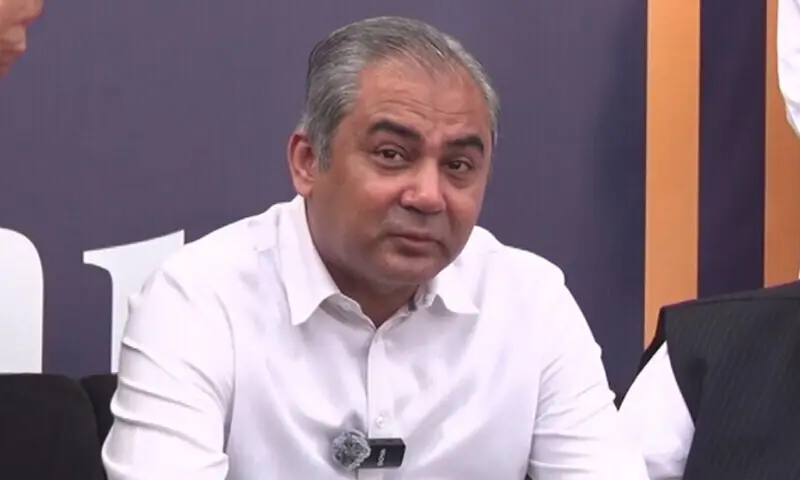
A crucial meeting is likely to be held at Gaddafi Stadium on Friday, where PCB chairman Mohsin Naqvi will receive a detailed briefing from the team management, including captain Shan Masood, the coaching staff and high-performance director Aaqib Javed on Pakistan’s latest Test series loss.
According to several reports, Shan is likely to be replaced as Test captain by T20 International skipper Salman Ali Agha. Former captain and all-rounder Mohammad Hafeez is also being considered for a key role in the PCB’s cricket structure, most likely as director of international cricket.
Although Pakistan won 27 of the 46 matches and lost 17 under Salman’s leadership, his individual performances as an all-rounder have remained below expectations. The additional responsibility of Test captaincy could further increase the burden on him.
The post of director of international cricket has remained vacant since Usman Wahla was removed from the position several months ago. However, the PCB has yet to advertise the vacancy on its official website.
Likewise, no permanent director of domestic cricket has been appointed since Abdullah Khurram Niazi was transferred to the Capital Development Authority (CDA). At present, the department is being run by two senior general managers. There are also unconfirmed reports that Abdullah continues to handle domestic cricket affairs as a consultant to the PCB chairman, though the board’s media department has not confirmed the claim.
Shan, who was appointed Test captain in 2023 by then PCB chairman Zaka Ashraf, has struggled to deliver results. Pakistan have played 16 Tests under his leadership and lost 12 of them.
The PCB had earlier shown confidence in Shan by assigning him the additional responsibility of director of international cricket. However, the decision was reversed within days after it became evident that the position required full-time administrative attention alongside his playing commitments.
Meanwhile, Aaqib’s role as selector and director high-performance is also expected to come under scrutiny. Over the past two years, he has served in multiple capacities, including selector, head coach on occasions and NCA director. Pakistan’s results during this period, however, have fallen short of expectations.
Pakistan failed to make an impact in the ICC Champions Trophy hosted by the country in 2025 and also endured a disappointing campaign in the ICC T20 World Cup 2026. The national side had similarly struggled in the 2024 T20 World Cup when former Test fast bowler Wahab Riaz was overseeing cricket affairs.
Overall, Mohsin has little to show in terms of on-field success despite making several changes to the captaincy, selection committee and coaching staff since assuming office on Feb 6, 2024.
PRESIDENT Donald Trump’s mercurial personality has been under intense scrutiny in his own country and beyond. Many of his personality traits and governing style have been widely commented upon and discussed.
What is perhaps under-recognised but more consequential, especially for his foreign policy, is how he takes initiatives or starts an endeavour but never finishes them. He embarks on a course of action but doesn’t see it through to bring it to closure. Whether this is because of his short attention span, lack of staying power or consistency, the result is half-done ventures. Among the reasons for this is that he sets unrealistic objectives and when he finds they are unattainable he moves on. Trump changes course when he cannot get his own way. Rather than try to fix the issue at hand, he prefers to kick the can down the road. He switches attention almost randomly from one policy area to another, leaving issues unresolved.
The most striking illustration of Trump’s unfinished ventures is his Gaza peace plan announced with such fanfare seven months ago. Instead of following through with his own 20-point plan, he decided to attack Iran along with Israel. This shift in focus left the Gaza plan at best in limbo but also in disarray. Yes, there is a ceasefire. But it is constantly violated by Israeli attacks, which have claimed the lives of over 700 Palestinians since it came into force in October 2025. Israel occupies over half of Gaza and Israeli Prime Minister Benjamin Netanyahu has now ordered his military to seize 70 per cent of the Strip. The withdrawal of Israeli forces, envisaged by Trump’s plan, never got underway. In fact, what was set out as a multiphase plan didn’t go beyond the first phase. The much-touted international stabilisation force has neither been assembled nor deployed.
President Trump embarks on a course of action but often doesn’t bring it to closure.
Little if anything is heard about the so-called Board of Peace established in January 2026, which Trump described as the most consequential organisation the world had seen. It was given responsibility for the reconstruction of Gaza but that hasn’t even started. Instead, reports indicate the organisation is mired in legal and political problems and the official fund for the Board has no cash. The building of a ‘New Gaza’ supposed to transform the territory into the “riviera of the Middle East” is nowhere on the horizon. The residents of Gaza continue to struggle in dire humanitarian conditions amid massive devastation. This is the shambolic state of Trump’s Gaza peace plan either because he has lost interest or simply shifted priorities to the war on Iran.
Another example of Trump’s unfinished diplomatic interventions is his administration’s efforts to end the Ukraine war, now in its fourth year, though eclipsed by the Middle East crisis. This is the war Trump promised to end in “24 hours” and which he proclaimed would never have started on his watch. He first tried to get Ukraine to accept a plan favourable to Russia saying Ukraine had “no cards” to play. When Kyiv resisted, a 20-point peace plan was agreed between the US and Ukraine in December 2025 aimed at ending the war. But over the past year, Trump routinely insulted the Ukrainian leadership, paused military aid to Ukraine and kept changing his position even while striking a minerals deal with Kyiv. He threatened to impose sanctions on Russia but never made good on this. His administration pursued on and off negotiations with Russia and sought to broker talks between Kyiv and Moscow in trilateral meetings.
Hopes that Trump’s summit meeting in August 2025 with Russian President Vladimir Putin in Alaska would yield a deal or even a ceasefire came to naught. Trump himself raised expectations that he would secure a commitment from Putin for a truce. When he failed, he claimed the best way to end the conflict was to “go directly to a peace agreement, which would end the war, and not a mere ceasefire agreement, which often do not hold up”. Subsequent peace talks made little progress much less produce a breakthrough. Talks stalled in February with Ukrainian officials believing the Trump administration was reluctant to mount pressure on Putin. Before leaving for China, Trump still claimed a settlement between Ukraine and Russia was getting “very close”. But Russian officials countered there was no clear plan to end the war. Meanwhile, US Secretary of State Marco Rubio acknowledged last month that the peace process on Ukraine had stagnated and said Washington was not interested in “endless meetings that lead to nothing”. As the war in Ukraine grinds on, there is slim possibility of reviving peace talks even after the Iran war ends. Both warring sides seem to have lost faith in the process with President Volodymyr Zelensky said to have given up on the US president. This means another diplomatic effort by Trump, which he claimed would be quick and easy to conclude, has not been brought to a close.
While the world waits to see when Trump will close on the Iran war the question is whether he is able to do so in a way consistent with his stated objectives. The no-war, no-peace state of play and diplomatic impasse can continue for weeks if not months. For Trump, the political and economic costs are very high of leaving the Middle East crisis to fester and move on without any resolution. This time it would be hard for him to leave without a deal even though he seems unwilling to accept that it cannot just be on his terms. Also, closure means a lasting deal that ensures there is no return to war, not just an extension of a short-term ceasefire.
The consequences of Trump’s unfinished diplomatic ventures and interventions are obviously detrimental to America’s global standing. They sow doubts about US reliability among Washington’s allies and encourage rivals and adversaries to hold their ground and wait it out rather than show any accommodation. Moreover, when the US does not complete what it starts and moves on leaving behind unfinished business, it loses credibility. That inevitably weakens its position in the world.
The writer is a former ambassador to the US, UK and UN.
IN November 1970, the Bhola cyclone killed up to half a million people in East Pakistan. Yahya Khan’s government introduced a 10 per cent surcharge to fund emergency relief. Bangladesh became independent 13 months later. The affected territory was gone. The levy remained. Zulfikar Ali Bhutto’s government absorbed the revenue into general federal accounts in 1972. No accounting was published. In 1985, Gen Zia introduced the Iqra surcharge, framed as an education fund. The revenue balanced federal operating accounts. No alternative education instrument replaced it when it was abolished under the IMF’s insistence. The template was set.
Fifty years later, Pakistan has not deviated from this template. What began as a cyclone surcharge is now a Rs1.55 trillion instrument misclassified as non-tax revenue. The architecture is identical but the scale has changed.
Pakistan has pursued this through two parallel tracks. The first collected resources in the name of disaster relief, later rebranded as climate resilience as floods became more frequent. The second imposed non-tax revenue through petroleum pricing. The petroleum development levy (PDL), a general development surcharge dating to 1961, was structurally insulated in 2010 to bypass provincial NFC sharing. It grew steadily, crossing Rs100 billion annually by the mid-2010s and exceeding Rs200bn by FY2018-19. Although never formally framed as a climate instrument, it has acquired a distinct environmental gloss, culminating in the climate support levy of 2026.
The flooding track: The 1973 floods wiped out three million houses and erased a year of economic growth. Bhutto created the Federal Flood Commission. Three consecutive 10-year national flood protection plans followed, running from 1978 to 2008 across four governments, each funded through the PSDP with no ring-fencing. Pakistan suffered catastrophic floods throughout. Three decades of federal plans, without a rupee ring-fenced.
No relief fund has ever been legally ring-fenced.
Since 1992, when Nawaz Sharif’s government first activated the prime minister’s relief fund model, Pakistan has deployed the same instrument at least five times across floods and earthquakes. The design is deliberate: by classifying flood revenue as voluntary donations rather than taxation, governments simultaneously escape parliamentary scrutiny, judicial challenge and NFC distribution requirements. Benazir Bhutto deployed the identical model after the 1994 floods. So did every government after 2010.
The 2010 floods affected 20m people and caused $43bn in damages. The government announced a flood relief surcharge projecting Rs40bn, collected it, and absorbed it into the federal consolidated fund while simultaneously negotiating IMF targets. After the 2022 floods, the government quietly renamed its existing super tax: Section 4B, whose stated purpose was rehabilitation of temporarily displaced persons, became Section 4C, a super tax on high-earning persons. The humanitarian justification was dropped without explanation. The revenue mechanism stayed the same.
Three findings hold across every instrument. No relief fund has ever been legally ring-fenced: every prime minister, president and chief minister relief fund is credited to the account of the federation, making it general government money. International pledges substitute for domestic accountability rather than supplementing it. And every fund since 2005 has carried a public commitment to publish an independent audit. None has been published.
Justice Saqib Nisar’s 2018 dam fund collected Rs11.5bn from the public in the name of water security, earned Rs2.2bn in mark-up over six years, and was quietly transferred to the public account of the federation in 2024 without a single rupee spent on the stated objective. If money raised under the highest judicial authority in the country can still end up in the general budget, no argument remains that any executive fund can be trusted to do otherwise.
The petroleum track: Climate change has been weaponised as a justification to tax citizens. Gen Musharraf used clean-fuel rhetoric to justify development surcharges during the CNG transition without a single rupee being traced to a cleaner fuel outcome. In 2009, the Supreme Court under chief justice Iftikhar Chaudhry ruled that revenue collected without a verifiable service to the payer is a tax, not a surcharge, and that imposing it by executive notification violates Article 77. The response was the Petroleum Products (Development Levy) Amendment Act, 2009, that satisfied the court’s procedural requirement while eliminating any ring-fencing obligation.
The consequences are calculable. At Rs1.55tr, the PDL represents 10-11 per cent of total federal revenue. Under the seventh NFC Award, provinces are entitled to 57.5pc of all taxes. If correctly classified, Punjab would receive Rs461bn annually, Sindh Rs219bn, KP Rs13bn and Balochistan Rs81bn. They receive zero. It is a tax called a levy because of the NFC Award. The classification is deliberate.
PML-N elevated PDL margins in 2016 on the justification that the premium would fund cleaner fuel production. The revenue went instead to IPP capacity charge payments and circular debt service, which reached Rs1.14tr by FY2017-18. The revenue collected in the name of cleaner fuel financed the liabilities of a fossil-fuel-dependent power grid. The PTI then scaled the PDL to Rs424bn, the highest in Pakistan’s history, while branding it a carbon instrument aligned with its Ten Billion Tree Tsunami project. In March 2022, it froze the levy at zero for political reasons. The IMF suspended a $1bn tranche within weeks. A climate-labelled levy had become a macroeconomic emergency.
Across 23 programmes since 1958, the IMF has required Pakistan to enhance the PDL without requiring it to distribute the revenue constitutionally.
The way forward: Can the PDL be ring-fenced or audited? Ring-fencing 15pc of PDL collections into a sovereign climate fund (SCF) would deploy Rs232bn annually, shared with provinces under the NFC Award and structured as a statutory trust.
Following global benchmarks, it can leverage private investment at a ratio of one to four, unlocking approximately Rs900bn in total climate finance conditioned on climate resilience outcomes aligned with Pakistan’s commitments.
The IMF objection is predictable but answerable. The SCF does not reduce total PDL collections. Tabled in the next programme negotiation as a structural benchmark rather than a provincial concession, the IMF’s incentives align with the reform rather than against it. The question is not whether Pakistan can create such a fund. It is whether any government is willing to surrender a revenue stream that it has prized too much to ring-fence.
DELAYS in budget announcements are normal. After all, it is not easy to satisfy different lobbies competing for a bigger share of the shrinking fiscal pie. But the current impasse is of a different order. It signifies a constitutional and political crisis that the government is struggling to contain. The immediate cause is clear, even if the government is reluctant to state it openly.
Islamabad wants the provinces to freeze their share from the federal tax divisible pool under the NFC award, returning any receipts above the current year’s level to the centre. This demand comes over and above the Rs1.95tr cash surplus that provinces are required to produce under the National Fiscal Pact.
The provinces are resisting the pressure. The reason the centre finds itself in this position is rooted in its failure to expand the tax net and boost revenues. That Pakistan is operating under the IMF programme’s strict conditions, requiring it to maintain a primary surplus and contain expenditures, is another reason. Meeting those targets while not touching defence spending and civil service perks intact leaves only one lever: squeeze the provinces.
The federal government’s broader narrative that the existing NFC award is the primary driver of its fiscal distress does not hold water. It excludes the petroleum levy and every other surcharge collected outside the divisible pool. GST on petroleum products was replaced by a levy precisely so that it would not have to be shared with the provinces.
By expanding non-shareable levies over the years, the centre has grown its own fiscal base while publicly lamenting its reduced NFC share. The provinces’ requirement to produce cash surpluses to help Islamabad meet key IMF targets is limiting provincial development spending.
Pakistan’s debt crisis was not triggered by higher provincial transfers, but by chronic under-taxation, reckless devaluation and serial borrowing — which have nothing to do with how the divisible pool is distributed.
However, the revenue failure is not the centre’s fault alone. Large parts of the economy — agriculture, retail, real estate, professionals like lawyers and doctors, etc — effectively remain outside the tax system, contributing only a negligible fraction of their potential to tax revenues. This is a structural issue that no NFC revision can resolve.
What is at stake, however, goes beyond provincial shares. The seventh NFC award and 18th Amendment are not merely about financial arrangement or devolution. They represent a constitutional guarantee of autonomous federating units and a stronger federation.
The undoing of this consensus will have an impact that will outlast this government and the IMF programme. The government can either address the structural issues holding back economic growth or continue to squeeze compliant taxpayers and claw back resources from the provinces.
• KP finance czar says federal govt facing Rs1.7tr ‘fiscal hole’ • Muzammil Aslam claims Centre in a tight spot due to coalition partners’ needs, IMF ‘over-commitments’
ISLAMABAD: The federal government is having problems formulating the budget, owing to an around Rs1.7 trillion fiscal hole and wants the provinces, particularly Punjab and Sindh, to shoulder a greater financial burden, Khyber Pakhtunkhwa’s finance czar claimed on Wednesday.
Speaking at a news conference, KP Adviser on Finance Muzammil Aslam said the uncertainty following the cancellation of National Economic Council (NEC) meeting and the rescheduling of Annual Plan Coordination Committee (APCC) was very concerning for the markets, as was evident from the massive recent plunge at the Pakistan Stock Exchange.
He said the NEC meeting called for June 3 had been unexpectedly canceled without any reason and without a new date being set, while the APCC meeting was also earlier canceled on May 21 without advance notice, and then held on June 1.
Aslam’s contentions seemed to echo points recently made by PPP leader Syed Naveed Qamar. In a recent appearance on DawnNewsTV, he said that the federal government did not have adequate funds to allocate to major heads, such as defence, debt servicing and pensions, adding that the provinces had also been asked to contribute to make up the shortfall.
Speaking to reporters on Wednesday, Aslam said the Centre did not expect the healthy profits next year and was banking on the petroleum levy, and more funds from provinces to shore up its kitty.
He said Finance Minister Muhammad Aurangzeb had earlier suggested about Rs1.7tr share out of provincial shares of the divisible pool by revisiting some taxes, like customs duties. Under this scheme, the Centre had indicated it would need a Rs700-800bn slice from Punjab, Rs500bn from Sindh and Rs200bn from KP, but claimed there had been no follow-up decision in this regard.
Highlighting Planning Minister Ahsan Iqbal’s dismay, Aslam said the government was taking its time to satisfy the demands of its coalition partners, and was finding it difficult to put together a budget that would also be acceptable to the IMF, chiefly the 2pc target for primary budget surplus.
He claimed the federal government had “over-committed” with the IMF on revenue, which was one of their key challenges. On the other hand, he said, no stakeholders were ready to stand with the finance ministry on the expenditure side.
“When you formulate budgets in such pressures, there would always be infighting and coalition partners would not get the budget passed,” he said adding the PPP’s leadership was spending long hours at the finance ministry which was matter of grave concern.
He said in one of the recent meetings, the Centre asked the provinces to extend a helping hand in revenue generation and demanded Rs430bn in additional revenue in the coming fiscal year through taxes on property and agricultural income.
Under that target, he said the KP was required to contribute Rs35bn but in a subsequent letter, the province was asked to generate Rs60-65bn and similar demands were made to other provinces. He said this additional demand had been raised because of ongoing infighting among coalition partners.
Aslam maintained that the tax relief being floated by the Centre would be only an eyewash, although it may increase the minimum threshold from Rs100,000 per month to Rs150,000 per month, but the resultant gap would then be shifted to other taxpayers. He also maintained that while the provinces were told recently about united efforts towards building water resources, development allocations suggested there was no such plan in place.
• From penalising green technology to sidelining adaptation, the government’s spending choices seem to contradict its own climate commitments • Without new budget pillars, proper risk screening, end to ‘green taxes’, country’s fiscal plans will only deepen climate vulnerability
FOR a country whose economic survival is tied to shoring up its climate-resilience, the government’s budgetary allocations have failed to reflect this pressing concern.
Besides measures that discourage the adoption of solar energy and electric vehicles, the government continues to invest in mega-hydro projects despite adverse ecological impacts; proposes ‘false solutions’ such as carbon capture instead of reducing reliance on fossil fuels; and leaves the adaptation agenda by the wayside despite recurring floods.
The upcoming budget, according to officials from the climate change ministry, features at least eight proposed projects focused on climate resilience, afforestation, green growth, biodiversity conservation, and environmental monitoring under the Public Sector Development Programme — with a total allocation of Rs2.78 billion.
However, experts have repeatedly criticised the government’s seemingly “anti-climate policies”, particularly attempts to tax renewable energy, which they believe will undermine the climate-smart policy direction spurred by recent IMF and World Bank programs.
The IMF’s Resilience and Sustainability Facility (RSF) requires Pakistan to revise its public investment framework so that at least 30 per cent of the project appraisal weighting for infrastructure projects reflects climate change adaptation and mitigation criteria.
In the outgoing fiscal year, at least Rs86bn worth of PSDP projects were tagged as ‘climate adaptation’, and measures worth over Rs600bn classified as ‘climate mitigation’.
“This year, these numbers will increase. However, the true essence of tagging must be followed — it should be inclusive, not just a box-ticking activity,” said SDPI Research Fellow Dr Khalid Waleed.
Pakistan is no stranger to climate-induced disasters. From 1992 to 2021, it cost the country $29.3 billion, according to a State Bank of Pakistan report on climate change’s economic impact. The 2022 monsoon floods alone cost at least $28 billion. By 2050, Pakistan stands to lose up to 6.5 per cent of its GDP, with agriculture and industry bearing the brunt.
Both the SBP and experts agree the country is unprepared unless it climate-proofs its fiscal plans. The approach, they stress, must be rooted in science, putting people at the centre and promoting climate-smart development models.
All the tools
Ali Tauqeer Sheikh, an Islamabad-based climate expert and former climate change advisor at the Planning Commission, argues that while the government has all the tools at its disposal, it doesn’t seem interested in using them.
The government formally notified Pakistan’s Handbook on Climate Risk Screening for Policy Planning in June 2024. Yet, in the financial year that followed, none of the around 57 approved projects underwent “necessary risk screening, in violation of the approved policy”, said Mr Sheikh, who helped develop the handbook. “The budget exercise every year is basically the dialogue of the deaf,” he said, describing the process as devoid of climate-smart proposals.
Failing to climate-proof PSDP projects “increases the cost of climate action and makes populations more vulnerable”, he warned.
Dr Fahad Saeed, who runs the Weather and Climate Services think tank in Islamabad, regrets that scientific evidence is missing from Pakistan’s climate policymaking. The government allocates funds for climate action before even deciding whether they will be spent on mitigation, adaptation, or loss and damage. Without a cost-benefit analysis rooted in evidence, “decisions are not embedded in science,” he said, calling for an audit of climate-earmarked budgetary allocations.
Climate-tagging development
Last year, the government touted the budget as “climate-focused” and introduced “climate budget tagging” under the RSF to classify climate-sensitive expenditures in line with the National Climate Change Policy.
Ammara Aslam at the Policy Research Institute for Equitable Development said that while the associated conditionalities and mandatory climate screening are “present on paper, climate-proofing the budget would require a robust implementation framework”. Every department and sector, she argued, needs to transition “from broad, unallocated budgetary statements to funding specific, verifiable, climate-resilient infrastructure projects”.
Dr Shafqat Munir, who leads the resilience programme at SDPI, called tagging “a good step” but insufficient in the current scenario.
“IMF and World Bank programmes are helping to open the door, but they are not yet transforming Pakistan’s fiscal model.” The RSF, he noted, “is still too reform-heavy and financing-light. It can improve systems, but it cannot close Pakistan’s adaptation financing gap”.
New pillar
Dr Munir argued that climate change should be embedded as a standalone pillar in development planning, with new budget heads for adaptation, climate-risk financing, and anticipatory action.
“Let’s move beyond budget tagging,” he said, calling for poverty-proof and climate-risk-sensitive allocations for 2026-27. His five-point priority agenda: protection of people, livelihoods, infrastructure, fiscal stability, and growth — in that order.
Experts also urged the government to promote rather than tax green technologies. “Taxing green technologies does not do any service to Pakistan’s renewable energy goals,” said Ms Aslam, calling for existing and proposed duties on solar panels, battery storage, and related components to be scrapped.
Mr Sheikh agreed, warning such measures could undermine Pakistan’s climate-smart policy direction entirely.
• Budget delay exposes Centre-province fiscal deadlock • NFC shares may be frozen under budget pressure • Critics say Centre ignores revenues kept outside divisible pool • Experts blame fiscal crisis on low tax collection, debt, federal spending • Raza Rabbani warns of phased rollback of 18th Amendment, NFC Award
WHEN Finance Minister Muhammad Aurangzeb rises to present his third budget, the usual questions will apply. Which sectors face fresh taxation? Will the salaried class get any relief? How much will the cost of living increase? Who will get tax benefits, and who will not?
But this year, there is an additional dimension worth watching closely. Will the budget clip provincial finances? Will the Centre freeze provincial shares under the current National Finance Commission (NFC) arrangement and push fresh expenditure obligations onto provinces — over and above their existing requirement to produce a primary surplus?
If it does, it would amount to a unilateral revision of the NFC arrangement through the back door of the budget.
When parliament adopted the landmark 18th Amendment in 2010, it was meant to settle a long-running devolution dispute between the provinces and the Centre. The 7th NFC Award corrected decades of fiscal imbalance, giving smaller provinces — particularly Balochistan and Khyber Pakhtunkhwa — a larger stake in national revenues. It was a moment of rare political consensus. Fifteen years on, that settlement is being unravelled: not through a constitutional amendment or fresh consensus, but through pressure and demands that provinces simply hand the money back.
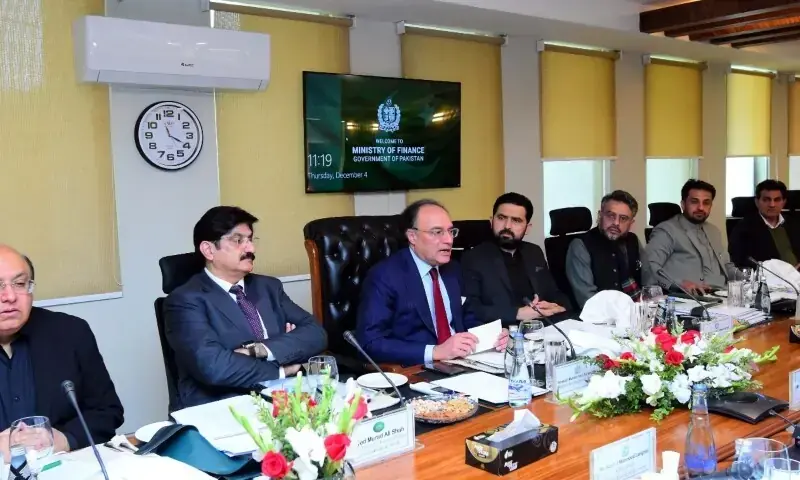
The announcement of Budget 2026-27 has been postponed twice as the Shehbaz Sharif government, its coalition partners and provincial governments struggle to agree on the Centre’s demand for additional funds of more than Rs1.2 trillion for strategic needs. The National Economic Council meeting, last called for June 9, was postponed for the fourth time amid continuing negotiations over the federal demand to freeze provincial shares in the federal tax divisible pool.
Former Pakistan chief economist Rashid Amjad called it a potential tragedy. “That [7th Award and 18th Amendment] is the best thing which has happened to Pakistan; it empowers provinces and strengthens the federation. They say they want to decentralise powers but they don’t want to give up power in the federal government,” he said.
‘Precarious situation’
Whatever is known about the contours of the federal government’s demand mostly comes from Muzzammil Aslam, finance adviser to the PTI government in KP, as the ruling PML-N and its principal coalition partner continue their discussions behind closed doors.
Aslam says the Centre told provinces their financial shares under the NFC for the current year would not be increased next year, and that any amount above the current year’s share would have to be returned to the Centre. This demand comes over and above the Rs1.95 trillion cash surplus that provinces have already committed under the National Fiscal Pact pushed by the IMF.
Aslam warned the move would push provincial budgets into deficit. “I have not seen such a precarious situation in the past 21 to 22 years that I have been following budgets,” he told journalists after a meeting with a federal team led by Planning Minister Ahsan Iqbal.
He acknowledged that “the demand for the strategic purpose is not unjustified and is in the national interest, but Sindh and Punjab will have to show generosity.” He also noted that the matter was beyond the KP government’s powers and required consultation with jailed PTI leader Imran Khan before any decision could be taken.
On the constitutional bar on reducing provincial NFC shares during a fiscal year, Aslam said there was no clear answer on the table — though the Centre perhaps intended to transfer funds to provinces and then seek their return, a workaround that raises serious questions of its own. As he put it, “everybody is standing on their toes” to find a solution, with no way forward yet in sight.
Also worth watching will be the PPP: what concessions it is willing to give, if any, and in exchange for what. Many believe the party has little room to refuse in the current political dispensation, with the coalition watching each move closely.
NFC rollback?
Proponents of the current NFC arrangement argue that the Centre’s posture did not emerge overnight. For years, Islamabad has pushed the narrative that the 7th Award — which hands 57.5 per cent of revenues to provinces — is the primary driver of its fiscal distress, leaving it unable to service debt, fund defence or complete strategic projects.
Critics say this narrative is built on selective accounting. By expanding non-shareable levies over the years, the federal government has quietly grown its own fiscal base while publicly lamenting its diminished share. “GST was replaced by a levy on petroleum products precisely so it wouldn’t go into the divisible pool. If it had remained GST, it would have had to be divided with the provinces,” said Ali Salman of the Policy Research Institute of Market Economy (PRIME).
A former Punjab finance secretary was equally blunt: “The NFC Award did not create the fiscal crisis; it inherited one. Debt and FBR dysfunction had crept into this system decades before provinces received a rupee more. Massive currency devaluation in recent years worsened this crisis. None of that has anything to do with how the divisible pool is split.”
Amjad identified the real squeeze. “When you are in an IMF programme, there are very strict macro-framework restrictions under which you work,” he said, adding that the government had compounded its difficulties by entering conflicts on multiple fronts simultaneously, driving federal expenses upward. “The only way you can square the circle is for provinces to take on more of the federal expenditures and run bigger surpluses.”
Salman noted that while the federal government bears a disproportionate fiscal burden, the revenue failure is shared. The NFC Award had set a target of bringing the tax-to-GDP ratio to 15 per cent within five years — a target the Centre never achieved, and one provinces did little to support either. “The abysmally low tax-to-GDP ratio of around 10pc is the core of the problem,” said Amjad. “The federal government must curtail its expenditures if it can’t raise tax revenues.”
Radical solutions?
Veteran PPP leader Raza Rabbani, who played a key role in building consensus on the 18th Amendment, warned that the Centre’s moves amounted to a gradual undoing of the constitutional order established in 2010. “They are rolling back the amendment in phases, and simultaneously the NFC Award, instead of reducing their own expenditure,” he said.
He pointed to devolved ministries still operating at the federal level as an obvious starting point, and called for cuts to civil bureaucracy perks. If the federal government was unwilling to take those steps, Rabbani proposed a more radical solution: hand over tax collection entirely to provinces, place federal expenditure before the Council of Common Interests, and have provinces contribute a proportionate share. “If they can’t put their own house in order, then they should stop tax collection altogether,” he said.
Rabbani reserved his strongest words for what he described as unprecedented IMF interference. “Based on my experience in politics, the level of IMF dictation regarding the budget is unlike anything I have seen before. This degree of micro-management of budget targets by the IMF is unprecedented,” he said, adding that the new fiscal targets being imposed on provinces also originated with the fund. “If parliament is to simply rubber-stamp an IMF budget, that is a different matter altogether.”
Whether provinces will ultimately cover the fiscal hole for Islamabad — and whether the Centre can build the consensus it needs — remain the central questions hanging over this budget season.
• Asked about ‘table talks’, Aleema says engagement with govt ‘changed nothing’ • IHC asks FIA to explain call-up notice to Salman Akram Raja over social media activity
ISLAMABAD: After leaders of the PTI and Imran Khan’s family were once again denied permission to meet the former premier in Adiala jail, party supporters staged a sit-in near the prison on Tuesday.
The Islamabad High Court has allowed Imran’s family to meet him on Tuesdays, while Thursdays are designated for visits by party leaders, but the orders have not been implemented for several months now.
On Tuesday, Imran’s sisters — Aleema Khan, Uzma Khan and Noreen Niazi — along with several lawyers, party leaders and workers, were stopped by the jail administration when they arrived outside Adiala jail.
Speaking to the media, Aleema Khan said the entire country had remained disturbed over the past three years because Imran Khan is in jail. “You are being unfair to Pakistan. The whole country is facing a law and order situation.”
Responding to a question about the elections in Gilgit-Baltistan, she said the voices of the people of the region were barred from mainstream media, but information was readily available on social media.
“Despite that, the people of GB voted in favour of PTI. That is why people faced baton charges and politicians from the PPP and PML-N had to rush to GB. Today, social media exists and everyone can see what is happening in GB,” she added.
She said it was the duty of every Pakistani to save the country and suggested that Imran Khan should be released to help resolve the prevailing crises.
Asked whether Khyber Pakhtunkhwa Chief Minister Sohail Afridi was coming to Adiala jail, she said it had been decided that he would reach Parliament House when the federal budget would be presented.
When asked about various proposals to resolve the party’s grievances through “table talks”, Aleema referred to recent meetings held between PTI Interim Chairman Barrister Gohar and Interior Minister Mohsin Naqvi, saying that nothing had changed.
She also called for public mobilisation, saying that if 10,000 people show up at Adiala jail, Imran Khan’s freedom could be secured.
Call-up notice
Separately, the Islamabad High Court on Tuesday directed authorities to go through and explain a Federal Investigation Agency (FIA) report in a case relating to a call-up notice, issued to PTI Secretary General Salman Akram Raja over alleged misuse of social media.
Justice Raja Inam Ameen Minhas was hearing a petition filed by Raja seeking protection from arrest and harassment in connection with an inquiry being conducted by a joint investigation team (JIT).
During the hearing, Assistant Inspector General (legal) Tahir Kazim, appearing on behalf of Islamabad police, informed the court that the FIA had received a complaint alleging that Raja had misused social media platforms.
Justice Minhas, however, pointed to the FIA report available on record and observed that it stated no case had been registered against the petitioner.
In response, Kazim submitted that the matter was still at the inquiry stage and proceedings before the FIA were continuing. He maintained that the inquiry had not yet been concluded.
The judge directed the AIG to carefully review the reports on record before making submissions to the court. “See the reports first and then address the court,” Justice Minhas remarked.
After hearing the preliminary arguments, the court adjourned the proceedings to a date to be fixed later.
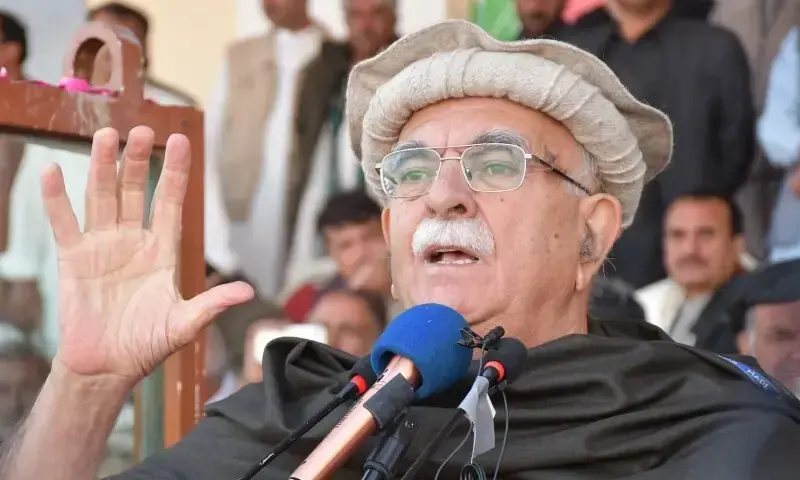
QUETTA: Leader of the Opposition in the National Assembly Mehmood Khan Achakzai has petitioned the Balochistan High Court against the registration of a case against him in Chaman over his recent controversial speech, and termed the issues facing the country ‘political in nature’.
“The establishment of a true democratic society is essential for national progress,” said Achakzai, who is chairman of Pashtoonkhwa Milli Awami Party (PkMAP), while speaking to the media and lawyers at the BHC on Wednesday.
He said that interference in the electoral process had weakened democratic institutions in the country, while those advocating for constitutional supremacy and democratic principles were often subjected to criticism.
Highlighting the need for a system based on genuine public representation, he said Pakistan required a truly elected parliament, where key national decisions, particularly related to internal and foreign policy, were made independently in the broader interest of the state and its people. “We will not overcome recurring crises unless we establish a transparent mechanism and ensure independent policy-making,” he remarked.
The veteran politician said the country’s constitution was the result of a long political struggle and consensus, and insisted that stopping repeated interference in the electoral process that has weakened civil institutions was essential for democracy.
About the FIR registered against him in Chaman, he said the FIR, lodged on the complaint of a person named Wali Achakzai at Chaman City Police Station over an allegedly controversial speech, was not in accordance with constitutional and legal requirements and should therefore be declared null and void.

 Login
Login