Reading view

Weaponizing passports won't help American kids

The State Department has announced plans to revoke passports from Americans with child support debt, which will disproportionately affect fathers, and is being met with criticism that it is a counterproductive and dated approach to child support policy.

  •  

Trump's justice department scrubs its website of news releases about January 6 defendants

Department of Justice acknowledges the removal of news releases about criminal cases related to 2021 Capitol attack

The Department of Justice is acknowledging it has removed from its website news releases about criminal cases related to the 6 January 2021 Capitol attack, calling the information about the prosecutions “partisan propaganda”.

The purge of news releases documenting criminal charges, convictions and sentencings is the latest step by the Trump administration to dramatically rewrite the history of the assault on the US Capitol, when hundreds of supporters of Donald Trump stormed the building in an effort to halt the congressional certification of his 2020 election loss to Democrat Joe Biden.

Continue reading...

© Photograph: José Luis Magaña/AP

© Photograph: José Luis Magaña/AP

© Photograph: José Luis Magaña/AP

  •  

Government expands diesel subsidy scheme to jeeps and pickups nationwide from June 1

Malay Mail

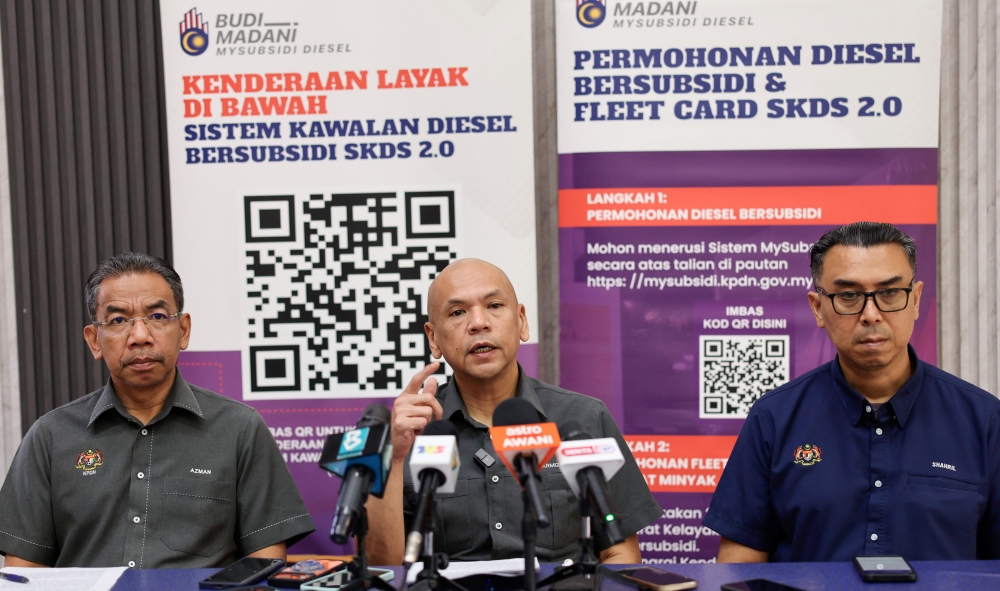
KUNDASANG, May 23 — The government has agreed to enhance the mechanism for implementing diesel subsidy distribution under the Subsidised Diesel Control System (SKDS) by expanding eligibility to include jeeps and pickup trucks for the land goods transport sector nationwide, effective June 1.

Domestic Trade and Cost of Living Minister Datuk Armizan Mohd Ali said the decision was made during the Cabinet meeting on May 20.

“Previously, eligibility for such vehicles was limited to the Cameron Highlands area. Beginning June 1, 2026, companies in the land goods transport sector nationwide that own jeeps and pickup trucks may apply to register under SKDS,” he told reporters here today.

He said the government had also agreed to extend diesel subsidy benefits under SKDS to jeeps and pickup trucks previously registered under individual ownership, subject to approval for the transfer of ownership to a company.

“Individual operators involved in land goods transportation are encouraged to register their companies or businesses with the Companies Commission of Malaysia, the Malaysia Cooperative Societies Commission (SKM), or relevant authorities in Sabah and Sarawak in accordance with state laws.

“In addition, applicants must fulfil other eligibility requirements, including transferring vehicle ownership from an individual to a company through the Road Transport Department,” he added.

Armizan said the government had also agreed to revise the fixed quota limits under SKDS for the land goods transport sector as part of efforts to strengthen regulatory and enforcement mechanisms to curb subsidy leakage and misuse of fleet cards.

“Each fleet card will be allocated a fixed quota ranging from 900 litres to 5,000 litres per month, depending on the quota limit set for 23 categories of vehicles in the land goods transport sector.

“The total quota allocation isdetermined based on an analysis of transport usage patterns throughout the two-year implementation period of SKDS. The revised fixed quota rates for each fleet card will take effect on June 1,” he said.

He added that companies requiring fuel usage beyond the stipulated limit may submit appeals for quota increases to the Petroleum Subsidy Approval Committee (JKSP), which is managed by the ministry.

“Appeals can be submitted online via email at mysubsidi@kpdn.gov.my or physically at the nearest KPDN office.

“Applications will be assessed based on the justification of actual operational requirements and existing monthly fuel usage records in the SKDS system since approval was granted,” he said.

He encouraged companies in the public land transport, land goods transport and water public transport sectors that have not yet enjoyed petrol and diesel subsidies to register under the Subsidised Petrol Control System (SKPS) and SKDS.

Armizan stressed that all companies receiving fuel subsidy benefits under SKPS and SKDS must use their fleet cards responsibly.

“Any misuse will result in the immediate suspension of the fleet card and the company concerned being blacklisted,” he said.

As of May 20, 2026, a total of 179,716 companies involving 432,495 eligible vehicles in the public land transport, land goods transport and water public transport sectors had received petrol and diesel subsidy benefits.

“This includes 19,189 companies involving 38,817 vehicles under SKPS, and 160,527 companies involving 393,678 vehicles under SKDS,” he said. — Bernama

  •  

Home Ministry pushes MyNIISe rollout, touts safer, quicker immigration services at your fingertips

Malay Mail

KUALA LUMPUR, May 23 — Malaysians are encouraged to download the National Integrated Immigration System (MyNIISe) application and complete their registration to enjoy more efficient and seamless digital immigration services.

Home Minister Datuk Seri Saifuddin Nasution Ismail said the application was introduced to enable various key processes to be carried out directly via smartphones without the need to go through complicated procedures.

“The Madani Government, through the Home Ministry, remains committed to strengthening digital services to facilitate public affairs.

“The MyNIISe application was introduced to provide a smoother, faster and more user-friendly travel and immigration experience,” he said in a Facebook post yesterday.

He said the application offers a more convenient, faster and safer service, while also saving users time and energy.

“This is not just an application, but a step forward in ensuring that the government service delivery system becomes more modern, efficient and closer to the people,” he said.

According to him, the MyNIISe application can be downloaded via the App Store and Google Play.

Based on the infographic shared, MyNIISe registration can be carried out by opening the application, signing in via MyDigital ID, selecting “Start creating a profile” and scanning the passport photo page.

Users are then required to review and confirm their information, take a selfie for verification, and create an account password. — Bernama

  •  

Singapore strapmaker Delugs races to turn viral AP x Swatch pocket watch into wristwear (VIDEO)

Malay Mail

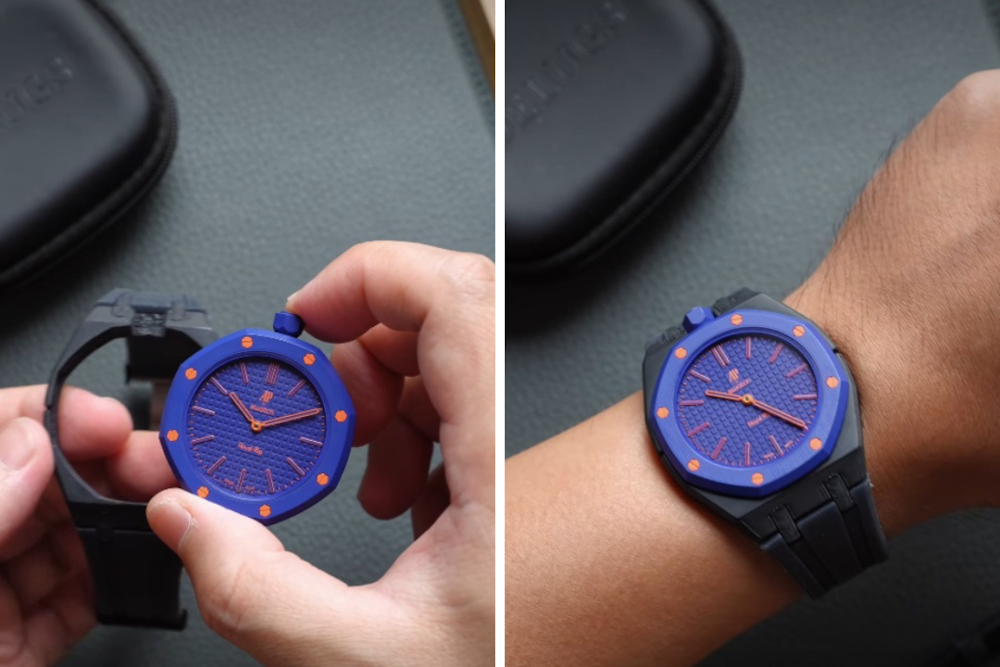
SINGAPORE, May 22 — A race is under way to transform the viral Audemars Piguet x Swatch Royal Pop pocket watch into a wearable wristpiece, with Singapore-based strapmaker Delugs among the frontrunners developing a custom solution.

The company is in the final stages of prototyping an integrated strap system designed for the collaboration, with sample production expected soon, co-founder Ken Kuan told The Straits Times.

Development began almost immediately after the hybrid watch was unveiled on May 12, as interest surged among collectors who were disappointed the collaboration did not offer a traditional wristwatch format.

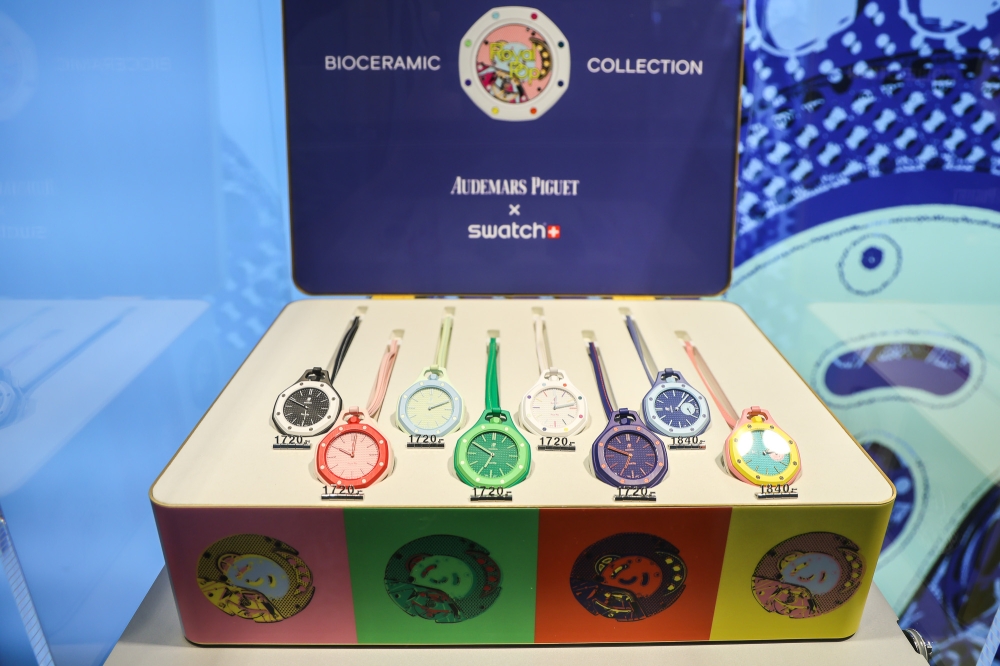
The Royal Pop series, which launched globally on May 16, features eight designs priced at around US$535 (RM2,120) to US$570 depending on configuration, significantly lower than Audemars Piguet’s signature Royal Oak models.

Kuan said demand for a wrist-worn version was clear from the outset, arguing that watches are ultimately designed to be worn on the wrist rather than carried as accessories.

Delugs’ approach involves an integrated strap system where the band is directly connected to a custom case, eliminating the gaps typically seen with standard aftermarket straps.

While several brands are also attempting similar conversions — some already taking pre-orders based on concept renders — Delugs is holding back until physical samples are finalised.

Kuan said the company’s email waiting list has already drawn around 10,000 sign-ups, despite the product not yet being released.

One of the key engineering challenges has been designing a secure case for the watch’s detachable “pop-in, pop-out” structure, which was originally intended for lanyard-style use.

Delugs, which does not usually design watch cases, has produced a 3D-printed prototype and is now preparing material testing to ensure durability, flexibility and a secure fit for daily wear.

Kuan said the team has carried out multiple rounds of testing to account for real-world movement, including impacts and wrist expansion.

The company also sourced two units of the watch at inflated resale prices after missing initial retail drops amid global launch chaos that saw long queues and store disruptions in several countries.

Swatch X Audemars Piguet Royal Pop watches are displayed in a presentation case at Mid Valley Megamall in Kuala Lumpur on May 16, 2026. — Picture by Yusof Isa

Delugs has since documented its development process online, partly to counter widespread AI-generated mock-ups circulating on social media and to capitalise on intense global interest in the collaboration.

Kuan said the project also serves an educational purpose, offering transparency on how such wearable conversions are engineered from concept to production.

The final product is expected to bundle the strap and case at a price range of about US$150 to US$200, with multiple colour options planned for both components.

Delugs, founded in 2018, has grown into a niche but fast-rising watch accessory brand with international reach, expanding from online retail into physical boutiques in Singapore and Hong Kong.

  •  

Before the Frame: A Filmmaker’s Approach to Street Photography

Split image: On the left, a view of the Manhattan Bridge framed by red brick buildings. On the right, two women face the Brooklyn Bridge and city skyline, one smiling and wearing sunglasses.

Six in the morning on the Brooklyn Bridge, and New York City is something it rarely is. It is quiet. Not empty, but quiet. Dan Aragon is standing on the walkway watching the light come up across the East River. The bridge holds a few early walkers, runners, and cyclists. A ferry is just starting to move on the water below. He has not raised the camera yet. He is still enjoying the silence.

[Read More]

  •  

Coming soon: KL’s trains, buses to allow credit cards for tap-in, tap-out; Prasarana says project in award stage

Malay Mail

KUALA LUMPUR, May 22 — Ever wished you could just tap in with your credit card at an MRT or LRT fare gate in Kuala Lumpur, instead of buying a token or looking for the Touch ‘n Go card that you left in the car?

The good news is that it is coming soon.

The other good news is that you will also be able to use other cashless payment options — such as debit cards, QR codes, mobile wallets (e.g. Apple Pay, Google Pay, Samsung Pay) — for buses and trains in Kuala Lumpur in the future too.

Current options for KL’s rail services: Buy a token or use TNG card 

Public transport operator Prasarana Malaysia Berhad explained why passengers currently cannot use credit cards, mobile wallets and QR codes yet to directly tap in and out for Rapid KL’s train services.

“Rapid KL’s current automated fare collection (AFC) system utilises the Touch ‘n Go platform, which has been the backbone of the network’s cashless ticketing since 1999.

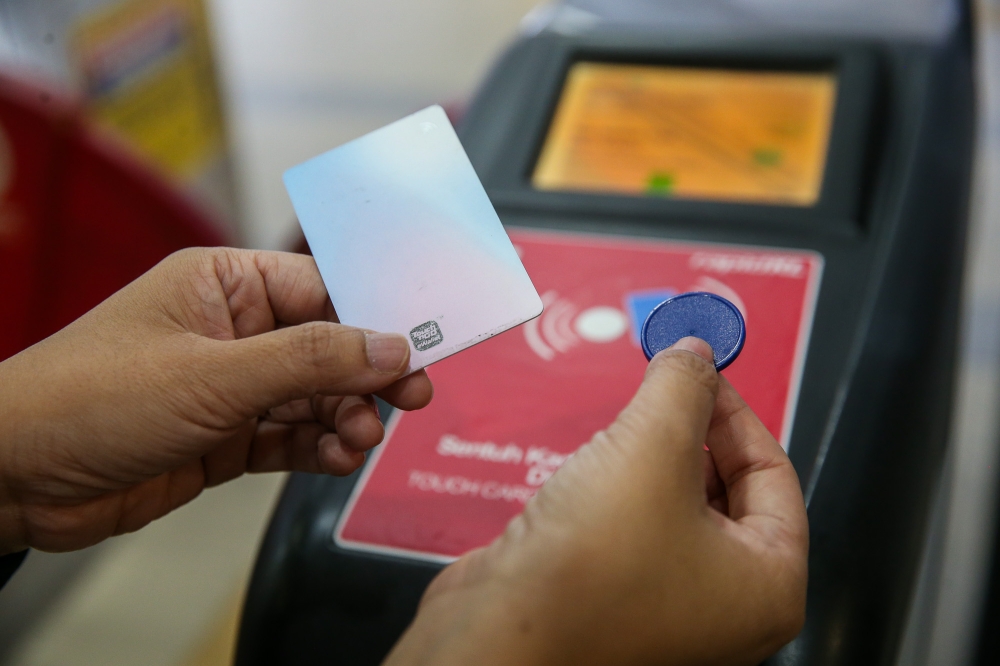
“As a closed-loop system, it currently restricts tap-in and tap-out functionality exclusively to Touch ‘n Go as the sole stored value card media, alongside single-journey tokens for cash-based ticketing.

“While this system has served commuters reliably for decades, it was designed before the emergence of newer open payment technologies such as contactless bank cards and mobile wallets. 

“As such, the existing infrastructure does not currently support direct integration with these newer payment methods,” the company said in a response to Malay Mail’s enquiry.

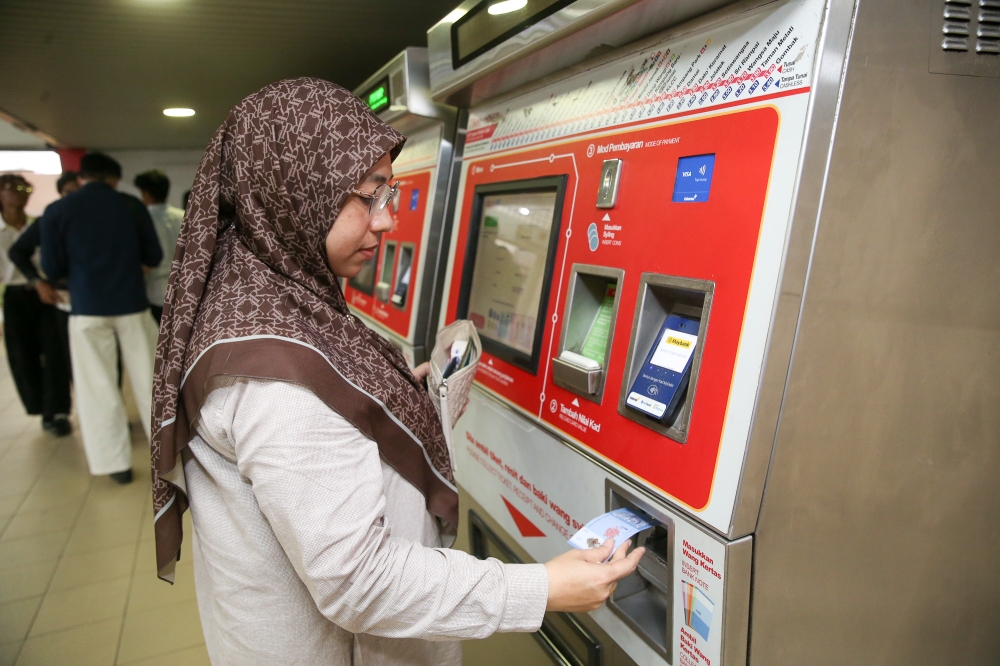
Currently, you can use cash, credit cards or debit cards at a ticket machine at Rapid KL’s train stations... but only to buy a token or reload your Touch ‘n Go card.

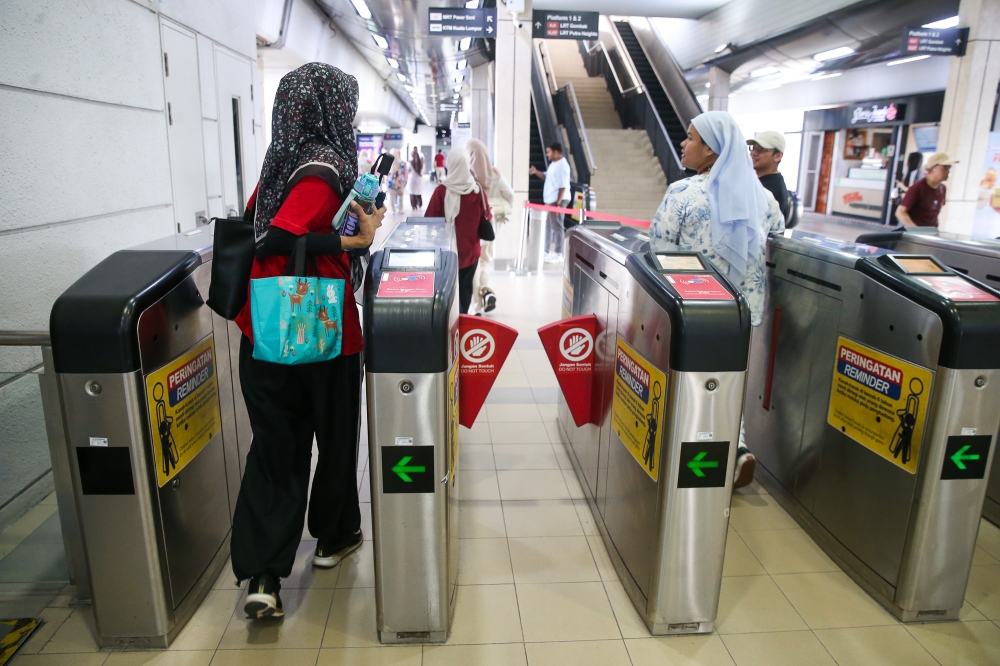
Now, you can only use a Touch ‘n Go card or a token to tap in and out for Rapid KL’s train rides, as seen here. — Picture by Choo Choy May

According to Prasarana, QR code payment “is available at all LRT, MRT, Monorail and BRT station counters”, which is also where you can buy tokens and reload Touch ‘n Go cards.

You can, of course, use cash or credit cards and debit cards at these station counters too to buy tokens or top-up your Touch ‘n Go cards’ value.

Current options for KL’s bus services  

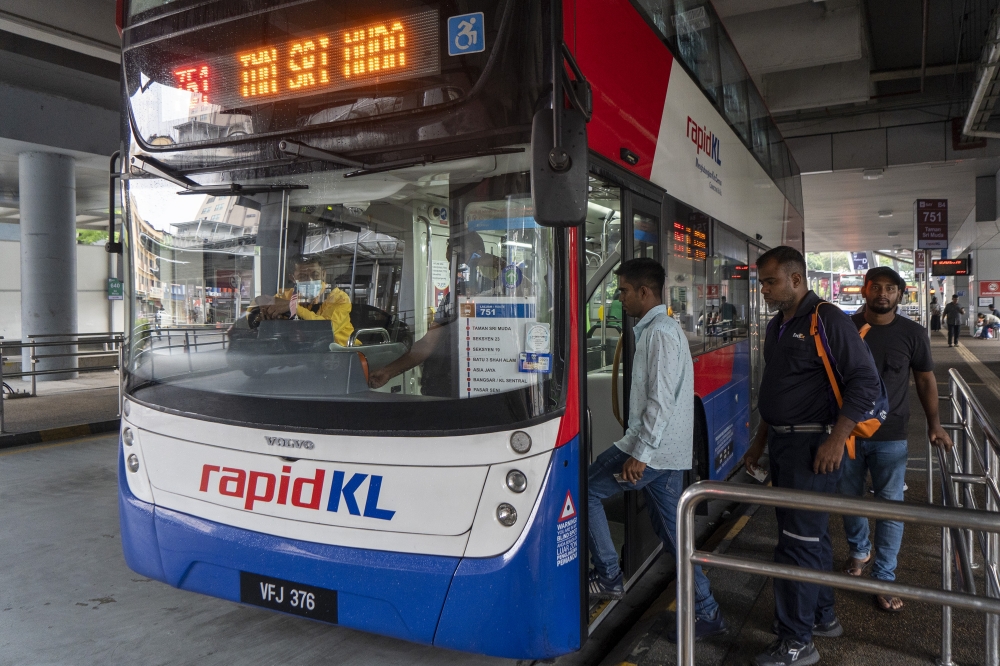
For Rapid KL’s buses, you can only pay using Touch ‘n Go cards or Rapid KL cards now, as cash is no longer an option since May 2019, based on Prasarana’s My Rapid website.

You can use cash, credit card or debit card at the ticket machine to buy a token or top-up your Touch ‘n Go card for a train ride. — Picture by Choo Choy May

Prasarana confirmed to Malay Mail that QR code payments to hop on Rapid KL buses are “not yet” available.

“At present, alternative payment options are limited: Rapid KL On-Demand (ROD) allows bookings via app-based payments, including QR code payments.

“However, credit cards, debit cards, and mobile wallets (Apple Pay, Google Pay, Samsung Pay) are not yet enabled for direct tap-in/tap-out across rail or bus services,” it said.

In the future: What we can expect  

Prasarana confirmed that it plans to enable an open payment system (including credit cards, debit cards, QR codes, mobile wallets) for directly tapping in and out for all its train and bus services.

“Yes, Prasarana is actively working towards implementing an open payment system. The project is currently at the award stage, with finalisation expected soon,” it said.

Prasarana said this project is “currently in the final stages of the award process”.

It added that this initiative “will allow commuters to use credit/ debit cards and, eventually, mobile wallets for seamless travel”.

Prasarana said “QR code payment capability is included as part of the open payment system rollout”, and that this will be made available for both its rail services and bus services.

“The implementation timeline will align with the broader open payment deployment for rail and bus services,” it said.

Expected timeline for open payment system rollout  

After the project is awarded, Prasarana said the open payment system is expected to be fully available within 30 months for its rail services, and within 15 months for its bus services in the Klang Valley.

In the future, QR code payments will be one of the alternative available payment methods for Rapid KL’s buses, according to Prasarana. — Picture by Shafwan Zaidon

Prasarana said “all payment modes under the open payment system, including credit cards, debit cards, QR, and NFC, will be delivered within the project timeline”.

“Once the project is awarded, open payment will be rolled out in phases in accordance with the project timeline. 

“It is planned to cover all rail services (LRT, MRT, and Monorail) as well as bus services (BRT, Rapid KL, MRT Feeder bus, and Rapid Penang).

“Implementation for Rapid KL On-Demand (ROD) may follow a different timeline, subject to business direction/ prioritisation.” 

 

  •  

MOF: RON97 up 15 sen, unsubsidised RON95 up 20 sen, diesel up 10 sen for May 21–27

Malay Mail

KUALA LUMPUR, May 21 — The retail prices of RON97, unsubsidised RON95 and diesel in Peninsular Malaysia will increase by 15 sen, 20 sen and 10 sen per litre respectively for the period from May 21 to 27.

The Ministry of Finance (MOF) said in a statement yesterday that the retail price of RON97 would be set at RM4.85 per litre compared with RM4.70 previously, while unsubsidised RON95 would rise to RM4.07 per litre from RM3.87 previously.

The price of diesel in Peninsular Malaysia will meanwhile be set at RM4.97 per litre compared with RM4.87 previously.

According to MOF, the new retail price adjustment is in line with the Automatic Pricing Mechanism (APM) formula.

At the same time, the Madani Government will maintain targeted subsidised prices for the people and selected sectors, covering RON95 (BUDI95) at RM1.99 per litre, diesel in Sabah, Sarawak and Labuan, as well as the Subsidised Diesel Control System (SKDS) at RM2.15 per litre, the Subsidised Petrol Control System (SKPS) at RM2.05 per litre.

MOF said that at the current unsubsidised RON95 price of RM4.07 per litre, the use of 200 litres would cost RM814.

“This means the Madani Government is bearing RM416, or more than half of the actual RON95 cost, for each recipient using the full BUDI95 entitlement,” it said.

It said Brent crude oil prices have now reached around USD110 per barrel, nearly 60 per cent higher compared with the pre-conflict level of around USD70 per barrel, as logistics costs and insurance premiums increased significantly due to shipping risks through conflict zones, further pressuring petroleum product prices.

The statement said disruptions to global oil supply were becoming more severe as the conflict continues with the Strait of Hormuz is a route for about 20 per cent of the world’s petroleum supply, while damage to oil production and refining facilities in West Asia will take time to restore.

“In view of the still uncertain global market conditions, MOF said the Madani Government urged the public to continue practising prudent fuel consumption to help extend the country’s supply,” it added. — Bernama

  •  
❌