Reading view

Cuban President Miguel Díaz-Canel’s NBC interview: 5 key takeaways

A conversation between Kirsten Welker, moderator of NBC News’ talk show “Meet the Press”, and Miguel Díaz-Canel aired on Sunday, marking the first time that a major U.S. media outlet has interviewed the current Cuban president. 

The discussion focused on the current state of U.S.-Cuba relations and saw Díaz-Canel insist that he would not resign in the face of U.S. pressure while aguing that sanctions on the island were the driving factor behind his people’s suffering. 

The Cuban politician did, however, express hope that current diplomatic talks between the two nations would culminate in a peaceful resolution and reverse the recent escalation of bilateral tensions. 

1. Defiance towards U.S. threats 

Responding to reports that the U.S. sees his dismissal from power as key to any successful negotiation, Díaz-Canel emphasized that, “In Cuba, the people in positions of leadership are not elected by the U.S. government … we have a free, sovereign state”.  

Díaz-Canel warned that both he and the Cuban population would be prepared to fight for such independence; he told Welker that, if the United States attempted to enforce political regime change through military action, he himself would be “willing to give my life for the Revolution” and would not be alone in his conviction. 

Invoking the words of Cuban independence hero and general Antonio Maceo, Díaz-Canel warned that “whoever tries to take power over Cuba will only get the dust of its soil, drenched in blood, if he doesn’t perish in the struggle”. Such a sentiment, the politician warned, is universally shared amongst Cuban people because “that is how we have been trained”.

The current readiness of Cuba’s military and population for the kind of irregular and asymmetrical warfare that Díaz-Canel referred to in the interview is unclear. The Cuban National Defense Council announced in January that its regular and irregular forces would transition into a state of preparation for war. 

Also, Cuba has a mandatory national service program designed specifically to deter and defend against a U.S. invasion. Therefore, the regular forces of the Cuban military can theoretically be bolstered by a mobilization of a paramilitary force of over 1 million trained troops at any time.

Considering this well-practiced defensive posture, Díaz-Canel predicted that a U.S. invasion of the island “would be unsustainable and untenable”.  

Though there is no way to prove Díaz-Canel’s claims about Cuban political unity in the face of U.S. threats, Dr Philip Brenner, an expert in U.S.-Cuba relations and professor at American University who spoke to Latin America Reports about the state of U.S.-Cuba relations, argued that the Cuban anti-regime opposition finds itself in a weak position. 

“There is no legitimate opposition in Cuba, there is no opposition party”. Furthermore, when discussing the anti-regime Miami-based Cuban opposition movement, Brenner argued that he “see[s] no way in which people who have been living outside of Cuba will have an effect on the future of Cuba other than through investment … There is no movement in Cuba that would really bring any of these dissidents into a leadership position”.

However, growing anti-government dissent on the island could be a sign that the Cuban population is not as supportive of the Cuban political leadership as Díaz-Canel suggests. 

2. Hope for improved relations

Despite his warnings about the potentially deadly consequences of American aggression, Díaz-Canel stressed that “both the American and Cuban peoples deserve … peace” and reiterated his desire that the current talks between the U.S. and Cuba could achieve that peace. 

“I think dialogue and deals with the U.S. government are possible, but they’re difficult … Cuba has always been willing, throughout all the years of the revolution, … [to have] a civilized, neighborly relationship with the United States”. 

On occasion, both sides have shown willingness to engage in high-level diplomatic talks, as was the case when revolutionary leader Raúl Castro and former U.S. President Barack Obama oversaw a normalization in relations in the mid-2010s. 

Nevertheless, Cuba’s posture during the Cold War, when it aligned with the USSR, the principal ideological adversary of the U.S., was more hostile. 

Specifically, Díaz-Canel listed the various areas of potential cooperation between the two countries, including combatting “drug trafficking, fighting terrorism, [working on] migration, issues of … transnational crime”. 

There has indeed been cooperation in these areas before; the U.S. previously agreed with the Cuban government to the admission of at least 20,000 legal migrants from Cuba a year, a deal designed to reduce irregular migration between the countries and slow the exodus of the Cuban population to American shores.

Despite their governments’ mutual hostility, the U.S. and Cuban Coast Guards have also historically cooperated in operations against drug trafficking and terrorism. 

Although Díaz-Canel saw continued and further cooperation on such issues as desirable, his positivity about the negotiations had a strong caveat; “we have always said that we need to build that relationship from a position of respect, from a position of equal footing, without having conditions imposed on us”. 

In practical terms, that means that discussions about the nature of Cuba’s leadership and internal political system are off the table for Cuban negotiators. 

Dr. Brenner emphasized the importance of this perceived diplomatic equality to any solution: “What the United States has to understand dealing with Cuba is that Cuba is not going to respond to threats, to the appearance of giving in to U.S. demands. They want to have a respectful negotiation that is mutually satisfactory”.

3. Identifying U.S. sanctions as principal cause of Cuban suffering

The Cuban leader decried American sanctions, calling them “genocidal” and referring to them collectively as “the blockade”. Díaz-Canel attributed the Cuban people’s suffering solely to the “policy of permanent hostility by the U.S. government at the national level.” 

Because of the U.S. sanctions, he argued, “we lack financing to buy food, to buy supplies for our production and services [industries] … [to buy] the medicine that we need and to carry out the repairs that we need for our national energy system and our industrial factories”. 

“Cuba is a country that has been under attack, …  [having suffered] over 60 years of the blockade … We are talking about the longest running blockade in the history of mankind, the most severe blockade, a blockade that is not only aimed at the Cuban people but at the American people and other peoples”, Díaz-Canel added.

Many, including representatives of the United Nations, agree that U.S. sanctions on Cuba impoverish the country’s population by causing shortages of spare parts, machinery, food, medicine, fuel and other essential goods and services. 

Dr. Brenner also pointed out that Cuba’s inclusion in the U.S. State Department’s state sponsors of terrorism (SST) list “makes it … [particularly] difficult for Cuba to engage in international commerce because most international transactions, regardless of whether the United States is actually involved, … travel through New York banks … [which are] very loathe to handle any transaction that involves Cuba” for fear of being sanctioned under the SST. 

Others, however, point to Cuban government mismanagement, failure to reform and corruption as key factors in the nation’s economic woes. 

Although Díaz-Canel suggested that he himself and Cuba’s collective leadership may have made some errors in economic judgement, he did not specify any and told Welker that the Cuban “people who are suffering … largely understand who the main culprit is”. 

4. Openness to economic, not political, reform

Cuban negotiators have stressed that any reforms implemented after negotiations with the U.S. and Cuba conclude will be economic in nature. Some of these reforms have already been announced; Cuban Americans will now be allowed to invest in businesses on the island and remittances sent from abroad will be able to be withdrawn in cash as U.S. dollars in Cuban currency exchange offices. 

Dr. Brenner suggested that such reforms demonstrated that the Cuban government is “willing to bend a lot … to regularize its relationship with the United States”. 

Díaz-Canel made occasional reference to these changes and indeed seemed enthusiastic about the possibility of greater American participation in Cuban economic life. 

“We can have investments and businesses from America, businesspeople in Cuba. We have a Cuban community living in the United States and we should also provide them with facilities, both in the United States and here … American people can come to Cuba for cultural and sporting exchanges … and exchange healthcare [expertise]”, he said. 

The Cuban president cited the recent cooperation of U.S. and Cuban healthcare practitioners on a potentially revolutionary Alzheimer’s drug developed by Cuba’s Center for Molecular Immunology (CIM) as a potential blueprint for future American-Cuban cooperation in key sectors. 

Following the U.S. operation to capture Cuban ally and Venezuelan President Nicolás Maduro, the U.S. left the Venezuelan regime intact but decided to effectively control the Venezuelan oil industry. 

Perhaps Díaz-Canel is hoping for a similar arrangement of political continuity with greater economic exchange in Cuba; during the interview, he said, “We’re open for foreign investment in Cuba, in oil exploration and drilling. There will be an opportunity for American businessmen and firms to come and participate in Cuba’s energy sector”. 

The Cuban leader even expressed admiration for the development of Vietnamese and Chinese “socialism”; Vietnam and China both retain their one-party communist political systems with more market-oriented, less centrally-planned economies than Cuba. 

Díaz-Canel’s admiration of such systems could suggest that he is open to steering Cuba in the same economic direction as Vietnam and China, though he clarified that the beginning of those two nations’ major economic development coincided with the lifting of U.S. sanctions, which clearly remains the Cuban leader’s economic priority. 

5. Rejection of human rights criticism

Towards the end of the interview, Welker challenged Díaz-Canel on Cuba’s human rights record, citing the detention of Maykel “Osorbo” Castillo Pérez, a Cuban musician and the co-founder of the Cuban anti-government dissident organization Movimiento San Isidro. 

Osorbo was sentenced to nine years in prison in 2022 for alleged “public disorder and defamation of institutions and organizations”. The UN Working Group on Arbitrary Detention has concluded that he was detained solely on the basis of pro-democracy activism. 

Díaz-Canel did not directly address Osorbo’s individual case, but instead attacked what he viewed as a manipulative media-driven campaign to discredit Cuba’s political system.

“They [the media] speak about political prisoners in Cuba … there are people in Cuba who are not in favor of the revolution … and they protest on a daily basis in different ways against the revolution and they are not in prison”.

The narrative that Cuba arbitrarily detains peaceful opponents, he continued, “is a big lie … [designed] to vilify and to engage in a character assasination of the Cuban Revolution”. 

Various human rights groups contradict this claim; Amnesty International, for example, reports that Cuban authorities routinely restrict freedom of expression, criminalize peaceful dissent and mistreat arbitrarily detained prisoners. 

Díaz-Canel, however, claimed that those imprisoned were not peaceful opposition activists, but rather malicious actors who ”promote vandalistic acts and disrupt safety … often financed by terrorist organizations and … agencies of the U.S. government which promote subversion against Cuba”. 

Those prisoners, he went on to argue, “would be in jail in any country in the world … for engaging in vandalism and [seditious] crimes”. 

Amnesty International refutes this claim too, reporting that the Cuban authorities label activists and journalists “common criminals, mercenaries and foreign agents” to legitimize their detention. 

Human Rights Watch (HRW) corroborates these claims; according to HRW the majority of the approximately 1,500 people detained after the widespread protests of 2021, were peaceful demonstrators or bystanders. 

Cuban NGO Justicia 11J also claims that, of the 760 prisoners of conscience still behind bars in Cuba in March, 358 were arrested for their participation in the 2021 protests. 

Featured Image: Cuban exiles in Miami hold placards calling for an end to the Cuban dictatorship and criticizing Cuban President Miguel Díaz-Canel

Image Credit: Luis F. Rojas via Wikimedia Commons

License: Creative Commons Licenses

The post Cuban President Miguel Díaz-Canel’s NBC interview: 5 key takeaways appeared first on Latin America Reports.
  •  

What to expect from Peru’s general election on Sunday

Over 27 million Peruvians are set to vote in the first round of highly unpredictable presidential elections and elect a new Congress on 12 April.

With a record number of 35 candidates still in the presidential race, the polls have shown strong, week-to-week volatility. 

The surprise emergence of an outsider candidate making it to the second round of presidential elections — like what happened with Pedro Castillo in 2021 — remains a possibility, considering all candidates are polling nowhere near the 50% of votes they’d need to secure a first-round victory. 

Unstable, fragmented vote 

In the latest voting simulations, Keiko Fujimori, the daughter and political heir of former Peruvian dictator Alberto Fujimori (1990-2000), is ahead in the polls. 

The right-wing candidate gathered 18.1% of the valid votes in a survey from newspaper El Comercio, and 18.6% in an IPSOS poll published by Peru21. Both projections were calculated in early April.

The most significant development is center-right candidate Carlos Álvarez’s rise to second position in both polls, from roughly 8% last week to 10.8% in the El Comercio survey and 12.1% in Peru21’s.

Rafael López Aliaga, the far-right former mayor of Lima, could be the candidate who lost the most ground ahead of Sunday’s election. After ranking among the top frontrunners for months, even rising above Fujimori at times in the polls, he dramatically plunged to 10.3% of voter intention according to El Comercio and 10.9% according to Peru21.

The two media outlet polls, however, differ regarding candidates outside of the current podium.

According to Peru21, Roberto Sánchez, a leftist former minister from Castillo’s government, is fourth as he surges to 9% of voting intention. He distanced himself from Jorge Nieto (center), with 5.6%, and César Acuña (right), with 5.1%. Four more candidates received more than 3% of votes in the poll. 

El Comercio’s population sample does not entirely share Peru21’s sample’s enthusiasm for Sánchez. He is fifth with 7% of intended votes, behind Nieto (7.2%) and ahead of Ricardo Belmont (centre). The latter hiked up from 2.8% on March 27 to 6.5% in this latest poll. Again, four candidates stood above 3%.

Polling estimations are to be interpreted with extreme caution as the electorate’s indecision remains strong, and any of the outsiders could be misrepresented and/or profit from late momentum. 

Ten days before the 2021 first round, El Comercio’s vote simulation put Castillo in sixth position with 7.9% of vote intentions.

In first-round elections at the time, the now-jailed president obtained 18.9% of the vote, surpassing Fujimori by five and a half percentage points before defeating her in the second round. 

The left-wing president, who ran on a rural Indigenous platform, was imprisoned after attempting to dissolve Congress in late 2022. His Vice President, Dina Boluarte, took over the presidency, only to be ousted herself in October of last year. 

After 36 years, a return to a bicameral legislature

For the first time since 1990, Peruvians will be voting for a bicameral Congress. 

On Sunday, the country will vote for the lower house, known as the Chamber of Deputies, as well as seats in the Senate. 

The Senate was eliminated in Alberto Fujimori’s 1993 constitution, a year after he shuttered Congress.

The legislative elections are held in every district in a single, proportional round. 

In both chambers, parties must meet a 5% nationwide threshold or a minimum of seats (seven for the Chamber of Deputies, and five for the Senate) to enter the reformed Congress.

Peru’s deep political crisis

This Sunday’s elections will take place amid high political instability and an overall disdain for Peru’s political landscape by its electorate.  

The country has seen eight presidents in the past 10 years, many of which cycled out via resignations, impeachments, and scandals.

Many Peruvians have also lost trust in their Congress, which has effectively become more powerful than the executive branch, and is held responsible for much of Peru’s current political crisis. According to Le Monde, more than half of congressmen are under investigation for corruption. 

Out of all aforementioned candidates, only Fujimori, López Aliaga and César Acuña’s parties are members of the current Congress, highlighting the strong, yet fragmented, impetus for change in the Andean nation.

Featured image: Peru’s Congress

Image credit: Genu5960 via Wikimedia Commons

The post What to expect from Peru’s general election on Sunday appeared first on Perú Reports.

The post What to expect from Peru’s general election on Sunday appeared first on Latin America Reports.
  •  

What the halt in the Strait of Hormuz means for Latin America

New York, New York — The Strait of Hormuz, a major shipping lane connecting the Persian Gulf and the Gulf of Oman, has been at a virtual standstill following the United States and Israel’s joint strikes on Iran late last month. 

One of the most critical passages for global energy markets, the strait handles nearly 20% of the global oil supply and 20% of the world’s liquified natural gas. 

As oil prices continue to shoot up at breakneck pace and with no clear end to the war in sight, some countries are scrambling to find new sources outside of the Gulf, including Caspian nations, Scandinavia, North Africa and even Latin America. 

And while some LatAm oil producing countries like Brazil could stand to prosper from increased exports, other non-oil rich countries may have a harder time competing for energy in an increasingly expensive market. 

Brazil, Guyana could have most to gain in oil sector 

Brazil, the region’s largest oil producer at around 4 million barrels per day, is already exporting upwards of 3 million barrels per day and has limited short-term capacity to increase. However, according to the nation’s energy expansion plan, production could rise to 4.4 BPD or more in the coming years. 

With many countries, especially in Asia, searching to fill gaps in their supply, Brazil could stand to gain from oil exports. 

Cristiano Pinto da Costa, president of Shell Brasil, called the U.S.-Israel-Iran conflict an “enormous opportunity” for Brazil to attract investment, citing the country’s geopolitical stability and reliability as a producer. 

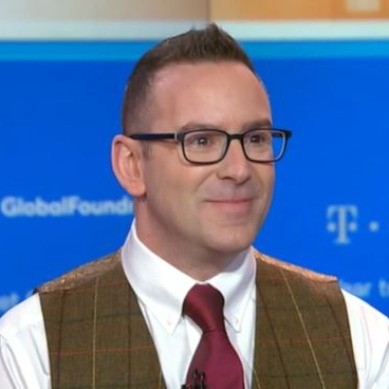
Matt Smith via LinkedIn.

Shares of the country’s state-owned oil company, Petrobras, surged on the Monday following the strikes.

According to Matt Smith, lead oil analyst for the Americas at commodity intelligence firm Kpler, for Brazil, it’s less about increasing production and more about redirecting barrels away from the U.S. and towards higher-paying Asian markets — something it was already doing before the strikes. 

“We’re seeing Brazil already going gangbusters in terms of production. It’s basically at a record,” Smith told Latin America Reports. “And so what we may see is those barrels being pulled away from other countries to Asia instead.” 

He pointed out that the shift in markets was already underway before the war, with over half of Brazil’s oil exports destined for China, as well as an uptick in shipments to India. 

Diego Rivera Rivota, an energy researcher at Columbia University’s Center on Global Energy Policy, cautioned that it may not be all upside for Brazil however. 

Any gains during the crisis are likely temporary, he explained, saying, “When you’re in crisis, I guess any volumes are useful. But can [Brazil] compete with the humongous series of volumes that flow through Hormuz to the Asia Pacific? I don’t think so.”

And while Petrobras may benefit from the crisis’ windfall, the macroeconomic picture is more complicated. 

El País reported that food costs could go up as Brazil’s transportation is largely truck-based and its agricultural center is heavily dependent on imported fertilizers tied to natural gas prices.

“Probably the balance sheet of Petrobras and other companies would look heftier. But the balance sheet of, you know, maybe some food distributor or supermarkets or other companies would not feel the same way. It’s very hard to balance that as a society,” Rivera told Latin America Reports.

Another South American country, the small but oil-rich Guyana, could also stand to benefit from the Strait’s closure. 

Oil production has been growing rapidly, with new crude streams coming online that are beginning to reach Asian markets. 

Smith noted, “As we’ve seen Guyanese production continuing to increase as they’ve added new crude streams, we’re starting to see some of these barrels heading to Asia. This developing situation is definitely going to pull more Guyanese barrels into Asia.” 

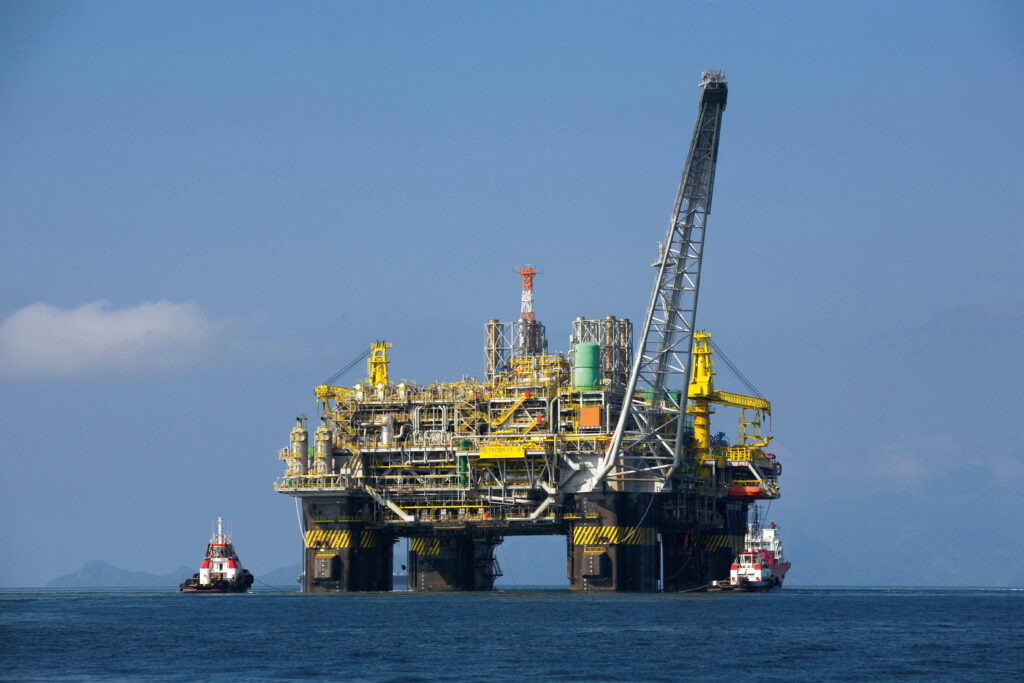
Oil platform P-51 in Brazil. Image credit: Wikimedia Commons

The Venezuela question

With the world’s largest proven oil reserves, Venezuela naturally comes to mind during a global energy crisis. 

But crumbling infrastructure means the country produces only a fraction of its potential, currently about 1.2 million barrels per day. Even so, rising prices could deliver the country significant revenue. 

Alejandro Grisanti, director of Ecoanalítica, told El País that Venezuela stands to receive about $400 million for every additional dollar in the average crude price.

The U.S. abduction of President Nicolás Maduro on January 3 and the subsequent appointment of acting President Delcy Rodríguez have raised questions about how much control the U.S. has over Venezuela’s oil flows. 

Before the intervention, Venezuelan crude allegedly flowed primarily to China through sanctioned shadow fleets. Since January, flows to the U.S. have increased significantly under supply arrangements involving trading houses such as Vitol and Trafigura.

Smith described a potential tug-of-war emerging between Washington and Beijing over Venezuelan barrels. 

“In recent months, we’ve seen Venezuelan crude, which had previously all gone to China, is now mostly going or starting to pick up to the U.S.,” Smith said. “You’ve got these trading houses, which are basically not discerning in who they sell that crude to. So if China’s going to come back into the market and is willing to pay the most for it, then it will head in that direction. But if we started to see some massive pick up in those flows back to China, there may be some response from the U.S.”

Rivera approached the scenario with more skepticism, saying he would find it “very hard” for trading houses to sell Venezuelan oil to China without “the approval, so to speak, or blessing of the U.S. administration for the specific case of Venezuela.”

Consumers take the hit

Elsewhere in Latin America, countries that import oil products could see costs go up for consumers if the war doesn’t de-escalate. 

Rising liquid natural gas prices could also feed into inflation, especially in countries like Brazil, where goods are primarily moved by truck rather than rail. 

Because so much of the food, merchandise, and manufactured goods are traveling by road, rising fuel prices would ripple across consumer products. If sustained, Rivers warns the shock could “mean a lot of inflationary pressure.” 

Chile is particularly vulnerable. Rivera described it as “a major importer in the region which imports the bulk of its consumption, both in crude and in oil products.” 

Diego Rivera Rivota via LinkedIn.

Just hours after the first U.S. strike, the Chilean peso weakened by about 14.8 pesos against the dollar, reaching 886.8 pesos per dollar.

Central American and Caribbean nations face an even greater exposure. 

“For some of them, they use oil products not only for transportation, which is pretty big, of course, but also for power generation,” Rivera said. “So they have a sort of double whammy on that price pressure.”

He noted that while some of these countries may be shielded by long-term contracts, many others, such as Jamaica, the Dominican Republic, and Nicaragua, rely heavily on the spot market and will be immediately exposed. 

The extent to which Latin America countries will feel the impact of the war in the Middle East will depend on how it develops and how long it lasts, according to the experts. 

Rivera said the crisis has pushed the world into “an absolutely unprecedented” and “nightmare” scenario, warning that if the conflict persists, the world could face “an energy crisis of major proportions that we probably haven’t seen in our lifetimes.” 

While some major oil and gas producers could stand to see windfall gains, he maintains that the broader economic consequences, inflation, and major trade disruption, outweigh any ‘benefits’. 

“The negative impacts seem to outstrip the possible wins,” Rivera concluded.

Featured image: Strait of Hormuz via Wikimedia Commons

The post What the halt in the Strait of Hormuz means for Latin America appeared first on Latin America Reports.
  •  

Colombia’s #MeToo moment highlights abuse within media organizations

Bogotá, Colombia – Noticias Caracol, one of the largest media outlets in Colombia, released a statement on March 20 regarding an investigation into two of its lead journalists, Ricardo Orrego and Jorge Alfredo Vargas, following allegations of sexual abuse against some of their female colleagues.

The allegations sent shockwaves through the media industry, in part because of the reputation both men had built over their careers.

For decades, Orrego was the voice of Colombian sports, leading coverage of multiple World Cups and other international sporting competitions, while Vargas had been the charismatic anchor of Caracol’s prime-time news show for over 20 years. 

Days after announcing the investigation, the network sent a follow-up message: both men had been removed from their positions despite them denying the allegations. Soon after, Orrego published a statement from his lawyer on X, saying the firing was “one sided” and that he would comply with any investigation. Vargas also published a statement saying he was stepping away from Caracol while saying he maintained “respect” and “good behavior” while working as a journalist.

The firings marked a pivotal moment for Colombian newsrooms and inspired dozens of female journalists to come forward and share their own experiences of sexual harassment, sparking a massive wave of solidarity under the hashtags #YoTeCreoColega (I believe you, colleague) and #MeTooColombia, while also exposing a deeply-rooted culture of harassment and abuse.

Fear: a reason for sharing an open secret

Before social media changed the news landscape, the men and women appearing on Colombian television screens to report the news became trusted icons for aspiring journalists, including myself. 

As their star-power rose, questioning them became more difficult. 

Longtime Colombian journalist Yolanda Ruiz wrote in her column for Spanish newspaper El País that the industry “has prioritized the ratings of its stars over the dignity of female journalists,” creating a “throne of impunity that is finally beginning to crumble.”

“It cannot be a surprise when the ‘open secret’ finally explodes,” she wrote. 

The harassment isn’t just contained to the television industry either. According to a 2020 study by the Observatorio de la Democracia at Universidad de los Andes, which surveyed 158 female reporters, six out of 10 participants reported being victims of gender-based violence in their workplaces, while a staggering 77.9% stated they were aware of this kind of abuse against their female colleagues.

Several journalists (in this case, regardless of gender) have also claimed to be victims of workplace bullying, stemming not only from bosses and power figures but also from their own colleagues. 

Beyond the situations of workplace and sexual harassment, journalists in Colombia also face low salaries and severe labor instability. According to a study by Universidad del Rosario, which surveyed 277 journalists, nearly half of the participants (137) stated they would leave the profession for another field if given the chance. 

This reveals a toxic environment where intimidation was normalized at every level of the newsroom, creating a cross-sectional pattern of abuse that silenced those trying to build a career or keep their current positions within the industry.

Same pattern, different workplaces

Following the Caracol journalists’ harassment allegations, Colombian journalists Paula Bolívar, Juanita Gómez, Mónica Rodríguez, Laura Palomino, and Catalina Botero began the #MeTooColombia movement. 

They were inspired by the #MeToo hashtag that arose in the U.S. in 2017 following revelations of sexual abuse by Hollywood producer Harvey Weinstein. 

The group of reporters also established a dedicated communication channel (yotecreocolega@gmail.com) for victims to share their stories of abuse within newsrooms. The response was overwhelming: in just a week, they received at least 200 emails with testimonies ranging from 1993 to 2025.

In the case of Juanita Gómez and Catalina Botero, both prominent journalists who previously worked at Noticias Caracol and who currently serve at weekly news magazine Semana and state-owned radio station RTVC respectively, the initiative started by sharing on social media their own experiences.

Through her account on X, Gómez detailed aggressions she suffered from a well-known anchor while on an international assignment in 2015.

“I would tell her that having to force a journalist/presenter off you, several times and with pushing, so he wouldn’t kiss you in an elevator… is not normal and should never have happened,” Gómez wrote.

“I would also tell her to talk to her female colleagues, hopefully many of them, because they have much worse stories, and surely together they would find a way to report the harasser.” 

This encouraged other women who worked at TV channel RCN, newspaper El Espectador, and other Colombian media, to share their own experiences.

Some questions began to surface: if this is a systemic pattern across the entire media industry, why has only one outlet spoken out publicly? And more importantly, why is this reckoning happening only now?

The fact that Juan Roberto Vargas, the director of Noticias Caracol, has publicly addressed the situation inside the media outlet as “painful” and “sad” marks a significant first step, one that directors of other major media outlets should follow.

His commitment to taking “decisive measures” sets a precedent in an industry where silence has long been the standard response to internal abuse.

The end of an era: Breaking the cycle of impunity

Eight years ago, Lina Castillo publicly accused Hollman Morris—the current director of the public radio broadcaster RTVC—of sexual and workplace harassment. 

The journalist’s public allegations were turned against her, however, after Morris filed a defamation complaint, arguing her accusations were damaging his reputation. 

Driven by the #YoTeCreoColega movement, a group of more than 40 women, including journalists, lawyers, and writers, joined together to sign an open letter questioning the case against Castillo and denouncing Morris’s legal actions. They argue that his goal is not to seek justice, but “to silence the women who report him.”

In March, following pressure from social organizations, the case was transferred to a higher court to ensure “gender sensitive analysis.” 

Additionally, Jineth Bedoya, an award-winning journalist who became a symbol of the fight against gender-based violence following her kidnapping, torture, and rape at the hands of right-wing paramilitaries in 2000, recently took the issue of harassment in newsrooms to lawmakers.  

On March 25, Bedoya testified before Congress, calling on lawmakers to end the “pacts of silence” that have protected predators in newsrooms for decades.

“A group of women journalists is here today to remind you that, for decades, women in the media have had to carry the burden of gender-based violence,” she stated. “No more pacts of silence in newsrooms. Today is not the time to remain silent.”

The #MeTooColombia movement is also seeking legal recourse for victims. The Attorney General’s Office reported over 50 complaints of sexual and workplace harassment within the media industry in less than a week after the initial allegations involving journalists from Noticias Caracol came to light.

Victims were encouraged to report abuse to a special email set up by the Prosecutor’s Office: denuncia.acoso@fiscalia.gov.co

The tip of the iceberg?

On April 7, the Ministry of Labor published a document detailing immediate measures imposed against Noticias Caracol. This followed an inspection of Caracol TV and BLU Radio facilities, which could potentially be extended to other media companies.

“There are clear signs of a possible failure in the mechanisms for prevention, attention, and investigation of workplace sexual harassment within the company,” the statement pointed out.

The investigation also revealed that one of the accused, Ricardo Orrego, had received prior warnings in 2023 and 2025. However, there are no documents identifying the complainants behind them or any evidence of a structured disciplinary procedure.

Regarding the disgraced journalist, the Ministry ordered a “documentary reconstruction process” for the warnings issued to Orrego. The goal is to “identify the original complaints, the departments involved, and the reasons why no formal disciplinary procedures were ever carried out.”

At the same time, the inspection uncovered 15 new complaints of potential sexual harassment. These cases had remained invisible, either because victims didn’t report them or because the company simply failed to handle them through the proper channels.

While Caracol’s decision to go public marks a rare and necessary first step, the Ministry’s ongoing oversight serves as a reminder that this is an open investigation—and a warning for the rest of the industry.

Hear from the women

As this report focuses on a culture of silence within Colombian media, Latin America Reports reached out to several victims of harassment directly. 

These journalists shared their stories on the condition of anonymity to protect their safety and professional careers. 

Their testimonies offer a look at the cases that have remained hidden for years. 

Giving a voice to these experiences is essential to breaking the cycle of harassment and silence, prioritizing the human experience over the data:


The abusive touching from that older man—who claimed to be the owner of a renowned media outlet—left me completely paralyzed. 

He approached my friend and I when we were just young women, speaking in a sickening tone. ‘Do you want to be part of my team? Please, don’t hesitate to contact me,’ he told her, while his hand kept moving all over her body and his mouth was disturbingly close to hers.


“You should remain silent and avoid creating unnecessary drama… It’s for the best,” the HR leader told me when I tried to ask for help regarding my abusive boss. I tried so hard to remain calm, but the harassment became my shadow.

He would call me desperately at any hour, screaming and berating me for no reason. My phone became a source of terror. I stopped sleeping, and when I finally had a moment of peace, my anxiety wouldn’t let me rest. I found myself waking up every few minutes, trembling, just to check my screen, waiting for the next blow.

I decided to talk to him man-to-man as a last resort. He looked at me with a smirk and said: ‘You have to understand that humiliations are part of the daily grind here. Only those of us who live in the newsroom know how to truly value them.’ Then, he softened his voice: ‘Don’t worry, you have a brilliant future ahead. You are on the right track.’

But his ‘mentorship’ was a lie. Just minutes later, I overheard him mocking me to a colleague, calling me a ‘crying baby’ who was unable to perform even the simplest tasks (even though I was doing my work and his). I decided to give up. Nobody ever listened. Or worse, they were spectators of the mistreatment and chose to look the other way.


Being an intern arriving in a newsroom is a dream come true. You watch those leading the day, seeing them on a pedestal, unaware of the power dynamics hidden behind the cameras.

The eyes shining and the hunger to ‘reach the top of the world’ are just a few steps away, but you’re new in an industry that is not as you imagine. Humiliations, screams, and rude remarks, all of them, are the daily meal.

You can see everyone getting nervous, but you can also feel the envy among colleagues—reporters pushing others away, making fun of them, or giving them derogatory nicknames to ruin their reputation. They are always on the lookout for their failures… It’s like a high school horror movie about bullying.

All of a sudden, the first message arrives on your phone: “Your ass is amazing, can I have a bite?” It comes from a colleague, much older than you, who has been leading the top stories for years and has falsely offered to share his professional secrets with you.

You’re nobody. You have just arrived at your first job—what can you really do? Report it to the director? He doesn’t even know who you are yet; you haven’t even had the chance to show what you’re capable of. It’s better to say nothing, even if each time the messages get worse and you feel more and more repulsed.

It’s part of ‘building character,’ was always heard.


Featured image: Ricardo Orrego and Jorge Alfredo Vargas

Image credit: David Gonzalez for Latin America Reports

The post Colombia’s #MeToo moment highlights abuse within media organizations appeared first on Latin America Reports.

  •  

Iran Is Aiming To Use Chinese Technology To Permanently Throttle Internet Access

A senior Iranian official says Tehran has imported Chinese equipment to support a “permanent” internet shutdown, as the country’s unprecedented blackout enters its third month. Experts say Iran's censorship model is cheaper than the Chinese version and easier to replicate for other states.

  •  

Argentina’s Milei courts investment through key deregulation legislation

Buenos Aires, Argentina – In the past weeks Argentina’s Congress has advanced two major structural reforms promoted by President Javier Milei that could reshape the country’s regulatory framework and reignite debate over labor rights, environmental protections and investment rules. 

The first measure, a major labor reform approved by both chambers, aims to make hiring more flexible by reducing litigation risks and introducing new severance fund schemes. The second proposal, currently under debate in the Chamber of Deputies, seeks to narrow the scope of Argentina’s glacier protection law, a change that could allow mining activity in areas previously restricted in the Andes.

The laws are part of a broader strategy by the libertarian government to deliver on campaign promises of attracting foreign investment and boosting economic activity after years of stagnation. 

But both initiatives have drawn strong criticism from labor unions, environmental organizations and opposition lawmakers, who argue the reforms could weaken worker protections and environmental safeguards.

Labor reform targets hiring costs and litigation

In late February, lawmakers approved a sweeping labor reform aimed at making hiring more flexible and reducing litigation risks for companies — a controversial issue that led to a nationwide general strike and widespread protests outside Congress. 

Approved by both chambers and now entering the implementation phase, the labor reform introduces several changes to Argentina’s employment framework, including the creation of severance funds that allow companies to replace traditional dismissal compensation with a capitalized system funded during employment.

The legislation also extends probationary periods for new hires and reduces penalties for companies that previously failed to properly register workers — a measure the government says could encourage formal employment in a country where nearly half of 12.9 million workers operate in the informal economy, according to the latest figures from Argentina’s national statistics agency (INDEC).

Other provisions expand the list of sectors considered “essential services,” placing limits on strike actions in areas such as transportation, energy and health. For the Milei administration, the reform aims to address structural barriers that have discouraged companies from hiring workers.

The Senate approves the labor reform bill. Image credit: Senate of Argentina

“Labor modernization has as its primary benefit the creation of employment,” Labor Secretary Julio Cordero said while defending the initiative during the congressional debate. According to Cordero, the reform seeks to correct distortions that have accumulated in Argentina’s labor system over time while preserving “essential worker protections.”

President Javier Milei celebrated the vote shortly after its approval, calling the measure “historic” and presenting it as a key step in modernizing Argentina’s labor market.

Supporters argue Argentina’s labor regulations have long discouraged job creation due to legal uncertainty and high non-salary labor costs. During the Senate debate, Senator Patricia Bullrich defended the reform arguing that Argentina has developed what she described as a “trial industry,” referring to the high level of labor litigation that, according to supporters of the bill, discourages companies from hiring.

“These measures move in the direction of creating a more favorable reputation for business, trade and investment,” stated Marcelo Elizondo, an economist specializing in international trade, to Argentina Reports.

“The labor law makes hiring more agile. One of Argentina’s main problems in job creation has been the uncertainty surrounding the labor regime and the high non-salary labor costs, which this reform significantly reduces,” he added.

According to Elizondo, the reform is part of a broader deregulatory strategy that began with Milei’s sweeping economic decree in late 2023 and continued with legislative initiatives aimed at improving the country’s business climate.

Glacier law reform reopens debate over mining

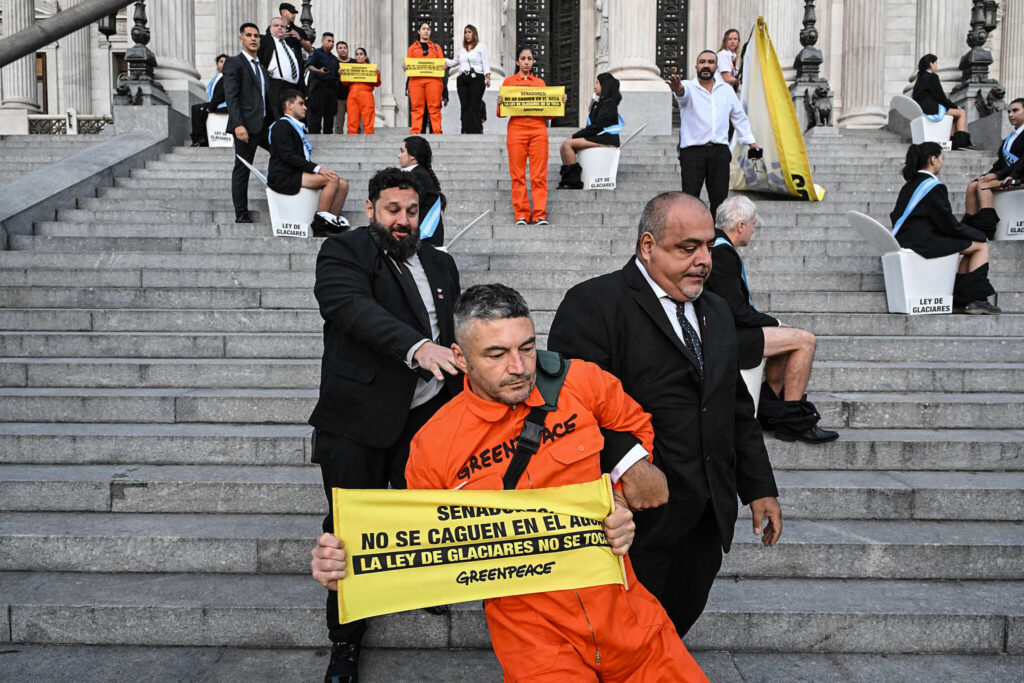
Just days after passing Milei’s labor reforms, the Senate also gave initial approval to changes to Argentina’s glacier protection law, a move critics say could reopen previously restricted areas to mining activity in the Andes. The bill is now under debate in the Chamber of Deputies, where the final vote has been extended into the first week of April.

The proposed reform seeks to redefine which glaciers qualify for legal protection, limiting safeguards to those that demonstrate a verified hydrological function.

Supporters say the measure could reduce regulatory uncertainty and allow mining projects to move forward in areas previously restricted under broader definitions of periglacial zones.

The debate is particularly relevant for Argentina’s mining sector, as the country forms part of the so-called “lithium triangle” alongside Chile and Bolivia and holds some of the world’s largest reserves of lithium — a key mineral used in electric vehicle batteries.

This image has an empty alt attribute; its file name is Martin-Katz-Glacier-protest-1024x683.jpg
Greenpeace activists were arrested after staging a direct action at the main entrance to the National Congress. Image credit: Martin Katz via Greenpeace

Economist Martín Kalos of the University of Buenos Aires said the reform touches on a longstanding debate within the mining sector over regulatory ambiguity. “There has been uncertainty about what constitutes a periglacial area and whether a mining project could later be challenged under glacier protection rules,” he told Argentina Reports.

However, Kalos warned that the reform may not necessarily eliminate legal risks for investors. Argentina, he explained, is a signatory to the Escazú Agreement, which incorporates the principle of environmental non-regression — a doctrine that could expose the new law to constitutional challenges if courts determine that environmental protections have been weakened.

“The risk of judicialization remains,” Kalos said, noting that environmental disputes in Argentina can take years to resolve and that uncertainty therefore remains.

The political consensus question

Beyond the environmental debate, analysts say Argentina’s broader challenge lies in building political consensus around structural reforms. Large investment projects — particularly in sectors such as mining, energy and infrastructure — often require regulatory stability that extends beyond a single administration, which can be challenging in a country that has shifted between political parties in the past three presidential elections.

In that sense, Kalos pointed out that the lack of broad political agreement could raise questions for investors evaluating long-term projects in the country. “Argentina changed its glacier law after only 15 years,” Kalos said. “If reforms do not achieve broader political consensus, investors may wonder whether they could be reversed by a future government.”

That concern has also appeared in Argentina’s negotiations with the International Monetary Fund (IMF), which has repeatedly emphasized the importance of political support and institutional stability to sustain economic reforms over time.

On the other hand, opposition lawmakers have strongly criticized the initiatives. Peronist Senator José Mayans described the labor reform as “an unconstitutional embarrassment” and argued it “weakens workers’ rights” while “favoring employers”.

Environmental groups have also raised concerns about the glacier law changes, warning that loosening protections could open fragile ecosystems in the Andes to mining activity.

For Kalos, the broader issue goes beyond the specific reforms. “Argentina has not had a broad debate about its long-term development model,” he said. “Without that consensus, reforms can become part of the country’s political pendulum.”

Investment opportunities — and uncertainty

Despite the controversy surrounding the reforms, both analysts agree that Argentina continues to offer significant opportunities for foreign investment in sectors such as energy, mining, agribusiness and services linked to those industries.

Large-scale projects in shale oil and gas development, lithium extraction and agro-industrial value chains remain attractive to international investors seeking exposure to natural resources and emerging markets.

The challenge for Milei’s government will be whether its reform agenda can create the stable regulatory environment needed for those investments to materialize.

For supporters, the reforms signal a country attempting to reposition itself in global markets. For critics, they raise a deeper question that has long defined Argentina’s economic trajectory: whether structural reforms can endure beyond the country’s volatile political cycles.

Featured image description: President Javier Milei.

Featured image credit: Javier Milei via Instagram.

The post Argentina’s Milei courts investment through key deregulation legislation appeared first on Argentina Reports.

The post Argentina’s Milei courts investment through key deregulation legislation appeared first on Latin America Reports.
  •  

Why is Delcy Rodríguez’s government erasing Nicolás Maduro’s image across Venezuela?

Caracas, Venezuela — Propaganda featuring Nicolás Maduro is disappearing from various public spaces and institutions in Venezuela. According to some analysts, it’s a sign of interim President Delcy Rodríguez’s attempt to distance herself from her predecessor and rebrand her government for political survival.

Five months after the authoritarian president’s capture by U.S. special forces, murals, posters, and other symbols associated with Maduro — including the anti-imperialist cartoon character Súper Bigote — have been gradually removed by the interim administration. 

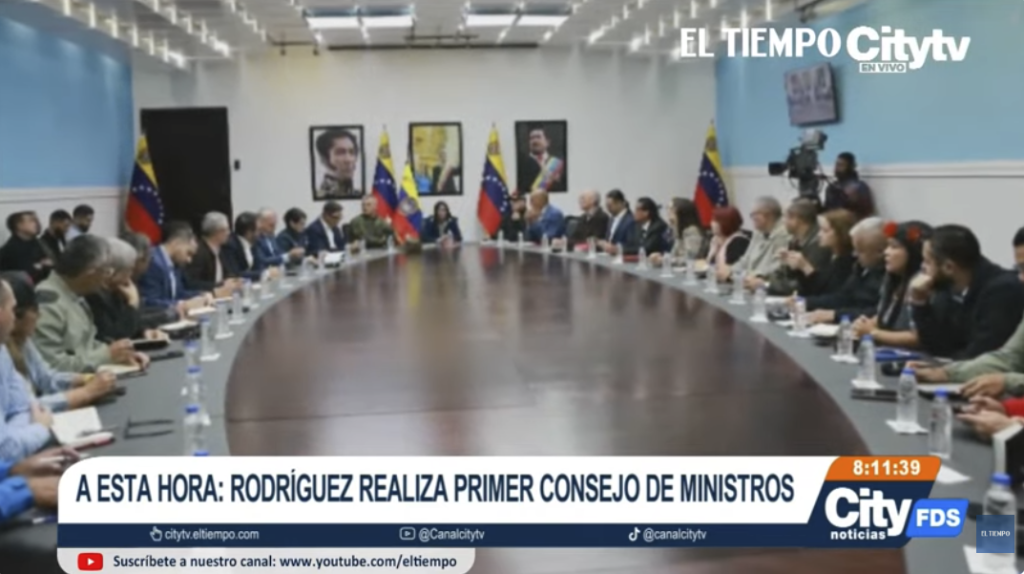
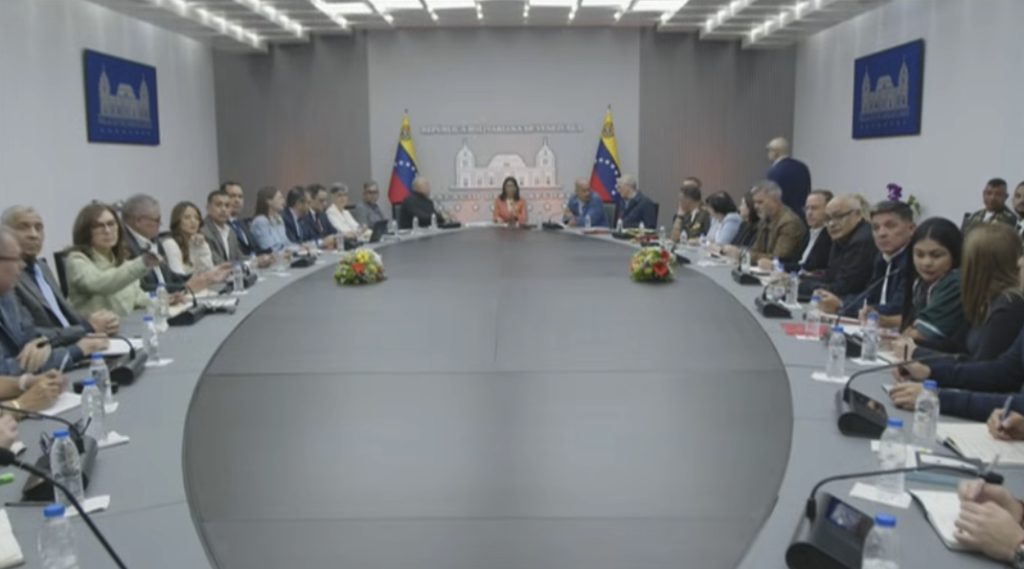
Social media posters have spotted Maduro’s image removed from toll roads, financial institutions including the Banco de Venezuela (BDV), even inside the Cabinet Room at the Miraflores Palace, home of Venezuela’s presidency, where pictures of Maduro and his wife, Cilia Flores, that hung on the wall after his capture, have since been replaced by a palace seal. 

Screenshot of cabinet meeting inside Miraflores Palace on January 4, 2026. Pictures of Nicolás Maduro, his wife Cilia Flores, and Simón Bolivar hang on a wall behind interim President Delcy Rodríguez. Image credit: CityTV & El Tiempo via YouTube.
Screenshot of cabinet meeting in Miraflores Palace on May 26, 2026. Behind interim President Delcy Rodríguez is a seal of the presidential palace. Image credit: Venezolana de Televisión via YouTube.

“Maduro is a figure with a very poor image. The revolution turned out to be one of the worst things that has happened to the country, and now they are seeking to disassociate themselves from that image conveyed by people who ultimately caused great harm to the country,” José Vicente Carrasquero, a Venezuelan political consultant and adjunct professor at Miami Dade College, told Latin America Reports

In late May, a Bloomberg and Atlas Intel poll showed 68% of Venezuelans surveyed had a negative perception of Maduro. Other influential members of the regime, such as Minister of Interior, Justice and Peace Diosdado Cabello and National Assembly President Jorge Rodríguez also received 68% disapproval ratings while 59% of Venezuelans perceived Delcy Rodríguez in a negative light. 

Carrasquero suggests that the erasure of Maduro-related propaganda could be an attempt to rebrand the political project known as Chavismo — which gets its named from Maduro’s predecessor and the deceased leader of the Bolivarian Revolution, former President Hugo Chávez. 

“Something that is disappearing — and hopefully will disappear forever from Venezuelan politics — is the cult of personality. The attempt to associate the political project and its progress with individuals,” he explained. “It is a mistake, especially when those individuals are as mediocre as Chávez and Maduro. Clearly, we must return to institutionalized politics, centered on a project, on parties, on things that endure over time and do not vanish.” 

Chavismo’s new look 

Carrasquero argues that Rodríguez’s administration is “very pragmatic” and desperately wants to remain in power because “power is what keeps them from being held accountable” for offenses committed during Maduro’s presidency. 

As part of this pragmatic shift, the government, the professor said, is showing concern for issues it previously would ignore, including corruption and basic services for ordinary Venezuelans.

Rodríguez recently announced that her team is establishing a hotline to report corruption amongst authorities. “I want to put an end to the harassment and extortion,” she said. 

In April, she also announced negotiations with Siemens and General Electric to resolve the electricity crisis in the Zulia state.

“They’re trying to stabilize the situation to see if they can stay in power as long as possible,” Carrasquero said.

Despite the fresh paint job, Carrasquero believes Chavismo will have a tough time winning any future elections, should they occur.

Rodriguez remains interim president despite her 90-day emergency mandate expiring in April. The country’s opposition has called for elections but government officials have pushed back, saying that they need to stabilize the economy before any political transition takes place. 

Congressman Nicolás Maduro Guerra, Maduro’s son, told the Spanish newspaper ABC, “When I walk down the street, I don’t get the feeling that Venezuelans want to vote yet this year. People need to breathe, they need a plan that leads to economic growth.” 

Read more: Delcy Rodríguez’s term as acting president has expired. Why haven’t new elections been called in Venezuela?

The same Bloomberg/Atlas Intel poll showed opposition leader Maria Corina Machado with a 55% approval rating and her political stand-in, Edumundo Gonzalez Urrieta, with 47% approval. U.S. President Donald Trump and Secretary of State Marco Rubio also saw mostly positive perceptions amongst Venezuelans, with 45% and 49% approval ratings respectively. 

“In my view, it is almost impossible for [Chavismo] to win an election again in the near future, basically because they are responsible for what Venezuela is going through,” he stated.

Featured image credit: SuperBigoteOficial via YouTube

The post Why is Delcy Rodríguez’s government erasing Nicolás Maduro’s image across Venezuela? appeared first on Latin America Reports.
  •  

The ‘global far right’ in Colombia – lessons from history (Perspective) 

On May 24, Colombia’s President Gustavo Petro posted on X denouncing an “international alliance of the ultra-right” which was seeking to interfere in presidential elections being held this Sunday. 

The so-called “Hondurasgate” responds to a series of audios leaked in late April indicating an alleged conspiracy between the United States, Israel and Argentina to destabilize left-wing governments in Latin America, including in Colombia. 

Leaked recordings, first published by Diario Red, allegedly tie former Honduran President Juan Orlando Hernandez to conservative actors in these countries who set out to spread disinformation about leftist governments in Mexico, Colombia and Brazil. 

Such international coordination is not new; since at least last August there have been reports of the far right in Colombia developing increasingly sophisticated ties with extremist groups in Latin America, Spain and the United States. 

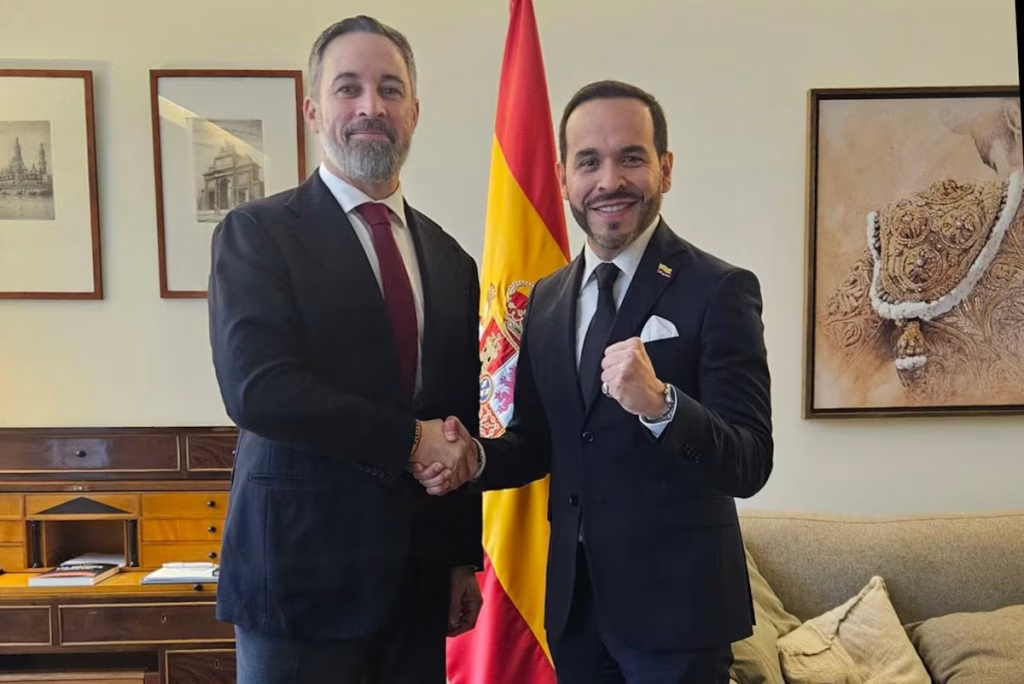
These cross-border networks include significant figures in Colombian politics. In January, presidential hopeful Abelardo de la Espriella travelled to Madrid where he met Santiago Abascal, leader of far-right Spanish Vox party, and participated in the Foro de Madrid, an alliance of right-wing leaders and groups across Europe and the Americas. 

A recent investigation by Bellingcat and Cerosetenta also connected Jorge Rodríguez, ex- congressional candidate for the Centro Democrático, to an alleged member of the global neonazi group Active Club in Bogotá. Rodríguez has been a keen supporter of another contender for the presidency, the Centro Demcrático’s Paloma Valencia.

As Petro’s post suggests, there are also more powerful influences at play. On May 20, Republican Senator Bernie Moreno told a meeting of the Atlantic Council that the United States might not recognize the result of Sunday’s elections if there is evidence of voter intimidation. 

Moreno, who is of Colombian origin and has been invited to oversee the elections as an international observer, also denounced the Petro administration and claimed it would be an “abject disaster” if the country voted in another leftist government. 

Santiago Abascal and Abelardo De La Espriella met in Spain in January 2026. Image credit: Vox

Colombia’s history with the global far right 

As a historian of 20th-century Colombia, focussing particularly on political and social developments in the mid-1900s, I am aware that Colombia’s growing entanglement in the global far right also has historical precedents.

In the late 1930s and early 1940s, various right-wing groups across the country cultivated cross-border connections with fascist-inspired groups in Europe and Latin America. 

In the context of Liberal social reformism, Conservative weakness and a growing fear of communism, several movements emerged across the country (but principally in Bogotá and Medellín) which sought inspiration from Nazism, Italian fascism and, most importantly, Spanish Catholic nationalism. 

The onset of the Spanish Civil War (1936 to 1939) allowed these groups to forge tangible links with their European counterparts in the form of fundraising campaigns for Nationalist troops in Spain, propaganda visits from representatives of General Francisco Franco and the establishment of local branches of the Falange Española, a fascist political party. 

These connections strengthened the Colombian far right financially and politically, making them a not insignificant force in the country. 

Colombia in the mid-20th century was clearly a very different political and social scene. For starters, it had a bipartisan political system and the Catholic Church played a very influential role in politics. 

However, it is worth taking note of the consequences of this previous international mobilization, particularly as the far right plays a much more significant role today. 

Firstly, the growing audacity of right-wing movements led to the halting of a reformist agenda which, although imperfect, did aim to improve the lives of many Colombians. 

It also increased political polarization in the country and infused popular and official Conservative discourse with a particular religious-based nationalism that would have disastrous consequences in the late 1940s when Colombia saw the outbreak of a more-than-decade-long informal civil war. 

Colombian President Laureano Gómez (1950-53) admired General Francisco Franco’s fascist government in Spain and in 1953 promoted a corporatist constitutional reform bill. He was deposed in a military coup that same year. Image credit: Señal Memoria

Finally, the sense that the country’s interests were better served as part of a wider conservative ideal, contributed to a constitutional reform bill in 1953 which sought to turn Colombia into a confessional corporatist state along the lines of Franco’s Spain. 

This bill failed but provoked a coup that inaugurated the country’s only 20th-century dictatorship which was succeeded by a 16-year power sharing agreement that set the scene for the emergence of guerrilla movements from the 1960s.

Of course, no one can predict the long-term impacts of the upcoming election result. However, the events of the 1930s and 1940s should give pause for thought about what the involvement of certain presidential candidates in the global far right could mean for Colombia’s future. 

The opinions and analysis expressed in this column are solely those of the author and do not necessarily reflect the views of Latin America Reports.

The post The ‘global far right’ in Colombia – lessons from history (Perspective)  appeared first on Latin America Reports.
  •  

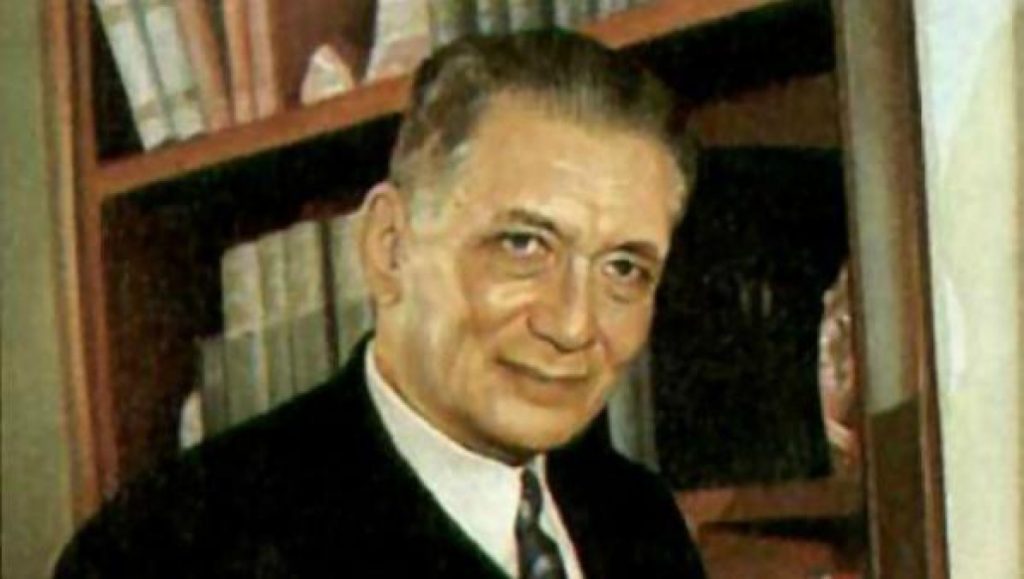
On anniversary of military coup, Argentina’s ‘Nuremberg Trial’ prosecutor reflects on current global conflicts (Interview)

Buenos Aires, Argentina — On the 50th anniversary of Argentina’s military coup, which led to one of the bloodiest dictatorships in South American history, the former prosecutor of Argentina’s so-called “Nuremberg Trial,” Luis Moreno Ocampo, argues that the country offers a key lesson for today’s global conflicts: violence should be confronted with justice, not war — otherwise, “it multiplies.”

In the 1970s, Argentina was battered by extreme political violence, with guerrilla groups and escalating state repression that intensified after the 1976 military coup led by General Jorge Rafael Videla. His military dictatorship carried out an illegal, nationwide campaign that included forced disappearances, torture, and the systematic theft of newborns. An estimated 30,000 people were disappeared, and around 500 babies were taken from detained parents, according to the human rights organization Grandmothers of Plaza de Mayo.

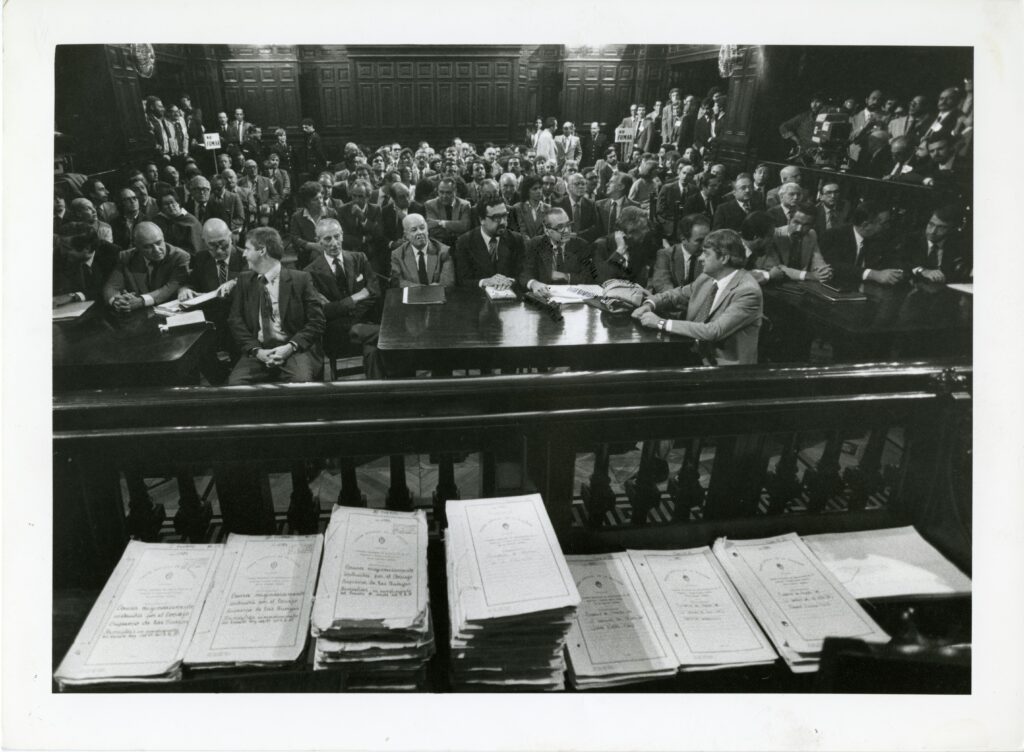
In 1985, after the fall of the dictatorship, Moreno Ocampo served as a deputy prosecutor in the Trial of the Juntas, in which Argentina’s newfound democratic government prosecuted the leaders of the military junta for crimes against humanity. 

The landmark trial set a precedent for the development of international criminal justice, later reflected in the creation of the International Criminal Court (ICC) in 2002, where Moreno Ocampo went on to serve as chief prosecutor.

In a conversation with Argentina Reports, Moreno Ocampo argues that Argentina’s experience stands as an exceptional case: a country that managed to confront violations to human rights without resorting to the logic of the “enemy” — which implies elimination without guarantees — but instead through a political consensus that led to a new method.

“Argentina showed that it is possible to confront the past with justice, not revenge,” Moreno Ocampo said.

Luis Moreno Ocampo and Chief Prosecutor of the Trial of the Juntas, Julio Strassera (1985). Image credit: FCJS UNIVERSIDAD NACIONAL DEL LITORAL

Justice, not war, protects societies from violence

The creation of the ICC, in part, was meant to provide a mechanism in which countries could avoid the political limitations of the United Nations Security Council, upon which permanent members have veto power that often leads to gridlock on pressing conflicts. 

Despite this body existing, many major global powers, including the United States, Russia and China, are not members, and increasingly, the former prosecutor laments, the world seems to be moving in the opposite direction.  

“The ICC is like a global Wi-Fi. Some countries are connected, others are not,” he said. 

In that context —marked by the fragmentation of the international order, large-scale wars such as those in Iran and Ukraine, and growing nuclear risk— war has once again become a tool to resolve conflicts.

From Afghanistan and Iraq to Ukraine, Gaza and now Iran, Moreno Ocampo argues that war is the “mother crime” that enables all others. Faced with violence that has once again become a response to terrorism and disputes between global actors, major powers are repeating a model that does not work.

“The way to protect a country against terrorist groups is not war —which generates more violence— but justice. And that is the lesson from Argentina,” he said.

For Moreno Ocampo, the problem is one of method. There are two ways to confront violence: to treat the violent actor as an enemy and eliminate them, or to investigate and judge them while respecting their rights. In 1985, Argentina chose the second path.

“It gave the military what they had not given their victims: a fair trial,” he said. 

Untitled photo. Trial of the Juntas in April, 1985.
Image credit: Eduardo Longoni via FCJS UNIVERSIDAD NACIONAL DEL LITORAL

The return of war

Moreno Ocampo traces the return of war as a tool for resolving conflicts to the aftermath of the September 11 attacks, when the United States decided to treat Al Qaeda leader Osama bin Laden not as a criminal to be prosecuted, but as a military target to be eliminated. 

The result, he argues, was counterproductive. Bin Laden remained at large for years, and the war in Afghanistan ultimately failed. 

Similar dynamics, he says, can be seen in Iraq and other conflicts.

“Every time the United States enters these wars, it loses. And yet, for different reasons, it cannot learn from that experience,” he said. 

This logic, he adds, is also visible in current conflicts in the Middle East, where opposing projects seek to eliminate each other rather than coexist.

“When projects appear that aim to exclude or eliminate the other, that inevitably leads to war.”

The persistence of war, according to Moreno Ocampo, is also linked to the limits of the current international system —and is visible in today’s conflicts.

In the Middle East, he argues, opposing sides are trapped in mutually exclusive projects that leave no room for coexistence. “When actors seek to exclude or eliminate the other, that inevitably leads to war,” he said, pointing to the dynamics between Israel and Hamas. 

After the October 7 attacks, he noted, there was broad international consensus in condemning Hamas — but the subsequent military response did not resolve the conflict and instead deepened the humanitarian crisis, while Hamas remains in power. 

For Moreno Ocampo, this reflects a broader failure of method: war continues to be used where justice mechanisms exist but are not applied.

A warning from Argentina

In a world shaped by nuclear weapons, advanced technology and growing geopolitical tensions, Moreno Ocampo warns that continuing down this path could lead to a global catastrophe.

“War is a model that humanity has used for thousands of years. But in a world with atomic bombs and cyberattacks, it is no longer viable,” he said.

Echoing Albert Einstein, he added: “I don’t know how the Third World War will be fought, but the Fourth will be fought with sticks and stones.”

For Moreno Ocampo, Argentina’s experience remains relevant not only as a historical process, but as a possible model for the future.

“The world is returning to the logic of war to resolve conflicts, and that can lead us to a catastrophe.”

Featured image: Luis Moreno Ocampo

Image credit: luismorenoocampo.com

The post On anniversary of military coup, Argentina’s ‘Nuremberg Trial’ prosecutor reflects on current global conflicts (Interview) appeared first on Argentina Reports.

The post On anniversary of military coup, Argentina’s ‘Nuremberg Trial’ prosecutor reflects on current global conflicts (Interview) appeared first on Latin America Reports.
  •  

What Delcy Rodríguez’s reshuffling of ministers means for Venezuela

Caracas, Venezuela — The cabinet of Venezuela’s interim president, Delcy Rodríguez, has seen some shake ups in recent days, with the appointments of a handful of new ministers in an apparent attempt to consolidate power just months after her predecessor, Nicolás Maduro, was captured by the United States. 

The reshuffling of officials in the ministries of Defense, Transportation, Housing, Culture, Electric Power, and Higher Education is a move by Rodríguez to buy time and remain in power longer, according to Benigno Alarcón, founder of the Center for Political and Government Studies at Andrés Bello Catholic University in Caracas. 

“I believe that what Delcy Rodríguez is trying to do is a political reshuffle within the government, aiming to stay in power as long as possible so that when an election is held, it will be one that she can control to some extent,” he told Latin America Reports

Alarcón believes that the roadmap proposed by the Trump administration after its January 3 attacks has not yet entered its most critical phase — a political transition — precisely because of resistance from diehards in the Chavismo movement. 

“We are seeing that the political deadlock continues, so we cannot say we are facing a transition at this moment. It is important to remember that [U.S. Secretary of State] Marco Rubio’s plan outlined a three-phase strategy, with the third phase being the transition. Well, clearly we haven’t entered that phase yet, and clearly Delcy Rodríguez is trying to prevent us from entering it,” he commented.

Ministerial changes lacking in scope

The recent appointments do not send a clear signal that a democratic reinstitutionalization is actually taking place in the country, according to the professor, since those who have been named ministers so far are part of the Chavista inner circle.

“What they’re basically doing is placing people whose merits, let’s say, are essentially their closeness to and the trust of those in power, right? In other words, in that sense, nothing has changed; everything remains more or less the same,” he stated.

Alarcón explained that there is a “recycling” of Chavista figures. “Some people from a faction within Chavismo are leaving, and others are coming in — let’s say because in the past they were either marginalized, overlooked, or had their chance and then were left out, and now they’re coming back,” he added.

He juramentado a los integrantes del Alto Mando Militar renovado de nuestra República, quienes asumen con absoluta lealtad y el más alto sentido del deber de defender la soberanía nacional, preservar la paz y resguardar la integridad territorial de Venezuela. pic.twitter.com/mYbEgbWZCj

— Delcy Rodríguez (@delcyrodriguezv) March 20, 2026

Recycling Chavismo 

The new ministers appointed by Rodríguez are: 

  • Gustavo González López as Minister of Defense; 
  • Jorge Márquez Monsalve as Minster of Housing; 
  • The engineer Rolando Alcalá as the Minister Energy and Electricity;
  • Jacqueline Faría as Transport Minister; 
  • Magistrate Carlos Alexis Castillo as the Minister of Social Process of Labor; 
  • Editor Raúl Cazal as Culture Minister;
  • Professor Ana María Sanjuán as Minister of University Education, Science and Technology.

A clear example of Alarcón’s so-called Chavista recycling is Gustavo González López, who now heads the Ministry of Defense, replacing Vladimir Padrino López — a key figure in Maduro’s government who held that position for over 10 years, making him the longest-serving minister in in that ministry’s history. 

Before joining the Ministry of Defense, González López was appointed in January 2026 by Rodríguez to lead the direct security of the presidency and military counterintelligence.

Additionally, in late 2024, he played a key role in the oil industry as Director of Strategic Affairs and Production Control.

The military officer is also known for having led the Bolivarian National Intelligence Service (SEBIN) for two terms (2014–2018 and 2019–2024). Under his command, the agency centralized much of the internal political control.

“I believe that what Maduro did at the time was to place, so to speak, the military component in the hands of a general he trusted, Vladimir Padrino López, and leave the military to him, making him a bridge between the civilian political sector and the military sector. Well, at this point, the bridge was changed, so to speak. So now you have González López as Delcy’s right-hand man, because he worked with her in the past, first as director of SEBIN,” Alarcón said. 

The reconfiguration of Rodríguez’s cabinet seems to respond more, according to Alarcón, to a strategy of internal protection than to a democratic opening. 

While the names in the portfolios are being recycled and the bridges with the military sector are being reinforced with figures of extreme trust, the true transition proposed by the international community remains in limbo.

Featured image: Delcy Rodríguez at a recent naval ceremony.

Image credit: Vice Presidency of Venezuela

The post What Delcy Rodríguez’s reshuffling of ministers means for Venezuela appeared first on Latin America Reports.
  •  
❌