Over the course of two decades, Queens resident Joe Macken meticulously built an entire city from the ground up. In fact, he built New York City—the whole thing—one building, house, and bridge at a time. Now, his expansive scale construction is on view in He Built This City: Joe Macken’s Model at the Museum of the City of New York.
Macken began working on the 50-by-27-foot model in 2004, first in Middle Village, Queens, before moving to Clifton Park, New York. It comprises 340 individual sections, each built from everyday materials like cardboard and glue, with many of the buildings constructed of balsa wood and detailed with pencil and paint. He completed the structure in 2025, and it’s now on long-term view at the museum, where visitors can walk around it and are encouraged to use binoculars to find familiar buildings and neighborhoods.
Photo by David Lurvey. All images courtesy of the artist and the Museum of the City of New York, shared with permission
You may also enjoy the “Panorama of the City of New York” at the Queens Museum, which was completed in 1964 and took a team of more than 100 people about three years to complete.
Photo by Filip WolakPhoto by David LurveyPhoto by David LurveyPhoto by Filip WolakPhoto by David LurveyPhoto by David LurveyPhoto by David LurveyPhoto by David Lurvey
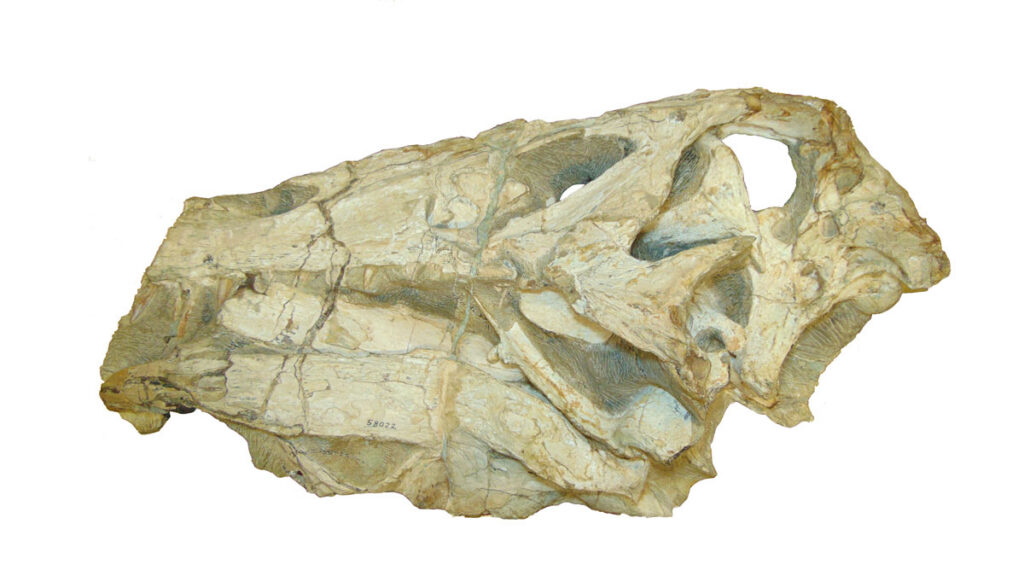
For many years a source of irritation, a fossil of the Brazilian spinosaurid Irritatorchallengeri is now bringing some joy to paleontologists in its homeland.
Following a successful public campaign for restitution, the piece is returning to Brazil from the collection of Germany’s State Museum of Natural History Stuttgart (SMNS), where it has been kept for the past 30 years—a situation that Brazilian paleontologists and lawmakers deemed illegal.
Representatives of both countries made the announcement last month during Brazilian President Luiz Inácio Lula da Silva’s visit to Germany. In a joint statement, they announced the German museum’s “willingness” to “hand over” the fossil to Brazil and start a new, more transparent era of international collaboration.
“It is a very expected and cherished move because it represents a huge scientific and social victory for the Global South and for Brazil.”
“Finally, the Irritator will be back to its original place,” said paleontologist Allysson Pontes Pinheiro, director of the Plácido Cidade Nuvens Paleontology Museum.
The museum, located in northeastern Brazil where the fossil was discovered in the 1990s, will host the Irritator when it returns to Brazil. “It is a very expected and cherished move because it represents a huge scientific and social victory for the Global South and for Brazil,” Pinheiro said, highlighting that the return will allow local scientists and the population to have access to a heritage that would be difficult and expensive to access abroad.
Martill and Frey named the newly discovered species in reference to their irritation upon learning that the skull had been manipulated by fossil dealers to get a better price. Little did the researchers know that the fossil would irritate many other scientists, especially those from the animal’s homeland.
“This campaign showed us that it is worth continuing to fight for our fossils.”
The restitution request is based on Brazilian legislation passed in 1942 that determined that fossils found in the country are the state’s property and cannot be traded or exported without explicit authorization. In addition, a more recent Brazilian ordinance (dating to 1990) mandates that any holotype (a fossil used to describe a new species, such as the contested Irritator specimen) must remain in the country. Regardless, SMNS maintained the fossil had been legally purchased from a private dealer in Germany in 1991.
“We are very happy the Brazilian law is now being respected,” said Aline Ghilardi, a paleontologist at the Federal University of Rio Grande do Norte who was at the forefront of the repatriation campaign. “This campaign showed us that it is worth continuing to fight for our fossils.”
At the time of publication, SMNS had not responded to requests for comment.
A Long Process of Decolonization
But Ghilardi is not entirely satisfied. She didn’t like the wording of the announcement, which used the expression “hand over” rather than return, repatriate, or restitute.
“The statement was a missed opportunity to demonstrate the German government’s willingness to decide in favor of a restitution process,” she explained. “It seems there is resistance to making these restitutions as actual restitutions. It appears as if it is theirs by right and that they will hand over the fossil to Brazil as part of scientific cooperation.”
Ghilardi expressed that she will believe the repatriation will actually happen only when a specific return date is announced. (As of publication, it has not.) She also hopes that the Irritator case is not an isolated incident, but part of an ongoing trend of restitutions intended to break the pattern of neocolonialism in science.
A 2025 study published by Ghilardi and colleagues in the journal Palaeontologia Electronica showed that of nearly 500 invertebrate species described from fossils found in the Araripe Basin—one of Brazil’s richest and most threatened regions of geodiversity—about half have holotypes stored in institutions across Europe, Asia, and North America, violating Brazilian law.
Most of these smuggled fossils are hosted in Germany. “Some foreign colleagues complained about our campaign, saying that it looked like we were persecuting Germany,” Ghilardi said. “But that is not the case. It is just the numbers.”
It is possible, she noted, that other countries hold even more specimens that were not described in the scientific literature and therefore could not be counted.
The same study also found that more than 200 species were described in publications that did not include any Brazilian scientists as coauthors, despite Brazilian legislation requiring foreign research on Brazilian fossil material to be conducted in partnership with local institutions.
Wave of Repatriation
Paleontologist Serjoscha Evers at the Universität Freiburg, who authored the 2023 study on the Irritator fossil, wrote in an email to Eos that he welcomed the news of the dinosaur’s return.
However, he also wondered whether the decision is just “a diplomatic favor that resulted from the public pressure, or foreshadowing a broader wave of repatriations based on a legal conclusion that the fossils are unlawfully in German custody.”
Paleontologists involved in the Irritator restitution efforts said that since the campaign began, they have been receiving emails from museums and institutions worldwide seeking information on the procedures for returning fossils to Brazil.
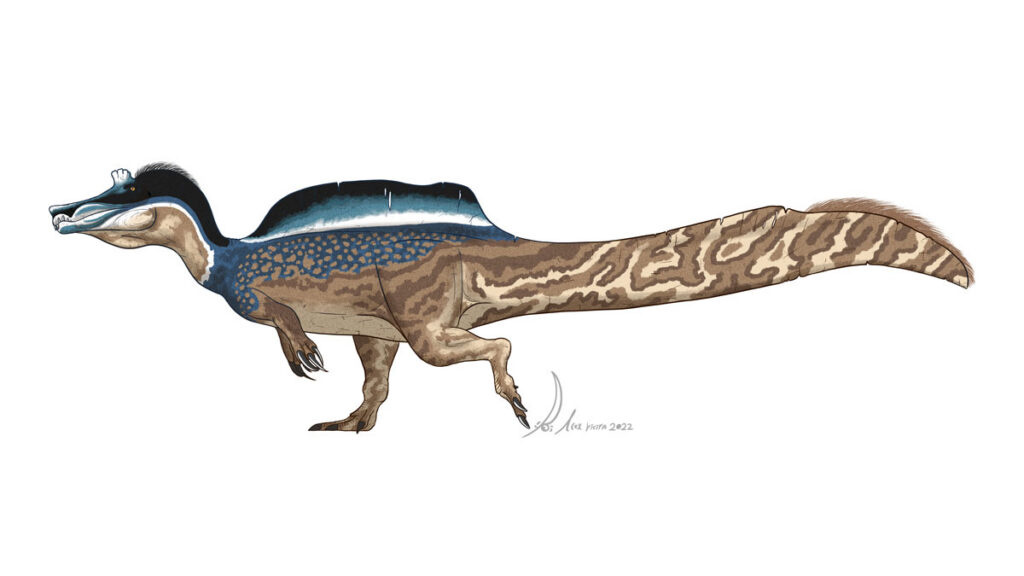
Germany recently said it would “hand over” the Irritator challengeri fossil to Brazil. This illustration suggests what the dinosaur would have looked like before it was a fossil, about 110 million years ago. Credit: PaleoGeekSquared/Wikimedia Commons, CC BY-SA 4.0
The Plácido Cidade Nuvens Paleontology Museum, the final destination of the Irritator, has received several restitutions itself, including 45 fossils originally collected from the Araripe Basin and previously held by the University of Zurich in Switzerland, the fossil of a crustacean that was in the possession of the Universidad Nacional del Nordeste in Argentina, and a fish fossil seized in Italy.
According to Pinheiro, the museum’s director, paleontologists and the Brazilian government have listed at least 90 Brazilian holotypes still held in Germany. And the Brazilian Ministry of Foreign Affairs confirmed to Eos that it is currently negotiating the return of nine fossils held in undisclosed countries.
“We have been talking with colleagues from the museums where these materials are hosted, and they seem very favorable to returning them,” Pinheiro observed. “It is a huge advancement and a great change of behavior from important museums that have been holding heritage from the Global South.”
Citation: Moutinho, S. (2026), Germany to return contested dinosaur fossil to Brazil, Eos, 107, https://doi.org/10.1029/2026EO260167. Published on 22 May 2026.
It is the Quentin Blake Centre for Illustration. The treasury of illustration art was years in the making and is scheduled to open next week on June 5, 2026. Stuart Hertage for The Guardian reports: Spread across a sprawling 17th-century industrial complex in London’s Clerkenwell, the Quentin Blake Centre for Illustration, which opens next month, […]
After six months of renovations and upgrades the Museum part of The Billy Ireland Cartoon Library & Museum will reopen Saturday May 23. Madeline Bradshaw for Ohio State University’s The Lantern reports: Ohio State’s Billy Ireland Cartoon Library & Museum, home to the world’s largest cartoon and comic collection, will turn a new page and […]

 Login
Login