
Normal view

  • ✇Eos
  • Germany to Return Contested Dinosaur Fossil to Brazil Sofia Moutinho
    For many years a source of irritation, a fossil of the Brazilian spinosaurid Irritator challengeri is now bringing some joy to paleontologists in its homeland. Following a successful public campaign for restitution, the piece is returning to Brazil from the collection of Germany’s State Museum of Natural History Stuttgart (SMNS), where it has been kept for the past 30 years—a situation that Brazilian paleontologists and lawmakers deemed illegal. Representatives of both countries made the
     

Germany to Return Contested Dinosaur Fossil to Brazil

22 May 2026 at 11:18
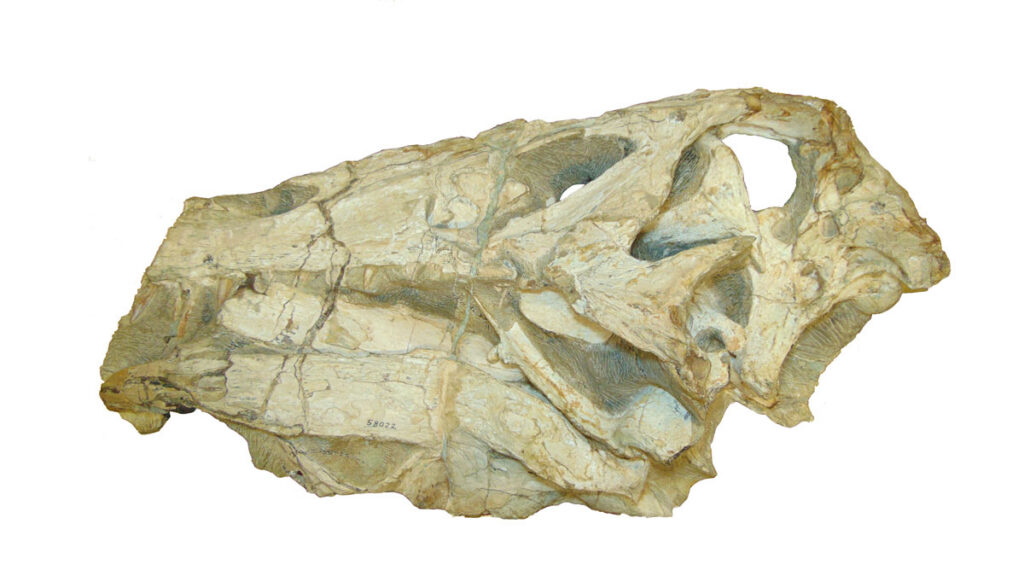
Fossil of the skull of the dinosaur Irritator challengeri

For many years a source of irritation, a fossil of the Brazilian spinosaurid Irritator challengeri is now bringing some joy to paleontologists in its homeland.

Following a successful public campaign for restitution, the piece is returning to Brazil from the collection of Germany’s State Museum of Natural History Stuttgart (SMNS), where it has been kept for the past 30 years—a situation that Brazilian paleontologists and lawmakers deemed illegal.

Representatives of both countries made the announcement last month during Brazilian President Luiz Inácio Lula da Silva’s visit to Germany. In a joint statement, they announced the German museum’s “willingness” to “hand over” the fossil to Brazil and start a new, more transparent era of international collaboration.

“It is a very expected and cherished move because it represents a huge scientific and social victory for the Global South and for Brazil.”

“Finally, the Irritator will be back to its original place,” said paleontologist Allysson Pontes Pinheiro, director of the Plácido Cidade Nuvens Paleontology Museum.

The museum, located in northeastern Brazil where the fossil was discovered in the 1990s, will host the Irritator when it returns to Brazil. “It is a very expected and cherished move because it represents a huge scientific and social victory for the Global South and for Brazil,” Pinheiro said, highlighting that the return will allow local scientists and the population to have access to a heritage that would be difficult and expensive to access abroad.

The Irritator challengeri fossil is one of many that have been illegally obtained from South America by researchers from the Global North. Considered the most complete spinosaurid skull ever described, the 110-million-year-old specimen was taken from the Araripe Basin in northeastern Brazil and described in 1995 by British paleontologist David Martill and his German colleague Eberhard “Dino” Frey. Martill and Frey worked on at least one other fossil smuggled from Brazil to Germany, an Ubirajara jubatus specimen, which was repatriated in 2023 and is currently housed at Plácido Cidade Nuvens.

Martill and Frey named the newly discovered species in reference to their irritation upon learning that the skull had been manipulated by fossil dealers to get a better price. Little did the researchers know that the fossil would irritate many other scientists, especially those from the animal’s homeland.

Revisiting a Fossil with “Problematic Status”

In 2023, triggered by the publication of a paper that acknowledged the fossil’s “problematic status,” paleontologists in South America published an open letter to the Ministry of Science, Research and Arts of Baden-Württemberg State demanding its return. The document received about 300 signatures from scientists and lawyers and was followed by a viral social media campaign involving influencers and a more recent public petition on Change.org that gathered more than 34,000 signatures.

“This campaign showed us that it is worth continuing to fight for our fossils.”

The restitution request is based on Brazilian legislation passed in 1942 that determined that fossils found in the country are the state’s property and cannot be traded or exported without explicit authorization. In addition, a more recent Brazilian ordinance (dating to 1990) mandates that any holotype (a fossil used to describe a new species, such as the contested Irritator specimen) must remain in the country. Regardless, SMNS maintained the fossil had been legally purchased from a private dealer in Germany in 1991.

“We are very happy the Brazilian law is now being respected,” said Aline Ghilardi, a paleontologist at the Federal University of Rio Grande do Norte who was at the forefront of the repatriation campaign. “This campaign showed us that it is worth continuing to fight for our fossils.”

At the time of publication, SMNS had not responded to requests for comment.

A Long Process of Decolonization

But Ghilardi is not entirely satisfied. She didn’t like the wording of the announcement, which used the expression “hand over” rather than return, repatriate, or restitute.

“The statement was a missed opportunity to demonstrate the German government’s willingness to decide in favor of a restitution process,” she explained. “It seems there is resistance to making these restitutions as actual restitutions. It appears as if it is theirs by right and that they will hand over the fossil to Brazil as part of scientific cooperation.”

Ghilardi expressed that she will believe the repatriation will actually happen only when a specific return date is announced. (As of publication, it has not.) She also hopes that the Irritator case is not an isolated incident, but part of an ongoing trend of restitutions intended to break the pattern of neocolonialism in science.

A 2025 study published by Ghilardi and colleagues in the journal Palaeontologia Electronica showed that of nearly 500 invertebrate species described from fossils found in the Araripe Basin—one of Brazil’s richest and most threatened regions of geodiversity—about half have holotypes stored in institutions across Europe, Asia, and North America, violating Brazilian law.

Most of these smuggled fossils are hosted in Germany. “Some foreign colleagues complained about our campaign, saying that it looked like we were persecuting Germany,” Ghilardi said. “But that is not the case. It is just the numbers.”

It is possible, she noted, that other countries hold even more specimens that were not described in the scientific literature and therefore could not be counted.

The same study also found that more than 200 species were described in publications that did not include any Brazilian scientists as coauthors, despite Brazilian legislation requiring foreign research on Brazilian fossil material to be conducted in partnership with local institutions.

Wave of Repatriation

Paleontologist Serjoscha Evers at the Universität Freiburg, who authored the 2023 study on the Irritator fossil, wrote in an email to Eos that he welcomed the news of the dinosaur’s return.

However, he also wondered whether the decision is just “a diplomatic favor that resulted from the public pressure, or foreshadowing a broader wave of repatriations based on a legal conclusion that the fossils are unlawfully in German custody.”

Paleontologists involved in the Irritator restitution efforts said that since the campaign began, they have been receiving emails from museums and institutions worldwide seeking information on the procedures for returning fossils to Brazil.

Reconstruction of the Irritator challenger dinosaur.
Germany recently said it would “hand over” the Irritator challengeri fossil to Brazil. This illustration suggests what the dinosaur would have looked like before it was a fossil, about 110 million years ago. Credit: PaleoGeekSquared/Wikimedia Commons, CC BY-SA 4.0

The Plácido Cidade Nuvens Paleontology Museum, the final destination of the Irritator, has received several restitutions itself, including 45 fossils originally collected from the Araripe Basin and previously held by the University of Zurich in Switzerland, the fossil of a crustacean that was in the possession of the Universidad Nacional del Nordeste in Argentina, and a fish fossil seized in Italy.

According to Pinheiro, the museum’s director, paleontologists and the Brazilian government have listed at least 90 Brazilian holotypes still held in Germany. And the Brazilian Ministry of Foreign Affairs confirmed to Eos that it is currently negotiating the return of nine fossils held in undisclosed countries.

“We have been talking with colleagues from the museums where these materials are hosted, and they seem very favorable to returning them,” Pinheiro observed. “It is a huge advancement and a great change of behavior from important museums that have been holding heritage from the Global South.”

—Sofia Moutinho (@sofiamoutinho.bsky.social), Science Writer
Citation: Moutinho, S. (2026), Germany to return contested dinosaur fossil to Brazil, Eos, 107, https://doi.org/10.1029/2026EO260167. Published on 22 May 2026.
Text © 2026. The authors. CC BY-NC-ND 3.0
Except where otherwise noted, images are subject to copyright. Any reuse without express permission from the copyright owner is prohibited.
  • ✇Eos
  • The Governance Gap Threatening Long-Term Ecological Archives Anthony Veltri
    On 31 March 2026, the U.S. Department of Agriculture announced the closure of 57 of its 77 U.S. Forest Service research facilities. The scientific community’s response was warranted: Save the science, restore the funding, protect the researchers. All of that is correct. But it misses a structural problem inherent in agency governance, one that will recur at every reorganization until the Earth science community builds an instrument to prevent it. In massive reorganizations like the ones f
     

The Governance Gap Threatening Long-Term Ecological Archives

27 May 2026 at 13:22
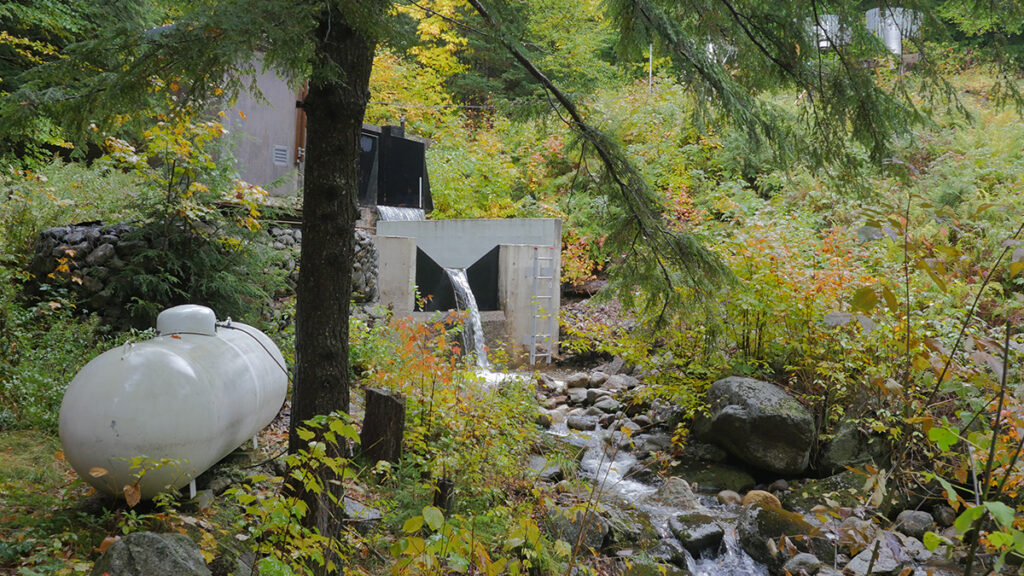
Concrete stream weir in a forest channel measuring water flow at Hubbard Brook Experimental Forest, N.H.

On 31 March 2026, the U.S. Department of Agriculture announced the closure of 57 of its 77 U.S. Forest Service research facilities. The scientific community’s response was warranted: Save the science, restore the funding, protect the researchers.

All of that is correct. But it misses a structural problem inherent in agency governance, one that will recur at every reorganization until the Earth science community builds an instrument to prevent it.

In massive reorganizations like the ones federal agencies are currently experiencing, the threat to long-term research facilities is not primarily a lack of funding. The true threat is an oversight of administrative architecture. There appears to be no general federal requirement to have a successor stewardship plan in place before reducing the output or outreach of a long-term research facility—or closing it entirely.

The Physical Archive Is Not a Digital File

Hubbard Brook Experimental Forest in New Hampshire was among the sites under review during the Forest Service restructuring but has since received a public reprieve. The future of Bartlett Experimental Forest, also in New Hampshire, remains unresolved. The governance problem, however, extends beyond either site.

Hubbard Brook’s physical archive holds more than 60,000 barcoded and cataloged samples: water, soils, plant material, and physical cores spanning 7 decades of continuous collection and stored under active environmental controls in a dedicated building on site.

These samples cannot be digitized. They cannot be migrated to a remote server, backed up to cloud storage, or emailed to a university partner. The samples require a functioning building, active temperature management, and a named human steward responsible for their integrity.

  • Shelves filled with labeled environmental samples in long-term storage.
    The physical archive at Hubbard Brook holds more than 60,000 barcoded and cataloged samples stretching back to the founding of the facility in 1955. Credit: Anthony Veltri
  • Close-up of labeled core sample from a tree labeled “84 yrs”
    The archive includes core samples of trees dating to long before the experimental forest was established, and the archive maintains each as a managed scientific record with continuity of custody. Credit: Anthony Veltri
  • Rock core samples are arranged in trays for analysis.
    Core samples like these document the watershed at Hubbard Brook and anchor long-term understanding of system processes. Credit: Anthony Veltri

The archive at Hubbard Brook is impressive, but a governed record is defined by continuity, provenance, and stewardship, not by the number of observations it contains: Data volume is not data value. A 70-year unbroken record of watershed chemistry, maintained by named stewards who documented what they were measuring and why, is a governed product. Without that stewardship and physical anchor, volume can become noise.

The failure to maintain archives like this is likely not malicious; it is an example of administrative indifference or perhaps a lack of awareness or understanding. Environmental controls, for example, get zeroed out of a budget line item, and nobody notices until the temperature in the facility drifts. By then, the sample record has degraded in ways that cannot be reversed.

This Is Not a Hubbard Brook Problem

Many physical archives, calibration sites, and long-duration sampling programs operate without a formal requirement for stewardship continuity.

Hubbard Brook is the most visible instance of a pattern—the lack of a successor stewardship plan—that runs across the entire 84-site federal Experimental Forests, Ranges, and Watersheds network. The March order that identified Bartlett Experimental Forest and 56 other research facilities across 31 states for closure was executed without a mandatory requirement to identify successor stewards for what gets left behind.

Nor is the pattern unique to experimental forests. The Long Term Ecological Research network spans 28 core sites. AmeriFlux includes more than 500 monitoring locations across North America.

Throughout all these systems, many physical archives, calibration sites, and long-duration sampling programs operate without a formal requirement for stewardship continuity under agency reorganization.

What We Stand to Lose

Long-term physical archives provide scientists and other stakeholders the ability to ask future questions of past reality. Nobody collecting water samples at Hubbard Brook in 1963 was thinking about PFAS (per- and polyfluoroalkyl substances), for instance, but the baseline its site samples provide is why we can track the chemicals today. The same continuous record was central to the regulatory science behind the Clean Air Act amendments of 1990.

Archival value compounds silently and becomes visible only when someone needs it.

Archival value compounds silently for decades and becomes visible only when someone needs it.

When these archives fail, the loss is not historical. It is operational. Regulatory agencies rely on long-baseline records to determine whether interventions are working. Without a continuous physical reference, observed changes cannot be distinguished from measurement drift, instrumentation bias, or natural variability. The results are policy decisions made without a defensible scientific baseline.

Federal investment in continuous collection at a site like Hubbard Brook runs to tens of millions of dollars over decades. That investment is not recoverable once continuity is broken.

Unlike a paused research grant, a degraded physical archive cannot be restarted. You can photograph a sample, but you cannot rerun its chemistry 40 years from now if the physical sample has degraded.

In 2017, a double mechanical failure at the University of Alberta destroyed 12.8% of the Canadian Ice Core Archive over a single weekend, permanently erasing records dating back 12,000 years. That incident was accidental. A mechanical malfunction is a failure of equipment. Administrative disposal without a named successor steward is a failure of governance. One arrives without warning. The other can be prevented.

The Community Already Knows How to Do This

The Earth observation community has already built the governance model we need. We are not yet applying it to long-term ecological research infrastructure.

GRUAN, the Global Climate Observing System (GCOS) Reference Upper-Air Network, operates under the World Meteorological Organization and GCOS, with explicit named stewardship obligations. Upper-air observations—measurements of temperature, humidity, and wind through the atmosphere—are foundational inputs to weather forecasting and climate monitoring. Each GRUAN station has a designated principal investigator with a documented succession obligation.

ICOS, the Integrated Carbon Observation System operating across Europe, applies the same logic to terrestrial ecosystem observations through formal site-level stewardship agreements and named succession requirements.

In the United States, the National Ecological Observatory Network is funded by the National Science Foundation (NSF) and operated by Battelle, a science and technology nonprofit, under a contract that includes explicit data continuity obligations.

These systems did not emerge by accident. They were explicitly designed to solve a known failure mode: Distributed observational networks cannot maintain their own calibration integrity without a separately governed reference layer. That design decision is documented, enforced, and funded. The absence of an equivalent requirement in long-term ecological research infrastructure is not a technical limitation. It is a governance omission.

The pattern is consistent across every network that has solved this problem: Named continuity obligations must be written into the governance structure before the need becomes acute.

The Governance Instrument

The best outcome is the continued, uninterrupted operation of facilities like Hubbard Brook.

Any federal agency action that would reduce operational support for a long-term research facility should require a formal continuity plan before the action takes effect.

If reductions move forward, however, the proposed fix is specific and not novel: Any federal agency action that would reduce or eliminate operational support for a long-term research facility should require a formal continuity plan before the action takes effect. That plan must name a successor steward for each active long-term dataset and for each physical archive under active environmental control.

In practice this means specificity: the name and institutional affiliation of the successor, a funded maintenance budget sufficient to sustain environmental controls and sample integrity, documented protocols for custody transfer, and a timeline for uninterrupted handoff. The plan must demonstrate that the successor steward has the operational capacity and funded mandate to preserve the archive’s physical integrity and continuity.

Laboratory microwave digestion system displays a foliage sample preparation method.
This instrument prepares plant samples collected at Hubbard Brook using standardized methods. Consistent preparation is what makes results comparable across time and labs and why continued stewardship is so important. Credit: Anthony Veltri

The default should be continued stewardship by the responsible federal entity. If a change in custody is legally permitted and genuinely unavoidable, any successor steward, whether another federal unit, a university partner, a consortium, or another entity, must have a funded mandate, demonstrated technical capacity, enforceable continuity obligations, and the ability to maintain the archive without interruption.

Protocol demands that if the agency cannot name a viable successor steward, the agency cannot execute the closure. This requirement does not prohibit closure; it prohibits closure without continuity of custody.

The instrument requiring a research facility to have a formal continuity plan should be applied not on a site-by-site basis, but uniformly across networks. A limitation narrowly written to protect a named facility invites the agency to execute the same administrative disposal at adjacent sites while technically complying with the specific requirement. The governance is structurally sound only if it applies across the network.

How This Actually Happens

The pathways that would make such an instrument possible already exist.

Agencies can impose continuity requirements through policy directives, appropriations language, or funding conditions. The federal Office of Science and Technology Policy and the Office of Management and Budget have coordinated interagency data management guidance before, and a directive requiring named successor stewardship before any facility reduction does not require legislation. Sen. Jeanne Shaheen (D-NH) has already secured fiscal year 2026 language directing the Forest Service to prioritize staffing at long-standing experimental forests; attaching successor stewardship language is the logical next step. NSF, the Department of Energy, and NOAA could require stewardship continuity guarantees from partner agencies as a condition of incorporating facility data into federally funded continental-scale products.

Buildings and watershed infrastructure at Hubbard Brook
Scientists recognize that agencies reorganize and funding for facilities can be downgraded. That is why preserving a continued record of any long-term research facility must be part of the facility’s governance structure from the outset. Credit: Anthony Veltri

What is missing is the requirement itself—and the strategic initiative to establish it. The Earth science community has the standing, the documented models, and the mechanisms to close those gaps.

This is not an argument against reorganization. Agencies reorganize. Budgets shift. Research priorities evolve.

The argument is that reorganization cannot be permitted to destroy multigenerational scientific infrastructure through administrative indifference when a specific, enforceable governance requirement can prevent it. The Earth observation community built GRUAN because it recognized that no federation of climate datasets can be a substitute for a governed anchor point. Long-term ecological research infrastructure needs the same recognition applied to the administrative layer that governs its continuity.

The scientific enterprise already knows how to do this. The governance has not caught up yet.

Author Information

Anthony Veltri (anthony@anthonyveltri.com) is an independent practitioner and former physical scientist and senior policy analyst with the USDA Forest Service Washington Office, where he worked on enterprise architecture and governance in federal programs, including those supporting scientific research.

Citation: Veltri, A. (2026), The governance gap threatening long-term ecological archives, Eos, 107, https://doi.org/10.1029/2026EO260172. Published on 27 May 2026.
This article does not represent the opinion of AGU, Eos, or any of its affiliates. It is solely the opinion of the author(s).
Text © 2026. The authors. CC BY-NC-ND 3.0
Except where otherwise noted, images are subject to copyright. Any reuse without express permission from the copyright owner is prohibited.
❌
Subscriptions