Reading view

1.3 million people share DNA with Maryland’s earliest colonists

In 1634, English settlers established St. Mary’s City as the first permanent outpost in the colony of Maryland. Many of these early residents were ultimately buried in the town’s Chapel Field cemetery, including 49 colonists between the town’s founding and 1734. Recently, geneticists collaborating between Harvard University, the Smithsonian Institute, and genetics company 23AndMe analyzed these previously unidentified remains as part of a larger genealogical project tracing colonial migration across the United States.

Their findings illustrate how  such a small original population can have vast genetic influences over time. According to the team’s study published in the journal Current Biology, over 1.3 million living descendents can be traced directly to the handful of settlers buried at St. Mary’s City. What’s more, researchers believe that they potentially identified remains belonging to Maryland’s second governor.

The results come after decades of work that began with the excavation of a trio of extremely rare lead coffins from the cemetery’s Brick Chapel in 1986. These were later revealed to contain the bodies of Philip Calvert, his first wife Anne Wolseley Calvert, and an infant son from Calvert’s second wife, Jane Sewell. Calvert served as Maryland’s fifth governor, and came from one of the colony’s most prominent and influential founding families. Later DNA analysis tied the Calverts to three more bodies buried nearby.

“Although additional work is needed to determine exactly how these individuals were related to Philip, this finding is significant given that several members of the extended Calvert family, including Philip’s half-brothers Leonard (1610–1647) and George (1613–1634), died in St. Mary’s during this period,” explained Douglas Owsley, the Smithsonian’s biological anthropology curator.

Further genetic examinations identified relatives among five other families, including one that spanned three generations.

“Because mortality was so high in the early days of the colony, finding a multigenerational family was a surprise,” Owsley said. “It’s a discovery that simply wouldn’t have been possible without genetic study.”

From there, the team was able to move forward through the centuries by comparing the DNA information at St. Mary’s City with more than 11.5 million participants from the 23AndMe genetic database. The results show that there are now around 1.3 million living relatives of Maryland’s first European residents. They were also able to corroborate a major migration that occurred between 1780–1820, when many of the colony’s Catholics fled south to Kentucky due to economic stressors and anti-Catholic sentiments.

One of the study’s more groundbreaking facets involved researchers’ ability to assess unknown remains through a combination of genetic material and multiple family trees that include still-living individuals. First, they identified people in the database who shared the strongest genetic relationships to the three related cemetery bodies. They then examined overlaps in anthropological information and known lineages to narrow down the mystery remains. Based on their findings, the team now believes the remains belong to colonial Maryland’s second governor, Thomas Greene, his first wife, Anne, and their son, Leonard.

“This is the first time that ancient DNA has been used to help identify unknown individuals, without any prior knowledge of who they might have been. And it just so happens that one of those individuals turned out to be one of colonial Maryland’s most prominent figures,” said Éadaoin Harney, a senior scientist at the 23andMe Research Institute.

Study co-author and Harvard Medical School geneticist David Reich added that their latest work showcases how vital ancient DNA analysis can be to expanding our understanding of history. 

“While written records are extraordinarily rich, genetic data can still address gaps in that record and yield surprises,” said Reich.

The post 1.3 million people share DNA with Maryland’s earliest colonists appeared first on Popular Science.

  •  

‘Two-headed snake’ confuses predators

Only around 600 of the nearly 4,000 known snake species are venomous. The recently discovered Guangxi reed snake (Calamaria incredibilis) in China is not one of those species, but its alternative defense mechanism is strange enough to keep most predators at bay. According to a study recently published in the journal Zoosystematics and Evolution by biologists at the Natural History Museum of Guangxi, C. incredibilis wields its wide, stubby tail like a second head to scare away potential threats.

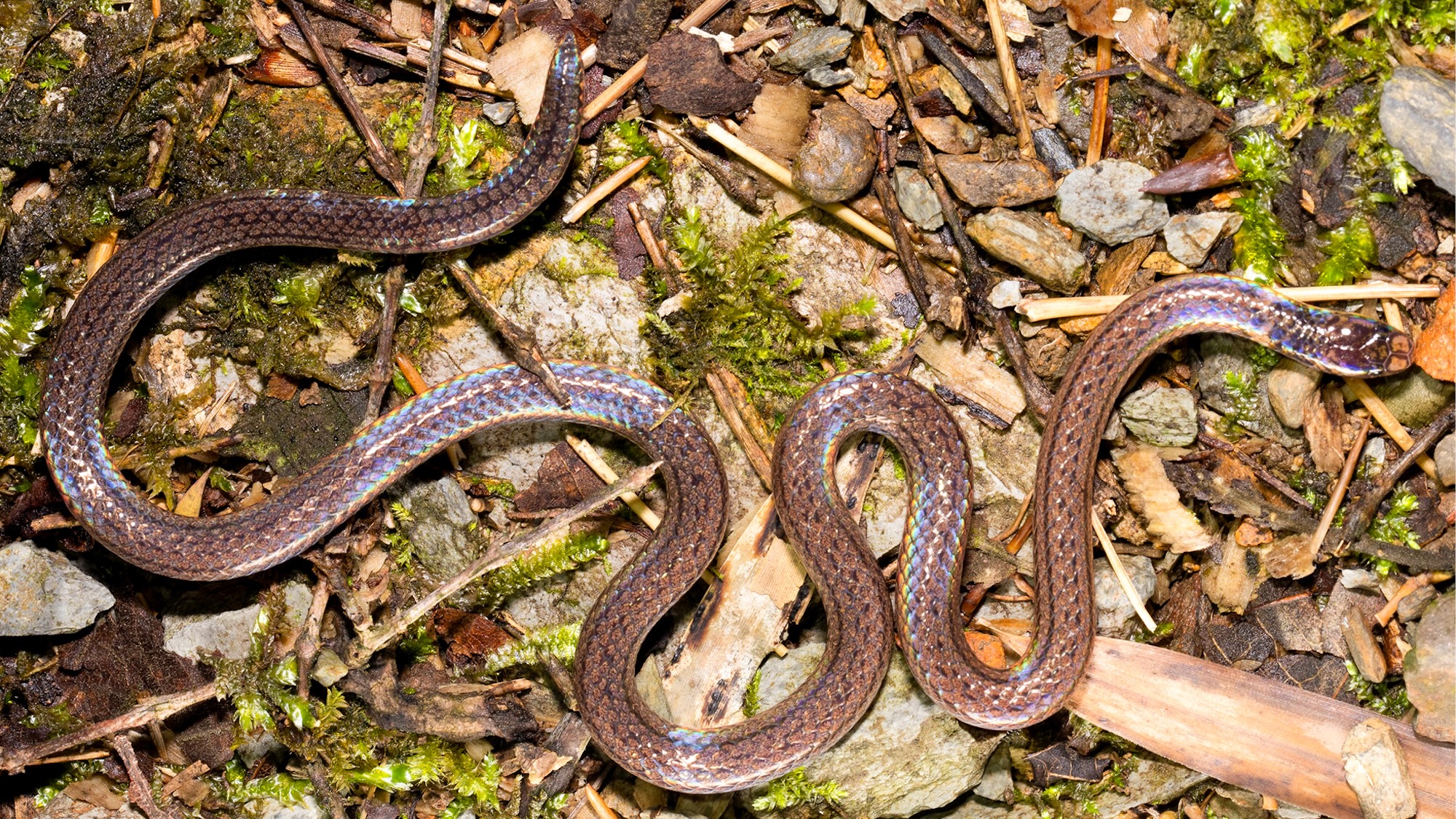
Researchers first spotted the Guangxi reed snake during a biodiversity study in China’s Huaping National Nature Reserve near the nation’s southern border with Vietnam. The mostly nocturnal, non-venomous serpent grows to about eight-inches-long, and is identifiable by its small brown scales and seven darker stripes. Largely docile, it prefers to hide away between rocks and underneath leaves, and prefers a diet of insect larvae and earthworms.

Although largely timid, the Guangxi reed snake has evolved a strategy to bluff its way out of dangerous situations. Whenever it feels threatened, the reptile raises its tail off the ground and begins waving it like an additional head. The tail even features similar markings to those seen on the snake’s head, which adds to the overall realism. 

As People recently noted, the reed snake is far from the first new snake species discovered in 2026. Earlier this year, researchers identified both a vibrantly turquoise pit viper and a flying snake in a Cambodian cave alongside previously unknown geckos, millipedes, and microsnails.

The study’s authors explained the Guangxi reed snake “highlights the underestimated diversity” in the reptile’s larger family, as well as underscores the region’s role as an “ important hotspot” of unique animals.

The post ‘Two-headed snake’ confuses predators appeared first on Popular Science.
  •  

ISS astronauts pose with fresh fruit in microgravity

Astronaut food has come a long way from the freeze dried packets aboard the Apollo missions. During their historic lunar fly-by in April, the Artemis II crew dined on beef brisket, mac and cheese, quiche, and a lot of tortillas. The same can be said for the hungry inhabitants of the International Space Station (ISS). With regularly scheduled restocks, the astronauts don’t have to worry as much about issues like shelf life. That means that even when nearly 250 miles above Earth, ISS residents can still snack on fresh fruit and vegetables.

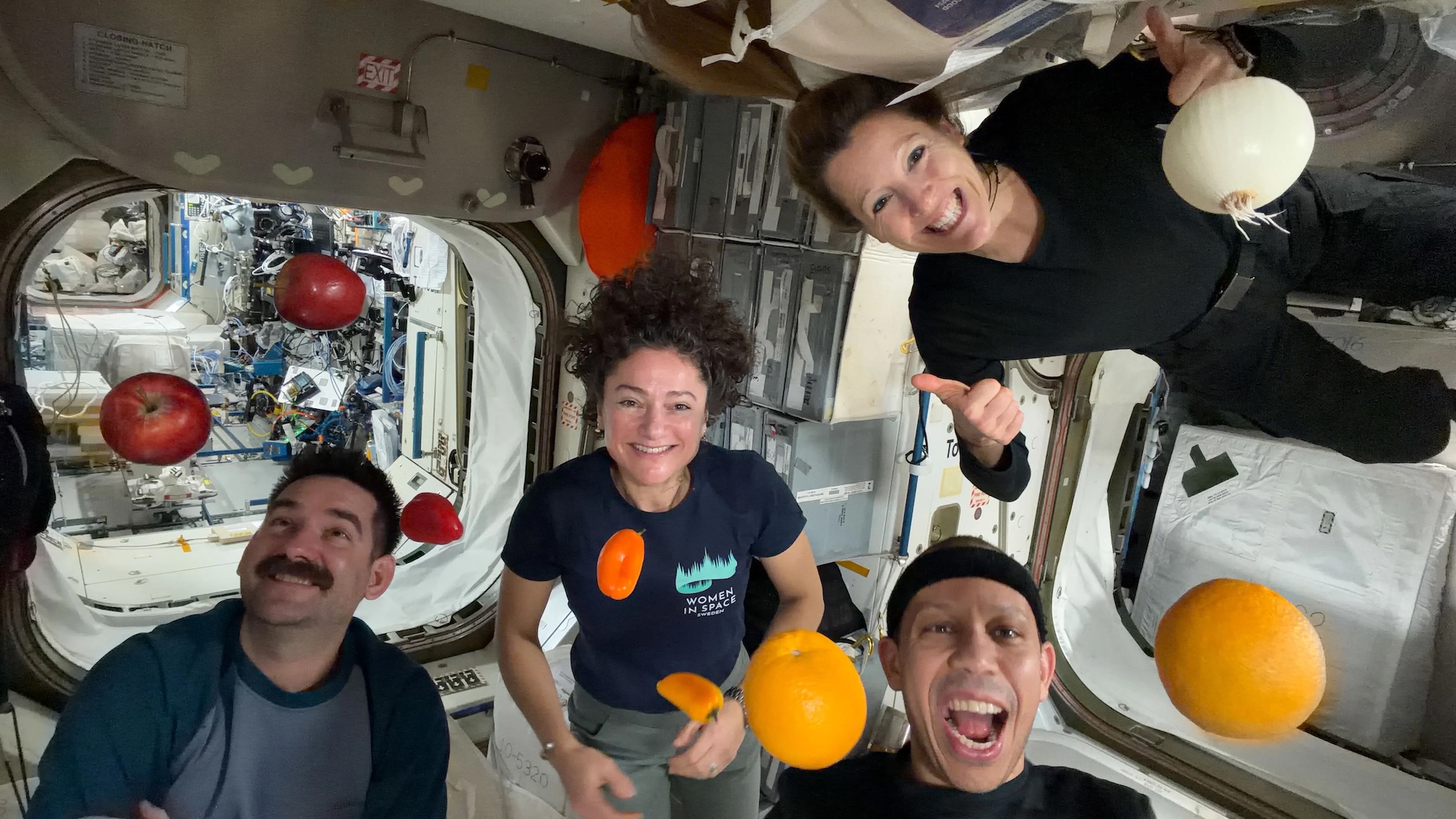
NASA highlighted one such astronaut grocery delivery in a photo released on May 14. Taken on April 19, astronauts Jack Hathaway, Jessica Meir, Chris Williams, and Sophie Adenot are seen in microgravity alongside what are presumably upcoming snacks like oranges, apples, peppers, and one conspicuous onion.

Food wasn’t the only precious cargo on the Cygnus XL spacecraft visit that month, however. In addition to the colorful produce, the ISS also received over 2,300 pounds of research hardware and science equipment. These materials encompass the tools the crew needs for their research on blood stem cells for cancer treatments and ways to strengthen astronaut gut health. The ISS is now also home to a new exercise machine, courtesy of the European Space Agency, as well as replacement nitrogen and oxygen tanks for spacesuits.

The post ISS astronauts pose with fresh fruit in microgravity appeared first on Popular Science.

  •  

Intrepid man tests giant flaming darts used on 16th century warship

The Mary Rose is a remarkable remnant of maritime history. One of England’s largest Tudor Era vessels, the four-masted carrack sailed with a crew of around 450 sailors during the 16th century French and Italian Wars armed with anywhere between 78 and 91 guns. Those weren’t the only tools at the Mary Rose’s disposal. Thanks to primary sources and an extensive analysis following its recovery in 1982, the ship included some truly gnarly handheld weapons.

Some of the most intense—and mysterious—of these were giant incendiary darts. However, there is very little historical information tied to them. Although reminiscent of flaming arrows, these much larger variants were simply far too large to be launched from bows. Historians aren’t even sure exactly how they were wielded or crafted, so medieval weapons specialist and replica crafter Tod Todeschini decided to investigate for himself. The result is a two-part video series that documents his research into the fire darts, as well as the construction of his very own set.

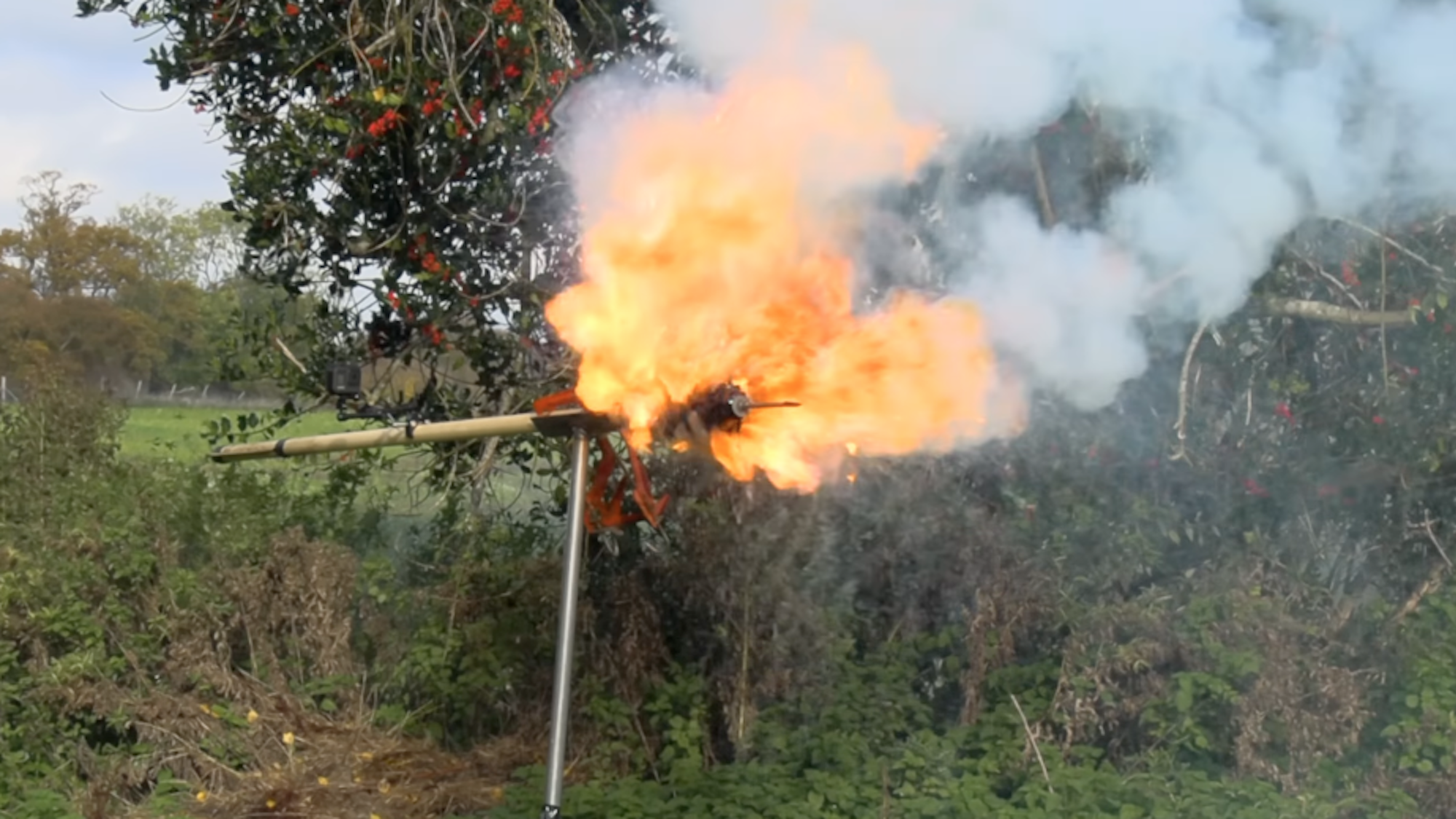
Based on the remnants of the three surviving original examples, Todeschini’s weapon combines an incendiary mixture wrapped in flammable cloth that is then encased in pitch. Wooden fuses inserted into the casing provide a delayed ignition, allowing the wielder enough time to aim and launch the wooden spear at their enemy.

But how were they used in combat? While there is no definitive answer, Todeschini’s experiments alongside Mary Rose Museum research director Alex Hildred led to some likely possibilities. He quickly realized that his initial instinct to hurl it one-handed like an oversized dart was basically impossible—and incredibly dangerous. Once the javelin was lit, you want to be as far away from the melting pitch and flames as possible. Knowing this, he then learned that he could effectively launch the weapon by gripping it near the shaft’s middle while using his other hand to support the end. Subsequent throws easily carried the flaming spear upwards of 60 feet away. That may not be very far compared to a bow-and-arrow’s distance, but it’s more than enough for someone standing in a crow’s nest aboard the Mary Rose to reach an enemy ship that has drawn up to the vessel during close combat.

It’s also plausible that sailors fired their darts from specialized cannons. A standard amount of gunpowder would destroy the supersized arrow before it hit its target, but a soft charge producing less force is a feasible alternative. Todeschini also tested this version by launching a scale model of the dart from a tube using compressed gas.

From there, it was time to see what kind of destruction these weapons rained on unfortunate sailors’ heads. In short, you would not want to encounter one of these things. Aside from virtually inextinguishable flames fueled by molten pitch, the payloads likely included toxic ingredients like camphor and arsenic. The ensuing clouds of smoke would not only blind anyone nearby, but choke them, too. To illustrate their efficacy, Todeschini demonstrated what happens when one of the darts lands in an enclosed environment like those below deck on a ship. After firing one into a shipping container, it only took a matter of seconds before the entire area was enveloped in noxious fumes.

While the weapons weren’t useful in every situation, it’s easy to see how a few well aimed launches could turn the tide during naval combat. That said, they weren’t a guarantee for success—the Mary Rose ultimately sank during battle in 1545, after all.

The post Intrepid man tests giant flaming darts used on 16th century warship appeared first on Popular Science.

  •  

Japan runs out of robot wolves in fight against bears

Japan’s bear problem continues, and the country is running out of the robot wolves that help keep them at bay. First released in 2016 by the manufacturer Ohta, Monster Wolf was originally designed to ward off the agricultural foes like boars, deer, and the island nation’s Asian black bear (Ursus thibetanus) and brown bear (Ursus arctos) populations. The creative solution quickly went viral for its red LED eyes and menacing fangs—as well as its admittedly odd, furry pipe frame.

Starting at around $4,000, each bespoke Monster Wolf is now equipped with battery power, solar panels, and detection sensors. Its speakers are programmed with over 50 audio clips including human voices and sirens audible over half a mile away. These aren’t assembly line products, however. Each Monster Wolf is custom made, and Ohta simply can’t keep up with the current demand.

“We make them by hand. We cannot make them fast enough now. We are asking our customers to wait two to three months,” company president Yuji Ohta recently told the AFP.

Bear encounters in Japan have steadily risen, as urban development continues to encroach on their habitats and limit their food sources. The country’s rapidly aging population is also making them particularly susceptible to attacks, especially in more rural regions. Since the beginning of 2025, the government has reported at least 200 injuries and 13 fatalities—over twice the previous mortality record. Official data also recorded over 50,000 bear sightings across the country during the same time period. 

Last year, Japan even deployed its own military to help cull bear numbers. More than 14,600 animals were captured and euthanized in 2025, an all-time high and almost triple the previous year’s tally.

Ohta told the AFP that amid the ongoing crisis, there has been “growing recognition” that Monster Wolf is “effective in dealing with bears.” The main customer base remains farmers, but orders are also coming from golf courses and rural workers. Upgraded versions will soon include wheels to actually chase animals and patrol preset routes. There are also plans to release a handheld version for outdoor enthusiasts and schoolchildren.

Until Ohta catches up with its orders, residents and visitors are encouraged to review the Japanese government’s own bear safety tips.

The post Japan runs out of robot wolves in fight against bears appeared first on Popular Science.
  •  

Birds avoid wind turbines painted like venomous snakes

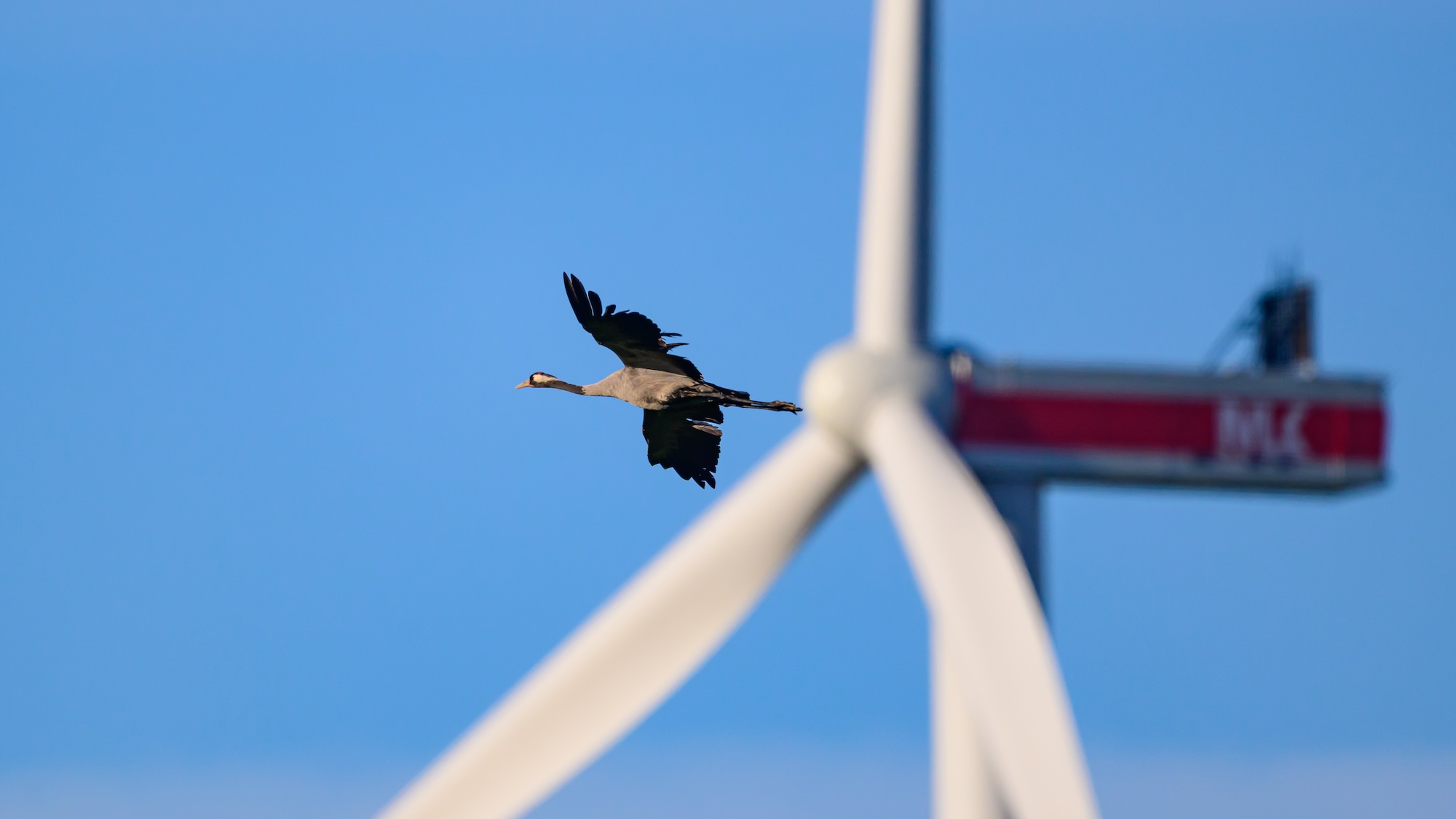
Wind turbines are a net positive for a sustainable society, but that doesn’t mean they don’t have an environmental impact. Apart from their material requirements, those giant, spinning blades can be lethal to unsuspecting winged animals like birds and bats. Although some reports dramatically overplay wind farms’ danger to flying species, there is no denying they can unintentionally kill anywhere from two-to-six birds and four-to-seven bats per megawatt every year. That may not seem like many fatalities, but every animal counts for an endangered species.

To lower these risks, engineers are devising new ways to make wind turbines more visible and avoidable. One potential solution may involve taking a cue from some of nature’s most dangerous creatures. According to a study published in the journal Behavioral Ecology, more bats and birds will steer clear of wind turbines when their blades are painted with colors similar to animals like venomous coral snakes and poison dart frogs.

A drone photograph of a wind turbine in southern Finland, digitally modified with a biologically inspired warning pattern under natural light conditions. Credit: Eric Lehtonen

“White blades, which are the most frequently used pattern around the world, turned out to be the worst option for birds,” Johanna Mappes, a University of Helsinki environmental scientist and study co-author, said in a statement. “This suggests that a relatively simple visual change could reduce bird mortality in connection with wind power.”

To test how birds respond to various turbine designs, Mappes and her colleagues placed test subjects in front of a video screen in a controlled laboratory environment. They then played clips of wind blades with multiple color palettes spinning at different speeds. These included turbines featuring classic white blades, one blade painted black, blades with red-and-white stripes, or blades with a newly designed, biomimetic red-black-yellow pattern.

“By using a touchscreen especially designed for birds, we can use games to explore their behavior and ecology by simulating real-world scenarios, without putting the birds at risk,” explained University of Exeter ecologist and study co-author George Hancock.

In nearly every trial, the birds were far more likely to approach white blades than any of the colored options. However, the test subjects were the most avoidant of the team’s novel, biomimetic striped blades.

“We’ve known for a long time that birds change how they respond to objects with warning colors, but to see such a large effect was remarkable,” Hancock added.

There is no way to completely prevent wind turbines from ever accidentally harming or killing animals. That said, the study’s authors believe a wider industry adoption of evolutionarily inspired color schemes could be an easy, cheap way to make the technology safer. They also suggest that similar approaches be developed for other human-made avian dangers like power lines and building windows.

“If the results are repeated in practical conditions in different countries and with different bird species, it could be a significant change for the entire wind power industry,” said Mappes.

The post Birds avoid wind turbines painted like venomous snakes appeared first on Popular Science.
  •  

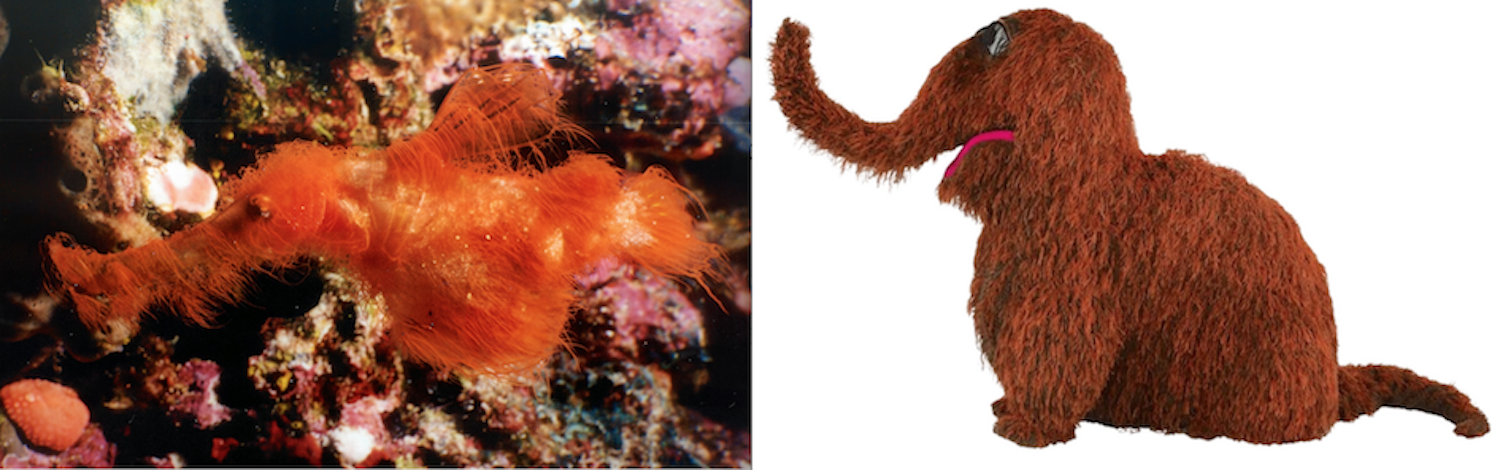
Real-life Snuffleupagus found swimming in the Great Barrier Reef

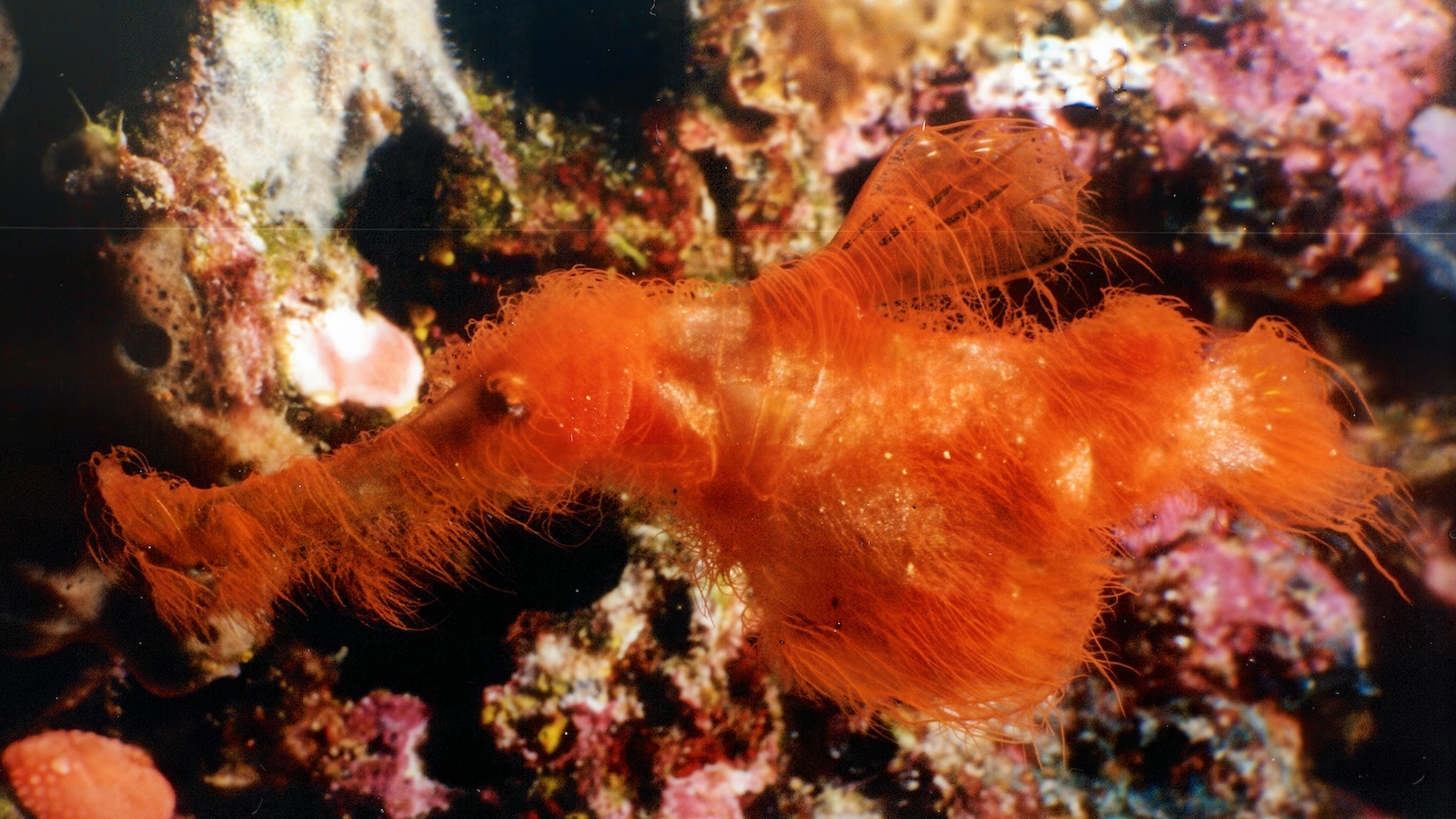
It’s undeniable. The bright reddish-orange hues, the fuzziness, the snout…there simply is no other way to put it. This unique fish looks exactly like Mr. Snuffleupagus from Sesame Street.

“Once you see it, the resemblance to Snuffleupagus is impossible to ignore,” declared marine biologist David Harasti.

The similarity is so strong that even the team from the beloved children’s show gave their full backing to name the seahorse relative after Big Bird’s woolly pal. But while the hairy ghost pipefish Solenostomus snuffleupagus was recently described for the first time in the journal Fish Biology, Harasti has long suspected its existence. In fact, he spent nearly 20 years trying to find it.

The saga began during a dive near Papua New Guinea in 2001. While combing through coral, Harasti spotted a unique and wholly unfamiliar creature swimming through the water. Although it appeared to be some type of pipefish, no specific species came to mind.

Side by side images of the hairy ghost pipefish and Mr. Snuffleupagus
There are definite similarities between the two. Credit: David Harasti

“I was perplexed. I photographed a few shots on my old film camera, went home, and pulled out every fish book I owned. Nothing matched,” Harasti recalled. “I realized we might be looking at something entirely new to science. You don’t often get a moment like that in your career, where you realize you could be looking at a species no one has ever documented before.”

Although divers claimed to spot the mystery creature over the next few years, no one managed to collect or properly study an actual specimen. It wouldn’t be until 2020 that Harasti reunited with the perplexing pipefish. After learning of a sighting near the city of Cairns in northern Australia, Harasti set out with research partner and study co-author Graham Short to track it down once and for all. It took a few days of scouring macroalgae in the Great Barrier Reef, the pair finally scooped up a male and female pair for proper examination. 

After carefully studying them, Harasti and Short confirmed the ghost pipefish to be a completely new species. At that point, there was only one last thing to do: get the blessing of Mr. Snuffleupagus. Or, at least, the blessing of Sesame Street’s legal team.

“We are delighted that our beloved Snuffleupagus inspired the naming of a newly discovered marine species in the real world,” Sesame Workshop senior vice president of global education Rosemarie Truglio said in a statement. “Connecting science with imagination and discovery is what Sesame Street has always been about, and this charming new species is a wonderful reminder that there is still so much to explore and learn about the world.”

According to the study’s authors, S. snuffleupagus is the shaggiest of all known ghost pipefish species. These lengthy filaments range in red, orange, and even green hues, which allows it to camouflage seamlessly into its coral habitat—and elude scientists for decades.

The post Real-life Snuffleupagus found swimming in the Great Barrier Reef appeared first on Popular Science.
  •  

Mars rover snaps a selfie near skyscraper-sized boulders

After five years of rolling across Mars, NASA’s Perseverance rover is still going strong. And it has the selfies to prove it. NASA highlighted its “six-wheeled scientist’s” latest Red Planet excursion in a mission update on May 12, explaining that the explorer is currently engaged in the Northern Rim Campaign. This is Perseverance’s fifth project since arriving on Earth’s planetary neighbor in February 2021.  Compiled from 61 separate photos taken in March, the latest scene depicts Perseverance near a region known as Lac de Charmes.

“We took this image when the rover was in the ‘Wild West’ beyond the Jezero Crater rim—the farthest west we have been since we landed at Jezero a little over five years ago,” Perseverance project scientist Katie Stack Morgan said in a statement.

Prior to snapping its selfie, the rover had just finished abrading the rocky Arethusa outcrop. This task involves using the drill on its robotic arm to grind a section of the geological formation, which then offers scientists back on Earth the materials necessary to analyze its composition. After remotely examining the rock’s chemistry, researchers learned Arethusa is largely igneous minerals dating even further back than the Jezero Crater itself. The outcrop likely formed underground millions of years ago from molten material.

The latest portrait is the sixth selfie taken by Perseverance since arriving on Mars. To pull it off, the rover relied on its Wide Angle Topographic Sensor for Operations and eNgineering (WATSON) camera installed at the end of its robotic arm. It took about one hour to accomplish and required 62 extremely fine-tuned movements to ensure the clearest shot possible.

NASA’s Perseverance captured this enhanced-color panorama of an area nicknamed “Arbot” on April 5, the 1,882nd Martian day, or sol, of the mission. Made of 46 images, the panorama offers one of the richest geological vistas of the rover’s mission, revealing a windswept landscape of diverse rock textures. Credit: NASA / JPL-Caltech / ASU / MSSS

Lest anyone think Perseverance is too narcissistic, the rover also employed its Mastcam-Z to also photograph Lac de Charmes’ Arbot area a few days later. The vista scene is the result of 46 combined images, and will help NASA plot out a route to further investigate the ridge. Thanks to the new vantage points, scientists already think they have spotted a few megabreccia—massive chunks of rock as big as skyscrapers that were launched during a meteorite impact about 3.9 billion years ago.

“The rover’s study of these really ancient rocks is a whole new ballgame,” Stack Morgan explained. “These rocks—especially if they’re from deep in the crust—could give us insights applicable to the entire planet, like whether there was a magma ocean on Mars and what initial conditions eventually made it a habitable planet.”

The post Mars rover snaps a selfie near skyscraper-sized boulders appeared first on Popular Science.

  •  
❌