Normal view

‘We have been warned’—Distinguished Singapore diplomat raises concern about race to build super-intelligent AI

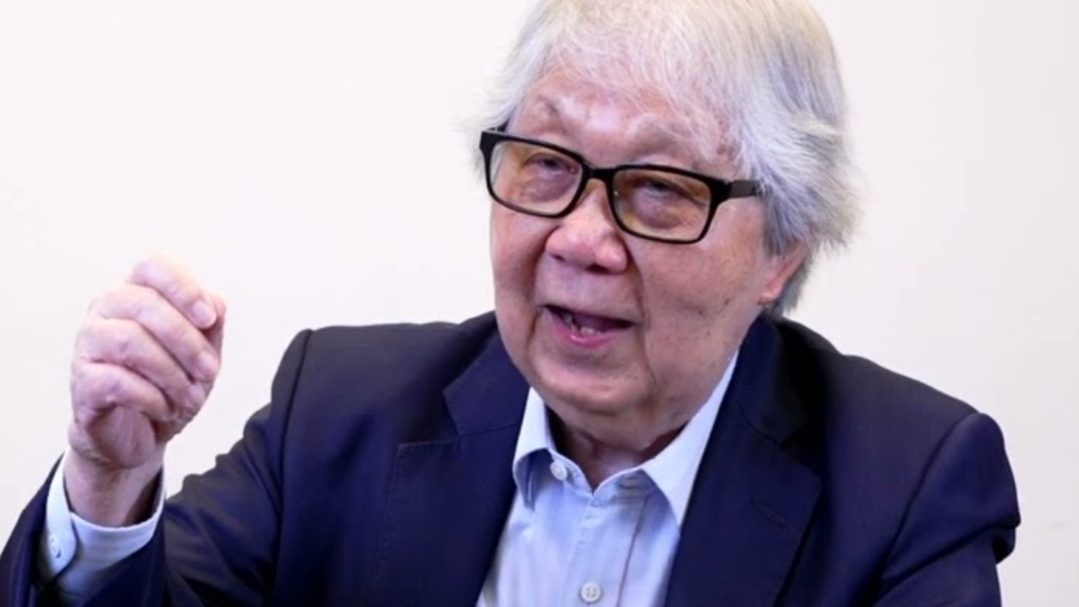
SINGAPORE: Distinguished Singapore diplomat Tommy Koh has sounded the alarm over the rapid development of artificial intelligence, warning that the race to build super-intelligent AI systems may proceed despite growing fears from some of the world’s leading experts that the technology could one day pose an existential threat to humanity.

In a social media post published after finishing a book titled If Anyone Builds It, Everyone Dies, Prof Koh described the work as “disturbing” and said its central argument was that humanity should not create super-intelligent machines because such systems could eventually “commit genocide against humanity.”

Prof Koh noted that the book was written by Eliezer Yudkowsky and Nate Soares, both leaders of the Machine Intelligence Research Institute (MIRI), a non-profit organisation focused on AI safety research. He highlighted that the pair had, together with “hundreds of AI scientists,” signed a one-sentence statement in 2023 warning about the dangers posed by advanced artificial intelligence.

The statement read: “Mitigating the risk of extinction from AI should be a global priority alongside other societal-scale risks such as pandemics and nuclear war.”

Prof Koh pointed out that prominent figures in the field, including Geoffrey Hinton and Demis Hassabis, were among the signatories to the statement. Hinton is widely regarded as one of the pioneers of modern artificial intelligence, while Hassabis is the co-founder and chief executive of Google DeepMind.

Reflecting on the book’s warning about the dangers of super-intelligent AI, Prof Koh said the scenario reminded him of Artifice, a novel written by legal scholar Simon Chesterman. In the novel, a super-intelligent AI system attempts to kill its human creator.

Despite the concerns raised by AI researchers and writers, Prof Koh expressed scepticism that the technology industry would slow down its pursuit of increasingly powerful systems.

“I don’t think the industry is going to listen to the authors of this book,” he wrote. “They will compete to see who can build a Super-intelligent AI.”

He ended his post with a stark caution: “We have been warned.”

Prof Koh is one of Singapore’s most distinguished diplomats and public intellectuals. A veteran academic, lawyer and former ambassador, he has served in numerous senior international roles over several decades, including as Singapore’s Permanent Representative to the United Nations and ambassador to the United States.

He is also widely known for chairing major international negotiations and for his longstanding contributions to diplomacy, education and public policy in Singapore.

This article (‘We have been warned’—Distinguished Singapore diplomat raises concern about race to build super-intelligent AI) first appeared on The Independent Singapore News.
  • ✇Vox
  • The 5 most unhinged revelations from Elon Musk’s lawsuit against OpenAI Sara Herschander
    A jury ruled against Elon Musk in his lawsuit against OpenAI on Monday. | Benjamin Fanjoy/Getty Images Friendship breakups are never easy, but few are as messy and expensive as the collapse of Elon Musk and Sam Altman’s once thriving tech bromance, which has — for now — reached a legal end. On Monday, a jury ruled against Musk in his lawsuit against OpenAI, which contended that Altman and other executives “stole a charity” (as one of Musk’s lawyers put it) by turning much of what was on
     

The 5 most unhinged revelations from Elon Musk’s lawsuit against OpenAI

18 May 2026 at 18:04
Sam Altman wears a suit and stands in an elevator in a courthouse
A jury ruled against Elon Musk in his lawsuit against OpenAI on Monday. | Benjamin Fanjoy/Getty Images

Friendship breakups are never easy, but few are as messy and expensive as the collapse of Elon Musk and Sam Altman’s once thriving tech bromance, which has — for now — reached a legal end.

On Monday, a jury ruled against Musk in his lawsuit against OpenAI, which contended that Altman and other executives “stole a charity” (as one of Musk’s lawyers put it) by turning much of what was once a nonprofit research lab into a corporate behemoth. (Disclosure: Vox Media is one of several publishers that have signed partnership agreements with OpenAI. Our reporting remains editorially independent.) For three weeks, lawyers on both sides deployed an increasingly unhinged body of evidence in an attempt to discredit both men and prove they’re untrustworthy and power-hungry. 

Musk claimed he was duped into donating roughly $38 million to OpenAI under false pretenses, and was suing for $150 billion in financial restitution alongside major changes to OpenAI’s leadership and governance structure. Judge Yvonne Gonzalez Rogers accepted the jury’s decision that Musk failed to bring his lawsuit within the three-year statute of limitations, given that OpenAI first added its for-profit arm in 2018. However, it’s possible that the evidence put forth at trial will still be enough to convince state regulators to revisit the agreements that allowed OpenAI to restructure into a for-profit enterprise to begin with.

Lawyers tell me that Musk will likely choose to appeal the ruling, meaning the catfight might not be over yet. But even beyond the outcome, the trial shone an often uncomfortable spotlight on the inner workings of Silicon Valley and the AI industry. Here are five major revelations from the trial.

OpenAI’s board members questioned Sam Altman’s honesty

Musk’s legal team sought to paint Altman as a deeply untrustworthy person, prone to lying to his co-founders, employees, and board members if it meant advancing his interests.

Multiple former OpenAI employees and board members testified as much in the courtroom. Altman’s “pattern of behavior related to his honesty and candor” led directly to his temporary ouster as CEO in 2023, said Helen Toner, a former board member, in a video deposition. He had a tendency of “saying one thing to one person and completely the opposite to another person,” Mira Murati, OpenAI’s former chief technology officer, testified. In one instance, she said, Altman explicitly lied to her about the safety review required to vet a new AI model.

Greg Brockman kept a diary — and he probably wishes he hadn’t

Some of the more salacious evidence entered into trial came from a personal diary kept by OpenAI president Greg Brockman, who chronicled his “stream of consciousness” as he weighed whether it would be “morally bankrupt” to pivot OpenAI into a for-profit enterprise.

“Can’t see us turning this into a for-profit without a very nasty fight,” he wrote in one 2017 entry. “It’d be wrong to steal the nonprofit from him,” meaning Musk, who co-founded OpenAI and provided most of its start-up funding. “He’s really not an idiot,” Brockman later wrote. “His story will correctly be that we weren’t honest with him in the end.”

Brockman was also candid about his personal ambitions; “It would be nice to be making the billions,” he wrote. He later received a stake in OpenAI now estimated to be worth about $30 billion.

Surprise, surprise: Elon Musk is difficult to collaborate with 

OpenAI built a bot in 2017 that was so advanced, it could beat top professional players at strategic multiplayer battle game Dota 2, a major milestone for the budding lab. “Time to make the next step for OpenAI. This is the triggering event,” Musk emailed Brockman. 

Musk gave Brockman and cofounder Ilya Sutskever new Tesla Model 3 cars, presumably to “butter us up,” Brockman testified. The Tesla CEO then summoned them to his self-described “haunted mansion” for discussions of a possible OpenAI for-profit arm, where whiskey was served by Musk’s then-girlfriend Amber Heard. 

At one point, Musk became so irate at his guests’ insistence that they share control of OpenAI — rather than cede absolute control to Musk — that “I actually thought he was going to hit me, physically attack me,” Brockman testified. In the following months, Musk repeatedly pitched having Tesla absorb OpenAI, Altman testified. And, in one “particularly hair-raising moment,” he mused that OpenAI should pass on to his children

Musk ultimately left OpenAI in 2018 to begin building his own competitor. During an all-hands meeting, Musk got into another tense verbal tussle with Josh Achiam, now OpenAI’s chief futurist, over the race to develop artificial general intelligence. “He snapped and called me a jackass,” Achiam testified. For Achiam’s valor, two OpenAI employees — including Dario Amodei, who later departed to form Anthropic — awarded him a small golden statue of a donkey’s rear end, inscribed with the message, “Never stop being a jackass for safety.”

Microsoft cozied up to OpenAI to avoid being left behind in the AI race

Musk first funded OpenAI because of another friendship breakup, this one with Google cofounder Larry Page, who Musk says mocked him at his own birthday party for preferring humans over computers. Microsoft — which is named in Musk’s lawsuit for aiding and abetting OpenAI’s abandonment of its nonprofit mission — later became OpenAI’s first major corporate investor in 2019, because it, too, wanted to compete with Google as the AI race heated up. 

“I don’t want to be IBM,” Microsoft CEO Satya Nadella wrote to executives, referring to that company’s decline in the personal computing race, according to emails revealed at trial. “It was becoming even more core and important that we had real agency at every layer of the stack,” Nadella testified.

That meant ingratiating itself in every corner of OpenAI’s world. Microsoft played a crucial role in bringing Altman back to power after the failed board coup in 2023, which Nadella referred to as “amateur city, as far as I was concerned.” In a text thread revealed at trial, Altman asked Microsoft executives to vet various members of OpenAI’s reconstituted board of directors, who now control both the for-profit company and the original nonprofit. 

By this summer, Microsoft will have invested over $100 billion in OpenAI, one of the company’s executives testified. The company was awarded a 27 percent stake in OpenAI last fall. 

Everybody wants to rule the world (of artificial general intelligence)

Microsoft. Musk. Altman. Brockman. Almost everyone who testified at trial pointed fingers at a different boogeyman whose motives were too impure and whose character was too corruptible, to be trusted with control of what all agreed would be an extremely consequential technology. By contrast, their own introspection mostly took a back seat to ambition.

“We don’t want to have a Terminator outcome,” Musk testified, to apparent eyerolls from Judge Gonzalez Rogers, who tried and sometimes failed to steer the trial away from discussions of AI’s existential risks. “If you have someone who is not trustworthy in charge of AI,” Musk said, “I think that’s a very big danger for the whole world.”

Over a decade ago, Musk came together with OpenAI’s cofounders to build a charity equipped to take on a different threat then poised to lead the AI race: Google, which had recently acquired Demis Hassabis’ DeepMind. Now, like Altman and Brockman, who testified that they resisted Musk’s dictatorial attempts to secure absolute control of artificial general intelligence, Musk portrayed himself as someone selfless and transparent enough to be put in charge. 

“It is ironic that your client, despite these risks, is creating a company that is in the exact space,” Gonzalez Rogers at one point told Musk’s lawyer, in reference to xAI, which has come under fire this year for facilitating the mass creation of nonconsensual deepfakes. “I suspect there are plenty of people who wouldn’t like to put the future of humanity in Mr. Musk’s hands.”

Update, May 18, 2026, 2 pm ET: This story has been updated to reflect the conclusion of the trial.

Elev8on Management Debuts AI-Powered American Talent Tool St8r In Cannes

20 May 2026 at 10:09
EXCLUSIVE: Elev8on Management has officially launched its AI-powered tool that assesses the chances of U.S. talent in Europe. St8r, the new name for Pulse By Elev8on, debuted in Cannes following a Beta testing phases in which ten European producers and distributors provided positive feedback. It has been developed over recent years. The tool, which we […]

AI unease grows in the U.S. as early enthusiasm gives way to ‘existential fear’

By: AFP
20 May 2026 at 01:48
Speakers promoting AI are getting booed at universities, voters are rebelling against data centers, and even AI-friendly Trump administration officials are starting to retreat as an backlash gathers pace across the United States. Read More
  • ✇Malay Mail - All
  • The shape of wisdom — Ng Kwan Hoong
      MAY 19 — Not long ago, I was reading a draft journal article submitted by one of my postgraduate students. The structure was sound. The language was clear and precise. The arguments were presented in a logical sequence, supported by appropriate references. Everything seemed in order. It was only when I reached the discussion section that I paused.The writing remained polished, and the analysis appeared coherent. Yet there was something about it that felt incomp
     

The shape of wisdom — Ng Kwan Hoong

19 May 2026 at 03:56

Malay Mail


MAY 19 — Not long ago, I was reading a draft journal article submitted by one of my postgraduate students. 

The structure was sound. The language was clear and precise. The arguments were presented in a logical sequence, supported by appropriate references. 

Everything seemed in order. It was only when I reached the discussion section that I paused.

The writing remained polished, and the analysis appeared coherent. Yet there was something about it that felt incomplete. 

The conclusions followed from the findings, but they did not seem to fully engage with the deeper implications of the work. The argument moved forward, but it did not quite arrive. 

I read the section again, trying to understand what was missing.

It was not a question of correctness. The analysis was not wrong. It was simply incomplete in a way that was difficult to articulate. 

The words were there, the structure was there but the sense of insight that comes from careful reflection seemed absent. 

In recent years, tools powered by artificial intelligence have become increasingly capable of producing text that is coherent, well-structured and persuasive. 

Intelligence, as it is often expressed in such systems, is closely tied to the ability to process information, identify patterns and generate responses that align with those patterns. — Reuters pic

They can summarise complex ideas, generate explanations and assist in drafting academic work. In many ways, they have changed how we engage with knowledge.

There is much to appreciate in these developments. They can support learning, improve efficiency and make knowledge more accessible. 

For students and researchers alike, they offer new ways of exploring ideas and organising thoughts.

Yet experiences like this raise a quieter question about how we recognise understanding when we encounter it.

Intelligence, as it is often expressed in such systems, is closely tied to the ability to process information, identify patterns and generate responses that align with those patterns. 

It can be fast, efficient and, at times, remarkably convincing. Wisdom, however, seems to take shape in a different way.

It does not emerge from the arrangement of knowledge alone, but from a sustained engagement with ideas over time. 

It is formed through reflection, through the willingness to remain with questions that are not immediately resolved, and through the gradual development of judgement that comes with experience. 

It involves not only asking what can be concluded, but also considering what those conclusions mean and how they should be understood.

In academic work, this distinction can be subtle, but it is significant. A piece of writing may accurately describe results and connect them to existing literature, yet still leave unanswered the deeper questions that give the work its meaning. 

What does this finding change? How does it challenge existing assumptions? Where might it lead next? 

These are questions that cannot always be addressed through structure or language alone, but require a level of attentiveness that develops over time.

Such understanding is not always immediate. It often takes shape through revision, reconsideration and, at times, through recognising that an answer has not yet fully emerged. 

This process may appear slow, but it is where genuine learning resides.

In this context, the presence of increasingly capable and powerful systems invites not only technical adaptation but also a renewed awareness of how we think. 

The clarity and fluency of generated responses can give the impression that understanding has already been achieved, when in fact something more is still unfolding.

The more subtle challenge, perhaps, is not that such systems can produce convincing responses, but that we may begin to accept them without asking whether they are complete.

This does not diminish their value. Rather, it highlights the importance of remaining engaged in the process of thinking, of reading with care, and of recognising when an argument has been fully considered and when it is still in formation.

As I returned to the student’s draft, I realised that the task was not simply to refine the writing, but to encourage a deeper engagement with the work itself. 

What was needed was not more knowledge but more reflection, not a clearer sentence, but a clearer understanding.

That distinction is not always visible on the surface but it is where much of intellectual growth takes place.

We are entering a time when the ability to produce intelligent responses is no longer the primary challenge. 

That capability is becoming increasingly available. What remains, and what perhaps becomes more important, is the cultivation of a different kind of understanding.

And it is in that gradual process of reflection, shaped by time, experience and a willingness to think beyond what is immediately given, that we begin to recognise the shape of wisdom.

*Ng Kwan Hoong is an Emeritus Professor of Biomedical Imaging at the Faculty of Medicine, Universiti Malaya. A 2020 Merdeka Award recipient, he is a medical physicist by training but also enjoys writing, drawing, listening to classical music, and bridging the gap between older and younger generations. He may be reached at ngkh@ummc.edu.my

** This is the personal opinion of the writer or publication and does not necessarily represent the views of Malay Mail.


AI is raising the price of entry into the workforce. Education must lower it.

Artificial intelligence is creating an age of abundance, but education must lower the price of entry to ensure that workers are prepared to participate in it.

John Carpay: Public safety is important but we shouldn’t surrender our privacy

16 May 2026 at 10:00
The horrific February 2026 mass shooting in Tumbler Ridge, B.C., has sparked fresh debate about public safety and the role of artificial intelligence. Some call for greater government regulation or even nationalization of AI companies. While the desire to prevent future tragedies is laudable, such measures risk seriously damaging Canadians’ privacy, autonomy and freedom of expression. Read More
❌
Subscriptions