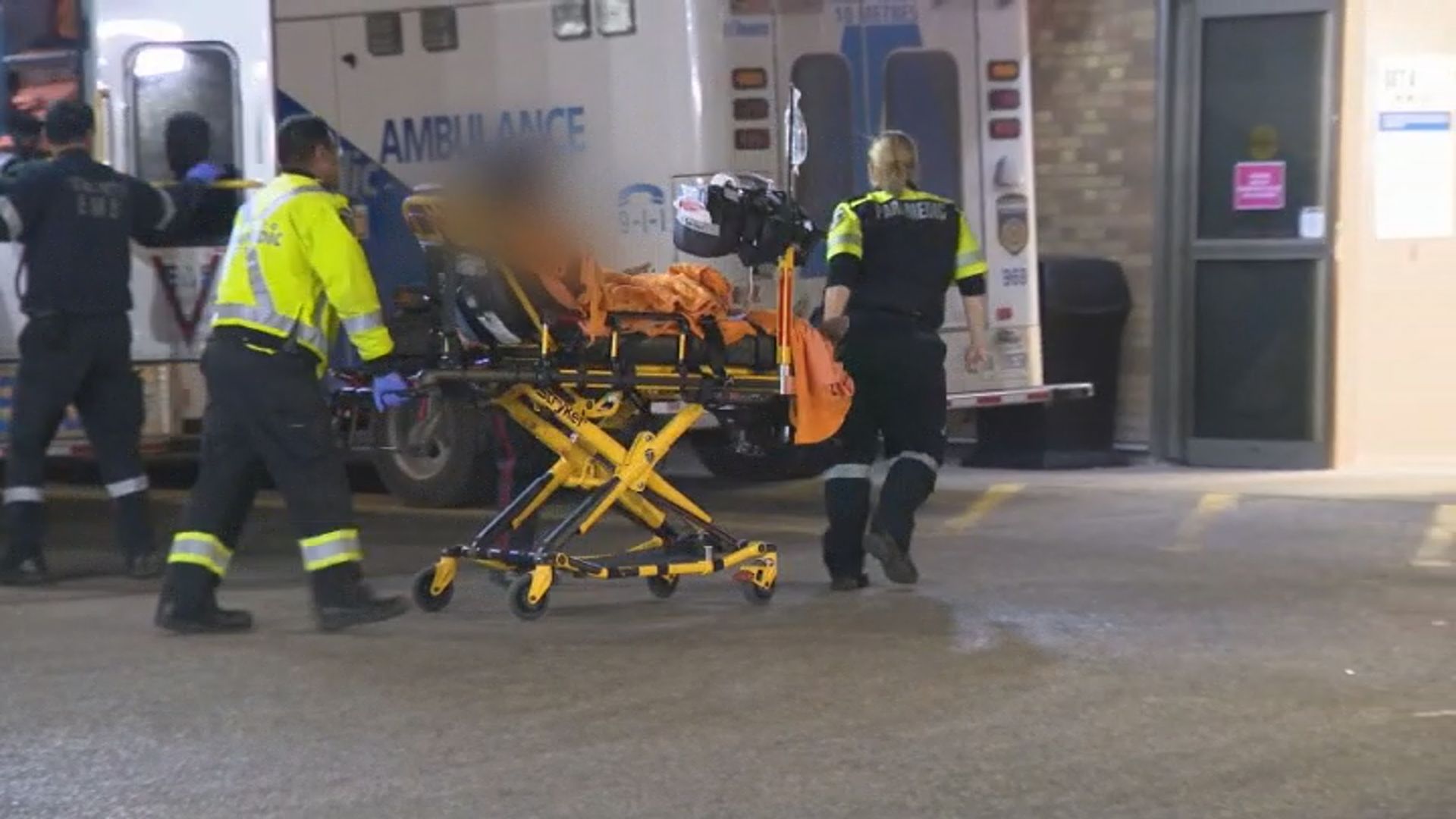
Paramedic services across Canada are reporting a concerning rise in violence against workers that is, in part, leading to staffing shortages and issues retaining staff.
Paramedic services across Canada are reporting a concerning rise in violence against workers that is, in part, leading to staffing shortages and issues retaining staff.
Medellín, Colombia – An outbreak of gang violence in Haiti on Sunday left at least 70 dead and displaced some 6,000, according to human rights group Défenseurs Plus.
The NGO’s estimate greatly differs from the official police figure of 16 deaths in the rural Artibonite region.
In recent years, Haiti has grappled with powerful gangs, with related violence making it one one of the most dangerous countries in the world.
The Artibonite region, the country’s key agricultural centre, is one
Medellín, Colombia – An outbreak of gang violence in Haiti on Sunday left at least 70 dead and displaced some 6,000, according to human rights group Défenseurs Plus.
The NGO’s estimate greatly differs from the official police figure of 16 deaths in the rural Artibonite region.
In recent years, Haiti has grappled with powerful gangs, with related violence making it one one of the most dangerous countries in the world.
The Artibonite region, the country’s key agricultural centre, is one of the worst affected areas. Sunday’s violence has been attributed locally to the Gran Grif gang, which was designated a terrorist organisation by the United States last year.
Antonal Mortimé, director of the human rights NGO Défenseurs Plus, told Haiti’s Radiotélévision Caraïbes that some 50 homes were set on fire on Sunday.
The United Nations (UN) has urged “Haitian authorities to conduct a thorough investigation,” and estimated that between 10 and 80 people had been killed.
A recent UN report confirmed over 5,500 deaths between March 2025 and January 2026.
During this period violence has also spread out from the epicentre of the capital, Port-au-Prince, as gangs continued to commit kidnappings, child trafficking, and sexual abuse on a large scale.
“Since the assassination of President Jovenel Moïse in July 2021, Haiti has entered a phase of unprecedented violence, which we describe as structural. Violence is no longer only criminal; it is a tool for political and territorial control,” Mortimé told Latin American Reports.
“Armed gangs, often instrumentalized by sectors of power and the economic elite, now control more than 80% of the metropolitan area of Port-au-Prince,” he added.
Mortimé also criticized the state, which he believes has failed to strengthen the judicial system or national police in response to the ongoing crisis: “Impunity has become the norm: almost none of the major massacres documented by human rights organizations have resulted in a serious trial. This culture of impunity, nourished by widespread corruption in public institutions, prevents any attempt to restore republican order.”
To control this epidemic, Mortimé highlights the need for sweeping reforms of the government and judicial systems, as well as controls on the trafficking of illegal weapons. Despite Haiti’s total arms embargo, the UN has reported that weapons are being trafficked primarily from the U.S. due weak border control and corruption.
“The Haitian crisis is the product of a system where corruption and lack of accountability have supplanted public interest. The containment of this violence will necessarily involve the restoration of the rule of law and the protection of the fundamental rights of every citizen,” concluded Mortimé.
Buenos Aires, Argentina – “We are the voice of those who no longer have one,” read the slogan plastered on signs across downtown Buenos Aires last Thursday, June 3.
Thousands gathered outside the National Congress to mark the 11th anniversary of Ni Una Menos, a movement that emerged after the 2015 murder of 14-year-old Chiara Páez and went on to reshape Argentina’s debate over gender violence while inspiring similar mobilizations across Latin America.
Purple scarves, green handkerchiefs and ph
Buenos Aires, Argentina – “We are the voice of those who no longer have one,” read the slogan plastered on signs across downtown Buenos Aires last Thursday, June 3.
Thousands gathered outside the National Congress to mark the 11th anniversary of Ni Una Menos, a movement that emerged after the 2015 murder of 14-year-old Chiara Páez and went on to reshape Argentina’s debate over gender violence while inspiring similar mobilizations across Latin America.
Purple scarves, green handkerchiefs and photographs of victims filled the streets on Wednesday as demonstrators demanded justice for women killed in acts of gender violence. This year’s march was largely shaped by the femicide of Agostina Vega, a 14-year-old girl in Córdoba, whose case dominated national headlines in the days leading up to the demonstration and became a symbol of public outrage.
The case sparked criticism of Argentina’s justice system and prompted calls for the resignation of judicial and government officials over alleged failures to protect the teenager.
Demonstrators also highlighted the recent murders of Dulce Candia, 17, in the northern province of Misiones; and Noelia Romero, 30, in a Buenos Aires suburb, whose names echoed throughout the protest.
“This case encapsulates the institutional violence that the State subjects us to,” organizers from Ni Una Menos said in a statement read during the main rally.
The statement was read by actress and gender rights activist Thelma Fardin, whose case became a landmark moment in Argentina’s #MeToo movement. “Don’t talk about me, stop killing us,” she said to the crowd that included women of all ages, political leaders and relatives of femicide victims. Earlier this year, Brazil’s Supreme Court upheld the conviction of Argentine actor Juan Darthés for sexually abusing Fardin during a tour in Nicaragua in 2009, bringing to a close one of the country’s most closely followed gender violence cases.
As demonstrators advanced through the city center, banners carried messages such as “No woman should have to learn how to survive living in the place she belongs,” “May freedom not be a promise but a reality,” and “Feminist rebellion against fascism.”
Debate over cuts to gender programs
Alongside demands for justice, many protesters also linked gender violence to Argentina’s economic situation. One of the most visible slogans read “We want to be alive, free… and debt-free” (“Vivas, libres y desendeudadas nos queremos”), a variation of the movement’s traditional slogan “Vivas y libres nos queremos” (“We want to be alive and free”). Organizers said the addition reflected concerns about the impact of President Javier Milei’s austerity policies on women and vulnerable communities.
The mobilization comes as feminist organizations and Milei’s government offer sharply different assessments of the situation facing women in Argentina.
According to Ahora Que Sí Nos Ven, an Argentine feminist observatory that monitors femicides and gender-based violence, a woman is killed every 31 hours in the country. The organization recorded 99 victims of gender-related killings between January and May this year and has documented more than 3,200 such cases since the first Ni Una Menos march in 2015.
For organizers, the anniversary has become not only a call against femicides but also a protest against what they describe as the dismantling of gender policies under Milei’s administration.
Activists pointed to reductions in funding for gender-based violence programs. According to an analysis by Argentine fact-checking organization Chequeado, inflation-adjusted spending on eight gender-related programs fell by nearly 95% between 2023 and 2025. Among the most affected were a nationwide hotline for victims of gender violence and a program which provides financial assistance to women at risk. Both saw their budgets fall by nearly 100% in real terms during the period.
According to Chequeado, six of the eight programs analyzed were either eliminated or absorbed into broader initiatives under the Human Capital and Justice ministries.
But the Milei administration has defended the restructuring, arguing that several programs were inefficient or redundant.
Government officials have also challenged the activists’ interpretation of the data. Senator Patricia Bullrich, from Milei’s La Libertad Avanza, highlighted what she described as a decline in femicides since Milei took office.
“I know that behind every statistic there are families, and for those families that number means everything,” Bullrich wrote on social media during the mobilization. “But the data reflects a reality: since Javier Milei took office, we have reduced femicides by 25%, strengthened the prison system and created a DNA registry for convicted rapists.”
Bullrich added that “the feminism I defend is the one that protects women,” reflecting the administration’s argument that public security measures, rather than gender-focused institutions, have driven improvements in the statistics.
According to a report released by Argentina’s Supreme Court, 200 direct victims of femicide were recorded in 2025, down 12.3% from the previous year and the lowest annual figure since 2017. The judiciary’s National Femicide Registry estimated that one woman was killed every 44 hours last year.
As the demonstration came to an end, participants raised photographs of victims toward Congress while organizers read aloud the names of women killed over the past year. Eleven years after the first Ni Una Menos march, demonstrators argued that the central demand remains unchanged: ensuring that no woman becomes the next name added to the list.
Featured image description: Protesters marked the anniversary of Ni Una Menos.
A search in Ohio for suspects who opened fire near a busy street festival stretched into Sunday after 12 people were wounded in the weekend shooting that sent crowds scrambling for cover in a historic Toledo neighborhood.
A search in Ohio for suspects who opened fire near a busy street festival stretched into Sunday after 12 people were wounded in the weekend shooting that sent crowds scrambling for cover in a historic Toledo neighborhood.
SINGAPORE: A Singapore man who claimed his wife beat him, controlled his salary, accused him of having affairs and even poked him with acupuncture needles failed in his attempt to obtain court protection orders after a judge ruled the man hadn’t shown that protection was still necessary.
According to a judgment reported on May 25 by Channel NewsAsia (CNA), the man had asked the Family Justice Courts for several forms of protection, including a Personal Protection Order (PPO), a no-contact order,
SINGAPORE: A Singapore man who claimed his wife beat him, controlled his salary, accused him of having affairs and even poked him with acupuncture needles failed in his attempt to obtain court protection orders after a judge ruled the man hadn’t shown that protection was still necessary.
According to a judgment reported on May 25 by Channel NewsAsia (CNA), the man had asked the Family Justice Courts for several forms of protection, including a Personal Protection Order (PPO), a no-contact order, counselling, and mandatory treatment orders.
The court ultimately dismissed all applications. The decision didn’t centre on whether every allegation happened as described. Instead, the court focused on whether legal protection remained necessary given the couple’s current situation.
Claims of control, fear and abuse
The husband painted a picture of married life shaped by suspicion and strict control. He claimed his wife regularly accused him of having affairs and demanded access to his phone whenever she became suspicious.
He also alleged the repeated accusations of infidelity involving multiple women, including his stepmother. And whenever such suspicion arises, the wife is said to force the husband to kneel and crawl around the house floor 100 times.
Another incident allegedly began after she wanted money linked to a government payout and escalated into a confrontation involving a 15cm-long kitchen knife before tensions eased.
The man also alleged that his wife, having knowledge in Traditional Chinese Medicine, later used acupuncture needles on his private parts and told him it was meant to prevent health issues, such as preventing it from turning black. She also threatened to kill him with the needles. He said the incident left him frightened and in pain, going to sleep only from about 3 am to 4 am.
On top of that traumatising experience, he said his wife also ordered him to wash her clothes every night and give her a massage and would strike him with a massage stick whenever she felt he wasn’t doing it properly.
Beyond that, he described a routine in which he handed over his full monthly salary and received only S$4 to S$5 a day for food. He claimed he had to return home quickly after work to avoid punishment and carried out household tasks under pressure.
The court rejected the protection order application because the couple had already separated
The hearing proceeded without the wife after she informed the court she was receiving medical treatment in China and agreed to accept the outcome. The court, however, didn’t accept her explanation for missing the hearing because supporting medical documents were not provided.
Still, Magistrate Soh Kian Peng didn’t grant the husband’s request. In the written judgment, the magistrate said that even if the husband’s account were accepted in full, the application still fell short on a key legal point: whether protection orders were still needed for the man’s present safety.
The court noted that the couple had already separated, the husband had cut off contact with his wife and her relatives, and he had kept his current residence hidden from them. Those steps, the magistrate said, reduced the likelihood of further incidents.
Because the PPO application failed, the linked requests for counselling, no-contact and treatment orders were also dismissed.
Family violence cases in courts don’t always meet expectations, especially when it’s no longer necessary
Cases involving alleged family violence challenge public assumptions about who seeks help and how abuse is perceived.
This particular case demonstrates that court orders aren’t automatic even after serious allegations. Courts still consider current risk, evidence, and whether legal intervention remains necessary at the time of the hearing, because protection orders are designed to prevent future harm, not to act as a finding that every disputed event took place.
As for the human side of it, separation, distance and cutting contact can become the first practical line of protection long before a court order enters the verdict.
Medellín, Colombia – There were 35 massacres in Colombia in the first three months of 2026, making it the most violent quarter in a decade, according to the Institute of Peace and Development Studies (Indepaz).
The Colombian NGO’s figures revealed that 133 people had died in the massacres, which occurred across 34 municipalities in 17 departments.
The grim figures come as Colombia faces a surge in violence related to its long-running armed conflict, almost ten years after a historic peace
Medellín, Colombia – There were 35 massacres in Colombia in the first three months of 2026, making it the most violent quarter in a decade, according to the Institute of Peace and Development Studies (Indepaz).
The Colombian NGO’s figures revealed that 133 people had died in the massacres, which occurred across 34 municipalities in 17 departments.
The grim figures come as Colombia faces a surge in violence related to its long-running armed conflict, almost ten years after a historic peace deal with the Revolutionary Armed Forces of Colombia (FARC) rebel group.
The massacres claimed the lives of 74 men, 16 women, and 17 children. 40 of the victims have not been identified.
The first massacre of the year, in which three women were killed, was committed in Santander de Quilichao, Cauca, on January 3. The single most violent attack took place in El Retorno, Guaviare, where 26 people were killed on January 16.
This makes this year’s first quarter the most violent in the last ten years, during which Indepaz has recorded the deaths of nearly 3,000 people in over 700 different massacres.
On the back of the peace accords signed in November 2016 between Colombian President Juan Manuel Santos and the FARC, 2017 was the least violent year, registering 33 massacres in total.
However, following the election of Iván Duque in 2018, yearly records of massacres increased from 39 in the first year of his presidency to 96 in 2021.
Under the current Gustavo Petro administration, figures have remained at similar levels, oscillating between the highest point of 94 cases in 2023 and 76 cases in 2024. Petro’s policy of Paz Total (Total Peace) that has sought to counter violence by negotiating with armed groups has had mixed results.
The period of 2021 to 2025 observed an average of 303 deaths annually, an increase on the average of 201 deaths each year in the preceding five year period. Even the most violent periods of the last decade did not register as many quarterly cases as 2026 has witnessed so far. The first quarter of 2020 recorded 17 massacres, under half of this year’s equivalent figure.
In the last decade, 1,657 men, 285 women, and at least 133 children have been killed. Valle del Cauca was the worst affected department with 62 massacres resulting in 215 deaths, followed by Cauca which saw 58 massacres and 200 deaths.
The surge in violence has come at a crucial moment in Colombian politics with presidential elections set to take place on May 31. While Petro’s possible Historic Pact successor, Iván Cepeda, looks to continue the Paz total policy, other candidates have promised tougher military measures against armed groups.
Featured image credit:Policía Nacional de los colombianos via Flickr
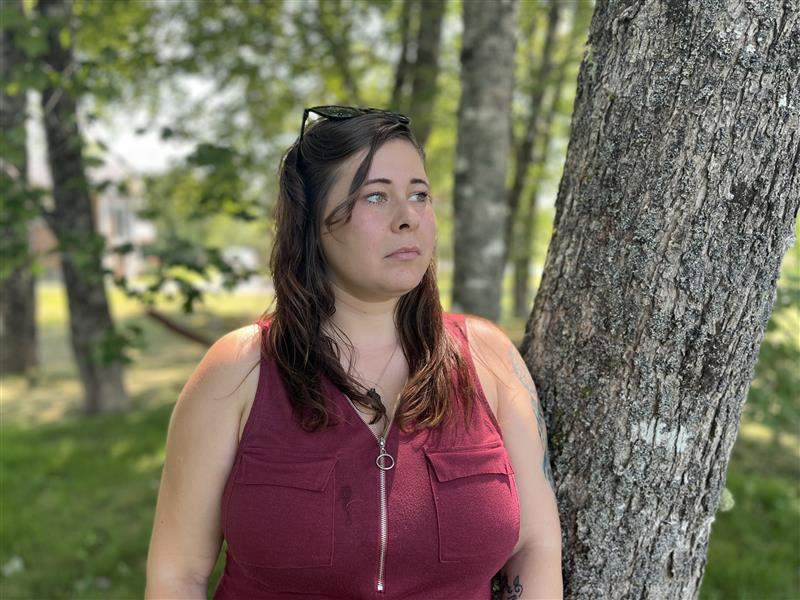
A Nova Scotian woman says the justice system has failed after she was the victim of intimate partner violence. She's speaking out again on her abuser's sentence as well.
A Nova Scotian woman says the justice system has failed after she was the victim of intimate partner violence. She's speaking out again on her abuser's sentence as well.
On Monday, El Salvador’s Attorney General announced the beginning of a mass trial of 486 alleged members of the Mara Salvatrucha (MS-13) gang, who are accused of more than 47,000 crimes committed between 2012 and 2022.
Among the defendants, 413 are already detained in different penitentiary centers, while 73 have arrest warrants issued against them.
The Attorney General said that 22 historical kingpins of the Ranfla, MS-13’s top leadership structure, will be prosecuted in the trial, along
On Monday, El Salvador’s Attorney General announced the beginning of a mass trial of 486 alleged members of the Mara Salvatrucha (MS-13) gang, who are accused of more than 47,000 crimes committed between 2012 and 2022.
Among the defendants, 413 are already detained in different penitentiary centers, while 73 have arrest warrants issued against them.
The Attorney General said that 22 historical kingpins of the Ranfla, MS-13’s top leadership structure, will be prosecuted in the trial, along with 212 other Ranfla members and 152 program coordinators. Charges include aggravated homicide, disappearance of persons, extortion, arms trafficking, and femicide.
MS-13 was founded in Los Angeles as a street gang in the 1980s by Salvadoran refugees who fled the civil war. It spread to Central America when many of its members were deported to their home countries during the 1990s and has been designated as a terrorist organization both by El Salvador and the U.S.
The trial takes place amid El Salvador’s state of emergency, which President Nayib Bukele declared in March 2022 under Article 29 of the country’s Constitution. Under the emergency act, security forces have broader powers to arrest and detain suspects, while certain constitutional protections have been suspended.
Once among the most violent countries in the world, El Salvador has managed to reduce its murder rate to 1.3 homicides per 100,000 inhabitants, one of the lowest in the whole continent.
More than 91,000 suspected gang members have been arrested since the implementation of the state of emergency, according to the government.
These measures have drawn criticism from several human rights organizations, which accuse Bukele’s government of rights violations and abuses.
In a statement published on April 21, the Inter-American Commission on Human Rights expressed concerns that the prolonged state of emergency “suspends the rights to a legal defense and to the inviolability of communications, and also extends administrative detention timelines.” In a report published last March, Salvadoran rights group Cristosal said that critics of the government, including journalists, activists, and opposition figures, have faced increasing criminalization since 2021.
Despite the critics, the latest data published by CID Gallup show that Nayib Bukele has reached a 94% approval rating, the highest level since he came into power in 2019.
Featured image description: MS-13 gang members sat through a mass trial on April 20.
Featured image credit: El Salvador Attorney General’s Office.
The death of the 11-year-old, named only as Lyhanna, has pushed the issue of male violence against girls to the top of the agendaA lawyer for the family of an 11-year-old girl whose disappearance and murder sparked protests across France has called for more funding for the struggling justice system, amid a political row over the French state’s failure to tackle sexual violence against children.“Frankly, if the justice system had more resources, this tragedy and all the others wouldn’t have happe
The death of the 11-year-old, named only as Lyhanna, has pushed the issue of male violence against girls to the top of the agenda
A lawyer for the family of an 11-year-old girl whose disappearance and murder sparked protests across France has called for more funding for the struggling justice system, amid a political row over the French state’s failure to tackle sexual violence against children.
“Frankly, if the justice system had more resources, this tragedy and all the others wouldn’t have happened,” said the family’s lawyer, François Roujou de Boubée, on Tuesday. “The victim’s family and I trust in the justice system. So enough is enough.”
 Login
Login





:max_bytes(150000):strip_icc():format(jpeg)/Theresa-Randle-060626-1-631300d2ee4e4be592be9208c9dba266.jpg)