A Hong Kong court has convicted a former law student of rioting during the 2019 protests and unrest after the government successfully appealed against her acquittal, leading to a retrial.
The protest in Wan Chai on August 31, 2019. File photo: May James/HKFP.
Alice Tong, 26, was found guilty of rioting on Tuesday, nearly seven years after she was arrested in Wan Chai on August 31, 2019, according to local media. District Judge Edmond Lee remanded Tong in custody pending sentencing on July
A Hong Kong court has convicted a former law student of rioting during the 2019 protests and unrest after the government successfully appealed against her acquittal, leading to a retrial.
The protest in Wan Chai on August 31, 2019. File photo: May James/HKFP.
Alice Tong, 26, was found guilty of rioting on Tuesday, nearly seven years after she was arrested in Wan Chai on August 31, 2019, according to local media. District Judge Edmond Lee remanded Tong in custody pending sentencing on July 15.
Lee initially acquitted Tong of rioting and possession of an offensive weapon in a public place in August 2021, saying at that time prosecutors had failed to prove she committed violence or abetted the riot.
Authorities appealed against her acquittal, and the Court of Appeal overturned Lee’s decision in June 2024.
The three appellate judges said at that time that the circumstantial evidence of Tong’s participation in the riot was “overwhelming,” according to media outlet The Witness.
The Court of Appeal judges ordered the case to be reconsidered by the trial judge. In July last year, they rejected Tong’s application to take her case to the Court of Final Appeal.
Judge Lee said on Tuesday that the circumstantial evidence was “overwhelming” in showing that Tong was part of the riot and had encouraged others through her presence.
District Court in Wan Chai. File photo: Hans Tse/HKFP.
At the time of her arrest, Tong was dressed in black, carrying a gas mask and a black scarf, and holding an umbrella and a walking stick, Lee said.
Officers also seized a helmet, goggles, gloves, and a laser pen from her backpack, Lee said.
The defendant’s clothing and the equipment she carried were “extremely unusual and suspicious,” Lee said, pointing out that her outfit on that day was clearly similar to that of other protesters.
Lee also said that, in the minutes before the defendant was stopped by police, many black-clad protesters were retreating along the same route on Wan Chai Road towards the east.
The judge dismissed the defence’s argument that Tong was merely caught in the riot and was not leaving the scene alongside other protesters.
Tong was seen weeping after the judge delivered his verdict, while her supporters yelled, “We all love you,” as she was led away by guards, The Witness reported.
A Hong Kong court has ordered the forfeiture of more than HK$670,000 in “terrorist property” from three persons involved in a thwarted bomb plot during the 2019 protests.
The High Court. File photo: Kyle Lam/HKFP.
In a written judgment on Thursday, High Court Judge Judianna Barnes ruled that Wong Chun-keung and Ng Chi-hung were “terrorists” and Lau Pui-ying was a “terrorist associate” under the United Nations (Anti-Terrorism Measures) Ordinance.
Barnes said a total sum of HK$674,860 in
A Hong Kong court has ordered the forfeiture of more than HK$670,000 in “terrorist property” from three persons involved in a thwarted bomb plot during the 2019 protests.
The High Court. File photo: Kyle Lam/HKFP.
In a written judgment on Thursday, High Court Judge Judianna Barnes ruled that Wong Chun-keung and Ng Chi-hung were “terrorists” and Lau Pui-ying was a “terrorist associate” under the United Nations (Anti-Terrorism Measures) Ordinance.
Barnes said a total sum of HK$674,860 in the defendants’ accounts and in cash, which was liable to be seized under the ordinance, was “intended to be used to finance or otherwise assist the commission of ‘terrorist acts.’”
In November 2024, Ng was sentenced to almost 24 years in jail for masterminding the foiled bomb plot, which aimed to kill police officers at a demonstration on December 8, 2019, amid the large-scale protests and unrest that year.
Wong, who led a radical group known as “Dragon Slayers,” was sentenced to 13 and a half years in prison. Both defendants pleaded guilty, with Wong testifying for the prosecution in exchange for leniency in sentencing.
Lau was among seven defendants who stood trial by jury. In August 2024, the nine-member jury found her and five others not guilty. Only one defendant was convicted by the jury and was sentenced to 10 years and 10 months behind bars.
Despite her acquittal, authorities submitted “numerous Telegram messages” that showed Lau “actively administered, together with [Wong], crowd-funding exercise in securing funds” for Dragon Slayers and the bomb plot, according to the judgment on Thursday.
A rally is held in Hong Kong Island on December 8, 2019, to mark International Human Rights Day. File photo: May James/HKFP.
Between November 6 and December 9, 2019, Lau’s three accounts received net deposits of more than HK$1 million while she was earning a salary of less than HK$3,000, the government submitted.
Barnes said the evidence “overwhelmingly supported” the government’s application to forfeit the sum.
Roughly HK$536,000 was kept in Lau’s three accounts, according to the judgment, while the remainder, around HK$138,000, consisted of deposits in Wong and Ng’s bank accounts, as well as cash.
Wong and Ng did not oppose the application while Lau was absent throughout the proceedings, including court notices and a hearing regarding the government’s application.
The anti-terrorism ordinance, enacted in 2002, was invoked for the first time to prosecute the group.
The defendants were accused of planning a bomb attack during a rally marking International Human Rights Day, plotting to place two bombs along the rally’s marching route to kill police officers.
Four men have pleaded guilty to rioting during the siege of the Hong Kong Polytechnic University (PolyU) campus amid the anti-extradition protest and unrest seven years ago.
District Court in Wan Chai. File photo: Hans Tse/HKFP.
Cheung Chung-yiu, 24; Cheung Chin-ming, 29; Chan Chun-hei, 22; and Chan Yuen-ming, 33, appeared at the District Court on Monday morning to enter their pleas.
The four defendants were not prosecuted when they were first arrested in 2019 and 2020. However, they w
Four men have pleaded guilty to rioting during the siege of the Hong Kong Polytechnic University (PolyU) campus amid the anti-extradition protest and unrest seven years ago.
District Court in Wan Chai. File photo: Hans Tse/HKFP.
Cheung Chung-yiu, 24; Cheung Chin-ming, 29; Chan Chun-hei, 22; and Chan Yuen-ming, 33, appeared at the District Court on Monday morning to enter their pleas.
The four defendants were not prosecuted when they were first arrested in 2019 and 2020. However, they were re-arrested in June 2024 and charged with rioting at PolyU between November 14, 2019 and November 20, 2019.
The events at the Hung Hom campus were one of the most violent episodes during the protests and unrest in 2019, with protesters setting fires with petrol bombs as they faced off against police.
A fifth defendant, Lai Chun-kit, was not present. He has not attended hearings since October 2024, and an arrest warrant has been issued for him, The Witness reported.
Protesters outside the Hong Kong Polytechnic University in Hong Kong on November 17, 2019. Photo: Studio Incendo.
According to the prosecution, CCTV footage captured the defendants’ behaviour during the riot. Cheung Chung-yiu was seen moving barriers to block a footbridge, while Cheung Chin-ming and Chan Chun-hei were filmed taking containers from a laboratory.
Chan Yuen-ming was seen walking around the university campus and taking a large flask and two bottles with him.
Mitigation
The four defendants had initially planned to plead not guilty and go forward with a trial, the court heard, but later changed their minds.
During mitigation, Cheung Chung-yiu’s lawyer said that the defendant had gone abroad to study before he was re-arrested in 2024, while Cheung Chin-ming’s lawyer told the court that his client had supported victims of the Wang Fuk Court fire in its aftermath.
A bridge leading to the Hong Kong Polytechnic University set on fire on Nov. 17, 2019. Photo: Viola Kam/United Social Press.
A legal representative for Chan Chun-hei said the defendant was only 16 at the time of the incident. He worked in the construction sector and became a father at 21, his lawyer said, adding that he regretted what he had done when he was younger.
Chan Yuen-ming’s lawyer said his client was tricked into working at a scam farm in Thailand, returning to Hong Kong in 2022 after his family paid a ransom. He suffers from post-traumatic stress disorder, the lawyer said.
The lawyer added that Chan Yuen-ming was sentenced to 18 years and five months in prison for a drug trafficking offence, and that he stands to face a long time in prison.
The four defendants will be sentenced on June 8. Rioting is punishable by up to 10 years’ imprisonment, although jail terms handed down at the District Court are capped at seven years.
The Legislative Council (LegCo) has confirmed that the Designated Demonstration Area at the complex, along with the surrounding LegCo Square, is being used as a car park.
LegCo Square and the Designated Demonstration Area at the front of the Legislative Council complex on April 22, 2026. Photo: Kyle Lam/HKFP.
In a response to HKFP earlier last month, the LegCo Secretariat said that the revamp was part of the renovations which took place after the number of lawmakers was expanded from 70 t
The Legislative Council (LegCo) has confirmed that the Designated Demonstration Area at the complex, along with the surrounding LegCo Square, is being used as a car park.
LegCo Square and the Designated Demonstration Area at the front of the Legislative Council complex on April 22, 2026. Photo: Kyle Lam/HKFP.
In a response to HKFP earlier last month, the LegCo Secretariat said that the revamp was part of the renovations which took place after the number of lawmakers was expanded from 70 to 90 for the 2022 legislative term.
LegCo Square and the Designated Demonstration Area at the front of the Legislative Council complex on April 22, 2026. Photo: Kyle Lam/HKFP.
The Secretariat said: “Since the completion of the expansion project of the Legislative Council (“LegCo”) Complex, all 90 LegCo Members and their staff as well as staff of the LegCo Secretariat have moved into the Complex and have been working under one roof.”
It added, “To meet operational needs, the LegCo Square and the whole area (including the Designated Demonstration Area) outside the main entrances to the Complex have been used as a parking area for Members and visitors to the Complex. The Legislative Council Commission will keep the use of this area under review from time to time.”
LegCo Square and the Designated Demonstration Area at the front of the Legislative Council complex on April 22, 2026. Photo: Kyle Lam/HKFP.
It did not respond when asked when the car park work was completed, but according to a LegCo fact sheet, major expansion works were completed at the complex last year.
Status of protest area ‘clear,’ says LegCo
The Designated Demonstration Area was intended as the only authorised location for petitions and protests at the legislature. However, it was closed during the 2019 pro-democracy protests and unrest.
After the turmoil and the Covid-19 pandemic restrictions that followed, then-legislative president Andrew Leung hinted that the protest area could reopen in early 2025 at the latest. He dismissed concerns that the extended closure was for political reasons, stating that it “can only reopen when we get rid of the glass and can ensure it is safe,” according to the Standard in 2023.
LegCo Square and the Designated Demonstration Area at the front of the Legislative Council complex on April 22, 2026. Photo: Kyle Lam/HKFP.
Leung may have been referring to the brief occupation of the building on July 1, 2019, by pro-democracy protesters, who broke windows to access the complex and vandalised it.
The storming of LegCo on July 1, 2019. File Photo: May James/HKFP.
Last August, Leung said the reopening was still under consideration, adding that the “scale of current petition activities had become smaller, and it is necessary to consider whether such a large space is still required,” according to NowTV.
HKFP asked the LegCo Secretariat multiple times last month whether the Designated Demonstration Area was still available for those who wished to submit a petition or stage a protest.
They did not directly confirm whether it remained open, but they referred HKFP to their earlier response, adding that it was already “clear,” and did not “amount to a refusal to confirm if the Designated Demonstration Area is still operational.”
LegCo Square and the Designated Demonstration Area at the front of the Legislative Council complex on April 22, 2026. Photo: Kyle Lam/HKFP.
A Legislative Council handbook for lawmakers, dated this February, suggests that the protest area is still available for applications, despite the new car park.
LegCo Square and the Designated Demonstration Area at the front of the Legislative Council complex on April 22, 2026. Photo: Kyle Lam/HKFP.
The application form for using the area is still online, as are the guidelines – both from 2018.
They state: “Members of the public are allowed to stage petitions or demonstrations at the LegCo Square, subject to the terms set out in the ‘Guidelines for staging petitions or demonstrations by individuals and groups at designated demonstration areas in premises managed by The Legislative Council Commission’.”
‘Doors always open’
According to its website, the purpose-built Legislative Council complex at Tamar in Admiralty was opened in September 2011 and included architectural features to showcase transparency.
LegCo Square and the Designated Demonstration Area at the front of the Legislative Council complex on Wednesday, April 22, 2026. Photo: Kyle Lam/HKFP.
The website states: “The Tamar Project has been designed with the main theme of ‘Doors Always Open’, ‘Land Always Green’, ‘Sky Will Be Blue’ and ‘People Will Be Connected’.”
No major mass protests have been held in Hong Kong since the onset of the 2020 national security law.
“This prosecution is, in fact, a trial of the law itself,” Hong Kong pro-democracy activist Chow Hang-tung told a court last month.
Hong Kong’s Tiananmen crackdown vigil. File photo: Etan Liam, via Flickr.
Chow, 41, made the remark during a defiant closing argument in her trial.
The barrister-turned-activist sought to challenge the legitimacy of the national security allegations against herself, former colleague Lee Cheuk-yan, and the organisation they led, which held Hong Kong’s cand
The barrister-turned-activist sought to challenge the legitimacy of the national security allegations against herself, former colleague Lee Cheuk-yan, and the organisation they led, which held Hong Kong’s candlelight vigils commemorating China’s 1989 crackdown on pro-democracy demonstrators in Beijing’s Tiananmen Square.
From 1990 to 2019, the Hong Kong Alliance in Support of Patriotic Democratic Movements of China organised the commemorative event every year on June 4 at Victoria Park, demanding accountability for the bloody crackdown and the democratisation of China, both taboos in the country.
Beijing imposed a national security law in Hong Kong in 2020, following the 2019 protests and unrest. In 2021, police arrested the Alliance’s leadership, including Chow, Lee, and Albert Ho. The Alliance voted to disband that year, ending its decades-long vigils and advocacy.
Chow, Lee, and the Alliance are standing trial for “inciting subversion” under the national security law, an offence that carries a maximum penalty of 10 years behind bars. Ho pleaded guilty when the trial opened in January.
HKFP looked at the events surrounding the establishment of the Alliance, the Tiananmen vigils it organised, and the ongoing trial of its leaders.
Chow Hang-tung, barrister and a leader of the Hong Kong Alliance in Support of Patriotic Democratic Movements of China, on March 21, 2021. Photo: Peter Parks/AFP.
Hong Kong prosecutors have argued that the case against the Alliance is not political and does not concern its activism, the vigils, or the 1989 crackdown. They allege that, however, the group had been calling for the overthrow of China’s ruling Communist Party (CCP) through its “end one-party rule” slogan – a key tenet of the Alliance since its founding.
For Chow, who represents herself in the trial, the prosecution has upended Hong Kong’s value of being a free-wheeling city that tolerates the kind of political dissent not permitted in mainland China.
The trial has in effect “cornered” the court, forcing it to choose its side between the rule of law and an authoritarian regime, she argued.
Alliance and 1989 Tiananmen crackdown
Massive pro-democracy demonstrations broke out in China in the spring of 1989, triggered by the death of Hu Yaobang, a former CCP leader seen as a reformist. Students and protesters gathered in Beijing’s Tiananmen Square for weeks, demanding political reforms and democracy, as the rest of the country rallied to support those in the capital city.
In May that year, the Alliance was founded in Hong Kong, and huge demonstrations were staged in support of protesters in mainland China.
Around 1.5 million people joined a mass rally on May 28, a day after celebrities like Anita Mui, Teresa Teng, Eric Tsang, and Jackie Chan took part in the Alliance’s benefit concert in support of the students’ movement.
Around 1.5 million people take part in a mass rally in Hong Kong in support of students protesting at Tiananmen Square in Beijing. Photo: 1989年的傳真 , via Facebook.
Lee personally went to Beijing to deliver donations raised during the concert. However, he was detained and made to sign a letter of remorse, around the time the tanks rolled in to crush the burgeoning movement.
The protests in Beijing ended in a bloody crackdown as Chinese troops dispersed protesters on June 3 and 4. Estimates of death tolls during the crackdown range from hundreds to thousands.
In the years that followed, the Alliance organised candlelight vigils at Victoria Park every June 4 to commemorate the dead and to keep the spirit of the 1989 pro-democracy movement alive.
The Alliance’s five tenets – release pro-democracy activists, vindicate the 1989 democracy movement, hold those responsible for the crackdown accountable, end one-party rule, and build a democratic China – were an integral part of the candlelight vigils.
Tens of thousands of people attended the commemorations every year. They lit candles, sang songs, observed a moment of silence, and chanted the Alliance’s five slogans, led by the group’s leaders.
Alliance leaders (from left) Lee Cheuk-yan, Chow Hang-tung, and Albert Ho appear on the giant screen at Hong Kong’s annual Tiananmen crackdown vigil on June 4, 2019. File photo: Todd R. Darling/HKFP.
In 2020, authorities banned the vigil for the first time, citing Covid-19 restrictions. They prohibited the gathering again the following year, also citing the pandemic. The Alliance was disbanded in September 2021, following the arrests of its leaders.
No official vigils have been held since 2019, but there is a heavy police presence at Victoria Park and nearby streets on June 4.
For four consecutive years, Victoria Park has been occupied by a pro-China food festival in early June, including the anniversary day of the bloody crackdown.
‘Weird’ prosecution
In her closing argument last month, Chow said the prosecution was “weird,” as the defendants had not disputed the alleged acts and instead, they embraced what they did.
“Ending one-party rule means putting an end to the status quo, in which those in power are not bound by the law,” she told the court in Cantonese. “What is really in dispute is what the law suppresses and what it protects.”
According to the prosecution, the Alliance’s calls to “end one-party rule” had exceeded the legitimate boundary of freedom of expression as the defendants intended to stoke hatred against Beijing. “Freedom is not absolute,” lead prosecutor Ned Lai told the court in Cantonese.
The last official Tiananmen crackdown candlelight vigil on June 4, 2019. File photo: Todd R. Darling/HKFP.
Chow said the prosecution’s argument had undermined the values long championed in Hong Kong, such as freedom of expression and the rule of law.
“Speaking out the truth has become stoking hatred. Seeking justice has become taking advantage of suffering,” she said. “Asking for accountability has become breaching the constitution. Demanding democracy has become inciting subversion.”
She maintained that the court must protect human rights when reaching a verdict in the case.
“What the court has been asked to ban, to punish in this case are, in fact, what society and the law should encourage… They are the core values of Hong Kong, the norms and ideals accumulated through generations,” she said.
“I hope the court will make a correct decision to safeguard the dignity and bottom line of the law, at a time when values are being reshaped,” she added.
Prosecutors have argued that there are no “lawful means” to end CCP rule after a 2018 constitutional amendment stipulated that the party’s leadership is the “defining feature” of China’s socialist system.
A pro-Beijing food carnival at Victoria Park on June 4, 2025, the anniversary of the Tiananmen crackdown. File photo: Kyle Lam/HKFP.
During his closing submission last month, Lee’s lawyer, Erik Shum, argued that prosecutors had presented a “tautological theory.”
“We ask: How exactly did the Alliance incite others to overthrow the CCP? And my submission is that the prosecution has always reverted to the claim that ending CCP rule is illegal,” Shum said in Cantonese.
Shum urged the court to draw a boundary for what is considered an acceptable political expression and what is not.
“The court must not pay lip service to human rights protections,” he said.
The three-judge panel – Alex Lee, Johnny Chang, and Anna Lai – has adjourned the proceedings, saying they hope to deliver a verdict in “mid or late July.”
In a letter from prison this week, Chow, who has been behind bars since September 2021, said she would go on a 37-hour hunger strike in commemoration of the 37th anniversary of the 1989 crackdown.
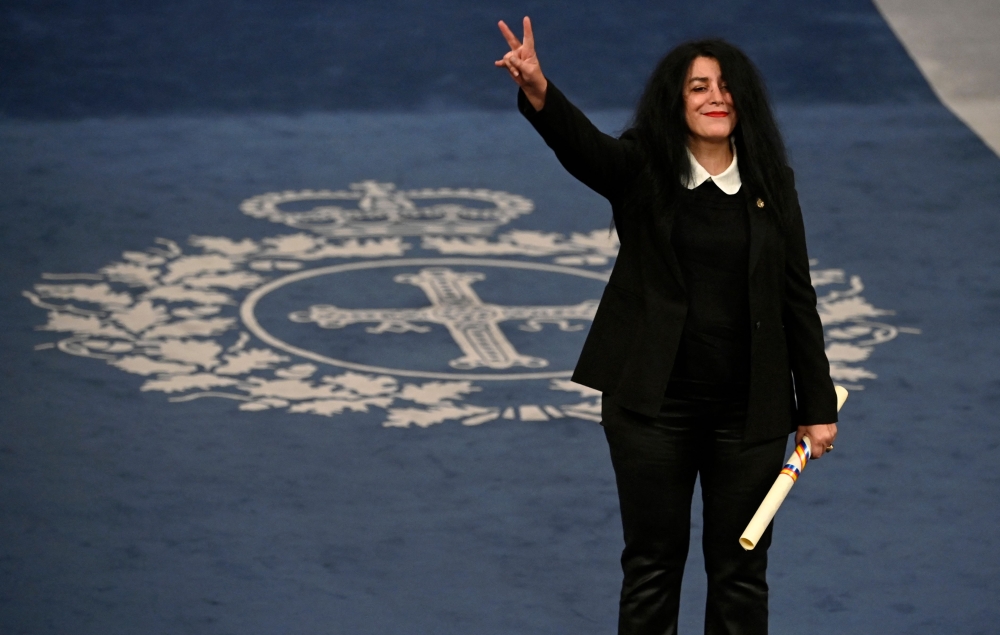
PARIS, June 5 — Franco-Iranian author and film director Marjane Satrapi, best known for the graphic novel and film “Persepolis”, has died aged 56, AFP learned yesterday from a member of her close circle.“Marjane Satrapi died of sadness a little over a year after the death of Mattias Ripa, her husband and the love of her life,” they said in a statement sent to AFP.Ripa, a Swedish producer, actor and screenwriter, died on April 8 last year.Satrapi, an outspoken cri
PARIS, June 5 — Franco-Iranian author and film director Marjane Satrapi, best known for the graphic novel and film “Persepolis”, has died aged 56, AFP learned yesterday from a member of her close circle.
“Marjane Satrapi died of sadness a little over a year after the death of Mattias Ripa, her husband and the love of her life,” they said in a statement sent to AFP.
Ripa, a Swedish producer, actor and screenwriter, died on April 8 last year.
Satrapi, an outspoken critic of Iran’s theocratic government, arrived in France in 1994 and gained French nationality in 2006.
“Persepolis” recounts the story of Satrapi’s early life in Tehran, struggling under the restrictions imposed by Iran’s Islamic leadership after the 1979 revolution, before she is sent to Europe by her parents and begins a life in exile.
Last year, she refused the French legion d’honneur award over the country’s “hypocrisy” in its dealings with Iran, citing French visa policies that prevented dissidents leaving Iran for the European country.
Satrapi directed several films, including a 2007 cinematic adaptation of her graphic novel “Persepolis”, which was co-directed by Vincent Paronnaud, won the Jury Prize at the Cannes Film Festival and was nominated for an Oscar.
“Even if this is a universal film, I want to dedicate this prize to all Iranians,” Satrapi told AFP at the time.
She was a voice for the women of Iran after protests erupted in the Islamic republic after the 2022 death of 22-year-old Iranian Kurdish woman Mahsa Amini while in custody for allegedly breaching the dress code for women.
At a protest to mark two years since Amini’s death in Paris, Satrapi was among those chanting “Women, Life, Freedom”.
“It’s very important that this regime disappears,” she said of the Islamic republic, but she stressed it could not happen overnight.
“I think it’s important to remain hopeful,” she added.
Her work expanded beyond stories connected to Iran, including “Radioactive”, a 2019 biopic about pioneering radioactivity researcher and Nobel-prize winner Marie Curie, starring Rosamund Pike.
Her husband, whom she met in Paris, had been a long-time collaborator.
After his death, Satrapi founded the Mattias and Marjane Ripa-Satrapi Cinema Foundation to support foreign students wishing to come to Paris to study filmmaking.
Since his passing, Satrapi’s Instagram page consisted almost exclusively of a series of images spelling out “For I Lost the love of my life”, along with a picture of her husband and an announcement of the foundation. — AFP
Two Hong Kong men accused of conspiring to incite people to riot during the 2019 protests and unrest have had their case moved to a higher court, where they face a maximum sentence of seven years’ imprisonment.
West Kowloon Magistrates’ Courts. File photo: Kelly Ho/HKFP.
Ng Tsz-lok, who is unemployed, and photographer Chan Wai-leong appeared at the West Kowloon Magistrates’ Courts on Thursday.
The two men have been remanded since they were charged in October over their alleged role in
Two Hong Kong men accused of conspiring to incite people to riot during the 2019 protests and unrest have had their case moved to a higher court, where they face a maximum sentence of seven years’ imprisonment.
West Kowloon Magistrates’ Courts. File photo: Kelly Ho/HKFP.
Ng Tsz-lok, who is unemployed, and photographer Chan Wai-leong appeared at the West Kowloon Magistrates’ Courts on Thursday.
The two men have been remanded since they were charged in October over their alleged role in the anti-extradition protests six years ago. Prosecutors have accused them of manufacturing and providing weapons to protesters.
The pair have been charged with conspiring to incite others to take part in a riot, with the date of the offence being October 22 to 23, 2019.
Ng was among a group of defendants acquitted by a High Court jury in September of alleged involvement in three bomb plots in places including a hospital and a car park between November 2019 and March 2020.
Ng Tsz-lok leaves the High Court after being acquitted on September 4, 2025. Photo: Kyle Lam/HKFP.
With the completion of handover procedures, Magistrate Victor So announced on Thursday the transfer of the case to the District Court.
The maximum penalty at the District Court is seven years’ imprisonment. At the magistrates’ court, the maximum penalty is two years, or three years when a defendant is convicted of more than one offence.
The case will be heard at the District Court on June 2 for the pair to confirm whether they will plead guilty or not guilty, So said.
Ng also faced an additional charge of “incitement to take part in a riot” on November 14, 2019. The prosecution said on Thursday it had changed the charge to “conspiracy to incite others to take part in a riot” and added an additional day – November 15, 2019 – to the offence.
District Court in Wan Chai. File photo: Almond Li/HKFP.
The details of the amended charge specified that the target of Ng’s incitement was an unknown individual and somebody by the name of Lee Tsz-ying – transliterated from Cantonese, as read out in court by the prosecution.
The prosecution also added a new charge for Ng, accusing him of inciting others to riot on different dates, between October 19 and November 8, 2019.
Buenos Aires, Argentina – “We are the voice of those who no longer have one,” read the slogan plastered on signs across downtown Buenos Aires last Thursday, June 3.
Thousands gathered outside the National Congress to mark the 11th anniversary of Ni Una Menos, a movement that emerged after the 2015 murder of 14-year-old Chiara Páez and went on to reshape Argentina’s debate over gender violence while inspiring similar mobilizations across Latin America.
Purple scarves, green handkerchiefs and ph
Buenos Aires, Argentina – “We are the voice of those who no longer have one,” read the slogan plastered on signs across downtown Buenos Aires last Thursday, June 3.
Thousands gathered outside the National Congress to mark the 11th anniversary of Ni Una Menos, a movement that emerged after the 2015 murder of 14-year-old Chiara Páez and went on to reshape Argentina’s debate over gender violence while inspiring similar mobilizations across Latin America.
Purple scarves, green handkerchiefs and photographs of victims filled the streets on Wednesday as demonstrators demanded justice for women killed in acts of gender violence. This year’s march was largely shaped by the femicide of Agostina Vega, a 14-year-old girl in Córdoba, whose case dominated national headlines in the days leading up to the demonstration and became a symbol of public outrage.
The case sparked criticism of Argentina’s justice system and prompted calls for the resignation of judicial and government officials over alleged failures to protect the teenager.
Demonstrators also highlighted the recent murders of Dulce Candia, 17, in the northern province of Misiones; and Noelia Romero, 30, in a Buenos Aires suburb, whose names echoed throughout the protest.
“This case encapsulates the institutional violence that the State subjects us to,” organizers from Ni Una Menos said in a statement read during the main rally.
The statement was read by actress and gender rights activist Thelma Fardin, whose case became a landmark moment in Argentina’s #MeToo movement. “Don’t talk about me, stop killing us,” she said to the crowd that included women of all ages, political leaders and relatives of femicide victims. Earlier this year, Brazil’s Supreme Court upheld the conviction of Argentine actor Juan Darthés for sexually abusing Fardin during a tour in Nicaragua in 2009, bringing to a close one of the country’s most closely followed gender violence cases.
As demonstrators advanced through the city center, banners carried messages such as “No woman should have to learn how to survive living in the place she belongs,” “May freedom not be a promise but a reality,” and “Feminist rebellion against fascism.”
Debate over cuts to gender programs
Alongside demands for justice, many protesters also linked gender violence to Argentina’s economic situation. One of the most visible slogans read “We want to be alive, free… and debt-free” (“Vivas, libres y desendeudadas nos queremos”), a variation of the movement’s traditional slogan “Vivas y libres nos queremos” (“We want to be alive and free”). Organizers said the addition reflected concerns about the impact of President Javier Milei’s austerity policies on women and vulnerable communities.
The mobilization comes as feminist organizations and Milei’s government offer sharply different assessments of the situation facing women in Argentina.
According to Ahora Que Sí Nos Ven, an Argentine feminist observatory that monitors femicides and gender-based violence, a woman is killed every 31 hours in the country. The organization recorded 99 victims of gender-related killings between January and May this year and has documented more than 3,200 such cases since the first Ni Una Menos march in 2015.
For organizers, the anniversary has become not only a call against femicides but also a protest against what they describe as the dismantling of gender policies under Milei’s administration.
Activists pointed to reductions in funding for gender-based violence programs. According to an analysis by Argentine fact-checking organization Chequeado, inflation-adjusted spending on eight gender-related programs fell by nearly 95% between 2023 and 2025. Among the most affected were a nationwide hotline for victims of gender violence and a program which provides financial assistance to women at risk. Both saw their budgets fall by nearly 100% in real terms during the period.
According to Chequeado, six of the eight programs analyzed were either eliminated or absorbed into broader initiatives under the Human Capital and Justice ministries.
But the Milei administration has defended the restructuring, arguing that several programs were inefficient or redundant.
Government officials have also challenged the activists’ interpretation of the data. Senator Patricia Bullrich, from Milei’s La Libertad Avanza, highlighted what she described as a decline in femicides since Milei took office.
“I know that behind every statistic there are families, and for those families that number means everything,” Bullrich wrote on social media during the mobilization. “But the data reflects a reality: since Javier Milei took office, we have reduced femicides by 25%, strengthened the prison system and created a DNA registry for convicted rapists.”
Bullrich added that “the feminism I defend is the one that protects women,” reflecting the administration’s argument that public security measures, rather than gender-focused institutions, have driven improvements in the statistics.
According to a report released by Argentina’s Supreme Court, 200 direct victims of femicide were recorded in 2025, down 12.3% from the previous year and the lowest annual figure since 2017. The judiciary’s National Femicide Registry estimated that one woman was killed every 44 hours last year.
As the demonstration came to an end, participants raised photographs of victims toward Congress while organizers read aloud the names of women killed over the past year. Eleven years after the first Ni Una Menos march, demonstrators argued that the central demand remains unchanged: ensuring that no woman becomes the next name added to the list.
Featured image description: Protesters marked the anniversary of Ni Una Menos.
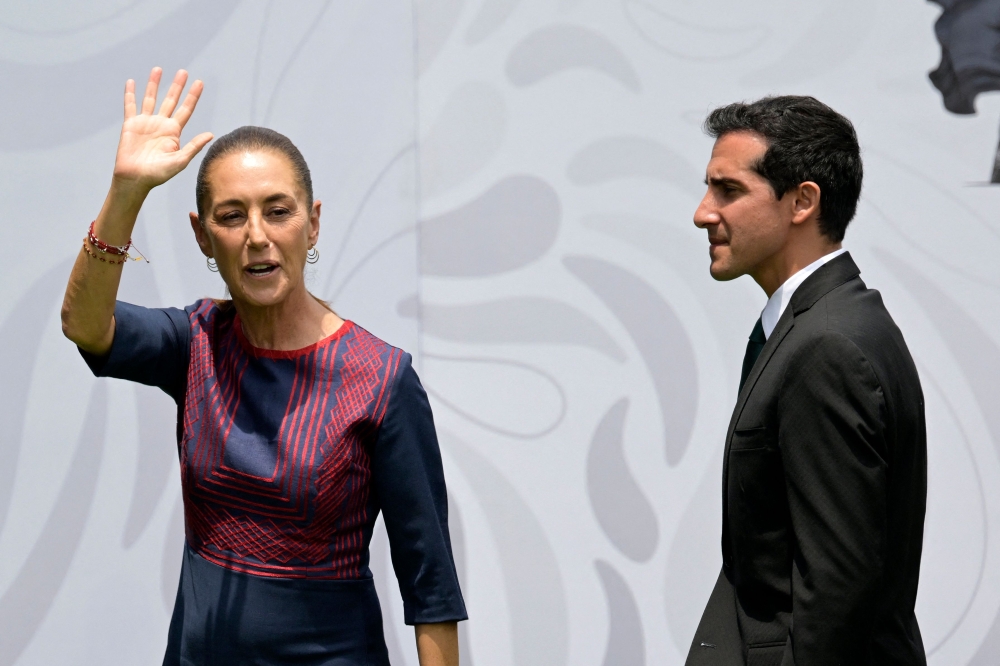
MEXICO CITY, June 9 — Mexican President Claudia Sheinbaum said yesterday she could guarantee a peaceful World Cup opening ceremony this week, despite concern over ongoing protests.A teachers union has threatened demonstrations at Thursday’s opening game between Mexico and South Africa in the capital if the government doesn’t respond to demands for salary raises and pension reforms.“We are going to guarantee... that the celebration of the World Cup is well-execute
MEXICO CITY, June 9 — Mexican President Claudia Sheinbaum said yesterday she could guarantee a peaceful World Cup opening ceremony this week, despite concern over ongoing protests.
A teachers union has threatened demonstrations at Thursday’s opening game between Mexico and South Africa in the capital if the government doesn’t respond to demands for salary raises and pension reforms.
“We are going to guarantee... that the celebration of the World Cup is well-executed, in peace and tranquility,” Sheinbaum said in her daily press conference.
Last week, police dispersed protesters with teargas and rubber bullets outside the historic Zocalo square where authorities have erected a massive screen for a World Cup fan zone.
The streets surrounding the square remain closed off with metal barricades, which Sheinbaum has said are meant to guard against “provocations.”
Protesting teachers also toppled commemorative statues of players in downtown Mexico City last week.
Though Sheinbaum has maintained open dialogue with the teachers, the union has deemed government proposals insufficient.
Joining the protests are hundreds of people from the Ayotzinapa teachers college, who are demanding further efforts to investigate the disappearance of 43 students from the rural school in 2014.
Mexico City police said they discovered 59 homemade explosive devices on one of the bus convoys entering the capital on Monday, posting a photo of dozens of small white pipes with fuses on X.
Tourists ‘freaked out’
The teachers’ sprawling tent camps have flooded the city center, leading to complaints from businesses that tourists will stay away during the World Cup.
“The access to our restaurant is closed off, the people aren’t coming, the tourists are freaked out,” 31-year-old waiter Jonathan Herrera, who was protesting against the encampment, told AFP.
Around 50 people waited to cross through one of the metal barricades under the watch of police, where one restaurant glued a poster reading “we’re still open.”
US tourist Heather Lutz, 64, expressed support for the protesters.
“No government likes their city to look real” during big events like the World Cup, she said.
The tournament is the ideal moment to “generate pressure” to win concessions from the government, 42-year-old teacher Dinora Diaz told AFP in the street encampment.
Negotiations
Sheinbaum’s government explained on Monday their proposals to the teachers union, proposing the creation of a new state-owned company to administer pensions.
But the government dismissed the possibility of reversing pension laws, arguing it would cost around $400 million.
The teachers have rejected the government’s proposals while the Secretary of Governance Rosa Icela Rodriguez called for the strikers to lift the blockades.
“It’s fundamental that the legitimate exercise of the right to protest can coexist with the rights of those who live in and move through this great city,” the official said. — AFP
BELFAST, June 10 — Anti-immigration protesters torched buildings and vehicles in Belfast on yesterday evening and blocked roads, a day after a stabbing allegedly by a Sudanese refugee, captured in a graphic video that shocked the country.Hundreds of protesters, many masked, gathered at several locations across Belfast, AFP journalists saw. A bus and several cars were set alight, while a building fringing the city centre caught fire and its residents had to be eva
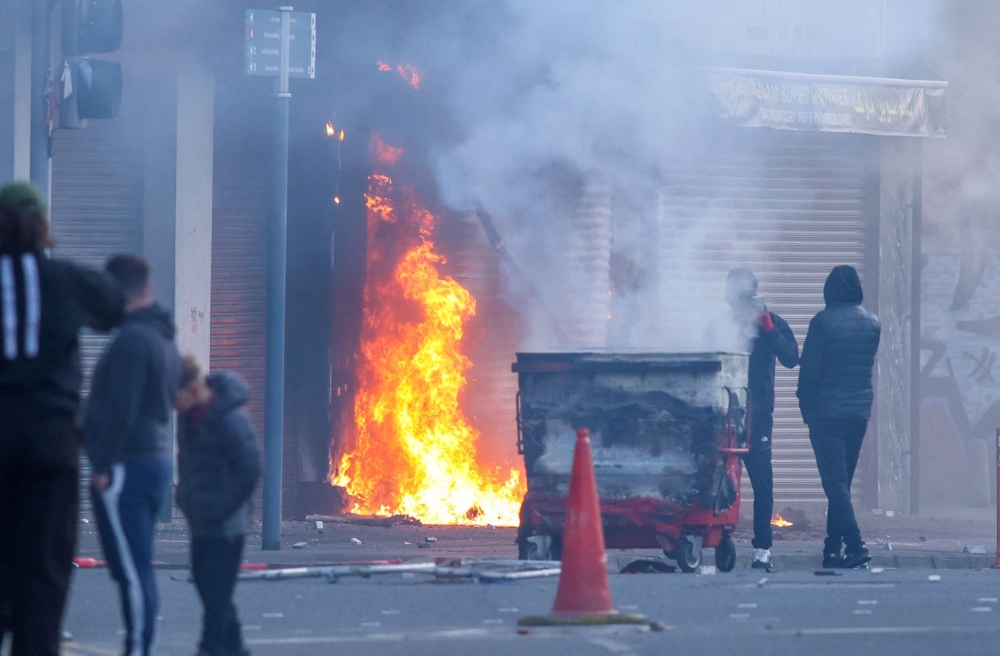
BELFAST, June 10 — Anti-immigration protesters torched buildings and vehicles in Belfast on yesterday evening and blocked roads, a day after a stabbing allegedly by a Sudanese refugee, captured in a graphic video that shocked the country.
Hundreds of protesters, many masked, gathered at several locations across Belfast, AFP journalists saw. A bus and several cars were set alight, while a building fringing the city centre caught fire and its residents had to be evacuated.
“By 7.30 pm they started (a) fire in the bins...we heard police cars and sirens,” said one resident, Eemran, an engineer of Indian origin who has been living in Belfast for slightly over a year.
“More and more people started coming, they started throwing petrol bombs. Suddenly the fire started going...we had smoke inside the building...fire people came in and they said ‘go down’,” he said in broken English.
Camila, a 36-year-old Chilean who moved to Belfast a month ago, said it was “scary”.
“Of course I’m not used to it,” she said. “I understand the people’s rage but also there are ways of discussing these things more peacefully”.
Sky television showed other buildings on fire.
Police helicopters patrolled above the city and shops were also closed early.
Michelle O’Neill, the First Minister of Northern Ireland, slammed the protests and urged calm.
“Groups of masked men burning families out of their homes is nothing less than disgusting cowardice,” she said on X.
“Racism, intimidation and violence are wrong wherever they occur. There can be no excuse and no justification for these attacks tonight. No one wants to see this on our streets and I again appeal for calm”.
Crowds also gathered in Antrim, around 25 kilometres (15 miles) west of Belfast.
US tech billionaire Elon Musk had earlier retweeted a post by anti-immigration activist Stephen Yaxley-Lennon—also known as Tommy Robinson—adding: “Only by protesting REPEATEDLY and LOUDLY will there be any change!!”.
The suspect in the knife attack, whose name has not been released, was charged late Tuesday with attempted murder, possession of a bladed weapon in a public place and making threats to kill. The 30-year-old man is due to appear in court on Wednesday.
As anti-immigration figures, including Reform party leader Nigel Farage and Restore Britain leader Rupert Lowe, demanded details about the attacker, the interior ministry confirmed he was a Sudanese refugee with a residence permit valid until 2028.
Northern Ireland police chief Jon Boutcher said he had arrived in the UK in 2023 via Paris and Dublin.
Living in fear
Tensions were already high in Britain after violent skirmishes last week in Southampton, southern England, over the police handling of the murder of a young white student stabbed to death by a British Sikh man.
Yesterday, dozens of demonstrators also gathered there outside a hotel housing asylum seekers, carrying banners reading “no racism, just patriotism” and “enough is enough”.
The video from Belfast shows a man straddling another man lying in a street and slashing him several times in the head and neck with a knife, in what far-right figures claimed was an attempted beheading.
Several people can then be seen intervening, one wielding a hurling stick, and tackling the perpetrator as police arrive.
The victim, a man in his 40s, “was taken to hospital with significant injuries to his eyes and serious slash wound injuries to his back and face,” he told reporters.
Officers recovered what is believed to be a kitchen knife at the scene, Henderson confirmed.
A 31-year-old mother-of-one who lives nearby said the incident had terrified the neighbourhood. “We’re just living in fear now,” she told AFP.
Sickening
Prime Minister Keir Starmer called the incident “horrific” and “sickening” on X.
The leaders of Northern Ireland’s five main political parties issued a joint statement condemning the incident, saying “there is no place in our society for this kind of brutality”.
The leaders and police urged people not to share the video, noting its “graphic nature would only serve to retraumatise those involved”.
But numerous social media accounts linked to so-called “patriots” were sharing the footage, urging people to “protest against mass immigration into their communities”.
The UK interior ministry confirmed the Sudanese suspect entered the country in 2023 and acquired refugee status the same year, allowing him to remain until 2028.
“There is no trace of this suspect on any of our national security databases, and he was not known to the Police Service of Northern Ireland,” police chief Boutcher said.
Immigration has become a hot-button issue in Britain, and helped fuel the rise of the hard-right Reform UK party in the polls. — AFP
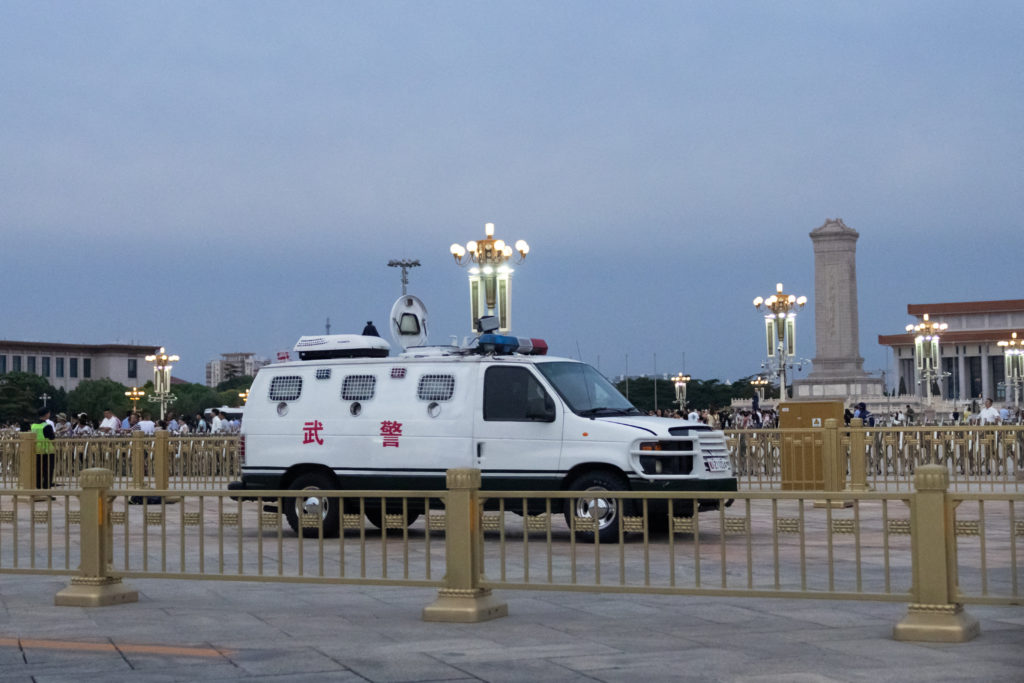
Chinese authorities are snuffing out any remembrance of the deadly 1989 military crackdown on student-led pro-democracy protests in Tiananmen Square, which happened 37 years ago Thursday, in a further tightening in a yearslong campaign to erase what happened from public memory.
Chinese authorities are snuffing out any remembrance of the deadly 1989 military crackdown on student-led pro-democracy protests in Tiananmen Square, which happened 37 years ago Thursday, in a further tightening in a yearslong campaign to erase what happened from public memory.

 Login
Login