CUNEN, June 2 — While drought expands through Cunen as the specter of El Nino climate instability approaches, one fear has seized this indigenous Guatemalan village: death by hunger.The rains still haven’t come here, where local farmers fear the lack of water could ruin the subsistence crops they need to survive.“If there isn’t rain, (the crops) won’t come...If there isn’t anything we’re going to die of hunger,” Cecilia Pasa Sarat, a 38-year-old woman who has pla
CUNEN, June 2 — While drought expands through Cunen as the specter of El Nino climate instability approaches, one fear has seized this indigenous Guatemalan village: death by hunger.
The rains still haven’t come here, where local farmers fear the lack of water could ruin the subsistence crops they need to survive.
“If there isn’t rain, (the crops) won’t come...If there isn’t anything we’re going to die of hunger,” Cecilia Pasa Sarat, a 38-year-old woman who has planted a small amount of corn, told AFP in Xetzac, a village in Cunen.
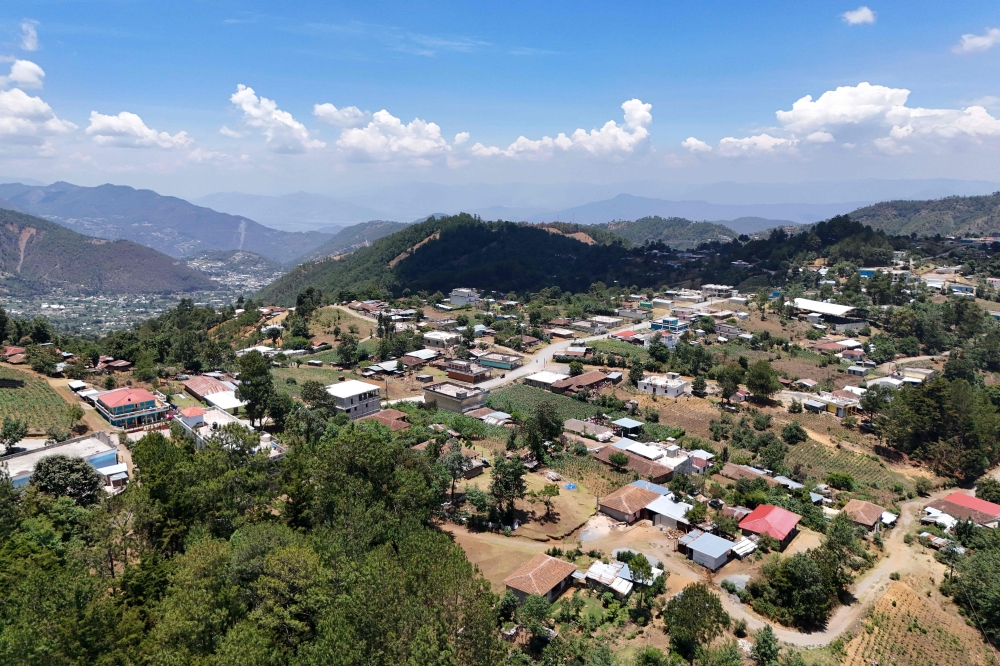
Cunen is a hard-to-reach mountainous region where the majority of the approximately 47,000 residents are poor, and rely on water from wells that are now going dry.
View of a drought-affected corn plantation in the Xetzac community of Cunen, Quiche department, Guatemala, on May 27, 2026. — AFP pic
This village in the Indigenous Maya department of Quiche lays in the heart of the Dry Corridor, an arid mountainous stretch running through Honduras, El Salvador and Nicaragua that’s become vulnerable to extreme climatic events.
Quiche was one of Guatemala’s most hard-hit regions during the El Nino related food crisis in 2023. Some worry the crisis could return due to a lack of government support.
The phenomenon now fueling local residents’ hunger fears occurs every two to six years as part of a natural climatic cycle that affects the surface temperatures on the Pacific Ocean.
It’s expected to start between June and August, creating monthslong planetary ripple effects.
Indigenous leader Elvira Pasa, 27, walks across drought-affected land outside her house in the Xetzac community of Cunen, Quiche department, Guatemala, on May 27, 2026. — AFP pic
‘Prolonged damage’
Weeks of drought have dessicated the dusty streets of Xetzac, where the creeks that usually irrigate the town’s patchwork of corn, potato, broccoli and bean fields are evaporating under the brutal sun.
Taking refuge in the tree shade where the resin-scent of pines drifts down the hillside, Elvira Pasa says the eventual loss of the village harvests will only end in “hunger.”
“We farm, we don’t sell it, we just eat it,” the 27-year-old community leader and mother of a two and seven-year-old son told AFP.
“Whatever we plant is what we eat. What will happen if it doesn’t rain?” 43-year-old Lucia Rojop asks herself.
Indigenous woman Catarina Sica, 39, shows different types of native corn she grows at her house in the Xetzac community of Cunen, Quiche department, Guatemala, on May 27, 2026. — AFP pic
Her fears are well-founded: around 2.5 million Guatemalans face potential food insecurity due to the drought and the high probability of a powerful El Nino weather cycle.
The Guatemalan government says it has 1.1 million rations ready to distribute in the face of an emergency.
According to experts, the chance that El Nino could spiral into a more dangerous event depends on numerous atmospheric factors.
Governments across the dry countries of Central America raised alert levels over the El Niño phenomenon.
But El Nino isn’t the only reason the situation is worsening.
Indigenous woman Cecilia Pasa, 38, loads firewood at her house in the Xetzac community of Cunen, Quiche department, Guatemala, on May 27, 2026. — AFP pic
Just in Guatemala, the “dry corridor” expanded from 40 to 160 municipalities since 2004, meaning almost half of the country has been subjected to climate change-fueled drought, according to the government.
El Nino has reduced by half, according to Alex Guerra, the director of the Private Institute for Investigation on Climate Change (ICC).
Cecilia Pasa walks through a puny corn farm, a clear testimony of the drought. “The plants can’t take it anymore, the ground is drier, it’s not humid anymore like it used to be,” she says categorically.
It means that only half of her neighbors planted corn this year. Everyone else, including Catarina Sica, didn’t even bother.
“There isn’t rain, and the time has passed for us to plant,” Sica says while showing the black, white, and yellow seeds still on the cob of corn.
Indigenous woman Catarina Sica, 39, poses with different types of native corn she grows at her house in the Xetzac community of Cunen, Quiche department, Guatemala, on May 27, 2026. — AFP pic
‘Migratory impact’
The brutal challenges of working the fields in Cunen, for years, were eased with remittances migrants sent home from the US. Yet Donald Trump’s mass deportations have taken away that support.
Around 24,000 Guatemalans have been deported this year, many from Quiche.
The deportations have paralyzed the construction of homes - the great dream of many migrants - as well as the jobs that go with it.
Families now deal with the crisis by raising pigs, sheep, chickens and turkeys for sale.
Sica’s husband returned two years ago after saving enough money to build a concrete house. Now he works occasionally in agriculture, though the US$10 daily wage he earns means the family diet is limited to beans, herbs and potatoes, like most locals.
“We’re seeing what to do, but it all depends on God,” the woman says with resignation. — AFP
Hong Kong sweltered on Friday, with temperatures exceeding 36 degrees Celsius in the northern New Territories by mid-afternoon.
A heatwave in Hong Kong in late May 2026. Photo: Kyle Lam/HKFP.
Acting Assistant Director of the Hong Kong Observatory (HKO) Choy Chun-wing told RTHK on Friday that minimum temperatures remained at, or above, 28 degrees Celsius over the past six days – matching a record seen in mid-May 2021. The longest continuous record could be broken by the weekend.
The HKO
Hong Kong sweltered on Friday, with temperatures exceeding 36 degrees Celsius in the northern New Territories by mid-afternoon.
A heatwave in Hong Kong in late May 2026. Photo: Kyle Lam/HKFP.
Acting Assistant Director of the Hong Kong Observatory (HKO) Choy Chun-wing told RTHK on Friday that minimum temperatures remained at, or above, 28 degrees Celsius over the past six days – matching a record seen in mid-May 2021. The longest continuous record could be broken by the weekend.
The HKO has suggested some relief from the weeklong heatwave is in store, with rain predicted for the weekend.
“The anticyclone aloft will weaken tomorrow, while upper-air disturbances will bring showers and thunderstorms to Guangdong. An easterly airstream will affect the coast of Guangdong in the next couple of days. High temperature weather will be alleviated,” the weather service said on Friday.
Temperatures as of 2.45pm on May 29, 2026. Photo: HKO.
But it added that high temperatures may soon return. “With the easterly airstream being replaced by a southerly airstream early next week, the weather over the coastal areas will be very hot again midweek next week.”
At a Thursday press briefing, the Senior Citizen Home Safety Association’s CEO Maura Wong said that it had handled over 7,700 heat-related emergency assistance cases requiring hospitalisation last summer.
“The Association urges the elderly to take precautions against the heat during the height of summer, and carers should also take a more proactive role in looking after the elderly by providing timely care and support,” she said.
A heatwave in Hong Kong in late May 2026. Photo: Kyle Lam/HKFP.
At the same event, the HKO’s Choy warned that sea surface temperatures in the central and eastern equatorial Pacific are predicted to continue rising, with an El Niño event set to develop in the summer and autumn.
Stronger El Niño events often increase the likelihood of abnormally high temperatures across different regions. Choy warned of a high chance that this summer would be among Hong Kong’s 10 hottest on record.
A heatwave in Hong Kong in late May 2026. Photo: Kyle Lam/HKFP.
The Labour Department hoisted the amber Heat Stress at Work Warning on Friday, urging employers to conduct risk assessments for staff who work outdoors or in non-air-conditioned environments.
Employers “should take necessary preventive and control measures, including rescheduling work periods, setting up shading covers, providing ventilation and heat dissipation equipment, and reminding employees to replenish water and rest in a timely manner,” the department said in a press release.
Planet warming
The Intergovernmental Panel on Climate Change has warned that the intensity and frequency of heatwaves have continued to increase since the 1950s due to human-caused climate change. The prevalence of greenhouse gases like carbon dioxide – which trap heat in the atmosphere – raises the planet’s surface temperature, with hotter, longer heatwaves putting lives at risk.
Hong Kong has already warmed by 1.7 degrees Celsius since the Industrial Revolution, research NGO Berkeley Earth says. Heat and humidity may reach lethal levels for protracted periods by the end of the century, according to a 2023 study, making it impossible to stay outdoors in some parts of the world.
SINGAPORE: As many countries in Asia already wrestle with the energy emergency brought about by the conflict in the Middle East, some are predicting that the region will be hit by a second blow in the form of an unusually strong El Niño.
The weather phenomenon is likely to make 2027 the hottest year on record, and South and Southeast Asia, along with southern Africa and Australia, are expected to experience a period of intense dryness.
However, aside from bringing more heat, economies will also
SINGAPORE: As many countries in Asia already wrestle with the energy emergency brought about by the conflict in the Middle East, some are predicting that the region will be hit by a second blow in the form of an unusually strong El Niño.
The weather phenomenon is likely to make 2027 the hottest year on record, and South and Southeast Asia, along with southern Africa and Australia, are expected to experience a period of intense dryness.
However, aside from bringing more heat, economies will also feel adverse effects.
“The Super El Niño will further worsen the economic pain inflicted by the ongoing energy crisis. Asia’s electricity supply will be further strained as droughts curtail hydropower generation; farmers will be hard hit, and water-intensive manufacturing sectors like semiconductor and textile may also be disrupted, physical climate scientist and visiting professor at the National University of Singapore (NUS) Ming Yi was quoted in Fortune as saying in a May 28 piece.
Double whammy
The conflict in the Middle East, which began when the United States and Israel began bombing Iran on Feb 28, resulted in the closure of the Strait of Hormuz, a chokepoint for around 20% of the world’s fuel supply, much of which was headed toward Asia.
In its wake, countries in the region have had to scramble to obtain enough fuel for domestic use, even as the price of oil and its by-products has risen.
Since the war began, Indonesia has seen a 5% decline in foreign reserves, while the Philippines has seen a 7% drop. India’s rupee has already lost over 6% against the US dollar, and Tokyo stepped in at least twice to prop up the yen.
The fuel crisis has caused Asian economies to rely more on alternative sources of power, but the drought that the Super El Niño is expected to bring will affect hydropower resources, which make up more than 14% of South and Southeast Asia’s total electricity.
Also, hotter days will mean more air-conditioner usage, creating an additional strain on power grids.
Furthermore, extreme heat may also contribute to unbearable working conditions for people working outdoors, such as those in construction, delivery, and logistics.
The director of the Centre for Climate Change and Environmental Health at Singapore’s Nanyang Technological University (NTU), Steve Yim, warned Fortune that a public health crisis may ensue, as outdoor workers are put at risk for severe heat exhaustion.
On May 29, the Meteorological Service Singapore (MSS) issued a statement telling Singaporeans to expect warmer and drier conditions from June to October, increasing the risk of transboundary haze affecting Singapore and the region.
“There is a high chance of an El Niño event occurring this year (more than 80 per cent chance). This assessment is supported by the presence of key precursors, including warmer subsurface ocean temperatures in the eastern tropical Pacific. El Niño’s influence on Singapore’s climate is expected to be felt once the event becomes established,” the statement reads. /TISG
An environmental NGO has urged the Hong Kong government to prioritise the climate crisis and strengthen its climate adaptation policies, as the city is expected to endure an extremely hot summer this year.
A heatwave in Hong Kong in late May 2026. Photo: Kyle Lam/HKFP.
Friends of the Earth said on Monday that as May drew to a close, Hong Kong and many parts of the world had already experienced mid-summer temperatures ahead of schedule.
“Early onset of extreme heat in many parts of the
An environmental NGO has urged the Hong Kong government to prioritise the climate crisis and strengthen its climate adaptation policies, as the city is expected to endure an extremely hot summer this year.
A heatwave in Hong Kong in late May 2026. Photo: Kyle Lam/HKFP.
Friends of the Earth said on Monday that as May drew to a close, Hong Kong and many parts of the world had already experienced mid-summer temperatures ahead of schedule.
“Early onset of extreme heat in many parts of the world is a clear warning of the intensifying climate crisis,” the NGO said in the Chinese-language statement.
“We urge the government to put the climate crisis at the top of its agenda, by placing carbon reduction at the core and setting more aggressive emission reduction targets.”
Logo of Friends of the Earth. Photo: Friends of the Earth.
Authorities should make a thorough climate risk assessment, utilising big data, artificial intelligence, and Geographic Information Systems (GIS) to analyse the vulnerability of various districts to extreme heat, torrential rain, storm surges, and sea-level rise, the statement said.
The NGO also called on the government to enhance the city’s infrastructure to withstand the climate crisis, including improving coastal flood defence facilities and drainage systems in older districts.
According to the statement, “global warming is making extreme weather more frequent and severe, and the climate crisis already poses a significant threat to public health, economic security, urban resilience, and social justice.”
Friends of the Earth also called for the protection of vulnerable groups, including the elderly, children, people with chronic illnesses, low-income families, homeless people, and those who work outdoors.
El Niño
Hong Kong has endured particularly high temperatures since early last week.
The Hong Kong Observatory (HKO) issued the “very hot weather warning” three times within a week: last Tuesday, Saturday, and Tuesday.
Choy Chun-wing, the HKO’s acting assistant director, said at a press conference on Thursday that Hong Kong would see “hotter than normal” temperatures this year and next year under the influence of climate change and El Niño.
Firefighters clean a drain during a flood in Wong Tai Sin on July 20, 2025, as Typhoon Wipha nears the city. File photo: Kyle Lam/HKFP.
Sea surface temperatures in the central and eastern equatorial Pacific will continue to rise, developing into an El Niño event during the summer and autumn, which will persist at least until the end of this year or the beginning of next year, Choy said.
Scientists have warned that the El Niño weather phenomenon will bring hotter temperatures, stronger storms, drought, and flooding.
Planet warming
The Intergovernmental Panel on Climate Change has warned that the intensity and frequency of heatwaves have continued to increase since the 1950s due to human-caused climate change. The prevalence of greenhouse gases like carbon dioxide – which trap heat in the atmosphere – raises the planet’s surface temperature, with hotter, longer heatwaves putting lives at risk.
Hong Kong has already warmed by 1.7 degrees Celsius since the Industrial Revolution, research NGO Berkeley Earth says. Heat and humidity may reach lethal levels for protracted periods by the end of the century, according to a 2023 study, making it impossible to stay outdoors in some parts of the world.
BRUSSELS, June 3 — The El Nino weather pattern is forming, and is expected to cause extreme weather around the world this year, the WMO said yesterday. Scientists say climate change will make its impact especially severe.The World Meteorological Organization said there is an 80 per cent chance that an El Nino event develops between June and August, and a 90 per cent chance it will last until at least November. The statement is the clearest signal yet of the likel
BRUSSELS, June 3 — The El Nino weather pattern is forming, and is expected to cause extreme weather around the world this year, the WMO said yesterday. Scientists say climate change will make its impact especially severe.
The World Meteorological Organization said there is an 80 per cent chance that an El Nino event develops between June and August, and a 90 per cent chance it will last until at least November. The statement is the clearest signal yet of the likelihood.
The El Nino phenomenon naturally occurs every two to seven years, when weakening trade winds result in warmer waters in the eastern Pacific. The result tends to be higher global temperatures, and disrupted rainfall — meaning drought in some regions, heavy rains in others. It also affects hurricane formation.
Two things make this year’s forecast particularly worrying.
The first is the chance that this year’s El Nino — and its impact — will be stronger than typical. The WMO said there was still uncertainty, and some models predict a “strong” El Nino while others do not. WMO forecasts suggest a strong El Nino is possible, defined by sea surface temperatures in the eastern Pacific of at least 1.5 degrees Celsius (2.7 degrees Fahrenheit) above average.
The second cause for concern is climate change.
Greenhouse gas emissions have increased the planet’s average temperature by around 1.3C since pre-industrial times. That higher baseline supercharges the effects of El Nino — enabling higher temperature spikes, more intense droughts, heatwaves, rains, and the resulting disasters, including bushfires, floods and crop failures.
“When we get an El Nino, because of the underlying climate change ... these things become more intensified and they’re more impactful,” said Piers Forster, Professor of Physical Climate Change at the University of Leeds. The combination of climate change and El Nino has led the WMO to warn that 2027 could be the hottest year since records began. The last El Nino year, 2024, holds the record. That El Nino was regarded by the WMO as strong.
‘The risks are enormous’
Each El Nino is different, and its effects vary around the world — making it hard to predict how this one will behave.
Typically, regions including southern South America and parts of Central Asia get more rain in an El Nino, while Central America and Australia dry out. The phenomenon also intensifies heatwaves, including in regions far from the Pacific, such as Europe.
These effects can have disastrous consequences for food production, industries and human life.
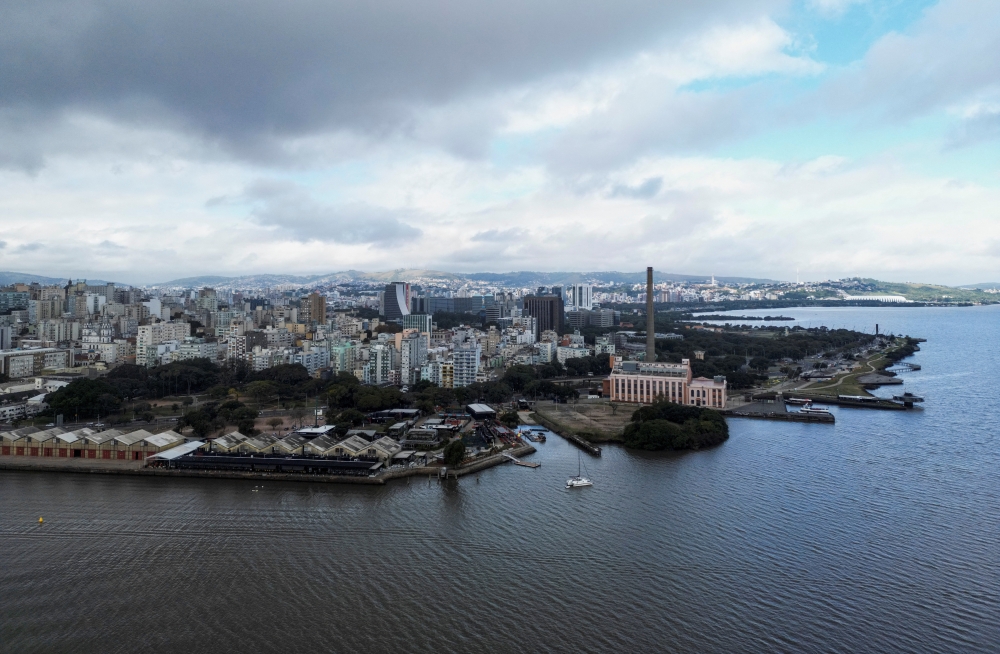
In April to May 2024, floods in Rio Grande do Sul in Brazil killed more than 180 people and displaced 600,000. Scientists said both climate change and El Nino strengthened the rains that triggered the disaster.
Francisco Aquino, head of the University of Rio Grande do Sul’s climate centre, said a strong El Nino this year risked causing a similar disaster.
“When you have an El Nino over what climate change already brought, the risks are enormous,” Aquino told Reuters. “A strong El Nino can lead to the exact same scenario we saw then, because the world keeps getting warmer, and the temperature in the ocean keeps rising.”
Climate change is also compounding the impact of El Ninos in southern Africa. There, the weather pattern reduces rainfall during the rainy season, limiting hydropower generation and cutting crop yields.
“Climate change will make that below-normal rainfall more intense, so it will last longer or have less rainfall... and that, of course, will affect agriculture, especially the rain-fed farmers in the region,” said Izidine Pinto, a Senior Climate Researcher at the Netherlands Meteorological Institute.
Antonio Navarra, head of Italy’s Euro-Mediterranean Center on Climate Change, said stronger Pacific cyclones were another impact governments should prepare for.
“Because the water in the Pacific will be much warmer, there will be a much more favourable environment for the formation of tropical cyclones.... El Nino will input an enormous amount of energy into the system, so everything will be more intense,” he said.
Some scientists said the destruction likely from this year’s El Nino could provide a foretaste of extremes that will become the norm in around five years’ time even without an El Nino.
“It does give a window into the future,” said Forster.
Theodore Keeping, Research Associate at Imperial College London, said El Nino’s impact on atmospheric circulation means it affects weather patterns in a way that a warmer climate alone would not — but broadly speaking, it can offer a flavour of future climate change.
“You’re able to kind of sample weather conditions that you would otherwise in a neutral El Nino only expect to see in a warmer climate,” he said. — Reuters
 Login
Login